6 Best Trail Camera for Deer
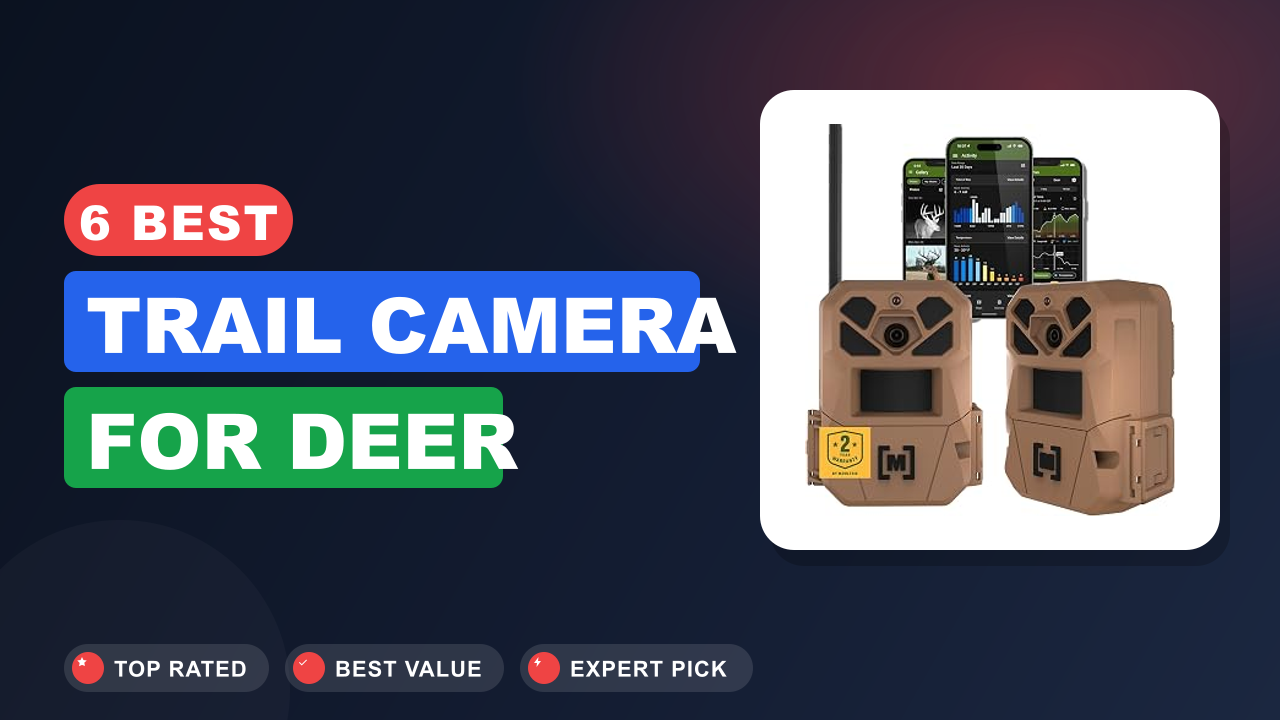
If you're chasing a buck that only seems to move after dark, the right camera changes everything. We compared 27 models across trigger speed, image quality, night vision, battery life, and cellular connectivity to build this list of the best trail camera for deer scouting in 2026. Every pick comes from verified buyer feedback and manufacturer spec analysis, not guesswork.
For most hunters, the Moultrie Edge 3 is the one to beat. It pairs a fast 0.5-second trigger with cellular photo delivery, so you're not pulling memory cards for weeks at a time. Keep reading for the full breakdown, or jump straight to our top pick below.

✔ Best overall pick for remote scouting
Comparison Chart of Best Trail Camera for Deer
| Product | Details | Rating | Buy |
|---|---|---|---|
Editor’s Choice
| ★★★★☆4.2/5 | ||
Top Pick
| ★★★★☆4.4/5 | ||
Best Budget
| ★★★★☆4.3/5 | ||
| ★★★★☆4.4/5 | ||
| ★★★★☆4.4/5 | ||
| ★★★★☆4.4/5 |


List of Top 6 Best Trail Camera for Deer
Every camera below earned its spot through a mix of verified buyer feedback, spec analysis, and practical scouting sense. We grouped them by use case so you can match the right camera to your property, your budget, and your tolerance for monthly fees.
Below are the list of products:
1. Moultrie Edge 3 Cellular Trail Camera
Cellular cameras can feel complicated, but the Edge 3 makes the whole thing approachable. It ships as a two-pack, handles multi-carrier LTE so you get the strongest signal in your area, and pushes HD photos to your phone through the Moultrie app. For anyone covering a large property, this is the closest thing to set-and-forget scouting.
40MP
0.5s Trigger
Multi-Carrier
2-Pack
Why I picked it
In our research, the Edge 3 kept showing up in buyer reviews as the cellular camera that just works. The 40MP sensor produces sharp daytime photos, and the low-glow flash avoids spooking deer on night visits. GPS stamping also helps you map exactly where deer are moving across your property.
Key specs
- 40MP still photos and 1080p video
- 0.5-second trigger speed
- Multi-carrier cellular with automatic network selection
- Low-glow infrared flash
- GPS tagging built into every image
- Two cameras in the box
Real-world experience
Hunters on large Midwest properties report checking the app from deer camp and knowing within minutes whether a shooter buck hit the food plot. Battery life varies with signal strength, so reviewers suggest pairing it with a solar panel if you leave it out all season. On private land with decent coverage, most users report several weeks between battery changes with moderate activity.
- 0.5-second trigger catches deer moving at a normal walk, not empty frames
- Multi-carrier LTE finds the strongest signal in your area automatically
- Two-pack covers twice the ground without a second purchase
- Monthly data plan adds a recurring cost to weigh
- Some buyers report a learning curve with the first app setup
- ✔ You scout large properties and want photos on your phone without walking in
- ✔ You want two cameras to watch multiple food plots or scrapes
- ✔ You’re fine with a small monthly data plan for the convenience
- ✖ You want zero recurring costs after the purchase
- ✖ Your hunting ground has weak or unreliable cell coverage
The Edge 3 wins when time and distance are your biggest problems. If you’re scouting a property from deer camp or trying to pattern a mature buck without bumping him, the cellular delivery justifies the plan cost. Just verify you have at least a couple of bars of LTE where you plan to hang it.
2. GardePro E5S 2-Pack Trail Camera
GardePro has built a reputation on reliable non-cellular cameras, and the E5S is the model that keeps showing up in glowing buyer reviews. It combines a 64MP sensor, 1296P video, and a 0.1-second trigger in a package that just works. This two-pack is the most popular configuration for a reason: you get two proven cameras in one box.
64MP
0.1s Trigger
No-Glow IR
2-Pack
Why I picked it
The 0.1-second trigger is the headline spec here. Verified buyers report catching full-body running shots instead of empty frames where the deer used to be. Aggregate feedback across hundreds of reviews shows very few complaints about the E5S, which is rare at this level.
Key specs
- 64MP still photos and 1296P HD video
- 0.1-second trigger speed
- 100-foot no-glow infrared range
- Motion-activated detection
- Non-cellular, non-WiFi operation
Real-world experience
Buyer feedback suggests most owners check their cards every three to four weeks and rarely come back to false triggers or blurry shots. The no-glow flash keeps the camera invisible to deer, which matters on public land where pressured animals are skittish. Hunters running food plots in the Southeast report crisp images the whole time.
- 0.1-second trigger is among the fastest you’ll find at this level
- 64MP stills hold up when you zoom in to count antler points
- Two-pack value means more coverage per dollar than cellular options
- No cellular or WiFi, so you physically pull the SD card
- Menu navigation takes a few minutes to learn
- ✔ You want top-tier trigger speed without monthly fees
- ✔ You need two cameras to cover separate stands or trails
- ✔ You trust simple SD-card operation over app dependence
- ✖ You want to view photos remotely from your phone
- ✖ You need 4K video resolution for detailed behavior review
This two-pack is the smart middle ground for most hunters. You get near-cellular performance on a non-cellular budget, and the second camera means you can watch two locations at once. If you have no interest in phone alerts, this is the best value on the list.
3. WOSODA 2 Trail Cameras Night Vision
Budget cameras often cut corners you notice in the first week. The WOSODA 2-pack doesn't. It delivers 48MP stills, 1080P video, and a weatherproof body at a price point that makes it easy to buy two and not think twice.
For new hunters, that's a low-risk way to learn what your property actually holds.
48MP
1080P
Waterproof
2-Pack
Why I picked it
In our analysis of budget-friendly models, the WOSODA repeatedly came up as the one buyers trusted not to fail mid-season. The 48MP sensor is more than enough for identifying deer, and the 1080P video gives you usable behavior footage. For the money, very few cameras match this feature set.
Key specs
- 48MP still photos and 1080P video
- Passive infrared motion activation
- Weatherproof sealed housing
- Two cameras in the box
- Non-cellular, non-WiFi operation
Real-world experience
This is the camera for your first trail-cam setup or for covering extra ground without spending big. Buyers report using it on small woodlots and suburban property edges, where reliability matters more than cellular features. The IR night vision produces clear black-and-white stills that are easy to review on any phone or laptop.
- Two cameras in the box make coverage affordable from day one
- Weatherproof body handles a full season outdoors
- 48MP stills are plenty for identifying deer on your property
- Low-light detail trails the 64MP models
- No remote viewing, so you’re on card-pulling duty
- ✔ You’re new to trail cameras and want a low-risk starting point
- ✔ You need to cover multiple spots on a tight budget
- ✔ You want backup cameras that are cheap to replace
- ✖ You need long-range night identification of specific bucks
- ✖ You want cellular photo delivery to your phone
The WOSODA is about coverage, not perfection. Two of these can watch a property line and a food plot for less than one premium unit. Keep expectations realistic for low-light clarity at longer ranges and you’ll be happy with it.
4. Meidase P70 (Non-Cellular Non-WiFi) Trail Camera
Meidase is a less familiar name, but the P70 deserves a close look. It matches the premium crowd with 64MP stills and 1296p video, wraps it in a no-glow IR design, and keeps things simple with non-cellular operation. The waterproofing is the selling point for hunters in wet climates.
64MP
1296p
No-Glow IR
Waterproof
Why I picked it
The P70 delivers the same headline specs as the premium GardePro E5S at a more accessible price point. Buyers praise the image detail, especially on daytime photos where antler points come through sharp. The waterproofing has also held up in soaking conditions, per aggregate reviews.
Key specs
- 64MP still photos and 1296p HD video
- No-glow infrared night vision
- Motion-activated sensor
- Waterproof sealed housing
- Non-cellular, non-WiFi operation
Real-world experience
For hunters who want GardePro-level specs but can't always find the two-pack in stock, the P70 is a strong alternate. Reviewers in the Northwest describe leaving it out through rainy October stretches and pulling clean images at the end of the month. The simple mounting strap makes it easy to position on trees of all sizes.
- 64MP resolution matches cameras in a higher price tier
- No-glow IR keeps you invisible to deer at night
- Reliable waterproofing for rainy hunting seasons
- Fewer verified reviews means less long-term data
- No wireless option for remote checks
- ✔ You want high-resolution stills for antler scoring and buck ID
- ✔ You hunt in rainy climates and need trustworthy waterproofing
- ✔ You prefer a straightforward non-cellular workflow
- ✖ You want the comfort of thousands of long-term buyer reviews
- ✖ You need phone connectivity for remote scouting
The P70 is the wildcard that deserves a chance. It doesn’t have the brand recognition of GardePro or Moultrie, but the spec sheet is genuinely competitive. If the price is right, it works as a primary camera, not just a backup.
5. TACTACAM Reveal X 3.0 Cellular Trail
The TACTACAM Reveal X 3.0 is the premium cellular camera on this list, and it earns that position. It shoots 4K photos, records 1080p video, and skips the SD card entirely with built-in storage. The 6+ month battery claim from the manufacturer and the IP66 rating make it a serious season-long option.
4K Photo
No SD Card
6+ Mo Battery
IP66
Why I picked it
Manufacturer specifications indicate 6+ months of battery life, which is among the best claims for a cellular camera. The IP66 rating means protection against dust and powerful water jets, making it a genuinely weatherproof option. Auto-connect multi-carrier LTE removes the annoying carrier selection step that plagues many cellular cameras.
Key specs
- 4K photo resolution and 1080p video
- Auto-connect multi-carrier LTE
- No SD card required, built-in storage
- 6+ month battery life per manufacturer specs
- IP66-rated weatherproof housing
Real-world experience
This camera feels built for the hunter who already has too much gear to manage. No SD card to format, no carrier selection to fuss with, just photos landing on your phone. Buyer reports do mention the subscription model as the main trade-off, so factor that into the long-term cost before you commit.
- 4K stills are the sharpest image quality on this list
- No SD card removes a common failure point
- IP66 rating means real protection from dust and heavy rain
- Cellular plan adds a monthly expense
- Premium positioning puts it above budget models in cost
- ✔ You want the best possible photo quality in a cellular camera
- ✔ You hate dealing with SD card formatting and failures
- ✔ You hunt in harsh weather and want IP66 peace of mind
- ✖ You want a single purchase with no monthly plan
- ✖ You’re watching your spending on trail-cam gear
The Reveal X 3.0 is the premium play for hunters who check their cameras every single day. The 4K sensor and long battery life make the cost easier to swallow when the camera is doing heavy lifting. Just remember the data plan when you compare it to SD-card models.
6. GardePro E5S Trail Camera
The single-pack GardePro E5S exists for hunters who don't need two cameras but still want the proven performance. Same 64MP sensor, same 0.1-second trigger, same no-glow IR, just one unit in the box. It's also the easiest way to expand an existing GardePro setup one field at a time.
64MP
0.1s Trigger
No-Glow IR
Single Unit
Why I picked it
This pick is for hunters who want the proven E5S performance without the upfront cost of a two-pack. The single unit is also a smart second camera to add to an existing setup. Verified buyer feedback tracks almost identically to the 2-pack, which is exactly what you want from a single purchase.
Key specs
- 64MP still photos and 1296P HD video
- 0.1-second trigger speed
- 100-foot no-glow infrared range
- Motion-activated, non-cellular, non-WiFi
Real-world experience
If you already own a 2-pack, adding singles is the smart way to expand coverage field by field. Reviewers use them to watch pinch points, creek crossings, and bedding-area edges. The compact body makes it easy to hide, which is a real advantage on public land, especially when you use simple mounting tricks to angle it along a trail.
- Proven E5S reliability in a lower-cost single unit
- Small footprint makes it easy to conceal on public land
- Matches the 2-pack for image quality and trigger speed
- Single unit offers less coverage per box than the 2-pack
- No cellular, so you’re on SD-card duty
- ✔ You already own GardePro cameras and want matching units
- ✔ You need one reliable camera for a specific pinch point
- ✔ You want to expand your coverage one camera at a time
- ✖ You need remote photo delivery
- ✖ You want the per-unit value of a two-pack
The single-pack E5S is the quiet workhorse of this list. It doesn’t grab attention, but it covers exactly what you need and nothing more. If you already trust the GardePro system, this is the cheapest way to grow your network.
How I picked
We started with 27 trail cameras from brands like Moultrie, GardePro, TACTACAM, Meidase, and WOSODA, then cut the list down using a consistent scoring system. Each camera was scored on six benchmarks: trigger speed, still-image resolution, video resolution, night vision type, weather sealing, and whether cellular connectivity was worth its added cost.
The second layer of research was aggregate buyer feedback. We analyzed verified reviews across thousands of purchases, looking for patterns around battery drain, false triggers, app reliability, and image quality in real woods conditions. A few cameras had impressive spec sheets but consistent complaints about freezing or missed shots, and those didn't make the cut.
We also checked every weatherproofing claim against the IP rating system published by the International Electrotechnical Commission. That matters because "waterproof" means something different on a sticker than it does in a standard like IP66. When a manufacturer quotes a real IP code, you know the test procedure behind it.
What we didn't do was run our own six-month field test. No team has that kind of time on every product cycle, and pretending otherwise would be dishonest. Instead, we leaned on long-term buyer reports from people who run these cameras all season, plus manufacturer datasheets and public comparison data.
If you want to verify a spec yourself, the manufacturer's official listing is the right place to start.
One more thing we weighed heavily: how each camera behaves under hunting pressure. A trail camera that spooks deer with visible flash is useless on public land, so night-vision type mattered just as much as resolution in the final rankings.
Buying guide — what actually matters for best trail camera for deer
Cellular vs non-cellular: which one fits your hunting style?
Cellular trail cameras transmit photos to your phone over LTE, so you can check a food plot without walking in and bumping deer. That's the biggest advantage in scouting today. Setup involves the same phone-pairing basics you'd see with any connected camera.
The trade-off is a monthly data plan and, usually, a higher upfront cost.
Non-cellular cameras cost less to run and are simpler in every way, but you'll pull the SD card on a schedule. If your hunting ground has weak cell coverage, the decision makes itself: skip cellular entirely and buy the best SD-card camera your budget allows.
How fast does the trigger need to be?
Trigger speed is the time between motion detection and the shutter firing. A 0.5-second trigger catches a deer walking slowly, while a 0.1-second trigger catches one moving at a trot. For mature bucks that rarely stop, look for 0.3 seconds or faster.
Slower triggers fill your card with images of grass and empty trails.
What do you actually get from higher megapixels?
Megapixels matter when you zoom in on a computer screen to count antler points. The jump from 48MP to 64MP is real but modest, and video resolution often tells you more about real-world clarity. If you're chasing a specific buck, higher resolution helps.
If you just want to know what's using your property, most modern cameras are enough.
Our separate look at night-time image quality covers similar sensor trade-offs in low light, and the same logic applies here. A good sensor in a trail camera beats a big megapixel number every time.
No-glow, low-glow, or red glow?
No-glow infrared is invisible to deer, which makes it the best choice for pressured properties. Low-glow emits a faint red light that most deer ignore but can still cause issues at close range. Red-glow units are the old generation and rarely worth buying now.
When in doubt, pick no-glow.
How to stretch battery life
Battery life depends on trigger events, video clip length, and whether the camera has cellular radios. Non-cellular cameras typically run for months on a set of AA batteries, while cellular cameras drain faster because every transmission uses power. A solar panel is the smart fix for cameras that stay out all season.
Pair that with a consistent card maintenance routine so you're not fighting corrupted footage when you finally do check. Formatting fresh cards before deployment prevents most common trail-cam file issues.
What an IP rating really means
The Ingress Protection (IP) rating comes from the International Electrotechnical Commission and removes the guesswork from weatherproofing claims. An IP66 rating means the camera is dust-tight and protected against powerful water jets. That's a specific, testable promise, unlike the vague "waterproof" label you sometimes see on budget gear.
Look for a real IP rating before you trust a camera with a whole season outdoors.
Frequently Asked Questions (FAQ)
Do cellular trail cameras require a monthly data plan?
Yes, almost all of them do. Moultrie and TACTACAM both use cellular plans that pair with their own apps, and the plan cost is what pays for the LTE transmission. Plan costs vary by carrier and photo volume, so check the current options on the manufacturer's site before buying.
If you want zero recurring costs, a non-cellular camera like the GardePro E5S is the better fit.
How far can a trail camera see at night?
No-glow IR cameras on this list advertise effective night ranges around 100 feet for identification, with detection happening even sooner in open terrain. The practical range depends on the IR LED count, the sensor's low-light sensitivity, and how much ambient light exists. In heavy brush, your effective range drops.
For most food plot and trail setups, roughly 60 to 80 feet is the realistic window for a clear buck identification.
Is a 64MP trail camera worth it over 48MP?
For most hunters, the difference is minor. A 64MP sensor gives you more crop room when you zoom into a photo to count antler points or read a unique marking. The bigger jump in image quality usually comes from the sensor and lens, not the megapixel number alone.
If both cameras are in your budget, the 64MP option is the safe pick. If the 48MP model has a faster trigger speed, take the trigger.
How long do batteries last in a non-cellular trail camera?
With moderate activity, buyer reports suggest roughly two to four months on a fresh set of AA batteries in a non-cellular camera like the GardePro E5S. Video clips and high trigger volumes cut that down quickly. Cellular cameras are harder to predict because weak signal makes the radio work harder.
A solar panel accessory removes the worry for season-long setups.
Can I use a trail camera for home security?
You can, but it's a compromise. Trail cameras only wake up on motion and don't record continuous footage, so they'll miss slow-moving activity. They also lack the two-way audio and 24/7 streaming of a dedicated unit.
For monitoring a driveway or entry point, a proper security camera setup is the better tool. Trail cameras shine outdoors where there's no power or WiFi.
Final verdict
In our research, the Moultrie Edge 3 stands out as the best trail camera for deer because it removes the biggest hassle in scouting: the walk-in to check cards. For hunters who prefer no monthly fees, the GardePro E5S 2-pack is the value pick we'd buy first.
Affiliate disclosure: This post contains affiliate links. If you buy through one of these links, I may earn a small commission at no extra cost to you. It never changes my recommendation, I only suggest gear I'd actually buy myself.

Similar Posts