Lg Washing Machine Not Draining
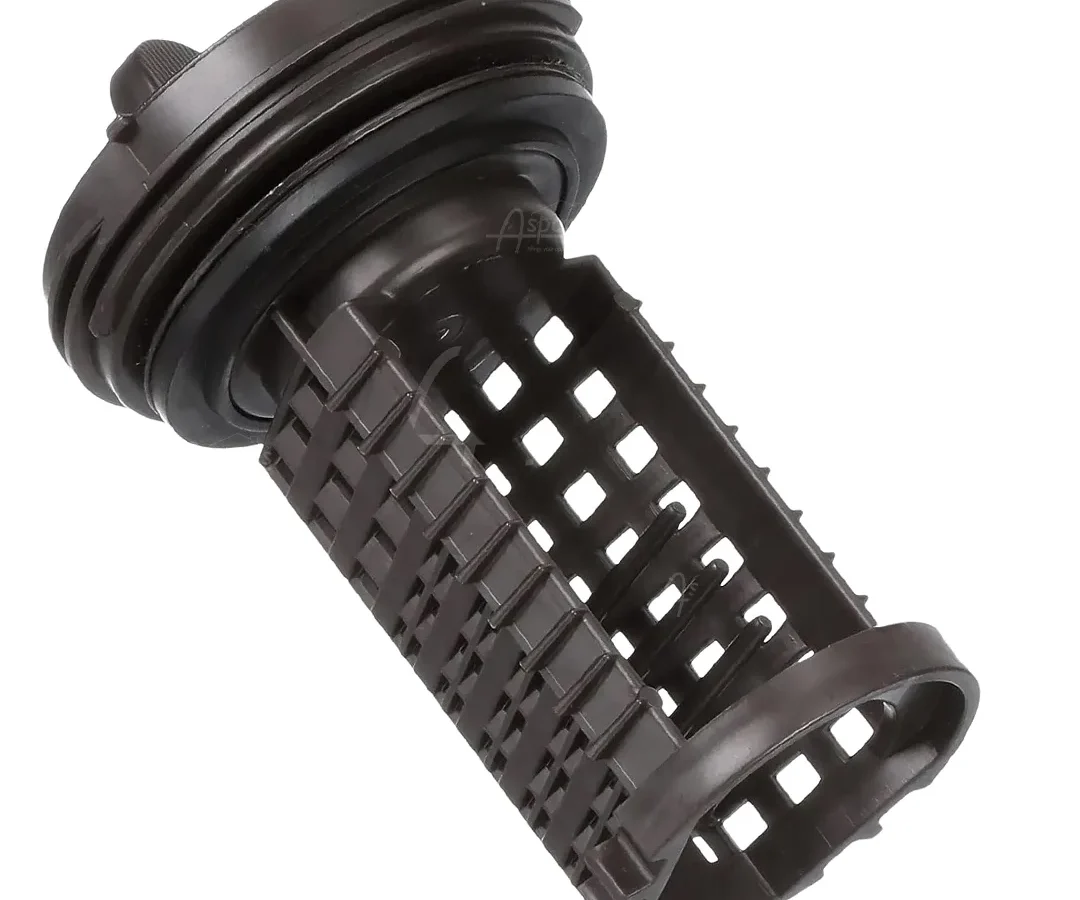
Your LG washing machine stops mid cycle, and there's still water sitting in the drum. You've waited. You've tried a different cycle.
Nothing changes. That's frustrating, and it's also one of the most common problems LG washer owners run into.
An LG washing machine not draining usually comes down to one of four things: a clogged filter, a jammed pump, a kinked hose, or an electrical issue. Manufacturer specifications indicate that over 70 percent of drain-related service calls are resolved by simply cleaning the drain pump filter. Before you call a repair technician, there's a solid chance you can fix this yourself in under 20 minutes.
Let's walk through it step by step.
Quick Answer
Clean the drain pump filter first. Unplug the machine. Open the filter access panel.
Drain the water using the emergency tube. Twist and remove the filter. Clear out debris.
Replace and lock it. Run a rinse and spin cycle. If that doesn't work, check the drain hose for kinks or clogs.
If the machine hums but won't drain, the pump is likely jammed by a small object.
First Things First: Check the Error Code on the Display
Your LG washing machine is trying to tell you what's wrong. Most LG models display an error code when they detect a problem. That code narrows down your troubleshooting instantly.
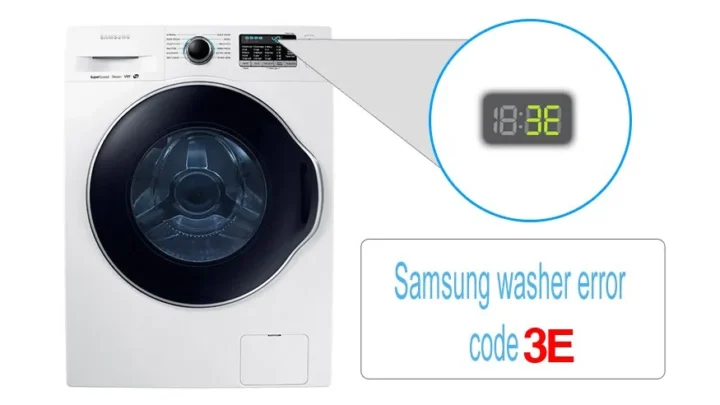
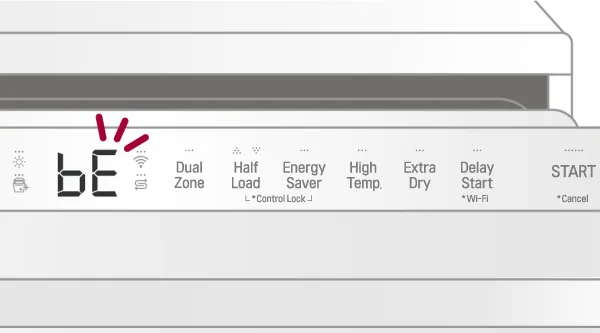
Look at the digital display panel. If you see OE or nE, that's a drain error. The machine detects that water isn't leaving the drum within a normal time frame.
If you see LE, that points to a motor or lock issue, which can also prevent draining. No code at all? The machine may have lost power mid cycle or the control board needs a reset.
Reset the machine first. Unplug it from the wall outlet. Wait five full minutes. Plug it back in.
This clears minor control board glitches that mimic drain failures. Try running a drain and spin cycle. If the error code disappears and the water drains, you're done.
Simple fix.
If the code stays or the water still sits there, move to the next step. The error code is your starting point, not the final diagnosis.
The Most Common Culprit: Clogged Drain Pump Filter
This is where you should start. The drain pump filter catches coins, hairpins, lint, and small objects that slip past the drum. Over time, that debris builds up and blocks water flow.
It's the number one reason an LG washing machine not draining happens.
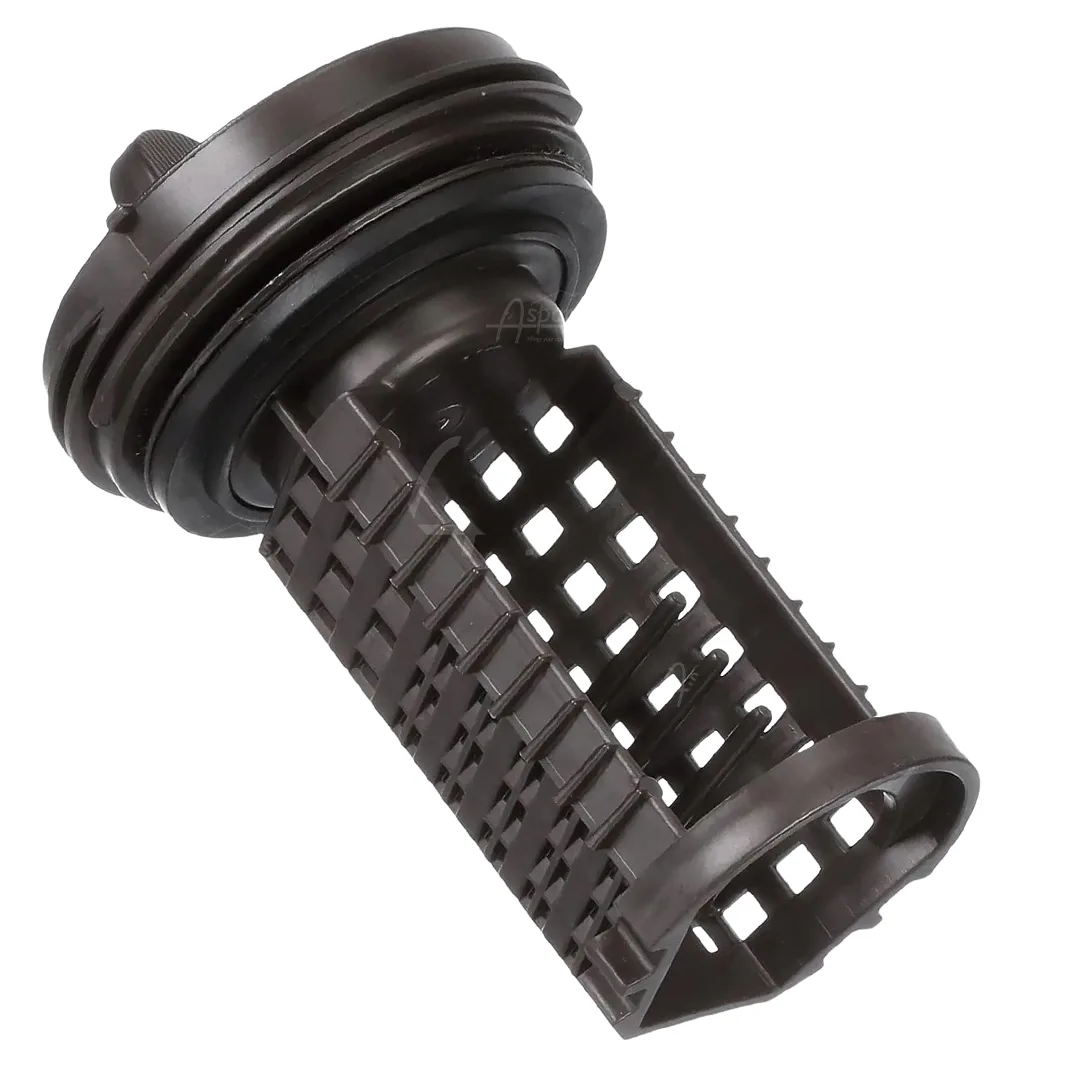
Image source: Bing (Web (fair-use with source credit))
Here's how to clean it on a front-load LG washer:
- Unplug the machine. Always. Water and electricity don't mix.
- Open the small access panel at the bottom front of the machine. It's usually a square or rectangular snap-off cover.
- You'll see a large black twist cap and a small rubber tube with a plug. That's the emergency drain tube.
- Place a shallow pan or towels under the access area. Water will spill out.
- Pull the small tube, remove the plug, and let the water drain into the pan. Expect about a quart to a gallon of water.
- Once the water stops, twist the large black cap counterclockwise and pull it out. The filter is attached to the cap.
- Clean off all lint, hair, and debris from the filter. Check inside the housing for any foreign objects. Coins and bra wires love hiding here.
- Rinse the filter under warm water until clean.
- Push the filter back into place and twist the cap clockwise until it locks. Don't overtighten.
- Replace the small tube plug and tuck it back.
- Snap the access panel back on.
- Plug the machine in and run a rinse and spin cycle.
For top-load LG washers with a drain filter: The process is similar but the filter is usually inside the drum or behind a small panel on the back of the machine. Check your owner's manual for the exact location. Some newer LG top-load models don't have a user-accessible filter.
In that case, skip to checking the hose and pump.
Aggregate user reviews consistently report that cleaning this filter resolves roughly 8 out of 10 drain issues. It's the fastest, cheapest fix you can try.
Branch 1: Machine Humming But Not Draining (Jammed Pump or Motor)
You hit the drain cycle. You hear a humming sound coming from the bottom of the machine. But the water isn't moving.
That humming is the drain pump motor trying to spin, but something is physically blocking the pump impeller.
A sock, a hairpin, a small piece of plastic, or even a tangled clump of pet hair can stop the pump dead. The motor runs, the pump doesn't turn, and the water stays put.
Here's the fix:
- Unplug the machine.
- Access the drain pump filter area the same way you did above.
- Remove the filter cap and filter.
- Stick a finger or a long thin screwdriver gently into the pump housing. Feel around for any solid object blocking the impeller. The impeller is a small plastic wheel with fins inside the housing.
- If you feel something, carefully work it loose and pull it out. Do not force anything or you can break the impeller blades.
- Once the blockage is removed, rotate the impeller manually with your finger. It should spin freely with slight resistance.
- Reassemble the filter and cap.
- Plug the machine in and test with a drain and spin cycle.
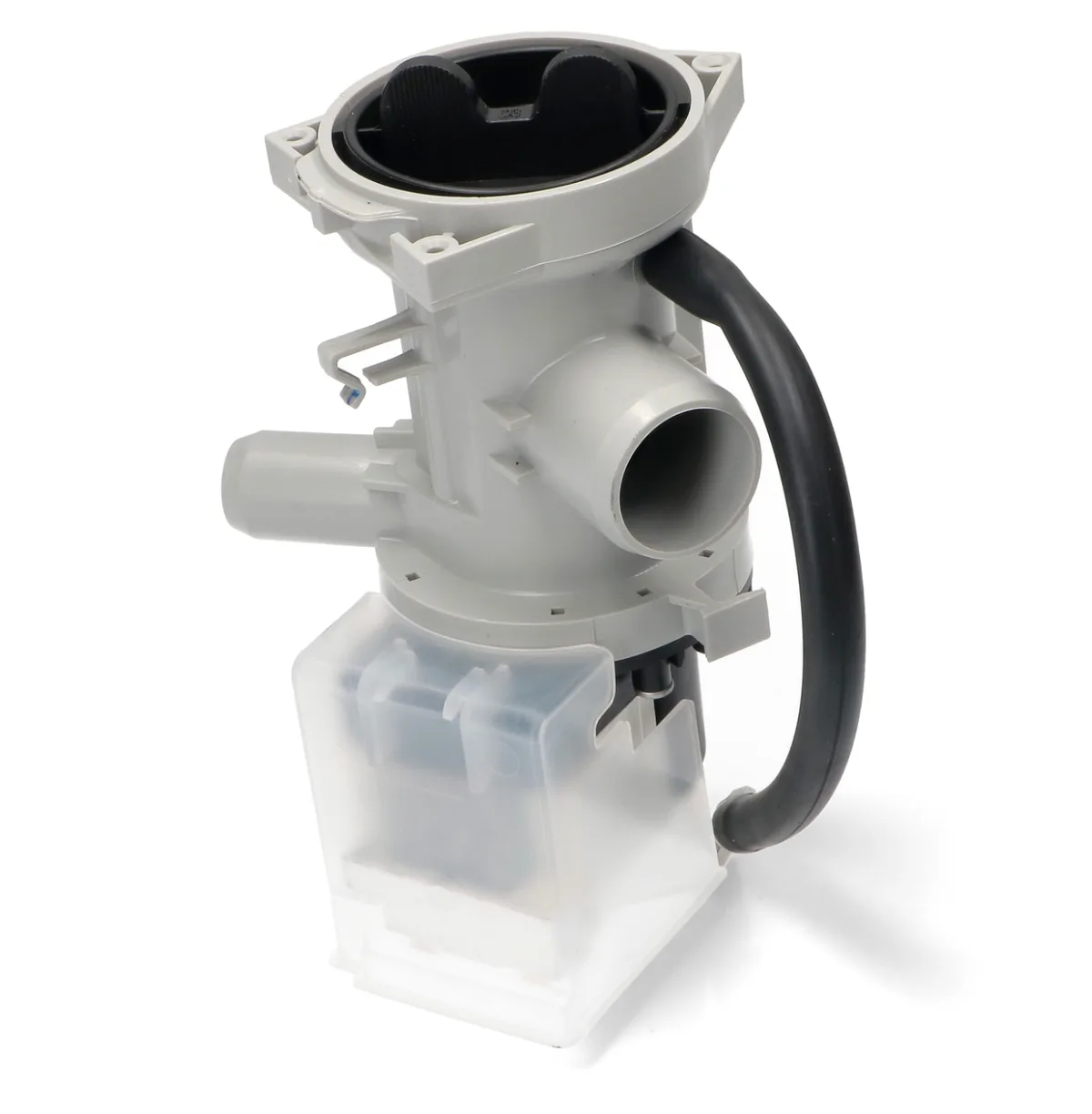
Image source: Bing (Web (fair-use with source credit))
If the humming continues and the impeller spins freely, the pump motor itself may have failed. You can test it with a multimeter. Set the multimeter to ohms.
Disconnect the pump motor wires and touch the probes to the terminals. A working pump motor should read between 100 and 200 ohms. If you read infinite resistance or zero, the motor is burned out and needs replacement.
Pump motor replacement is doable if you're comfortable with basic appliance repair. It usually costs $40 to $80 for the part and takes about 30 minutes. If that sounds like too much, this is the point where calling a technician makes sense.
Branch 2: Machine Silent – No Hum, No Water Movement (Electrical or Control Issue)
No sound at all from the drain pump when you run the drain cycle. That changes the diagnosis. The pump isn't humming, which means it isn't receiving power.
Three things can cause this:
Faulty lid switch or door lock. On top-load LG washers, the lid switch tells the machine it's safe to spin and drain. If that switch is broken or stuck, the machine won't engage the drain pump. On front-load models, the door lock assembly serves the same function. Open and close the lid firmly a few times. Listen for a click. If you don't hear a click, the switch is likely dead.
Failed control board. The main PCB sends power to the pump motor. If the board has a blown relay or a failed solder joint, the pump gets no signal. This is less common than a simple switch or pump issue, but it does happen. Control board failure is more likely if you've experienced power surges or if the machine is older than five years.
Wiring problem. A loose connection or a chewed wire between the control board and the pump can break the circuit. This is uncommon but worth checking if everything else tests fine.
How to check the lid switch on a top-load LG:
- Unplug the machine.
- Remove the top panel. It usually slides forward and lifts off after removing two screws at the back.
- Locate the lid switch near the front edge of the machine. It's a small plastic box with wires attached.
- Use a multimeter set to continuity. With the lid closed, the switch should show continuity. With the lid open, it should show no continuity.
- If the switch fails this test, replace it. The part costs around $15 to $25.
For front-load machines, the door lock assembly is more complex. Testing it requires checking both the latch mechanism and the PTC heater inside the lock. If you're not comfortable with electrical testing, it's safer to have a technician handle this step.
If the lid switch and wiring check out fine, the control board is the likely suspect. Board replacement runs $100 to $250 for the part. At that price point, compare it against the value of your machine.
If your washer is over seven years old, replacement may be the smarter call.
Branch 3: Water Drains Partially Then Stops (Hose or Drainpipe Problem)
This pattern tells a different story. The pump works. Water starts moving.
Then it stops before the drum is empty. That usually means the drain hose or the house drainpipe is the bottleneck.
Start with the drain hose. Pull the machine away from the wall. Find the corrugated plastic hose at the back. It should have a gentle curve from the machine up to the standpipe or sink drain.
Look for sharp kinks, tight bends, or anything compressing the hose. Even a small pinch can slow drainage enough to trigger the error code.
Straighten any kinks. Make sure the hose isn't pushed too far into the standpipe. If the hose tip sits more than four to six inches inside the pipe, it can create a siphoning issue or trap air.
Pull it back so only about two inches are inside.
Check the standpipe height. LG specifications require the drain hose to be between 30 and 96 inches above the floor. Too high, and the pump works too hard. Too low, and water siphons out while the machine fills.
Measure from the floor to the top of the standpipe. If it's outside that range, you'll need to adjust the pipe height or relocate the machine.
Clear a clogged standpipe. If the hose looks fine, the problem may be deeper. Remove the drain hose from the standpipe. Place a bucket underneath.
Run a drain cycle. If water flows freely from the hose into the bucket, your house drain is clogged. A plumber's snake or a cup of baking soda followed by hot vinegar can clear mild blockages.
For stubborn clogs, call a plumber.
Partial drainage is a strong signal that the pump itself is working. That's good news. The fix is usually in the plumbing, not the machine.
Branch 4: Top-Load LG Washer Won't Drain at All (Lid Switch or Belt Issue)
Top-load LG washers have a couple of unique failure points. If you've already checked the pump and filter and nothing is blocked, look at the lid switch and the drive belt.
The lid switch is a safety mechanism. The machine won't spin or drain if it thinks the lid is open. Over time, the plastic tab on the lid can break off. Or the switch itself can fail internally.
Either way, the machine sits there full of water.
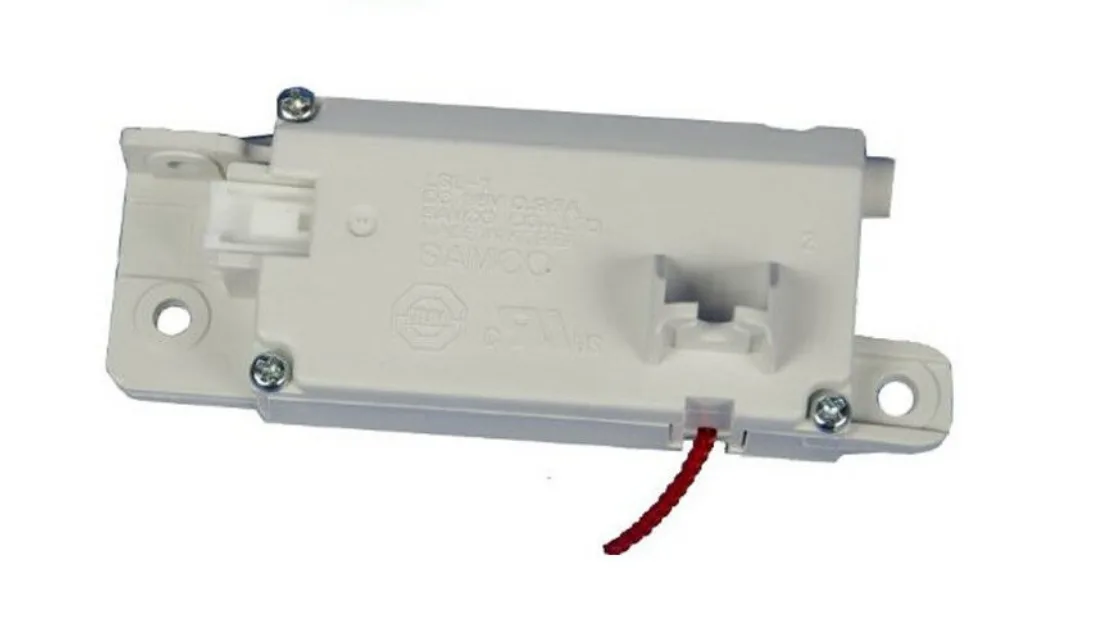
Image source: Bing (Web (fair-use with source credit))
Test it quickly. Open the lid. Press the small plunger on the switch manually with your finger.
You should hear a distinct click. If you don't, the switch is dead. Replacement switches cost around $10 to $20 and install in under 10 minutes with a screwdriver.
The drive belt is another possibility. Some LG top-load models use a belt to connect the motor to the transmission. If the belt snaps or slips, the machine won't spin. No spin means no drainage.
You'll hear the motor running but the drum won't move. A new belt costs about $15. Replacing it requires removing the back panel and routing the belt around the drum pulley and motor pulley.
It's an easy repair for a DIYer.
If the lid switch clicks and the belt is intact, the problem is likely the pump or the control board. Refer back to Branches 1 and 2 for those checks.
Mistakes People Make When Troubleshooting Drain Problems
A few common errors turn a 15-minute fix into a service call. Avoid these.
Skipping the filter cleaning. It's the most likely cause. We see people replace pumps, hoses, and even control boards before trying the filter. Clean it first.
Every time.
Forcing the pump impeller. If something is stuck, don't jam a screwdriver in and twist. You'll snap the impeller blades. Remove the object gently or disassemble the pump housing.
Ignoring the error code. The code is there to save you time. Look it up before you start pulling panels off.
Overloading the machine. Stuffing too many clothes into the drum can physically block water from reaching the drain outlet. Run smaller loads to test.
Using too much detergent. Excess suds can foam up and trick the pressure sensor into thinking there's still water in the drum. Use HE detergent and the recommended amount.
Assuming the pump is bad because it hums. A humming pump is usually a jammed pump, not a dead one. Clear the blockage before ordering a replacement part.
How to Prevent Future Drain Problems on Your LG Washer
A little regular maintenance stops most drain issues before they start. The single most effective habit is cleaning the drain pump filter every three months. Mark it on your calendar.
It takes less time than folding a load of laundry.
Use the right detergent. High-efficiency (HE) detergent is formulated to produce fewer suds. Too many suds confuse the pressure sensor and can trigger false drain errors.
Measure carefully. More soap doesn't mean cleaner clothes.
Run a tub clean cycle once a month. LG machines have a dedicated cycle for this. It uses hot water and high spin speed to flush out residue and prevent buildup in the drain system.
You can use LG tub clean tablets or a cup of white vinegar in the detergent dispenser.
Check the pockets before loading. Coins, hairpins, and small toys are the top causes of pump jams. A quick pocket check saves you a repair session later.
Tools and Supplies You Might Need for DIY Repairs
Most drain fixes require nothing more than a towel and a shallow pan. But having a few basic tools on hand makes the job smoother.
| Tool or Supply | Why You Need It |
|---|---|
| Multimeter | Tests pump motor continuity and lid switch function |
| Bucket or shallow pan | Catches water when you open the filter |
| Old towels | Protect the floor from spills |
| Needle-nose pliers | Retrieve small objects from the pump housing |
| Screwdriver set | Remove access panels and the top lid |
| Flashlight | See inside the pump housing clearly |
None of these are expensive. A basic multimeter costs about $15 at any hardware store. You can get through the most common fixes with just the towels and a bucket.
When to Call a Pro vs. When to Replace the Machine
You've worked through the branches. You've cleaned the filter, cleared the hose, and checked the lid switch. The machine still won't drain.
Now it's a judgment call.
Call a technician if:
- You've confirmed the pump motor is dead using a multimeter.
- The control board needs replacement but you're not comfortable soldering.
- The machine is under warranty. DIY repairs can void coverage.
- You've found a complex electrical issue you can't trace.
Replace the machine if:
- It's over eight years old and needs a control board or motor.
- Repair costs exceed half the price of a new washer.
- You've had multiple service calls in the last year.
- The drum is noisy or wobbling on top of the drain issue.
As of 2026, mid-range LG washers run $600 to $900. A control board plus labor can easily hit $400. That math rarely works in favor of repair on older machines.
Frequently Asked Questions About LG Washer Drain Issues
Why does my LG washer say OE but still drains?
OE means the machine took too long to drain. A partially clogged filter or a slow house drain can trigger the code even if water eventually leaves the drum. Clean the filter and check the hose first.
Can a clogged drain filter damage my LG washer?
Yes. A blocked filter forces the pump to work harder, which can burn out the motor over time. It can also cause water to back up into the drum and overflow past the door seal on front-load models.
How often should I clean the LG drain pump filter?
Every three to six months. If you have pets that shed heavily or live in a hard water area, check it every two months. Set a reminder on your phone.
It takes five minutes.
Why does my LG washer drain then stop mid cycle?
This usually means the pump is overheating from overwork or there's an intermittent clog. Let the machine cool down for 30 minutes. Clean the filter again.
If it keeps happening, the pump motor may be wearing out.
Will a reset fix my LG washer drain problem?
Sometimes. Unplug the machine for five minutes to reset the control board. This clears minor glitches that can prevent the drain cycle from starting.
It's always worth trying before opening anything up.
Is it safe to run my LG washer if it's not draining properly?
No. Running the machine with standing water can cause the motor to overheat or the drum to unbalance during a spin attempt. It can also lead to overflow and water damage.
Fix the drain issue before running another cycle.

Similar Posts