Shower Liner Vs Shower Curtain
You walk into the bathroom section of any store, and there they are: the thin plastic liner on one side, the decorative fabric curtain on the other. The choice seems simple, but get it wrong, and you're dealing with mildew stains, wet floors, and a replacement trip sooner than you'd like. The real question in the shower liner vs shower curtain debate isn't which one looks better, it's which one actually keeps your bathroom dry and clean.
Manufacturer specifications indicate that a standard PEVA liner costs between $5 and $15 and should be replaced every three to six months, while a fabric curtain runs $12 to $50 and can last two to three years with proper care. That's a significant difference in both upfront cost and long-term maintenance. Here's what you need to know before you buy.
Quick Answer
A shower liner protects your bathroom from water damage. A shower curtain provides decoration and minimal splash control. You generally need both for proper protection.
The liner goes inside the tub or shower pan. The curtain hangs outside. Using only a fabric curtain without a liner leads to mildew and water damage.
Skip the liner only if you buy a vinyl or plastic curtain with waterproof backing.
Why This Comparison Actually Matters
The hidden cost of getting it wrong
Water damage is the expensive part of this decision. A single shower session sends gallons of water bouncing off your body, the walls, and the floor. If that water escapes the tub or shower pan, it seeps into grout, drywall, and subflooring.
The repair bill for a small leak can run hundreds of dollars. The difference between a properly sealed setup and a poorly chosen curtain is often just a few dollars at the register.
Aggregate reviews report that bathrooms with fabric-only curtains (no liner) show visible mildew growth within two to three weeks in humid climates. Bathrooms with a proper liner and curtain setup can go months without a mold problem. That's not a small difference.
It's the difference between a quick wipe-down and a deep scrub with bleach.
What most people misunderstand about water protection
Here's the mistake: people think the curtain is doing the waterproofing. It's not. Most fabric curtains are made from polyester, cotton, or linen blends.
None of those materials are waterproof. They're water-resistant at best. Water beads up and rolls off for a while, but eventually, the fabric soaks through.
Once that happens, moisture sits against the curtain, the rod, and the wall.
The liner is designed to be waterproof. PEVA, EVA, and vinyl are all non-porous materials. Water hits them and runs straight down into the tub.
That's the whole job. A fabric curtain alone can't do that. It's like wearing a cotton jacket in the rain, fine for a light drizzle, useless in a downpour.
How this decision affects your bathroom long-term
The choice you make today affects your bathroom cleaning routine, your budget, and your risk of mold for the next several years. Replace a cheap PEVA liner every three months, and you're spending $20 to $60 per year on liners alone. Buy a quality fabric curtain once every two years, and you're looking at $25 to $50 annually on the decorative side.
The math favors the two-piece system.
But there's another factor: time. Cleaning a fabric curtain takes effort, machine wash, hang dry, rehang. Cleaning a liner takes a spray bottle and 30 seconds.
If you're someone who hates bathroom chores, the liner-first approach saves you real time. If you enjoy a beautiful bathroom and don't mind maintenance, the fabric curtain becomes the centerpiece of the room. Knowing which type of person you are changes the answer.
What Each Option Actually Does
The shower liner: Your only real defense against water damage
The liner is the workhorse. It's the thin, usually clear or translucent sheet that hangs closest to the water. Its job is simple: keep water inside the tub.
When you draw the liner closed, the bottom edge sits inside the tub rim. Water hits the liner, slides down, and drains away. No seepage.
No drips. No damage.
There are three main materials for liners, and they perform differently.
PEVA (Polyethylene Vinyl Acetate) is the most common. It's cheap, lightweight, and has a mild plastic smell when new. Manufacturer specs indicate a standard PEVA liner weighs about 0.5 millimeters thick.
It works for about three to six months before it shows cloudiness, stiffness, or mildew spots. Cost: $5 to $12.
EVA (Ethylene Vinyl Acetate) is the upgrade. It's thicker (around 1.0 millimeter), heavier, and has almost no chemical odor. It flexes better, resists mildew longer, and typically lasts eight to twelve months.
Cost: $12 to $20.
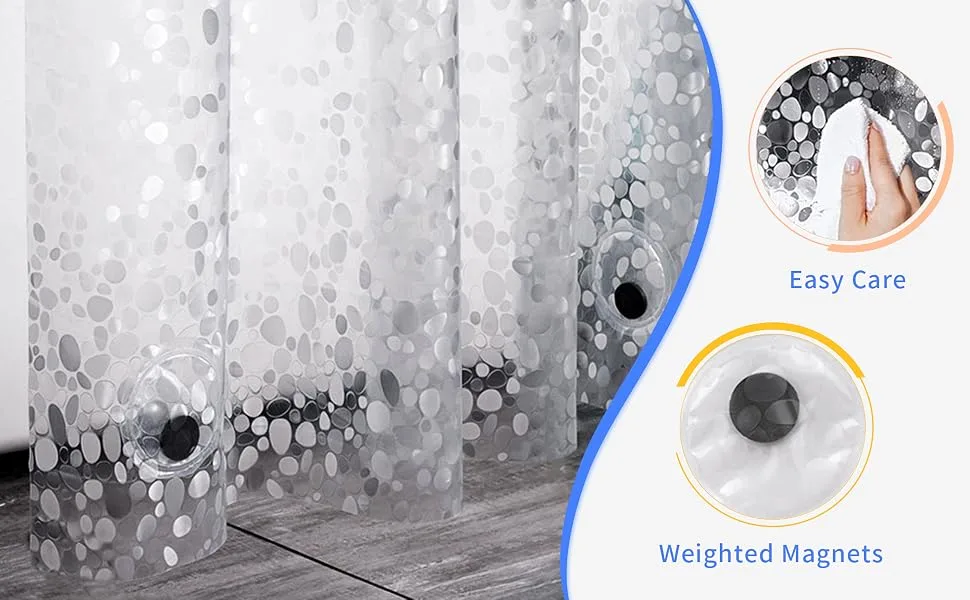
Heavy-gauge vinyl is the premium option. It's thick, durable, and often feels like a shower door replacement. Weighted hems and magnetic strips are standard at this tier.
Lifespan: twelve to eighteen months. Cost: $18 to $25.
One thing all liners have in common: they are not decorative. They're functional. Most are clear, frosted, or white.
You buy a liner for performance, not appearance.
The shower curtain: Decoration first, splash guard second
The curtain is the pretty part. It hangs outside the tub, outside the liner, and faces the room. Its job is to make the bathroom look good.
Patterns, colors, textures, fabrics, that's the curtain's domain. But it also serves a secondary function: it catches the small amount of splash and mist that escapes the liner.
Fabric curtains are typically made from polyester, cotton, or linen blends. Polyester is the most practical, it dries fast, resists mildew, and machine-washes well. Cotton and linen look beautiful but absorb water and take longer to dry.
A damp cotton curtain is a breeding ground for mildew if not aired out properly.
Some curtains come with a waterproof backing or coating. These are called "waterproof fabric curtains" or "vinyl-backed curtains." They function like a liner-curtain hybrid. In our research, these perform reasonably well for light use, but the waterproof coating wears off after several washes.
After about six to eight months, they're just heavy fabric curtains that take longer to dry.
Why the "decorative only" argument is misleading
You'll hear people say the curtain is purely decorative and the liner does all the work. That's mostly true, but not completely. In a small shower stall where the curtain presses against your body during a shower, the curtain absorbs surprising amounts of water.
Even with a good liner, the curtain can get soaked. If the curtain is thick cotton and stays bunched up, it stays wet for hours. That wet fabric against the wall or door is a recipe for mold.
So no, the curtain isn't just decoration. It's a moisture management tool. Treat it like one.
If you choose a heavy fabric curtain, plan to spread it out after every shower and wash it monthly. If you want less work, pick a lightweight polyester curtain that dries fast.
The truth about using one without the other
Can you use just a curtain? Technically, yes. Practically, no, not if you care about your bathroom long-term.
A fabric curtain alone will leak water onto the floor and leave moisture against the wall. Within weeks, you'll see mildew at the curtain's bottom edge and along the tub rim.
Can you use just a liner? Absolutely. Many people do.
A good heavy-gauge liner with a weighted hem and magnetic strip works perfectly well as a standalone solution. It won't win any design awards, but it keeps water contained. If you're a renter on a tight budget or you just don't care about bathroom aesthetics, a quality liner alone is a perfectly valid choice.
The hybrid approach, curtain plus liner, is the standard recommendation for a reason. It gives you the best of both worlds: full water protection and an attractive bathroom.
Side-by-Side: Liner vs Curtain at a Glance
| Factor | Shower Liner (PEVA) | Shower Liner (EVA) | Fabric Curtain |
|---|---|---|---|
| Initial cost | $5–$12 | $12–$20 | $12–$50 |
| Replacement frequency | 3–6 months | 8–12 months | 2–3 years |
| Annual cost | $10–$48 | $12–$30 | $4–$25 |
| 3-year total | $30–$144 | $36–$90 | $12–$75 |
The math is clear: a good EVA liner plus a quality fabric curtain costs less over three years than a series of cheap PEVA liners and a mid-range curtain. Spend a bit more upfront, save money and hassle later.
Cleaning effort and frequency
Liners need the least maintenance. A quick spray with a vinegar-water solution after each shower prevents soap scum and mildew buildup. Once a month, toss the liner in the washing machine with a cup of white vinegar and a towel (the towel scrubs the liner clean).
Hang it back up immediately. Don't let it sit in the dryer.
Fabric curtains need more attention. Machine wash every two to four weeks on a gentle cycle. Use a small amount of detergent and a quarter cup of baking soda to fight mildew.
Hang dry only. Never put a fabric curtain in the dryer, heat can warp the grommets and shrink the fabric.
Lifespan and replacement schedule
A PEVA liner shows its age quickly. Within three months, you'll notice clouding, stiffness, and perhaps small spots of mildew at the bottom edge. Replace it at the first sign of permanent staining or odor.
EVA liners hold up much better. Expect a year of service before the material starts to degrade. Some users report two years from a high-end EVA liner with proper care, but the industry standard replacement is twelve months.
Fabric curtains last two to three years in normal use. High-quality cotton or linen curtains can stretch to four or five years with careful washing. The limiting factor is usually the grommets, if they rust or tear, the curtain is done regardless of the fabric condition.
Water protection performance
This is where the liner wins outright. A properly installed liner with a weighted hem and magnetic strip keeps water completely contained. The magnets hold the liner against the tub wall, preventing the "billowing" effect that pushes water out onto the floor.
Image source: Bing (Web (fair-use with source credit))
A fabric curtain alone fails at water protection. Even with a curved rod (which creates more interior space and reduces curtain contact), a standalone fabric curtain allows water to escape at the corners and along the bottom edge. For serious water protection, you need a liner.
Aesthetic options
Liners come in clear, frosted, white, and sometimes gray or beige. That's it. They're functional, not fashionable.
Fabric curtains are the opposite. Thousands of patterns, colors, textures, and materials. You can match any bathroom design, from minimalist white to bold tropical prints.
If your bathroom is part of your home's design language, the fabric curtain is where you express that.
Which Setup Fits Your Situation Best
Renters and budget-conscious buyers
If you rent, you probably can't install a shower door, and you might not care about long-term investment. A cheap PEVA liner and a basic polyester curtain are sufficient. Total cost: $15 to $25.
Replace the liner every three months. Don't stress about fabric quality, just make sure the liner is correctly installed inside the tub rim.
If budget is tight and you can only buy one piece, buy a good liner. A heavy-gauge EVA liner at $15 to $20 will outperform any $10 curtain. You can add a decorative curtain later when funds allow.
Homeowners and long-term bathrooms
If you own your home, invest in quality. Buy a thick EVA or heavy-gauge vinyl liner with a weighted hem and magnetic strip. Pair it with a machine-washable polyester or cotton curtain in a pattern you love.
Total investment: $35 to $70 upfront. Expected lifespan: liner one year, curtain two to three years. Annual cost: about $20 to $30.
This setup looks good, performs well, and costs less over time than repeatedly buying cheap liners. It also reduces the risk of water damage to your bathroom walls and floor, a repair that can easily cost ten times more than a quality shower curtain setup.
High-humidity bathrooms
Bathrooms in humid climates or bathrooms without a ventilation fan need special attention. In these environments, moisture stays in the air longer. Fabric curtains stay damp longer.
Mildew forms faster.
The solution is a quick-dry approach. Choose a PEVA or EVA liner (both dry fast). Choose a lightweight polyester curtain that dries quickly.
Avoid heavy cotton or linen in humid bathrooms. And open the curtain fully after every shower to let air circulate.
If you have a window in the bathroom, crack it open after showers. If you have a fan, run it for at least 20 minutes after each shower. These habits double the life of both your liner and curtain.
Guest bathrooms vs daily use bathrooms
Guest bathrooms get less frequent use. A lightweight PEVA liner and a decorative fabric curtain are fine here. The liner will last longer because it's used less, and the curtain will stay cleaner because it's not getting wet every day.
Daily use bathrooms need the durable setup. Invest in an EVA liner and a machine-washable polyester curtain. Wash both monthly.
Replace the liner annually. This routine keeps a high-traffic bathroom fresh without constant deep cleaning.
The Two Most Common Setups (And Which One Wins)
Fabric curtain plus PEVA liner
This is the standard setup in most homes. A decorative fabric curtain hangs outside. A clear PEVA liner hangs inside.
Cost: $15 to $35 total. Replacement: liner every three to six months, curtain every two to three years.
This works well for most people. It's affordable, easy to install, and provides good water protection. The main downside is the frequent liner replacement.
But at $5 to $10 per liner, it's hard to complain.
Fabric curtain plus EVA or heavyweight liner
This is the upgrade. A thick EVA or heavy-gauge vinyl liner replaces the thin PEVA liner. Cost: $25 to $60 total.
Replacement: liner every twelve to eighteen months, curtain every two to three years.
The heavier liner feels different. It doesn't billow as much. It stays tucked inside the tub.
The weighted hem and magnetic strips hold it in place. The water stays inside. Many people describe this setup as "almost like having a shower door" without the installation hassle.
Vinyl or plastic curtain alone
Some people skip the liner entirely and buy a single vinyl or plastic curtain. These curtains are waterproof on their own. They don't need a separate liner.
They cost $8 to $15.
This works in theory but has practical drawbacks. The plastic curtain presses against your body in the shower. It clings to wet skin.
It traps moisture against itself. And it doesn't look as nice as a fabric curtain. For a guest bathroom or a quick fix, it's acceptable.
For daily use, the two-piece system is better.
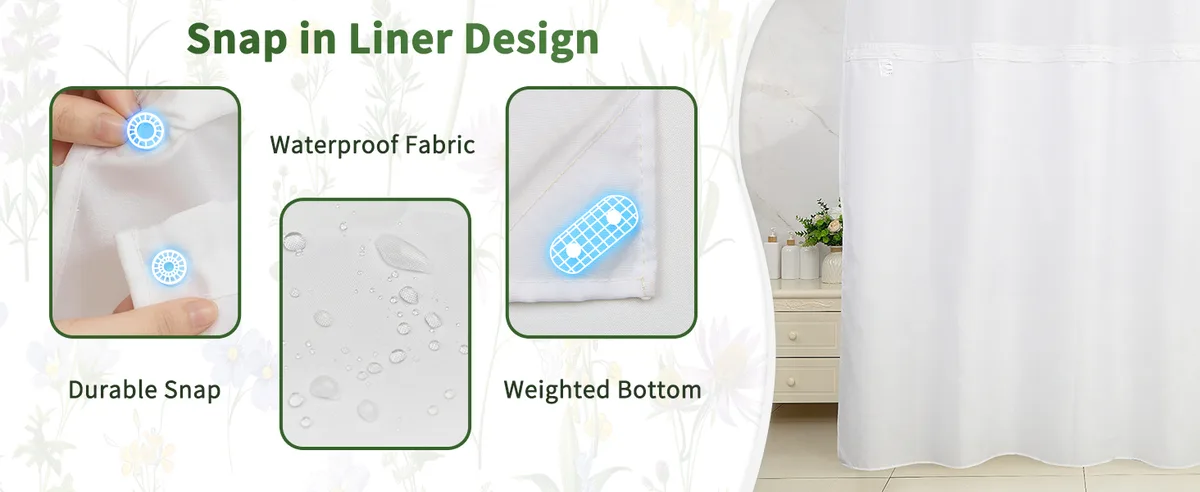
Image source: Bing (Web (fair-use with source credit))
What Nobody Tells You About Maintenance
The 30-second habit that doubles your liner's life
After every shower, take two seconds to pull the liner closed and spread it flat. Don't leave it bunched up in a corner. A bunched liner traps water against itself.
That trapped water breeds mildew. Spread flat, a liner dries completely in about an hour.
That one habit, spreading the liner flat after each shower, can extend its life from three months to six months. It's free, it's fast, and it works.
How often to wash the curtain
Wash the fabric curtain every two to four weeks. Use a gentle cycle with cold water. Add a quarter cup of baking soda to the wash to fight odors and mildew.
Add a small amount of mild detergent. Skip the fabric softener, it leaves a residue that attracts dirt.
Hang the curtain back up immediately after the wash cycle ends. Don't let it sit in the machine overnight. Damp fabric left in a pile is a mold magnet.
The easiest way to fight mildew
Mix equal parts white vinegar and water in a spray bottle. After your last shower of the day, spray the bottom few inches of the liner and curtain. Let it air dry.
The vinegar kills mold spores and dissolves soap scum.
Do this daily, and you'll rarely need a deep clean. Do it weekly, and you'll still be ahead of the mold curve. Skip it entirely, and you'll be scrubbing mildew stains within a month.
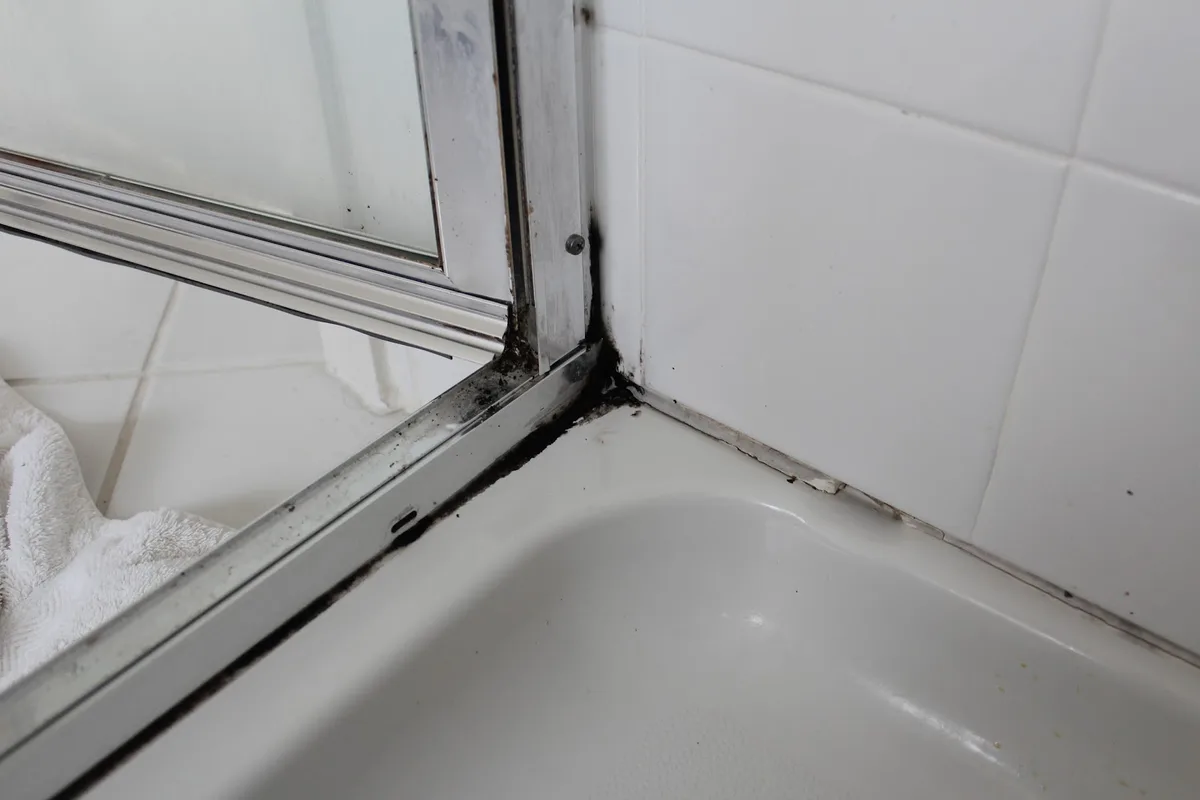
Image source: Bing (Web (fair-use with source credit))
When to stop cleaning and just replace
Once the liner or curtain shows black or green spots that won't wash out, replace it. Those spots are mold colonies. They release spores into the air every time you shower.
Breathing those spores can irritate lungs, especially for people with asthma or allergies.
A new PEVA liner costs $8. A new fabric curtain costs $20. The health cost of keeping a moldy one is much higher.
Mistakes Most People Make
Buying the wrong size
Standard shower curtains measure 70 inches wide by 72 inches tall. But not all showers are standard. Measure your tub or shower opening before buying.
If your shower is wider than 60 inches, you may need a 72-inch-wide curtain. If your tub is deeper than standard, you may need a 78-inch-tall curtain.
A curtain that's too short leaves a gap at the bottom. Water escapes through that gap. A curtain that's too wide bunches up and traps moisture.
Hanging the liner outside the tub
This sounds obvious, but it's a common mistake. The liner must hang inside the tub rim. Not on the edge.
Not outside. Inside. The entire bottom edge of the liner should sit inside the tub or shower pan.
If it's even slightly on the rim, water will wick under it and leak onto the floor.
Check this after every shower until it becomes habit. Pull the liner inward so its bottom edge is clearly inside the tub.
Ignoring the rod setup
A straight rod works fine for standard tubs. But a curved rod adds about six inches of elbow room and reduces curtain billowing. The curved rod pushes the curtain outward at the center, giving you more space and keeping the fabric off your body.
If you have a small shower stall, a curved rod is almost essential. Without it, the curtain presses against your body and water escapes at the sides.
Using metal hooks without checking for rust
Metal hooks look nice, but they rust. Even "stainless steel" hooks can develop rust spots in a humid bathroom. Rust stains the fabric and eventually rusts through the grommets.
Plastic hooks don't rust. They're cheaper and lighter. They also glide more smoothly on the rod.
Unless your bathroom decor absolutely demands metal hooks, choose plastic.
Frequently Asked Questions
Can I use a fabric curtain without a liner?
You can, but you shouldn't. A fabric curtain alone will leak water onto the floor and allow moisture to reach your bathroom walls. Within weeks, you'll see mildew growth.
Use a liner behind the curtain for proper water protection.
How often should I replace the shower liner?
Replace a PEVA liner every three to six months. Replace an EVA liner every eight to twelve months. Replace a heavy-gauge vinyl liner every twelve to eighteen months.
Replace sooner if you see permanent stains, cloudiness, or mildew that won't wash out.
Does a curved rod help with curtain billowing?
Yes. A curved rod pushes the curtain outward at the center, adding about six inches of interior space. This reduces the amount of curtain contact with your body and cuts down on the billowing effect that pushes water onto the floor.
What's the best material for a shower liner?
EVA is the best balance of cost, performance, and longevity. It's thicker than PEVA, has almost no chemical smell, and lasts eight to twelve months. For the best performance, choose a heavy-gauge EVA liner with a weighted hem and magnetic strips.
Do weighted magnets actually work?
Yes. The magnetic strips along the bottom edge of a good liner hold it against the metal tub wall. This prevents the liner from floating upward during a shower and stops water from escaping at the bottom corners.
It's a small feature that makes a big difference.
The Bottom Line: What to Buy and Why
If you're starting from scratch, buy an EVA liner with a weighted hem and magnetic strips, plus a machine-washable polyester curtain. Total cost: $30 to $50. The setup will last one to two years with minimal maintenance.
If you're replacing just one piece, replace the liner. A fresh liner fixes most water leakage problems. A worn-out liner is the most common cause of wet bathroom floors.
One-sentence decision guide: Buy a good liner for water protection, buy a pretty curtain for appearance, use both together for a dry, nice-looking bathroom.

Similar Posts