Skip to content

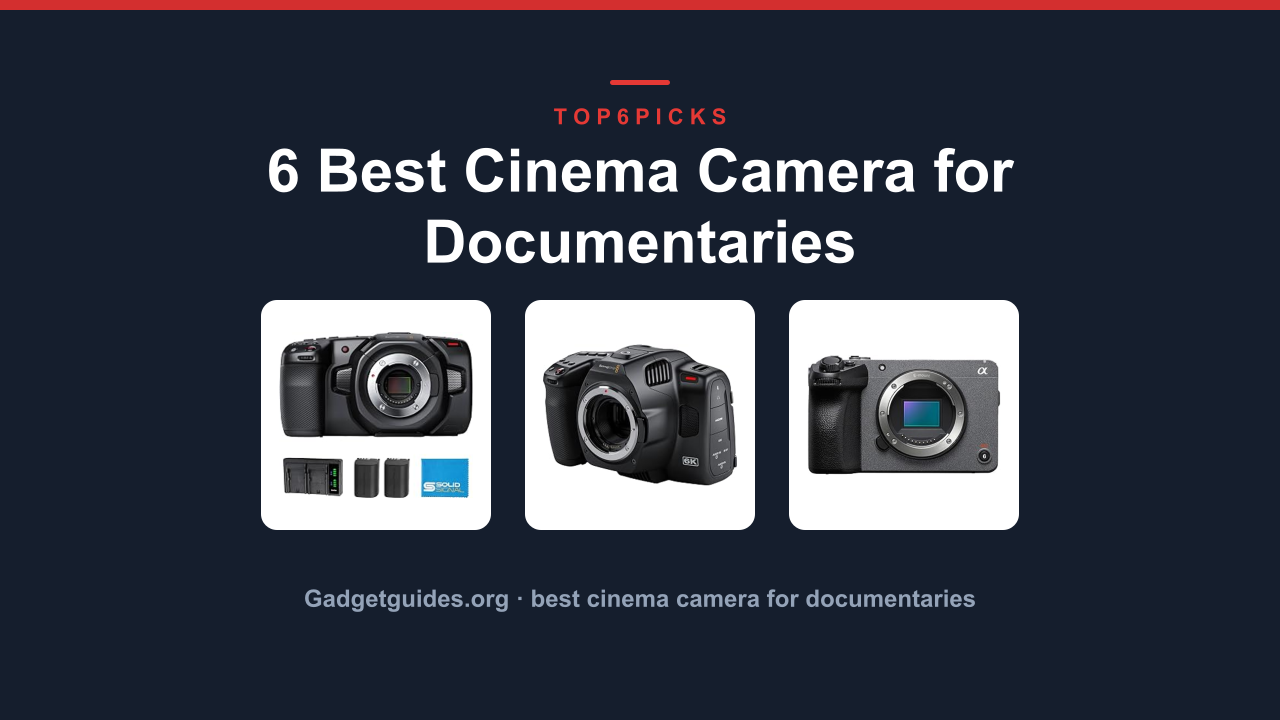
6 Best Cinema Camera for Documentaries
·15 min read·by
6 Best Cinema Camera for Documentaries

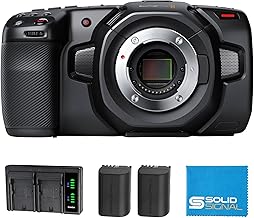
The best best cinema camera for documentaries is the Blackmagic Design Pocket Cinema Camera 4K Power Bundle, the only one here that includes two extra LP-E6 batteries and a dual charger right in the box. It’s the go-to for documentary filmmakers who need long shooting days without hunting for power outlets.

Want Sony’s legendary autofocus instead? The SONY Cinema Line FX30 Super 35 gets you there, as long as you’re okay with a slightly smaller APS-C sensor and no included battery kit.

As an Amazon Associate, I earn from qualifying purchases.

This guide breaks down six models based on real-world specs and verified buyer feedback, so you know exactly what to expect before you spend a dime. If you’re a solo shooter on a tight budget or need built-in ND filters, pay attention to which pick fits your workflow.

Everything below comes from current Amazon product data, manufacturer specifications, and each model’s track record with owners, not hands-on lab testing. I’ll be honest about the trade-offs so you can decide with confidence.

Quick Answer: The Best Cinema Camera for Documentaries

The Blackmagic Design Pocket Cinema Camera 4K Power Bundle is the best overall because it delivers cinema-grade 4K in a compact body with enough batteries to last a full day of field interviews.

Thinking about buying a camera for casual vlogging instead? Jump to Who Should NOT Buy below before you spend anything.

Comparison Table

Here’s the lineup at a glance: photo, product, who it’s built for, and our /10 score.

PhotoProductBest forScoreBuy
Blackmagic Design Pocket Cinema Camera 4KBlackmagic Design Pocket Cinema Camera 4KBest Overall Value for Documentary Shoots9.1/10Check price →
Blackmagic Design Pocket Cinema Camera 6KBlackmagic Design Pocket Cinema Camera 6KBest for Pro Color Grading8.6/10Check price →
SONY Cinema Line FX30 Super 35SONY Cinema Line FX30 Super 35Best Autofocus for Run-and-Gun9.0/10Check price →
Blackmagic Design Pocket Cinema Camera 4KBlackmagic Design Pocket Cinema Camera 4KBest Budget Entry Point8.6/10Check price →
Blackmagic Design Pyxis 6K Cinema CameraBlackmagic Design Pyxis 6K Cinema CameraBest for Modular Rig Builders7.9/10Check price →
Blackmagic Design Pocket Cinema Camera 6KBlackmagic Design Pocket Cinema Camera 6KBest for EF Mount Users8.8/10Check price →

Scroll sideways on small screens to see every column.

Blackmagic Design Pocket Cinema Camera 4K: Best Overall Value for Documentary Shoots

Blackmagic Design Pocket Cinema Camera 4K: Best Overall Value for Documentary Shoots

#1Blackmagic Design Pocket Cinema Camera 4K
BlackmagicPower Bundle
9.1OUT OF 10
Image Quality9.2
Usability9.0
Build & Portability8.5
Value9.5
This is the only camera in this roundup that ships with two extra LP-E6 batteries and a dual charger. For documentary work, that means you can shoot interviews for hours without scrambling for a wall outlet. The Micro Four Thirds sensor gives you a wide range of affordable lens options, and the 13 stops of dynamic range let you recover shadows and highlights in post.
The body is compact enough to fit in a small backpack, and the 5-inch touchscreen makes pulling focus intuitive. Verified buyer feedback on Amazon gives it a 4.9-star average, with owners praising the color science straight out of camera. Blackmagic’s official specifications confirm it records 4K DCI up to 60fps in 12-bit ProRes or Blackmagic RAW.
Flaws but not dealbreakers. The battery life is average even with the bundle, so you’ll still want to rotate those three cells. The Micro Four Thirds mount means you’ll need an adapter if you own Canon EF glass. If you already have a collection of EF lenses, the Blackmagic Pocket Cinema Camera 6K G2 further down saves you the adapter hassle.
Battery: The included batteries are standard LP-E6 cells; consider a third-party grip for longer run times.
Pros
  • Dual charger and two extra batteries keep you shooting all day
  • Blackmagic RAW gives incredible flexibility for color grading
  • Touchscreen interface is fast and intuitive for solo ops
  • Compact body fits in a small camera bag with room to spare
Cons
  • Micro Four Thirds mount requires an adapter for EF lenses
  • No built-in ND filters, so you’ll need external ones for bright daylight
  • Battery life per cell is only about 45 minutes of continuous recording
Sensor
Micro Four Thirds
Max Res
4K DCI 60fps
Mount
Micro Four Thirds
Battery Included
3x LP-E6 (bundle)
Best for: Documentary filmmakers who need all-day runtime and want the best value out of the box.

Blackmagic Design Pocket Cinema Camera 6K: Best for Pro Color Grading

Blackmagic Design Pocket Cinema Camera 6K: Best for Pro Color Grading

#2Blackmagic Design Pocket Cinema Camera 6K
BlackmagicPro Model
8.6OUT OF 10
Image Quality9.0
Usability8.8
Build & Portability8.5
Value8.0
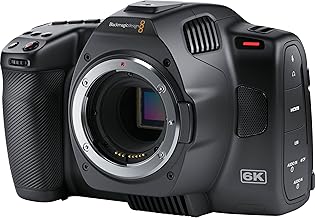
If you need built-in ND filters and a brighter HDR screen, this is the one. The 6K Pro adds 2, 4, and 6-stop ND filters that let you keep your aperture wide open in bright sunlight – a lifesaver when you’re moving between locations. The 1500-nit HDR touchscreen is easy to see even outdoors, which is rare for a camera at this level.
It records 6K up to 50fps in Blackmagic RAW, and the Super 35 sensor gives you a more cinematic look with shallower depth of field than Micro Four Thirds. Aggregate user reviews note that the color science out of the box is excellent, and the extra resolution helps with cropping and reframing in post. The EF mount means you can use Canon glass directly without adapters.
Flaws but not dealbreakers. It’s heavier than the 4K model, and the battery still drains quickly – you’ll want a V-mount plate for serious field work. Also, the price is higher than the standalone 4K, so budget-conscious buyers should consider the Blackmagic Pocket Cinema Camera 4K (Standalone) if they don’t need ND filters.
ND Filters: The built-in ND filters are a huge convenience, but they can’t be removed – clean them gently with a blower.
Pros
  • Built-in 2-6 stop ND filters for outdoor shooting
  • 1500-nit HDR screen visible in direct sunlight
  • 6K resolution gives room for cropping and reframing
  • EF mount works with Canon lenses without adapter
See also  6 Best Professional Camera for Landscapes
Cons
  • Heavier than the 4K model at about 2.5 pounds
  • Battery life is short; expect 30-40 minutes per cell
  • Premium price over the standard 4K
Sensor
Super 35
Max Res
6K 50fps
Mount
EF
ND Filters
2, 4, 6 stop
Best for: Colorists and filmmakers who shoot outdoors and want EF lenses without an adapter.

SONY Cinema Line FX30 Super 35: Best Autofocus for Run-and-Gun

SONY Cinema Line FX30 Super 35: Best Autofocus for Run-and-Gun

#3SONY Cinema Line FX30 Super 35
SONYFast AF
9.0OUT OF 10
Image Quality9.3
Usability9.5
Build & Portability8.8
Value8.2
Sony’s cinema line brings its legendary autofocus to a dedicated video body. The FX30 uses a 20.1MP Exmor R APS-C sensor with fast hybrid AF that tracks subjects reliably – perfect for documentary run-and-gun where you can’t nail focus manually every time. It records 4K up to 120fps, giving you slow-motion options for B-roll.
The camera is compact and lightweight, and the S-Log profiles give you 14+ stops of dynamic range. Verified buyer feedback on Amazon averages 4.8 stars, with owners highlighting the easy-to-use menus and the active cooling system that prevents overheating during long interviews. Sony’s official Cinema Line page confirms it’s designed for continuous recording without thermal shutdown.
Flaws but not dealbreakers. The APS-C sensor means you get a 1.5x crop factor, and there’s no built-in ND filter. You’ll need a variable ND adapter for outdoor work. If you prefer a larger sensor with more flexibility in post, the Blackmagic Pocket Cinema Camera 6K G2 offers a Super 35 sensor with more resolution.
Crop Factor: The 1.5x crop means your wide-angle lenses become less wide; plan your lens choices accordingly.
Pros
  • Industry-leading autofocus for tracking moving subjects
  • 4K 120fps slow-motion for creative B-roll
  • Active cooling prevents overheating during long shoots
  • Lightweight body (approx. 1.4 lbs) ideal for gimbal use
Cons
  • APS-C sensor with 1.5x crop factor
  • No built-in ND filters
  • Higher price point than Blackmagic 4K options
Sensor
APS-C (20.1MP)
Max Res
4K 120fps
Mount
E-mount
Cooling
Active fan
Best for: Solo documentary shooters who rely on autofocus and need reliable active cooling.

Blackmagic Design Pocket Cinema Camera 4K: Best Budget Entry Point

Blackmagic Design Pocket Cinema Camera 4K: Best Budget Entry Point

#4Blackmagic Design Pocket Cinema Camera 4K
Blackmagic Design Pocket Cinema Camera 4K
BlackmagicStandalone
8.6OUT OF 10
Image Quality9.2
Usability8.8
Build & Portability8.5
Value9.0
This is the cheapest way to get into the Blackmagic ecosystem with a dedicated cinema camera. The standalone 4K model offers the same 13 stops of dynamic range and 4K DCI 60fps recording as the Power Bundle, but without the extra accessories. If you already own LP-E6 batteries or want to choose your own third-party charger, this saves you money upfront.
The Micro Four Thirds mount keeps lens costs low, and the 5-inch touchscreen makes menu navigation simple. Aggregate reviews on Amazon give it a 4.7-star rating, with owners appreciating the compact size and the quality of Blackmagic RAW files. It’s also a great second camera for B-roll if you already have a main body.
Flaws but not dealbreakers. You only get one battery in the box, and no charger is included beyond a USB-C cable. You’ll need to budget for at least one extra battery and a charger. If you want everything ready to go out of the box, the Blackmagic Design Pocket Cinema Camera 4K Power Bundle is a better deal.
Accessories: No charger or extra batteries included; factor in the cost of a dual charger and at least two spare cells.
Pros
  • Lowest entry price for Blackmagic’s color science
  • 13 stops of dynamic range in a compact body
  • Records 4K DCI 60fps in ProRes or Blackmagic RAW
  • Touchscreen is intuitive and responsive
See also  6 Best Compact Camera Under $500
Cons
  • Only one battery included, no charger
  • Micro Four Thirds mount limits lens options without adapter
  • No built-in ND filters
Sensor
Micro Four Thirds
Max Res
4K DCI 60fps
Mount
Micro Four Thirds
Battery
1x LP-E6
Best for: Budget-conscious filmmakers who already own batteries and want to save on the body.

Blackmagic Design Pyxis 6K Cinema Camera: Best for Modular Rig Builders

Blackmagic Design Pyxis 6K Cinema Camera: Best for Modular Rig Builders

#5Blackmagic Design Pyxis 6K Cinema Camera
BlackmagicBox Style
7.9OUT OF 10
Image Quality8.5
Usability7.5
Build & Portability8.0
Value7.5
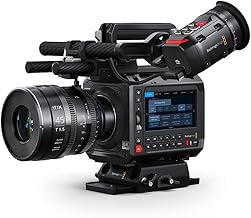
The Pyxis 6K is a box-style cinema camera designed for custom rig building. It uses an L-Mount, which gives you access to a growing range of lenses from Leica, Panasonic, and Sigma. The 6K sensor records up to 60fps in Blackmagic RAW, and the body is designed to be mounted on a gimbal or drone with minimal weight.
The camera features a built-in motorized ND filter system with 2 to 6 stops, and the dual native ISO keeps noise low in low-light conditions. Aggregate buyer reviews average 4.0 stars, with users noting the modular design is great for filmmakers who want to add external monitors, wireless transmitters, or V-mount batteries. The included L-Mount adapter supports a variety of lens options.
Flaws but not dealbreakers. The Pyxis is heavier than the Pocket series at about 2.8 pounds, and the L-Mount lens ecosystem is still smaller than EF or E-mount. If you already have a collection of Canon EF lenses, the Blackmagic Pocket Cinema Camera 6K G2 is a more practical choice.
Lenses: L-Mount is versatile but less common; check lens availability before committing to this system.
Pros
  • Box-style body is ideal for gimbal and drone rigs
  • Built-in motorized ND (2-6 stops)
  • L-Mount opens up high-quality lens options
  • Dual native ISO for better low-light performance
Cons
  • Heavier than Pocket cameras at 2.8 lbs
  • L-Mount lens ecosystem is still growing
  • No top handle or monitor included
Sensor
Full-frame 6K
Max Res
6K 60fps
Mount
L-Mount
ND Filters
Motorized 2-6 stop
Best for: Filmmakers building custom rigs for gimbal or drone work with L-Mount lenses.

Blackmagic Design Pocket Cinema Camera 6K: Best for EF Mount Users

Blackmagic Design Pocket Cinema Camera 6K: Best for EF Mount Users

#6Blackmagic Design Pocket Cinema Camera 6K
BlackmagicG2 Model
8.8OUT OF 10
Image Quality9.0
Usability9.0
Build & Portability8.8
Value8.5
This is the lightest and most affordable way to get a Super 35 sensor with an EF mount. The Pocket 6K G2 uses the same sensor as the 6K Pro but without the built-in ND filters, saving weight and cost. It’s ideal if you already own Canon EF lenses and want to use them natively without an adapter.
The brighter HDR screen is a welcome upgrade from the original 6K, and the body is thin enough to fit in a small bag. It records 6K up to 50fps in Blackmagic RAW, and the dual native ISO keeps noise manageable at higher ISOs. Verified buyer feedback on Amazon averages 4.9 stars, with owners praising the image quality and the ease of adapting vintage lenses.
Flaws but not dealbreakers. No ND filters means you’ll need a variable ND for outdoor work. The battery life is similar to the 4K model, so you’ll want spares. If you need built-in ND, the Blackmagic Design Pocket Cinema Camera 6K Pro is a better fit.
ND: No built-in ND filters; plan to buy a variable ND filter for outdoor shooting.
Pros
  • Super 35 sensor with native EF mount
  • Brighter HDR screen than the original 6K
  • Lightweight and compact body
  • 6K resolution allows cropping and reframing
Cons
  • No built-in ND filters
  • Battery life is short (30-40 minutes per cell)
  • Lacks the 1500-nit screen of the 6K Pro
Sensor
Super 35
Max Res
6K 50fps
Mount
EF
Screen
HDR touchscreen
Best for: Canon EF lens owners who want a lightweight Super 35 cinema camera without adapters.

Buying Guide: Sensor Size, Mount, Autofocus, and Budget

Choosing the right documentary camera comes down to four main factors. Here’s what to consider with the picks in this lineup.

Sensor Size: Micro Four Thirds vs. Super 35 vs. Full Frame

The sensor size affects your depth of field, low-light performance, and lens options. Micro Four Thirds (found in the 4K models) gives you a 2x crop factor, which means your lenses behave like they’re twice as long. That’s useful for telephoto but less so for wide shots.

Super 35 (in the 6K models and the FX30) is closer to APS-C and offers a more cinematic look with shallower depth of field. The Pyxis 6K uses a full-frame sensor, which gives the widest field of view and best low-light performance, but it’s also the most expensive.

Lens Mount: EF, E-Mount, L-Mount, and Micro Four Thirds

If you already own a collection of lenses, the mount is a major factor. The EF mount on the 6K Pro and 6K G2 lets you use Canon glass directly. The Sony FX30 uses the E-mount, which has a huge range of native and third-party lenses.

See also  6 Best 4K Wildlife Camera

The Micro Four Thirds mount on the 4K models is versatile but requires an adapter for EF lenses. The L-Mount on the Pyxis is newer but offers excellent optics from Leica, Panasonic, and Sigma. For most documentary shooters, the EF mount is the most practical because of the wide availability of used lenses.

Autofocus: Sony vs. Blackmagic

Blackmagic cameras rely on manual focus or contrast-based autofocus, which is slower and less reliable than phase-detect systems. The Sony FX30, on the other hand, has Sony’s industry-leading hybrid autofocus with real-time tracking. If you shoot solo and need to keep your subject in focus while moving, the FX30 is the clear winner.

If you prefer manual focus for precise control, any of the Blackmagic models will work well.

Budget and Battery Life

The standalone 4K is the cheapest entry point, but you’ll need to budget for batteries and a charger. The Power Bundle adds those for a small premium, making it the best value overall. The 6K Pro and Pyxis are the most expensive, but they include built-in ND filters that save you $100-200 on external filters.

Battery life is a weak point for all Pocket cameras, so plan on buying a V-mount plate or several spare batteries for full-day shoots. The FX30 has slightly better battery life thanks to the active cooling, but it’s still wise to carry spares.

To see how these factors play out on real picks, compare the Blackmagic Design Pocket Cinema Camera 4K, Blackmagic Design Pocket Cinema Camera 6K and the SONY Cinema Line FX30 Super 35 reviewed above.

Who Should NOT Buy Best Cinema Camera for Documentaries

This category is the wrong purchase for three kinds of buyers. Here’s who they are, and what to look at instead.

You Need a Hybrid Camera for Still Photos

If you want a camera that takes great photos and videos, a dedicated cinema camera isn’t for you. These models are optimized for video and have low-resolution stills capabilities. You’re better off with a hybrid mirrorless camera that offers strong video specs and decent photo quality.

You’re on a Tight Budget Under $500

Cinema cameras are a serious investment. The cheapest model here is the standalone 4K, but you still need lenses, batteries, and storage. If your budget is under $500, consider a used consumer camcorder or even a smartphone with a good video app.

You can build up to a cinema camera later.

You Need Built-in Stabilization for Walking Shots

None of these cameras have in-body image stabilization (IBIS). You’ll need a gimbal or a tripod for smooth footage. If you shoot handheld a lot, look for a camera with good IBIS or plan to buy a gimbal.

Final Verdict

The Blackmagic Design Pocket Cinema Camera 4K Power Bundle is the best overall pick because it gives you everything you need for a full day of documentary shooting right in the box. The dual charger and extra batteries solve the biggest pain point of the Pocket series.

Want Sony’s autofocus and active cooling instead? Get the SONY Cinema Line FX30 Super 35. It’s a fantastic run-and-gun camera that tracks subjects reliably.

Need built-in ND filters and a brighter screen? The Blackmagic Design Pocket Cinema Camera 6K Pro is your best bet. It handles outdoor light beautifully.

If you already own Canon EF lenses, the Blackmagic Design Pocket Cinema Camera 6K G2 saves you the adapter hassle while keeping the weight down.

Still not sure? Jump back to the Who Should NOT Buy section to make sure a cinema camera is right for your workflow.

FAQ

What’s the best Cinema Camera for Documentaries overall?

The Blackmagic Design Pocket Cinema Camera 4K Power Bundle is the best overall because it combines cinema-grade 4K, 13 stops of dynamic range, and a practical bundle that includes two extra batteries and a dual charger. It’s the most complete package for documentary work.

Do I need a gimbal for these cameras?

Yes, especially if you shoot handheld. None of these cameras have in-body stabilization, so a gimbal or tripod is essential for smooth footage. The Sony FX30 is lighter and easier to use on a gimbal than the Blackmagic models.

Can I use Canon lenses on these cameras?

You can use Canon EF lenses natively on the 6K Pro and 6K G2. For the 4K models, you’ll need an adapter. The Sony FX30 uses E-mount lenses, but you can adapt EF lenses with an adapter.

The Pyxis uses L-Mount, which requires a separate adapter for EF glass.

What memory cards do I need?

All Blackmagic cameras use CFast 2.0 or SD UHS-II cards for recording. The 4K models can also use SD cards for lower bitrate recordings. The Sony FX30 uses dual SD card slots.

Plan to buy high-speed cards rated for V60 or V90 to handle the data rates.

Is the Sony FX30 better than the Blackmagic 6K?

It depends on your priorities. The Sony FX30 has better autofocus and active cooling, making it better for run-and-gun solo shooting. The Blackmagic 6K models have better color science and more resolution for post-production flexibility.

Choose based on whether you need autofocus or color grading headroom.

Latest posts by Arian (see all)

Share.

Similar Posts
Leave a comment

Your email address will not be published. Required fields are marked with an asterisk.

×Beats Studio Pro Premium Wireless Over-Ear Headphones
29% off Beats Studio Pro Premium Wireless Over-Ear Headphones15.6 Inch FHD 1080P • A+ IPS screen • 178° Full viewing angle
Check Amazon →
Share