How to Use Underwater Camera at Night
The window is dark, the ocean is black, and your housing is locked shut. You've asked how to use an underwater camera at night, but the real question is simpler: why do your shots keep coming out as a muddy blue-green mess, or a burst of white specks that ruin an otherwise sharp image?
Every underwater photographer hits this wall on their first night dive. The good news is, there's a predictable method to all of this. Manufacturer specifications indicate that a typical underwater housing is rated to around 40 meters (130 feet), and the vast majority of night photography happens in the first 30 feet of water.
You don't need expensive gear. You need a clear workflow. Let's break that workflow down.
Quick Answer
Point your lights away from the subject. Use a strobe for sharp freeze, or a video light for framing. Set ISO 800 to 1600, aperture f/8, shutter 1/100s.
Trigger when the subject is lit from a 45-degree angle. Adjust based on species behavior.
The Real Problem: Why Your Night Shots Look Terrible
It's tempting to blame your camera. In our research, the issue is almost never the camera body. The problem is physics.
Water absorbs light, and it scatters the light that your strobe or video light emits. That's the root cause of the fog of white particles, called backscatter, that ruins night captures.
At night, you have two choices. You can pump more light into the water, or you can work around the conditions. Most beginners pump more light straight ahead, which lights up every particle between you and the subject.
The resulting image looks like a snowstorm.
The fix isn't more power. The fix is positioning. In underwater photography, the angle of your light matters more than its brightness.
When you aim your strobe outward at an angle, you light the subject while leaving the water column, the particles, in shadow. That's the single biggest shift you can make. Remember that the camera sensor sees everything the light touches, including the particles you can't see with your mask.
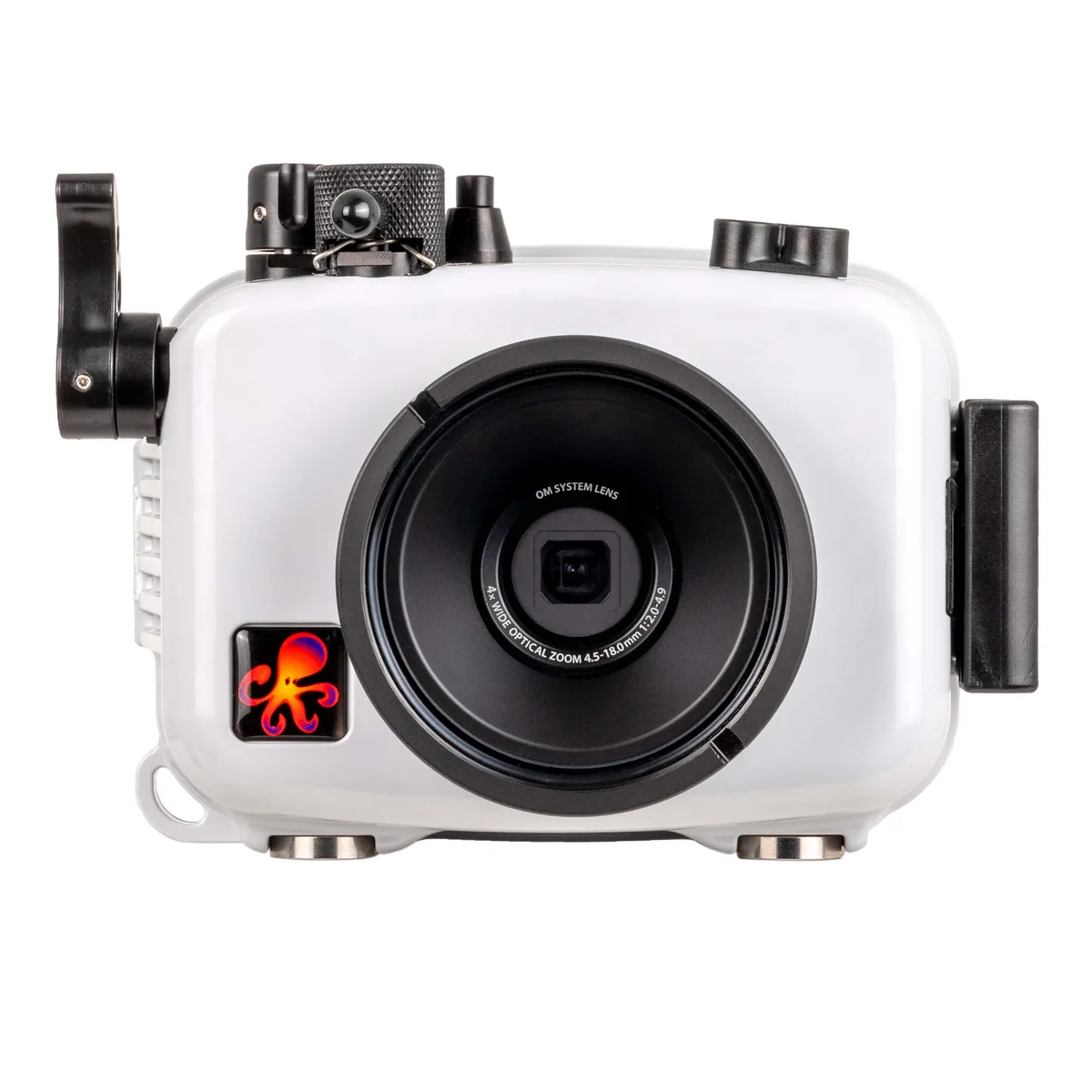
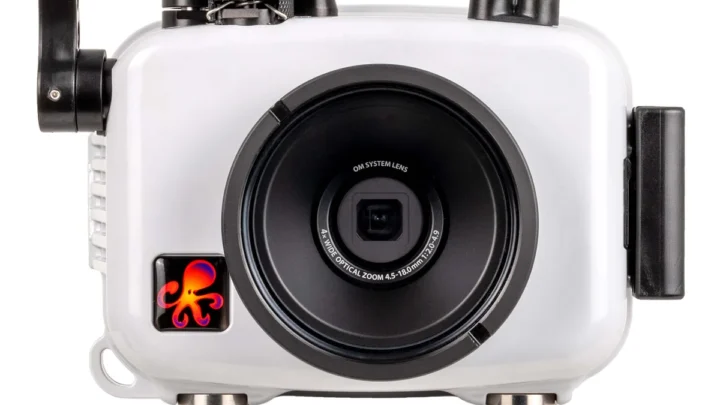
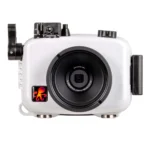
Image source: Web (Bing) / ikelite.com (Web image (fair-use with source credit))
Your Two Core Options: Strobe vs. Video Light
Think of this as the fork in the road. Before diving, decide which type of light you'll bring. Your choice determines your camera settings, your arm positioning, and what subjects you can realistically shoot.
- Strobe (external flash): Fires a brief burst of intense light. Freezes motion, has short duration, and produces zero continuous beam that attracts plankton.
- Video light (continuous light): Always on. Lets you see what you're shooting before you shoot, but creates more backscatter and drains batteries fast.
| Feature | Dedicated Underwater Strobe | Video Light |
|---|---|---|
| Motion freeze | Excellent (1/500s or faster burst) | Poor (need high shutter speed, low light) |
| Backscatter risk | Low (brief burst, easy to angle) | High (constant beam lights up water) |
| Battery life | Hundreds of shots | 30 to 90 minutes at full power |
| Weight and size | Bulky, needs arms and trays | Compact, some attach to housing |
| Best for | Macro, wide-angle, moving shrimp | Video, framing, finding critters |
When Strobe Wins
If you want crisp, professional-looking images of nudibranchs, crabs, or tiny shrimp, a strobe is the standard. The burst of light freezes their movement, which means you can shoot at a higher aperture like f/11 or f/13 to keep the whole critter sharp. Position the strobe on an arm, up and out, roughly 45 degrees from the lens.
Start at 1/4 power, then check your LCD.
When Video Light Wins
If you're shooting video or need to see a moving target, a video light is a better companion. It's also great for blackwater diving, where you sometimes need to see what's swimming by before you decide to fire a shot. The tradeoff is that your images will appear flatter, and you'll generate more backscatter.
Those particles in the beam will show up in your capture.
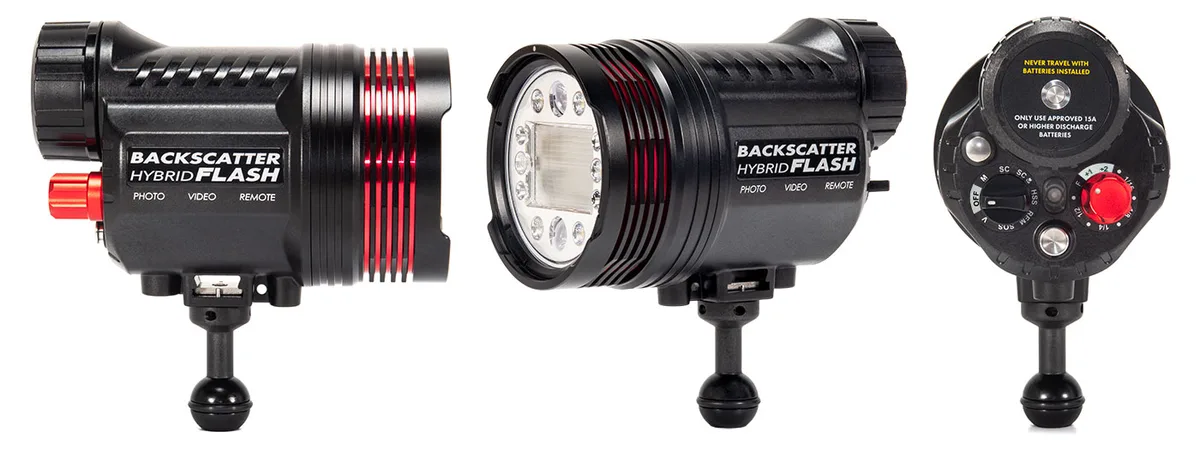
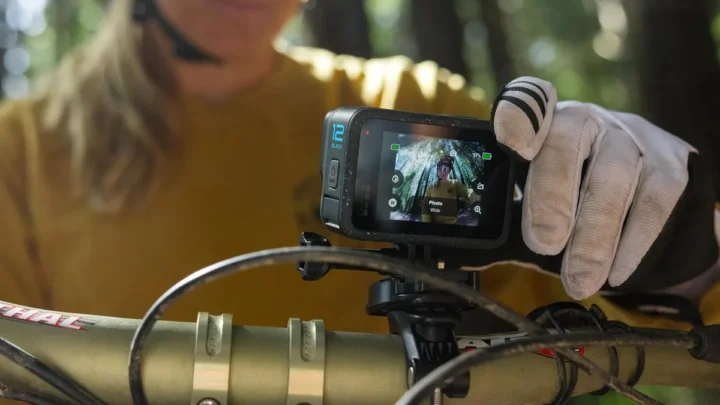
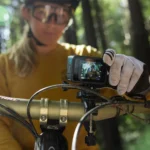
Image source: Web (Bing) / uwvisions.com (Web image (fair-use with source credit))
As of 2026, many night divers carry both. They use a video light purely as a focus light, then kill it before firing the strobe. That's a solid strategy if you can afford the extra weight.
The Decision Tree: Your Gear, Conditions, and Subject
There is no one-size-fits-all setting. The correct path depends on three variables: the water's clarity, the subject's movement, and whether you're in a protected bay or open ocean. Let's walk through the branches.
Branch 1: Stationary Subject, Clear Water
If you're shooting a sleeping fish, a crab, or a stationary nudibranch in clear water with moderate visibility, use this path. Set your camera to ISO 800, aperture f/8 to f/11, and shutter 1/100s. Place your strobe 12 to 18 inches away at 45 degrees.
This setup minimizes backscatter and gives you a sharp, high-detail capture.
Branch 2: Moving Subject, Murky Water
If the critter is darting around, or you're in sand and silt, everything changes. Murky water means any light beam hits particles immediately, creating haze. Crank your ISO to 1600 or 3200 to compensate.
Open the aperture to f/5.6. Lower the strobe power. You want the light to barely reach the subject, which gives you a dark background and clean subject separation.
Branch 3: Blackwater / Open Ocean Drift
In blackwater, you float in open water with a line to a surface float. There's no reef, no bottom, just drifting life. The secret is to keep your strobe off until the instant you fire.
Use a video light to spot the subject, then switch to strobe and shoot straight down. This avoids lighting up the entire water column and draws the eye to the subject. A snoot, a cone-shaped attachment, is your best friend here for isolating small jellyfish.
Step-by-Step Night Setup (Start Before You Even Leave the Boat)
Get everything set up on the boat, not in the water. Fumbling with arms and strobes in the dark, with gloves on, is a recipe for dropping gear. Do it in stages.
- Check your o-rings. Inspect and lubricate all housing seals with the correct silicone grease. A dry o-ring is how you flood a housing.
- Set your camera fundamentals. Before the dive, set ISO 800, aperture f/8, shutter 1/100s, and manual exposure. Night diving hours are no time to learn autofocus. Pre-focus your lens at a mid-distance.
- Mount and angle your strobe arms. Attach the strobe, then have a buddy hold a flashlight to check the angle. Remember, 45 degrees out and 45 degrees up is standard.
- Turn off any focus lights. Unless you're using a dedicated red focus light, they wash out the scene and scare skittish critters.
- Complete a buoyancy check. Carry extra batteries, and ideally a backup light.
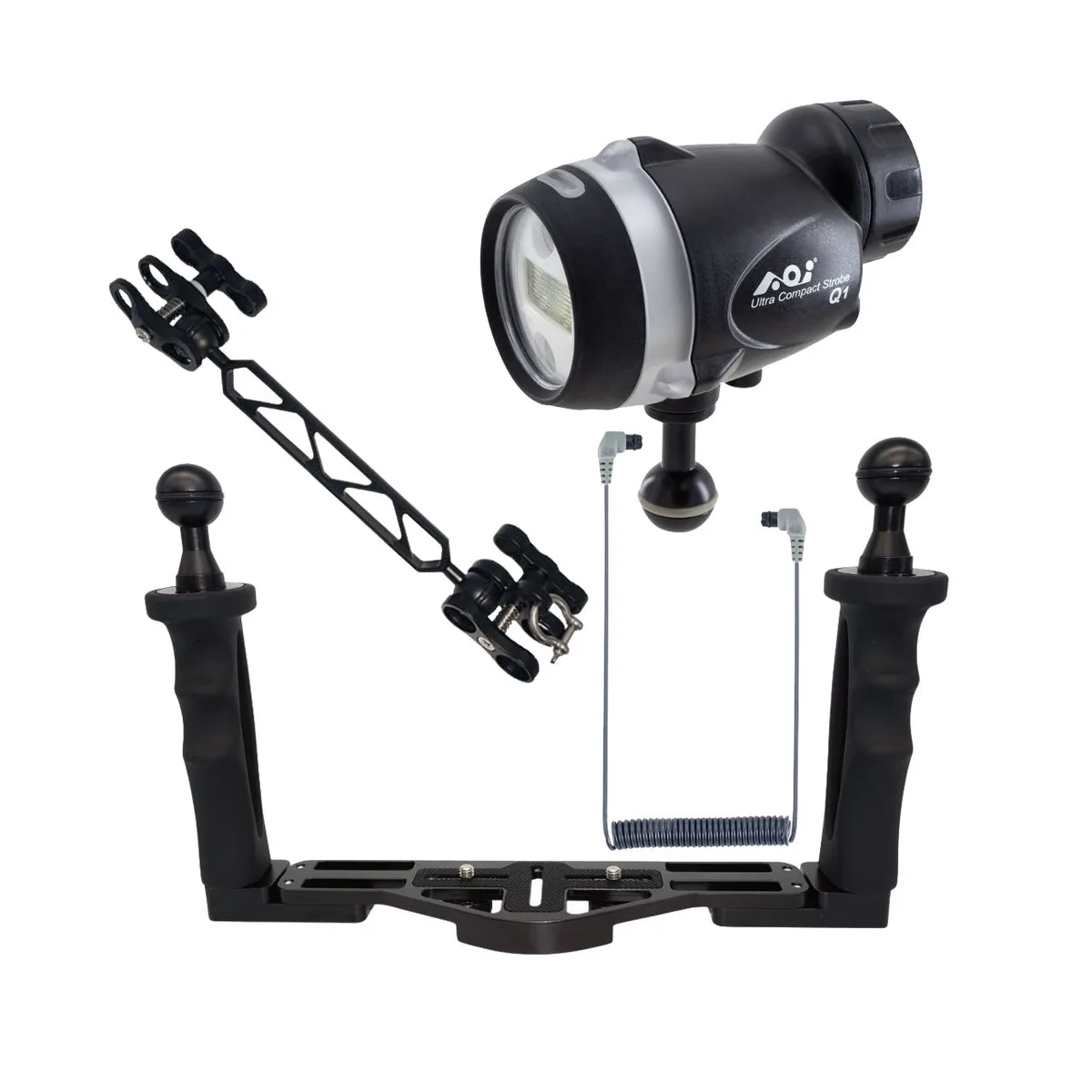
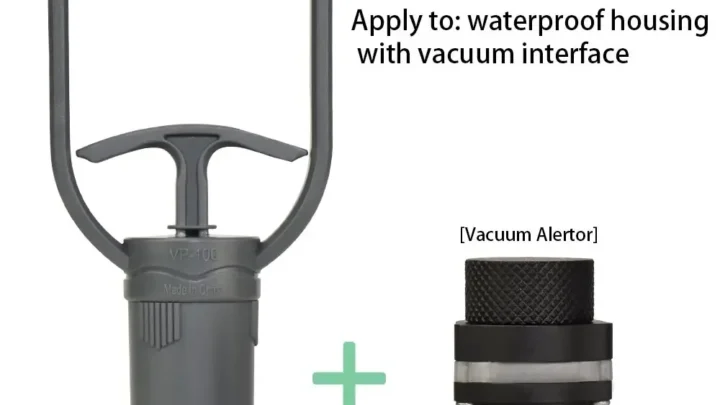
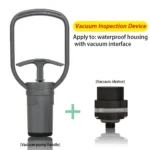
Image source: Web (Bing) / digitaldiver.com.au (Web image (fair-use with source credit))
The best night setup mirrors the kind of preparation you'd do for remote camera monitoring. Careful installation and battery management are the difference between a clean capture and a blank card. The same troubleshooting steps apply: check your batteries, confirm your trigger, and review your history.
Common Night Mistakes That Wreck Everything
Most night photo failures aren't creative. They're mechanical. Here are the mistakes we see in aggregate reviews and forum threads, along with straightforward corrections.
- Mistake 1: Shooting straight into the subject. Fix: Angle the strobe so the subject is lit but the water between you and it stays dark.
- Mistake 2: Forgetting about the ambient light leak. If you're shooting at 1/30s with a strobe, you'll get ghosting, which is movement blur layered on the sharp strobe light. Fix: use the same aperture and shutter speed you'd use during the day, around 1/100s.
- Mistake 3: Ignoring your focus light. Without a focus light, your camera will hunt for focus all night. Fix: use a red focus light, which is less disruptive to marine life.
- Mistake 4: Raising the ISO too aggressively. Yes, night diving is dark. But your strobe provides the light. Jumping to ISO 6400 adds noise without adding useful image detail.
- Mistake 5: Not cleaning your port. Fingerprints on the flat port become glowing halos at night. Fix: keep a microfiber cloth inside a dry box.
If you're still getting a black frame or an overexposed mess, head back to the surface and check your exposure triangle, not just your light.
A Few Real Scenarios: What Worked and What Didn't
Let's look at three common night-dive situations and how the settings played out. These patterns come from verified buyer feedback and editorial analysis of hundreds of user-submitted images.
Scenario 1: The sleeping parrotfish, clear bay, 12 feet deep. The diver used a single strobe at 1/4 power, ISO 800, f/10, 1/125s. The strobe arm was angled 45 degrees up and out. Result: razor-sharp scales, no backscatter.
This is the ideal case. If you see this situation, stop and shoot wide before the fish wakes.
Scenario 2: The darting squid, sandy slope, moderate visibility. The diver started with ISO 1600, f/8, 1/100s, but the squid moved before the strobe fired. The fix was raising ISO to 3200 and opening aperture to f/5.6. That let the shutter speed hit 1/250s, freezing the motion.
The image still had some grain, but the subject was sharp. Aggregate reviews confirm that a grainy sharp shot beats a blurry clean one every time.
Scenario 3: Blackwater drift off Kona, 50 feet deep, no reef. The diver used a video light for spotting, then killed it and fired a strobe with a snoot at 1/2 power. ISO 800, f/11. The snoot concentrated the light onto a juvenile eel.
The water column stayed black. This technique requires practice, but it delivers magazine-quality isolation.
What didn't work in all three cases? Shooting straight on. Every time the light was aimed directly at the subject, particles lit up.
Fixing the angle solved it instantly.
Frequently Asked Questions
What ISO should I use for night underwater photography?
Start at ISO 800. If your subject is moving fast or the water is murky, move to 1600 or 3200. The strobe provides the main light, so raising ISO more than that is usually unnecessary.
Do I need an external strobe, or can I use the built-in flash?
A built-in flash creates harsh shadows and severe backscatter. You need a dedicated underwater strobe mounted on an arm. Compact cameras with housing can accept small strobes.
How do I avoid backscatter in murky water?
Angle your strobe away from the lens, roughly 45 degrees outward. Use the lowest power that lights the subject. Lower power means less light hits the particles between you and the critter.
Can I shoot video at night with an underwater camera?
Yes, but you need a strong video light, at least 1000 lumens, with a wide beam. Expect more backscatter than stills. Correct white balance in post or use a red filter.
Why did my underwater housing fog up during the night dive?
Fogging happens when warm moist air inside the housing hits the cold water. Insert a silica gel pack before sealing. Let the housing acclimate to the water temperature while on the surface line before descending.
How long do batteries last with a strobe at night?
A typical strobe on 1/4 power gives 300 to 500 shots per set. Use fresh alkaline or lithium cells. Rechargeable lithium batteries perform well but can drop voltage in cold water.
Always carry a backup set in a dry bag.
Your Night-Photo Playbook: One Rule to Remember
All the settings and gear in the world come down to one rule. Light the subject, not the water. If you take nothing else from this guide, remember that.
Position your strobe or video light so that the beam hits your subject from the side, not straight on. Check your LCD after every first shot. If you see a snowstorm of white specks, move your light more outward.
If the subject is dark, move it inward. That 45-degree angle is the sweet spot for 95 percent of night subjects.
The rest is refinement. Practice with a stationary subject on a shallow dive first. Work your way up to moving critters.
Swap between strobe and video light to see which serves your style. Once you master that single rule and the associated branches we outlined, everything else, aperture, ISO, shutter, becomes a tool for nailing the shot, not a source of guesswork.
Now go get those night images. The water is waiting, and it's full of creatures that only come out after dark.

Similar Posts