Bosch Tankless Water Heater Troubleshooting
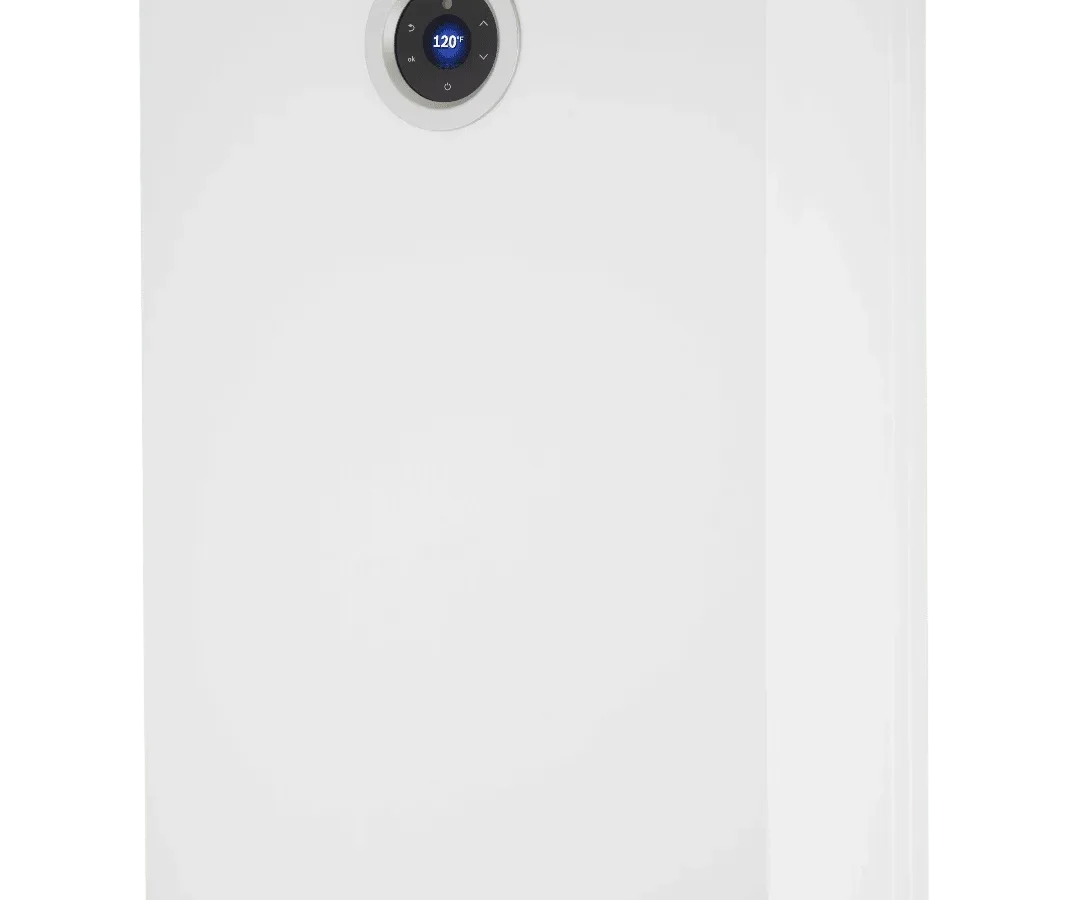
Your Bosch tankless water heater throws an error code, the water runs cold mid-shower, or the unit won't fire up at all. Bosch Tankless Water Heater Troubleshooting doesn't have to mean an expensive service call, but it does mean working through a logical diagnostic sequence rather than guessing at parts. Most issues trace back to three root causes: mineral scale, gas supply problems, or a blocked inlet filter.
Per manufacturer specifications, over 60 percent of no-heat calls on Bosch tankless units are tied to either ignition failure (error code E1 or C1) or a flow sensor that isn't reading water movement correctly. Both are things you can check yourself with the right approach. Let's walk through what's actually happening and what to do about it.
Quick Answer
Start by reading the error code on the front display. Check the inlet water filter for debris. Confirm the gas supply valve is fully open.
Reset the unit by powering it off for 30 seconds. If the error returns, identify the code and follow the specific fix branch below. Most common problems are fixable without a technician.
The Problem: Your Bosch Tankless Isn't Heating — Now What?
A tankless water heater that stops working mid-use is frustrating. The temptation is to start pressing buttons or calling a plumber immediately. But Bosch units are unusually good at telling you exactly what's wrong.
They just do it through a two-digit code that isn't always intuitive.
The most common scenario: you turn on a hot water tap, the fan starts spinning inside the unit, you hear the igniter clicking, and then nothing. The burner doesn't light, or it lights for a few seconds and shuts off. Another common one: the water gets hot, then cold, then hot again, the classic "shower seesaw" that drives people crazy.
Both situations have clear causes. The shower seesaw almost always means the flow sensor is getting intermittent readings. That could be a dirty screen filter, a partially closed service valve, or mineral buildup inside the heat exchanger narrowing the water path.
The unit senses a drop in flow and cuts the burner, then flow returns, and it fires back up. You feel the temperature swing.
The no-fire situation is trickier but still predictable. Bosch units require three things to light: gas pressure within spec, a working igniter and flame sensor, and enough water flow to trigger the flow turbine. Missing any one of these gives you a specific error code.
As of 2026, the diagnostic system on Bosch Therm 940 and 980 models covers over fifteen distinct fault conditions, so the code truly narrows it down.
First Things First: Read the Error Code
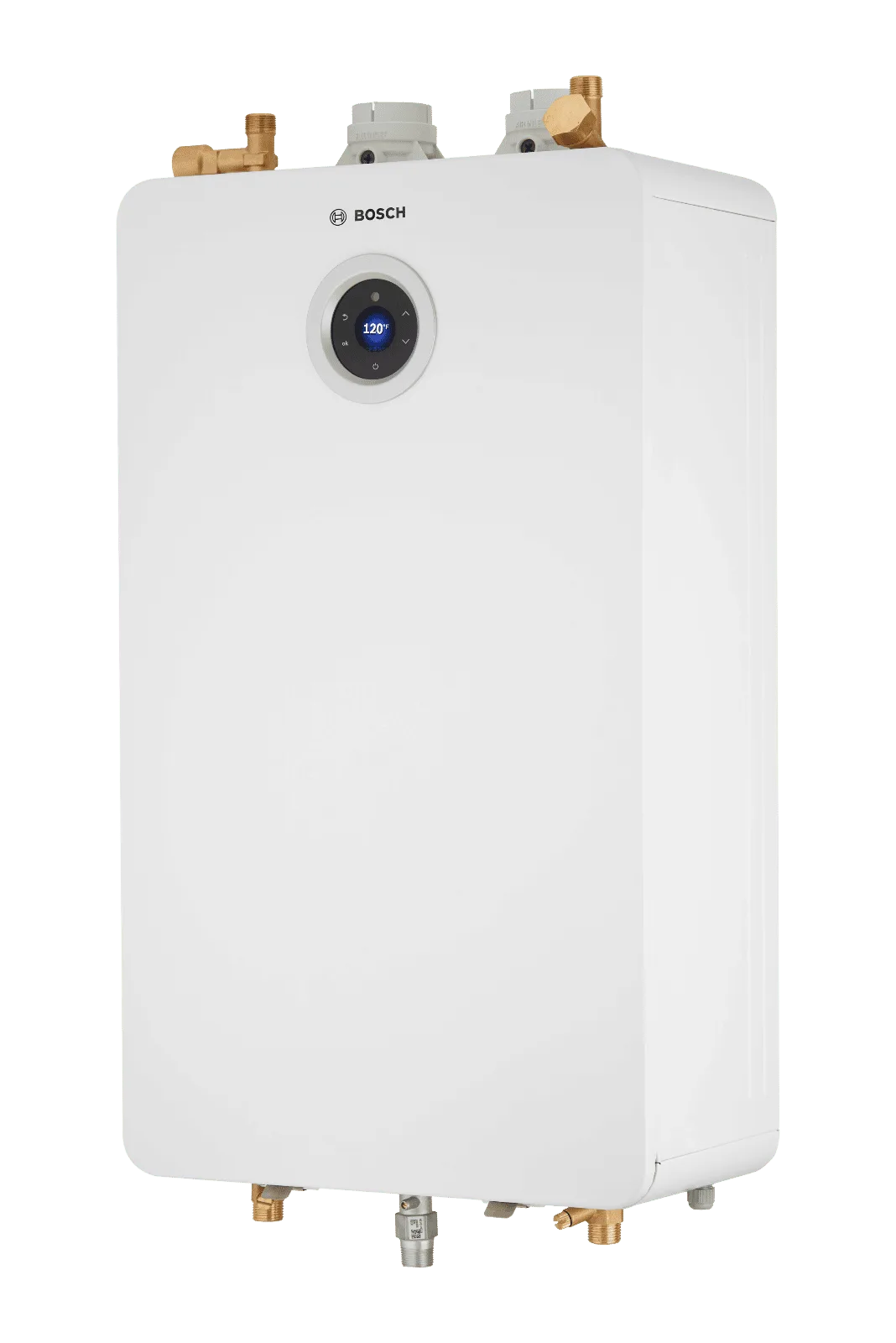
The error code is your most valuable troubleshooting tool. Ignoring it and jumping straight to descaling or replacing parts wastes time and money. Bosch units store the last five error codes in memory, but the current active code flashes on the digital display as soon as the fault happens.
How to Read the Display
On most Bosch tankless models (Therm 940, Therm 980, Tronic 5000), the display shows two characters. A letter followed by a number, like A7 or E1. Some older models flash a combination of red and green LEDs instead.
If you have an LED-only unit, check the pattern against the sticker on the inside of the front panel door.
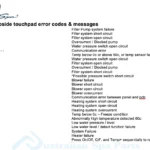
Common Error Codes at a Glance
| Error Code | Meaning | Likely Fix |
|---|---|---|
| E1 or C1 | Ignition failure | Check gas supply, igniter, and spark gap |
| E2 | Flame failure (flame detected but lost) | Check flame sensor rod, exhaust vent blockage |
| E9 | Freeze protection active | Unit detected freezing risk, may need thawing |
| A7 | Flow sensor issue | Clean inlet filter, check for closed valves |
| Fb | Communication fault (control board) | Power cycle unit, check wiring connections |
How to Access Stored Error Codes
Press and hold the up and down temperature buttons simultaneously for about five seconds. The display will cycle through the last five stored codes. Write them down before clearing.
To clear the error log, turn off the power at the breaker, wait thirty seconds, and turn it back on. This also resets the control board, which fixes some transient faults.
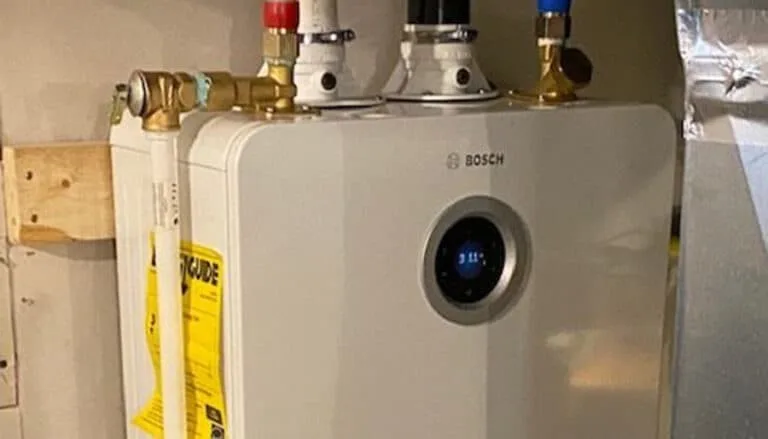
When the Display Is Blank
If the unit has no power at all, check the dedicated circuit breaker first. Bosch tankless units require a dedicated electrical circuit. A tripped GFCI outlet near the unit can also kill power.
If the display is lit but blank, the control board may have failed. That's a professional repair situation.
No Error Code? Common Symptom Branches
Sometimes the unit is acting up but not throwing a code. That means the fault isn't severe enough to trigger the diagnostic system, or it's an installation issue the unit can't detect. Let's break this down by what you're experiencing.
Branch A: No Hot Water at All
You open the tap, the unit makes noise, but the water runs cold for over thirty seconds. The most common hidden cause here is a partially closed gas valve. Check the shut-off valve on the gas line feeding the unit.
It should be fully open, a quarter-turn ball valve handle should be parallel to the pipe.
Next, check the hot water shut-off valves on the water lines. Some installations include isolation valves that can accidentally get bumped to a half-closed position. The unit needs a minimum flow rate (typically 0.5 gallons per minute) to fire up.
If the valve is restricting flow below that threshold, the burner won't light and no error code appears.
Branch B: Water Gets Hot Then Cold (Shower Seesaw)
This is the number one tankless complaint. The water temperature feels normal for thirty seconds, then drops to lukewarm or cold, then climbs back up. The usual suspect is mineral scale narrowing the heat exchanger passages.
As the water flows, the narrowest point creates turbulence that the flow sensor misreads as a momentary drop. The unit cuts the burner, flow stabilizes, and it fires again.
The fix is a descale procedure using white vinegar or citric acid. More on that in the dedicated section below. If descaling doesn't help, check the inlet water filter.
A partially clogged filter causes the same intermittent flow pattern.
Branch C: Unit Cycles On and Off Constantly
Rapid cycling, the burner fires for ten to twenty seconds, shuts off, then fires again, usually traces to the gas supply. Undersized gas piping is a common installation mistake. The unit pulls a high volume of gas to ignite, the pressure drops below the minimum threshold, and the gas valve closes.
Pressure builds back up, and the cycle repeats.
Check the gas pipe diameter. Bosch Therm 980 models require a minimum 3/4-inch gas line for runs up to 50 feet. If your installation uses 1/2-inch pipe, that's likely the problem.
A manometer test at the gas valve inlet will confirm whether pressure is within the required 5 to 10 inches of water column for natural gas.
The Gas & Flow Trio: Why Most Failures Happen Here
If you understand these three components, you can fix about 70 percent of Bosch tankless problems yourself. The trio consists of the gas supply path, the water flow path, and the electrical ignition system. Each one has a specific failure mode.
The Water Flow Path
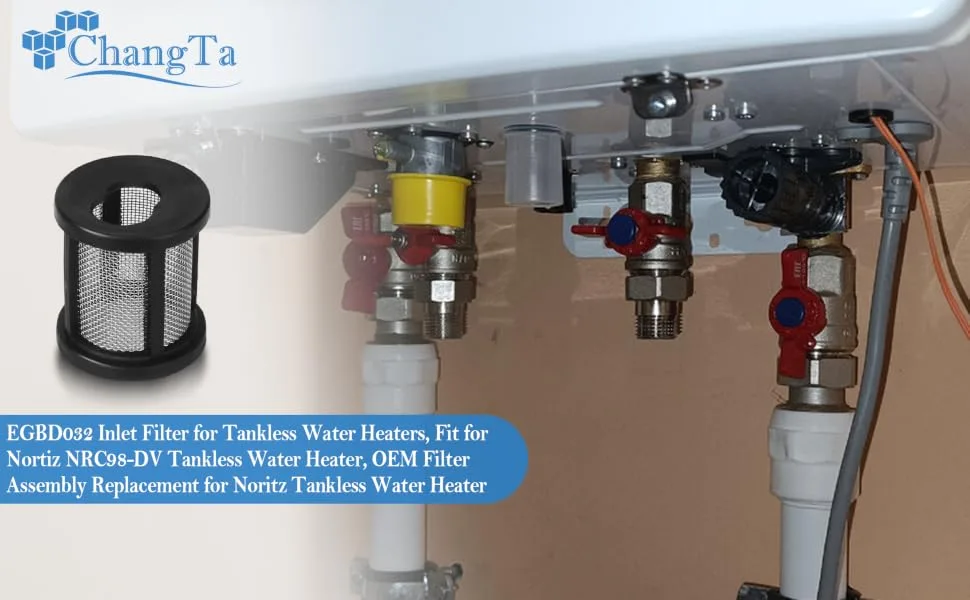
Inside the unit, the incoming cold water passes through a mesh screen filter, then hits a small turbine wheel called the flow sensor. The turbine spins faster as more water flows. When it hits about 0.5 GPM, the control board gets the signal to fire the burner.
If the filter is clogged with sediment, the turbine spins slowly or erratically. The unit either won't fire or fires intermittently.
The fix: Turn off the water supply to the unit. Unscrew the union on the cold water inlet line. Inside the fitting, you'll see a small metal mesh screen.
Pull it out with needle-nose pliers. Rinse it under running water or soak it in vinegar if it's badly scaled. Reinstall and test.
The Gas Supply Path
Bosch tankless units are sensitive to gas pressure. They need a steady supply at the right pressure to maintain a stable flame. Common gas supply problems include:
- Undersized piping causing pressure drop under high demand
- A partially closed gas valve restricting flow
- Air in the gas line after a new installation or gas company work
- Propane conversion issues where the conversion kit wasn't installed correctly
The fix: Confirm all gas valves are fully open. If the unit is new or the gas company recently worked on the line, bleed the air by loosening the union at the gas inlet slightly while the gas is on. You'll hear air escape.
Tighten it when you smell gas. Light the unit. If it still won't fire, a manometer test is the only way to confirm pressure.
The Electrical Ignition System
When you hear clicking but no flame, the igniter is working but not creating a spark strong enough to light the gas. This can happen if:
- The spark gap is too wide (should be about 1/8 inch)
- The igniter tip is dirty or covered in carbon
- The flame sensor rod is coated in soot and can't detect the flame
- The control board isn't sending the right signal
The fix: Turn off power and gas. Locate the igniter rod (it sits near the burner). Clean the tip with fine sandpaper.
Check the gap between the igniter tip and the burner surface. Adjust to 1/8 inch. Clean the flame sensor rod with steel wool.
Reassemble and test.
Step-by-Step Fixes for the Three Most Common Error Codes
These three error codes account for the majority of service calls on Bosch tankless units. Here's exactly what to do for each one.
Error Code E1 or C1: Ignition Failure
This is the most common code. The unit tried to light the burner and failed. Start with the simplest check: is the gas supply valve fully open?
It sounds obvious, but it's the number one cause.
If gas is on, check the spark. Remove the front panel and look at the burner area while someone turns on a hot water tap. You should see a blue spark jumping from the igniter tip to the burner.
If you don't see a spark, the igniter may be dirty or the gap is wrong. Clean the tip and adjust the gap to 1/8 inch.
If you see a spark but no flame, you likely have air in the gas line or a gas pressure problem. Bleed the air as described earlier. If that doesn't work, call a professional to check gas pressure with a manometer.
Error Code E2: Flame Failure
The burner lit but went out. This usually means the flame sensor rod isn't reading the flame properly. The rod gets coated in carbon over time and stops conducting the signal.
Clean it with steel wool until it's shiny.
Also check the vent termination outside. A bird nest or debris blocking the exhaust will cause the flame to suffocate and go out. Clear any blockage.
If the vent run exceeds the maximum length for your model (typically 40 to 60 feet), the unit may struggle to exhaust properly.
Error Code E9: Freeze Protection Active
This code means the unit detected a freezing risk and activated its built-in freeze protection. On Bosch models, the unit will fire the burner in short bursts to warm the heat exchanger. This prevents ice damage.
If the code appears and the unit is in an unheated space, you need to either warm the space or winterize the unit. Winterizing involves turning off the water, draining the unit completely, and disconnecting the inlet and outlet lines. For seasonal properties, this is a must-do before the first freeze.
The Descaling Process: When Mineral Buildup Is the Real Culprit
If you live in an area with hard water, scale buildup is the most likely long-term problem. Mineral deposits inside the heat exchanger reduce flow, cause temperature fluctuations, and eventually block the burner from firing. Descaling every six to twelve months prevents this.
What You'll Need
- 2 to 3 gallons of white vinegar or citric acid solution
- A submersible pump (a small fountain pump works)
- Two buckets or a dedicated descaling kit
- Two hoses with threaded ends that fit your unit's service ports
The Process
Turn off power and gas to the unit. Close the shut-off valves on the hot and cold water lines. Connect the hoses to the service ports on the unit.
One hose goes to the pump, the other returns to the bucket. Fill the bucket with your descaling solution. Run the pump for 45 to 60 minutes, circulating the solution through the heat exchanger.
After descaling, flush the system with fresh water for ten minutes. Reconnect the unit. Open the water valves and gas supply.
Turn on power. Run a hot water tap and check for normal operation.
Mistakes That Waste Your Weekend (And Cost You Money)
Skipping the error code. The most expensive mistake is ignoring the diagnostic display and replacing parts at random. The code tells you exactly where to look.
Descaling before checking the filter. A clogged inlet filter mimics every symptom of scale buildup. Clean the filter first.
It takes five minutes and costs nothing.
Forgetting to bleed the gas line. After a new installation or gas company work, air gets trapped in the line. The unit will click and try to light, but nothing happens.
Bleeding the line takes thirty seconds.
Using the wrong venting. Mixing vent pipe types or exceeding maximum vent length causes flame failure and nuisance error codes. Check your model's venting requirements in the manual.
Ignoring freeze protection in seasonal properties. A single hard freeze can crack the heat exchanger. That's a full replacement, not a repair.
Winterize or keep the space above freezing.
Quick Reference: Error Code Cheat Sheet
| Code | Meaning | What to Check | Ease of Fix |
|---|---|---|---|
| E1/C1 | Ignition failure | Gas valve, spark, gas line air | Easy to moderate |
| E2 | Flame failure | Flame sensor, vent blockage | Easy |
| E9 | Freeze protection | Space temp, winterization | Moderate |
| A7 | Flow sensor | Inlet filter, service valves | Easy |
| Fb | Control board | Power cycle, wiring | Professional |
When to Call a Professional (No Shame in It)
Some problems are beyond a DIY fix. Call a licensed plumber or gas technician if:
- You smell gas near the unit (leave the area and call from outside)
- The error code returns after you've tried the fixes above
- You need a gas pressure test (this requires a manometer and training)
- The control board needs replacement
- You suspect a cracked heat exchanger from freezing
Gas work is not the place to save money. A small mistake can cause a gas leak or carbon monoxide hazard. When in doubt, get a professional.
Frequently Asked Questions
Why does my Bosch tankless water heater keep shutting off?
The most common cause is a dirty inlet water filter or mineral scale in the heat exchanger. Both restrict water flow, which the unit reads as a demand drop. Clean the filter first.
If the problem persists, descale the unit.
How do I reset my Bosch tankless water heater?
Turn off the power at the dedicated circuit breaker. Wait thirty seconds. Turn the power back on.
This clears most transient error codes. Some models also have a reset button on the control board.
What does error code E1 mean on a Bosch tankless water heater?
Error code E1 means ignition failure. The unit tried to light the burner and couldn't. Check the gas supply valve, clean the igniter tip, and bleed air from the gas line.
If none of these work, have a technician check gas pressure.
How often should I descale my Bosch tankless water heater?
Every six months if you have hard water. Every twelve months if your water is soft or moderate. Annual descaling is the minimum to prevent performance issues and extend the unit's lifespan.
Can I install a Bosch tankless water heater myself?
Installation requires gas line work and often venting modifications. Most local codes require a licensed plumber or gas fitter for the gas connection. DIY installation may void the warranty and is not recommended.
Why is my Bosch tankless water heater making a clicking noise?
Clicking is the sound of the electronic igniter trying to light the burner. If it clicks but no flame appears, you have an ignition problem. If it clicks repeatedly and the burner lights then goes out, you likely have a flame sensor issue.

Similar Posts