Freezer Not Cold Enough
Your freezer not cold enough is one of those problems that hits right in the gut. You open the door expecting solid ice cream, and instead you find a pint you could pour. Before you panic and start pricing a new unit, know this: most of the time, the fix is simple, cheap, and something you can do yourself in under an hour.
The USDA says a freezer should sit at 0°F (-18°C) to keep food safe for months. Even a few degrees above that can shorten shelf life and raise the risk of spoilage. The good news?
There are usually clear signals about what's gone wrong. Once you learn to read those signals, you'll know exactly which branch of the decision tree to follow.
Image source: Bing (Web (fair-use with source credit))
The Real Problem: Two Scenarios, Two Very Different Paths
Every "freezer not cold enough" situation falls into one of two broad categories. The first is a freezer that runs but can't keep up. You hear the compressor humming, the fan is spinning, but the temperature inside creeps above 10°F.
The second is a freezer that isn't running at all. No hum, no fan noise, just silence.
These two scenarios lead to entirely different troubleshooting paths. If your freezer is running but warm, you're looking at airflow blockages, a failing evaporator fan, a faulty defrost system, or a sealed system problem. If it's not running, you're looking at a failed start relay, a bad overload protector, a broken control board, or a dead compressor.
The mistake most people make is jumping straight to "the compressor is shot" or "I need a new freezer" without first figuring out which scenario they're in. That wastes time and money. Step one is simple: open the freezer door, listen, and feel.
Step One: Start With What The Freezer Is Telling You
Before you pull out a multimeter or a vacuum cleaner, spend 60 seconds using your ears, eyes, and hands.
Listen for the compressor. Stand near the back or bottom of the freezer. You should hear a low, steady hum or a slight vibration. If you hear nothing, that's scenario two.
If you hear a hum but the freezer isn't cold, that could be a failed start relay or a seized compressor.
Listen for the evaporator fan. In frost-free freezers, you should hear a fan running inside the freezer compartment when the compressor is on. Open the door and listen carefully. If the fan isn't spinning, you've found a likely culprit.
Ice buildup can block the fan blades or the motor can fail outright.
Check the condenser fan. Some upright freezers and combo units have a fan near the compressor at the bottom rear. You should be able to hear or see it spinning when the compressor runs. If it's stuck or dead, the compressor will overheat and shut off.
Feel the door seal. Run your hand along the gasket. A cold draft or visible gaps mean warm air is leaking in. The dollar bill test is reliable: close the door on a dollar bill and tug.
If it slides out easily, the seal is weak.
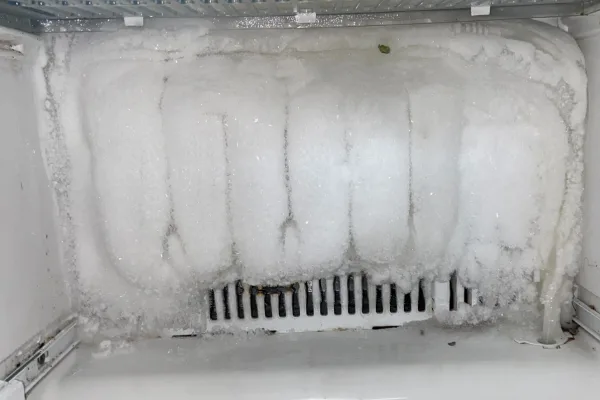
Look for frost. Open the freezer and check for excessive ice buildup on the back wall, around the vents, or on the evaporator coils. Frost in a frost-free unit is a red flag that the defrost system isn't working.
This quick assessment tells you which branch to follow. If you've confirmed the compressor runs and the evaporator fan spins but the freezer is still warm, move to the quick fixes.
The Quick Fixes That Solve 80% of Warm Freezer Problems
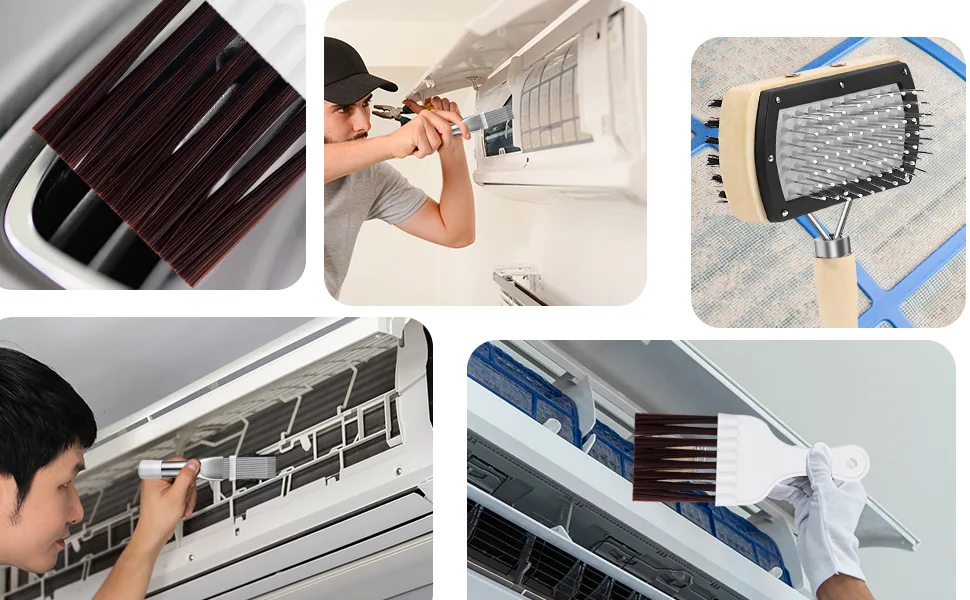
Image source: Bing (Web (fair-use with source credit))
Three checks, in order, solve most cases. Do them before you touch anything electrical.
Check the temperature setting. It sounds obvious, but it's the most common cause. Someone bumps the dial, or the digital display gets changed accidentally. Set it to 0°F if you have a digital panel, or to the coldest setting on a dial and let it run for 24 hours.
Clean the condenser coils. This is the number one reason freezers lose cooling over time. The coils, usually located at the bottom front or rear, release heat. When they're caked with dust, pet hair, or grease, the compressor has to work harder and can't keep up.
Unplug the freezer, pull it away from the wall, and use a condenser coil brush or a vacuum with a brush attachment. Clean them every six months. You'll be shocked at the improvement.
Test the door gasket. A weak seal lets warm air in. The freezer runs longer trying to compensate. If the gasket is torn, cracked, or not making contact, replace it.
A new gasket costs around $20 to $50 and takes about 15 minutes to install. Most are held in place by screws or a retaining strip.
If those three steps don't fix it, you're moving into the less common territory. But these three alone resolve the vast majority of warm-freezer complaints. Manufacturer service documentation confirms that dirty coils and poor door seals are the top two causes for service calls.
When Frost Is The Culprit — The Defrost System Deep Dive
Frost-free freezers have a defrost system that runs automatically, usually two to four times a day. The system has three key parts: a defrost timer, a defrost thermostat (also called a bi-metal thermostat), and a defrost heater. When any one of these fails, the freezer stops defrosting and ice builds up on the evaporator coils.
That ice blocks airflow, and the freezer warms up.
The defrost timer cycles the freezer between cooling and defrosting. It's a small motorized switch or an electronic control. If the timer gets stuck in defrost mode, the freezer won't cool at all.
If it gets stuck out of defrost mode, the heater never turns on and ice builds up.
The defrost thermostat is a temperature-sensitive switch. It closes when the evaporator coils get cold enough to call for defrost, and opens again when the coils warm up to around 55°F. If it fails open, the heater never turns on.
If it fails closed, the heater runs continuously and can melt plastic.
The defrost heater is a metal sheathed heating element that warms the evaporator coils to melt frost. It can burn out over time. Testing it with a multimeter is straightforward: disconnect the wires and check resistance.
A good heater shows between 10 and 100 ohms. An open circuit means a dead heater.
If you see frost buildup on the back wall of a frost-free freezer, you're looking at a defrost system failure. The fix is to manually defrost the freezer (unplug it, empty it, let ice melt), then replace the failed component. The most common failure is the defrost timer, followed by the heater.
Replacing a timer is a plug-in swap and costs about $30.
Branch 1: The Freezer Runs But Isn't Cold Enough
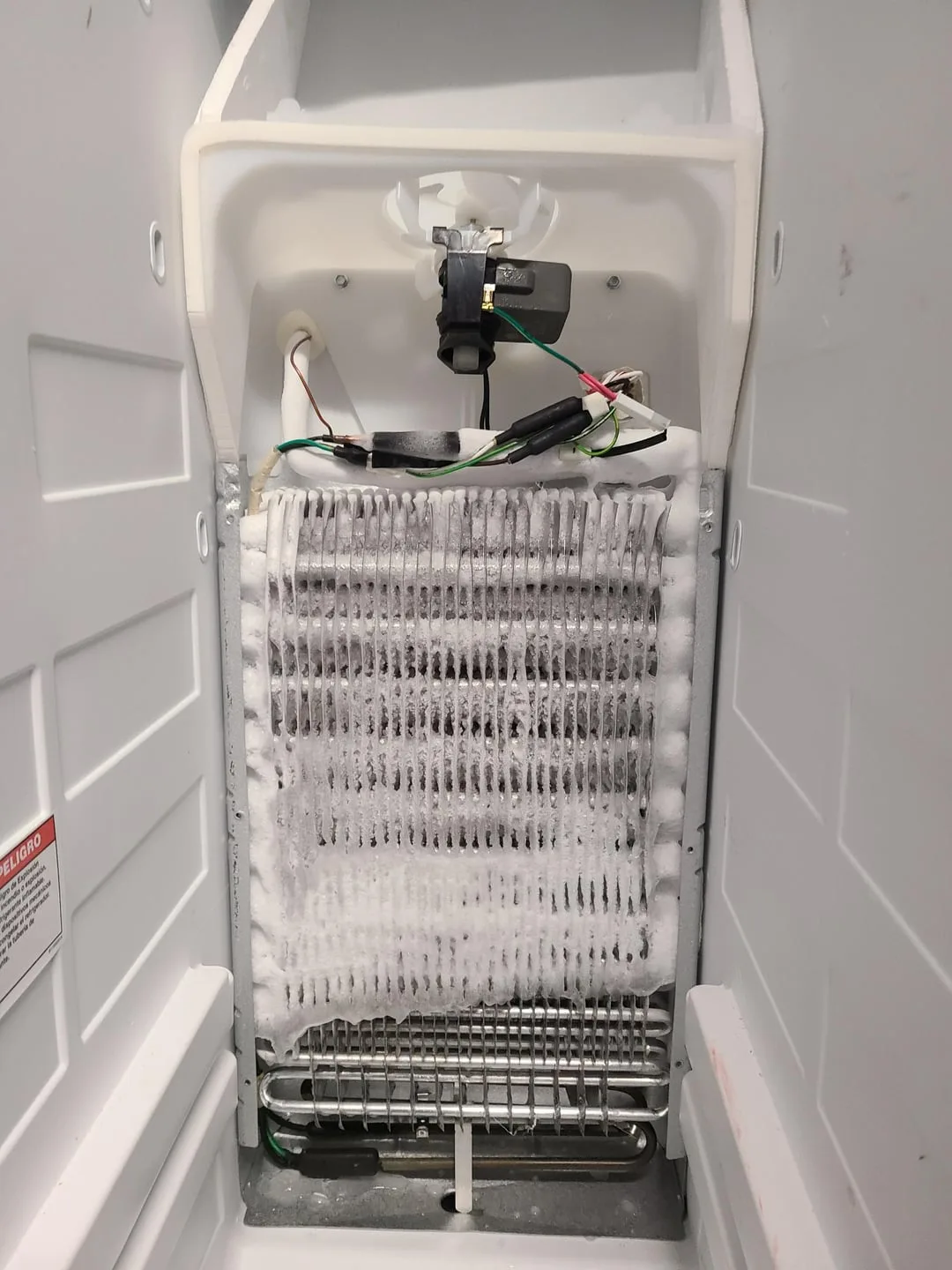
Image source: Bing (Web (fair-use with source credit))
You've confirmed the compressor runs, the evaporator fan spins, and the condenser coils are clean. The freezer is still above 10°F. Now you're on a specific diagnostic path.
This is where the decision tree splits further.
Check the evaporator fan airflow. If the fan is spinning but the blades are partially blocked by ice or debris, airflow is restricted. In frost-free units, check the vents inside the freezer. If they're clogged with frost, you need to defrost and address the defrost system (see previous section).
Even a small ice dam can cut cooling dramatically.
Test the thermistor. Many modern freezers use a thermistor (a temperature sensor) to tell the control board when to run the compressor. If it's reading too warm, the compressor may not run long enough. If it's reading too cold, the compressor may not shut off.
You can test a thermistor with a multimeter and a glass of ice water. At 32°F, most thermistors read between 10,000 and 15,000 ohms. If the reading is way off, replace it.
They cost about $10 and just plug in.
Check for a sealed system leak. This is the worst-case scenario. If the compressor runs, the fan works, the coils are clean, the defrost system is fine, and the freezer still won't get cold, the refrigerant charge is low. A slow leak in the sealed system means you've lost some of the R-134a or R-600a that does the actual cooling.
This is not a DIY repair. It requires EPA Section 608 certification to handle refrigerant, and the repair often costs more than a new freezer. Per U.S.
Department of Energy guidelines, a freezer with a sealed system leak that is more than eight years old is typically not worth repairing.
Check the damper (combo units only). If you have a refrigerator-freezer combo and the freezer is cold but the fridge is warm, or vice versa, the damper between the two compartments may be stuck. In most designs, a door or flap opens and closes to control how much cold air flows from the freezer into the fridge. If it's stuck closed, the fridge warms up.
If it's stuck open, the freezer can't get cold enough. Open the fridge and look for the damper flap. It should move freely.
If it's blocked or the actuator is broken, that's your problem.
Once you've gone through these checks, you'll either find a cheap fix or know it's time to call a professional. But most warm freezers are fixable with a $10 part and 20 minutes of your time.
Branch 2: The Freezer Isn't Running At All
This branch starts with the scariest sign: silence. You walk up to the freezer, and there's no hum, no vibration, no fan sound. The light might still come on when you open the door, but the compressor is dead quiet.
That usually means an electrical component failed, not the compressor itself.
Check the start relay first. The start relay gives the compressor a jolt of electricity to get it spinning. It's a small plastic box attached to the side of the compressor. Unplug the freezer, remove the relay, and give it a gentle shake.
If you hear rattling inside, the relay is broken. Test it with a multimeter set to continuity. A good relay shows continuity between certain terminals.
An open circuit means it's dead. A replacement costs around $15 and just plugs back in.
Check the overload protector. This small component sits next to or inside the start relay. It's a safety device that cuts power if the compressor draws too much current or gets too hot. If it fails, the compressor won't run.
Test it for continuity at room temperature. It should show a closed circuit. If it's open, replace it.
They cost about $10.
Check the control board. On newer freezers with digital displays, the main control board tells the compressor when to run. A power surge or a failing capacitor can kill the board. Look for visible damage like burned spots or bulging capacitors.
If the board looks bad, replacement runs $50 to $150 depending on the brand. Some boards need to be programmed, so check the manufacturer's service manual.
Check the compressor itself. If the start relay, overload protector, and control board all test fine, the compressor may be seized or have an internal winding failure. Test the compressor windings with a multimeter. You're looking for continuity between the common, run, and start terminals.
If any winding shows an open circuit, the compressor is dead. Compressor replacement costs $300 to $700 and requires a certified technician. On a freezer over eight years old, it's usually smarter to replace the whole unit.
Branch 3: The Freezer Runs But Cycles Too Often Or Too Rarely
This is the weird middle ground. The freezer runs, it's cold enough, but it's cycling on and off every few minutes. Or it runs for hours without shutting off.
Either way, something is off.
If the freezer cycles too often, the thermostat or thermistor may be reading the temperature wrong. In older freezers with a mechanical cold control, the sensing bulb may have shifted or lost its charge. In newer freezers with a thermistor, a bad sensor tells the board to run the compressor too frequently.
Replace the thermistor first. It's cheap and easy.
If the freezer runs too long without cycling off, the same sensor could be stuck reading too warm. Or the compressor could be losing efficiency. A compressor that runs nonstop but never shuts off is often a sign of low refrigerant.
If the freezer is still cold, you might not notice a problem immediately. But running nonstop wears out the compressor and drives up your electric bill.
Check the ambient temperature. This is a big one for garage freezers. Most freezers are designed to operate in environments between 50°F and 100°F. If your garage drops below 50°F in winter, the freezer may not run enough to stay cold.
The compressor relies on warm refrigerant pressure to cycle properly. In cold garages, the freezer can trick itself into thinking it's already cold enough. You may need a garage kit or a freezer rated for low ambient temperatures.
Manufacturer specifications usually list the operating range in the user manual or on the model tag.
Check for a dirty condenser fan motor. Some upright freezers have a condenser fan near the bottom rear. If the fan motor is failing, it may run intermittently or not at all. That causes the compressor to overheat and cycle on the overload protector.
Listen for the fan. If it's slow or squeaky, it's on its way out. Replacement motors cost around $30.
The Mistakes That Waste Your Time And Money
After years of helping people troubleshoot warm freezers, we've seen the same mistakes over and over. Avoid these four and you'll save hours of frustration.
Mistake one: replacing parts without testing first. The classic error is buying a new start relay, thinking that's the problem, and discovering the freezer still doesn't run. Then you buy an overload protector. Then a control board.
Pretty soon you've spent $200 on parts and the real issue was a seized compressor. Test each component with a multimeter before you buy anything. It takes five minutes and saves real money.
Mistake two: defrosting incorrectly. People often try to chip ice off the evaporator coils with a screwdriver or ice pick. That punctures the tubing and vents the refrigerant to the atmosphere. That violates EPA regulations under the Clean Air Act and destroys the freezer.
Defrost properly: unplug the unit, empty it, prop the door open, and let the ice melt naturally. Use towels to catch the water. A hair dryer on low heat speeds things up without damaging anything.
Mistake three: ignoring the condenser fan on upright units. Many upright freezers have a condenser fan that pulls air across the compressor and coils. If that fan stops spinning, the compressor overheats and shuts off. The freezer warms up.
People assume the compressor is dead and replace the freezer. Check that fan first. A stuck fan blade or a dead motor costs $30 to replace.
Mistake four: misdiagnosing a sealed system leak. A low refrigerant charge behaves exactly like a dirty condenser coil or a bad evaporator fan. The freezer runs but can't get cold. You clean the coils, replace the fan, test the defrost system, and nothing helps.
That's when you suspect a leak. A technician can confirm it with a refrigerant pressure test. But be honest with yourself about the math.
If the freezer is more than eight years old, the repair cost usually exceeds the value of the unit.
When To Throw In The Towel — Repair Vs. Replace Decision Guide
No one wants to hear this, but there comes a point where fixing a freezer stops making financial sense. Here's how to make that call without second-guessing yourself.
| Condition | Repair Cost | Recommended Action |
|---|---|---|
| Compressor dead, freezer under 8 years | $300–$700 | Repair if freezer is high-end or built-in. Replace if standard unit. |
| Compressor dead, freezer over 8 years | $300–$700 | Replace. A new unit costs $400–$900. |
| Sealed system leak | $250–$500 | Replace. Even repaired, leaks often return. |
| Control board failure | $50–$150 | Repair. It's cheaper than replacing. |
| Start relay or overload protector | $15–$30 | Repair. Always fix these. |
| Evaporator fan motor | $30–$80 | Repair. Straightforward job. |
| Defrost timer or heater | $20–$60 | Repair. Easy swap. |
| Door gasket | $20–$50 | Repair. Quick fix. |
The math is simple. If the repair costs more than half the price of a new comparable freezer, replace it. If the freezer is over 12 years old, even a cheap repair is a gamble because other parts are near end of life.
Three signs that your freezer is genuinely dead, not just sick. The compressor is seized and the unit is over eight years old. The sealed system has a leak and you've already ruled out everything else.
The control board failed and the replacement part is discontinued or costs more than a new board plus installation. In those cases, it's time to shop for a new freezer.
One more thing. When you replace a freezer, dispose of the old one properly. The refrigerant must be recovered by a certified technician under EPA rules.
Many retailers offer haul-away service when you buy a new unit. Take that option. It keeps refrigerant out of the atmosphere and saves you a trip to the dump.
Frequently Asked Questions
Why is my fridge cold but my freezer warm?
In a combo unit, this usually means the damper between the compartments is stuck closed or the evaporator fan in the freezer has failed. The fridge relies on cold air from the freezer. If that airflow stops, the freezer warms up and the fridge follows.
Can I recharge the refrigerant myself?
No. Refrigerant handling requires EPA Section 608 certification under the Clean Air Act. It's illegal to buy refrigerant without a license.
DIY recharging also risks overpressurizing the system or introducing air, which destroys the compressor. Leave it to a pro.
How long should I wait after a repair before checking the temp?
Give it 24 hours. A freezer needs time to pull down to 0°F after being opened, defrosted, or repaired. Check with an independent thermometer, not the built-in display.
If it's not at 0°F after 24 hours, the problem wasn't fixed.
What's the most common cause of a warm freezer?
Dirty condenser coils top the list. They're easy to forget because they're out of sight. A thick layer of dust or pet hair traps heat and forces the compressor to run longer and harder.
Cleaning them every six months prevents most cooling problems.
Should I unplug my freezer when I go on vacation?
Only if you empty it first. A full freezer stays cold longer than an empty one. If you leave it on, make sure the door is closed tightly.
Some people use a temperature alarm that texts their phone if the temp rises above 20°F.
How do I know if my freezer needs a new compressor?
Test the start relay and overload protector first. If both are good and the compressor hums but won't start, it may be seized. A seized compressor draws locked-rotor amps and trips the overload protector.
That usually means replacement.

Similar Posts