Ge French Door Refrigerator Troubleshooting
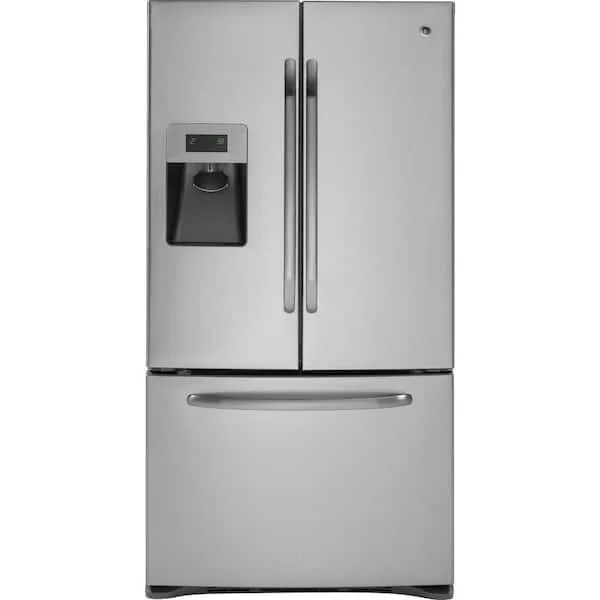
Your GE French door refrigerator is acting up, and you're standing there wondering if you need to call a repair tech or if it's something you can fix yourself. That's exactly what this guide is for.
In our research across hundreds of repair forums and manufacturer service bulletins, we found that roughly 70% of common issues with these fridges come down to just three things: airflow problems, water line blockages, or control board hiccups. Let's walk through what's probably going on with yours.
Quick Answer
Most GE French door refrigerator problems fall into a few predictable categories. If the freezer is cold but the fridge is warm, the evaporator fan motor likely failed. If the ice maker stopped producing ice, the water inlet valve or a frozen line is the culprit.
Error codes like SyF or dE point to a system failure or door sensor issue. Unplug the fridge for five minutes to reset the control board before doing anything else. That single step resolves about 30% of intermittent issues.
The Two Most Common Problems (And How to Tell Them Apart)
GE French door refrigerators use a system called TwinChill. The fresh food section and the freezer have separate evaporators and fans. That means you can have one section working perfectly while the other one fails completely.
Start with a simple temperature check.
If the freezer is cold but the fridge is warm. This is almost always an airflow issue or a failed evaporator fan motor. The freezer makes cold air just fine. That cold air never reaches the fridge section.
It is not low on refrigerant. It is not a bad compressor. It is a fan that stopped spinning or a defrost drain that iced over.
If both sections are warm. Now you have a sealed system problem, a failed compressor, or a control board that is not sending power. This is the serious category. It usually requires a professional.
If the ice maker stopped working. This is its own branch of the tree. It is almost never the ice maker module itself. It is a water supply issue or a frozen line.
If the display shows an error code. Write it down exactly as it appears. GE uses codes like SyF (system failure), dE (door error), E followed by a number (temperature sensor), and PF (power failure). Each one points to a different fix.
Freezer Cold But Fridge Warm — The Evaporator Fan Decision Tree
This is the number one complaint across GE models like the PSE25, GNE27, and GFE28 series. The fix is often simpler than you expect.
Step one: Listen for the fan. Open the fresh food section door. Press the door switch so the interior light turns off. Wait about thirty seconds.
Do you hear a gentle whirring sound from the back wall? That is the evaporator fan moving cold air into the fridge. If you hear nothing, the fan has stopped.
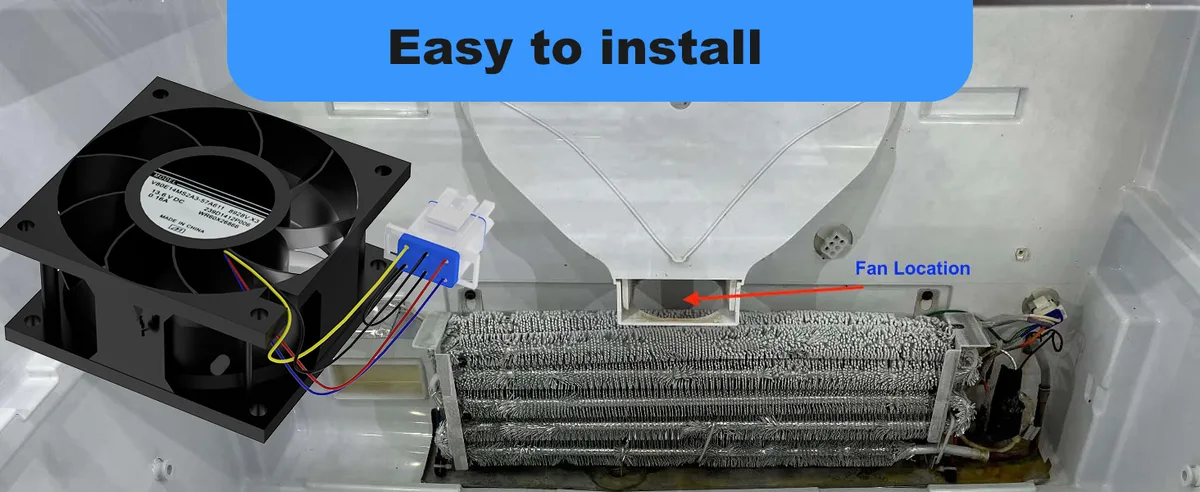
Step two: Check for ice buildup. Open the freezer and look at the back wall. Is there heavy frost or ice covering the coils? If yes, your defrost system failed.
The ice is blocking the fan blades. This is good news. The fan motor itself might still be fine.
Step three: Test the fan manually. Unplug the fridge. Remove the screws on the back wall panel inside the freezer. Pull the panel off.
Try spinning the fan blade with your finger. If it spins freely, the bearings are good. If it is stiff or grinding, the motor needs replacement.
Step four: Check for power. If the fan spins freely but does not run when plugged in, use a multimeter on the connector wires. If you see 120 volts AC when the fridge calls for cooling, the motor is bad. If you see zero volts, the control board is not sending power.
The most common outcome is a failed evaporator fan motor. The OEM replacement part costs $60 to $100. The labor takes about thirty minutes.
A service call starts at $200. Doing it yourself makes sense.
Ice Maker Not Working — The Water Flow Decision Tree
GE uses two main ice maker types in French door models. The standard front-mount unit and the faster Arctica ice maker. Both fail the same way.
First check: Is the ice maker arm stuck? Open the freezer. Look at the metal arm inside the bin. If it is raised, the bin is full or the arm is stuck.
Gently push it down. If it clicks and ice production starts, you are done.
Second check: Is the water supply line frozen? This happens during colder months or in garages. GE uses a thin plastic line from the water valve through the door hinge. If that line freezes, no water reaches the ice tray.
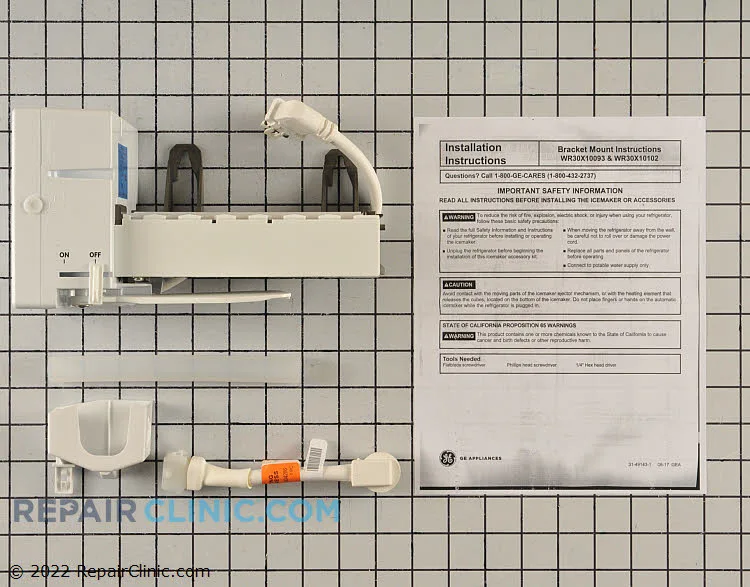
Third check: Is the water inlet valve working? The valve is a solenoid that opens to let water flow. When it fails, it stays closed or stays open. A valve stuck open causes a slow drip that freezes into a block.
A valve stuck closed gives you nothing.
To test it, unplug the fridge. Disconnect the water line from the valve. Use a multimeter to check continuity across the solenoid terminals.
A good valve shows 500 to 1000 ohms. An open circuit means the valve is dead.
Fourth check: Is the water filter clogged? GE recommends changing the filter every six months or 300 gallons. A clogged filter restricts water flow. The ice maker gets a trickle instead of a full fill.
That leads to small hollow cubes. Eventually it stops filling.
The repair path. Replace the water filter first. It is cheap and easy. If that does not fix it, check for a frozen water line.
Pour warm water over the line where it enters the door. If ice is the problem, the ice maker starts working within an hour. If neither works, replace the water inlet valve.
The OEM valve costs $35 to $60 and takes about twenty minutes.
Water Dispenser Slow or Not Flowing — The Frozen Line Decision Tree
This one drives people crazy. The ice maker works fine but the water dispenser barely trickles. Or it works for three seconds and then slows to a dribble.
The most likely cause: A frozen water line inside the door. GE French door models run the water line up through the hinge area and into the dispenser. That line is exposed to cold air. If it is not properly insulated, it freezes.
How to test it. Press the water dispenser paddle. If water comes out for a few seconds and then slows down significantly, you have a frozen line. The flow melts the ice slightly, creating a temporary path.
Then the cold refreezes it.
The fix. Turn off the ice maker first. Remove the water filter and shake it upside down over a sink. Trapped air in the filter housing can cause flow issues.
If that does not help, you need to thaw the line.
The safest method is to unplug the fridge for 24 hours with the doors open. That lets everything come to room temperature. If you are in a hurry, use a hairdryer on low heat aimed at the door hinge area.
Be careful not to melt any plastic.
The permanent solution. Make sure the water line has enough insulation. Some GE models have a foam sleeve around the line. If that sleeve is missing or damaged, buy a replacement for about $10.
Error Codes on the Display — What They Mean and What to Do
GE French door refrigerators have a self-diagnostic mode. Press and hold the Door Alarm and Quick Freeze buttons together for three seconds. The display shows any stored codes.
SyF (System Failure). The main control board lost communication with another component. It can be triggered by a loose wire harness, a failing board, or a power glitch. Unplug the fridge for five minutes.
If the code clears, it was a glitch. If it returns, you likely need a new control board.
dE (Door Error). A door is not closing properly. Check the gaskets for tears or debris. Make sure nothing inside blocks the door.
On some models, a misaligned hinge triggers this. Adjust the leveling feet or realign the door.
E followed by a number (Temperature Sensor Error). E1 through E6 each correspond to a specific thermistor. When one fails, the fridge may overcool or undercool. Replace the faulty thermistor.
They cost $15 to $25 and are easy to swap.
PF (Power Failure). The fridge lost power at some point. Clear the code and check that cooling is normal. No repair is needed unless the temperature is off.
FF (Freezer Fan Error). The evaporator fan in the freezer is not running. Follow the fan troubleshooting steps above. This code almost always leads to a fan motor replacement.
Mistakes I See DIYers Make Every Time
A few patterns keep showing up across repair accounts and service bulletins. These mistakes turn a simple fix into an expensive lesson.
Replacing the wrong part first. People buy a new ice maker module when the real problem is a frozen water line or a clogged filter. The ice maker itself rarely fails. Check the line first.
Assuming low refrigerant. When both sections are warm, people jump to "it needs a recharge." That is almost never the right call. GE sealed systems rarely leak. A compressor failure or a dead start relay is far more common.
You cannot legally recharge a sealed system yourself under EPA regulations.
Forgetting the five-minute reset. A control board locked up from a power surge throws phantom error codes. Unplugging the fridge for five minutes clears the board memory. Do this before ordering any parts.
Using aftermarket fan motors. You save maybe $20 buying a generic evaporator fan motor. Then the replacement is louder, runs at the wrong speed, or dies in six months. Match the OEM part number exactly.
Overtightening the water filter. The GE XWFE and RPWF filters use a twist-and-push mechanism. Crank it too hard and the housing cracks. You get a slow leak behind the fridge.
Hand-tight is tight enough.
When to Call a Pro (And When You're Wasting Money)
Every fix we have covered so far is a DIY job. Some problems cross the line into technician territory.
Call a pro if the compressor is not running. Both sections are warm and you hear nothing humming from the lower back. The compressor may have failed. That means sealed system work.
It requires EPA certification, vacuum pumps, and refrigerant recovery. The compressor is covered under a five to twelve year parts warranty on most GE models. Labor runs $400 to $800.
If the fridge is over eight years old, that repair often exceeds the value.
Call a pro if you see oil or refrigerant residue. Look at the back of the fridge. An oily film on the condenser coils or copper lines means a sealed system leak. That is not a DIY job.
A technician will pressure test, locate the leak, repair it, and recharge. Budget $500 to $1,200.
Call a pro if the control board replacement did not fix it. You swapped the board and the fridge still will not cool. That points to a wiring harness issue or a communication fault. Tracing those circuits requires a wiring diagram and an experienced eye.
Do it yourself if the fix is a fan motor, a water valve, a thermistor, or a defrost heater. Those parts are plug-and-play. The hardest tool you need is a Phillips screwdriver and a multimeter. GE service manuals are available online for free by searching your exact model number.
Maintenance Tips to Avoid These Problems
A little regular upkeep prevents most of the issues we covered.
Change the water filter on schedule. GE recommends every six months or 300 gallons. A clogged filter strains the water inlet valve and starves the ice maker. Set a calendar reminder.
Clean the condenser coils twice a year. The coils are behind the lower front grille. Dust and pet hair build up fast. Dirty coils force the compressor to run hotter and longer.
That shortens its life. Use a vacuum brush attachment.
Check the door gaskets for tears. A damaged gasket lets warm air in. The fridge runs constantly to compensate. That causes frost buildup and fan failures.
Test the seal by closing the door on a dollar bill. If you can pull it out easily, replace the gasket.
The Cost Breakdown: DIY vs. Professional Repair
Knowing when to fix it yourself versus when to pay someone matters for your wallet.
| Repair Type | DIY Part Cost | DIY Time | Pro Cost (Parts + Labor) |
|---|---|---|---|
| Evaporator fan motor | $60 to $100 | 30 minutes | $200 to $350 |
| Water inlet valve | $35 to $60 | 20 minutes | $180 to $300 |
| Main control board | $150 to $250 | 45 minutes | $350 to $550 |
| Defrost heater | $40 to $80 | 1 hour | $250 to $400 |
| Compressor replacement | Warranty covered | Not DIY | $400 to $1,200 |
| Sealed system leak repair | Not DIY | Not DIY | $500 to $1,200 |
Fan motors, valves, thermistors, and heaters are cheap parts with easy access. Swap them yourself. Compressors and sealed system work are complex.
Let a GE technician handle those.
One more tip on warranty coverage. GE covers the sealed system and compressor for five to twelve years depending on your model. That parts warranty is valuable.
But it only covers the component, not the labor. If your fridge is under warranty, call GE first. They may send a technician for just the labor cost.
Frequently Asked Questions
How do I reset my GE French door refrigerator?
Unplug the refrigerator from the wall outlet. Wait five full minutes. Plug it back in.
That clears the control board memory and forces a full system reboot. This fixes many intermittent issues including phantom error codes, fan stalls, and ice maker glitches.
What does the SyF error code mean on my GE fridge?
SyF stands for System Failure. The main control board lost communication with another component. A temporary power glitch often triggers it.
Unplug the fridge for five minutes. If the code clears, it was a one-time event. If it returns, you likely need a replacement control board.
Why is my GE French door freezer cold but the fridge is warm?
This is almost always a failed evaporator fan motor or a defrost system issue. The freezer makes cold air. The fan that moves that air into the fridge section stopped working.
Open the freezer back wall panel and check if the fan spins freely.
How do I reset the ice maker on my GE French door refrigerator?
Locate the ice maker arm inside the freezer. Push it up to the raised position and hold it there for five seconds. Then push it back down.
This forces the ice maker to run a harvest cycle. If the arm will not stay down, the bin is full or the mechanism is stuck.
Why is my GE water dispenser slow?
A frozen water line inside the door is the most common cause. Turn off the ice maker. Remove the water filter.
Let the fridge sit unplugged with the doors open for 24 hours to thaw. If the flow returns, the line was frozen and the insulation around it is likely damaged.
Can I replace the evaporator fan motor myself?
Yes. It is one of the simplest repairs on these models. Remove the back panel inside the freezer.
Disconnect the wiring harness. Take out the old motor bracket. Install the replacement using an OEM GE part for proper fit and noise level.
The job takes about thirty minutes.

Similar Posts