Frigidaire Washer Code E52
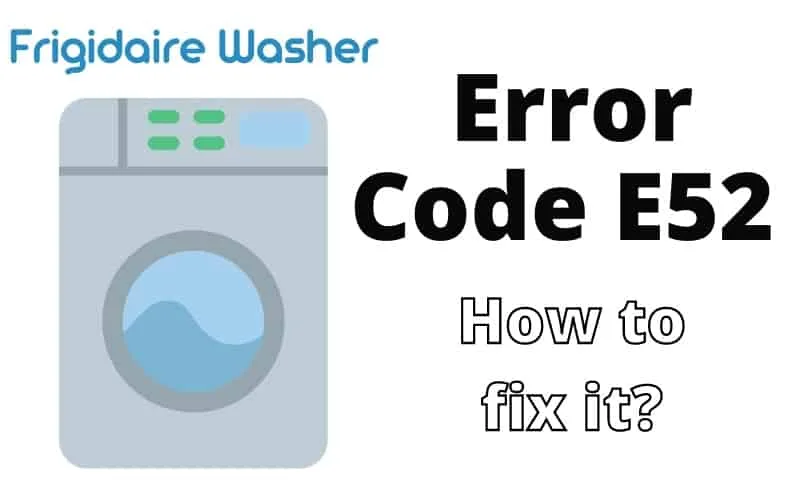
Image source: Bing (Web (fair-use with source credit))
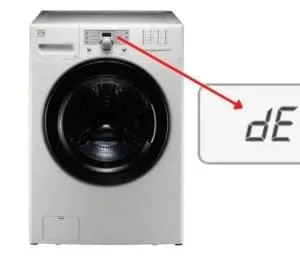
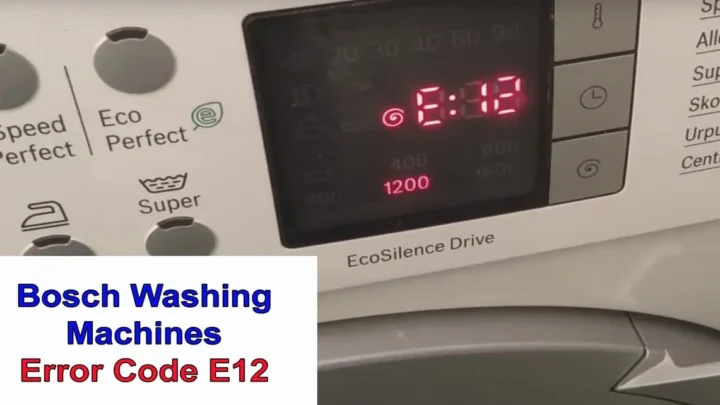
So your Frigidaire washer just flashed E52 on the display and stopped mid-cycle. Maybe there's a load of wet clothes sitting in there, and you're wondering if this is a quick fix or a pricey repair. Let's walk through this together.
Here's the short version: E52 means the control board has lost communication with the motor. Specifically, the board isn't getting the proper feedback signal from the motor's sensor system. Without that signal, the washer refuses to continue the cycle. It's a safety feature, not a random glitch.
The good news? Sometimes it's a 10-minute fix that costs nothing. The bad news?
Sometimes it means replacing the motor or the control board. Either way, knowing exactly what you're dealing with helps you decide whether to DIY or call a technician.
Below, I'll walk you through what causes E52, how to diagnose it step by step, and what each fix involves, including realistic costs and timeframes.
What Exactly Is Code E52?
E52 is a motor communication fault. Your Frigidaire washer, typically a front-load model from the late 2000s through the 2010s, uses an inverter motor. This motor has sensors that continuously report its speed and position back to the main control board.
That feedback loop is what allows the board to precisely control the drum during wash, rinse, and spin cycles.
When the sensor signal is missing, intermittent, or out of expected range, the board triggers E52 and halts the cycle. This usually happens one of three ways:
- At startup: The washer powers on, tries to engage the motor, fails, and throws E52 within seconds.
- During spin: The motor runs fine for a while, then loses feedback mid-cycle and stops with E52.
- Intermittently: The error appears sometimes but not others, often after the washer has repositioned itself mid-cycle.
The timing of the error actually gives you a clue about which component is failing. More on that below.
Common Causes of E52 (In Order of Likelihood)
1. Loose or Corroded Motor Connector
This is the most common cause, and it's also the cheapest to fix. Over years of vibration, the wiring harness plug that connects to the motor can work its way loose. Moisture inside the plug, pretty common in laundry rooms, can also cause oxidation on the pins, which interrupts the signal.
How to tell: The washer may run fine for weeks, then throw E52 randomly. Jiggling the washer or moving it slightly might temporarily clear the error.
2. Damaged Wire Harness
The harness running from the control board to the motor can chafe against the tub, get pinched between panels, or develop cracks where it bends. Over time, the copper strands inside can break completely while the outer insulation still looks fine.
How to tell: The error tends to happen at the same point in every cycle, say, every time the machine transitions from wash to spin. That's because the motor rocks or shifts during that transition, opening and closing the broken circuit.
3. Failed Motor
The motor itself, or the Hall sensor assembly mounted to it, can fail. The Hall sensor is a small magnetic feedback device that tracks motor position. It's a wear item, not as durable as the motor windings themselves.
When it fails, the motor spins physically but the board has no idea what's happening.
How to tell: The motor spins freely but without sensing. The washer starts the cycle, the drum moves briefly, then E52 appears. Sometimes a burned smell comes from the back of the washer shortly before the error appears.
4. Failed Control Board
The main control board can fail in its motor communication circuit. This is the least common but most expensive cause. Power surges are the usual culprit, which is why plugging your washer into a surge protector is a smart habit.
How to tell: The washer typically throws E52 immediately, even on the very first attempt, regardless of cycle. Replacing the motor and harness doesn't clear the error.
How to Diagnose E52: A Step-by-Step Path
You don't need to guess which component is failing. There's a logical order to test them, starting with the cheapest and working up to the most expensive.
Step 1: Power Cycling
This is the 60-second fix that works surprisingly often.
- Unplug the washer from the wall outlet.
- Wait 5, 10 minutes. Let all the capacitors discharge.
- Plug it back in.
- Run a spin-only cycle and see if E52 clears.
Why this works: Sometimes the control board throws a false error due to a transient electrical glitch, a brief voltage drop while the motor was starting, for example. A full reset clears the logic fault.
If power cycling fixes it and the error doesn't return, you're done. If it comes back immediately or within a few days, move to Step 2.
Step 2: Inspect the Motor Harness
You'll need a Phillips screwdriver and 15, 20 minutes.
- Unplug the washer.
- Remove the rear access panel (usually 4, 6 screws around the perimeter).
- Locate the motor, it's mounted near the bottom of the tub, pointing toward the back of the unit.
- Find the wiring harness connector going into the motor. It's typically a 6-pin or 8-pin plug.
- Disconnect it. Pull straight off, don't rock it side to side, you don't want to spread the pins.
- Look closely at both sides: , Inside the plug: Are any pins pushed in, bent, or missing entirely?
, On the metal pins: Is there greenish-green corrosion, black soot, or a burned smell?
, On the wire strands: Does any wire look cut, cracked, or exposed?
- If you see corrosion or dark spots, that's a clear sign of moisture ingress.
If the plug looks bad: Replace the harness. It's a cheap part, usually $20, 45 depending on your model. You can order it by your washer's model number, which is printed on a sticker inside the door frame or on the back panel.
If the harness looks fine: Re-seat it firmly, making sure it clicks into place. Then run a test cycle. If E52 clears and stays away for a week, you're good.
If it returns, move to Step 3.
Step 3: Test the Motor
If the harness is clean, the next suspect is the motor itself, specifically the Hall sensor.
The business-card test: Unplug the washer, remove the harness you just inspected, then pull the washer away from the wall so you can access the rear. With the harness detached, manually spin the drum by hand. It should spin freely with a slight magnetic drag.
If it feels gritty, grinding, or catches at certain points, the motor bearings are going.
But even if the drum spins smoothly by hand, you can't rule out a sensor failure. The Hall sensor doesn't affect how the motor feels when turned manually, it only matters when the motor is powered.
The Hall sensor test (requires a multimeter):
- Unplug the washer.
- Disconnect the motor harness.
- Set your multimeter to measure DC voltage.
- Use back-probe pins (test leads with fine tips) to check the sensor's voltage signal while manually rotating the motor.
- Connect the test leads to the sensor ground and sensor output wires, typically white and yellow on most models, but confirm against your wiring diagram.
- Spin the motor by hand, slowly. The meter should show fluctuating voltage between 0V and 5V, or 0V and 12V (depending on your model). If the signal doesn't fluctuate, the Hall sensor is dead.
If the sensor tests dead: Replace the motor assembly. Yes, you have to replace the whole motor, the Hall sensor isn't sold as a separate part for most Frigidaire models. But before you do, check the cost:
- Motor assembly price: $80, 180 for most models, depending on where you buy.
- Labor if you hire someone: 1, 2 hours at $80, 120/hour.
If you're comfortable removing the rear panel and disconnecting a few plugs, replacing the motor is doable for a confident DIYer. Typical procedure:
- Unplug the washer.
- Remove the rear panel.
- Disconnect the harness and the ground wire from the motor.
- Removed the motor mounting bolts, usually two to four 10mm or 13mm hex bolts.
- Slide the motor out of its bracket. On some models, you need to gently pry it off the tub shaft with a flat-head screwdriver. Don't force it, if it's stuck, spray the shaft area with a penetrant and wait 10 minutes.
- Install the new motor. Make sure the shaft aligns with the tub spline. You'll feel it click into place.
- Torque the bolts to 10, 12 ft-lbs (check your service manual, but that range is typical).
- Reconnect the harness and ground wire.
- Reinstall the rear panel.
- Run a test cycle.
If you're not comfortable doing this yourself, a local appliance repair tech will charge you $180, 350 total, parts and labor included. That's a reasonable price range for this job.
Step 4: Test the Control Board
If you've replaced the harness and the motor and E52 persists, the control board is the remaining suspect. This is the trickiest diagnostic step because you can't easily test the board's motor communication circuit with a multimeter. The circuit is a low-voltage signal path, and unless you have a service manual with specific test points, you're mostly in elimination territory.
What to look for on the board:
- Pull the washer away from the wall.
- Remove the top panel (screws at the back, slide the top forward).
- Locate the control board, usually mounted in a plastic enclosure on the right or left side, near the top.
- Open the enclosure and inspect the board for obvious physical damage: burned components, blackened resistors, cracked solder joints, bulging capacitors (the small cylindrical parts).
- Also check where the wires converge at the board connector, look for scorched or melted plastic.
If you see physical damage: Replace the board. Typical pricing:
- Control board price: $100, 250 depending on your model.
- Labor: 30, 45 minutes for a tech, since board replacement is straightforward (plug out, plug in, secure the enclosure).
If the board looks pristine: You're now in the gray zone. Here's the honest reality, on some Frigidaire models, the board can fail internally without visible damage, and the only way to verify is to replace it. Some repair shops will offer a diagnostic service where they bench-test the board with specialized equipment.
Most local techs, though, will recommend replacing the board as the logical next step after the motor and harness.
One caution: on many Frigidaire models, replacing the control board requires a pairing step. The new board needs to be programmed to communicate with the motor and door lock. Not all models do this, some are plug-and-play, but if yours does, it's a dealer or service center job.
Ask the parts supplier if your model requires "firmware pairing" before you order.
What E52 Costs You, Realistically
Here's the honest cost breakdown:
| Fix | Parts Cost (DIY) | Labor (Hired Tech) | Time to Fix |
|---|---|---|---|
| Power cycle | $0 | — | 10 minutes |
| Re-seat harness | $0 | — | 15 minutes |
| Replace harness | $20–45 | $100–160 | 30–45 min |
| Replace motor | $80–180 | + 1–2 hrs labor | 45–60 min |
| Replace control board | $100–250 | + 30–45 min labor | 30–45 min |
Total worst-case scenario: $270, 430 with a hired tech for a motor + board replacement. Most people never get that far, though, the harness and motor fixes catch the majority of E52 cases.
When E52 Is Not E52
Here's something the repair forums don't always tell you: sometimes the display says E52 but the actual problem is something else hiding behind it. Specifically:
Locked or jammed drum bearings: If the drum doesn't turn freely, the motor works harder, draws more current, and can overheat, triggering the motor communication fault. Try the business-card test above: spin the drum by hand with the washer unplugged. If it drags, grinds, or won't rotate, fix the bearings first, not the motor.
Failed door lock: A dead door lock can sometimes trigger a cascade of faults, including E52, because the board can't complete its startup sequence properly. If E52 appears alongside other codes (like door lock errors), test the door lock assembly first. It's a cheap fix, typically $30, 60 for the part.
Low voltage from your wall outlet: If the outlet supplying the washer has loose wiring or low voltage (below 110V), the board can misbehave and throw random codes. Test the outlet with a multimeter, it should read 115, 125V under no load. If it's low, call an electrician (~$150, 250) before buying a $200 control board.
Can You Prevent E52?
Not entirely, motors wear out and boards fail, but you can reduce the odds:
- Clean the floor vent: A clogged rear vent causes the motor to overheat over time. Those vents are at the back of the washer, near the bottom. Vacuum them out twice a year.
- Use a surge protector: Power surges are the most common cause of premature control board failure. The washer should be plugged into a dedicated grounded outlet with surge protection. A whole-house surge protector is better, but a good power strip with surge protection costs $15, 30.
- Don't overload the drum: Sure, you want to get through the laundry, but overloading makes the motor work harder than it should. Follow the drum fill line, typically 80% capacity for cotton, less for bulky items.
- Wipe up water spills immediately: Water around the top panel and control board area can find its way inside and cause corrosion over time. Keep the top surface dry.
- Balance heavy loads: If the washer throws E52 during spin, an unbalanced load, like a single large comforter, can cause the motor to surge and overcurrent. Redistribute the load before running spin again.
When to Call a Professional vs. DIY
Be honest with yourself about your skill level here. Here's my straightforward advice:
DIY if you can:
- Use a screwdriver confidently
- Follow a basic wiring diagram
- Handle large, heavy parts without dropping them
- Accept that you might make a mistake that costs more later
Call a pro if you're:
- Unsure about which component is failing
- Uncomfortable removing the rear and top panels
- Dealing with an older washer under warranty (doing the repair yourself voids most warranties)
- Short on time and just need it solved
There's no shame in calling someone. A local appliance tech in most areas charges $80, 150 for the diagnostic visit, which they'll typically apply to the repair cost if you have them do the work.
Models Most Affected by E52
While E52 can appear on any Frigidaire front-loader with an inverter motor, the most commonly reported models include:
- Frigidaire Affinity series (late 2000s, early 2010s)
- Frigidaire Gallery series (2010, 2016)
- Frigidaire Professional series (same era)
- Models where the motor is mounted directly to the tub without a separate belt
If your washer is from those eras and has been running for 6, 10 years, E52 is a common late-life failure. The good news: replacement parts for these models are still widely available, and the repair cost is usually far less than buying a new washer.
The Bottom Line
E52 means your washer's motor isn't talking to its brain. It's a communication failure, and it's almost never a random occurrence, it points to a specific physical issue.
Start with the free fix: power cycle. If that doesn't work, inspect the harness. If the harness is clean, test the sensor, and if the sensor is dead, replace the motor.
If the motor doesn't solve it, the board is the last suspect.
Most people resolve E52 by either re-seating the harness or replacing the motor. The whole diagnostic path takes about an hour and $100, 200 in parts worst case. That's significantly cheaper than a replacement washer, which would run you $600, 1200 for a comparable front-loader.
And if you're not comfortable doing the repair yourself, find a reputable local appliance tech, ask neighbors or your local hardware store for a referral. A good tech will walk through the same diagnostic path and usually have the right parts in their van.
You've got this. Take it step by step, and don't skip the power cycle, it's free, and sometimes that's all it takes.

Similar Posts