Bosch Washer Code E12

Image source: Bing (Web (fair-use with source credit))
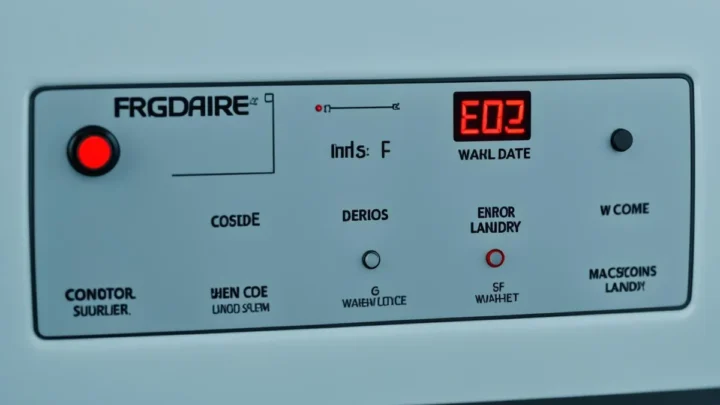
Your Bosch washer just flashed E12 at you mid-cycle, didn't it? That digital red flag usually pops up right as the tub is full of water, and the machine just stops. It's a drain error, and it's one of the most common issues Bosch owners run into.
Here's the good news: E12 rarely means a major failure. In most cases, you can fix it yourself in under an hour with zero special tools. Let's walk through it step by step.
Quick Answer
Bosch Washer Code E12 means the machine failed to drain water fast enough. It's a drainage error. Check the drain hose for kinks first, then clean the drain pump filter. A clogged filter is the most common cause.
Reset the washer after fixing the issue.
What the E12 Code Actually Means
When your Bosch washer throws an E12 code, it's not telling you the motor is dead or the control board fried itself. It's essentially raising its hand and saying, "I tried to drain the water, but it's taking too long."
Here's the technical bit: the machine's control unit monitors the drain pump's performance. If the water level doesn't drop to a certain point within a set window, it aborts the cycle and displays E12. The electronics are fine.
What's usually not fine is something physically blocking the water's path out of the machine.
Think about what a drain system looks like. Water leaves the tub, passes through a filter that catches stray coins and buttons, gets pulled by the pump, and then travels up a hose to your home's standpipe. Any kink, clog, or restriction along that path slows the water down enough to trip the timer.
That's actually good news for you. It means the fix is usually mechanical, not electrical. It's a matter of finding the blockage, clearing it out, and letting the machine do its thing again.
Did You Know?
Most E12 service calls turn out to be a clogged lint trap or a simple hose kink. You're likely not looking at a major repair bill. You're looking at a bit of dirty work and ten minutes of your time.
Why Bosch Washers Throw This Code More Often Than You'd Think
You might wonder why Bosch washers seem to flash this code more frequently than other brands. It mostly comes down to design.
Bosch front-loaders use a high-efficiency pump system that moves water with impressive force, but that also means it's sensitive to restrictions. They also use a mesh filter to protect the pump, which is great for the pump's lifespan but lousy for you when you forget to clean it. Lint, hair, and tiny debris accumulate there over time.
Another factor is how the drain hose is routed during installation. Many E12 cases trace back to a hose that got pinched behind the machine when someone shoved it back into the cabinet. A drain hose might look flexible, but it can fold and pinch shut if the washer is crammed into a tight space.
Add in the fact that many people use detergent pods which can leave a waxy residue, and you have a recipe for slow drainage.
Here's the thing: a slow drain doesn't always show up right away. The machine might work fine for months. Then you wash a heavy load of towels with thick lint, and the buildup tips the balance.
The pump can't push water out fast enough, the timer expires, and boom, E12.
How Bosch Washers Detect a Drainage Problem
Bosch washers don't have a sensor that watches the water flow with its eyes. They work on a logic-based timer combined with a pressure switch. The pressure switch measures the water level in the tub.
When a cycle needs to drain, the control board activates the drain pump and starts a countdown. If the pressure switch doesn't signal that the water level has dropped enough within that countdown, the board assumes there's a problem. It halts the cycle and triggers the E12 error.
This is a clever system because it prevents the machine from running the spin cycle while water is still in the drum. Spinning a heavy, waterlogged drum can damage the bearings and the motor. So the E12 code is essentially a protective measure.
When you fix the drain obstruction, the machine will reset (once you manually power it down) and usually complete the cycle without further complaints.
E12 vs. E13: What's the Difference?
If you look at a list of Bosch washer error codes, you'll see E12 isn't the only one that deals with water. E13 is also a drainage error but usually indicates a different symptom.
| Error Code | Meaning | Likely Cause |
|---|---|---|
| E12 | Drainage timeout — water didn't leave fast enough | Clogged filter, kinked hose, blocked pump |
| E13 | Drainage error — water didn't leave completely or came back | Improper hose routing, siphoning, standpipe issue |
It's a subtle difference, but it matters for troubleshooting. If you have E13, you might be dealing with a problem in the drain hose routing that causes water to siphon back into the tub. With E12, the issue is more often a simple blockage.
Also, don't confuse E12 with other codes that involve heating or motor faults. E12 will always appear alongside a drain attempt. If you see the code flash during the initial fill or during a wash cycle with no drain activity in progress, that's unusual and could point to a pressure sensor issue.
But in most cases, E12 is tied directly to the drain phase. Always start with the physical drain path before you suspect the electronics.
Step-by-Step Troubleshooting Guide
Step 1: Unplug and Reset the Washer
Your first move is the easiest. Don't dive behind the machine and start pulling hoses off.
- Unplug the washer from the wall outlet.
- Wait a full five minutes. This isn't just a safety thing. It's a hard reset for the control board. The capacitor inside the board can hold a charge and keep the error code stored in memory. Pulling the power clears that.
- Plug it back in and try a simple "Drain & Spin" cycle.
Sometimes the E12 code is a one-off glitch. Maybe a sock got sucked into the pump then dislodged itself. Maybe the power flickered.
A simple reset clears the code and lets the machine try again. If the washer starts draining normally, you're done.
If the E12 code returns within a few minutes, that tells you the problem is persistent. Move on to the next step.
Quick Prep
Before you go further, grab a bucket and some old towels. You'll need them for the filter step. Getting your supplies ready now saves you from a wet floor later.
Step 2: Check the Drain Hose for Kinks and Blockages
Pull the washer away from the wall. You can do this by hand usually, but if it's tight, use a flathead screwdriver to gently pry the feet forward. You need to see the back of the machine.
Look at the corrugated plastic hose that runs from the washer's back panel up into your home's drain pipe. That's your drain hose. Run your hand along its entire length.
Feel for any sharp bends, pinches, or spots where the hose is squeezed against the cabinet or the wall.
A kinked hose is the second most common cause of E12. If you find a kink, straighten it out and re-secure it. A lot of times, these hoses are just pushed into a drain pipe and gravity holds them in place. If they're long enough to loop, they can bend sharply at the top.
The fix is to adjust the hose so it flows in a smooth, upward arc without any tight turns.
Make sure the hose isn't pushed too deep into the drain pipe. If it is, the water can back up on itself. While you're back there, check the point where the hose enters the standpipe.
Is it clear? Sometimes debris from your plumbing can clog the end of the hose or the top of the drain pipe.
You can pull the hose out of the standpipe and shine a flashlight into it. If you see gunk, scrape it out. The goal here is to confirm the hose is free-flowing and correctly routed.
Only move to the next step if the hose looks perfectly clear.
Step 3: Clean the Drain Pump Filter (The Most Common Fix)
Here's the real culprit most of the time. The drain pump filter on a Bosch washer is a little trap door located at the bottom front of the machine, usually behind a small access panel. It catches coins, hairpins, buttons, and massive clumps of lint.
Over time, this filter fills up until the pump can barely pull water through it. When that happens, you get E12.
Cleaning it is a dirty job, but a simple one:
- Lay down those towels you grabbed. Place a shallow pan or a baking dish under the filter opening.
- Open the access panel. On most Bosch models, it's a small plastic door at the bottom right or left corner.
- Twist the filter cap counterclockwise. It should open easily, but if it's tight, use pliers.
- Let the water drain into the pan. About a cup or two will come out. It's not always clean, so the towels protect your floor from grey, lint-filled water.
- Pull the filter out and look at it. You'll see fabric fuzz, hair, and sticky residue. This is what's been choking your washer.
- Rinse the filter under warm running water. Use an old toothbrush to scrub the mesh screen if it feels slimy.
- Clear out the recess where the filter sits. Stick your finger in the hole and feel around for any small objects like coins or buttons that might be lurking deeper.
- Push the filter back in and twist it clockwise until it's snug. Don't over-tighten it, you just need it to lock into place.
Close the door. Run a drain cycle. Nine times out of ten, the E12 code vanishes.
Step 4: Check the Drain Hose Connection and Standpipe
If the filter was clean and the hose is kink-free, the issue might be downstream of your washer entirely. That means your home's plumbing.
Take the drain hose out of the standpipe, which is the vertical pipe that the hose slides into. Run the hose into a bucket and have someone start a drain cycle. If the machine pumps water fine into the bucket, then the washer is healthy.
The problem is in the standpipe or the house drain.
Standpipes get clogged just like any other pipe. Laundry lint is a notorious clogger, even with a lint trap in the washer. Over time, it builds up inside the vertical pipe and restricts the water flow. You can often clear this with a plumber's snake or a drain auger.
Feed the snake down the standpipe until you hit resistance, then work it through. Usually, it pulls out a wad of soap scum and hair that was holding back the water.
There's also the possibility of a partial clog deeper in the main drain line. If water gurgles up from the standpipe while the washer is draining, that's a sign of backpressure. This isn't a washer problem at all, it's a plumbing problem.
You can try a biological drain cleaner, but if the clog is stubborn, you might need a plumber.
The standpipe check is crucial because it distinguishes between an appliance issue and a home infrastructure issue.
Step 5: Test the Drain Pump Motor
If all the hoses and filters are clear, you've got a more serious problem. The drain pump motor itself might be failing.
The pump is located behind the filter access panel. It's a small, round device, usually black, with wire harnesses attached to it.
Before you test anything, unplug the washer. Electricity and water don't mix. Consult your owner's manual for the specific location of the pump on your model.
Test for Continuity
Use a multimeter to test the pump's continuity:
- Disconnect the plug from the pump.
- Set your multimeter to the resistance (ohms) setting.
- Touch the probes to the pump's terminals.
A healthy motor will show a low resistance reading, usually between 10 and 30 ohms. If your multimeter displays infinite resistance or a "1" on the left side of the display, the motor's winding is burned out. That means the pump will need to be replaced.
Similarly, if the reading is near zero, it's shorted.
Check the Impeller
You can also spin the pump impeller manually. The pump has a small cap with fins on the back. Use a screwdriver or just your finger to spin it.
It should turn smoothly with a slight resistance. If it's seized, grinding, or feels rough, the bearing is shot.
A replacement pump runs around $50 to $80 on parts websites. It's a very doable DIY replacement, but it requires taking off the bottom panel and reversing the hose connections. If you're not comfortable with that, this is where you call a technician.
Step 6: What to Do If the Code Persists After All Checks
If you've cleaned the filter, checked the hose, cleared the standpipe, and tested the pump as working, yet E12 still appears, you're dealing with a control board issue. This is rare, but it happens.
The main control board might be failing to send the correct signal to the pump, or the pressure sensor that monitors the water level might be miscalibrated. These are complex electronic diagnostics.
Before you replace the control board, check the wiring harness:
- Look for any chewed wires (mice love warm electronics)
- Check for loose connectors
- Look for corroded pins
A loose ground wire can cause intermittent drain issues that mimic a sensor failure. If you find corroded pins, clean them with electrical contact cleaner and reconnect everything.
If everything checks out electrically, then the control board is likely the culprit. A new control board is expensive, often $200 to $300, and it needs to be programmed to match your washer's specific configuration. This is beyond the scope of most home DIYers.
At this point, you should call an authorized Bosch service technician. They have the diagnostic equipment to read the error log and pinpoint the exact failure. If you've done all the physical checks, electronics are the only thing left, and that needs a pro.
Quick Reference: E12 Troubleshooting Checklist
Here's a fast reference you can use when the E12 code appears:
| Step | What to Check | How to Fix | Difficulty |
|---|---|---|---|
| 1 | Power reset | Unplug for 5 minutes, then retry | Easy |
| 2 | Drain hose kinks | Straighten hose, adjust routing | Easy |
| 3 | Drain pump filter | Remove and clean thoroughly | Easy |
| 4 | Standpipe and home drain | Clear clogs with a snake | Moderate |
| 5 | Drain pump motor | Test with multimeter | Moderate |
| 6 | Control board and wiring | Inspect, then call a technician | Difficult |
Preventing the E12 Code in the Future
Now that you've fixed it, here's how to keep E12 from coming back:
Clean the filter monthly. Set a reminder on your phone. It takes five minutes and saves you hours of frustration. A clean filter is the single best thing you can do for your Bosch washer.
Don't overload the washer. Bosch machines have specific load capacities. Check the manual. Overloading forces the pump to work harder and makes clogs more likely.
Empty your pockets. Coins, keys, and loose change find their way into the filter. A quick check before you toss clothes in the machine goes a long way.
Use the right detergent. High-efficiency detergent is a must. Regular detergent creates excessive suds that can leave residue in the drain system. If you use pods, make sure they're marked as HE-compatible.
Inspect the drain hose periodically. Pull the washer out every few months and look at the hose. Check for kinks, cracks, or signs of wear. Replace it if it looks damaged.
A new drain hose costs about $15.
Don't let small items slip through. Socks and delicates can get past the drum and into the pump. Use a mesh laundry bag for small items, especially items with straps or strings.
Frequently Asked Questions
Is the E12 code dangerous?
No. The E12 code is a protective measure. It stops the washer from spinning with water still in the drum, which could damage the bearings and motor.
It's not a safety hazard, but it does mean your washer won't complete its cycle until you fix the drain issue.
Can I use my washer with the E12 code?
You shouldn't. The washer won't drain or spin while the E12 code is active. Using it in this state can cause standing water to sit and potentially leak onto your floor.
Fix the issue first before running another cycle.
How much does it cost to fix E12?
That depends on the cause:
| Cause | DIY Cost | Professional Cost |
|---|---|---|
| Clogged filter | $0 (just your time) | $100–150 service call |
| Kinked hose | $0 (adjust it) | $100–150 |
| Replaced drain hose | $15–25 for parts | $150–200 |
| Replaced drain pump | $50–80 for parts | $200–300 |
| Replaced control board | $200–300 for parts | $350–500 |
Should I call a professional?
You should call a professional if:
- You've completed all the steps above and the code persists
- You're not comfortable using a multimeter
- You've confirmed the pump is seized or the control board is failing
Final Thoughts
The E12 error code on your Bosch washer is a drain problem, and in most cases, it's fixable at home. A clogged filter, a kinked hose, or a blocked pump covers about 90% of E12 cases. You don't need to be a technician to handle most of these fixes.
Start with the simple stuff: reset the machine, check the hose, and clean that filter. Nine times out of ten, that gets you back to doing laundry. If it doesn't, you now know exactly what the code means, what to check next, and when it's time to bring in the professionals.
Good luck, and here's hoping your next wash cycle goes off without a hitch.

Similar Posts