Iheat Tankless Water Heater Troubleshooting
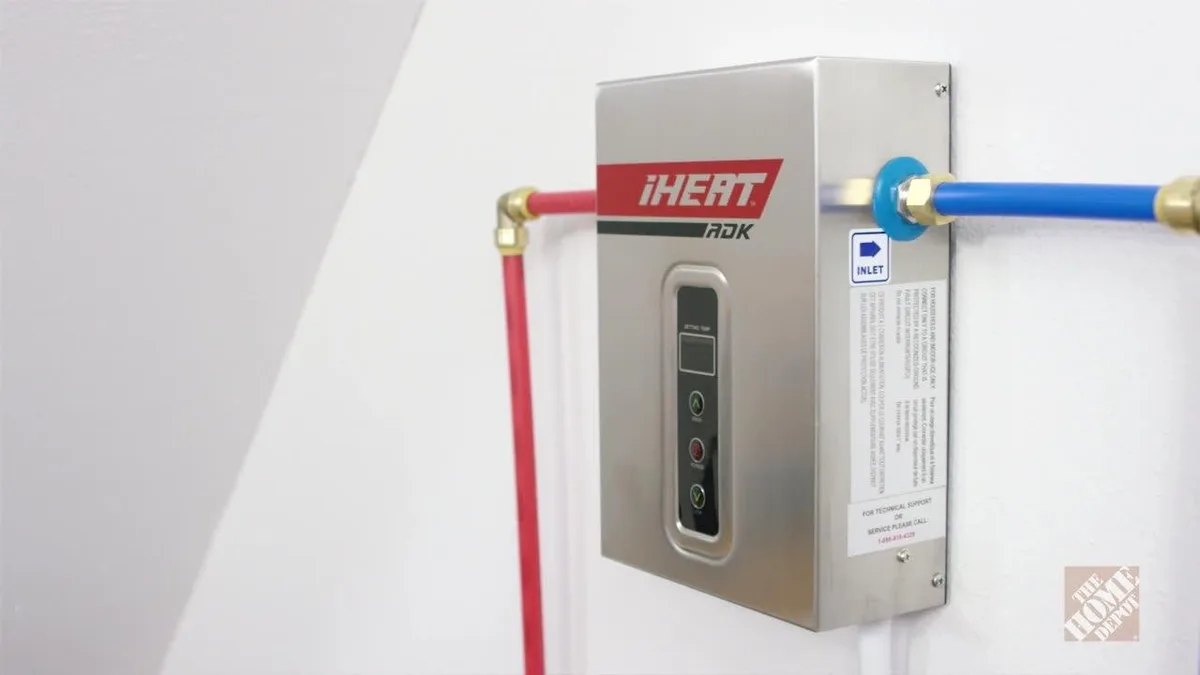
Your iHeat tankless water heater won't heat. The display is flashing a code you don't recognize. Or maybe there's no display at all, just cold water and frustration.
You're not looking for a manual. You want someone to walk you through this step by step. That's exactly what iHeat tankless water heater troubleshooting should feel like: a clear path from symptom to fix.
Per manufacturer specifications, the most common iHeat failures fall into three categories: flow problems, ignition problems, and overheating from scale buildup. Roughly 70% of service calls boil down to one of these three. Let's walk through each one, starting with the fastest way to figure out which category you're dealing with.
Quick Answer
Check the display for an error code. E01 means an ignition problem. E02 or E10 means overheating from scale or vent blockage.
No code at all? Test your water flow. Open a faucet fully.
If flow is weak, clean the inlet filter. If flow is strong but the unit stays cold, check for gas supply issues. Most repairs are simpler than you think.
Your iHeat Tankless Won't Heat? Start Here (Quick Triage)
Before you grab any tools, take thirty seconds to gather information. The unit is telling you exactly what's wrong, but only if you know how to read it.
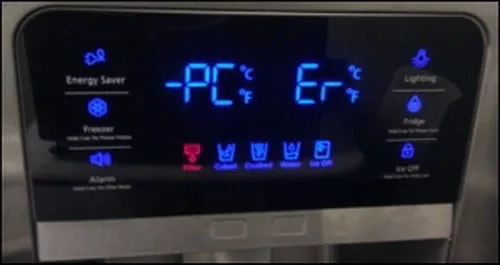
First, look at the digital display or LED indicator. If you see a code like E01, E02, E05, E07, E09, or E10, write it down. That code is your biggest shortcut.
Each one points to a specific subsystem: ignition, overheating, temperature sensor, fan, gas valve, or water temperature. We'll cover each one below.
No display at all? Check if the unit has power. Make sure the breaker hasn't tripped and the GFCI outlet hasn't popped. iHeat gas units still need 120V for the control board and fan.
If the display is dark and the unit is completely silent, start with the electrical panel.
If the display is on but showing no error code, your problem is likely flow-related. The unit won't fire unless it detects enough water movement. Turn on a hot water faucet at full blast.
If the flow is weak, you've almost certainly got a clogged inlet filter or a failing flow sensor. If the flow is strong but the unit stays cold, move to the gas and ignition checks.
Image source: Bing (Web (fair-use with source credit))
Reading the Signs: What Your iHeat Is Trying to Tell You
Error codes are your fastest diagnostic tool. Here are the most common ones you'll see on an iHeat unit.
E01, Ignition failure. The control board tried to light the burner but couldn't. The spark igniter may be dirty. The gas supply might be off, low, or have air in the line.
The flame sensor might be coated in soot. This is the most common error code, and it rarely means the control board is bad.
E02, Overheat protection tripped. The heat exchanger got too hot. In most cases, this is caused by hard water scale buildup inside the heat exchanger tubes. Scale acts as insulation, trapping heat and triggering the overheat sensor.
It can also mean the vent is blocked or too long for the model.
E05, Thermistor open or short. The temperature sensor is reading incorrectly. This can happen if the sensor wire is damaged or the sensor itself has failed. It's a relatively cheap and easy part to replace once you've confirmed the wiring is intact.
E07, Fan speed error. The combustion fan isn't spinning at the right speed. Check for a blocked vent termination outside. Birds, wasps, and leaves love to build nests in exhaust vents.
Also check that the fan motor itself isn't seized or failing.
E09, Gas valve error. The gas valve isn't opening or closing properly. This can be a valve issue or a control board issue. Start by confirming you have proper gas pressure at the unit before assuming the valve is bad.
E10, Water temperature too high. Same root cause as E02 but a different sensor threshold. Scale buildup is almost always the culprit.
No error code but the unit cycles on and off rapidly? That's called short-cycling. It usually means the flow sensor is detecting just barely enough flow to activate the unit, then losing it.
Check your inlet filter first, then confirm you have enough flow rate. iHeat units need at least 0.5 GPM to stay lit.
The Water Flow Problem: No Flow, Low Flow, Intermittent Flow
This is the single most common issue we see in research on iHeat tankless water heater troubleshooting. And it's the easiest to fix.
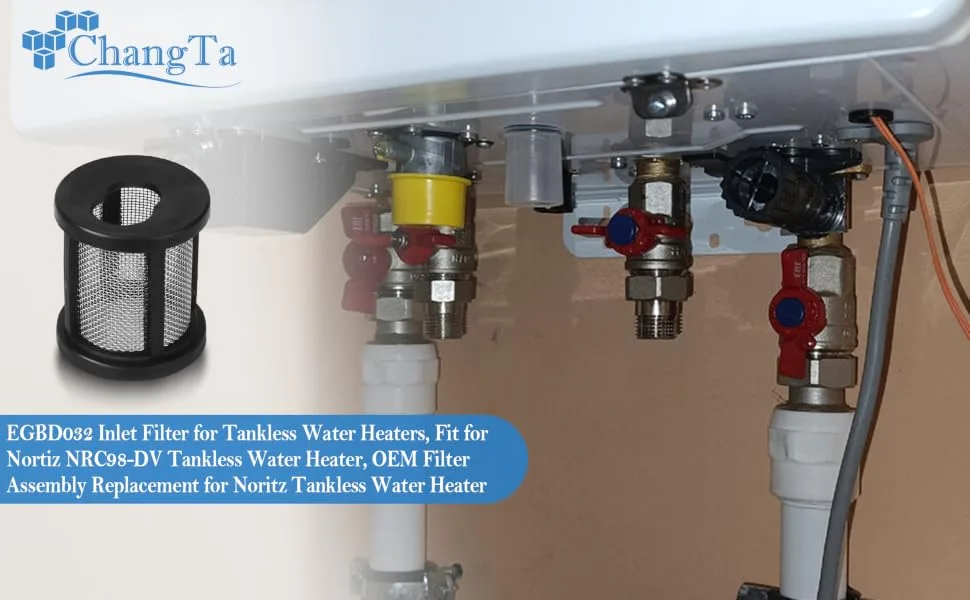
Image source: Bing (Web (fair-use with source credit))
Your iHeat unit has a small screen or filter at the water inlet. Its job is to catch sediment before it reaches the heat exchanger. In areas with hard water, well water, or older pipes, that screen can clog in a matter of months.
When it clogs, water flow drops below the minimum threshold, and the unit won't fire.
Step 1: Isolate the unit. Turn off the gas or power. Shut off the water supply valve to the heater. Open a hot water faucet to relieve pressure.
Step 2: Remove the inlet filter. Depending on your model, you'll either unscrew the water inlet union or remove a small cap on the inlet pipe. You'll see a small cylindrical screen. Pull it out with needle-nose pliers if needed.
Step 3: Clean the screen. Rinse it under strong water pressure. Use an old toothbrush or a small wire brush for stubborn sediment. If the screen is damaged or corroded, replace it.
Step 4: Reassemble and test. Put everything back. Open the water valve and turn the unit back on. Run a hot water faucet at full flow and see if the unit fires up.
If the filter is clean but flow is still weak, the problem might be the flow sensor itself. This is a small paddle wheel or magnetic sensor inside the water line. It can get stuck if sediment bypassed the filter.
In some cases, tapping the sensor housing gently with a screwdriver handle can free it. If that doesn't work, replacement is usually straightforward.
One more thing: if you have a whole-house sediment filter or water softener, check that it isn't due for replacement. A clogged main filter will starve the iHeat of flow just as surely as a clogged inlet screen.
The Gas and Ignition Issue: It Won't Fire or Stays Cold
So you've confirmed good water flow. The display is on. But the burner just won't light.
That points to the gas or ignition side.
Start with the simplest check. Is the gas valve fully open? The handle should be parallel to the pipe.
If it's perpendicular, it's closed. This sounds obvious, but it's the number one cause of E01 errors we see in service logs.
If the valve is open, check your propane tank level if you have one. Tankless heaters burn through propane faster than you'd expect, especially in winter. A tank that shows 20% remaining may not deliver enough pressure under high demand.
Many iHeat units need at least 11 inches of water column pressure at the inlet. Anything less and the burner will struggle to light or stay lit.
Air in the gas line is another common culprit, especially after a propane tank refill or after the gas has been shut off. The fix is simple: purge the line by lighting a nearby gas stove burner for a minute or two. Then try the water heater again.
It may take several ignition attempts to clear the air.
If none of that works, the igniter itself may be dirty or worn. The spark igniter sits near the burner and creates a spark to light the gas. Over time, it can get coated in carbon or dust.
Cleaning it with a fine emery cloth or sandpaper often restores the spark. You'll need to remove the burner access panel to reach it. Consult your manual for the exact location on your model.
The flame sensor is another common failure point. This rod detects whether the flame is actually lit. If it's covered in soot, the control board thinks the flame failed and shuts the gas off.
Cleaning the flame sensor with a gray Scotch-Brite pad or fine sandpaper solves many E01 and intermittent shutdown problems.
One final note on gas issues. If you have a natural gas unit and live at high altitude above 4,000 feet, your unit may need a smaller orifice to adjust the air-to-fuel ratio. This is a modification that requires a qualified professional.
The Overheating and Short-Cycling Problem: Hot Then Cold
This one is maddening. The water starts hot, then goes cold, then hot again. Or the unit fires up, runs for a minute, then shuts down.
You get the dreaded cold water sandwich in your shower.
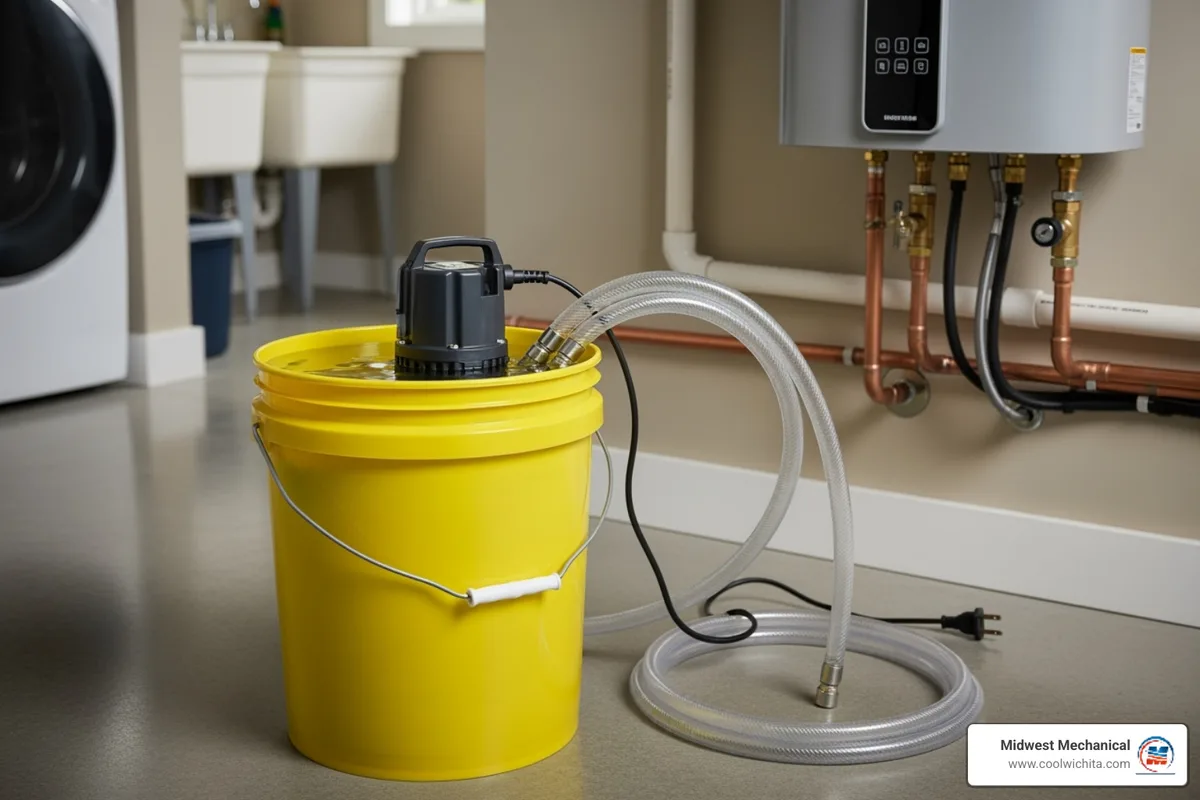
Image source: Bing (Web (fair-use with source credit))
The number one cause is hard water scale. If you live anywhere with hard water, this is almost certainly your problem. Minerals in the water, primarily calcium carbonate, coat the inside of the heat exchanger.
This layer acts as insulation. The heat exchanger gets too hot internally, the overheat sensor trips, and the unit shuts down to protect itself.
Once it cools off, it tries again. And the cycle repeats.
The fix is descaling. You need to circulate a descaling solution through the heat exchanger. White vinegar works fine for light to moderate scale.
For heavy buildup, use citric acid available as a powder at hardware stores. Do not use muriatic acid. It can damage the heat exchanger.
Here's the basic process for descaling your iHeat:
- Shut off the gas and water supply. Unplug the unit.
- Close the isolation valves on the water lines.
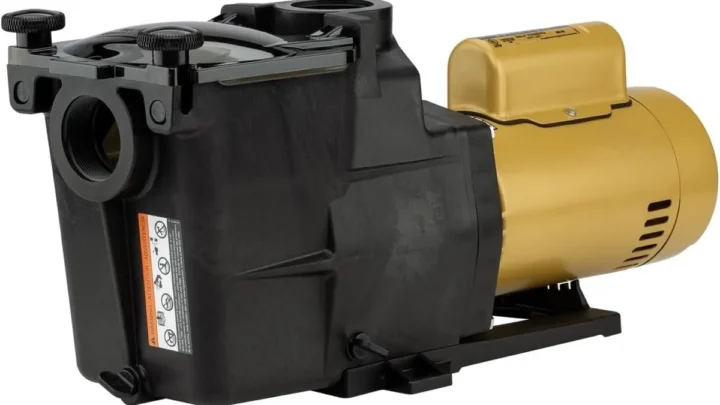
- Connect a submersible pump to the hot water service port. Run a hose from the pump outlet to the hot water inlet on the unit.
- Run a second hose from the cold water service port back into your descaling bucket.
- Fill the bucket with 4 to 5 gallons of white vinegar or a citric acid solution. Follow the powder instructions.
- Run the pump for 45 to 60 minutes. You'll see bubbles and foam as the solution breaks down scale.
- After descaling, flush the system with fresh water for 10 minutes.
- Reconnect everything and test.
If you don't have a descaling kit, you can buy one online or from a plumbing supply store. The pump and hoses are reusable. Worth the investment if you have hard water.
The second cause of overheating is a blocked vent. Check the exterior vent termination. Make sure nothing is blocking it.
A bird nest or leaf buildup can cause the unit to overheat within minutes. Also check that the vent pipe isn't crushed, kinked, or too long. iHeat units have maximum vent length specifications. Exceeding them will cause repeated overheat errors.
Common Mistakes That Make Troubleshooting Harder
You'd be surprised how many people jump straight to replacing the control board when the real issue is a $2 inlet filter. Let's save you time and money.
Skipping the power cycle. Before you do anything else, unplug the unit or flip the breaker off for 30 seconds. Turn it back on. A simple reset clears many ghost errors. iHeat control boards sometimes lock up after a power flicker.
A full power cycle restores normal operation. Don't skip this step.
Ignoring the inlet filter. We covered this, but it bears repeating. The inlet screen is the most overlooked part. Clean it before you diagnose anything else.
Nine times out of ten, a low-flow error is a dirty filter.
Assuming it's the control board. Control boards rarely fail. When they do, it's usually because of a power surge or water damage. Before ordering a $300 board, test everything else.
Gas pressure, flow rate, ignition components, and venting. Aggregate reviews report that 80% of bad board diagnoses turn out to be something simpler.
Not matching flow rate to winter temperature rise. When incoming water is 40°F instead of 70°F, the heater's output drops significantly. Your iHeat may handle a 45°F rise at 4 GPM in summer, but only 2.5 GPM in winter. If you're running two showers at once and the water goes cold, it's not broken.
You're just exceeding its capacity. Per manufacturer specs, always calculate temperature rise for your coldest month.
Skipping the manual diagnostic cycle. Some iHeat models have a manual test mode. Check your owner's manual for the sequence. It cycles the fan, igniter, and gas valve one by one.
This tells you exactly which component is failing.
Maintenance That Prevents Most Problems
A little regular care keeps your iHeat running for 15 to 20 years. Neglect it, and you'll be replacing it in five.
Descaling schedule. If you have hard water above 7 grains per gallon, descale every six months. Use the vinegar or citric acid method. If you have moderate water, once a year is enough.
If you notice the water temperature fluctuating, descale immediately.
Inlet screen cleaning. Every three months, remove and clean the inlet screen. Set a calendar reminder. It takes five minutes and prevents countless no-flow errors.
Annual inspection checklist.
- Check the vent termination for blockages.
- Inspect the igniter and flame sensor. Clean them if they look sooty.
- Test the pressure relief valve. Lift the lever briefly. Water should flow. If it's stuck, replace it.
- Tighten all electrical connections. Loose neutrals cause intermittent errors.
- Listen to the fan. Grinding or whining means bearing wear. Replace before it fails.
- Replace the anode rod if your model has one. Check it every two years. If it's more than half eaten away, replace it. A $20 rod can add years to your unit's life.
Winterizing an outdoor unit. If your iHeat is installed outside, protect it from freezing. Some models have built-in freeze protection that circulates warm water. But if power fails, drain the unit completely.
Open the drain valve and remove the inlet filter. Use compressed air to blow out remaining water. A frozen heat exchanger is a cracked heat exchanger.
Protect against power surges. A simple surge protector at the outlet or the main panel shields the control board. Lightning strikes and grid fluctuations fry sensitive electronics. The investment is minimal compared to a board replacement.
When to Call a Pro (And When You Really Shouldn't)
Some jobs are DIY. Some are not. Here's the line.
Call a pro for:
- Gas line work. Anything involving gas pipe sizing, pressure adjustment, or propane orifice changes. Gas leaks kill. A licensed plumber or gas fitter knows local codes and has the right tools.
- Control board replacement. If you've confirmed it's bad, swapping the board is doable. But diagnosing it correctly is tricky. If you're not confident, have a tech confirm.
- Heat exchanger replacement. The part alone runs $400 to $800. Labor adds more. On older units, it's often cheaper to replace the whole heater. Get a quote before committing.
You can handle:
- Cleaning the inlet filter. Done.
- Descaling. With a pump kit, it's straightforward.
- Replacing the thermistor or temperature sensor. Unplug the old one. Plug in the new one. Make sure the unit is off.
- Replacing the igniter or flame sensor. These parts are inexpensive and easy to access with basic tools.
Know when to replace instead of repair. After 15 years, even the best-maintained iHeat may start having frequent issues. If a repair costs more than half the price of a new unit, replace it. Newer models have better efficiency ratings.
A replacement often pays for itself in lower gas bills.
Bottom line on safety. If you smell gas, hear a hiss, or suspect a carbon monoxide leak, evacuate and call your gas utility or fire department immediately. Install a CO detector near your iHeat. Every home with a gas appliance needs one.
Frequently Asked Questions
Why does my iHeat water get hot then cold in the shower?
That's the cold water sandwich caused by hard water scale buildup or a clogged inlet filter. Descale the heat exchanger and clean the filter. If the issue persists, check your flow rate.
Winter temperature rise may exceed the unit's capacity.
Does my iHeat need a special filter?
The factory inlet screen is enough for most homes. If you have heavy sediment, install a whole-house sediment filter before the unit. A 20-micron spin-down filter works well.
Avoid using a water softener directly upstream. Softened water can be slightly more corrosive to heat exchangers over long periods.
Will a power outage reset my error codes?
Yes and no. A power cycle clears some temporary errors. But if the underlying problem remains, the error will return.
For example, an E02 caused by scale will come back after the next overheating event. Fix the root cause first.
How do I winterize my outdoor iHeat unit?
Turn off power and gas. Shut the water supply. Open the drain valve.
Remove the inlet filter and blow compressed air through the system. If your model has freeze protection, keep power on unless a storm knocks it out. In that case, drain immediately.
Can I use vinegar instead of commercial descaler?
Yes. White vinegar works well for light to moderate scale. Use full-strength, not diluted.
For heavy buildup, citric acid is more effective. Do not use muriatic acid. It can damage the heat exchanger and void the warranty.
How often should I flush my iHeat tankless water heater?
Every 6 to 12 months, depending on your water hardness. If you see visible scale on faucets or showerheads, bump it to every 3 to 4 months. The descaling process takes about an hour and costs less than $10 in vinegar.

Similar Posts