Kohler Generator Troubleshooting Manual
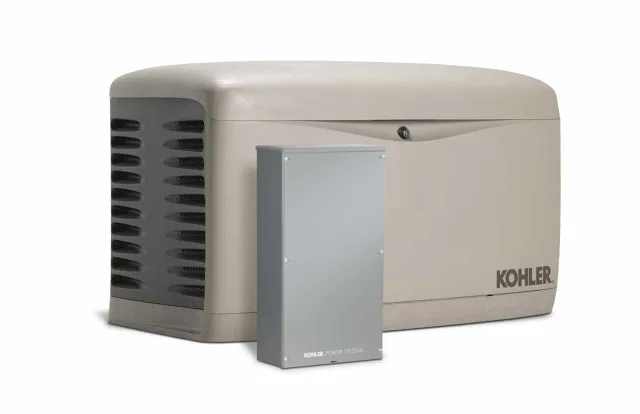
Image source: Bing (Web (fair-use with source credit))
You're staring at a dead generator. The power's out, the fridge is warming up, and the Kohler sitting outside won't even crank. Before you call a technician and pay a visit fee, there's a solid chance you can fix this yourself.
This guide walks you through the common faults, the error codes, and the fixes that don't require an electrician's license.
The good news is that Kohler residential generators run on a surprisingly logical control platform. The controller, whether it's the older RDC2 or the newer K2, practically tells you what's wrong if you know how to read it. Most no-start and shutdown issues trace back to just a handful of causes: battery condition, fuel supply, oil level, or a tripped internal breaker.
Here's how to work through them in order.
Safety First: What to Do Before Touching Anything
Working on a generator means managing two separate hazards: the engine and the electrical output. The engine side has moving parts, hot surfaces, and pressurized fuel. The electrical side is worse, a residential standby unit can generate fatal voltage, and it can do so without warning because the transfer switch is still connected to the grid.
Shut it down properly. If the generator is running, let it go through its cooldown cycle, then press the OFF button on the controller. If it's dead and won't start, disconnect the negative battery cable first. On most Kohler models, that's a 10mm nut on the battery terminal.
Never work on a live controller. The control panel runs on 12V DC from the battery, but the alternator windings and the transfer switch carry line voltage. If you suspect a wiring issue around the transfer switch, call a licensed electrician. That's not a cop-out, that's the difference between a blown fuse and a trip to the hospital.
Disconnect the utility power. If you're troubleshooting the transfer switch or the load side, flip the main breaker in your home's panel to OFF. This isolates the generator from grid feedback while you work.
Tools you'll need:
- Digital multimeter (set to DC volts for battery checks)
- 10mm and 13mm sockets with a ratchet
- Spark plug socket
- Clean shop rags
- Owner's manual for your specific model
- Battery terminal cleaner
When to call a professional:
- You see burned wires or smell something electrical
- The transfer switch is clicking rapidly or chattering
- The generator runs but produces no output
- You're not comfortable working near live electrical components
Problem 1: The Generator Won't Start at All
This is the most common complaint, and it's usually the simplest to fix. A Kohler that won't crank or won't turn over falls into one of four branches: battery, fuel, spark, or safety interlocks. Test them in that order.
Step 1: Check the battery voltage
Grab your multimeter and set it to DC volts. Touch the red probe to the positive battery terminal and the black probe to the negative. A healthy battery should read at least 12.4 volts.
Below 12.2 volts, the battery is too weak to spin the starter reliably.
If the voltage is low, don't assume the battery is bad. Kohler generators charge the battery while running, but a battery that's sat for months in cold weather can drop below cranking threshold. Jump-start it using the same procedure you'd use on a car.
If it starts and runs, the battery was the culprit. Let it charge for a few hours and call it a win.
Step 2: Check the battery connections
Corrosion on the terminals is a silent killer. It looks like white or green powder and it blocks current flow. Even tight bolts can hide corrosion between the cable lug and the terminal post.
Loosen the cables, clean both the posts and the lugs with a wire brush, and reattach them snugly. Smear a thin layer of dielectric grease over the connections to keep moisture out. Then retest the voltage at the battery.
Step 3: Test the starter solenoid
If the battery is fine but nothing happens when you press START, the problem is between the battery and the starter. The solenoid is a small cylindrical relay mounted near the starter that sends power to the starter motor.
Test it by listening: press START and have someone listen near the engine. A single loud click from the solenoid is good. A rapid click-click-click means the solenoid is engaging but not getting enough current, usually from a weak battery or a bad ground.
No click at all means the controller isn't sending a start signal, which points to the fuse, the controller itself, or a safety interlock.
Step 4: Check the 15A fuse in the controller
The RDC2 and K2 controllers have a blade fuse that protects the control circuit. Pull it and hold it up to the light. A blown fuse shows a visible break in the wire.
Replace it with the same amperage. Do not jump it with a larger fuse, that's how you burn out a controller.
If the new fuse blows immediately, you have a short somewhere in the harness. Frayed wires around the battery box or a pinched harness near the engine cover are common spots.
Step 5: Verify safety interlocks
Kohler units have a low-oil pressure switch that kills the starter circuit if oil pressure is too low. If your oil is low, the generator won't crank. Check the dipstick.
If it's low, top it off and hit START again.
Also check the engine compartment cover. Some models have a cover position switch that prevents starting if the housing isn't closed. Make sure everything is latched properly.
Problem 2: Generator Starts Then Dies
This one's frustrating. The engine fires up, runs for a few seconds, and then dies like someone yanked the fuel line. If the generator runs for exactly 5 to 10 seconds and shuts down, you're dealing with a safety sensor or a fuel delivery issue.
Notice whether it sputters as it dies or just quits cold, that tells you which branch to chase.
If it dies instantly (no sputter)
The engine is firing but the controller is killing it. This is almost always a low oil pressure shutdown or a blown fuse on the control circuit. Check the oil level first.
The oil pressure switch takes a few seconds to build pressure, and if the oil is low, pressure never stabilizes, so the controller shuts the engine down to protect it.
If the oil is fine, look for a loose wire on the oil pressure switch. The vibrating engine can shake a connector loose. Re-seat it firmly and retest.
If it sputters and dies
That's a fuel flow problem. The engine is getting enough fuel to start but not enough to keep running. On natural gas or LP models, check the fuel shutoff valve first.
It's usually a quarter-turn ball valve near the gas pipe connection. Make sure it's fully open.
Next, check fuel pressure.
Kohler residential generators require specific fuel pressure, usually 11 to 14 inches of water column for natural gas and slightly higher for LP. If you don't have a manometer, you can't measure this precisely. But you can do a rough check: open the gas valve and listen for gas flowing.
You should hear a soft hiss.
If there's no hiss, your gas line is blocked or the regulator is stuck. Common causes include debris in the line, a shutoff valve that's partially open, or a regulator that's frozen up in cold weather. In freezing temperatures, a little water vapor in the gas line can ice up inside the regulator.
Warm the regulator with your hands and try again.
Check the air intake.
A plugged air filter causes a rich fuel condition that kills the engine after a few seconds. Remove the filter housing cover and look at the element. If it's black with dirt or clogged with debris, replace it.
Kohler recommends changing the air filter every 200 hours of operation or annually, whichever comes first.
The over-crank circuit
Here's where the controller logic gets interesting. The controller gives the starter plenty of time to spin the engine, typically 45 seconds. If the engine doesn't reach a running state in that time, the controller locks out the starter and throws an error code.
This looks like a start-and-die situation because the engine fires briefly, dies, and the controller never sees sustained RPM.
If you've cleared the fuel and oil issues, reset the controller by cycling the main power switch OFF and then back to AUTO. Wait 15 seconds between cycles. That clears the fault and lets you try again.
Reading Kohler Fault Codes Like a Technician
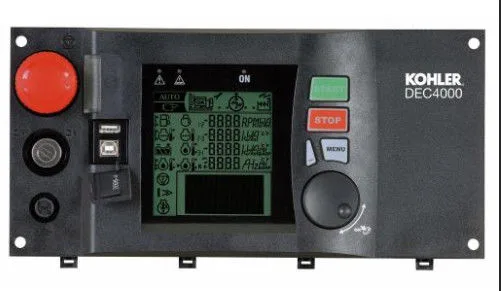
Image source: Bing (Web (fair-use with source credit))
Once you know how to read them, fault codes are your best friend. They turn a frustrating guessing game into a direct path to the problem. The controller displays codes either on the LCD screen (RDC2 and K2 models) or as a blinking LED light on older models.
The blinking pattern matters: a long blink is a 1, a short blink is a 0.
The two-part code: SPN and FMI
Kohler uses the J1939 diagnostic standard, the same protocol used in commercial trucks and heavy equipment. Each fault has two numbers: the SPN (Suspect Parameter Number) identifies which system has the problem, and the FMI (Failure Mode Identifier) tells you how it failed. Think of the SPN as the subject and the FMI as the verb.
| SPN | Meaning | Common FMI |
|---|---|---|
| 190 | Engine speed | 4 (unexpected) / 3 (overspeed) |
| 94 | Fuel pressure | 1 (low) / 2 (high) |
| 100 | Oil pressure | 1 (low) / 4 (sensor error) |
| 723 | Battery voltage | 1 (low) / 2 (high) |
| 27 | Intake air temp | 4 (sensor short) |
| 1907 | Throttle actuator | 7 (no response) |
FMI codes you'll see most often
- FMI 1, Low signal: the sensor reads below normal range. Usually means a bad sensor, a broken wire, or an actual low condition
- FMI 3, Voltage high: sensor circuit is shorted to power
- FMI 4, Voltage low: sensor circuit is shorted to ground or broken
- FMI 5, Current low: usually an open circuit in a control output
- FMI 7, No response: a component isn't answering the controller's command
The most common fault codes
The most frequent fault on residential Kohlers is SPN 100 FMI 1, low oil pressure. If the engine is actually low on oil, that's a simple fix. If the oil is full, the sensor itself might be failing.
A faulty oil pressure switch triggers this code even when pressure is fine. Swap the sensor and the code clears.
SPN 723 FMI 1, low battery voltage, appears when the battery drops below 10.5 volts during cranking. That's a battery health issue. Cold weather makes it worse, since battery capacity drops about 20% at 32°F.
SPN 190 FMI 3, overspeed, means the engine ran faster than the controller allows, usually above 3780 RPM. That's a governor or throttle issue. Don't run the generator when this code is active.
Overspeed can damage the alternator and produce bad voltage.
What to do when you see a code you don't recognize
Don't panic. Write down the exact SPN and FMI numbers. Check the interconnect harness for obvious damage: chafed wires, loose connectors, corroded pins.
Then look at your owner's manual, most manuals have a fault code table specific to your model.
Reset after fixing
After you've addressed the root cause, clear the code by cycling the controller power OFF for 15 seconds, then back ON. If the code returns immediately, you didn't fix the problem. If it stays gone, you're back in business.
Problem 3: Transfer Switch Not Switching
The generator can run perfectly and still leave you in the dark if the automatic transfer switch (ATS) isn't doing its job. The ATS is the box that decides whether your home runs on utility power or generator power. When the utility drops, the switch should transfer within 10 to 15 seconds.
When it doesn't, you have a clear diagnostic path.
Check the position indicator
Look at the window on the front of the switch enclosure. If it shows UTILITY, the switch didn't transfer. If it shows STANDBY or GENERATOR, the switch did its job and the problem is elsewhere.
Check utility power sensing
The ATS has a utility sensing coil that monitors the grid. If this coil isn't receiving voltage, the switch won't know there's a power failure. Use your multimeter to check voltage at the utility terminals inside the ATS enclosure.
You should see somewhere around 240V between the two hot legs. If you see zero, the problem is upstream: a tripped main breaker, a blown fuse on the utility side, or a loose connection at the meter or panel.
Check the generator start signal
When the utility voltage drops below the threshold (typically 80% of nominal), the ATS sends a start signal to the generator, black wire N1, white wire N2 on most models. Measure for 12V DC on the start wires at the generator terminals. If you have 12V, the ATS is calling for power.
If you have nothing, the ATS sensing board is bad or the wiring between the ATS and generator is broken.
Testing the transfer mechanism manually
Most Kohler ATS units have a manual transfer handle, a molded lever that slides through an access slot in the enclosure. Move the lever to STANDBY after the generator is running. Then move it back to UTILITY once utility power returns.
This confirms the mechanical switch mechanism isn't stuck.
If the handle moves freely but the motorized transfer doesn't happen, the transfer motor is likely bad. That's a repair job for a licensed electrician. Don't attempt to replace the motor yourself unless you're absolutely certain you can work safely in a live switch enclosure.
The no-charge problem
If the ATS transferred properly but your battery is dead a week later, check the battery charger inside the ATS. The typical Kohler ATS includes a float charger that keeps the battery topped up when the generator isn't running. This charger runs on 120V AC.
If it fails, the battery slowly drains until the generator can't start. Test the charger output at the battery terminals: it should be around 13.5V when the utility is on.
Quick Reference: Symptoms and Likely Causes
Here's a condensed cheat sheet for the most common scenarios. Use it to jump straight to the likely fix.
| Symptom | Likely Cause | Fix |
|---|---|---|
| Won't crank, no click | Dead battery, bad connection, blown fuse | Charge battery, clean terminals, replace fuse |
| Won't crank, rapid clicking | Weak battery, bad ground | Jump start, check ground cable |
| Cranks but won't start | No fuel, plugged filter, bad spark plug | Check fuel valve, replace filter, clean plug |
| Starts then dies (no sputter) | Low oil pressure, sensor failure | Top off oil, replace oil pressure switch |
| Starts then dies (sputters) | Fuel restriction, frozen regulator, dirty air filter | Open valve, warm regulator, replace filter |
| Runs but no power to house | ATS didn't transfer, transfer motor failure | Check ATS position, test transfer mechanism |
| Error code SPN 100 FMI 1 | Low oil or bad oil pressure sensor | Check oil, replace sensor |
| Error code SPN 723 FMI 1 | Low battery voltage | Charge or replace battery |
When to Walk Away and Call a Pro
Some repairs require equipment you don't have and training you shouldn't fake. Here's the honest list of situations where you should call a Kohler dealer:
Fuel pressure issues. If you suspect the gas regulator is bad but you don't have a manometer, you're guessing. A technician has the right tools and can safely test gas pressure at multiple points. This matters because an over-pressurized regulator can damage the fuel solenoid or cause a dangerous leak.
Generator produces no output. The engine runs fine, but the house stays dark. That points to the alternator, the voltage regulator, or the ATS. Testing alternator windings requires a megohmmeter.
The voltage regulator operates at lethal potential. Call a pro.
Complex electrical shorts. Repeatedly blown controller fuses mean a wiring fault somewhere in the harness. Chasing it without a wiring diagram and a proximity test light is a nightmare. Let a professional trace it.
Transfer switch faults. The ATS is a live electrical enclosure. If the manual transfer lever is hard to move or the switch is stuck between positions, don't force it. A stuck switch can arc and cause severe damage.
Shut off the generator and utility power, then call a licensed electrician or Kohler dealer.
Warranty work. If your generator is still under warranty, performing major repairs yourself can void coverage for related components. Check your warranty terms before taking things apart.
Maintenance That Prevents Most Problems
Most generator failures we see are self-inflicted, not through misuse, but through neglect. A generator that runs once a week for exercise and sits through the rest of the year without attention is going to find a way to fail when you need it most. Here's a quick maintenance checklist that keeps common faults away.
Weekly:
- Run the generator under load for at least 10 minutes (Kohler recommends a weekly exercise cycle, which is usually programmed in the controller)
- Listen for unusual noises
- Check the controller display for any fault codes
Monthly:
- Check the battery terminals for corrosion
- Verify battery voltage (should be above 12.4V with the charger active)
- Look for oil leaks around the engine block or oil filter
- Check the air filter visually
Annually:
- Change the oil and oil filter (Kohler recommends 5W-30 for most residential units)
- Replace the air filter
- Replace the spark plug
- Change the fuel filter (if your unit has one)
- Have a licensed technician perform a full load test and ATS inspection
Before winter:
- Check the antifreeze level and condition
- Verify the block heater is working (if equipped)
- Confirm the battery is fully charged, cold weather drops battery capacity by about 20% at freezing
- Clear debris from around the generator enclosure vents
A little routine care costs less than an emergency service call. And when the power goes out at 2 AM during a storm, a working generator is worth every minute of maintenance you put in.
Final Thoughts: Work Through It Systematically
A dead generator isn't random. It's a chain of events with a clear starting point. Work through the steps in order: battery first, then fuel, then sensors.
Don't skip around. Write down any fault codes you see. If you fix something and the code clears but returns later, you haven't fixed the root cause, dig deeper.
And remember: the generator isn't the only thing that can fail. The transfer switch, the wiring between the generator and the ATS, and the utility connection are all part of the system. If the generator runs perfectly but the house stays dark, check the ATS indicator, it'll tell you which side of the system is failing.
If you've worked through everything in this guide and still can't get it running, call a Kohler dealer. A professional diagnostic visit is cheaper than replacing an engine, an alternator, or a transfer switch that you accidentally damaged with guesswork.

Similar Posts