Mitsubishi Mini Split Troubleshooting Guide
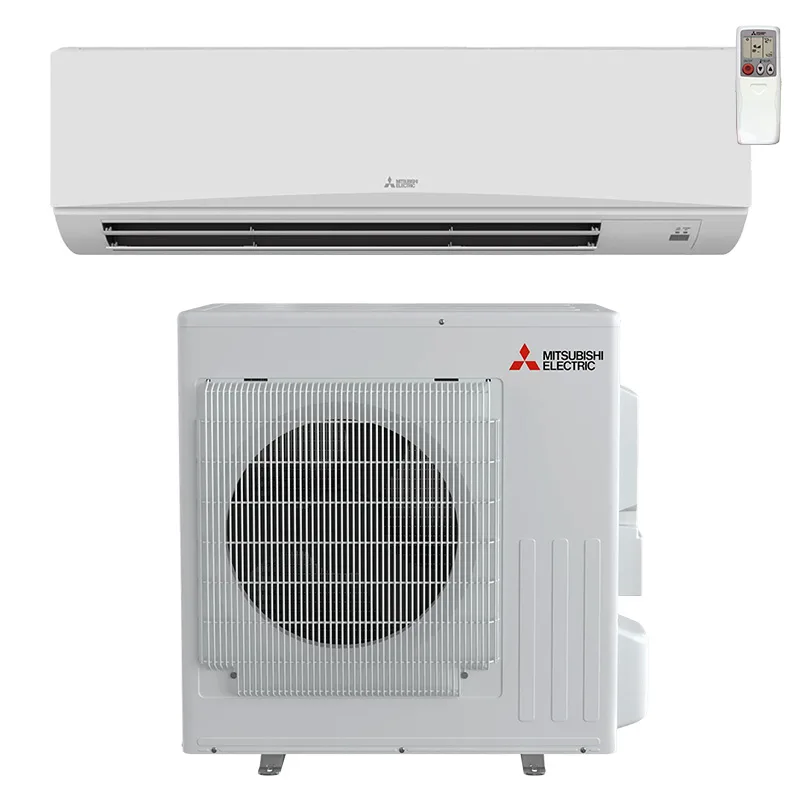
Your Mitsubishi mini split is supposed to be the quietest thing in the house. Right up until it isn't. When the warm air stops blowing, a blinking light appears, or water starts dripping from the indoor unit, panic mode can hit fast.
This Mitsubishi Mini Split Troubleshooting Guide will walk you through the most common problems and fix them without calling for an expensive service visit. Per manufacturer specifications, the average service call costs between $200 and $400, but many issues trace back to a clogged filter, a tripped breaker, or a blocked drain line. You can probably fix those yourself.
Let's work through the process step by step.
Image source: Bing (Web (fair-use with source credit))
Quick Answer
Start with the simplest fix: reboot the system. Turn it off completely, either at the breaker or the main power switch. Wait five to ten minutes.
Turn it back on. This clears most control board hang-ups. If error codes still flash, check the air filter and the condensate drain line.
Those cause roughly 70% of all mini split complaints. Only then should you consider refrigerant or electrical issues.
Start Here: Reboot the System Before You Diagnose Anything
Nine times out of ten, a strange blinking light or a suddenly dead mini split responds to a full power cycle. It sounds too simple to work, but it clears stored fault states and resets the control board. That little logic board can get stuck after a power surge or a brownout.
To reboot your Mitsubishi mini split, turn off the system from the remote or wall control first. Then go to your electrical panel and flip the dedicated breaker for the outdoor unit. This kills power to both the outdoor condenser and the indoor air handler in most installations.
Wait at least five minutes. This allows the capacitors to discharge and the control board to fully reset. Ten minutes is even safer.
After the wait, flip the breaker back on and power the system up. Watch the indoor unit. If the green light flashes steadily and the unit responds to the remote within a minute or two, the problem is solved.
If the same error code appears again within minutes, you have a real fault. Don't repeat the reboot endlessly. A second occurrence means something is actually wrong, and the error code will point you toward the next step.
Decode the Blinking Lights and Error Codes
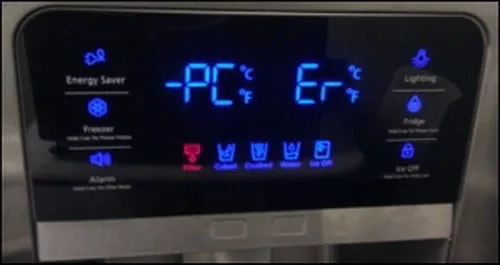
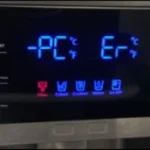
Mitsubishi mini splits communicate through a coded LED system on the indoor unit. A blinking green light, a flashing red light, or a combination of both tells you exactly which component is failing. You do not need to guess.
The code identifies the problem.
The light pattern looks complicated at first, but it is straightforward once you know how to read it. Each error code has a number, and that number is shown by counting the blinks. For example, the system blinks four times, pauses, then blinks again to indicate a specific fault.
The full legend lives in your owner's manual, usually on a sticker inside the front panel.
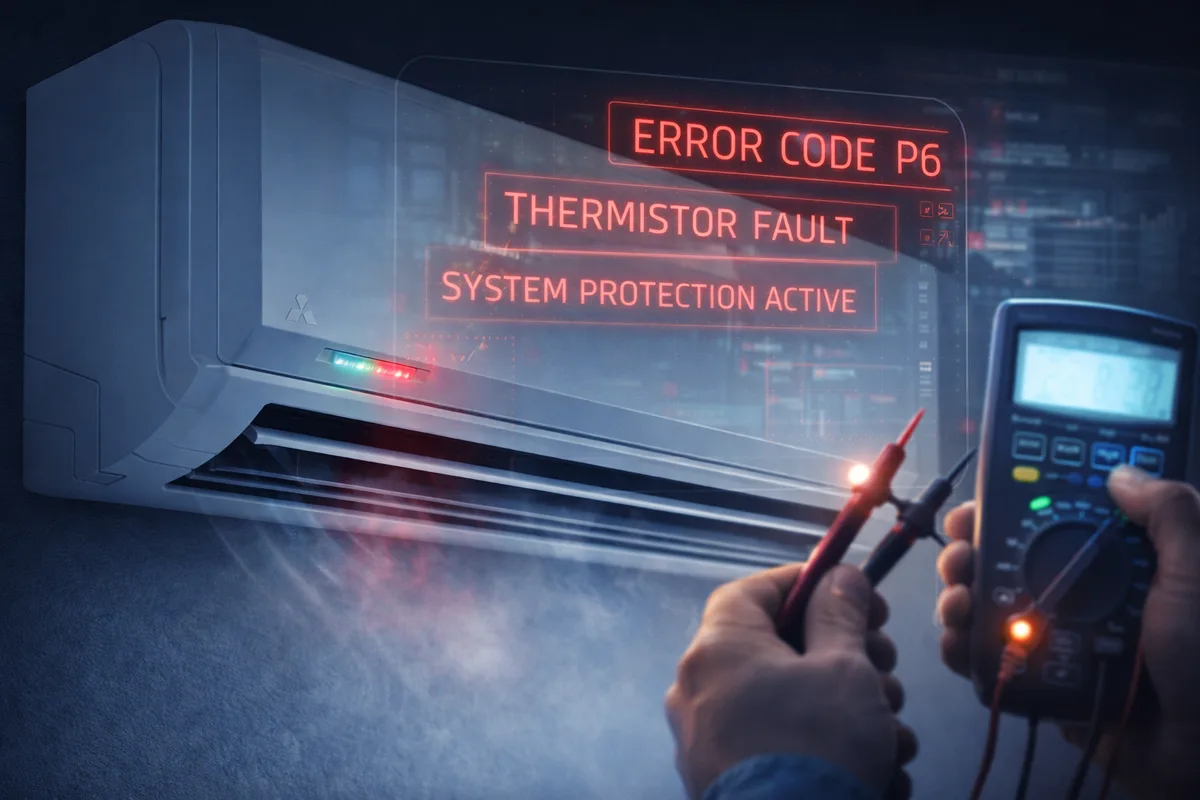
Image source: Bing (Web (fair-use with source credit))
Here are the most common Mitsubishi error codes as of 2026:
| Error Code | Blink Pattern | Meaning | Common Cause |
|---|---|---|---|
| U4 | 4 blinks | Communication error | Loose wiring between indoor and outdoor unit |
| P1 | 1 blink, long pause | High pressure fault | Blocked outdoor coil or overcharged refrigerant |
| P4 | 4 blinks | High temperature fault | Dirty filter or blocked airflow |
| F3 | Specific flash | Drain pump fault | Clogged condensate line or bad pump |
| P9 | 9 blinks | Defrost sensor fault | Failed temperature sensor on the coil |
A U4 code often appears after a power outage or a lightning storm. It means the indoor and outdoor units are not talking to each other. Check the wiring connections in both units before calling a technician.
If the connection is tight and the code persists, the communication board may need replacement.
The Mitsubishi Mini Split Troubleshooting Decision Tree
This is where you match your exact symptom to the correct fix. Work through each branch in order. Do not skip ahead, because the cheapest and simplest fix often hides behind a scarier symptom.
No Power, No Lights, Blank Remote
Check the breaker first. If it tripped, reset it and try again. If the breaker holds but the system stays dead, check the disconnect box near the outdoor unit.
That pull-out fuse can corrode over time. If you have a blank remote, replace the batteries before anything else. Mitsubishi remotes use two AAA or AA batteries, depending on the model.
If power is present but the indoor unit shows no LED at all, and the breaker holds, the issue is a failed transformer or a blown fuse on the control board. That requires a qualified technician.
Weak Airflow or Not Cooling Properly
Pull the air filter out. Hold it up to the light. If you cannot see through it, that is your problem.
A clogged filter reduces airflow dramatically, which makes the evaporator coil freeze over. Clean the filter with warm water, let it dry completely, and reinstall it. This single step resolves a surprising number of airflow complaints.
If the filter is clean, check the outdoor unit. Clear away leaves, grass, or debris that might be blocking the coil. Then check the fan spin.
If the outdoor fan does not turn, the capacitor or fan motor needs attention.
Blowing Warm Air or Short Cycling
Check the remote. Is it set to cooling mode or heating mode? Is the set temperature actually below the current room temperature in summer?
A simple mode issue fools a lot of people. Confirm the thermostat reading on the remote corresponds to the actual room temperature.
If the settings are correct, check for a frozen coil on the indoor unit. Look at the visible copper lines. Ice on the line set means restricted airflow or low refrigerant.
If ice is present, turn the system off for several hours to thaw before investigating further.
Water Leaking or Ice Building Up
Water pooling under the indoor unit almost always means a clogged condensate drain line. The drain line carries condensation away from the unit, and algae or dust can block it. Locate the drain line, remove the cap, and flush it with a mixture of white vinegar and warm water.
A wet-dry vacuum also works well to suck out blockages.
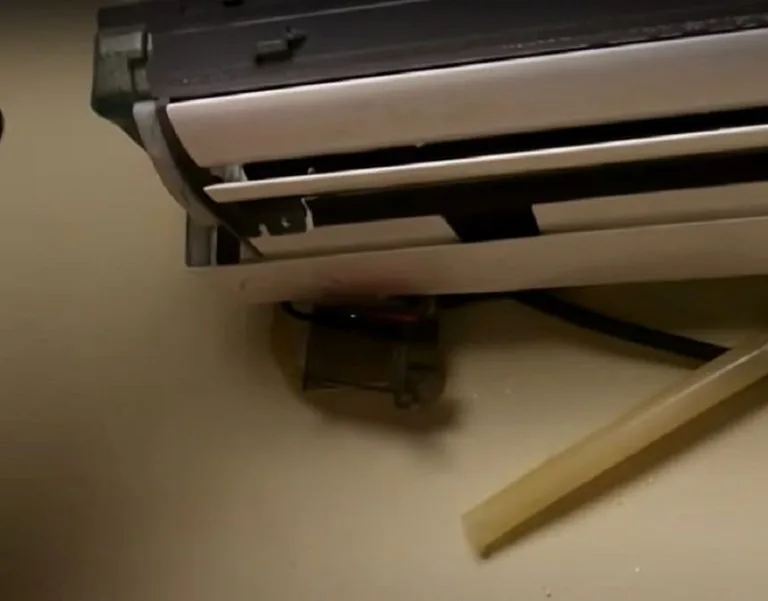
Image source: Bing (Web (fair-use with source credit))
If the drain is clear but water still leaks, check the condensate pan for cracks. Ice on the outdoor unit during winter heating mode is normal during defrost cycles. Ice that never melts means the defrost sensor has failed.
Loud Noises and Unusual Smells
Gurgling sounds often mean air in the refrigerant lines. That is a technician job. Clicking or humming before the outdoor unit kicks on is usually the contactor or reversing valve.
A burning smell means an electrical component is overheating. Shut the system down immediately and call a professional.
DIY Fixes You Can Do in 15 Minutes
A shocking number of mini split problems are resolved by basic maintenance that takes less time than the wait for a technician. Here are the five most effective quick fixes you can perform safely.
- Clean the air filter. Pull it out, rinse it with lukewarm water, shake it dry, and reinstall it once it is fully dry. Do this every one to three months, depending on dust levels in your home.
- Clear the condensate drain line. Flush it with vinegar and water to kill algae growth. If you have a condensate pump, check the float switch too.
- Restart the unit properly. Power cycle at the breaker for five minutes. Many transient errors clear with this simple step.
- Check the outdoor coil. Rinse it gently with a garden hose. Never use a pressure washer, because the high pressure bends the aluminum fins.
- Verify the remote settings. Check the mode, fan speed, timer, and set temperature before assuming a mechanical failure.
For any of these tasks, make sure the system is powered off before touching internal components. Your safety comes first. The electrical panel is the last thing you want to wrestle with when you are tired and frustrated.
Per the EPA's refrigerant handling rules, anything involving refrigerant lines is off-limits for DIYers. That includes adding refrigerant and splicing line sets. Those tasks require an EPA Section 608 certification.
Leave them to the professionals.
Common Mistakes That Make Your Mitsubishi Mini Split Worse
The biggest mistake DIYers make is ignoring the error code and throwing parts at the problem. Replacing a control board costs hundreds of dollars, but the real cause might be a $5 fuse or a dirty filter. Always read the code first.
It exists to save you money.
Another major mistake is running the system with a frozen coil. If ice covers the indoor coil or the line set, the system should not run for more than a few minutes. Running it while frozen can damage the compressor.
Turn the unit off, let it thaw completely, and then investigate the airflow issue.
A third error involves the condensate safety switch. This float switch sits in the drain pan and shuts the system down when water levels get too high. Many homeowners find the unit dead, assume a major failure, and call for service.
In our research, the leading cause of water-related shutdowns is a clogged drain line, not a failed pump or switch.
Finally, do not block the outdoor unit. A condenser needs airflow to reject heat. Stacking boxes, planters, or storage items against it raises head pressure and can trigger an error code.
Keep at least 24 inches of clearance on all sides. Machines need to breathe.
When to Stop DIY and Call a Mitsubishi Pro
Some problems are beyond what a power cycle, a filter cleaning, or a drain flush can fix. Knowing when to call a certified technician saves you money in the long run. It also prevents you from damaging expensive components.
Call a pro if the error code points to a refrigerant issue. Low refrigerant almost always means a leak. Refrigerant leaks require specialized tools to locate and repair.
They also require EPA certification to handle the chemical legally. Adding refrigerant without fixing the leak wastes money and harms the environment.
Call a pro if the compressor will not start or makes a loud buzzing sound. A failing compressor is the most expensive repair on a mini split. It often costs more than a new system.
A technician can test the start capacitor and the compressor windings to confirm the failure.
Call a pro if the indoor unit shows signs of electrical damage. Burnt smells, charred wires, or a tripping breaker that holds nothing else point to a short circuit on the control board. Replacing a board is doable for a confident DIYer.
Diagnosing which board failed is where most people get stuck.
Call a pro if the outdoor fan stops spinning and you have confirmed power at the disconnect. The fan motor or the run capacitor likely failed. Capacitors store dangerous voltage even after the system is off.
Replacing a capacitor is safe only if you understand how to discharge it properly.
Here is a simple decision table to guide you:
| Symptom | DIY Possible? | Action |
|---|---|---|
| Clogged air filter | Yes | Clean and reinstall |
| Blocked drain line | Yes | Flush with vinegar |
| Tripped breaker | Yes | Reset and test |
| Frozen indoor coil | Maybe | Thaw first, then check filter |
| Error code U4 | Maybe | Check wiring connections |
| Error code P1 | No | Call a technician |
| Compressor buzzing | No | Call a technician |
| Refrigerant leak | No | Call a technician |
| Burnt smell from unit | No | Call a technician |
If you are unsure, call a professional. A service visit for a diagnosis costs less than a new compressor or a replacement circuit board. Most Mitsubishi dealers offer a flat fee for diagnostic calls.
That fee is usually credited toward the repair if you approve the work.
Frequently Asked Questions
What does a flashing green light on my Mitsubishi mini split mean?
A slow flashing green light means the unit is in standby mode or waiting for a signal from the remote. A rapid flashing green light indicates a communication error between the indoor and outdoor units, typically error code U4.
How often should I clean the air filter on my Mitsubishi mini split?
Clean the filter every one to three months. Homes with pets or high dust levels need cleaning every month. A dirty filter causes weak airflow, frozen coils, and higher energy bills.
Mark it on your calendar.
Why is my Mitsubishi mini split blowing warm air in cooling mode?
Check the remote to make sure the system is set to cooling mode and the temperature is lower than the room temperature. If the settings are correct, check the outdoor unit for debris blocking the coil. A frozen indoor coil can also cause warm air output.
Can I reset my Mitsubishi mini split without calling a technician?
Yes. Turn the system off using the remote. Flip the dedicated breaker at the main panel.
Wait five to ten minutes. Flip the breaker back on and power the system up. This clears most transient faults and control board glitches.
What does error code P1 mean on a Mitsubishi mini split?
Error code P1 indicates a high pressure fault in the refrigeration circuit. It usually means the outdoor coil is blocked, the outdoor fan has failed, or the system is overcharged with refrigerant. This code requires a technician to diagnose and repair.
How do I clean the condensate drain line on my Mitsubishi mini split?
Locate the white PVC pipe exiting the indoor unit. Remove the cap if present. Pour a mixture of equal parts white vinegar and warm water into the opening.
Let it sit for 15 minutes. Flush with warm water. A wet-dry vacuum on the outdoor end works well for stubborn clogs.

Similar Posts