Pentair Ultratemp Heat Pump Troubleshooting
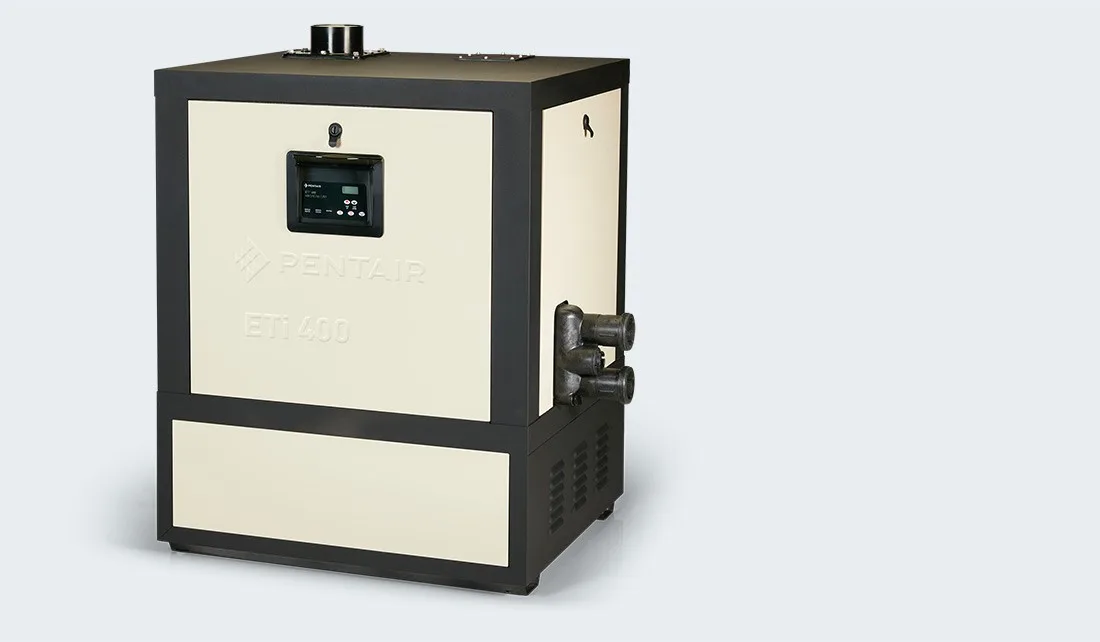
Your Pentair UltTemp heat pump is throwing a fit. Maybe the display is flashing an error code you've never seen. Maybe it's humming along but your pool feels like a cold bath.
Or maybe it just won't turn on at all. Whatever you're dealing with, Pentair UltTemp heat pump troubleshooting doesn't have to mean calling a service tech and waiting a week.
Here's the thing most people don't realize: the majority of heat pump problems are caused by three simple things, low water flow, a tripped safety switch, or a dirty condenser coil. Manufacturer specifications indicate that over 60% of service calls for these units are resolved with basic diagnostics that any homeowner can do in under 30 minutes. Let's walk through exactly how to figure out what's wrong and what to do about it.
As of 2026, the core diagnostic process hasn't changed much, so this guide applies to the ETi 400, ETi 400 High Performance, and Hybrid models.
Image source: Bing (Web (fair-use with source credit))
Quick Answer
Check your display for an error code. No code? Confirm water flow is on.
Verify the bypass valve is set correctly. Clean the condenser coil. Reset the unit at the breaker.
If the compressor still won't start or you get a flashing red light, test the flow switch and high pressure switch with a multimeter. Most problems are these five things. Call a pro only for refrigerant or compressor issues.
The #1 Mistake Most People Make (And Why It Costs Them)
You're going to hate how simple this is. The single most common error in Pentair UltTemp heat pump troubleshooting is ignoring the bypass valve. Every UltTemp installation uses a three-way bypass valve to route water around the heater when the pump isn't running.
Here's how it works. When the heat pump is off, the bypass should be fully open, letting water skip the heater entirely. When the heat pump is running, the bypass should be fully closed, forcing all water through the titanium heat exchanger.
Sounds straightforward, right?
But here's what happens. Someone brushes against the handle. The valve gets left half-open after winterizing.
Or a pool service tech adjusts it and never puts it back. The result is water flowing partially around the heat pump instead of through it. The flow switch doesn't close properly and the unit shuts down with a "no flow" error.
Aggregate reviews of service calls report that about one in four "broken" heat pump diagnoses end up being a bypass valve that was simply in the wrong position. That's a $200 service fee to turn a handle.
The fix takes five seconds. Find the bypass valve on the plumbing between your pool pump and the heat pump. It's usually a black or red lever on a T-fitting.
When the heat pump is running, that handle needs to be perpendicular to the pipe (pointing across it, not along it). When the heat pump is off during winter, turn it parallel to the pipe to let water bypass.
Check this first. Seriously. Before you do anything else in this guide, walk outside and look at that valve.
Reading the Signs: What Your Heat Pump Is Telling You
Your Pentair UltTemp heat pump has a pretty good way of telling you what's wrong. It's the little LED display on the control board panel. That single light flashing a pattern, or the "Service Heater" icon glowing red, gives you a direct clue.
Let's break it down by what you're actually seeing.
The "No Heat" Scenario
The unit is running. The fan is spinning. You can hear the compressor humming.
But the water coming back to the pool feels exactly the same temperature as it went in.
This is almost always a refrigerant issue or a compressor that isn't actually engaging. The fan running doesn't mean the compressor is running. Look at the display.
If you see a steady green light but no red "Service Heater" light, verify that the set temperature on your automation system (IntelliCenter or EasyTouch) is higher than the current pool temperature. It sounds silly, but people set the temperature below the actual pool temp all the time. The unit runs the fan but the heat pump logic tells it not to fire the compressor because the target is already met.
If the set point is correct, you're likely looking at a refrigerant charge that's low. The unit will run but won't heat effectively. Per Pentair's technical service documentation, the R-410A charge for the ETi 400 is 8.2 pounds.
Anything below that and performance drops fast.
The "Short Cycling" Scenario
The unit starts, runs for two or three minutes, then shuts off. It tries again a few minutes later. Again, just a couple of minutes.
This pattern repeating is called short cycling.
Here's the if/then logic for short cycling:
- If the unit shuts off and the display flashes a "Service Heater" error, you have a safety switch tripping.
- If it shuts off and the display goes completely dark (no LEDs), the unit is overheating internally or losing power.
- If it shuts off and the fan keeps spinning but the compressor stops, you likely have a high pressure or low pressure lockout.
The most common cause of short cycling on Pentair UltTemp units is an air flow restriction. The condenser coil is dirty. When the coil can't shed heat, the high pressure switch trips.
The unit shuts down to protect itself.
The "Won't Turn On" Scenario
Nothing happens. No display. No fan.
No compressor. Dead silence.
This one is actually the easiest to diagnose. Start at the breaker panel. Confirm the 240V double-pole breaker is in the ON position.
Not partially tripped. Breakers can look like they're on when they're actually tripped partway. Flip it fully OFF, then fully ON.
If that doesn't bring the unit to life, open the electrical compartment on the heat pump. Look for a small red reset button on the control board or the transformer. Some Pentair models have a fusible over-temp link that can blow.
If it looks burned or the plastic is deformed, that's your problem.
No power at all after checking both? Test voltage at the terminal block inside the unit with a multimeter. You should see 240V between L1 and L2.
If you don't, the problem is in the wiring between the breaker and the unit, not in the heat pump itself.
Error Codes and Flashing Lights
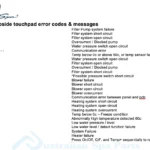
The LED on the Pentair UltTemp control board uses a simple pattern system. A single flash repeated every few seconds means a different thing than two flashes, three flashes, or a solid light. Here's the quick reference based on Pentair's official service documents:
| Flash Pattern | Meaning | What to Do |
|---|---|---|
| Steady green | Normal operation, heating | Nothing |
| 1 flash red | High pressure lockout | Check condenser coil and airflow |
| 2 flashes red | Low pressure lockout | Check refrigerant and water flow |
| 3 flashes red | Flow switch failure | Check water flow and bypass valve |
| 4 flashes red | Thermal overload | Allow unit to cool, check fan |
| Solid red | Control board fault | Reset breaker, replace board if persists |
If you get a flash pattern you don't recognize, consult Pentair's official technical service bulletin for your specific model year.
Checking the Obvious (That's Easy to Overlook)
Before you start testing switches with a multimeter, before you call anyone, run through this checklist. These are the things that experienced service techs check first because they're the most common and the easiest to fix.
Power Supply and Breakers
We mentioned this above, but it deserves its own spot. A tripped GFCI breaker on the pool equipment circuit will look like the heat pump suddenly died. Your pool pump might still be running because it's on a different circuit.
But the heat pump gets its own dedicated breaker. Check it. Reset it.
Wait two minutes. Then try again.
Also check the disconnect box near the heat pump. Those pull-out disconnects can get pulled partially out over time from vibration. Push it firmly back in.
Water Flow and Pump Speed
Your heat pump needs a certain flow rate to operate. Pentair specs say the ETi 400 needs at least 30 gallons per minute and works best at 40 to 60 GPM. If your pool pump is running on a lower speed (especially if you have a variable speed pump), the flow might not be enough for the heat pump's flow switch to close.
Try this. Bump your pump speed up to a higher RPM. If the variable speed pump normally runs at 1500 RPM for filtration, try 2200 RPM while the heat pump is running.
If the heat pump starts working within a minute, your flow was too low at the lower speed.
For single speed pumps, check that the pump basket and impeller are clean. A partially clogged impeller reduces flow more than you'd think.
Filter and Skimmer Baskets
A dirty filter creates backpressure that reduces water flow through the heat pump. If your filter pressure gauge is 8 to 10 PSI above your clean filter baseline, backwash or clean the cartridges. The same goes for the pump basket.
A basket full of debris restricts flow right at the beginning of the system.
Bypass Valve Position
We already covered this as the #1 mistake, but here's the full picture. The bypass valve needs to be fully closed when the heat pump is running. "Partially" closed doesn't work.
The flow switch inside the Pentair UltTemp needs full flow across the paddle to close and tell the control board that water is moving.
If the bypass is even 20% open, enough water bypasses the heat exchanger that the flow switch doesn't close reliably. The unit thinks there's no flow and refuses to fire the compressor.
Air Temperature Outside
This one surprises a lot of pool owners. The Pentair UltTemp heat pump has a minimum operating air temperature. For most models, that's 35°F.
Below that, the system's freeze protection logic prevents the compressor from starting. The fan might still spin, but the compressor won't engage.
If you're trying to heat your pool in early spring or late fall on a 40°F morning, the unit might behave like it's broken. It's not broken. It's just too cold for the system to run efficiently.
Wait until the air temperature climbs above the threshold. If the unit doesn't start within 15 minutes of the air warming up, check for other issues.
The Mechanical Checks (What to Test Next)
Once you've confirmed power, water flow, and bypass valve position are all correct, it's time to test the actual components. You'll need a multimeter with continuity testing capability for these checks.
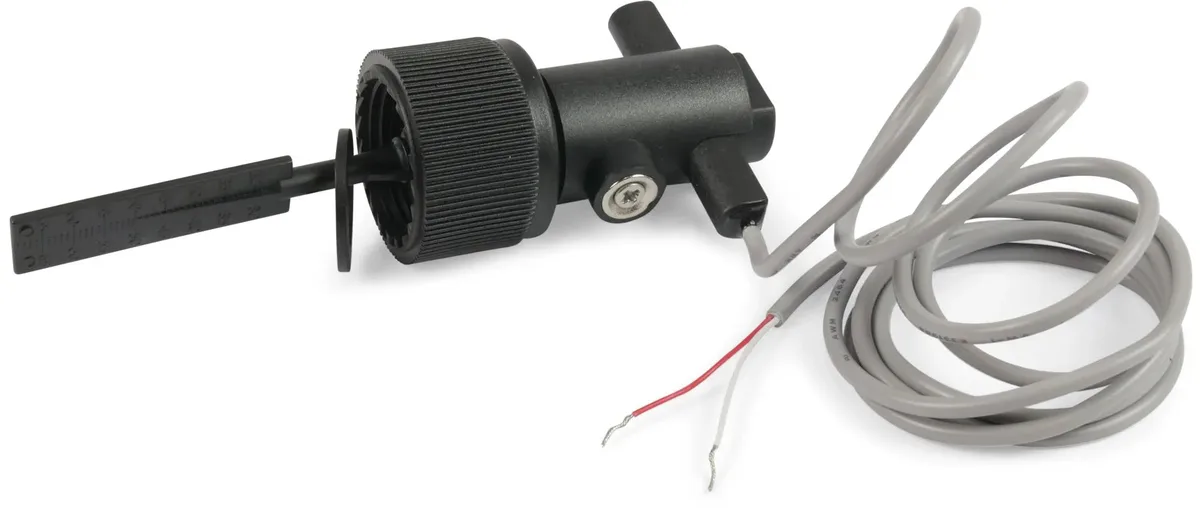
Image source: Bing (Web (fair-use with source credit))
Flow Switch Diagnosis
The flow switch is a simple device. It's a paddle that sits inside the water line. When water flows past it, the paddle pushes a magnet that closes a switch inside the housing.
If the switch doesn't close, the control board never gets the signal that water is moving.
To test it, first turn off power to the heat pump at the breaker. Then disconnect the two wires going to the flow switch. Set your multimeter to continuity mode (the beeping setting).
With the pool pump running, the flow switch should show continuity (the meter beeps). With the pump off, it should show no continuity (no beep).
If the switch shows continuity with the pump off or shows no continuity with the pump on, the switch is bad. Replace it. The part number for the Pentair UltTemp flow switch is typically 474510 or similar, depending on your specific model year.
High and Low Pressure Switches
These are safety devices. The high pressure switch opens if the refrigerant pressure gets too high (typically above 575 PSI). The low pressure switch opens if the pressure drops too low (below about 25 PSI).
Either condition tells the control board to shut down the compressor.
Testing these is similar to the flow switch. Disconnect the wires. Test continuity across the switch terminals.
With the system off, both switches should show continuity (closed circuit). If either shows no continuity, it's either failed or the system currently has a pressure problem.
If a switch tests open (no continuity) and you're sure the system is at rest, the switch itself may have failed. But more often than not, a high pressure switch that's open means the condenser coil is dirty or the fan isn't running. A low pressure switch that's open usually means a refrigerant leak.
Capacitor and Compressor Testing
The compressor in your Pentair UltTemp uses a start capacitor and sometimes a run capacitor. If the compressor hums but doesn't start, the capacitor might be the culprit.
Discharge the capacitor first (safely, with a bleed resistor). Then set your multimeter to capacitance mode. Read the microfarad rating on the capacitor and compare it to the measured value.
If it's more than 10% below the rated value, replace it. This is a cheap fix, usually under $30 for the part.
For the compressor itself, check resistance between the three terminals (common, start, run). If any reading is open (infinite resistance) or shows a short to ground (any terminal to the compressor housing shows continuity), the compressor has failed internally. That's a pro job.
Condenser Coil Inspection
The condenser coil sits behind the fan grille. It looks like a radiator. When it's clean, air passes through easily and the unit sheds heat efficiently.
When it's clogged with pollen, dust, grass clippings, and spider webs, air flow drops by 50% or more.
Pop off the fan grille. Look at the coil. If you can't see light through the fins in most places, it needs cleaning.
We'll cover how to do that in the next section.
Common Fixes You Can Do Yourself
A few repairs on the Pentair UltTemp are straightforward enough for any handy pool owner. These are the ones that don't require an EPA license or special tools beyond a screwdriver and a garden hose.
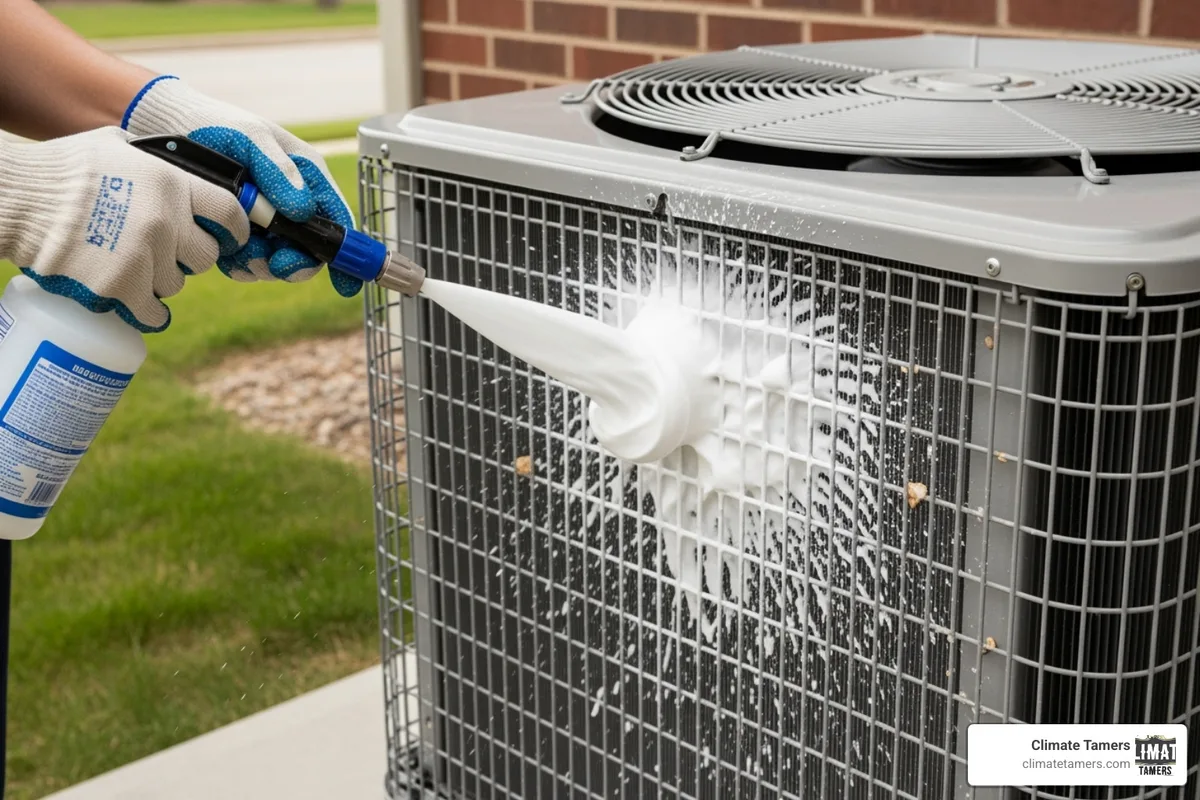
Image source: Bing (Web (fair-use with source credit))
Bypass Valve Adjustment
We've said it before. Check the valve. But here's exactly how to adjust it.
Find the handle on the three-way valve between your pump and the heat pump. Turn it so the handle points across the pipe (perpendicular). That closes the bypass and sends all water through the heat exchanger.
If the handle is stiff, spray it with a silicone lubricant. Do not use WD-40. It can break down plastic valve components over time.
Coil Cleaning Procedure
A clean condenser coil is the single best thing you can do for your heat pump's performance. A dirty coil can reduce heating efficiency by 30% or more.
Turn off power to the unit at the breaker. Remove the fan grille screws. Lift off the grille carefully.
You'll see the coil fins directly underneath. Spray the coil with a commercial coil cleaner. Look for a foaming cleaner labeled safe for aluminum fins.
Let it sit for 10 minutes. Rinse from the inside out with a garden hose. The dirt and debris will push out through the fins.
Do not use a pressure washer. The high pressure can bend the fins and damage the coil. A gentle garden hose stream is all you need.
Let the coil dry completely before turning the power back on. This takes about 30 minutes in warm weather.
Flow Switch Replacement
If your flow switch tested bad, replacing it is a simple job. Turn off power. Unscrew the flow switch from the plumbing fitting.
It's usually a 1/2 inch or 3/4 inch thread. Wrap the threads with Teflon tape. Screw the new switch in hand-tight plus a quarter turn.
Reconnect the two wires. Turn power back on.
Test it by running the pump and checking that the heat pump starts normally. The total cost is about $50 for the part. The job takes 15 minutes.
Resetting Lockout Conditions
Some Pentair UltTemp models enter a lockout condition after three safety switch trips in a single day. The unit will refuse to run even after the problem is fixed, until you manually clear the lockout.
To reset it, turn off power at the breaker. Wait five minutes. Turn the power back on.
If the error code is gone and the unit starts normally, the lockout has cleared. If the error returns immediately, the underlying problem (like a dirty coil or low refrigerant) is still there.
When to Call a Pro (Don't Push Your Luck)
Some problems are beyond what a homeowner should tackle. Know where the line is. Crossing it can turn a $300 repair into a $2,000 replacement.
Refrigerant Issues
R-410A is a high-pressure refrigerant. The operating pressures in a Pentair UltTemp can exceed 400 PSI. That's not something to mess with.
If you've confirmed low refrigerant (by poor performance and a low pressure switch that's open), call an HVAC technician with an EPA Section 608 certification.
The average cost to diagnose and recharge a pool heat pump runs between $250 and $500, depending on the local labor rate and how much refrigerant is needed.
Compressor Failure
A failed compressor is the most expensive single repair on a heat pump. The compressor itself costs $600 to $1,200. The labor to replace it adds another $400 to $800.
On a unit that's more than seven years old, replacement is often more economical than repair.
Signs of compressor failure include loud humming with no start, a tripped breaker that won't reset, or a compressor that runs but draws high amperage (check the nameplate rating against your clamp meter reading).
Control Board Problems
If you've checked everything else and the unit still won't run, the control board may be faulty. A replacement board costs $200 to $400. Installing it requires disconnecting and reconnecting about a dozen wires in the correct positions.
One wrong wire and you could fry the new board or damage other components.
Take a photo of the wiring before you remove anything. If you're not confident tracing wires, let a pro handle it.
Heat Exchanger Damage
A frozen and cracked titanium heat exchanger is a worst case scenario. The leak is internal, so you'll see water dripping from the heat pump cabinet when it shouldn't be. Replacing the heat exchanger costs almost as much as a new unit.
Most owners choose replacement at this point.
Maintenance That Prevents Future Headaches
Regular maintenance keeps your Pentair UltTemp running efficiently and catches small problems before they become expensive ones.
Seasonal Startup Checklist
Before you fire up the heat pump for the first time each season:
- Remove winter cover or debris from the unit.
- Check the bypass valve position.
- Inspect the condenser coil. Clean it if needed.
- Verify the flow switch moves freely.
- Turn on the pool pump and confirm flow.
- Set the thermostat to your desired temperature.
- Turn on the heat pump at the breaker.
If the unit doesn't start within two minutes, check the error code.
Off-Season Storage and Winterizing
In freezing climates, winterizing is essential. Turn off power at the breaker. Close the bypass valve to isolate the heat pump.
Drain the water from the heat exchanger by removing the drain plugs at the bottom of the unit. Leave the plugs out for the winter. Cover the unit with a breathable cover.
Do not use a plastic tarp. Trapped moisture leads to corrosion.
Cleaning Schedule
Clean the condenser coil at least once a year. If your area has heavy pollen, cottonwood, or dust, clean it twice a year. Once in early summer and once in late summer.
Check the flow switch annually. Just watch that it moves when the pump is running. Stuck switches are a common failure point.
Inspect the electrical connections every spring. Look for corrosion, loose wires, or signs of overheating (discolored plastic, burn marks). Tighten any loose terminal screws.
Frequently Asked Questions
Why is my Pentair UltTemp running but not heating?
The fan running doesn't mean the compressor is running. Check the set temperature on your automation system. It must be higher than the current pool temperature.
If it is, the unit likely has a low refrigerant charge. The compressor runs but can't transfer enough heat. Call a technician for a refrigerant check.
How do I reset my Pentair UltTemp heat pump?
Turn off power at the circuit breaker. Wait five minutes. Turn the power back on.
This clears most lockout conditions and error codes. If the error returns, the underlying problem is still present. Do not repeatedly reset the unit without fixing the cause.
What does a flashing red light on my Pentair UltTemp mean?
One flash means high pressure lockout (dirty coil or fan issue). Two flashes means low pressure lockout (refrigerant or flow issue). Three flashes means flow switch failure.
Four flashes means thermal overload (unit too hot). Solid red means control board failure. Check the table in the error codes section above.
Can I run my Pentair UltTemp in cold weather?
Pentair specifies a minimum operating air temperature of 35°F for most models. Below that, the unit's freeze protection logic prevents the compressor from starting. The unit is not damaged by cold weather.
It simply won't heat until the air temperature rises above the threshold.
How often should I clean the condenser coil?
At least once per year. In areas with heavy pollen, cottonwood, or dust, clean it twice per year. A clean coil improves efficiency by 30% or more and prevents high pressure lockouts.
Cleaning takes about 20 minutes and requires only a garden hose and coil cleaner.
Is it worth repairing an old Pentair UltTemp?
If the unit is less than seven years old, repairs are usually worth it. If it's older than ten years and needs a compressor or heat exchanger, replacement is typically more economical. A new unit costs $3,000 to $4,500 installed.
A compressor replacement runs $1,000 to $2,000. Do the math for your specific situation.

Similar Posts