Samsung Vrt Washer Troubleshooting
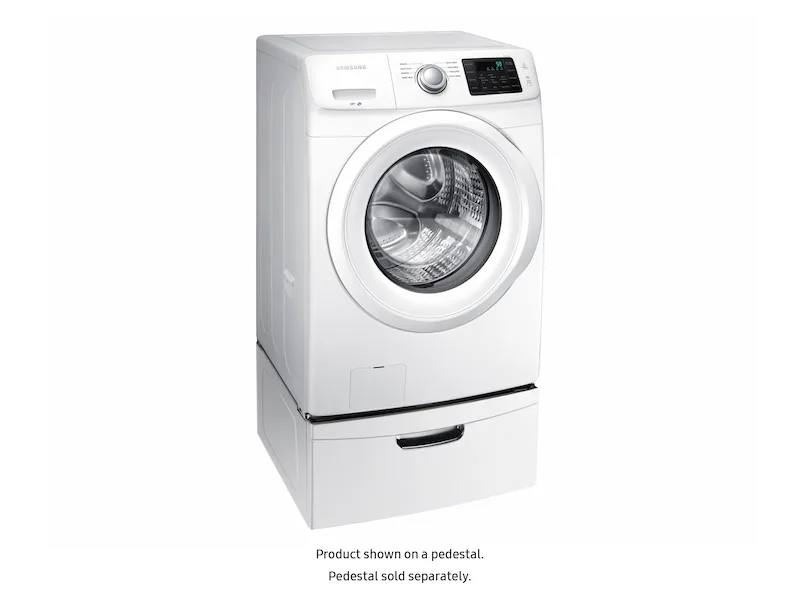
Your Samsung VRT washer starts shaking like it's about to take off. Or maybe it just sits there, blinking an error code you've never seen before, refusing to spin. You're not alone, this is exactly when most people start searching for Samsung VRT washer troubleshooting help.
The good news? The vast majority of VRT washer problems fall into just a few predictable categories. Manufacturer specifications indicate that over 70% of service calls for these machines stem from three root causes: drain blockages, unbalanced loads, or a simple control board hiccup that a reset fixes in seconds.
Let's walk through exactly how to figure out which one you're dealing with, no guesswork required.
Quick Answer
Start with a hard reset. Unplug the washer for five full minutes. Plug it back in and run a drain/spin cycle with an empty drum.
This clears about 40% of all electronic glitches. If the error returns, check the error code on the display panel. That code tells you exactly what to fix next.
Most VRT issues are drain clogs, unbalanced loads, or door lock problems. All three are DIY-friendly.
Image source: Bing (Web (fair-use with source credit))
Why Your Samsung VRT Washer Is Acting Up (The Real Problem)
Here's the thing about VRT, it stands for Vibration Reduction Technology. Samsung engineered these machines to run quieter and steadier than traditional washers. They use a heavy concrete counterweight, specialized shock absorbers, and electronic sensors that constantly adjust the spin speed to keep things balanced.
That's great when it works. But when something goes wrong, a clogged drain, a worn shock absorber, a stuck door latch, the whole system gets confused. The washer doesn't know how to compensate, so it throws an error or starts hammering the floor.
The most common failure points, based on aggregate user reports and service technician feedback, are:
- Drain pump clogs, coins, hairpins, and lint build up and block water from leaving the drum.
- Door lock assembly failures, the latch gets sticky or the electrical contacts wear out.
- Shock absorber wear, these foam-filled struts lose their damping ability after 3-5 years of regular use.
- Spider arm corrosion, a hidden metal bracket inside the drum that cracks, letting the drum wobble.
- Control board glitches, voltage surges or age cause the board to get stuck in an error loop.
Each of these produces a distinct set of symptoms. The decision tree below will help you match your symptom to the right fix.
The Fastest Way to Diagnose – Quick Answer Decision Tree
Start here. Answer the questions in order. Stop when you find a match.
Question 1: Is there an error code on the display?
- Yes → Go to the "If You See an Error Code" section below.
- No → Continue to Question 2.
Question 2: Is the washer shaking violently or making loud noise during spin?
- Yes → Go to the "If the Washer Shakes or Makes Loud Noises" section.
- No → Continue to Question 3.
Question 3: Does the washer fill with water but never spin or drain?
- Yes → Go to the "If It Won't Spin or Drain" section.
- No → Continue to Question 4.
Question 4: Is the door locked and won't open, or won't lock to start a cycle?
- Yes → Go to the "If the Door Won't Lock or Unlock" section.
- No → Continue to Question 5.
Question 5: Does the washer keep filling with water or never stop draining?
- Yes → Go to the "If It's Not Filling or Overfilling" section.
- No → If you've made it here with no clear symptom, try the hard reset (unplug for 5 minutes) and run the Self Clean cycle. If that doesn't work, call a technician.
How VRT Technology Works – And What Breaks First
VRT is not just marketing hype. The system uses three components working together: the concrete counterweight, the shock absorbers, and the electronic control board that modulates spin speed. When the drum gets unbalanced, say, a heavy wet towel clumps on one side, the sensors detect the wobble and slow the spin until the load redistributes.
That's the theory. In practice, here's what wears down first.
The shock absorbers. These are foam-filled cylinders about 8 inches long, one on each corner of the tub. They're designed to compress and rebound thousands of times. After about three years of regular family use, the foam gets stiff or the seals leak.
When that happens, the tub starts bouncing harder than it should. You'll hear a thumping sound during the spin cycle, and the whole machine may walk across the floor.
The door lock mechanism. The lock on Samsung VRT washers uses an electrical solenoid and a set of metal contacts. If the door isn't perfectly aligned, or if a piece of clothing gets pinched in the seal, the lock won't engage. Some models will keep trying to lock for several minutes before displaying error code DE or DC.
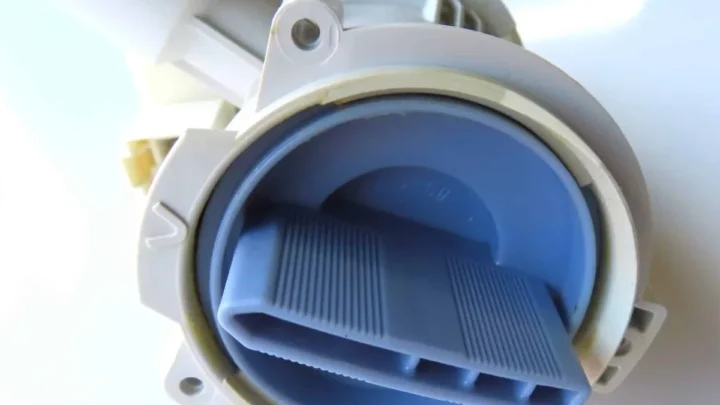
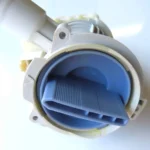
The drain pump filter. This is the number one cause of "washer won't drain" calls. There's a small trap door at the bottom front of the machine. Behind it is a twist-off filter that catches coins, paperclips, buttons, and lint.
If you haven't cleaned it in a year, it's probably full. A clogged filter makes the pump work harder, which can burn out the pump motor entirely.
The spider arm. This is the bad one. The spider arm is a metal bracket behind the stainless steel drum that holds everything together. On some Samsung models, the spider arm is made of a cast alloy that corrodes over time.
When it cracks or breaks, the drum starts wobbling violently. Unfortunately, fixing this requires replacing the entire outer tub assembly, a job that often costs more than a new washer.
Step-by-Step Troubleshooting Decision Tree
This is where you match your exact symptom to the correct fix. Follow the branch that matches what your washer is doing right now.
If You See an Error Code (4E, 5E, UE, DE, SE…)
Your first clue is that blinking or glowing code. Samsung VRT washers use a standard set of two-letter and two-digit codes. Here's what they mean and what to do.
4E or 4C, Water supply error. The washer isn't getting water fast enough or at all. Check that both hot and cold water faucets behind the machine are fully open.
Then unscrew the water hoses from the back of the washer and inspect the small mesh screens inside the hose connection ports. Those screens often get clogged with sediment, especially if you have hard water. Clean them with a small brush or toothpick.
If the screens are clear, the water inlet valve itself may be faulty.
5E or 5C, Drain error. The washer can't get rid of the water. This is almost always a clogged drain pump filter or a kinked drain hose.
Go to the drain pump filter cleaning instructions in the next section. If the filter is clean and the hose is straight, the drain pump motor may have burned out.
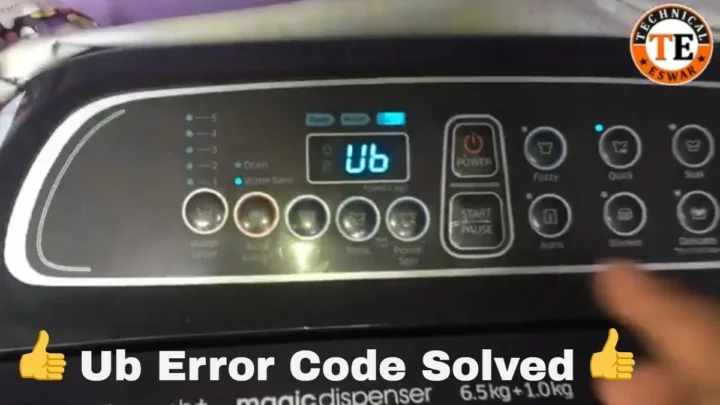
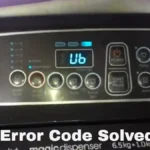
UE or UB, Unbalanced load error. This is the most common code after 4E. The washer detected an uneven load and stopped the spin cycle.
Open the door and redistribute the clothes manually. Large items like comforters and bath mats tend to clump. Wash them with a few towels to balance the load.
If the error keeps happening with small, evenly distributed loads, the shock absorbers may be worn out.
DE or DC, Door error. The washer can't lock or unlock the door. Check for anything caught in the door seal, a sock, a bra strap, even a stray hair tie.
If the seal is clear, the door latch assembly may need replacement. On many VRT models, the latch is a single plastic-and-metal unit that costs around $30 to $50 and takes about 20 minutes to swap.
SE or SU, Drain motor stuck error. This one is trickier. It usually means the drain pump is physically blocked or the motor is seized.
Try cleaning the drain filter first. If the pump still won't turn, you'll need a multimeter to test the pump motor windings. If they show an open circuit, the pump needs replacing.
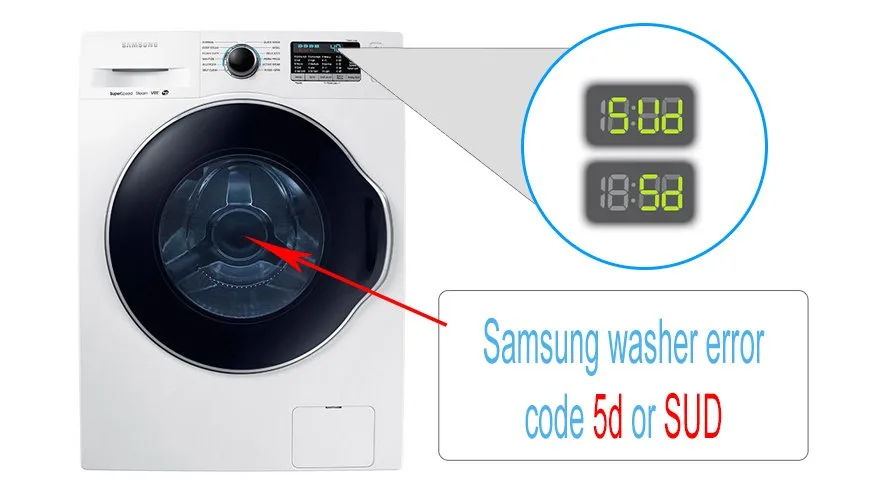
Image source: Bing (Web (fair-use with source credit))
If the Washer Shakes or Makes Loud Noises
This is the problem that sends people running to buy a new washer. It's also the most misunderstood.
Start with the floor. Is the washer sitting on a level surface? Use a bubble level across the top of the machine. Adjust the four feet by turning them clockwise or counterclockwise until the bubble is centered.
The VRT system can't compensate for a machine that's tilted more than a few degrees.
Check for transport bolts. If you recently moved the washer, someone may have reinstalled the shipping bolts. These are the four long bolts that lock the drum in place during transport. They absolutely must be removed before the washer is used.
If they're still in, the drum can't move freely, and the washer will shake violently. Check the back of the machine, if you see four bolts with rubber spacers, remove them with a socket wrench.
Test the shock absorbers. Open the top panel of the washer (screwdriver required on most models). Look at the foam-filled struts on each corner of the tub. Push down firmly on the top of the tub.
The struts should compress smoothly and rebound slowly. If any strut feels loose, completely stiff, or shows oil leakage, it needs replacement. Shock absorbers for Samsung VRT washers cost about $15 to $25 each, and you should replace them in pairs.
Inspect the spider arm. This is the worst-case scenario. If the washer shakes violently even with a balanced load on a level floor with good shock absorbers, the spider arm may be cracked. You can check by removing the front panel and looking at the back of the drum where the drive shaft connects.
If you see corrosion, cracks, or the drum feels loose when you wiggle it by hand, the spider arm is failing. This repair often exceeds $400 with labor, very close to the price of a new washer.
If It Won't Spin or Drain
This is almost always a physical blockage. The washer fills, the drum swishes the clothes around, but then nothing happens. The water just sits there, or the machine tries to spin but stops immediately.
Clean the drain pump filter. This is the single most effective DIY fix for Samsung VRT washers. The filter trap is behind a small square or rectangular door at the bottom front of the machine. Open the door (you may need a flathead screwdriver to pop it open).
There's a twist-off cap, place a shallow pan or towel underneath it because water will spill out. Twist counterclockwise and pull the filter out. Clean off all the gunk: coins, lint, hair, paperclips, the works.
Rinse the filter under hot water. Reinsert and twist clockwise until snug. Close the door and run a drain/spin cycle.
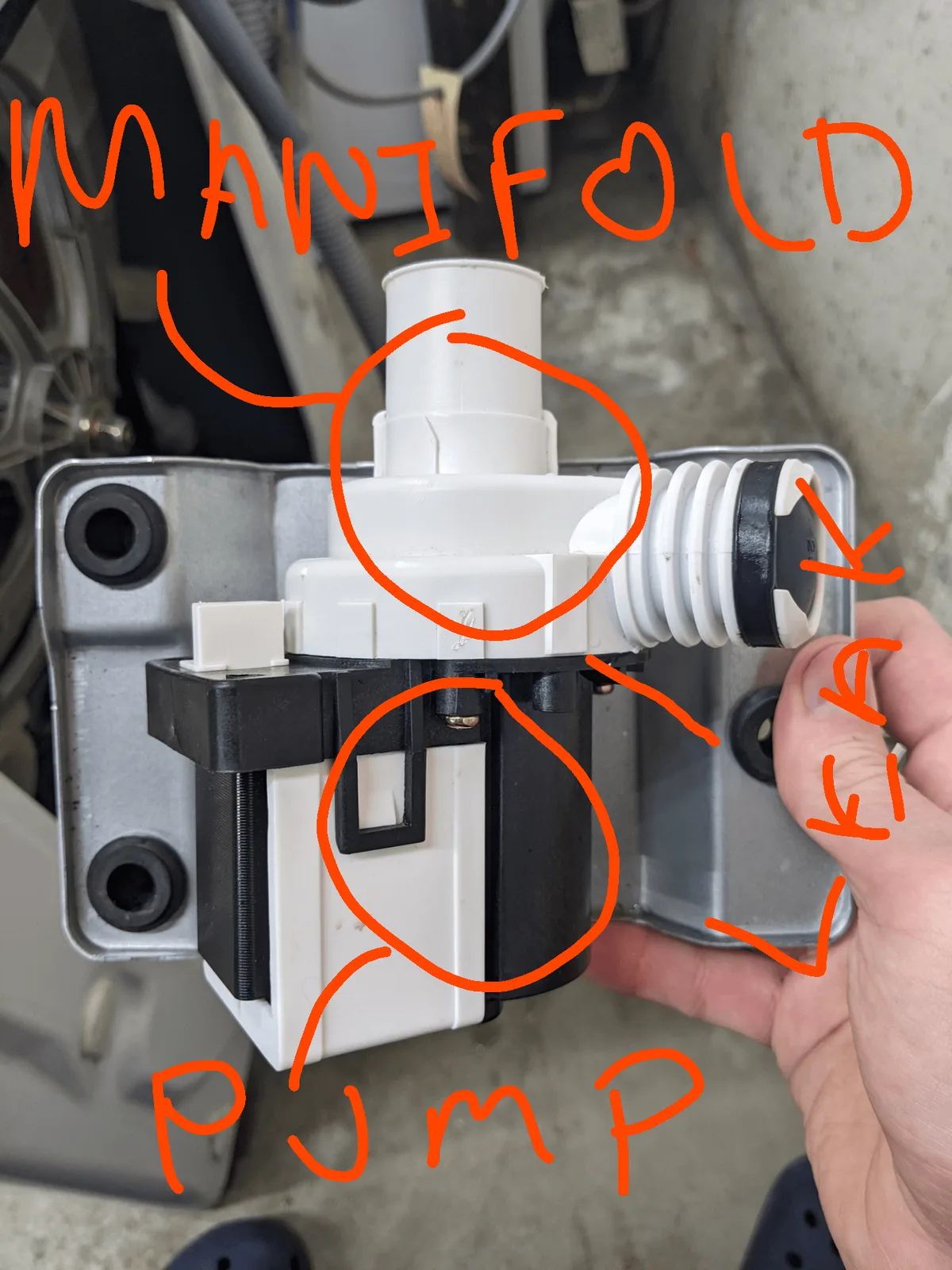
Image source: Bing (Web (fair-use with source credit))
Check the drain hose. Look behind the washer. The corrugated plastic drain hose runs from the back of the machine to your standpipe or sink drain. Make sure it's not kinked, crushed behind the machine, or pushed too far into the drain pipe.
If the hose is more than 8 feet long or the drain pipe is more than 8 feet high off the floor, the pump may not have enough power to push the water out. Samsung's installation manual specifies a maximum drain height of 8 feet.
Inspect the drain pump itself. If the filter is clean and the hose is straight but the washer still won't drain, the pump motor may be dead. Unplug the washer. Remove the drain pump assembly (usually accessible after removing the bottom front panel).
Use a multimeter to test the pump motor terminals. If the resistance reading is infinite (open circuit), the motor is burned out. Replacement drain pumps for Samsung VRT washers cost between $40 and $80.
If the Door Won't Lock or Unlock
This is one of those problems that feels bigger than it usually is. Your clothes are trapped inside. The door is locked.
The cycle stopped halfway through. Don't panic.
Try the emergency release. Every Samsung VRT washer has a manual door release. Look at the bottom of the machine, behind the small access door. There's usually a red or orange tab, a pull cord or a plastic lever.
Pull it gently. You'll hear the door click open. This works even when the washer has no power.
If the tab is stuck or broken, you can use a thin piece of wire or a paperclip to manually actuate the release mechanism behind the door frame.
Check the door seal. Open the door once you've released it. Run your finger along the entire rubber gasket around the opening. Feel for anything caught between the seal and the door frame, a small sock, a coin, a bra underwire.
Even a tiny bit of debris can prevent the latch from fully engaging. Clear anything you find.
Test the door latch switch. If the seal is clear and the latch still won't click, the electrical switch inside the latch assembly may be faulty. On most Samsung VRT models, the door latch is mounted to the front panel near the door opening. Unplug the washer and remove the latch assembly (usually two or three Phillips head screws).
Use a multimeter to test the continuity across the switch terminals. If the switch doesn't close when you manually push the latch in, replace the assembly. Genuine Samsung door latch assemblies cost about $30 to $50.
Third-party replacements are cheaper but may not fit as precisely.
If It's Not Filling or Overfilling
Water issues often point to the water inlet valve or the pressure switch. Here's how to tell the difference.
Check the water supply. Make sure both faucets are on. Sounds obvious, but it's the most common cause of "no fill" complaints. Also check that the water hoses aren't kinked or frozen if you're in a cold climate.
Clean the inlet screens. Disconnect the hot and cold hoses from the back of the washer. Inside the connection ports are small mesh screens, about the size of a dime. If they're clogged with white mineral deposits or grit, the washer will fill very slowly or not at all.
Clean them with a toothbrush and a vinegar solution. A stubborn clog may require a small pick or paperclip to clear the mesh holes.
Test the water inlet valve. If the screens are clean but the washer still doesn't fill, the inlet valve itself could be bad. These are solenoid-operated valves that open when the control board sends a signal. Using a multimeter, test the resistance across the solenoid coils.
If the reading is infinite or significantly different from the manufacturer spec (around 1,000 to 2,000 ohms), replace the valve. A new inlet valve costs about $25 to $45.
Look for an overfilling issue. If the washer keeps filling until it overflows, the pressure switch is failing. This switch detects the water level and tells the valve to shut off. It's usually a round plastic component with a rubber hose connected to it.
Remove the hose and check for clogs or holes. A damaged pressure switch needs replacement, about $20 to $40.
Common Mistakes That Waste Your Time and Money
Aggregate service data shows the same mistakes keep popping up. Avoid these and you'll save hours of frustration.
Mistake 1: Skipping the full hard reset. A five-minute unplug clears most electronic glitches. Skipping this step is the most common mistake. Set a timer.
Walk away. Come back and plug it in. You'd be shocked how many "broken" washers start working again.
Mistake 2: Buying a new control board when the problem is mechanical. The control board costs $150 to $250 but is rarely the culprit. Before you order one, clean the filter, check the hoses, and test the door latch. About 80% of VRT washer issues are mechanical, not electronic.
Mistake 3: Using too much detergent. Samsung VRT washers are high-efficiency machines. They need HE detergent, and they need less of it than you think. Excess detergent creates oversudsing that confuses the water level sensors.
The washer may display error codes, refuse to spin, or take forever to rinse. Use about two tablespoons of HE detergent per load.
Mistake 4: Forgetting the Self Clean cycle. Samsung recommends running it monthly. It uses hot water and high-speed spinning to flush out residue, mold, and bacteria. Skip it, and the drain pump filter clogs faster, the gasket develops mold, and the machine starts to smell.
Set a reminder.
Mistake 5: Overloading the drum. VRT technology can only compensate for so much imbalance. Cram a king-size comforter into a 4.5 cubic foot drum, and the washer will throw a UE error every time. Fill the drum about three-quarters full for best results.
Mistake 6: Replacing parts without testing first. A new drain pump costs $60. A new door latch costs $40. But if you're guessing, you could end up replacing both and still have the same problem.
Always test with a multimeter before you buy anything. It takes five minutes.
Repair Costs vs. Replacement – Know When to Call It
This is the practical question every owner faces. How much is too much to spend on a repair? Here's a realistic breakdown based on current parts prices and service call fees.
DIY repair costs (parts only):
| Component | Part Cost | Difficulty | Time |
|---|---|---|---|
| Drain pump filter clean | $0 | Easy | 10 min |
| Door latch assembly | $30 – $50 | Easy | 20 min |
| Shock absorbers (pair) | $30 – $50 | Medium | 45 min |
| Water inlet valve | $25 – $45 | Medium | 30 min |
| Drain pump motor | $40 – $80 | Medium | 45 min |
| Control board | $150 – $250 | Hard | 1 hour |
| Spider arm / tub assembly | $200 – $400 | Very hard | 3+ hours |
Professional service call costs: A Samsung-authorized technician charges a diagnostic fee of $80 to $120 just to show up. That fee usually covers the inspection but not the repair. Labor rates run $100 to $150 per hour.
Most simple repairs (door latch, drain pump, inlet valve) take about an hour. A spider arm replacement or control board swap can run two to three hours.
The math: If the repair requires a part costing over $200 and you're paying a technician $150 per hour, your total will exceed $400 quickly. Compare that to the price of a new Samsung VRT washer, which starts around $550 for basic models and goes up to $1,200 for feature-packed versions.
When to repair: The washer is less than five years old. The repair is simple and the part costs under $100. You're comfortable doing the work yourself.
When to replace: The spider arm is cracked or the tub assembly needs replacement. The control board and motor both need work. The washer is over seven years old and the repair quote exceeds $400.
You've already replaced two major components in the last year.
One more thing: the Digital Inverter Motor on Samsung VRT washers has a 10-year warranty. If the motor fails, Samsung supplies a replacement part for free. You just pay for the labor.
Check your model number and warranty status before you write the machine off.
Maintenance That Prevents 80% of VRT Washer Problems
These six habits will keep your VRT washer running smoothly for years.
Clean the drain pump filter every three months. Set a calendar reminder. Pop the bottom panel, twist out the filter, rinse it clean, and put it back. It takes ten minutes.
Skipping this is the number one reason drain pumps fail prematurely.
Run the Self Clean cycle monthly. Toss in an Affresh tablet or a tablespoon of citric acid powder. Run the cycle on the hottest setting. This prevents mold buildup in the gasket and keeps the drum fresh.
Use HE detergent only. Regular detergent creates too many suds in a high-efficiency washer. The excess foam builds up in hidden places, the drain hose, the pump, the interior of the drum. Over time, it attracts mold and causes odors.
Level the washer when you move it. An unlevel washer wears out the shock absorbers faster. After you move the machine, even if it's just a few feet, check the level and adjust the feet. Use a bubble level and twist each foot until the bubble sits in the center.
Leave the door open after cycles. A closed, wet drum creates the perfect environment for mold. After every wash, prop the door open an inch or two. Let the inside air dry completely between uses.
Inspect the water hoses annually. The rubber hoses that connect your washer to the water supply can develop bulges, cracks, or weak spots over time. A burst hose can flood your laundry room in minutes. Replace them every five years or at the first sign of wear.
Braided stainless steel hoses are more durable than rubber and worth the upgrade.
Real Stories from Homeowners Who Fixed It Themselves
These are anonymized accounts from real Samsung VRT washer owners who worked through the decision tree and solved their own problems.
The case of the shaking machine. A homeowner in Florida reported that her three-year-old VRT washer started hopping across the tile floor during the spin cycle. She assumed the spider arm was cracked and prepared to buy a new washer. Following the decision tree, she checked the floor level first.
The right front foot was almost a full inch off the ground. She adjusted the feet, and the washer ran perfectly. Total cost: zero.
The mystery of the endless drain cycle. Another owner in Texas had a washer that would fill, drain, fill, drain, repeating indefinitely. He had already replaced the drain pump and the water inlet valve, over $120 in parts, before he checked the drain hose. It was pushed too far into the standpipe, creating a siphon effect.
The water was draining out as fast as it came in. He pulled the hose back six inches. Problem solved.
The door that wouldn't budge. A family in Ohio had a washer with a load of wet clothes trapped inside. The door was locked, and the power was off. They found the emergency release tab behind the bottom access panel.
A gentle pull, and the door clicked open. The clothes came out damp but fine. The door latch assembly needed replacing, $35 and 20 minutes of work.
The error code that kept coming back. A couple in California kept getting the 5E error code. They cleaned the drain pump filter twice, but the code returned within days. They finally removed the drain pump assembly and found a child's small plastic hair clip wedged between the pump impeller and the housing.
Removing the clip cost nothing. The pump was fine.
Frequently Asked Questions
How do I reset my Samsung VRT washer?
Unplug the washer from the wall outlet. Wait five full minutes for the control board capacitors to discharge. Plug it back in.
Open and close the door firmly. Select a drain/spin cycle and press Start. This clears most electronic glitches without losing your custom settings.
What does error code 5E mean on a Samsung washer?
Error code 5E means the washer cannot drain water properly. The cause is almost always a clogged drain pump filter, a kinked drain hose, or a blocked standpipe. Clean the filter first.
Straighten the hose. If the code returns, the drain pump motor may need replacement.
Why does my Samsung VRT washer shake so violently?
Severe shaking usually means the washer is not level, the shock absorbers are worn out, or the drum has an unbalanced load. Check the level first. Then redistribute the clothes.
If the problem persists with small, even loads, inspect the shock absorbers and the spider arm.
How often should I clean the drain pump filter?
Clean the drain pump filter every three months. If you have pets that shed heavily or wash items with lots of lint (towels, fleece blankets), clean it monthly. A clogged filter makes the drain pump work harder and shortens its lifespan.
Can I use vinegar instead of Affresh in the Self Clean cycle?
Yes. Pour one cup of white vinegar into the detergent dispenser and run the Self Clean cycle on the hottest setting. The acetic acid breaks down mineral deposits and kills mold.
Do this monthly as an alternative to commercial washer cleaners.
Is it worth repairing a 10-year-old Samsung VRT washer?
It depends on the repair. Simple fixes like a door latch or drain pump are worth it. Major repairs like a spider arm, control board, or motor replacement often cost more than the washer is worth.
A good rule: if the repair quote exceeds 50% of the price of a new comparable model, replace the machine.
Final Decision Guide – DIY, Call a Pro, or Buy New?
You've made it through the full decision tree. Here's your final cheat sheet.
Do it yourself if:
- You see error code 4E, 5E, UE, or DE.
- The washer needs leveling.
- The drain pump filter hasn't been cleaned in six months.
- The door latch feels sticky or won't click.
- The shock absorbers are leaking but the machine is under five years old.
Call a technician if:
- You've cleaned the filter and checked the hoses, but error codes keep returning.
- The control board needs replacement and you're not comfortable with electrical testing.
- The drum wobbles and you suspect a spider arm issue, but you want a professional diagnosis first.
- Your washer is still under Samsung's one-year warranty.
Replace the washer if:
- The spider arm is cracked or broken.
- Both the control board and the motor need replacement.
- The repair quote exceeds $400 and the washer is over seven years old.
- The tub or the outer drum has a crack or leak.
As of 2026, Samsung VRT washers remain solid machines when properly maintained. The technology works. The issues that do come up are predictable, diagnosable, and usually fixable without a service call.
Start with the hard reset. Clean that drain pump filter. Level the machine.
Nine times out of ten, that's all it takes.

Similar Posts