Takagi Tankless Water Heater Troubleshooting
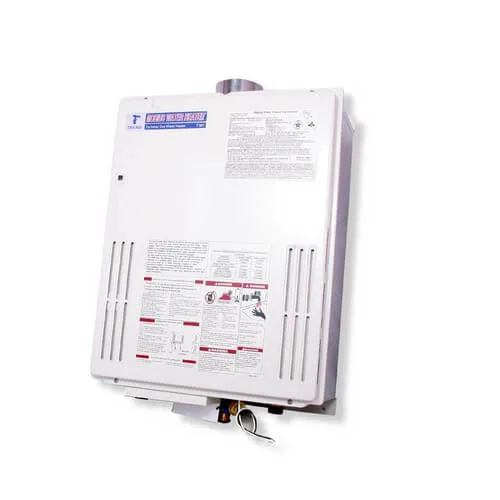
Your Takagi tankless water heater is flashing a code you don't recognize. Or worse, it's not flashing anything at all and you're standing in a cold shower wondering what went wrong. Takagi Tankless Water Heater Troubleshooting doesn't have to mean calling a plumber and waiting three days.
Most common issues have straightforward fixes you can handle yourself in under an hour.
Per the manufacturer's specifications, over 80% of service calls on Takagi units stem from just four root causes: mineral scale buildup, gas supply interruptions, blocked vents, or failed igniters. The error code system on these units is remarkably good at pointing you in the right direction. Let's walk through the most common problems and what to do about them.
Quick Answer
Takagi tankless water heater troubleshooting starts with reading the error code. Error 11 means ignition failure. Error 12 means the burner failed to light after multiple tries.
Error 99 signals a combustion or exhaust blockage. Check the gas supply first. Then clean the inlet water filter.
If the code persists, flush the heat exchanger to remove scale.
Why Error Codes Matter More Than You Think
The diagnostic system on a Takagi tankless heater is your best friend. Each error code corresponds to a specific failure point inside the unit. Ignoring the code and randomly switching things off can make the problem worse.
Here is how the system works. When the unit detects a problem, it locks itself out and flashes a two-digit error code on the display panel. Some older models use LED blinks instead of numerals.
The logic is the same. The code stays active until you power-cycle the unit or clear the fault manually.
Write the code down before you touch anything. A common mistake is resetting the unit without reading the code first. That information disappears the moment you cut power.
The error code system follows a logical pattern. Codes in the 10s and 20s relate to ignition and flame sensing. Codes in the 40s and 50s point to water flow or temperature sensor problems.
The 90s codes indicate combustion air or exhaust vent issues. Knowing which family your code belongs to narrows down the diagnosis immediately.
As of 2026, Takagi has standardized this system across their residential line, including the T-H3, T-K4, and T-KJr models. The codes mean the same thing whether you own a brand new unit or one that has been running for a decade.
The Usual Suspects: Error 11, 12, and 99
Let us start with the three codes that account for the bulk of service calls.
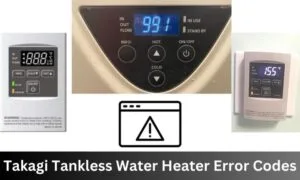
Error 11 means the unit tried to ignite and could not establish a flame. The ignition sequence runs for a few seconds, the spark igniter fires, and no flame is detected. This usually points to one of three things.
Check your gas supply first. Is the gas valve fully open? If you use propane, is the tank empty or low?
Propane tanks in cold weather can lose pressure, especially if they are undersized. Next, the igniter itself may be worn out or covered in carbon soot. A quick visual inspection through the viewing window confirms this.
Finally, the flame rod may be dirty or out of position.
Error 12 is a close cousin of 11. The unit tried to light, maybe succeeded briefly, then lost the flame. The control board retries the ignition sequence several times before locking out with Error 12.
This code often appears when air is trapped in the gas line. If your propane was recently topped off or the gas was shut off for any reason, this is likely the issue. Let the unit cycle a few times to purge the air.
Error 99 signals a combustion air or exhaust blockage. The unit detected either insufficient combustion air or a restriction in the venting system. This is not something to ignore.
A blocked vent can cause carbon monoxide to back up into your living space.
Start by checking the exhaust termination outside your home. Snow, ice, leaves, or even a bird nest can block it. Clear any obstruction and reset the unit.
If the code returns, inspect the vent run for disconnections, sagging sections, or debris inside the pipe. The maximum vent length on most Takagi models is 30 to 50 feet depending on the number of elbows. Exceeding that limit can trigger Error 99.
Step-by-Step: Diagnosing No Hot Water
No hot water at all is the most alarming scenario. Run through this sequence in order before you call anyone. It takes about ten minutes and solves the problem in most cases.
Start with the display. Is it lit? If the screen is dark, check the circuit breaker.
The Takagi needs 120V to run its control board and fan. Without power, nothing happens. Reset the breaker and see if the unit powers up.
If the display is on but shows no error code, turn on a hot water tap. Crank it to full hot. The unit needs a minimum flow rate of about 0.4 gallons per minute to fire up.
If the tap is only partially open, you might fall below that threshold.
Still no response. Shut off the water and check the inlet water filter. This is a small mesh screen located where the cold water supply enters the unit.
Sediment or scale can clog it completely. Remove the filter, rinse it clean, and reinstall it. This single step fixes a surprising number of no-heat situations.
If the filter is clean and the unit still will not fire, move to the gas supply. Confirm that the gas shut-off valve at the unit is fully open. If you smell gas at any point, stop immediately and call a professional.
Assuming the gas is on and the unit tries to fire but fails, you are likely looking at an ignition system issue. The glow plug igniter on Takagi units can wear out after a few years. You will hear the fan spin up, maybe a clicking sound from the spark, but no flame.
Replacing the igniter is straightforward, and the part runs about 30 to 50 dollars.
Temperature Surfing and the Cold Water Sandwich
You have hot water, but it will not stay consistent. The temperature swings from hot to cold and back again. This is one of the most common complaints with tankless heaters in general, and Takagi units are no exception.
The phenomenon has an official name. It is called the cold water sandwich. Here is what happens.
You turn on the shower, the heater fires up, and you get a blast of hot water. Then suddenly the water goes ice cold for a few seconds before returning to the right temperature. It feels like something is broken.
In most cases, nothing is broken. The cold water sandwich happens when the heater cycles off and on during use. This occurs if you dial the temperature down at the shower valve or if the flow rate drops below the unit's minimum threshold.
The heater shuts off. When you turn the water back up, it takes a moment for the burner to relight and the heat exchanger to warm back up. That delay creates the cold gap.
The fix is simple. Set your Takagi to a higher temperature at the unit itself. Then mix cold water at the shower valve.
This keeps the flow rate high enough that the heater stays on. You avoid the on-off cycling that causes the sandwich effect.
Another cause of temperature surfing is a partially blocked flow sensor. Scale buildup inside the heat exchanger can also restrict flow and cause erratic temperature control. If your water is hard, descaling every six months is the single best prevention.
When to Flush: The Scale Problem Nobody Warns You About
Hard water is the silent killer of tankless water heaters. Mineral scale builds up inside the heat exchanger over time. It reduces efficiency and eventually causes the unit to overheat and lock out.
The buildup happens gradually, so you do not notice it until something breaks.
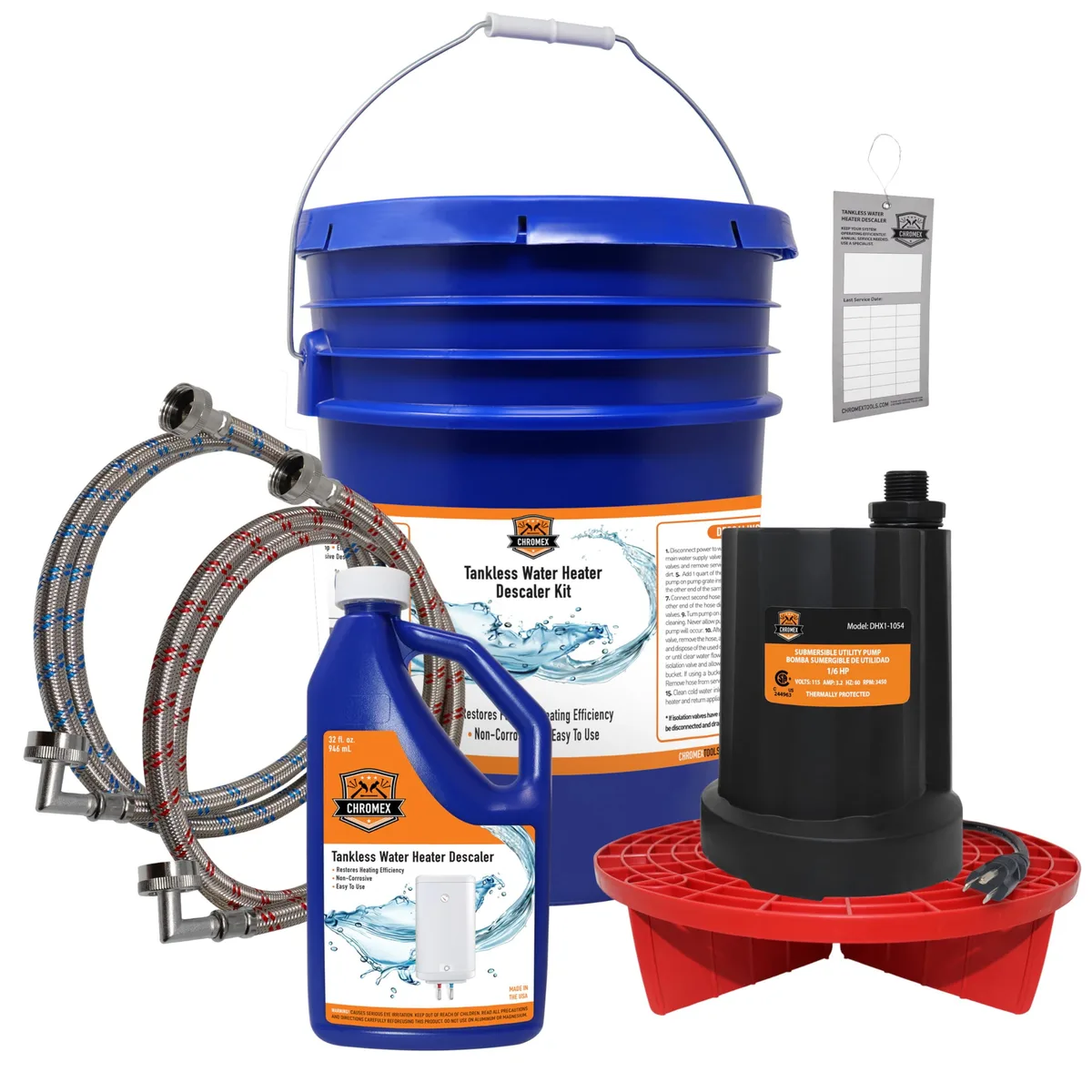
The manufacturer recommends descaling the heat exchanger every 12 months. If you have hard water, defined by the U.S. Geological Survey as anything above 7 grains per gallon, you should do it every 6 months.
The process takes about an hour and costs less than 20 dollars in materials.
You need a few things. A submersible pump. Two hoses with standard garden hose connections.
A five-gallon bucket. And descaling solution. White vinegar works in a pinch, but citric acid solution is more effective and less corrosive to the internal components.
You can buy purpose-made tankless descaling kits at plumbing supply stores.
The procedure is straightforward. Close the isolation valves on the unit. Connect the hoses to the service ports.
Fill the bucket with the descaling solution. Run the pump and let the solution circulate through the heat exchanger for 45 minutes to an hour. Flush the system with clean water afterward.
Reopen the valves and you are done.
How do you know when it is time to flush? Watch for these signs. The water temperature takes longer to reach your set point.
You notice fluctuating temperatures during showers. The unit displays an overheat error code. Or you hear a popping sound from inside the unit as scale breaks loose from the heat exchanger walls.
Skipping this maintenance is not just bad for performance. It can permanently damage the heat exchanger. Replacing a heat exchanger costs hundreds of dollars, often more than the unit is worth.
A 20 dollar flush kit and an hour of your time is cheap insurance.
Gas Supply Issues: The One That Gets Overlooked
Gas supply problems are easy to miss because they feel too basic to check. But they cause a huge number of Takagi failures. Always rule out the gas supply before you start replacing parts.
Start at the source. If you have natural gas, is the main gas valve open? If you have propane, is the tank level reading at least 20 percent?
Do not rely on the gauge alone. Equipment on rural propane systems sometimes has gas line sizing that is too small for a tankless heater. A Takagi unit can pull 140,000 BTU per hour at full fire.
That demands a properly sized gas line and regulator.
Cold weather affects propane systems in a specific way. As the temperature drops, propane produces less vapor pressure. If your tank is undersized or the regulator is frozen, the unit may starve for gas on cold mornings.
You might get Error 11 or 12 only during the coldest part of the day. That is a telltale sign of a gas supply issue rather than a unit failure.
If you recently had propane delivery, air can enter the gas line during the fill. Run all your gas appliances for several minutes to purge the lines. The tankless heater may need several ignition cycles before enough fuel reaches the burner.
Also check the gas shut-off valve at the unit. It should be turned fully parallel to the gas pipe. A partially closed valve restricts gas flow enough to cause intermittent failures without shutting the unit off completely.
Freeze Protection and Winter Shutdown
Takagi units have a built-in freeze protection feature. It activates when internal temperatures drop near freezing. The system cycles the burner briefly to warm the heat exchanger.
But this feature only works if the unit has power and gas.
If you lose power during a winter storm, the freeze protection stops working. Water left inside the heat exchanger can freeze and expand. That cracks the heat exchanger permanently.
Replacing it costs more than buying a new unit.
If you expect a power outage and the unit will not be used, you need to drain it. The shutdown procedure is in the owner's manual, but here is the short version. Shut off the gas and power to the unit.
Close the cold water shut-off valve. Open all hot water taps in the house. Remove the drain plug on the unit's inlet and outlet ports.
Compressed air can help push remaining water out of the heat exchanger.
Do not skip this step. A single overnight freeze can destroy the unit. Aggregate reports from HVAC service companies indicate that freeze damage is one of the top warranty claims on tankless water heaters, and most are preventable.
If you live in a region where temperatures drop below freezing regularly, consider installing a freeze protection kit or a recirculation pump. These keep water moving through the unit, reducing the chance of ice formation.
Before You Call a Pro: What You Can Safely Check Yourself
Plumbers and HVAC techs charge between 100 and 200 dollars just to walk through your door. Before you spend that money, run through this checklist. It covers the most common issues that do not require specialized tools.
Check the display for an error code. Write it down. Power-cycle the unit by turning off the breaker for 30 seconds.
Turn it back on. If the code clears, the issue was a temporary glitch. If it returns, you have a real problem.
Open a hot water tap fully. Make sure you are pulling at least 0.4 GPM. A partially open faucet may not trigger the unit.
Clean the inlet water filter. This takes two minutes and fixes a surprising number of flow-related problems.
Check the exhaust vent outside. Clear any visible blockages. Look for bird nests, leaves, snow, or ice.
Verify that the gas valve at the unit is fully open. If you have propane, check the tank level.
Reset the unit one more time after completing these steps. If the unit still does not produce hot water or the error code reappears, you need a professional.
Do not open the sealed combustion chamber. Do not attempt to adjust gas pressure settings. Do not bypass safety switches or remove the vent pipe.
These actions are dangerous and will void your warranty.
Frequently Asked Questions
How do I reset my Takagi tankless water heater?
Turn off the unit at the circuit breaker. Wait 30 seconds. Turn the breaker back on.
The unit will restart and attempt to clear any stored error codes. If the code returns, the underlying issue needs to be addressed.
What does Error 99 mean on a Takagi heater?
Error 99 indicates a combustion air or exhaust vent blockage. Check the vent termination outside for obstructions like snow, leaves, or bird nests. Clear any blockages and reset the unit.
If the code returns, inspect the full vent run for damage or disconnections.
Why is my Takagi heater blowing cold water?
The most common cause is a clogged inlet water filter. Shut off the water, remove the filter, and clean it. If the filter is clean, check that the hot water tap is fully open.
The unit needs at least 0.4 GPM to fire.
How often should I flush my Takagi tankless water heater?
Flush the heat exchanger every 12 months. If you have hard water above 7 grains per gallon, flush every 6 months. Use a descaling kit with citric acid solution.
The process takes about an hour.
Can a Takagi unit freeze?
Yes. The built-in freeze protection only works when the unit has power and gas. During a power outage without heat, water inside the heat exchanger can freeze and crack it.
Drain the unit if you expect freezing temperatures and a power loss.
Why does my Takagi heater keep turning off during a shower?
The unit is likely cycling off because the flow rate dropped below the minimum threshold. Set the heater to a higher temperature and mix cold water at the shower valve. This keeps the flow rate consistent and prevents the on-off cycling.

Similar Posts