Beckett Pressure Washer Burner Troubleshooting
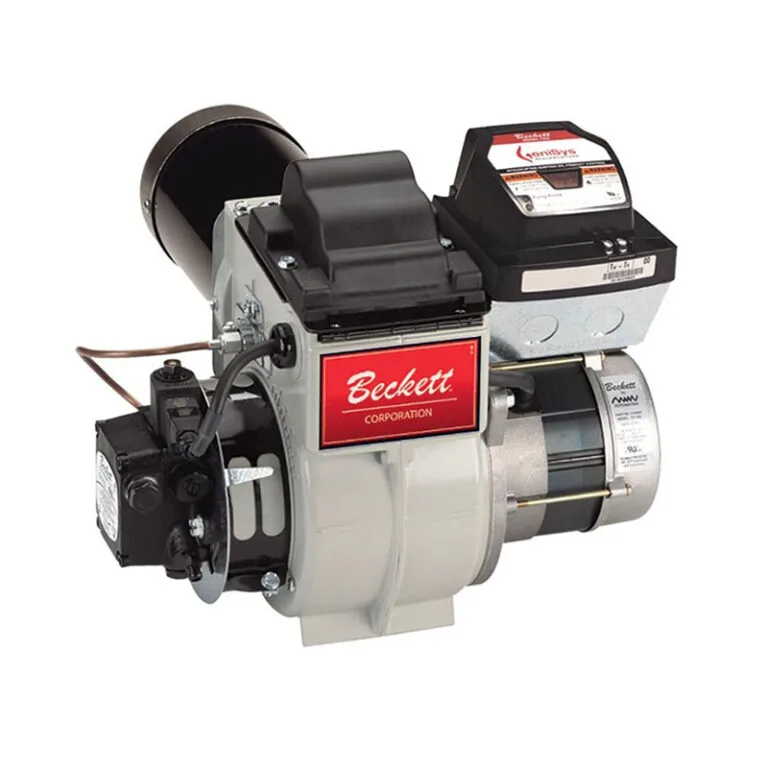
Your pressure washer burner fires up, runs for a few seconds, then dies. Or maybe it won't light at all. You're standing there wondering if this is a simple fix or a call-the-pro situation.
Beckett Pressure Washer Burner Troubleshooting doesn't have to be a guessing game. Most issues boil down to four or five common failure points, and you can diagnose every single one with basic tools and a little patience.
Per the Beckett technical manual and NFPA 31 standards, the primary control locks out after a specific number of failed ignition attempts. That safety feature is your best diagnostic clue. Once you understand what the reset button is telling you, the rest is methodical checking.
Let's walk through the most common problems in order of likelihood and danger.
Image source: Bing (Web (fair-use with source credit))
Quick Answer
Most Beckett pressure washer burner problems come from clogged fuel filters, bad cad cells, or misaligned electrodes. If the burner runs but won't light, check the spark gap first. If it lights then shuts off, test the cad cell. If it won't run at all, hit the reset button and watch the lockout pattern. These three checks solve roughly 80 percent of field issues.
Why This Burner Troubleshooting Guide Is Different
There's a lot of bad advice about oil burners—some wasteful, some dangerous. This guide sticks to what the manufacturer says, what safety codes require, and what experienced techs do in the field.
The problem with generic troubleshooting advice
Most online guides treat every oil burner the same. They tell you to check the spark plug and nozzle. But Beckett burners on pressure washers have specific failure modes not seen on residential heating units. Vibration loosens electrodes. Soot coats the cad cell from intermittent duty cycles. Water contaminates the fuel pump. Generic advice misses all that, leading you to replace parts that weren't bad.
What you actually need to know
The Beckett primary control on pressure washer burners typically uses a 15-second safety lockout. If the burner doesn't detect a steady flame within 15 seconds, it shuts everything down and trips the reset button. That timing is critical. A burner that fires and dies after 10 seconds has a different problem than one that never fires at all.
The one tool you should always carry
A digital multimeter with an ohms setting. You don't need a combustion analyzer or nozzle tester. You need to check continuity, resistance, and voltage. That multimeter tells you if your cad cell is good, if your transformer is firing, and if your fuel solenoid is getting power.
When this guide applies
These steps cover Beckett models AF, CG, and NX on pressure washers from 3 to 8 GPM. If you have a commercial rig with a UV scanner or a Riello burner, some of this changes. But for the vast majority of hot water pressure washers sold in North America as of 2026, this is your playbook.
The Most Dangerous Mistake You Can Make (And How to Avoid It)
The puffback you don't walk away from
A delayed ignition can produce a puffback—an explosion inside the combustion chamber that can blow off the access cover or crack the heat exchanger. It can injure you, destroy equipment, or start a fire.
What causes delayed ignition
Fuel accumulates in the chamber before the spark arrives. Normal sequence: fuel nozzle opens, spark fires, ignition happens instantly. If the spark is weak, gap too wide, or transformer failing, fuel sprays in for a second or two before lighting. That atomized diesel vapor explodes.
How to check for it safely
Never lean over the burner when starting. Stand to the side. Keep the access cover partially open. If you hear the fuel pump running but don't see a spark within three seconds, shut it down immediately. Do not keep cycling the reset button—each cycle dumps more raw fuel into the chamber.
The correct procedure for testing ignition
Disconnect the fuel line at the nozzle. Crank the burner and watch the electrodes. You want a bright blue arc that jumps cleanly across the gap. A weak orange spark or no spark means your transformer or electrode assembly needs attention. Per NFPA 31, never operate a burner with an ignition system that fails this visual test.
Burner Won't Start at All: The Reset Button Tells You Everything
What the lockout pattern means
Press the red reset button. If it's already popped out, the burner locked out. If not, the burner never tried to start. That distinction matters.
If the reset button is popped out
The burner tried to fire but didn't sustain a flame. The motor ran, pump ran, transformer fired—but the cad cell didn't see a steady flame. Common causes in order of likelihood:
- Clogged fuel nozzle or nozzle filter
- Air in the fuel line
- Bad cad cell (photocell failure)
- Fuel pump pressure too low
- Electrode gap closing from vibration
Reset once. If it trips again within 30 seconds, move on to fuel system checks.
If the reset button is not popped out
The burner motor never started. Check in order:
- Is there power at the burner? Use multimeter at primary control terminals—120 volts between hot and neutral.
- Is the pressure washer trigger pulled? Many hot water machines have a flow switch that won't let the burner fire unless water is flowing.
- Does the motor hum? A humming motor that doesn't spin usually means a bad run capacitor. Replace before condemning the motor.
- Is the motor winding open? Check continuity. Infinite resistance means the motor is burned out.
The one test that saves you hours
Jump the thermistor or high-limit switch temporarily. On many Beckett burners, a high-limit switch on the heat exchanger kills power if overheated. Jump it for two seconds. If the burner fires, the switch is bad or the heat exchanger is actually overheating. Don't leave the jumper in place. Replace the switch.
Burner Fires Up but Shuts Off After a Few Seconds
The cad cell is almost always the culprit
The burner lights, flame looks good, then shuts off after three to ten seconds. The cad cell (photocell) is a light-sensitive resistor. When it sees the flame, its resistance drops. If resistance stays above threshold, the control locks out.
How to test the cad cell
Disconnect the two wires. Set multimeter to ohms. Cover the cad cell completely—should read infinite resistance or above 10,000 ohms. Uncover and shine a flashlight directly at the lens—resistance should drop to under 1,000 ohms. If it stays high, replace it.
The real-world problem nobody talks about
Pressure washer burners accumulate soot on the cad cell lens faster than heating equipment. The heat exchanger design creates more turbulence, throwing combustion byproducts onto everything. A cad cell that tests fine in your hand can fail in the burner because it's dirty. Clean the lens with a dry cotton swab. If the burner stays lit, you're good for now, but plan to replace the cad cell soon—once they start fouling, they keep fouling.
Other possibilities
If the cad cell tests good and is clean, check:
- Fuel pressure too low. Below 100 PSI, the spray pattern changes and the flame becomes less visible.
- Air shutter too open. Too much air makes the flame blue and transparent. Adjust until the flame has visible orange tips.
- Bad primary control. Rare but possible. Replace last.
Black Smoke, Sooting, or a Lazy Orange Flame
What the flame color tells you
A properly tuned Beckett burner running on diesel or kerosene produces a flame mostly blue with orange tips. If the entire flame is lazy and orange, or black smoke rolls out, you have incomplete combustion.
The air shutter is your first adjustment
The air shutter controls oxygen mixing. Too little air gives a rich, smoky flame. Too much gives a thin blue flame the cad cell struggles to detect. The air shutter is the metal ring or sliding plate near the fan. Turn the adjustment screw a quarter turn at a time. Open if flame is orange and sooty. Close if blue and unstable. Wait 30 seconds between adjustments.
The nozzle may be wrong
Pressure washer burners need specific nozzle flow rates and spray angles. A nozzle too large dumps excess fuel, causing soot and black smoke. A nozzle too small starves the flame and causes lockouts. Delavan and Hago nozzles on Beckett burners typically range from 1.10 to 2.00 GPH at 100 PSI. Check your burner's rating plate. An oversized nozzle can overheat the heat exchanger and warp the coil.
Dirty heat exchanger tubes restrict airflow
Soot builds up inside heat exchanger tubes, reducing oxygen for combustion. Clean tubes with a wire brush on a flexible shaft or a pressure washer nozzle designed for heat exchanger cleaning. Pull the burner, brush each tube, vacuum out soot. The difference in flame quality is immediate.
Check the fuel for water contamination
Water in diesel is common on pressure washer trailers that sit between jobs. Water doesn't burn—it passes through the nozzle and extinguishes the flame, and corrodes fuel pump internals. Drain a cup from the tank bottom into a clear jar. If you see a water layer, drain the tank, replace the fuel filter, and add a water-separating fuel additive.
Delayed Ignition or Puffback: This One Scares Me
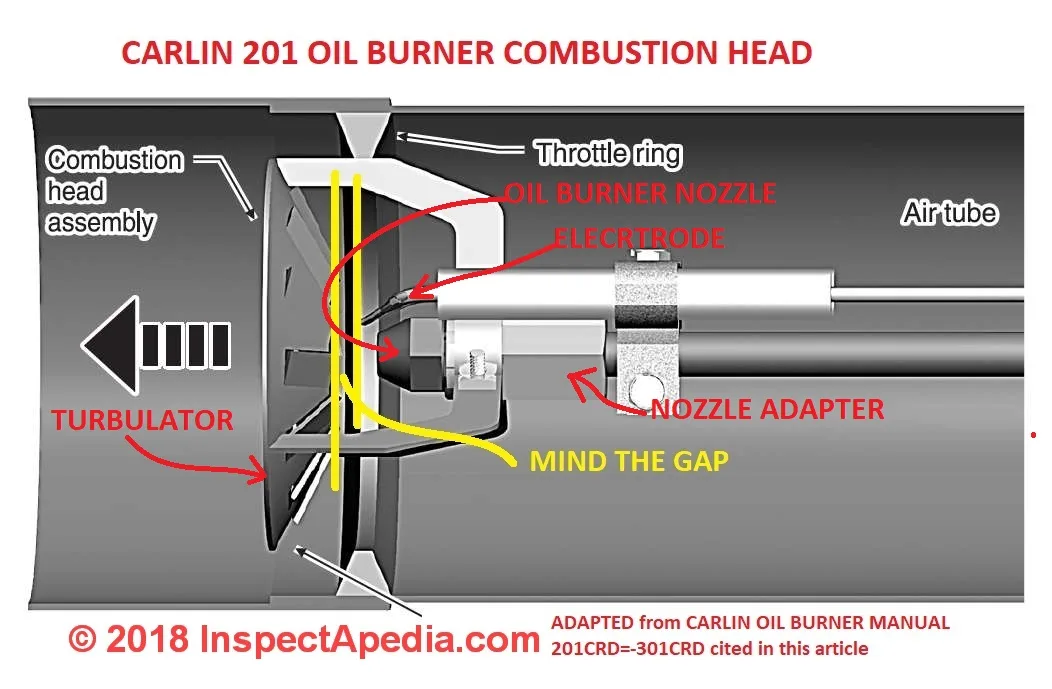
Image source: Bing (Web (fair-use with source credit))
Why this is the most dangerous failure
A puffback is an explosion inside the combustion chamber. It can blow the burner access door open, crack the heat exchanger, rupture the fuel line, and throw burning fuel onto anything flammable. Stop troubleshooting and replace parts until ignition is instant and reliable.
What causes the delay
The ignition transformer sends 10,000 volts to the electrode tips. A weak transformer drops voltage. Vibration closes the electrode gap, making the spark jump too early. Carbon-fouled electrodes leak spark to ground. Any of these let fuel spray into a hot chamber without igniting. After one to three seconds, accumulated fuel vapor ignites—that's the puffback.
How to inspect the electrode assembly
Remove the assembly. Look at the ceramic insulators for cracks or carbon tracking—high voltage is leaking to ground. Replace the entire assembly. Check the gap with a feeler gauge. Correct gap for most Beckett pressure washer burners is 1/8 inch (3.2 mm). Too wide—spark won't jump in fuel vapor. Too narrow—spark is weak and easily blown out.
When to replace the transformer
An ignition transformer that fires under no-load can fail under load. You may see a spark with electrodes in the open, but the spark disappears when the fuel nozzle is spraying. The only reliable test is to watch the ignition sequence with the burner running. If you see fuel spray without a simultaneous spark, replace the transformer. Beckett transformers are inexpensive relative to the damage a puffback can cause.
The hard rule on delayed ignition
If your burner has ever had a puffback or even a close call, replace the transformer and electrode assembly as a pair. Both degrade over time. A fresh transformer with clean, properly gapped electrodes gives instant ignition every time.
Fuel Supply Problems: Air, Water, and Gelling
Air in the fuel line acts like a vapor lock
Air gets in when you change the filter, run the tank dry, or crack a line. The fuel pump can't compress air—it pushes bubbles through the nozzle, causing a sputtering or no flame. To bleed, loosen the fitting at the pump outlet, crank the burner, and when a steady stream of fuel with no bubbles appears, tighten the fitting. The burner should fire on the next cycle.
Water is a slow killer
Water contamination doesn't always cause immediate failure. Sometimes the burner runs fine for an hour then locks out intermittently. Water settles in low spots; when the pump pulls a slug, the flame goes out. Prevention: use a water-absorbing fuel filter, drain the tank every 50 hours, and fill the tank to the top for storage over two weeks.
Diesel gelling in cold weather
Summer diesel gels at 15°F; winter diesel is treated down to -20°F. If fuel isn't flowing in freezing temps, diesel may have gelled. Do not add gasoline—it creates a fire hazard and damages the pump. Use a diesel anti-gel additive. If already gelled, move the machine to a heated space for 24 hours, then add treatment before running.
Clogged fuel filters are the most common cause of no-start
Fuel filters clog faster than expected from debris, fuel breakdown, and microbial growth. A partially clogged filter lets enough fuel through to light but not sustain the flame. Change the fuel filter every 100 hours or at the start of each season. Use the filter specified by Beckett for your model.
When to Call a Pro (And When You Can Handle It Yourself)
What you can safely do yourself
Replace the fuel filter, nozzle, cad cell, and electrode assembly without special training. Clean heat exchanger tubes and adjust the air shutter. Bleed the fuel line and test the cad cell with a multimeter. Replace the run capacitor—match the microfarad rating and voltage exactly.
When you need a qualified technician
Call a pro if you suspect a cracked heat exchanger—white smoke and diesel exhaust smell in the cleaning water. A cracked heat exchanger cannot be repaired; it must be replaced. Call a pro if the primary control board fails and you can't get the replacement to sync with the burner—some newer Beckett controls require a specific wiring sequence. Call a pro if you smell fuel inside the burner housing—there's a leak that can spray onto hot surfaces and ignite.
The cost calculation
A service call runs $75 to $150 plus parts. A replacement cad cell is about $15, a nozzle under $10, an electrode assembly $25 to $40. Diagnose in 15 minutes with a multimeter and you save money. If you've replaced three parts and the burner still won't run, stop—you're past the break-even point. Call a tech.
Frequently Asked Questions
How do I reset my Beckett pressure washer burner?
Press the red reset button on the primary control box. Wait 30 seconds. If the button pops back out, the burner detected a fault. Do not keep pressing it without diagnosing the problem—each cycle dumps unburned fuel into the combustion chamber.
Why does my pressure washer burner fire but not stay lit?
The most common cause is a failing or dirty cad cell lens. The primary control does not detect a steady flame and locks out. Clean the lens with a dry swab and test cad cell resistance with a multimeter.
Can I run kerosene in my Beckett pressure washer burner?
Yes. Kerosene burns cleaner than diesel and produces less soot. It stays liquid at lower temperatures. However, kerosene has less BTU content per gallon, so the burner may produce slightly less heat output.
What causes black smoke from a pressure washer burner?
Black smoke means incomplete combustion. Common causes: clogged air shutter, oversized fuel nozzle, or soot buildup in heat exchanger tubes. Adjust the air shutter first. If that doesn't help, check the nozzle size against the burner rating plate.
How often should I replace the fuel filter on my pressure washer burner?
Every 100 hours of operation or at the start of each season. A clogged fuel filter is the most common cause of intermittent lockouts. Use the filter specified by Beckett for your burner model.
Is it safe to bypass the high-limit switch temporarily?
Only for diagnosis. Jump the switch for two seconds to see if the burner fires. If it does, replace the switch immediately. Never run the burner with the switch bypassed—it protects against a heat exchanger fire.

Similar Posts