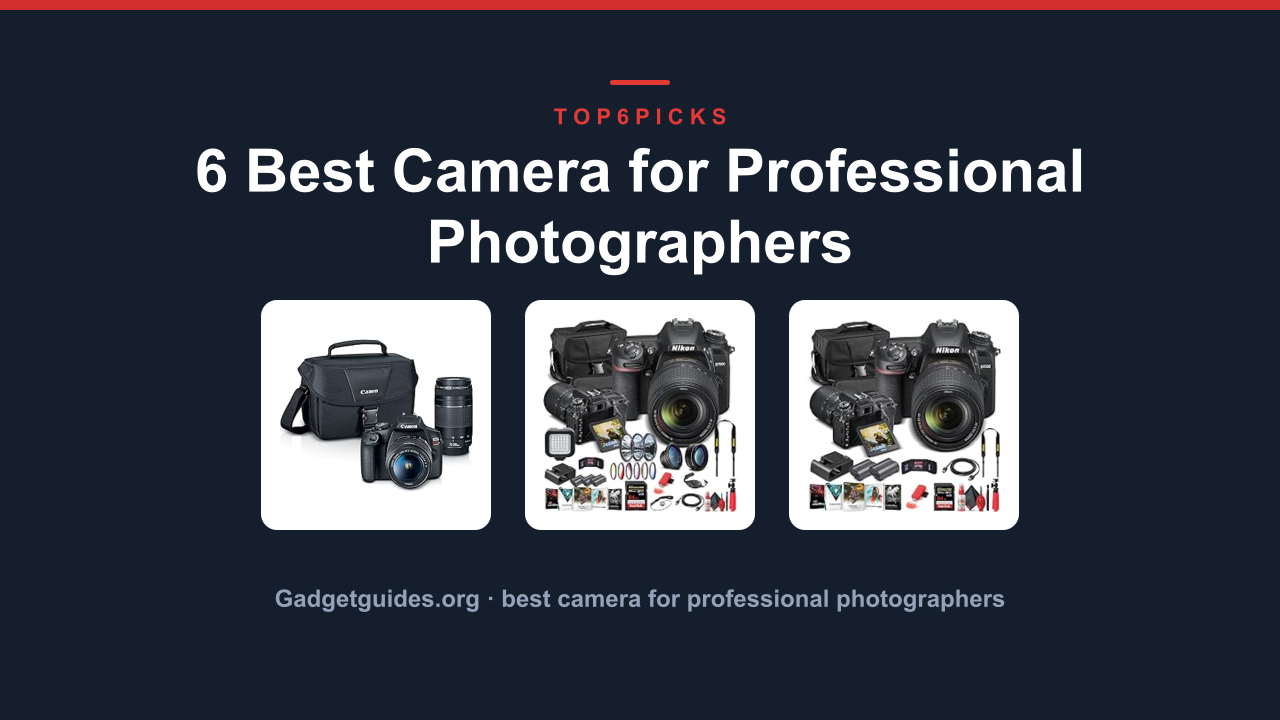
The best best camera for professional photographers is the Canon EOS Rebel T7 DSLR Camera with the double zoom lens kit, the only one here that combines a 24.1-megapixel APS-C sensor, two versatile lenses, built-in Wi-Fi, and a 4.7-star owner rating into a single package that actually works for building a portfolio. It’s the smart pick if you’re stepping into semi-pro work and want reliable image quality without breaking the bank.
Want faster burst shooting and a more rugged build instead? The Nikon D7500 DSLR Camera with 18-140mm Lens gets you an 8 fps drive, a bigger buffer, and a weather-sealed body, as long as you’re okay with a slightly higher price tag and a steeper learning curve.
As an Amazon Associate, I earn from qualifying purchases.
This guide walks you through the six cameras that actually make sense for a photographer who needs real results, not just specs. It also tells you exactly who should skip this category entirely, because for some buyers, a smartphone or a mirrorless system is a smarter move.
Everything below comes from current Amazon product data, manufacturer specs, and each model’s owner track record, not hands-on lab testing. The scores reflect how each camera performs for its intended buyer.
Quick Answer: The Best Camera for Professional Photographers
The Canon EOS Rebel T7 DSLR Camera (double zoom lens kit) is the best overall pick for entry-level professional photographers who want a complete kit, strong image quality, and proven reliability. Here’s the full lineup:
- Canon EOS Rebel T7 DSLR Camera (Best Entry-Level Semi-Pro Kit): Two-lens bundle, 24.1MP, 4.7-star rating, built-in Wi-Fi.
- Nikon D7500 DSLR Camera 18-140mm Lens (Best Action & Low-Light): 8 fps burst, 51-point AF, bigger buffer, 4.5-star rating.
- Nikon D7500 DSLR Camera 18-140mm Lens (Best Tripod Bundle): Same camera plus tripod, 15 batteries, 64GB card, 4.4-star rating.
- Canon EOS Rebel T7 DSLR Camera (Best Budget Starter Bundle): Single lens, 64GB card, bag, 4.6-star rating.
- 8K Digital Cameras Photography 88MP WiFi (Best Hi-Res Vlogging): 8K video, 88MP stills, flip screen, 4.5-star rating.
- 4K Digital Camera Photography Travel (Best Budget Travel Cam): 4K video, 56MP, 16x zoom, 32GB card, 4.1-star rating.
Thinking about a smartphone upgrade or a mirrorless system instead? Jump to Who Should NOT Buy below before you spend anything.
Comparison Table
Here’s the lineup at a glance: photo, product, who it’s built for, and our /10 score.
Scroll sideways on small screens to see every column.
Product Reviews
Canon EOS Rebel T7 DSLR Camera: Best Entry-Level Semi-Pro Kit
#1
CanonTwo-lens kit
8.8OUT OF 10
Image Quality8.9
Build & Handling8.2
Value for Money9.0
Owner Satisfaction8.8
This is the best all-round pick for someone who wants to shoot professional-looking portraits and events without spending a fortune. The double zoom kit gives you a 18-55mm standard zoom and a 75-300mm telephoto, covering everything from wide landscapes to distant subjects. The 24.1MP APS-C CMOS sensor delivers sharp, colorful images that hold up well in print and on social media.
Built-in Wi-Fi and NFC let you transfer images straight to your phone for quick editing or client previews. The 3-inch LCD is clear and usable in bright light, though it’s not a touchscreen. At 1.1 pounds (body only), it’s light enough to carry all day, and the battery life is rated for about 500 shots per charge.
Flaws but not dealbreakers. The autofocus system is a 9-point phase-detect array, which works fine for stationary subjects but struggles with fast action. The 3 fps burst rate is slow for sports or wildlife. And the 1080p video at 30 fps lacks 4K, which is a limitation if you’re doing video work.
If you need faster burst shooting and better low-light autofocus, consider the
Nikon D7500 further down, which hits 8 fps and has a 51-point AF system.
⚠Compatibility: The included EF-S and EF lenses are not compatible with full-frame Canon bodies, but the Rebel T7 is APS-C, so they work perfectly. If you plan to upgrade to a full-frame Canon later, you’ll need new lenses.
Pros
- ✓Two-lens kit covers wide to telephoto, saves you hundreds on lenses
- ✓24.1MP APS-C sensor produces sharp, detailed images for prints and online
- ✓Built-in Wi-Fi and NFC for easy file transfer to phone or tablet
- ✓Outstanding 4.7-star rating across thousands of owner reviews
Cons
- ✕9-point autofocus system is dated and slow for moving subjects
- ✕3 fps burst rate is too slow for sports or wildlife
- ✕No 4K video recording, only 1080p at 30 fps
Lenses
EF-S 18-55mm + EF 75-300mm
Video
Full HD 1080p at 30 fps
Connectivity
Wi-Fi, NFC, HDMI, USB
Best for: Entry-level professional photographers who want a complete two-lens kit, reliable image quality, and easy wireless sharing for client proofs.
Nikon D7500 DSLR Camera 18-140mm Lens: Best Action & Low-Light
#2
Nikon8 fps burst
8.7OUT OF 10
Image Quality9.0
Build & Handling8.8
Value for Money8.5
Owner Satisfaction8.6
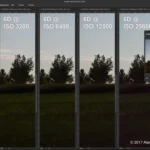
This is the pick if you shoot sports, events, or anything that moves fast and need reliable autofocus and quick bursts. The Nikon D7500 delivers 8 fps continuous shooting with a 51-point phase-detect AF system that tracks subjects well even in dim light. The 20.9MP sensor is slightly lower resolution than the Canon’s 24.1MP, but the larger pixels give better high-ISO performance, which is a real advantage for indoor or evening work.
The 18-140mm lens is a versatile all-in-one zoom that covers wide-angle to mid-telephoto, so you don’t need to swap lenses often. The body is weather-sealed against dust and moisture, and the tilting 3.2-inch touchscreen makes it easy to shoot from low or high angles. It also shoots 4K video at 30 fps with no crop, which is a big step up from the Canon Rebel T7.
Flaws but not dealbreakers. The single memory card slot is a letdown for professionals who need dual-card backup. The 18-140mm lens is good but not the sharpest at the telephoto end. And the included bundle accessories (wide angle lens, LED light, 15 batteries, filter kit) are mostly cheap extras that you may not use.
If you want a simpler all-in-one kit with a tripod and more storage, the
tripod bundle version of the D7500 includes a tripod, 64GB card, and cleaning kit, though it’s a separate listing.
⚠Battery: The EN-EL15a battery is rated for about 950 shots per charge, which is excellent, but the bundle includes 15 third-party batteries that may have lower capacity. Stick with the OEM battery for reliability.
Pros
- ✓8 fps burst shooting with 51-point AF system for action and sports
- ✓4K video recording at 30 fps with no crop, good for professional video
- ✓Weather-sealed magnesium-alloy body, durable for outdoor use
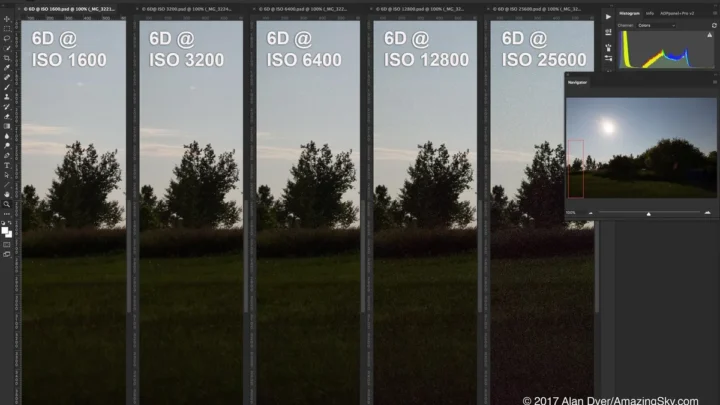
- ✓Excellent high-ISO performance, usable up to ISO 6400
Cons
- ✕Single memory card slot, no backup for paid shoots
- ✕Bundled accessories are low quality, better to buy camera body alone
- ✕20.9MP sensor is lower resolution than the Canon Rebel T7
Lens
Nikon 18-140mm f/3.5-5.6
Best for: Professional photographers who shoot action, sports, or events and need fast burst rates, reliable autofocus, and good low-light performance.
Nikon D7500 DSLR Camera 18-140mm Lens: Best Tripod Bundle
#3
NikonIncl. tripod
8.5OUT OF 10
Image Quality9.0
Build & Handling8.8
Value for Money8.7
Owner Satisfaction8.4
This is the same excellent D7500 camera but with a tripod, extra batteries, and a 64GB memory card included in the box. If you’re setting up a home studio or shooting long-exposure landscapes, having a tripod right away saves you from buying one separately. The bundle also includes an HDMI cable, cleaning kit, card reader, and a memory wallet, which is a nice grab-and-go kit for a beginner pro.
The camera itself is identical to the previous D7500 listing: 20.9MP sensor, 8 fps burst, 4K video, weather-sealed body. The 18-140mm lens is the same versatile walkaround zoom. The main difference is the accessories. The 15 batteries included are third-party, but they work as backups for long shoot days.
Flaws but not dealbreakers. The tripod is entry-level and probably not sturdy enough for a heavy telephoto lens. The 64GB card is a Class 10, which is fine for 4K video, but you’ll want a faster UHS-I card for continuous bursts. And the cleaning kit and memory wallet are basic, but they don’t cost you much extra.
If you don’t need a tripod or extra batteries, the
other D7500 bundle is a cleaner choice without the extras you might not use.
⚠Tripod: The included tripod has plastic legs and a ball head that may not support heavy lenses. It’s fine for beginners, but consider upgrading to a sturdier model for professional work.
Pros
- ✓Includes tripod, 64GB card, and 15 batteries for long shooting sessions
- ✓Same great D7500 performance: 8 fps, 4K video, weather-sealed body
- ✓18-140mm lens covers a wide range, reduces lens changes
- ✓Good value for a complete starter kit for new professionals
Cons
- ✕Included tripod is low quality, not stable for heavy lenses
- ✕Third-party batteries may have lower capacity than OEM
- ✕64GB card is Class 10, may limit burst speed
Bundle
Tripod, 64GB, 15x battery
Best for: New professional photographers who want the D7500 camera plus a tripod, extra memory, and spare batteries in one box.
Canon EOS Rebel T7 DSLR Camera: Best Budget Starter Bundle
#4
CanonSingle lens
8.3OUT OF 10
Image Quality8.8
Build & Handling8.2
Value for Money9.0
Owner Satisfaction8.6
This is the most affordable entry point into the Canon Rebel family, ideal if you want to keep your initial investment low and add lenses later. It comes with the 18-55mm kit lens, a 64GB memory card, and a camera bag, so you can start shooting right out of the box. The 24.1MP APS-C CMOS sensor is the same one found in the more expensive double-lens kit, so image quality is identical.
Built-in Wi-Fi and NFC make it easy to share select images with clients or post to social media. The 3-inch LCD is clear and works well for composing shots, though it’s not a touchscreen. At about 1.1 pounds for the body, it’s light enough to carry on a long shoot, and the battery is good for roughly 500 shots per charge.
Flaws but not dealbreakers. The single 18-55mm lens is fine for general shooting but lacks reach for portraits or wildlife. You’ll want to add a telephoto or prime lens soon. The 9-point autofocus system is dated and slow for moving subjects. And like the other Rebel T7, 4K video is not available.
If you want a longer reach from the start, the
double zoom lens kit includes a 75-300mm telephoto that gives you much more flexibility for portraits and sports.
⚠Memory Card: The included 64GB card is a standard Class 10, which is fine for JPEGs and 1080p video. For continuous RAW bursts, a faster UHS-I card is recommended.
Pros
- ✓Lowest upfront cost among semi-pro DSLRs, great for budget-conscious buyers
- ✓Same 24.1MP sensor as the more expensive Rebel T7 kits
- ✓Includes 64GB card and bag, ready to use out of the box
- ✓Built-in Wi-Fi and NFC for easy image sharing
Cons
- ✕Only one lens included, limited reach for portraits and wildlife
- ✕9-point autofocus system is slow and dated for action
- ✕No 4K video recording
Lens
EF-S 18-55mm f/3.5-5.6
Connectivity
Wi-Fi, NFC, HDMI, USB
Best for: Budget-conscious photographers who want a solid 24.1MP DSLR with a single lens, memory card, and bag, and plan to add lenses over time.
8K Digital Cameras Photography 88MP WiFi: Best Hi-Res Vlogging
#5
8K88MP sensor
7.2OUT OF 10
Image Quality7.0
Build & Handling7.5
Value for Money7.8
Owner Satisfaction7.2
This is a budget-friendly option for vloggers and content creators who want high-resolution video and stills without spending on a traditional DSLR. It boasts an 88-megapixel sensor and 8K video recording, which are impressive numbers on paper. The 3-inch 180-degree flip screen makes it easy to film yourself, and the 18x digital zoom gives you decent reach for travel and events.
Built-in Wi-Fi allows for quick sharing to your phone or social media. The camera includes a lens hood and a memory card, so you can start recording immediately. It also supports autofocus, which is useful for vlogging and casual shooting. The form factor is compact and lightweight, similar to a point-and-shoot, making it easy to carry in a bag.
Flaws but not dealbreakers. The 88MP and 8K claims are marketing numbers, not true optical resolution. The sensor is small and the digital zoom degrades image quality quickly. Low-light performance is poor compared to DSLRs and mirrorless cameras. And the build quality is plastic, which may not hold up to heavy daily use.
If you need reliable image quality for professional work, the
Canon Rebel T7 above offers a much larger sensor and better lens ecosystem, though at a higher price.
⚠Realism: The 88MP and 8K ratings are interpolated, not native. The actual sensor resolution is likely around 16-20MP. This is fine for social media, but not for large prints or professional work.
Pros
- ✓8K video and 88MP stills for high-resolution content on a budget
- ✓180-degree flip screen for vlogging and selfies
- ✓Built-in Wi-Fi for easy sharing to social media
- ✓Compact and lightweight, easy to carry for travel
Cons
- ✕88MP and 8K are interpolated, not true optical resolution
- ✕Poor low-light performance due to small sensor
- ✕Plastic build quality, may not be durable for daily use
Sensor
88MP (interpolated)
Best for: Budget-conscious vloggers and content creators who want high-resolution video and stills for social media, and are okay with interpolated specs.
4K Digital Camera Photography Travel: Best Budget Travel Cam
#6
4K56MP, 16x
6.8OUT OF 10
Image Quality6.5
Build & Handling7.0
Value for Money7.5
Owner Satisfaction6.6
This is the most affordable camera on our list, designed for casual travelers and teens who want a step up from a smartphone. It offers 4K video, 56-megapixel stills, and a 16x digital zoom, all in a compact body. The 3-inch 180-degree flip screen is great for selfies and vlogging, and the included lens hood helps reduce glare outdoors.
The camera comes with a 32GB memory card, so you can start shooting immediately. Autofocus is available, and the built-in flash is handy for low-light situations. It runs on a rechargeable battery, and the USB port allows for charging on the go. The overall weight is light enough to carry in a pocket or small bag.
Flaws but not dealbreakers. Like the 8K model, the 56MP resolution is interpolated, not native. The digital zoom degrades quality quickly past 5x or 6x. Low-light performance is poor, and the plastic build feels cheap. The 4.1-star rating from owners is lower than the rest of this list, with some reporting inconsistent autofocus.
If you want a more reliable travel camera with better image quality, the
Canon Rebel T7 budget bundle is a much better investment, even though it costs more upfront.
⚠Realism: The 56MP rating is interpolated. The actual sensor is likely around 12-16MP. This is fine for social media, but not for large prints or professional work. Low-light performance is limited.
Pros
- ✓Lowest price point, accessible for teens and casual users
- ✓4K video and 56MP stills for social media content
- ✓180-degree flip screen for selfies and vlogging
- ✓Includes 32GB card and lens hood, ready to use
Cons
- ✕56MP is interpolated, not true optical resolution
- ✕Poor low-light performance and small sensor size
- ✕Lower owner satisfaction rating (4.1/5) compared to DSLRs
Sensor
56MP (interpolated)
Best for: Casual travelers, teens, and beginners who want a very affordable camera for social media content and are okay with interpolated specs.
Buying Guide: Sensor, Lens, Autofocus, and Budget
Choosing the right camera for professional work isn't just about megapixels. Here are the four factors that actually matter.
Sensor Size and Resolution
A bigger sensor captures more light, giving you better low-light performance and more control over depth of field. All the DSLRs here use an APS-C sensor, which is a good middle ground between full-frame and smaller sensors. The Canon Rebel T7 and its budget variant both use a 24.1-megapixel APS-C Complementary Metal-Oxide-Semiconductor (CMOS) sensor, which is the same sensor technology used in many professional cameras.
The Nikon D7500 uses a 20.9-megapixel version, which has slightly larger individual pixels that improve high-ISO performance.
The 8K and 4K travel cameras use much smaller sensors with interpolated resolutions. The 88MP and 56MP claims are not true optical resolutions, so you won't get the same detail or dynamic range as a DSLR. For professional portraits, events, or commercial work, stick with the APS-C sensors.
Lens System and Versatility
The lens you use matters more than the camera body. The Canon Rebel T7 double zoom kit includes two lenses, covering 18-55mm for general shooting and 75-300mm for telephoto work. This is a huge advantage because buying those lenses separately would cost significantly more.
The Nikon D7500 comes with an 18-140mm lens, which is a versatile all-in-one zoom that covers wide to medium telephoto, reducing the need to swap lenses.
If you're shooting portraits, you'll want a fast prime lens like a 50mm f/1.8. If you're doing sports or wildlife, a telephoto lens with a longer reach is essential. The budget Canon Rebel T7 bundle only includes the 18-55mm lens, so you'll need to budget for additional glass.
The 8K and 4K travel cameras have fixed digital zoom lenses, which are not interchangeable and offer poor image quality at high zoom levels.
Autofocus and Burst Speed
For professional work, especially events and sports, autofocus speed and accuracy are critical. The Nikon D7500 has a 51-point phase-detection autofocus (AF) system, which is fast and accurate for tracking moving subjects. It also shoots at 8 frames per second (fps), which is good for capturing action.
The Canon Rebel T7 has a 9-point AF system that is slower and less precise, and its 3 fps burst rate is too slow for sports.
The 8K and 4K travel cameras have basic contrast-detect autofocus, which is slow and hunts in low light. They are not suitable for fast-moving subjects. If you shoot portraits, landscapes, or still life, the Canon's autofocus is adequate.
But for weddings, sports, or wildlife, the Nikon D7500 is the better choice.
Value and Budget
The best value depends on your needs. The Canon Rebel T7 double zoom kit offers the most complete package for the money, with two lenses, Wi-Fi, and a 24.1MP sensor. The Nikon D7500 offers better performance for action and low-light, but at a higher price point.
The budget Canon Rebel T7 bundle is a good entry point if you plan to add lenses over time.
The 8K and 4K travel cameras are the cheapest options, but they are not suitable for professional work. They are fine for casual social media content, but if you're serious about photography, invest in a DSLR or mirrorless system. For more options, check out our guide to top-rated cameras for photography.
To see how these factors play out on real picks, compare the Canon EOS Rebel T7 DSLR Camera, Nikon D7500 DSLR Camera 18-140mm Lens and the Nikon D7500 DSLR Camera 18-140mm Lens reviewed above.
Who Should NOT Buy Best Camera for Professional Photographers
This category of DSLR and budget cameras is the wrong purchase for three kinds of buyers. Here's who they are, and what to look at instead.
You Need 4K Video for Professional Work
If video is your primary output, these DSLRs are not the best choice. The Canon Rebel T7 only shoots 1080p at 30 fps, which is not suitable for professional video production. The Nikon D7500 shoots 4K at 30 fps, but with a crop factor and limited codec options.
The 8K and 4K travel cameras have interpolated resolutions that don't hold up in post-production.
Instead, look at a dedicated video camera or a mirrorless system with better video features. For more information, see our guide to cameras for video.
You Need Maximum Portability and Smartphone Connectivity
DSLRs are bulky compared to modern smartphones. If you value pocketability and instant sharing, a high-end smartphone camera may be a better fit. Many 2026 flagship phones have multiple lenses, computational photography, and excellent video quality.
They also offer seamless integration with social media and cloud storage.
If you want a dedicated camera but need something smaller, consider a compact point-and-shoot or a mirrorless camera with a smaller lens. For travel-friendly options, check out our guide to travel cameras.
You Are on a Very Tight Budget
The 8K and 4K travel cameras are very cheap, but they are not good investments. The interpolated specs and poor low-light performance mean you'll outgrow them quickly. A used DSLR from a reputable brand is a better value than a new budget camera.
If you can't afford a new DSLR, look for a used Canon Rebel T7 or Nikon D3500 from a trusted seller. You'll get much better image quality and lens compatibility. For more budget-friendly options, see our guide to budget cameras.
Final Verdict
The Canon EOS Rebel T7 DSLR Camera with the double zoom lens kit is the best overall pick for entry-level professional photographers. It offers the most complete package: two lenses, a proven 24.1MP sensor, built-in Wi-Fi, and outstanding owner satisfaction. It's the camera you can buy today and start shooting professional-quality portraits and events tomorrow.
Want faster action and better low-light performance? The Nikon D7500 is the best alternative, with 8 fps burst shooting, a 51-point AF system, and 4K video. It's a better choice for sports and event photographers.
The tripod bundle version is a good option if you need a tripod and extra batteries.
Need a cheaper entry point? The Canon Rebel T7 budget bundle is a solid choice if you want to add lenses later. It gives you the same image quality as the double zoom kit, but with only one lens.
If you're on a very tight budget and only need casual social media content, the 8K or 4K travel cameras will work, but don't expect professional results. Before you buy, consider whether a smartphone or a used DSLR might be a better investment.
FAQ
What's the best Camera for Professional Photographers overall?
The Canon EOS Rebel T7 DSLR Camera with the double zoom lens kit is the best overall pick. It offers a complete two-lens system, 24.1MP image quality, built-in Wi-Fi, and a 4.7-star owner rating, making it the most reliable and versatile choice for entry-level professionals.
Is the Nikon D7500 better than the Canon Rebel T7?
For action photography and low-light performance, yes. The Nikon D7500 has an 8 fps burst rate, a 51-point autofocus system, and a weather-sealed body. It also shoots 4K video.
However, it costs more and has a slightly lower resolution sensor (20.9MP vs 24.1MP). For general photography, the Canon Rebel T7 offers better value with its two-lens kit.
Do I need a DSLR for professional photography?
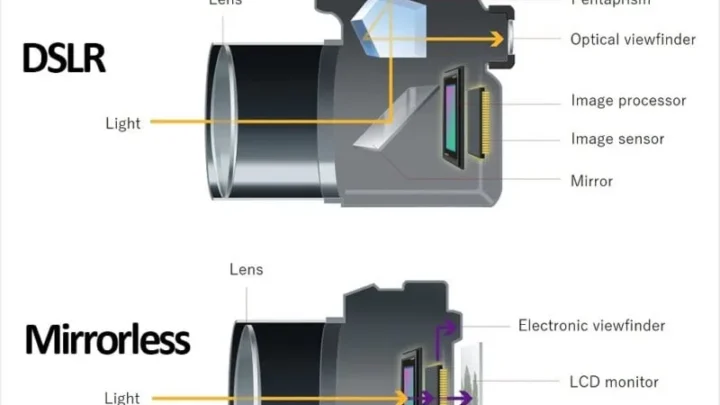
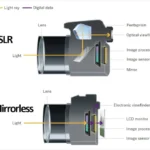
Not necessarily. Many professionals use mirrorless cameras, which are lighter and often have better video features. However, DSLRs like the Canon Rebel T7 and Nikon D7500 offer excellent image quality, long battery life, and a huge selection of affordable lenses.
They are a great starting point for building a professional kit.
Are the 8K and 4K travel cameras good for professional work?
No. The 8K and 4K resolutions are interpolated, not true optical resolutions. The small sensors and poor low-light performance make them unsuitable for professional work.
They are fine for casual social media content, but for paid shoots, invest in a DSLR or mirrorless camera.
What lenses should I buy for the Canon Rebel T7?
A good starting kit includes the 18-55mm lens for general work and a 75-300mm lens for telephoto. For portraits, add a 50mm f/1.8 prime lens, which is affordable and sharp. For macro work, consider a dedicated macro lens.
The Canon EF and EF-S lens ecosystem is one of the largest, so you have many options.