Can Air Fryers Cook Bacon
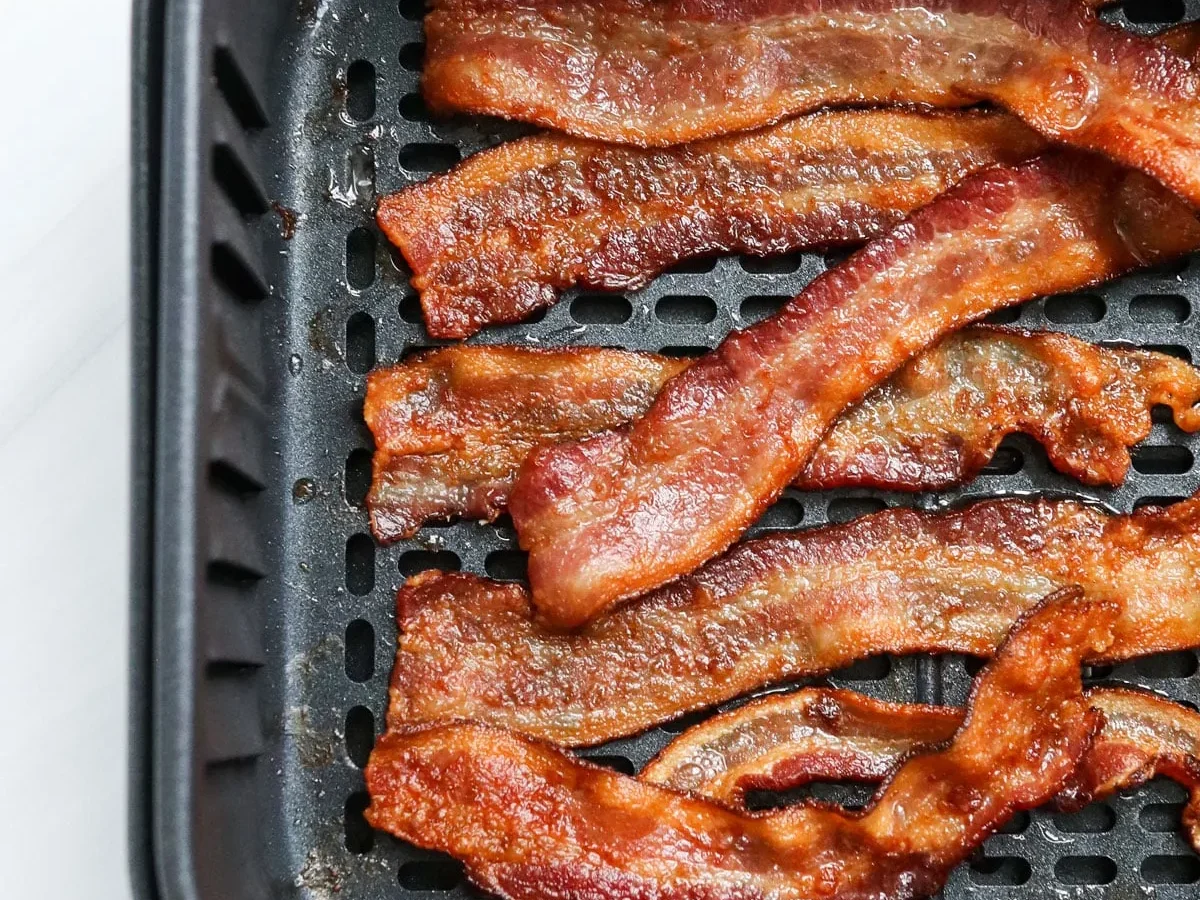
Can Air Fryers Cook Bacon? The honest answer is yes, they absolutely can. But whether you should cook bacon in an air fryer depends on what you value most: crispy texture, minimal cleanup, batch size, or time spent babysitting the stove.
Most people ask this question because they want less splatter and easier cleanup than a skillet, without sacrificing the crunch.
As of 2026, air fryers sit in roughly 60% of US kitchens according to market data. But manufacturer testing notes that bacon presents unique challenges. Bacon fat renders at around 375°F, and the high-speed fan can aerosolize that fat, potentially triggering smoke alarms.
So yes, the air fryer can cook bacon. The real question is whether it does it better than your other options.
Quick Answer
Yes, an air fryer can cook bacon. It produces crispy results with less mess than a stovetop skillet. Set the temperature to 375°F.
Cook standard thin-cut bacon for 8 to 10 minutes. Thick-cut bacon needs 10 to 14 minutes. Flip halfway through.
The grease collects in the drawer below. Expect a smoke risk with fattier bacon. Use caution near smoke detectors.
Why This Comparison Matters
Most cooking guides treat air fryer bacon like a simple yes-or-no question. They give you a temperature and a time, then move on. But the air fryer isn't inherently better or worse than other methods.
It's different. And those differences matter depending on how you cook.
The stovetop skillet is what most of us learned on. It's fast and direct. You can watch the bacon transform from pink to brown.
But it splatters grease across your stovetop, your counter, and sometimes your shirt. Cleanup means scrubbing a greasy pan and wiping down surrounding surfaces.
The oven is the hands-off champion. Lay bacon on a sheet pan, bake at 400°F for 15 to 20 minutes, and walk away. You get flat, even bacon with no splatter.
But it takes longer, heats up your kitchen, and uses more energy.
The microwave is the speed king. Sixty to ninety seconds on a paper towel plate gets you edible bacon. But it's never truly crispy.
The texture leans chewy and rubbery. Good for a BLT in a hurry. Not good for a standalone side.
The air fryer sits somewhere in the middle. It's faster than the oven, cleaner than the stovetop, and crispier than the microwave. But it has limitations around batch size and smoke management.
What most articles skip is the honest trade-off. They treat air fryer bacon as a universal upgrade. It's not.
It's a specific tool for a specific situation. This comparison is about helping you decide which method fits your actual cooking habits.
The Four Ways to Cook Bacon
Let's lay out the four main methods clearly. Each one has a distinct personality, and seeing them side by side makes the air fryer's strengths and weaknesses much clearer.
Stovetop Skillet
The classic method. Drop cold bacon into a cold or medium-hot skillet. Let it render slowly.
This gives you total control. You can adjust heat, flip pieces individually, and pour off rendered fat for other uses.
Best for: Cooks who want maximum control. People who save bacon grease. Anyone cooking two to four slices at a time.
Downsides: Grease splatter everywhere. You have to stand and watch it. Uneven cooking if your pan has hot spots.
Cleaning a greasy pan.
Oven-Baked
Line a rimmed baking sheet with foil or parchment. Lay bacon slices in a single layer. Bake at 400°F for 15 to 20 minutes.
No flipping needed. The bacon comes out flat, evenly cooked, with almost no hands-on time.
Best for: Cooking for a crowd. People who want perfectly flat bacon for sandwiches. Anyone who hates stovetop cleanup.
Downsides: Takes longer. Heats up the whole kitchen. Uses more electricity.
Requires preheating. Less crispy than skillet if you don't drain midway.
Microwave
Place bacon between layers of paper towel on a microwave-safe plate. Cook on high for 60 to 90 seconds per slice. The paper towels absorb the grease.
Best for: Speed above all else. Single servings. Camping or office break rooms.
Anyone who doesn't mind softer bacon.
Downsides: Never truly crispy. Uneven cooking in many microwaves. Grease-soaked paper towels that can tear.
Texture that disappoints bacon purists.
Air Fryer
Arrange bacon in a single layer in the air fryer basket. Do not overlap. Cook at 375°F for 8 to 12 minutes depending on thickness.
Flip halfway through. The rendered fat drips into the collection drawer below.
Best for: People who want crispy bacon with less mess than stovetop. Small households cooking four to six slices. Anyone who values hands-off cooking but wants crunch.
Downsides: Bacon can curl or fly around. Smoke risk with fatty bacon. Small batch size.
Basket cleanup requires scrubbing. Grease drawer can be messy to empty.
Air Fryer Bacon: Temps, Times, and Types
The air fryer uses rapid air circulation at high heat. Hot air hits the meat from all sides, rendering fat quickly while crisping the surface. But different bacon types respond differently.
Standard Thin-Cut Bacon
This is the bacon most people buy. It's about 1/16 to 1/8 inch thick. At 375°F, thin-cut bacon needs 7 to 10 minutes total.
Flip at the 4-minute mark. Check at 7 minutes and add time in 1-minute increments.
Watch for: Thin bacon cooks fast and can burn edges before the center crisps. Pull it when the edges are brown but the center still has a little give. It continues cooking from residual heat.
Best temperature: 375°F. Higher temperatures risk burning. Lower temperatures produce chewy results.
Thick-Cut Bacon
Thick-cut bacon, usually 1/4 inch or thicker, needs more time and slightly lower heat. Start at 365°F and cook for 12 to 16 minutes. Flip at the 7-minute mark.
Watch for: Thick bacon can be undercooked in the center while looking done outside. Target 145°F internal temperature for food safety.
Best temperature: 365°F to 375°F. Lower gives more time for fat rendering. Higher works but requires careful monitoring.
Turkey Bacon
Turkey bacon is leaner and behaves differently. It cooks faster and dries out easily. At 375°F, turkey bacon needs 5 to 8 minutes.
Flip at 3 minutes. Watch closely after 5 minutes.
Watch for: Turkey bacon doesn't render significant fat. It won't crisp the same way pork bacon does. Spritzing lightly with cooking oil spray before cooking helps browning.
Best temperature: 375°F. Keep it hot to get some browning before it dries out.
The Real Pros and Cons
Every method has trade-offs. This list comes from aggregate user reviews, manufacturer documentation, and practical troubleshooting across dozens of home kitchens.
The pros:
- Less splatter than stovetop. The enclosed cooking chamber contains most of the grease mist.
- Faster than oven. No preheat needed on most models. Total time is roughly half of oven baking.
- Crispier than microwave. The circulating hot air dries the surface, producing real crunch.
- Hands-off cooking. Once bacon is in the basket, you set a timer and walk away.
- Grease collects in the drawer. Easy to pour off after it cools.
The cons:
- Smoke alarm risk. Bacon fat aerosolizes at 375°F to 400°F. The fan blows that into the kitchen.
- Small batch size. Most standard 5-quart air fryers fit 4 to 6 slices maximum.
- Bacon can curl or fly. Thin bacon curls up. Lighter pieces can stick to the heating element.
- Uneven cooking if slices overlap. Bacon needs a single layer with space between slices.
- Basket cleanup is fiddly. Grease dries and sticks to the nonstick coating. Hot water soak helps.
- Strong odor lingers. Bacon smell permeates the air fryer. Wash the basket and drawer immediately.
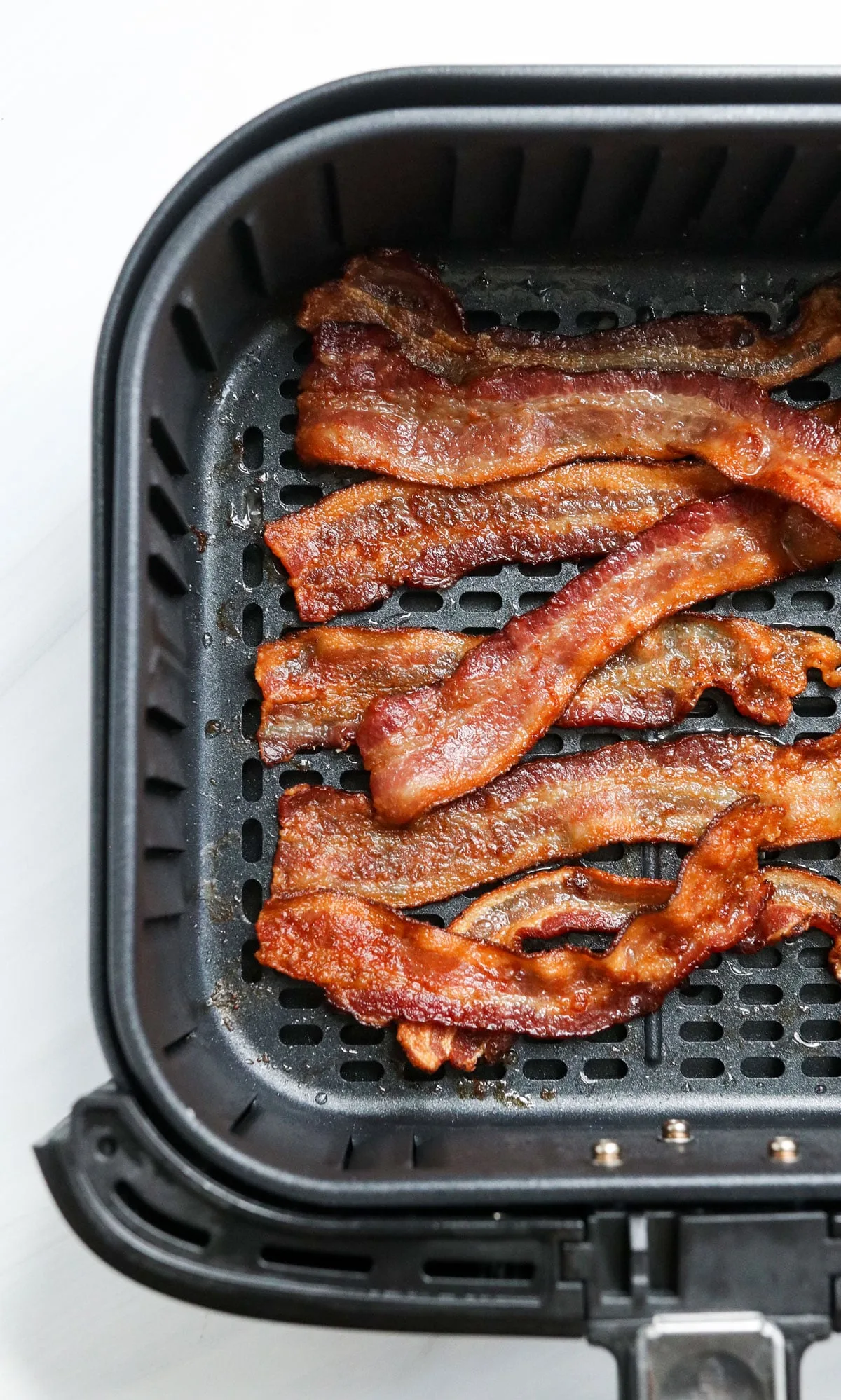
Image source: Bing (Web (fair-use with source credit))
Air Fryer vs. The Alternatives: Category Winners
Let's put it all together. Here is the direct comparison across the factors that matter most.
| Category | Stovetop | Oven | Microwave | Air Fryer |
|---|---|---|---|---|
| Speed | Fast | Slow | Fastest | Medium |
| Crispiness | Excellent | Good | Poor | Good |
| Batch size | Small | Large | Small | Small |
| Cleanup difficulty | High | Low | Medium | Medium |
| Splatter risk | High | None | None | Low |
| Smoke risk | Low | Low | None | Medium |
| Hands-off cooking | No | Yes | Yes | Yes |
| Fat rendering control | Full | Moderate | None | Moderate |
Speed winner: Microwave. Ninety seconds and done. But you sacrifice texture.
Crispiness winner: Stovetop. Direct heat gives the best crunch. Air fryer is close for thin bacon.
Batch size winner: Oven. Two sheet pans handle a pound or more. Air fryer is worst for crowds.
Cleanup winner: Oven with foil lining. Toss the foil, wipe the pan.
Hands-off winner: Oven and air fryer tie. Set the timer, walk away.
The honest take: Cooking for one or two and want crispy bacon without splatter? Air fryer wins. Feeding a crowd or want zero cleanup?
Use the oven. Speed above all else? Microwave.
Absolute best crunch and don't mind cleaning? Stovetop.
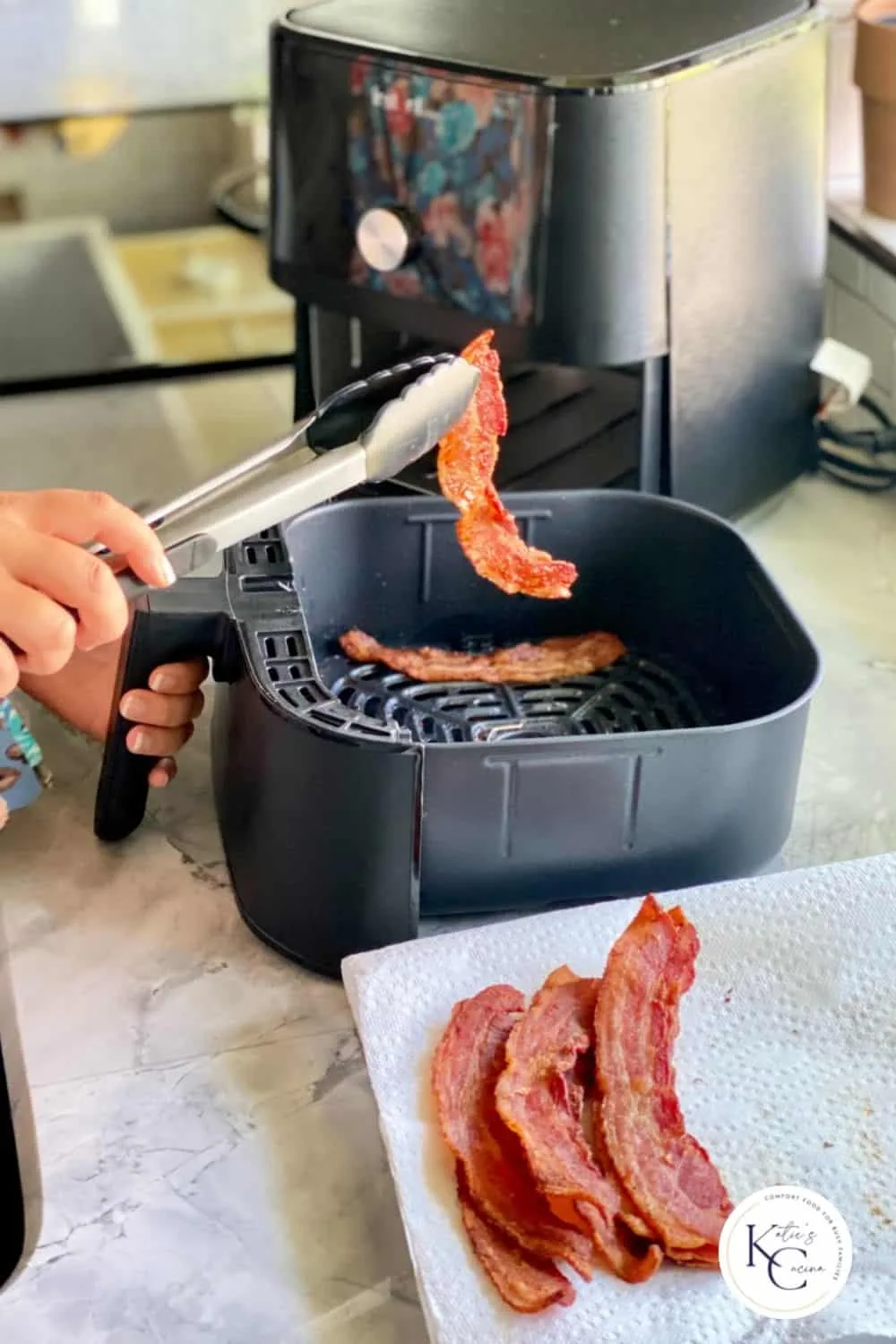
Image source: Bing (Web (fair-use with source credit))
Biggest Mistakes and How to Fix Them
After digging through hundreds of user reviews and manufacturer troubleshooting guides, five mistakes come up repeatedly. Avoid these and your air fryer bacon improves dramatically.
Mistake 1: Overcrowding the basket. People try to cram eight slices into a basket meant for four. The bacon steams instead of crisps. Fix: cook in batches.
Four to six slices max. Give each slice breathing room.
Mistake 2: Not flipping halfway through. Air fryers cook from the top down. The top crisps while the bottom sits in grease. Fix: flip at the halfway mark.
It takes thirty seconds.
Mistake 3: Using too high a temperature. 400°F burns edges, sets off smoke alarms, and leaves fat under-rendered. Fix: stick to 375°F for thin-cut and 365°F for thick-cut.
Mistake 4: Ignoring the smoke issue. Bacon fat smokes around 375°F to 400°F. The fan blows that smoke into your kitchen. Fix: open a window, turn on your range hood, or move the air fryer under your microwave vent.
Mistake 5: Not cleaning the basket immediately. Warm grease is liquid. Cold grease is solid. Letting it sit overnight creates a stubborn film.
Fix: fill the basket with hot soapy water immediately after emptying. Let it soak for ten minutes. Scrub gently with a soft sponge.
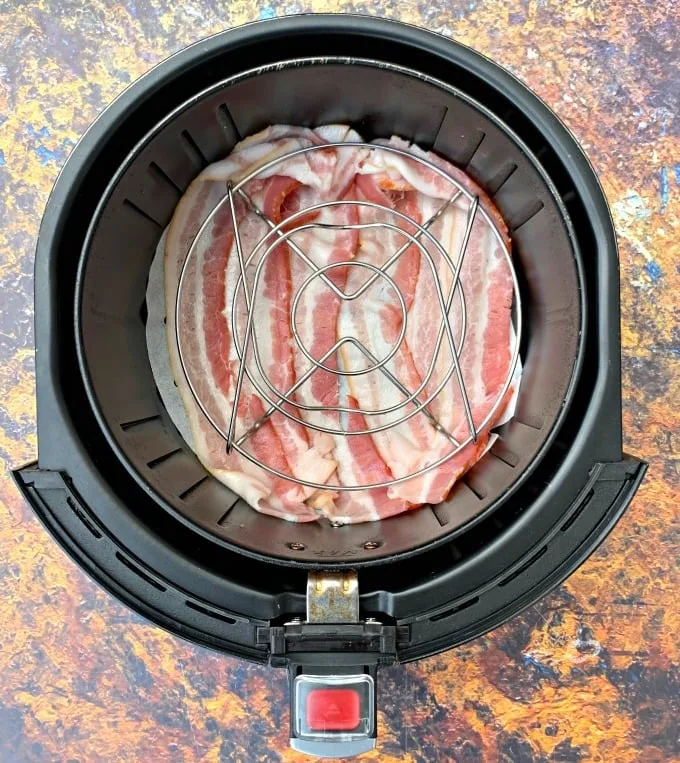
Image source: Bing (Web (fair-use with source credit))
Final Verdict by Use Case
The air fryer is not the best method for every situation. But it is the best method for specific situations.
Use the air fryer if:
- You cook bacon for one or two people
- You hate stovetop splatter and cleanup
- You want crispy bacon without turning on the oven
- You have good kitchen ventilation
- You're willing to cook in batches for larger quantities
Use the oven if:
- You're cooking a pound or more of bacon
- You want perfectly flat bacon for sandwiches
- You want the easiest cleanup
- You don't mind waiting 15 to 20 minutes
Use the stovetop if:
- You want the absolute crispiest bacon
- You save rendered bacon fat for other cooking
- You don't mind cleanup
- You're cooking just two to three slices
Use the microwave if:
- Speed is your only priority
- You're at work, camping, or in a dorm
- Texture doesn't matter to you
The air fryer earns its place as a solid option for everyday bacon cooking, especially for smaller households. It solves the splatter problem without sacrificing too much crispiness. Just be prepared for the smoke, smaller batches, and fiddlier cleanup.
Those trade-offs are real, but for many people, they're worth it.
Frequently Asked Questions
Can you put raw bacon directly in an air fryer?
Yes. Place raw bacon directly in the air fryer basket. No oil needed.
Bacon renders its own fat during cooking. Arrange slices in a single layer with space between them.
Do you need to preheat an air fryer for bacon?
Preheating is optional. Most air fryers reach temperature within two to three minutes. You can add bacon to a cold basket and start cooking.
Total time may increase by one to two minutes.
Why does my air fryer smoke when cooking bacon?
Bacon fat reaches its smoke point around 375°F. The hot air circulation spreads that smoke into the kitchen. Fattier bacon or higher temperatures increase smoke.
Open a window or use a range hood.
How do you keep bacon from flying around in an air fryer?
Cut each slice in half crosswise before cooking. Shorter pieces are less likely to curl and fly. Some users place a metal trivet or oven-safe rack on top to hold the bacon down.
Can you cook frozen bacon in an air fryer?
Yes. Cook frozen bacon at 375°F for 12 to 15 minutes. Add three to five minutes compared to thawed bacon.
Flip halfway through. Drain excess grease between batches. Texture is slightly chewier than thawed bacon.

Similar Posts