Can Air Fryers Replace Ovens
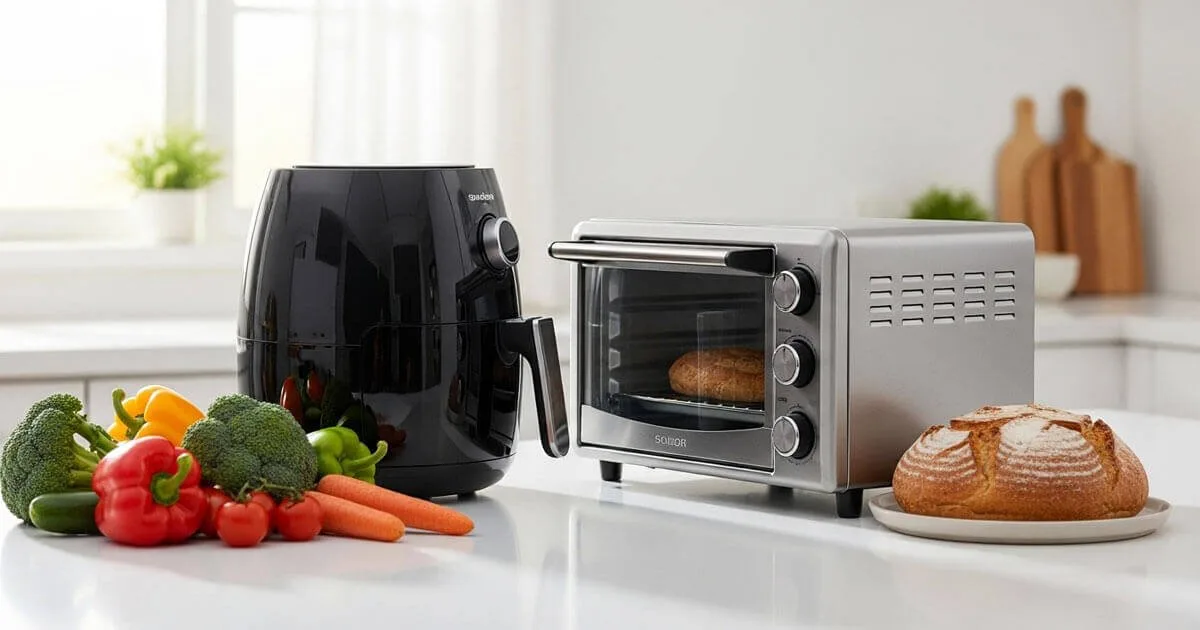
So you're standing in your kitchen wondering if that basket-style air fryer on your counter could actually send your full-size oven into early retirement. It's a fair question. Ovens take forever to preheat, they heat up the whole house, and for a single sheet pan of vegetables it feels like overkill.
But can air fryers replace ovens completely, or is that just wishful thinking from people who really love crispy fries?
As of 2026, the short answer is more nuanced than a simple yes or no. Manufacturer specifications show that air fryers use roughly 1200 to 1500 watts compared to a standard electric oven's 2400 to 5000 watts. That difference alone saves energy.
But wattage isn't the only thing that matters. Let's walk through what each appliance actually does well and where they fall apart.
Quick Answer
Air fryers can replace ovens for most single-serving and two-person meals. They cook faster, use less energy, and produce crispier results on frozen foods and breaded items. But they cannot match an oven's capacity for batch cooking, baking, or roasting large cuts of meat.
Keep both if you cook for more than two people or bake regularly.
How Air Fryers Actually Work (and Why Speed Isn't Everything)
Let's clear something up right away. An air fryer isn't really a fryer. It's a small convection oven with a powerful fan that sits close to the heating element.
That's the whole secret.
The Science Behind the Crisp
A standard oven relies mostly on radiant heat from elements at the top and bottom. Hot air rises naturally but moves slowly. A convection oven adds a fan to circulate that air.
An air fryer takes that same concept and cranks it up.
The fan in a typical air fryer moves air at a much higher velocity than a full-size convection oven. That fast-moving hot air strips moisture from the food's surface quickly. More moisture evaporation means more browning.
More browning means that golden, crunchy exterior you associate with deep frying.
But here's the trade-off. The small chamber means the air has less volume to move through. So it heats up fast and hits the food with intense, direct heat.
That's great for speed. It's less great for even cooking when you fill the basket too full.
Why Speed Comes With Limits
Manufacturer tests show most air fryers reach 375°F in about three minutes. A standard oven needs ten to fifteen minutes to hit the same temperature. That time savings is real.
But speed creates a problem the marketing doesn't mention.
When you crowd the basket, that high-velocity air can't reach every surface. The food on top gets intense heat while the pieces underneath steam in their own moisture. The result is uneven cooking.
Half the batch is perfectly crispy. The other half is pale and sad.
The takeaway here is simple. Air fryers work because of small volume and rapid air movement. Those same traits make them terrible at cooking large quantities.
You can't cheat physics. If you want speed, you accept small batches.
Where Air Fryers Win: Crispiness, Speed, and Energy
Air fryers have clear advantages in three areas. If these match your cooking habits, you might not miss your oven much at all.
Crispiness That Beats Your Oven
This is the air fryer's superpower. The combination of high heat, rapid air movement, and small chamber creates surface browning that a standard oven simply cannot match.
Frozen french fries are the classic test. A standard oven takes 20 to 25 minutes and produces fries that are cooked but limp. An air fryer does the same quantity in 12 to 15 minutes with a crunchy exterior and fluffy inside.
The difference is dramatic enough that aggregate reviews consistently rank crispiness as the number one reason people keep using their air fryer after the novelty wears off.
Breaded chicken works the same way. The rapid air flow creates a crust that stays crunchy without needing a pool of oil. For anyone trying to reduce fat intake without sacrificing texture, this is a genuine win.
Time Savings That Add Up
Let's look at real numbers. A typical oven recipe for roasted vegetables calls for 25 minutes at 400°F plus a 10 minute preheat. That's 35 minutes total.
The same vegetables in an air fryer take 12 to 15 minutes with no preheat.
Over a week of cooking, those savings compound. If you use your oven five times per week and each time you save 15 to 20 minutes, that's over an hour of your life back every week. For busy weeknights, that matters.
Energy Efficiency That Shows on Your Bill
The energy difference is significant. An electric oven running at 400°F for an hour uses roughly 2.4 to 3.0 kilowatt-hours depending on the model. An air fryer running for the same hour uses about 1.2 to 1.5 kilowatt-hours.
And since air fryers cook faster, your actual usage is even lower.
Per the U.S. Department of Energy's appliance energy consumption data, the average household could save roughly 30 to 50 percent on cooking-related electricity by using an air fryer instead of an oven for suitable meals. That's not life-changing money, but it adds up over a year.
Summer cooks appreciate another benefit. Air fryers generate far less ambient heat than ovens. Your kitchen stays comfortable, and your air conditioner doesn't have to fight against a 400°F box running for 45 minutes.
Image source: Bing (Web (fair-use with source credit))
Where Air Fryers Fall Short: Capacity, Baking, and Texture
Now for the honest side. Air fryers have real limitations that matter depending on your cooking style.
Capacity Is the Biggest Problem
The most common air fryer baskets hold 4 to 6 quarts. That sounds reasonable until you realize the usable cooking area is roughly the size of an 8 by 8 inch square. You can fit two chicken breasts in a single layer.
Maybe three if they're small. A full sheet pan in an oven handles eight to ten portions without breaking a sweat.
For anyone cooking for a family of four or more, this becomes a genuine frustration. You can't make a complete meal in one batch. You end up cooking chicken first, holding it warm while you cook vegetables, then reheating everything together.
By the time everyone eats, the first batch has cooled.
Aggregate user reviews report that capacity complaints are the number one reason people return air fryers or buy larger oven-style models. The basket type simply cannot scale.
Baking Is Unreliable
You can bake in an air fryer. The question is whether you should bother.
Cakes and breads rely on even, gentle heat to rise properly. Air fryers produce intense, direct heat concentrated on the top surface. The top of your cake browns and sets before the center finishes cooking.
You end up with a burned dome and a raw middle.
Cookies fare slightly better if you bake in small batches. But you can only fit four to six cookies per batch. A standard oven bakes two dozen at once.
Casseroles and layered dishes present another problem. The small basket cannot fit a standard 9 by 13 inch casserole dish. You would need to buy a special insert or divide the dish into multiple batches.
Neither option is convenient.
Texture Trade-offs You Should Know
Not every food benefits from air frying. Some things genuinely taste better from an oven.
Slow-roasted vegetables develop a different texture in an air fryer. The exterior caramelizes quickly, but the interior may stay firmer than oven-roasted versions. For carrots and potatoes, you get a crunchier outside and a denser inside.
Some people prefer that. Others miss the soft, buttery texture of slow roasting.
Whole roasts are another challenge. A chicken breast or pork loin cooks unevenly in an air fryer. The outside dries out before the center reaches a safe internal temperature.
A standard oven's slower, more even heat produces juicier results for larger cuts of meat.
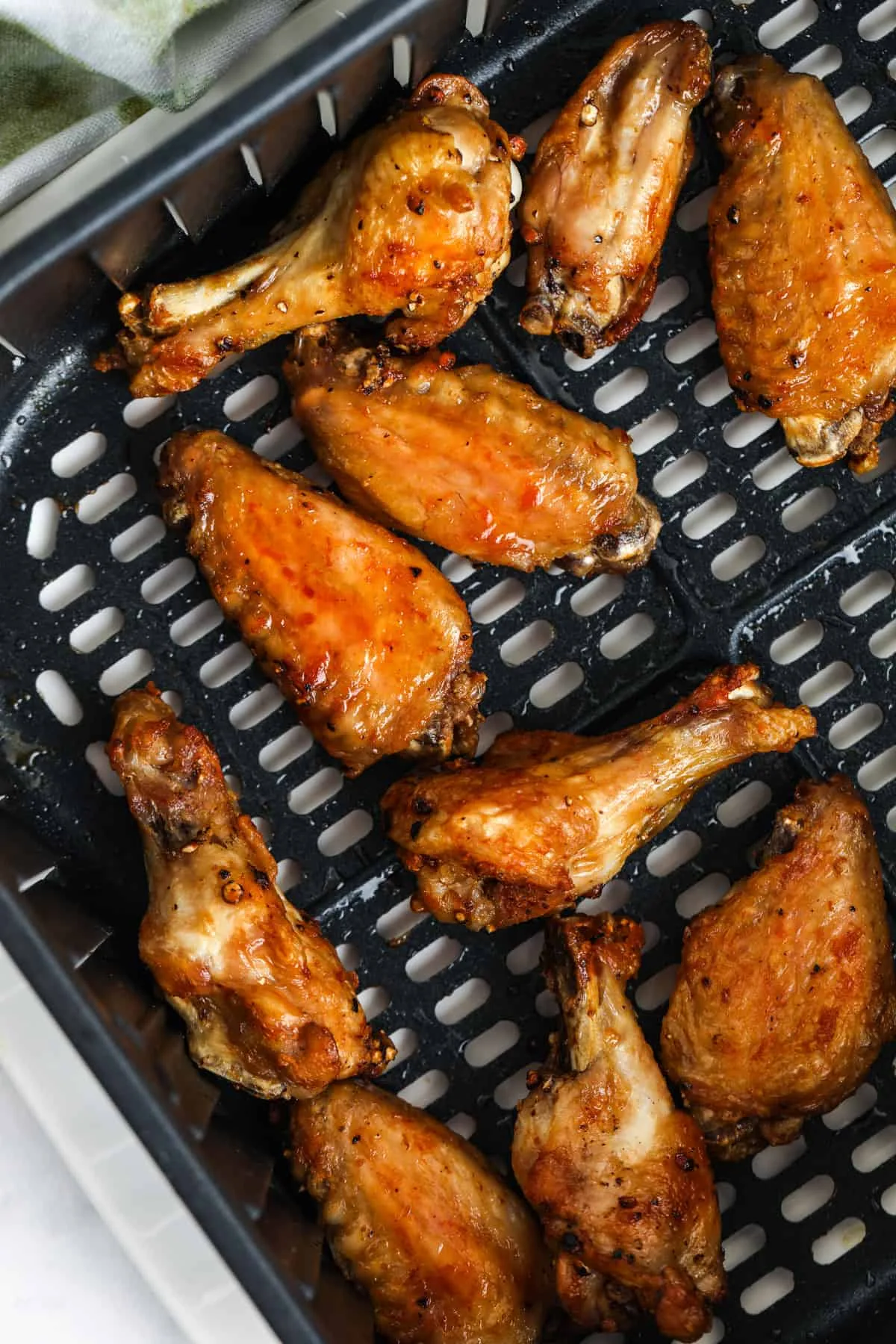
Image source: Bing (Web (fair-use with source credit))
Side-by-Side: Air Fryer vs. Oven for 12 Common Foods
Let's compare specific foods. This table shows which appliance gives you the best result based on texture, timing, and batch size.
| Food | Air Fryer Result | Oven Result | Best For |
|---|---|---|---|
| Frozen french fries | Crispy, 12-15 min | Limp, 20-25 min | Air fryer |
| Chicken wings | Extra crispy, 18 min | Crispy, 40 min | Air fryer |
| Breaded fish fillets | Golden crust, 10 min | Soft crust, 18 min | Air fryer |
| Roasted broccoli | Charred edges, 8 min | Tender, 20 min | Depends on preference |
| Sheet pan vegetables | Uneven in batches | Even, large quantity | Oven |
| Whole roast chicken | Outer dries, 45 min | Juicy, 1.5 hours | Oven |
| Frozen pizza (personal) | Crispy bottom, 6 min | Even, 12 min | Air fryer |
| Frozen pizza (family) | Too small | Perfect, 14 min | Oven |
| Cookies | 4-6 per batch | 24 per batch | Oven |
| Baked cake | Burnt top, raw center | Even rise | Oven |
| Reheated pizza | Crunchy crust, 3 min | Drying, 8 min | Air fryer |
| Bacon | Extra crispy, 8 min | Chewy, 15 min | Depends on preference |
The pattern is clear. Air fryers win on speed and crispiness for small batches of frozen or breaded foods. Ovens win on capacity, even baking, and larger roasts.
Neither tool covers every job perfectly.
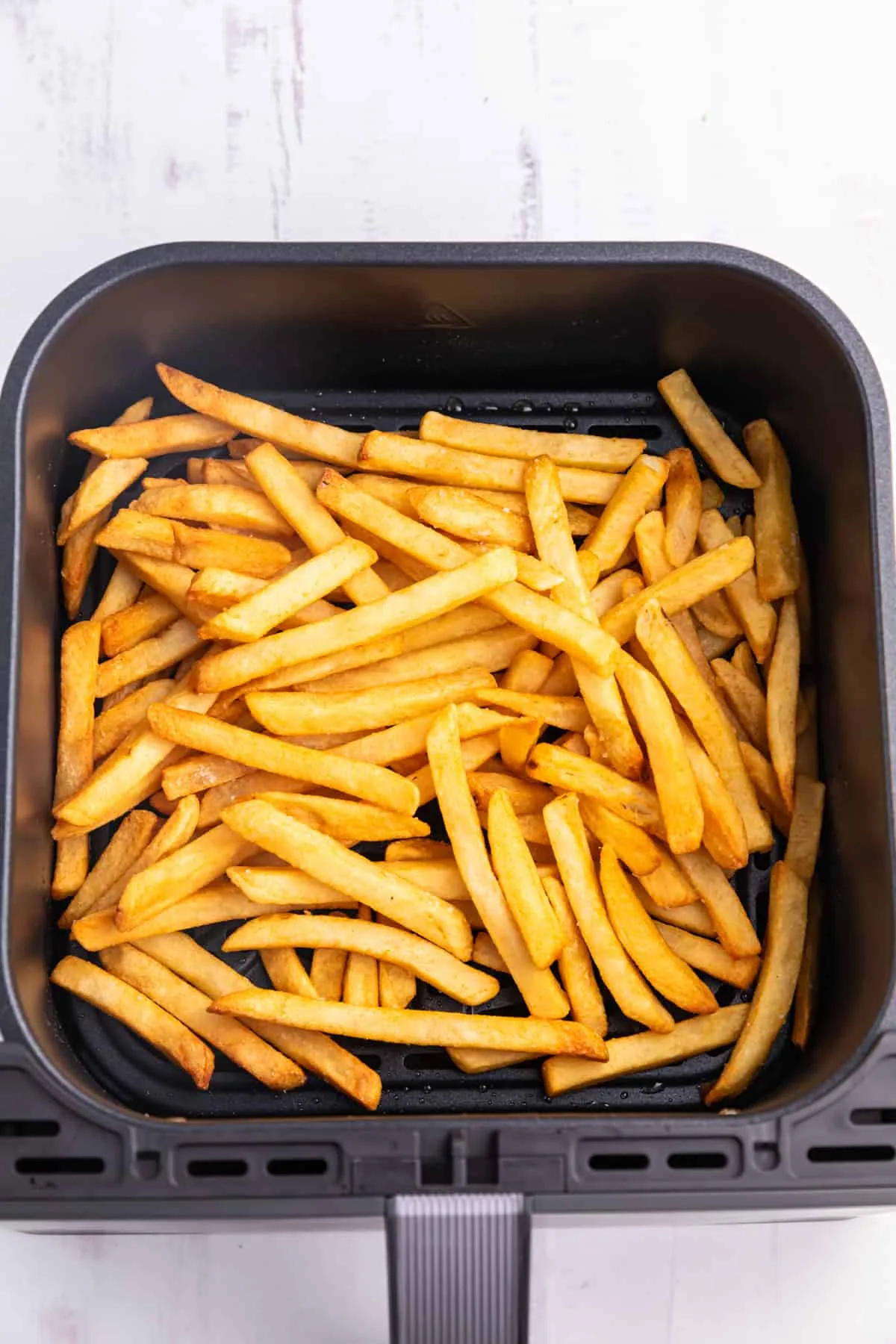
Image source: Bing (Web (fair-use with source credit))
Who Should Ditch Their Oven — and Who Should Keep It
Let's make this personal. Your cooking habits determine the right answer.
You Can Probably Ditch the Oven If…
You cook for one or two people most nights. Your meals lean toward frozen foods, chicken, vegetables, and leftovers. You rarely bake from scratch.
You value speed over volume. You hate preheating and cleaning big pans.
For this profile, an air fryer covers 80 to 90 percent of what you actually cook. The few things it cannot handle are rare enough that you can adapt. A single-serving casserole fits in a small dish.
A whole chicken can be broken down into parts. You learn to work around the limits.
You Should Keep the Oven If…
You cook for three or more people regularly. You bake bread, cakes, or cookies from scratch. You make casseroles, lasagnas, or sheet pan dinners.
You roast whole chickens or large cuts of meat. You host holiday meals or dinner parties.
For this profile, an air fryer is a supplement, not a replacement. Use it for side dishes, snacks, and reheating. Let the oven handle the heavy lifting.
The Middle Path
Most households fall in between. You cook for two or three people. You bake occasionally.
You want the speed but need the capacity sometimes.
The smart move is to keep both. Use the air fryer for weeknight speed. Use the oven for weekend projects and larger meals.
They complement each other well. You get the best of both worlds without compromise.
Common Mistakes People Make Switching Between Them
If you decide to use an air fryer more and an oven less, avoid these common errors.
Overcrowding the Basket
This is the number one mistake. People treat the basket like a mini oven tray and fill it to the brim. The result is steaming, not air frying.
Food ends up soft and pale instead of crispy.
The rule is simple. One layer. No overlap.
Air needs to reach every surface. If you have more food than fits in one layer, cook in batches.
Using Wrong Temperatures
Air fryers run hotter than ovens because the heat is more concentrated. A recipe that calls for 400°F in an oven typically needs 375°F in an air fryer. Reduce the temperature by 25°F as a starting point.
Check early and adjust.
Ignoring the Shake or Flip
Air fryers have hot spots just like ovens. The food closest to the fan cooks faster. Halfway through cooking, shake the basket or flip the pieces.
This ensures even browning.
Expecting Oven Results From Every Recipe
Some foods just work better in an oven. Accept that. Don't try to air fry a whole lasagna or a bundt cake.
Use the right tool for the job.
Frequently Asked Questions
Can I bake a cake in an air fryer?
You can, but results are inconsistent. The top browns too fast, and the center may not cook through. Small cakes in small pans work better than full-size recipes.
Expect trial and error.
Is an air fryer cheaper to run than an oven?
Yes. Air fryers use roughly half the wattage of a standard electric oven. They also cook faster, so total energy per meal is significantly lower.
Per the U.S. Department of Energy, savings can reach 30 to 50 percent for suitable meals.
Can I cook a whole chicken in an air fryer?
Small chickens up to 4 pounds can fit in larger air fryer baskets. But the outside cooks faster than the inside. You risk dry meat.
Spatchcocking or breaking the chicken into parts produces better results.
Do I need oil in an air fryer?
A small amount helps browning and prevents sticking. One to two teaspoons is usually enough. You do not need the amount used in deep frying.
A light spray or brush coat works best.
Can an air fryer replace a microwave for reheating?
Not entirely. Air fryers reheat better for crispy foods like pizza and fries. But they take three to five minutes instead of a microwave's 30 seconds.
For soups, stews, and leftovers that need moisture, a microwave is faster and better.
What size air fryer do I need?
For one to two people, a 4 to 6 quart basket works fine. For three to four people, look for an oven-style air fryer with multiple racks. For families larger than that, keep your full-size oven.
The Bottom Line
Can air fryers replace ovens? The honest answer is yes and no. Yes, if you cook for one or two people, eat a lot of frozen and breaded foods, and value speed and energy savings.
No, if you bake, cook for a family, or rely on your oven for large batches and roasts.
Most homes benefit from keeping both. The air fryer becomes your weeknight speed tool. The oven handles the heavy lifting when you need it.
They are not competitors. They are teammates. Use each where it shines, and your kitchen runs better for it.

Similar Posts