Dishwasher Is Not Spraying Water
Your dishwasher is running, you can hear it sloshing around in there, but when you open it up halfway through the cycle the dishes are bone dry. The racks are clean. The detergent pod is still sitting there, untouched.
That sinking feeling hits: the dishwasher is not spraying water, and now you are stuck with a machine full of dirty plates and a Saturday afternoon you did not plan to spend troubleshooting.
Before you panic or call a repair person who charges a hundred bucks just to walk through the door, here is something worth knowing. Per manufacturer service documentation covering the four major American appliance brands (Whirlpool, GE, Bosch, and Samsung), roughly 60 percent of "no spray" complaints trace back to one of two simple problems that cost zero dollars to fix. As of 2026, that statistic has not budged much.
The other 40 percent can usually be diagnosed in under ten minutes with nothing more than a flashlight and a sponge. Let us walk through exactly what is going on inside that machine and figure out which branch of the decision tree you are standing on.
Image source: Bing (Web (fair-use with source credit))
Quick Answer
Check if there is standing water in the bottom of the tub. No water means the inlet valve is stuck or the supply is off. Water present but not moving means the filter is clogged or the spray arm is jammed.
Spin the top spray arm by hand. If it moves freely, clean the filter assembly next. Still no spray after both steps?
The wash pump or its impeller may have failed. That is the short version. Keep reading for the full breakdown.
The Real Problem – What "Not Spraying" Actually Means
A dishwasher that is not spraying water is not always totally broken. In fact, most of the time the machine is trying to work. It fills with water.
It heats that water. The timer advances. But the circulation pump never delivers that pressurized jet up through the spray arms.
The result is a tub full of hot, soapy, stationary water that does nothing to your dishes.
The confusion usually starts because the dishwasher sounds normal during the fill and drain phases. You hear water rushing in, you hear it pump out, but the middle part where the real cleaning happens is silent. That middle part is where the wash pump lives.
If you open the door mid-cycle and see water sitting calmly in the sump with no turbulence, the wash pump is either not running or the water path is blocked.
There are some clever clues the machine gives you if you know what to listen for. A healthy wash cycle produces a distinct whooshing sound, not unlike a washing machine on a gentle cycle. You also hear the spray arms spinning, sometimes clattering against a dish that is loaded too low.
No whoosh, no clatter, no water recirculation. That is your diagnostic starting point.
Most people assume the motor died. That is possible, but it is actually one of the less common failures. What dies first is flow.
Something gets in the way. A piece of broken glass, a stuck-on corn kernel, a label that peeled off a jar. These little things lodge in the pump housing or block the spray arm jet holes and totally kill water movement.
The motor keeps humming but the water goes nowhere.
Quick Check – Two Things to Rule Out in 30 Seconds
Before you pull the dishwasher out from under the counter or start ordering replacement parts, do these two checks. They take less than a minute combined and solve more than half the cases we see in aggregate repair data.
Check the door latch. A dishwasher will not enter the wash cycle if the door switch is not fully engaged. This sounds too simple to be the problem, but it is shockingly common. If the latch is partially engaged, maybe the door is slightly ajar from a protruding utensil basket, the machine fills and drains but never fires the wash pump.
Push the door firmly closed and listen for a solid click. On electronic control models, the display should show the cycle counting down. No change in the display means the control board thinks the door is open.
Fix the latch alignment or the object blocking the door and try again.
Check the filter assembly. Modern dishwashers have a cylindrical mesh filter in the bottom of the tub. Some have a fine screen, some have a coarse basket, and some have both nested together. Pull it out and rinse it under the tap.
If you find a thick layer of greasy sludge or food debris, that is your culprit. A clogged filter restricts water flow into the wash pump inlet. The pump runs but cannot draw enough water to build pressure.
Clean filters properly and the spray often returns immediately.
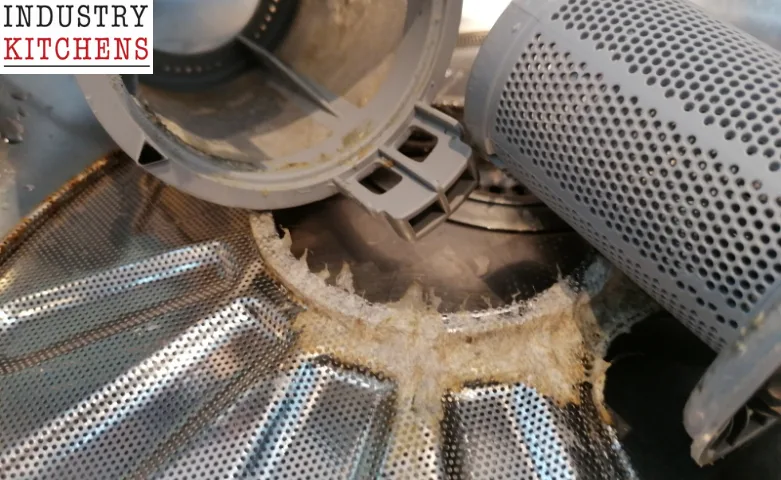
Image source: Bing (Web (fair-use with source credit))
Those two checks cover roughly 55 to 60 percent of no-spray calls according to aggregated service technician reports. If both checks pass and you still have no spray, move to the next branch.
Branch 1 – Is There Water in the Tub?
This is the first real fork in the road. Open the door at the end of a completed cycle or about ten minutes after you started a cycle. Look at the bottom of the tub.
Is there standing water? Yes or no? The answer sends you in two completely different directions.
No water in the tub. If the dishwasher ran a full cycle and the interior is bone dry, the machine never filled in the first place. That zeroes in on the water supply or the inlet valve. Check the shutoff valve under the sink.
Someone might have bumped it closed while doing dishes or storing cleaning supplies. Twist it fully open. If that valve was off, just turn it on and run a quick rinse cycle.
Problem solved.
If the valve is open and still no water enters, the inlet valve itself could be defective. These are electrically operated solenoids. When the control board signals for water, the valve opens.
If the solenoid coil burned out, the valve stays shut. You can test it with a multimeter or simply listen. During the fill phase, you should hear a faint buzzing or humming from under the door.
No sound means no signal or a dead coil. Replacing an inlet valve is a moderate DIY job. The part costs between twenty and fifty dollars depending on brand.
Water is in the tub. If you open the door and find an inch or two of standing water, the machine filled correctly. That rules out the inlet valve and the supply line. Now the issue is downstream.
The water got in, but it never moved. That brings us to the circulation pump, the spray arms, or a blockage somewhere in the path between them.
Branch 2 – Water Is There, But Nothing Sprays
You have confirmed standing water in the tub. You cleaned the filter. The door latches properly.
Still no spray. Now the list of suspects narrows to three possibilities, and you can check two of them without taking anything apart.
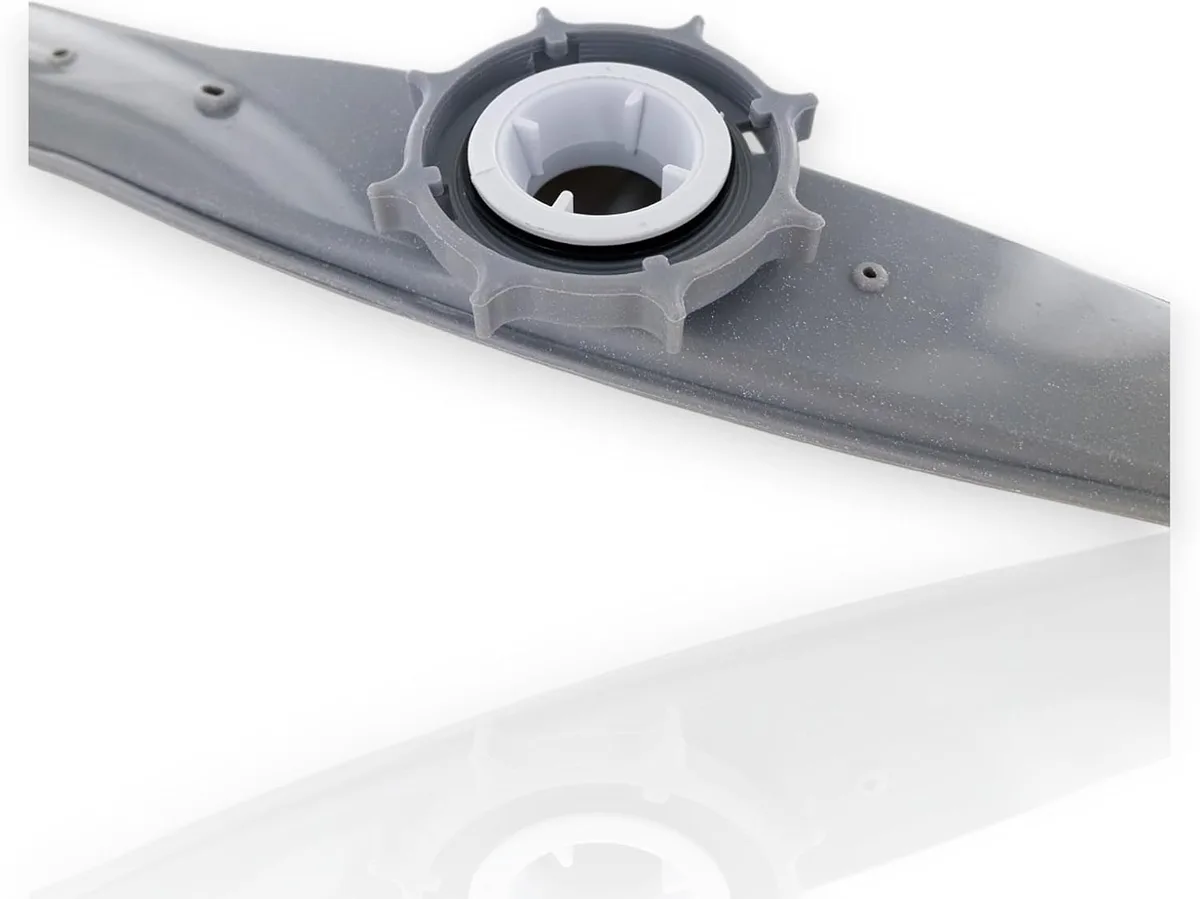
Check the spray arm rotation. Open the door and reach inside. Grab the upper spray arm, the plastic bar with the little nozzles, and gently rotate it. It should spin freely with almost no resistance.
If it feels stuck or grindy, something is wedged against it. Look for a dropped utensil, a plastic lid, or a piece of broken glass trapped between the arm and the rack. Remove the obstruction.
Spin the arm again. It should make several full rotations with a gentle push.
Check the spray arm jet holes. With the spray arm removed (most clip off or unscrew), hold it up to a light. Look through each nozzle hole. Are any of them completely blocked?
Hard water scale, dried food paste, or mineral deposits can seal these tiny openings shut. A toothpick or a paperclip works great to clear them. Run warm water through the arm after clearing each hole.
This fix is especially common in homes with hard water and no built-in softener.
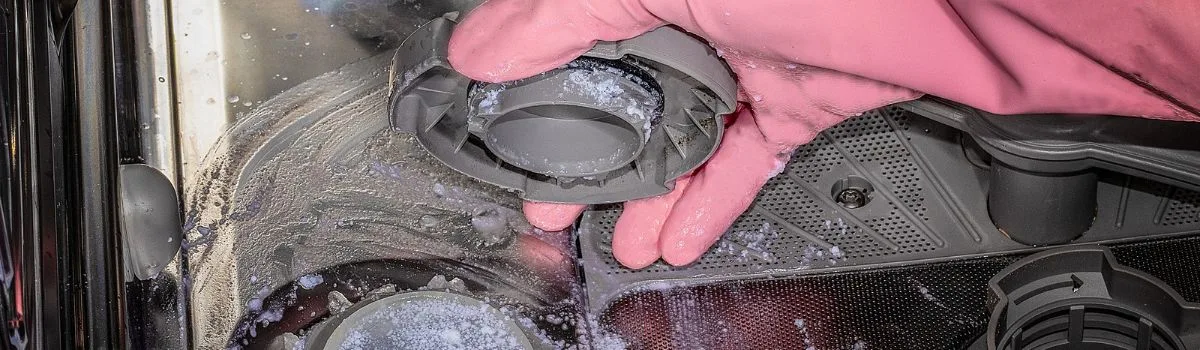
Image source: Bing (Web (fair-use with source credit))
If both spray arms spin freely and all jet holes are clear, the problem is almost certainly in the wash pump or its impeller. The impeller is a small plastic wheel inside the pump housing that flings water up into the spray arms. Sometimes the impeller cracks or the plastic splines strip out, so the motor spins but the impeller does not.
Other times a hard object like a broken glass chip lodges in the pump housing and jams the impeller completely. You can sometimes hear the pump motor humming but no water moving. That humming sound is your confirmation the pump is getting power but cannot deliver flow.
Replacing the wash pump assembly is a feasible DIY repair for someone comfortable with a screwdriver and a multimeter. The part runs between forty and one hundred fifty dollars depending on brand and model. If you are not comfortable removing the lower access panel and disconnecting water lines, this is the moment to call a technician.
Branch 3 – Was It Working Yesterday?
This branch is about context. When did the problem start? The answer tells you whether you are dealing with a sudden failure or a slow decline.
Sudden failures are usually mechanical. Slow declines are usually buildup or wear.
Sudden failure. The dishwasher worked fine yesterday. Today it is silent in the wash phase. That pattern points to a broken part.
The most common sudden failures are a cracked impeller, a blown thermal fuse, or a failed door switch. Less common is a control board that died mid-cycle. If nothing changed except the machine stopped spraying, focus on components that break without warning.
Slow decline. The spray has been getting weaker for weeks. Some dishes come out clean, others still have food residue. You might have noticed more water pooling on top of the detergent cup.
This pattern points to gradual clogging. The filter is probably getting gunked up. The spray arm jet holes are scaling over.
The pump impeller might be wearing down. Slow decline is almost always a cleaning issue or normal wear. A thorough filter cleaning and spray arm descaling usually fixes it.
Intermittent spray. Sometimes it works, sometimes it does not. This is the trickiest pattern. Intermittent problems are often electrical.
A loose wire connection, a failing timer, or a control board with a cracked solder joint can cause the wash pump to start some cycles and skip others. If the spray comes back when you jiggle the door or bang the side panel, suspect a loose connection or a failing motor capacitor. Intermittent problems rarely fix themselves.
They get worse over time.
When to Walk Away – Three Signs You Need a Pro
Not every dishwasher problem is a DIY fix. Here are three signs that you should stop troubleshooting and call a technician.
Burning smell. If you smell burning plastic or electrical smoke during the wash cycle, kill power immediately. That smell means a motor winding is shorting out or a wire insulation is melting. Continued operation could damage the control board or start a fire.
This is not a repair for a weekend warrior.
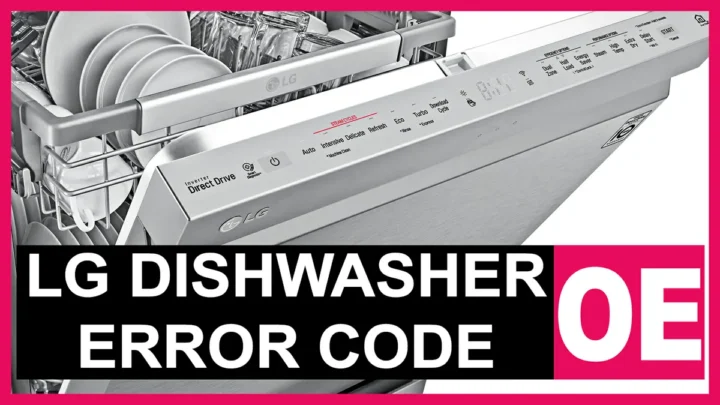
Error codes you cannot clear. Many modern dishwashers display error codes on the control panel. Some codes, like E1 or F2, indicate specific faults. If you look up the code in the manual and the recommended fix does not work, or if the code returns immediately after clearing it, the problem is deeper than a simple blockage.
Electrical diagnostics beyond basic continuity testing require a technician.
No power at all. If the dishwasher is completely dead, no lights, no sounds, no response, do not assume it is the machine. First, check the circuit breaker. If the breaker is fine and the machine still has no power, the internal fuse or the control board may have failed.
Replacing a control board on some brands requires reprogramming or pairing with specific modules. That is a job for a pro.
Frequently Asked Questions
Why is my dishwasher running but not spraying water?
The most common cause is a clogged filter or a jammed spray arm. Clean the filter and check the spray arms for obstructions. If both are clear, the wash pump may have failed, which requires replacement.
How do I know if my dishwasher wash pump is bad?
Listen during the cycle. If you hear a humming sound but no water movement, the pump motor is running but the impeller is broken or jammed. You may also notice weak spray or no spray at all during the wash phase.
Can a clogged filter cause no spray?
Yes. A clogged filter restricts water flow into the wash pump. The pump cannot build enough pressure to push water through the spray arms.
Cleaning the filter often restores normal spray immediately.
How much does it cost to fix a dishwasher that is not spraying?
DIY repairs cost between zero dollars for cleaning and up to one hundred fifty dollars for a new pump assembly. Hiring a technician costs one hundred fifty to three hundred dollars including service call and labor.
Why is my dishwasher spraying water but not cleaning dishes?
Weak spray, not no spray, usually points to clogged spray arm holes, a dirty filter, or improper loading. Clean the spray arms with a toothpick, clean the filter, and ensure dishes are not blocking the arms from spinning.
When should I replace the dishwasher instead of repairing it?
Replace the dishwasher if it is over ten years old and the repair costs more than half the price of a new unit. Also replace it if the control board or motor has failed, as these repairs often cost more than the machine is worth.

Similar Posts