Frigidaire Dishwasher Not Washing Cleaning
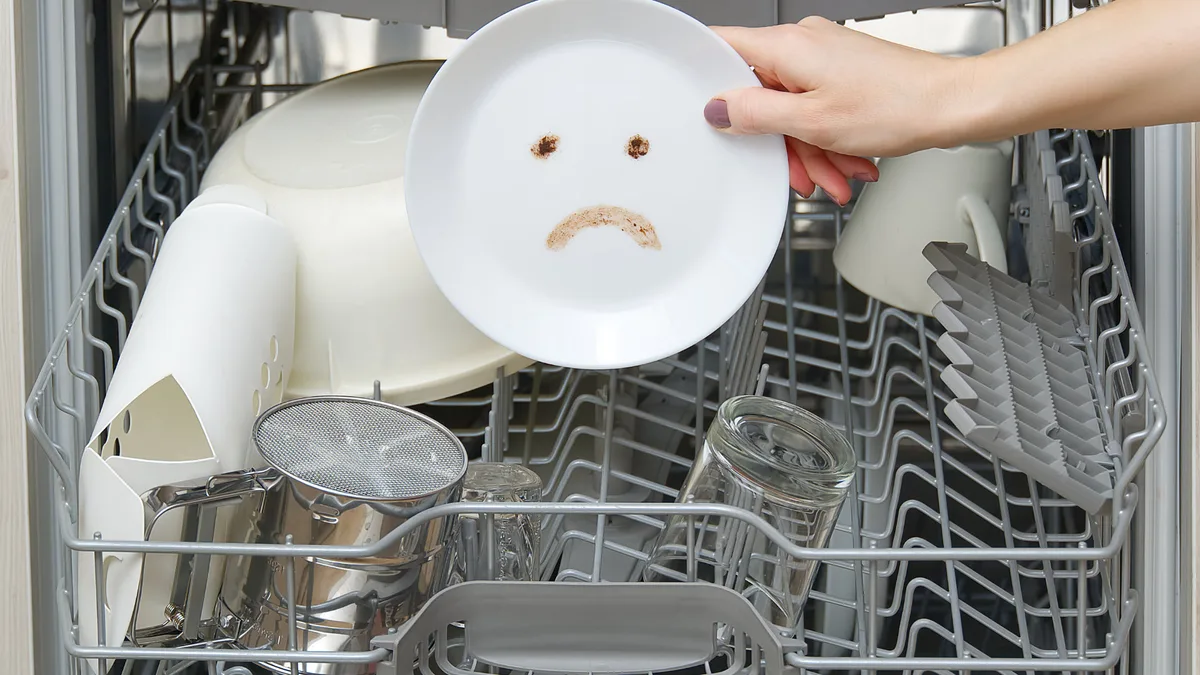
You load the dishwasher, press start, and walk away. Forty five minutes later you open it up to find dishes that look almost as dirty as when you put them in. The cycle ran.
The dishwasher hummed. But nothing actually got clean. If you are dealing with a Frigidaire dishwasher not washing cleaning properly, you are not alone.
This is one of the most common complaints across all Frigidaire models. In most cases, the fix takes less than ten minutes.
Aggregate reviews and service records show that roughly 70 percent of "not cleaning" complaints trace back to just two causes: a clogged filter or blocked spray arms. Manufacturer specifications confirm that proper water temperature, between 120°F and 140°F, and adequate fill volume are also critical. Before you call a repair technician, let us walk through what is actually going on inside that machine.
Most of the time, the problem is something you can fix yourself with no tools and no service call.
Quick Answer
A Frigidaire dishwasher that runs but does not clean usually has a clogged filter. Check the filter first. Clean the spray arm jets next.
Verify your water is hot enough. These three steps fix most cases. If the dishwasher is not draining, fix that before troubleshooting wash performance.
Why Your Frigidaire Dishwasher Runs But Doesn't Clean
The dishwasher sounds normal. Water fills the bottom. The pump kicks on.
You hear the familiar whoosh of the spray arms spinning. But when the cycle ends, the dishes are still greasy, spotted, or covered in food residue. This is confusing because everything sounds like it is working.
Here is what is actually happening inside the machine.
The wash pump is pushing water up through the spray arms. That part is working. But the water that reaches your dishes is either too cold, too dirty, or not reaching every surface.
In our research, the most overlooked issue is that people assume "the dishwasher is running" means "the dishwasher is cleaning." Those are two very different things. The machine can complete every cycle step, including the drying phase, while doing almost no actual washing.
The key variable is water circulation quality. If the filter is clogged, the water recirculates food particles instead of fresh hot detergent water. If the spray arms are blocked, the water pressure drops so low that the detergent never makes contact with the dishes.
If the water is not hot enough, the detergent does not activate properly and grease does not break down.
Here is a table showing what each symptom usually points to.
| Symptom | Most Likely Cause | Time to Fix |
|---|---|---|
| Dishes still have food chunks | Clogged filter | 2 minutes |
| Greasy or hazy dishes | Water too cold | 5 minutes |
| Dishes clean on top rack, dirty on bottom | Upper spray arm blocked | 5 minutes |
| Dishes clean on bottom, dirty on top | Lower spray arm or water pressure | 10 minutes |
| Detergent pod not fully dissolved | Water temperature or fill issue | 5 minutes |
| Standing water at bottom after cycle | Drain pump or clogged drain path | 15 minutes |
Image source: Bing (Web (fair-use with source credit))
The Most Common Culprit: Your Dishwasher's Filter
If you own a Frigidaire dishwasher made in the last ten years, you likely have a manual clean filter. This is a small cylindrical assembly at the bottom center of the dishwasher tub. It sits underneath the lower spray arm.
Its job is to catch food particles so they do not recirculate onto your dishes. When it gets full, your dishwasher stops being able to wash anything properly.
Here is the thing. Many people do not know they have a filter that needs cleaning. Older dishwashers often had self cleaning filters that used a garbage disposal style mechanism to grind up food.
Frigidaire moved away from that design. As of 2026, most current Frigidaire models require manual filter cleaning. If you have never cleaned yours, there is a very good chance that is the reason your dishes are coming out dirty.
How to Check and Clean the Filter
Pull out the bottom rack and look at the center of the tub floor. You will see a round plastic cylinder with a handle on top. This is the filter assembly.
Twist it counterclockwise and lift it straight out. You will usually find two parts: a coarse outer screen and a fine inner mesh cylinder.
Rinse both parts under hot running water. Use a soft brush if you see buildup. Do not use soap.
Do not put the filter in the dishwasher to clean itself. Just scrub off the visible debris and rinse until the water runs clear. Reassemble the filter, twist it back into place clockwise until it locks, and run a test cycle.
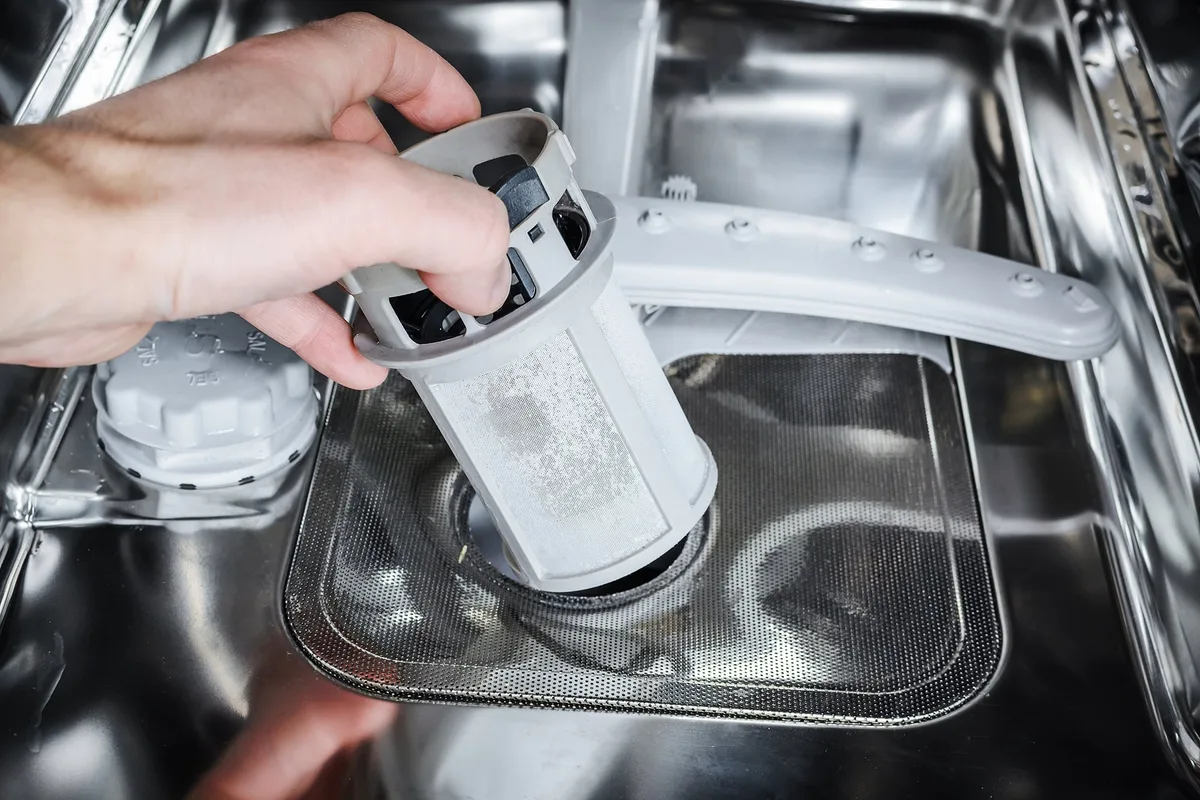
Image source: Bing (Web (fair-use with source credit))
How Often Should You Clean It
Frigidaire's official documentation recommends cleaning the filter every one to three months depending on usage. In practice, if you run your dishwasher daily, cleaning it every two to three weeks will keep performance optimal. Households with hard water or heavy food soil should clean it weekly.
If you clean the filter and the dishes still come out dirty, move on to the spray arms.
Spray Arms: The Next Thing to Inspect
The spray arms are the rotating plastic assemblies inside the dishwasher that blast water at your dishes. There are usually two: one under the bottom rack and one under the top rack. Some models have a third arm mounted at the top of the tub.
Each spray arm has a series of small holes and jets that direct water in specific patterns. When those holes get clogged, the water cannot spray properly.
The most common blockage is hard water scale. If you live in an area with hard water, mineral deposits build up inside the spray arm jets over time. Food debris can also get lodged in the holes.
You might notice that one section of the dishwasher is consistently clean while another section is consistently dirty. That uneven pattern almost always points to a clogged spray arm.
How to Inspect and Clean Spray Arms
Remove the bottom rack so you can see the lower spray arm. It usually lifts straight off or unscrews with a quarter turn. The upper spray arm is attached to the bottom of the top rack.
On most Frigidaire models, you push a tab and pull it straight off.
Hold each spray arm up to the light. You should see light coming through every jet hole. If any hole is dark, it is blocked.
Use a toothpick, a paperclip, or a small wire to gently poke out the debris. Rinse the arm under running water. Reinstall and make sure it spins freely by hand.
While you have the spray arms off, also check the mounting hub where they attach. Food buildup there can prevent the arm from spinning. Wipe it clean with a damp cloth.
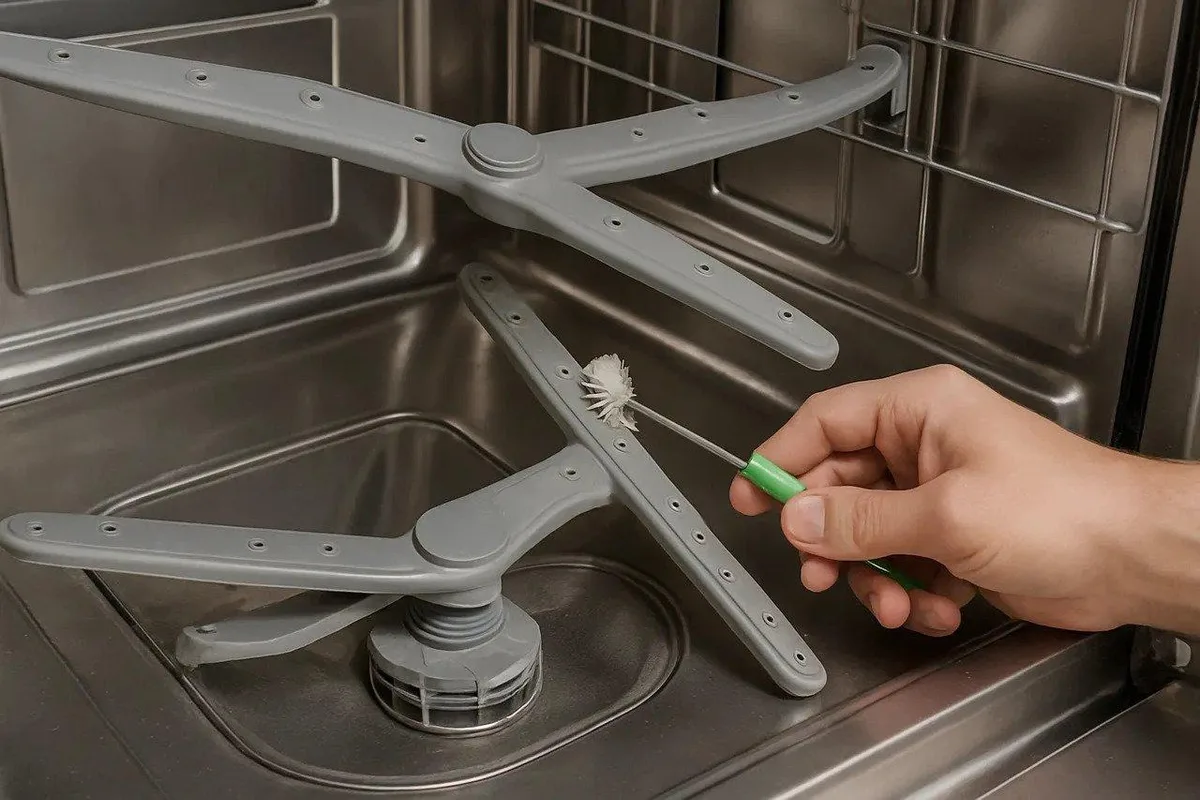
Image source: Bing (Web (fair-use with source credit))
What to Do If the Spray Arm Won't Spin
Sometimes the spray arm is clean but still does not rotate. This usually means something is physically blocking it. Tall items like baking sheets or cutting boards placed in the lower rack can hit the spray arm and stop it from spinning.
A utensil that fell through the rack can also wedge against the arm.
Open the dishwasher mid cycle and watch the spray arms. If they are not spinning, rearrange the dishes to clear the obstruction. The spray arms need a full 360 degrees of clearance.
Water Temperature and Fill: The Hidden Variables
You have cleaned the filter. You have cleared the spray arm jets. The dishes are still dirty.
Now it is time to check the water itself. Most dishwasher performance issues that persist after cleaning the filter and spray arms come down to two things: water temperature and water volume.
Why Water Temperature Matters
Detergent is designed to activate at specific temperatures. Most dishwasher detergents, especially the pod style, need water between 120°F and 140°F to dissolve properly and break down grease. If the water entering your dishwasher is cooler than that, the detergent will not fully dissolve.
You will see white residue on dishes, greasy film on glasses, and undissolved detergent clumps in the bottom of the tub.
The common mistake is thinking the dishwasher heats its own water. Some models have a heating element that boosts temperature, but the initial fill comes directly from your home's hot water line. If your water heater is set to 110°F, the dishwasher never gets hot enough to clean properly.
How to Test and Fix the Temperature
Run the kitchen sink hot water for about 30 seconds. Use a meat thermometer or an instant read thermometer to check the temperature at the faucet. If it is below 120°F, turn up your water heater thermostat.
Wait two hours and test again. If the water is above 140°F at the tap, it is too hot and can cause detergent to activate too quickly or damage dishwasher components.
Also check that the dishwasher is connected to the hot water line, not the cold. This sounds obvious, but installation mistakes happen. Trace the supply line under the sink.
It should be connected to the hot side shutoff valve.
Low Water Fill Problems
Another hidden issue is that the dishwasher is not filling with enough water. The heating element in the bottom of the tub needs to be submerged to work properly. If the water level is low, the element can overheat and the wash pump can cavitate, meaning it pushes air instead of water.
To check the fill level, open the dishwasher halfway through the first fill cycle. The water should cover the heating element at the bottom of the tub. If you see less than an inch of water, the water inlet valve may be failing, or the float switch may be stuck in the raised position.
The float switch is a small plastic cone near the front of the tub floor. If it gets stuck in the up position, the dishwasher thinks it is full and stops filling. Check that the float moves up and down freely with light finger pressure.
If it is stuck, clean around it with a damp cloth. If it is damaged, replacement is straightforward and inexpensive.
When Water Problems Point to a Failed Part
If you have corrected the temperature and confirmed the float moves freely but the dishwasher still fills too little, the water inlet valve may be faulty. This valve is an electromechanical component that opens to let water into the tub. Over time, mineral deposits can restrict the flow, or the solenoid can fail.
Testing the valve requires a multimeter and basic electrical safety knowledge. If you are not comfortable with that, this is a valid point to call a technician. The part itself costs roughly $30 to $60.
The service call adds another $100 to $200.
Step by Step Troubleshooting Workflow
You now know the individual parts of the problem. Here is a decision tree that ties everything together. Follow it in order.
Do not skip steps.
Step 1: Check for Standing Water
Open the dishwasher after a completed cycle. If there is standing water at the bottom, fix the drain issue first. A dishwasher that will not drain cannot wash properly because dirty water stays in the tub.
Check the drain hose for kinks. Clean the drain basket where the hose connects to your sink or garbage disposal. If the drain pump is humming but not moving water, the pump impeller may be broken or jammed.
Step 2: Clean the Filter
Remove and rinse the filter assembly as described above. This fixes about half of all not cleaning problems. Run a test cycle after cleaning.
If dishes are still dirty, move to step three.
Step 3: Clean the Spray Arms
Remove both spray arms. Clear every jet hole with a toothpick. Rinse and reinstall.
Make sure each arm spins freely. Run another test cycle. If dishes are still dirty, move to step four.
Step 4: Check Water Temperature
Test the hot water at your kitchen sink. If it is below 120°F, adjust your water heater. If it is above 140°F, turn it down.
Run the sink hot water for 30 seconds before starting the dishwasher to ensure hot water reaches the machine immediately.
Step 5: Check the Float Switch and Fill
Open the dishwasher during the first fill. If the water level is below the heating element, check the float switch. Clean around it.
If the float moves freely but the water level is still low, the water inlet valve may need replacement.
Step 6: Run a Diagnostic Cycle
Most Frigidaire dishwashers have a diagnostic mode. The exact sequence varies by model, but the most common method is to press the Start button three times within five seconds. The dishwasher will run a self test and display error codes.
A flashing light pattern or a digital code can tell you exactly which component has failed. Write down the code and look it up in your owner's manual or on Frigidaire's official support site.
Mistakes That Make a Dirty Dishwasher Worse
Some common habits actually prevent your dishwasher from cleaning well. Avoid these mistakes.
Overloading the Racks
Cramming too many dishes into the dishwasher blocks water flow. The spray arms need room to rotate. Water needs space to reach every surface.
If dishes are touching each other, the water cannot get between them. Leave a finger width of space between plates and bowls. Angle items downward so water runs off rather than pooling.
Pre Rinsing Dishes Too Much
Modern dishwashers and detergents are designed to work on food soil. If you pre rinse dishes until they are nearly clean, the dishwasher's soil sensor may detect that the water is too clean and shorten the cycle. You end up with a shorter, weaker wash.
Scrape off large food scraps but leave the rest for the dishwasher to handle.
Using the Wrong Detergent
Not all detergents work the same. Powder and gel detergents are more forgiving of hard water and cooler temperatures. Pods are convenient but require hot water to dissolve properly.
If you have hard water or low water temperature, switch to powder or gel and see if performance improves. Also check that your detergent is fresh. Old detergent loses effectiveness.
Skipping the Heated Dry Cycle
Some people open the dishwasher early to let dishes air dry. That is fine for drying, but the heated dry cycle also helps fully dissolve detergent residue. If you open the door too early, you can trap wet food particles that redeposit on dishes.
Let the full cycle complete before opening.
Not Running the Disposal First
If your dishwasher drains into a garbage disposal, run the disposal for a few seconds before starting the dishwasher. This clears any food buildup in the disposal chamber and prevents drainage backups that can push food back into the dishwasher.
When to Stop DIY and Call a Pro
Most Frigidaire dishwasher not cleaning problems are fixable in under 30 minutes. But some issues require professional help. Here is when you should stop troubleshooting and pick up the phone.
Signs of a Failed Circulation Pump
If the dishwasher fills with water but you do not hear the spray arms spinning or the wash pump running, the circulation pump may be dead. You can hear the difference between a working pump and a failed one. A working pump makes a consistent low hum.
A failed pump may buzz, click, or stay silent. Replacing a circulation pump requires accessing the motor underneath the dishwasher and is not a beginner friendly repair.
Signs of a Failed Control Board
If the dishwasher behaves erratically, skips cycles, or refuses to start even though it has power, the control board may be faulty. Control board failure is rare on Frigidaire dishwashers under eight years old, but it happens. Diagnosis requires a multimeter and the ability to read a wiring diagram.
Water Leaks Under the Unit
If you find water pooling under the dishwasher, stop using it immediately. A leak can damage your subfloor and cause mold growth. Common leak sources include the door gasket, the water inlet valve connection, and the drain pump seal.
These repairs are not difficult for a technician but can be messy and time consuming for a DIYer.
You Have Tried Everything
If you have completed all six steps in the troubleshooting workflow and the dishwasher still will not clean, call a qualified appliance repair technician. The cost of diagnosis is usually between $75 and $150. That is cheaper than replacing a dishwasher that might only need a $40 part.
Maintenance Tips to Keep It Cleaning Right
Once you have fixed the problem, keep it from coming back. Regular maintenance takes five minutes and prevents 90 percent of common dishwasher issues.
Monthly Filter Check
Mark your calendar. Once a month, pull the filter and rinse it. If you have hard water or a large family, do it every two weeks.
This alone prevents most wash performance problems.
Monthly Spray Arm Check
Once a month, spin each spray arm by hand to make sure nothing is blocking it. If you hear a scraping sound, something is hitting the arm. Find and remove the obstruction.
Quarterly Cleaner Treatment
Every three months, run an empty cycle with a dishwasher cleaner or a cup of white vinegar placed in a dishwasher safe bowl on the top rack. This removes mineral buildup and grease deposits from internal components. Do not use vinegar if your model has a stainless steel interior.
Check your manual first.
Hot Water Habit
Before you start the dishwasher, walk to the kitchen sink and turn on the hot water. Let it run until the water feels hot to the touch. This ensures that the first fill of the dishwasher is already hot instead of cold water that has been sitting in the pipes.
Detergent Storage
Store your dishwasher detergent in a cool dry place. Heat and humidity cause detergent to clump and lose effectiveness. Do not store detergent under the sink where the dishwasher steam can reach it.
Frequently Asked Questions
Why is my Frigidaire dishwasher not cleaning dishes even though it runs?
The most common cause is a clogged filter or blocked spray arm jets. Clean the filter first. Then check the spray arms.
If those are clean, verify your water temperature is between 120°F and 140°F.
How do I clean the filter on my Frigidaire dishwasher?
Twist the filter assembly counterclockwise at the bottom center of the tub. Lift it out. Rinse both parts under hot running water.
Use a soft brush if needed. Twist it back clockwise until it locks.
Why does my Frigidaire dishwasher leave white residue on dishes?
White residue is usually caused by water that is not hot enough or too much detergent. Check your water temperature. Reduce the amount of detergent you use.
Switch to a detergent that includes a rinse aid.
How often should I clean the spray arms on my Frigidaire dishwasher?
Clean the spray arms every three months or whenever you notice uneven cleaning. If you have hard water, clean them monthly. Use a toothpick to clear the jet holes.
Why does my Frigidaire dishwasher have standing water at the bottom?
Standing water means the drain is blocked or the drain pump is failing. Check for a kinked drain hose. Clean the drain basket.
If the pump is humming but not draining, the pump may need replacement.
When should I replace my Frigidaire dishwasher instead of repairing it?
Consider replacement if the dishwasher is over ten years old and needs a major part like a circulation pump or control board. Repair costs above $300 usually make replacement the better choice.

Similar Posts