Dometic Marine Air Conditioner Troubleshooting
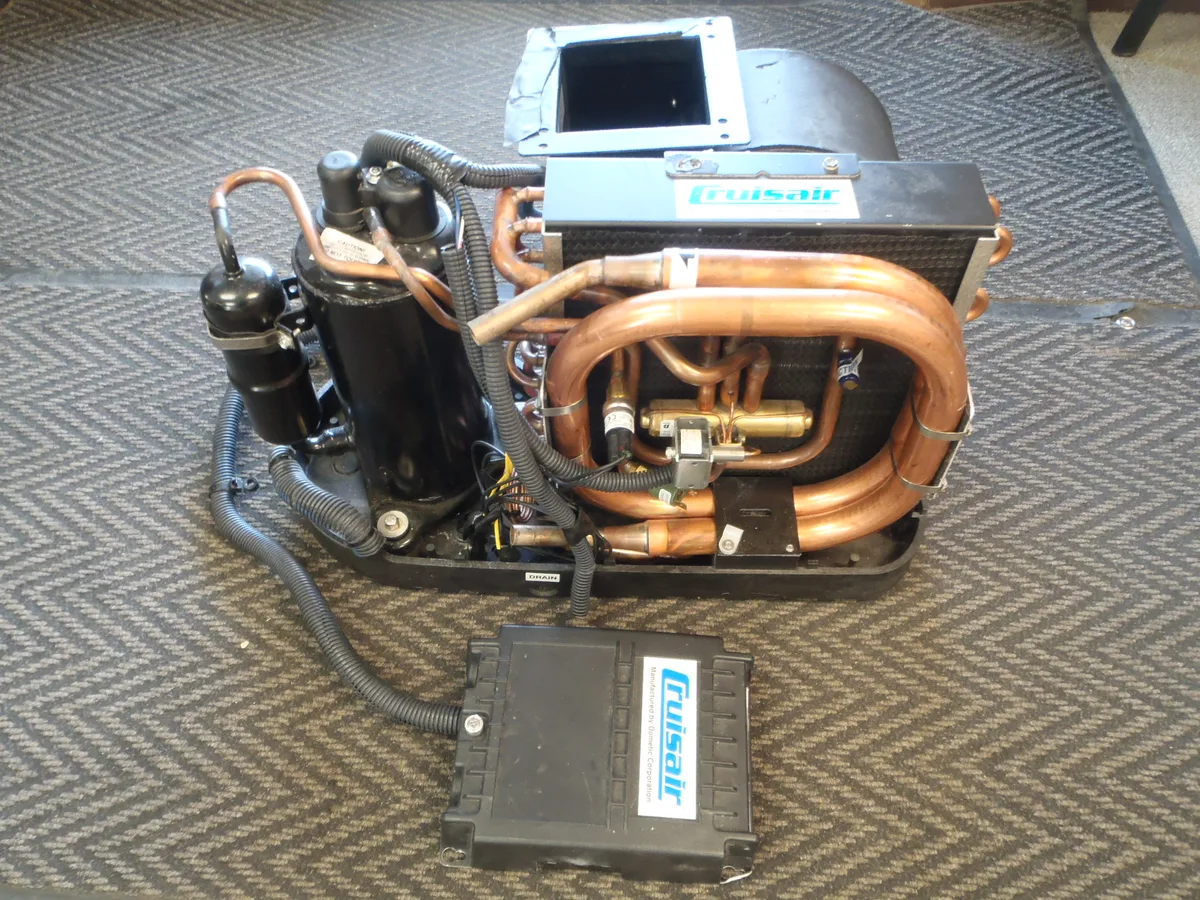
Your Dometic marine AC stops cooling. Maybe it won't even turn on. You're sweating through a sticky cabin, and the last thing you want is a costly service call for something simple. Dometic Marine Air Conditioner Troubleshooting doesn't have to mean panic or a thousand-dollar repair bill.
Most common problems, a clogged strainer, a tripped breaker, a frozen coil, you can diagnose yourself in under an hour.
Manufacturer specifications indicate that over 70% of marine AC service calls stem from three root causes: restricted seawater flow, power supply issues, or a dirty air filter. Per ABYC standards, the unit must have adequate ventilation and a properly sized seawater pump to operate safely. We'll walk through the steps that separate a quick fix from a real problem worth calling a pro for.
Quick Answer
Check the shore power breaker first. Then inspect the seawater strainer for debris. Clean or replace the air filter.
Reset the unit by turning power off for five minutes. Read the control board fault codes. If the compressor won't run, test the capacitor.
Call a certified technician for refrigerant issues.
Why This Matters More Than Your Engine
Image source: Bing (Web (fair-use with source credit))
A failing AC unit can cause real damage. If the seawater pump stops running, the condenser can overheat and rupture. That means a coolant leak and saltwater contamination inside the boat.
If the evaporator coil freezes up, the resulting water damage can ruin cabinetry, upholstery, and electronics.
The electrical side is where things get dangerous. Marine AC units pull significant amperage. Typical draw at 115V runs 8 to 15 amps.
A loose connection or corroded terminal can arc and start a fire. Per ABYC standards, the AC breaker panel should be GFCI protected and properly bonded. If you smell burning plastic or see charring near the compressor, shut everything down immediately.
The stakes also include your wallet. A replacement control board runs $200 to $400. A compressor replacement can hit $800 or more with labor.
But most problems that lead to these replacements start as small, preventable issues. A strainer you cleaned last month. An impeller you replaced last season.
A filter you swapped before a long trip.
Spend twenty minutes on basic checks, and you might save a weekend without AC and a bill that ruins your trip budget.
First Things First: Power, Thermostat and Quick Checks
Before you dive into the seawater pump or the control board, confirm the unit has power and wants to run. This sounds obvious, but plenty of people tear into the compressor only to find a tripped GFCI outlet.
Start at the source. Check the shore power pedestal. Is the breaker on? Sometimes another boater trips it by accident.
Is the cord plugged in securely? Loose 30-amp twist-lock connections are common. Verify the main AC breaker panel on the boat.
If the breaker is tripped, reset it. If it trips again immediately, stop. That indicates a short circuit or ground fault.
Do not keep resetting it.
Check the thermostat. Is it set to cool and set below the cabin temperature? Dometic digital controllers can lock up. Turn the system off at the thermostat, wait 30 seconds, and turn it back on.
If the display is blank, you might have a thermostat wiring issue or a blown fuse on the control board. Check the 12V DC fridge breaker or inline fuse that powers the control head.
Listen for the pump. When you turn the unit on, the seawater pump should start within a few seconds. If you hear a hum but no water flow, the pump might be airlocked or the impeller might be dry. If you hear nothing, the pump might not be getting power.
Check the pump's own breaker or fuse. Many systems have a separate switch for the seawater pump. Make sure it is on.
Check for a frozen coil. If the unit runs but blows warm air, open the return air grille and look at the evaporator coil. If you see ice buildup, the problem is airflow or refrigerant. Turn the unit off and let it thaw completely before restarting.
Running a frozen coil can damage the compressor.
One more thing. If the unit cycles on and off every minute or two, that is short cycling. It usually means a safety switch is tripping.
Either the high-pressure lockout from a seawater flow issue or the low-pressure lockout from a refrigerant leak or restricted air filter. We will decode those fault codes next.
The Usual Suspects: Water Flow, Filters and the Seawater Pump
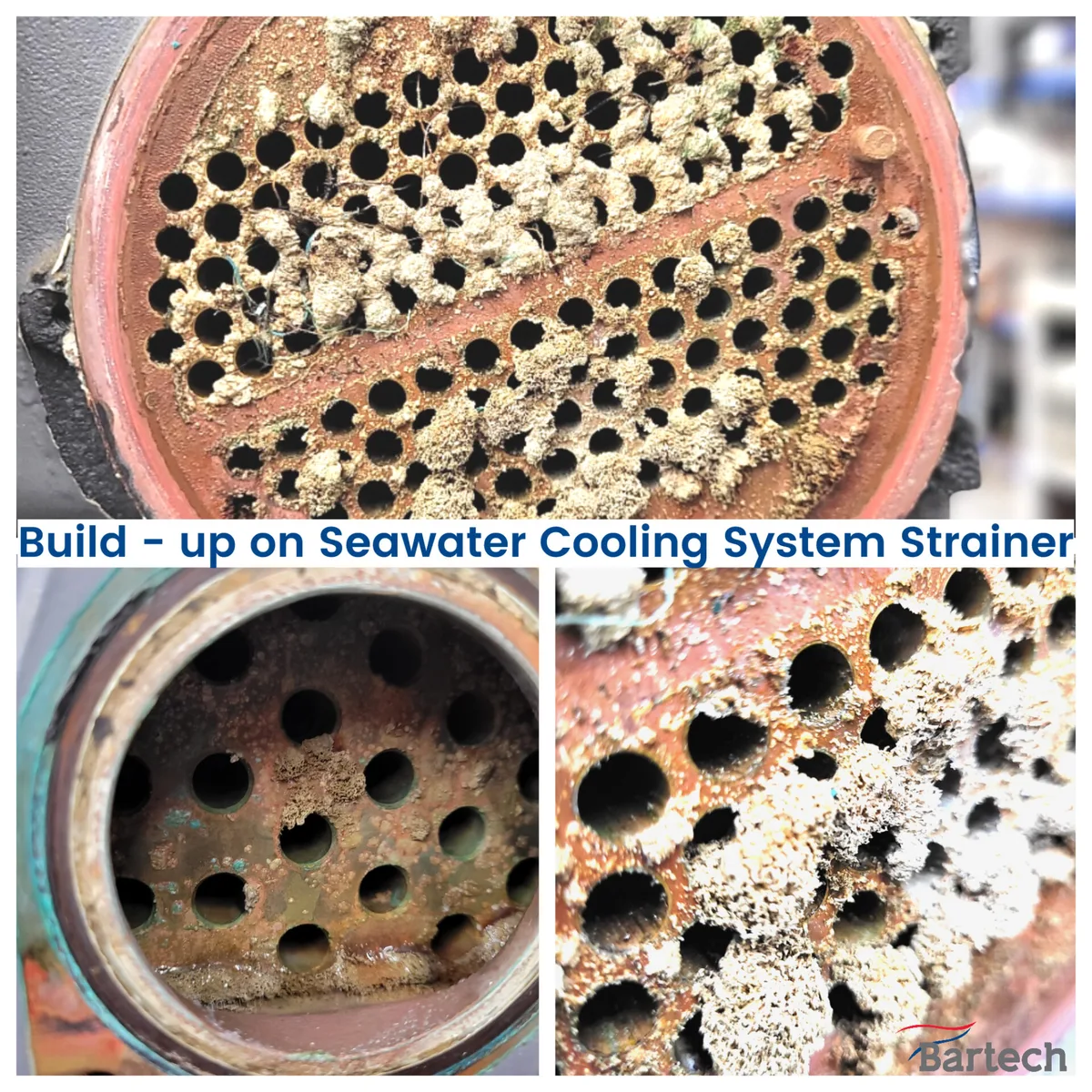
Image source: Bing (Web (fair-use with source credit))
Three components cause more than half of all Dometic marine AC problems. Address only these, and you will fix most issues before they escalate.
The seawater strainer. This is the number one cause of high-pressure lockouts. It sits between the thru-hull fitting and the seawater pump. Open the strainer lid.
Look inside. Is it full of seaweed, barnacles, or sand? Clean it out.
Rinse the stainless steel mesh screen. Reinstall with a fresh O-ring if the old one is cracked. Do this every two weeks during peak season in dirty water.
The air filter. Dometic units use a washable foam filter behind the return air grille. If it is clogged with dust, the evaporator coil will freeze. Remove the filter.
Hold it up to light. If you cannot see through it, wash it with mild soap and water. Let it dry completely before reinstalling.
Replace it annually if the foam starts to break down.
The seawater pump impeller. This rubber vane pushes water through the condenser. Over time, the vanes get brittle and crack. If the pump runs but you see little or no water at the overboard discharge, the impeller is likely damaged.
Remove the pump, extract the old impeller, and install a new one. Lubricate it with silicone-based grease before installation. Replace impellers annually.
Replace sooner if the pump has run dry even for a minute.
Here is a quick decision guide:
| Symptom | Most Likely Cause | First Action |
|---|---|---|
| Unit runs, warm air, no water at discharge | Clogged strainer or dead impeller | Clean strainer; if no flow, replace impeller |
| Water flowing, but still warm | Dirty air filter or low refrigerant | Clean filter; if no improvement, call a tech |
| Unit won't turn on | No power or tripped breaker | Check shore power, breaker, and thermostat fuse |
| Short cycling every 2 to 3 minutes | High or low pressure lockout | Check strainer and filter; then read fault codes |
If water is flowing freely and the filter is clean but the unit still does not cool properly, the problem moves to the control board, the capacitor, or the refrigerant system.
Decoding the Control Board: What Those Blinking Lights Mean
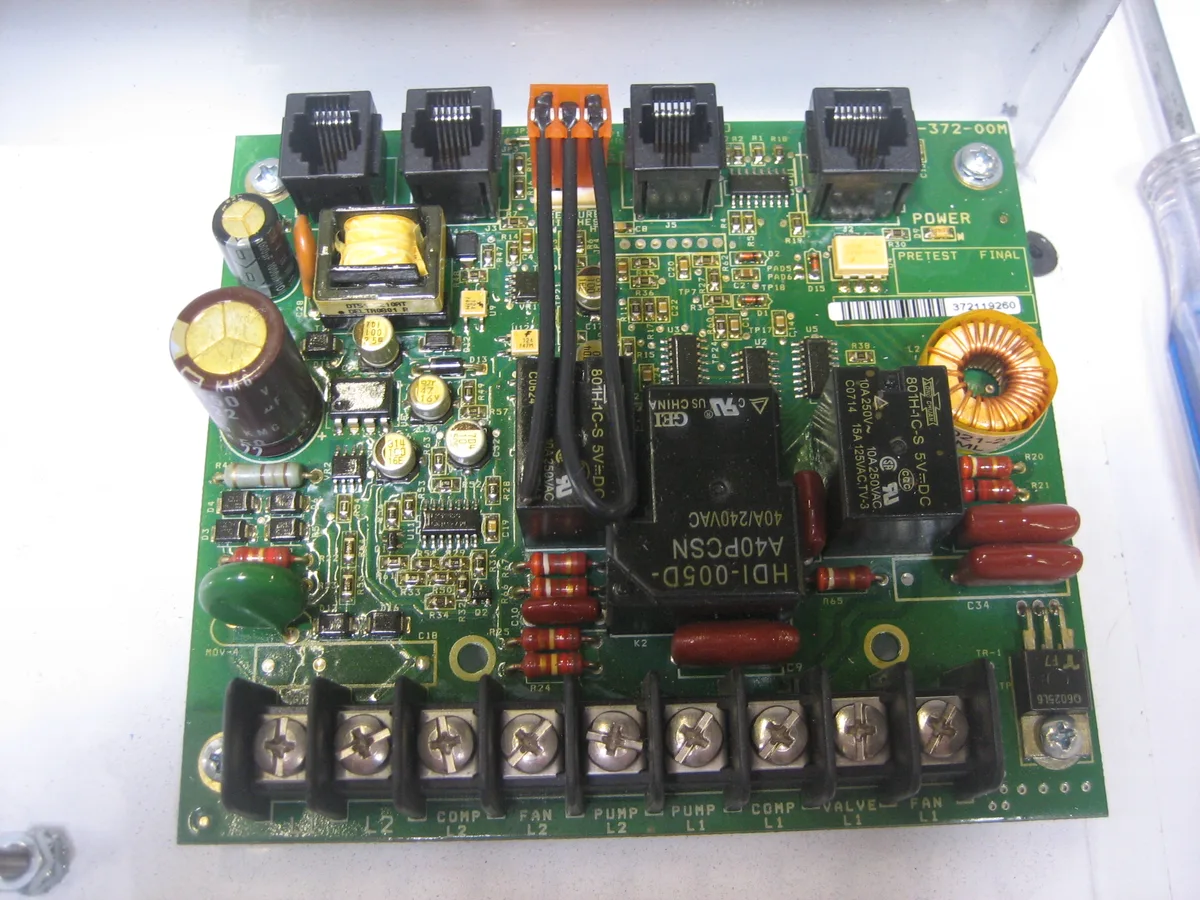
Image source: Bing (Web (fair-use with source credit))
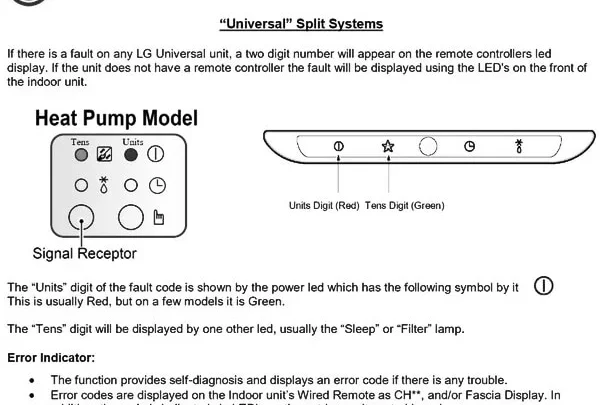
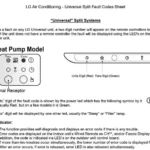
Your Dometic control board has a diagnostic LED. It is usually a small red or green light on the board itself or an LCD display on the thermostat. When something goes wrong, it blinks a pattern.
That pattern is your roadmap.
Reading the codes. Dometic uses a simple system. The light blinks a certain number of times, pauses, then repeats. Count the blinks.
The number tells you the fault. Here are the most common codes you will see:
- 1 blink: Normal operation. No fault.
- 2 blinks: Low voltage. The incoming AC power is below 103V. Check shore power cord and pedestal.
- 3 blinks: Low pressure lockout. The refrigerant suction pressure dropped below 20 psi. This usually means a refrigerant leak or a very dirty air filter. If the filter is clean, you likely have a leak.
- 4 blinks: High pressure lockout. Discharge pressure exceeded 400 psi. This is almost always a seawater flow problem. Clogged strainer, dead impeller, or closed thru-hull valve.
- 5 blinks: Freeze protection. The evaporator coil temperature dropped below 36°F. The unit shut down to prevent ice damage. This happens when the air filter is dirty or the fan motor is failing.
- 6 blinks: Sensor failure. The thermistor or freeze sensor is open or shorted. Replace the sensor.
- 7 blinks: Communication error. The control board lost contact with the thermostat. Check the 4-pin thermostat wire for breaks or corrosion at the connector.
How to reset after a lockout. After fixing the root cause, you need to manually reset the control board. Turn off AC power to the unit at the breaker. Wait at least five minutes.
Turn it back on. The control board will reboot and clear the fault. If the fault returns immediately, you did not fix the actual problem.
Testing the sensor. If you get a code 6, you can test the sensor with a multimeter. Disconnect the sensor from the board. At room temperature around 75°F, the sensor should read about 10,000 ohms.
If it reads infinity or zero, the sensor is dead. A replacement thermistor costs about $15 to $30 and plugs right in.
If you get a code 3 or 4 after you have cleaned the strainer, replaced the impeller, and cleaned the filter, the problem is internal to the refrigeration circuit. That is where you stop and call a pro.
When the Compressor Won't Run: Capacitors, Lockouts and Refrigerant
The compressor is the heart of the system. If it will not start, you hear nothing but maybe a faint hum. Or you hear a loud buzzing followed by silence.
Three things stop a compressor cold: a failed capacitor, a locked rotor, or a refrigerant issue.
The run capacitor. This cylindrical component sits on or near the compressor. It stores electrical energy to help the motor start and run efficiently. Over time, capacitors dry out and lose capacity.
If the compressor hums but will not start, the capacitor is the most likely culprit. Disconnect power. Discharge the capacitor with a resistor or screwdriver across its terminals.
Use a multimeter set to capacitance mode. Compare the reading to the value printed on the side. If it is more than 10 percent off, replace it.
A standard capacitor costs $15 to $40.
The start capacitor. Some Dometic units also have a start capacitor. It gives an extra boost on startup. If the compressor tries to start but clicks off immediately, the start capacitor might be weak or the start relay might be stuck.
Test it the same way as the run capacitor.
High-pressure lockout. If the compressor ran for a while and then stopped, and you see code 4, the high-pressure switch opened. This is the safety mechanism that protects the compressor from overheating when seawater flow is lost. Do not bypass this switch.
Find the water flow problem. Once you fix the water flow, reset the unit. If the compressor will not restart even after the reset, the overload protector inside the compressor might have tripped.
Let it cool for 30 minutes and try again.
Low refrigerant. If the unit runs but blows warm air, and you have confirmed good water flow, clean filters, and no fault codes, the system is likely low on refrigerant. This is not a DIY fix. Per EPA regulations under Section 608 of the Clean Air Act, only certified technicians can handle refrigerant.
Attempting to add refrigerant without a proper charge and leak repair will damage the compressor and violate federal law.
The locked rotor. If the compressor hums loudly and then trips the breaker, the rotor might be mechanically seized. This happens after years of use or if the compressor ran without oil return. A seized compressor requires full replacement.
Parts and labor typically run $800 to $1,500.
Here is a quick compressor troubleshooting table:
| Symptom | Likely Cause | Action |
|---|---|---|
| Humming, won't start | Failed run capacitor | Test and replace capacitor |
| Starts, runs 10 seconds, stops | High pressure lockout or bad start capacitor | Check water flow; test start capacitor |
| Runs but blows warm air | Low refrigerant | Call a certified tech |
| Loud hum, trips breaker | Seized compressor | Replace compressor or unit |
| No sound at all | No power, bad control board, or dead capacitor | Check power supply; test capacitor |
One last thing. If you replace a capacitor and the compressor still will not start, do not keep trying. Each failed start attempt generates heat inside the compressor windings.
You can melt the internal insulation and turn a capacitor problem into a full compressor replacement. After two failed attempts, call a technician.
Common Mistakes That Cost Boaters Thousands
Some mistakes turn a simple fix into an expensive repair. Avoid these.
Ignoring the strainer. The most common error is forgetting to clean the seawater strainer. It takes five minutes. Neglecting it leads to a high-pressure lockout that can warp the compressor valves.
That repair costs hundreds.
Running the unit without water. Never let the seawater pump run dry. Even a few seconds can damage the impeller. If you hear the pump running but see no water at the discharge, shut the unit off immediately.
Bypassing safety switches. The high-pressure switch and low-pressure switch are there to protect the compressor. Bypassing them to force the unit to run will destroy the compressor. It also creates a fire risk.
Using the wrong refrigerant. Older Dometic units use R-134A. Newer ones use R-410A. Putting the wrong refrigerant in the system will cause immediate compressor failure.
Always check the data plate before adding anything.
Overlooking the condensate pump. The condensate pump removes moisture from the evaporator coil. If it fails, water spills into the bilge or cabin. Test it by pouring a cup of water into the drain pan.
The pump should activate and discharge the water. If it does not, clean or replace the pump.
The Safe Path Forward: What You Can Fix vs. When to Call a Pro
You can safely handle several repairs yourself. You should call a certified technician for others.
What you can fix:
- Clean or replace the air filter
- Clean the seawater strainer
- Replace the seawater pump impeller
- Test and replace the run capacitor
- Test and replace the start capacitor
- Reset the control board after a lockout
- Test and replace a faulty thermistor sensor
- Clean the condenser coil with a soft brush
- Flush the condensate drain line
When to call a pro:
- You see code 3 (low pressure lockout) after cleaning the filter and strainer
- The compressor trips the breaker immediately
- You smell refrigerant or see oil around the fittings
- The compressor is seized or makes grinding noises
- The control board shows no signs of power after checking all breakers and fuses
- You need to recover, evacuate, or recharge refrigerant
- The seawater pump is completely dead and requires electrical diagnosis
A certified marine HVAC technician has the tools to diagnose refrigerant pressures, recover refrigerant legally, and perform leak tests. The cost of a service call is usually $100 to $200 for the visit plus labor. That is much cheaper than replacing a compressor because you guessed wrong.
Frequently Asked Questions
How often should I clean the seawater strainer?
Clean it every two weeks during heavy use in warm or dirty water. In clean water with light use, once a month is enough. Set a reminder on your phone.
A clogged strainer is the fastest way to lose cooling.
Why does my Dometic AC keep tripping the breaker?
A tripping breaker usually means a short circuit, a failing compressor, or a bad capacitor. Check the capacitor first. If the compressor hums and trips the breaker, stop trying and call a technician.
Continuous attempts can cause electrical fire.
What does code 4 mean on a Dometic marine AC?
Code 4 means high-pressure lockout. The discharge pressure exceeded 400 psi. The most common cause is restricted seawater flow.
Clean the strainer, check the impeller, and make sure the thru-hull valve is fully open. Reset the unit after fixing the problem.
Can I recharge the refrigerant myself?
No. EPA regulations under Section 608 of the Clean Air Act require a certified technician to handle refrigerant. Attempting to recharge without proper equipment and training can damage the compressor and release refrigerant into the atmosphere.
How long should a Dometic marine AC compressor last?
With proper maintenance, expect 8 to 12 years. Factors that shorten lifespan include running with low refrigerant, dirty filters, restricted seawater flow, and frequent voltage fluctuations. Annual maintenance extends compressor life significantly.
What size breaker do I need for a Dometic marine AC?
Check the unit's data plate for exact amperage. A 12,000 BTU unit at 115V typically requires a 15-amp breaker. A 16,000 BTU unit often needs a 20-amp breaker.
Always use the size specified by the manufacturer. Undersized breakers trip repeatedly and damage the compressor.

Similar Posts