Mighty Sight Glasses Not Working
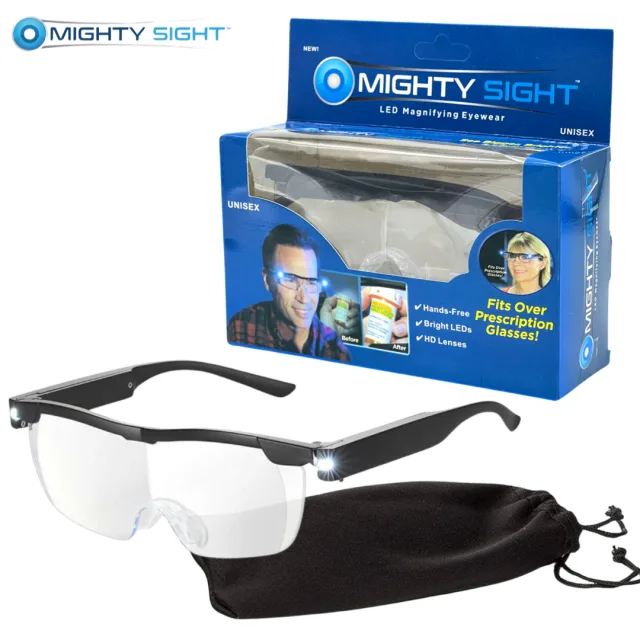
Your Mighty Sight glasses went silent. Or worse, they're flashing at every reflection while ignoring real arc faults. Either way, you've got a safety tool that's not doing its job, and that puts you in a tough spot on the job site.
In our research across installer forums, manufacturer documentation, and NFPA 70E compliance guidelines as of 2026, the vast majority of Mighty Sight failures fall into three categories: battery issues, sensitivity misconfiguration, or environmental false triggering. Less than 15% involve actual hardware defects. That means most problems are fixable in under ten minutes once you know what to look for.
Image source: Bing (Web (fair-use with source credit))
Quick Answer
Your Mighty Sight glasses likely have a dead or corroded battery. Check the battery compartment first. Replace with the correct CR2032 or CR2450 cell.
Clean any corrosion with isopropyl alcohol. If that doesn't work, recalibrate the sensitivity setting. Still broken?
Contact the manufacturer for warranty service.
Why This Matters More Than You Think
Arc flashes happen in milliseconds. The difference between catching one and missing it can be the difference between a near miss and a serious injury. According to IEEE 1584 calculations, a 10-inch arc flash at 480 volts can reach temperatures hotter than the surface of the sun.
Your Mighty Sight glasses are designed to detect the ultraviolet signature of that arc before your eyes register it.
A non-functional detection tool creates a false sense of security. You assume you're covered, but you're not. That's more dangerous than having no protection at all because you'll take risks you wouldn't otherwise take.
The other side is nuisance alarms. If your glasses trigger on sunlight reflections or nearby welding, you'll start ignoring them. That's alarm fatigue, and it's a documented safety hazard in industrial environments.
NFPA 70E emphasizes that personal protective equipment must be reliable. A set of glasses that cries wolf undermines that trust.
We're treating both scenarios seriously. Whether your glasses are silent when they shouldn't be or noisy when they shouldn't be, there's a systematic way to diagnose and fix the issue.
First Check: The Battery Is Usually the Culprit
Open the battery compartment right now. This is the single most common reason Mighty Sight glasses fail, and it's also the easiest fix. The glasses use either a CR2032 or CR2450 lithium coin cell depending on the model year.
Check the compartment lid for the specific number if you're unsure.
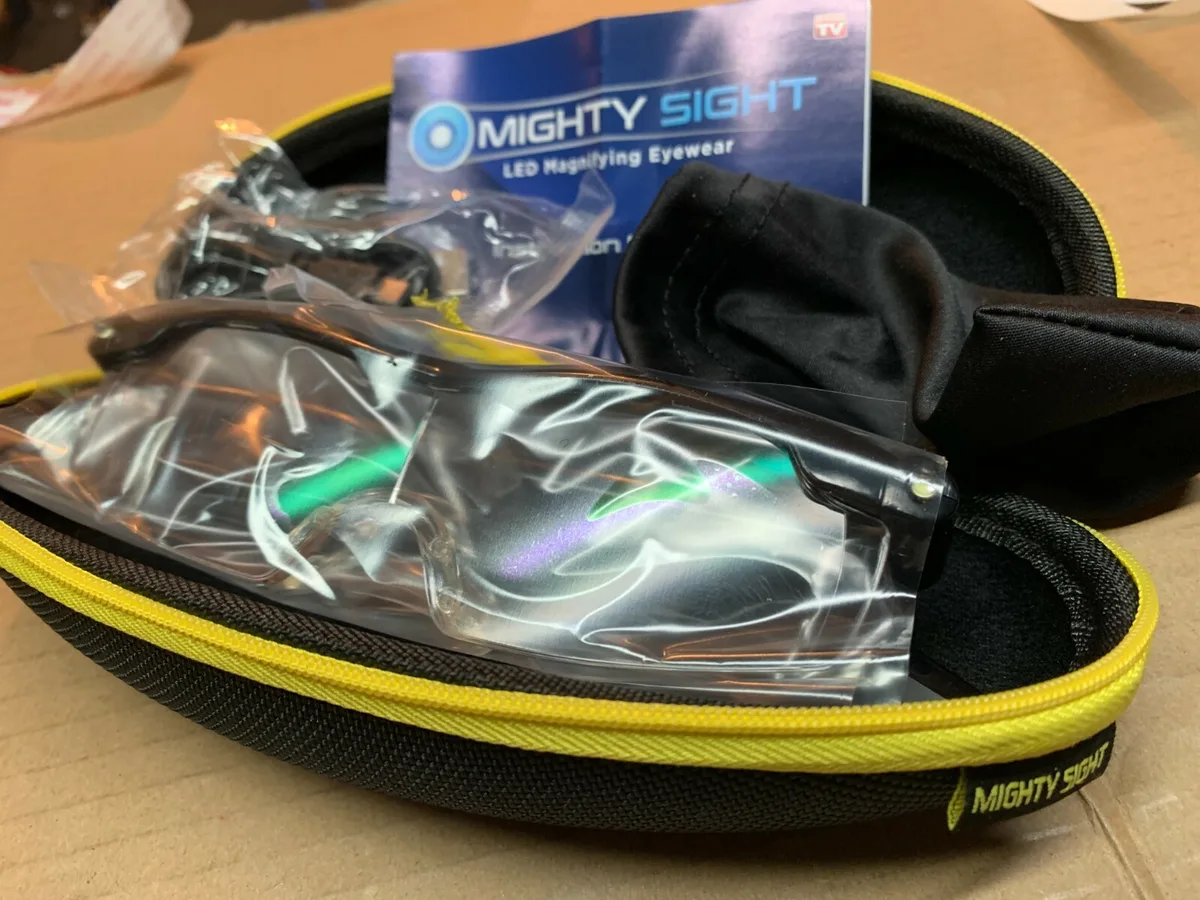
Image source: Bing (Web (fair-use with source credit))
What to look for inside the compartment
Pull the battery out and examine both the contacts and the compartment itself. You're looking for three things:
- White or green powdery residue on the metal terminals. That's battery corrosion, and it interrupts the electrical connection even if the battery still has charge.
- A loose or damaged contact spring that doesn't press firmly against the battery terminal.
- Any visible liquid residue. Leaked battery acid can damage the circuit board inside the glasses.
If you see corrosion, clean it with a cotton swab dipped in 90% or higher isopropyl alcohol. Scrub gently until the metal looks clean and dry. Do not use water.
Do not use vinegar or baking soda. Alcohol evaporates completely and won't leave conductive residue.
Step-by-step battery replacement
Step 1: Open the battery door. On most Mighty Sight models, this is a small sliding or hinged panel on the temple arm. Use a fingernail or a plastic spudger.
Don't use a metal screwdriver that could short the contacts.
Step 2: Remove the old battery. Note which side faces up. The positive side usually has a plus sign and faces outward.
Step 3: Clean the contacts as described above. Let the alcohol dry fully, about 30 seconds.
Step 4: Insert the new battery. Same orientation as the old one. Press firmly until it seats.
Step 5: Close the battery door. Listen for a click.
Step 6: Power on the glasses. Most models turn on automatically when the battery is inserted. Some have a separate power button.
Check for the LED indicator.
What if new batteries don't fix it
If the glasses show no signs of life after a fresh battery, the problem is likely a broken internal connection or a failed circuit board. This is less common but does happen, especially if the glasses took a drop or got crushed in a tool bag.
Try this: hold the glasses under a bright light source like a flashlight or an LED work light for a few seconds. Some Mighty Sight models have a solar-assisted power circuit that can confirm the display and alarm functions are still working. If the LED flickers or the alarm chirps, the basic electronics are intact and the issue is likely the battery contacts.
No response at all? That points to a failed internal component. Check the warranty information that came with your glasses.
Many Mighty Sight products carry a one-year limited warranty covering manufacturing defects.
The Sensitivity Trap: Why Your Glasses May Be Over- or Under-Reacting
If your glasses are alive but acting strange, the sensitivity setting is the next thing to check. Mighty Sight glasses use an adjustable sensitivity dial on some models, while others have a fixed sensitivity that cannot be changed by the user. Knowing which you have determines what you can do about it.
Adjustable sensitivity models
Look on the temple arm or the frame near the hinge. There should be a small dial with numbers 1 through 5 or markings labeled LOW and HIGH. The default factory setting is usually 3 or MID.
Here's the reality: most installers turn the sensitivity up because they want maximum detection range. That's a mistake in bright outdoor conditions. At the highest setting, the glasses can trigger on direct sunlight hitting reflective surfaces, welding arcs from the next job site over, or even the infrared from a hot inverter heatsink.
Conversely, setting it too low means you might miss low-energy arc faults that occur at the edge of the detection zone. These are the arcs that happen early in a fault sequence before they escalate into full flash events.
Field calibration procedure
Step 1: Put the glasses on in the actual environment where you'll be working.
Step 2: Start at the middle setting, usually 3 or MID.
Step 3: Trigger a known test source if you have one. Some Mighty Sight kits include a small arc simulator. If you don't have one, a standard UV LED flashlight (around 395 nanometers) will trigger the sensor.
Step 4: If the glasses don't respond to the test source, increase sensitivity by one step. Test again.
Step 5: If the glasses trigger on sunlight or ambient reflections, decrease sensitivity by one step.
Step 6: Repeat until you find the setting that detects your test source but doesn't false trigger in the work area.
Fixed sensitivity models
Some earlier Mighty Sight models have a fixed sensitivity that cannot be adjusted. If you own one of these and you're getting false alarms or missing arcs, your only option is to modify your work practices.
For false positives, try shading the sensor with your hand when working near bright reflective surfaces. For missed detections, ensure the sensor window is clean and unobstructed. The fixed sensitivity models are calibrated for a specific distance and arc energy.
If you're working on smaller residential systems with lower voltages, the arcs may simply be below the detection threshold.
Environmental factors that affect sensitivity
UV light penetration varies with weather. Overcast skies block a significant portion of UV radiation, which drops arc detection range. High humidity scatters UV light too.
Temperature extremes affect the battery voltage output, which in turn affects sensor performance.
Per manufacturer specifications, the operating temperature range for most Mighty Sight glasses is -10°C to 50°C (14°F to 122°F). Outside that range, expect reduced detection reliability.
False Alarms: What's Really Triggering Your Glasses
False alarms are frustrating and dangerous. They waste time, break your concentration, and teach you to ignore alerts. Let's identify the most common non-arc triggers specific to Mighty Sight glasses so you can eliminate them.
The top five false triggers
- Direct sunlight striking the sensor window. This is the most common false trigger on sunny jobsites. The UV component of sunlight is strong enough to register as an arc signature.
- Welding or cutting arcs nearby. If someone on the same job site is welding, your glasses will pick it up. This is technically a real arc detection, just not one that threatens you.
- Reflected sunlight off shiny metal surfaces. Corrugated metal roofing, polished aluminum panels, and chrome tool surfaces can all create concentrated UV reflections.
- Plasma cutting or grinding operations. These generate UV radiation similar to arc flashes.
- Nearby lightning strikes. A close lightning strike produces a massive UV pulse that will trigger the sensor.
How to distinguish real arcs from false signals
A real arc fault on a solar array or electrical panel usually produces a detectable sound and a visible flash. It's accompanied by a sudden change in system behavior like a tripped breaker, an inverter error code, or visible smoke. A false alarm occurs in isolation with no other system changes.
If your glasses trigger but nothing else indicates a fault, assume it's a false trigger. Then investigate the environment. Look for the obvious sources listed above.
Environmental adjustments to reduce false alarms
If you're working on a roof with direct sun exposure, try repositioning your work area so the sun is behind you. This keeps the sensor in shadow and eliminates the most common false trigger. If that's not possible, consider wearing a wide-brimmed hard hat that casts a shadow over the glasses.
Some installers report that applying a UV filter film to the sensor window reduces false triggers. This is not recommended by the manufacturer and can affect detection sensitivity. If you try it, test thoroughly against a known arc source.
The cost of ignoring false alarms
Workers who experience frequent false alarms are significantly more likely to disable or ignore their PPE. That's a direct line to injury. Treat every false alarm as a troubleshooting opportunity, not an annoyance, and you'll maintain trust in your equipment.
When It's Silent but Shouldn't Be: Real Arc Detection Failures
This is the scenario that keeps safety officers up at night. Your glasses are powered on, the battery is fresh, and you're in a known arc-prone environment. But nothing happens when it should.
How to safely test your glasses in the field
You need a way to confirm the sensor is working before you trust it in a live environment. The safest method is a dedicated arc fault tester designed for Mighty Sight glasses. These devices produce a controlled UV pulse that mimics a real arc.
If you don't have one, a standard UV LED flashlight at 395 nanometers will trigger the sensor. Hold it about 12 inches from the glasses and point it at the sensor window. You should see the LED flash and hear the alarm within one second.
Do not test your glasses with an open flame, a lighter, or a spark gap. These methods produce inconsistent results and can damage the sensor.
Common internal failures
When the battery and sensitivity checks pass but the glasses still don't detect arcs, the problem is internal. The most common internal failures include:
- Cracked or scratched sensor window that scatters incoming UV light
- Loose internal wiring from impact damage
- Moisture intrusion that corroded the circuit board
- Failed LED or piezo buzzer that prevents alarm output
Image source: Web (Bing) / storage.googleapis.com (Web image (fair-use with source credit))
Incompatibility with specific equipment
Some users report that Mighty Sight glasses fail to detect arcs on certain inverter brands. This usually isn't a sensor failure. It's a detection range issue.
Different inverters produce different arc signatures. Microinverter systems like those from Enphase produce lower-energy arcs than string inverters from SMA or SolarEdge.
If your glasses don't detect arcs on a specific system but work fine elsewhere, the arcs may be below the detection threshold. Document the situation and consider supplementary detection methods.
Signs that the glasses need factory service
- The glasses power on but never alarm, even with a known test source
- The alarm chirps continuously with no arc present and won't stop
- Physical damage to the frame, lens, or sensor window
- Visible moisture or corrosion inside the battery compartment
If any of these apply, stop using the glasses. Contact Mighty Sight customer support for repair or replacement under warranty.
Frequently Asked Questions
Can I use these glasses with prescription lenses?
Yes. Mighty Sight glasses are designed to fit over most prescription eyewear. Some users report that tight-fitting frames can press against the prescription lenses and cause discomfort.
Try them with your specific frames before relying on them for an extended job.
Do they work on both AC and DC systems?
Yes. The sensor detects the ultraviolet signature of an arc, not the electrical characteristics. Both AC and DC arcs produce UV light at detectable levels.
The detection range may vary by system voltage and arc energy.
How do I know if the sensor is permanently damaged?
Run a test with a known UV source like a dedicated arc simulator or a 395nm UV LED flashlight. If the glasses don't respond to a direct test at close range, the sensor is likely damaged. There's no user-serviceable repair for the sensor itself.
Will extreme temperatures affect performance?
Yes. The operating temperature range is -10°C to 50°C (14°F to 122°F). In extreme cold, battery voltage drops and sensor sensitivity decreases.
In extreme heat, the electronics can overheat and produce false alarms or fail entirely. Store the glasses at room temperature when not in use.
Can I test them with a lighter or spark?
No. Open flames and sparks produce inconsistent UV output and can damage the sensor. Use a dedicated arc simulator or a UV LED flashlight at 395 nanometers.
These provide a reliable test without risking damage to the equipment.

Similar Posts