Frigidaire Washer Code E1
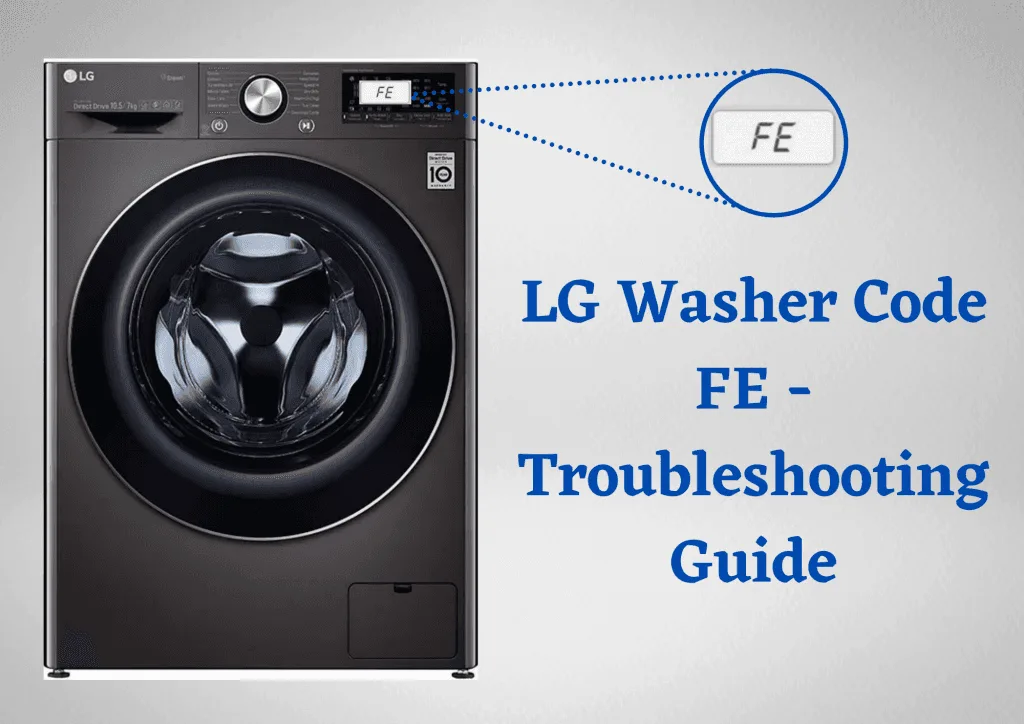
If your Frigidaire washer has stopped mid-cycle and flashed the E1 code, you're not alone. This is one of the most common error codes across Frigidaire front load and top load models. But here's the tricky part: E1 doesn't mean the same thing on every machine.
Depending on your washer's age and design, it could point to a drain problem or a fill problem.
Manufacturer specifications indicate that models built before 2012 typically use E1 to signal a drain timeout. Newer units (2012 to present) use it for a fill timeout. That distinction is the key to getting your washer back in action quickly.
Let's walk through what's actually happening and how to fix it.
Image source: Bing (Web (fair-use with source credit))
Why Your Frigidaire Is Showing E1 (And Why It's Different Depending On Your Model)
The Frigidaire washer code E1 is what engineers call a "timeout" error. The control board expects something to happen within a set window. Water should fill or drain within a few minutes.
If that doesn't happen, the machine stops and shows E1.
Here's where most people get tripped up. On older Frigidaire washers (built before roughly 2012), E1 means the water didn't drain fast enough. The machine tried to pump out the wash water, but something blocked it.
On newer models, E1 means the water didn't fill fast enough. The inlet valves opened, but the water level sensor never signaled that the tub was full.
That difference matters because the troubleshooting steps are completely opposite. Check the wrong thing and you'll waste an hour looking at a perfectly good drain pump when the problem is actually a kinked fill hose.
There's another variable: how the code displays. On some models, a solid E1 means a drain error. A flashing E1 points to a fill problem.
On others it's reversed. The user manual for your specific model is the definitive source. You can find it on Frigidaire's official support website.
As of 2026, this split is still in effect. Frigidaire hasn't unified the code across its lineup. So never assume E1 means the same thing your neighbor's machine showed.
You need to know your model year.
How can you tell? Look at the serial number plate inside the door or on the back panel. The first two digits of the serial number indicate the year of manufacture.
A 10-character serial starting with "FF" means 2015. That's a fill-error machine. An older serial starting with "VF" or similar from the late 2000s is likely a drain-error machine.
If you can't find the serial, use another clue. Top load washers from the 2000s often use E1 for drain issues. Front load models from the same era sometimes do too, but many were updated after 2012.
When in doubt, start with the branch that matches the symptoms you actually hear.
Quick Answer: What E1 Actually Means (For Your Specific Model)
E1 means a timeout error. On pre-2012 models it signals a drain problem. On 2012 and newer models it signals a fill problem.
Solid E1 usually means drain. Flashing E1 usually means fill. Check your model year to pick the right branch.
That's the short version. Now let's dig deeper into each scenario so you can fix it in under an hour.
The Two Main Branches: Drain Error vs. Fill Error
Before you pull any panels, listen to your washer. What is it doing when E1 appears? This is the diagnostic fork in the road.
If the washer is full of water and won't drain: you're on the drain error branch. The machine completed the wash cycle but couldn't pump the water out. You might hear a humming sound from the drain pump, or nothing at all.
If the pump is humming but not moving water, the impeller is likely jammed. If it's completely silent, the pump may be dead or the control board isn't sending power.
If the washer is empty or barely wet and won't fill: you're on the fill error branch. The machine started a cycle but no water entered, or it trickled in too slowly. You might hear a faint clicking from the water inlet valves, or complete silence.
Check whether the water supply valves behind the washer are fully open. Then listen for the valve solenoids clicking when a cycle starts.
If the washer has water but the display shows E1 after the wash stage: still think drain first. Some models display the code during spin, not immediately after the wash. The machine waits through its drain attempt, fails, then shows E1.
So if you open the lid and see standing water, you're in Branch 1.
| Symptom | Likely Branch | What to Check First |
|---|---|---|
| Standing water, pump hums but no drain | Drain error | Drain pump filter and impeller |
| Standing water, pump silent | Drain error | Pump motor resistance, wiring |
| No water in tub, cycle starts but stops | Fill error | Water supply valves, inlet valve screens |
| Slow trickle of water, eventually times out | Fill error | Inlet valve solenoids, pressure switch hose |
| Error appears before any water enters | Fill error | Inlet valve electrical test, control board |
If the symptoms are mixed (for example, water slowly drains but E1 still appears), start with the drain branch anyway. A partially clogged pump filter can slow drainage enough to trigger the timeout.
Branch 1: E1 Means Drain Problem (Pre-2012 Models and Some Top-Loads)
This is the easier branch to fix. Most of the time, a clogged drain pump filter is the culprit. On Frigidaire washers, the filter lives behind a small access panel at the bottom right corner of the front panel.
On top load models, you may need to remove the cabinet or reach under the machine.
Step 1: Hard Reset
Unplug the washer for one full minute. Plug it back in. Try a drain-only cycle (if your model has one) or a spin cycle.
If the washer drains and spin starts, the error was a temporary glitch. If E1 reappears, proceed.
Step 2: Clean the Drain Pump Filter
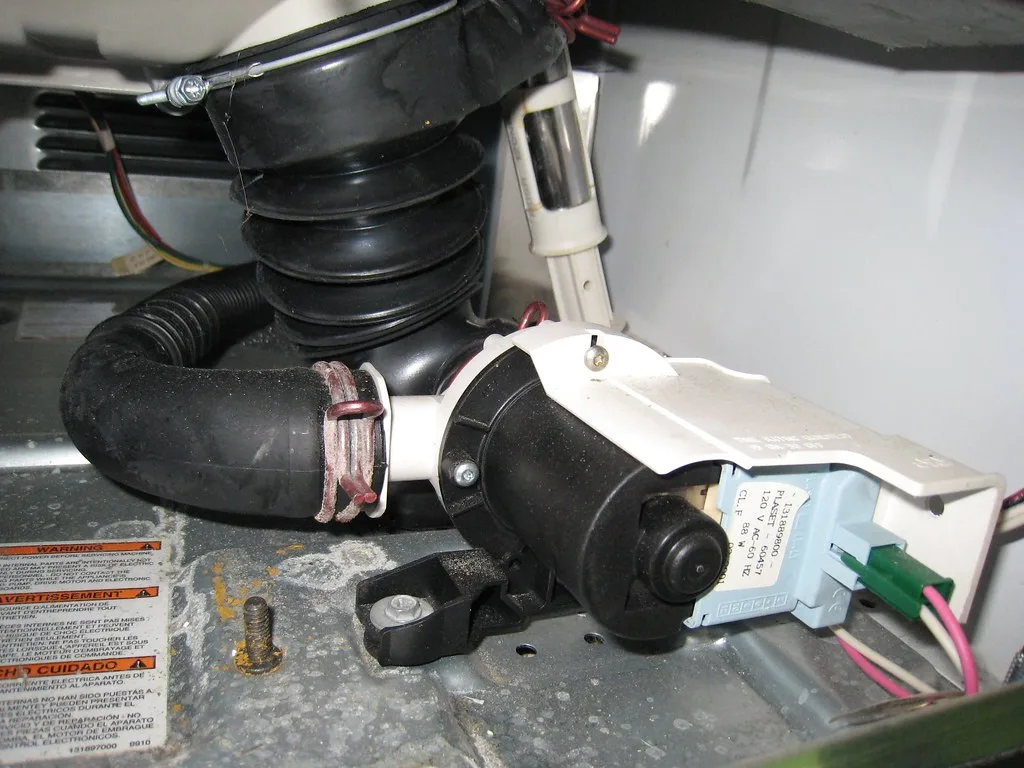
Image source: Bing (Web (fair-use with source credit))
Place towels under the access panel. You'll likely get some water, so be ready. Use a flathead screwdriver to pop the panel off.
You'll see a circular cap. Twist it counterclockwise. Pull it out slowly.
Water will drain.
Inspect the filter. You will probably find a coin, a sock, a hairpin, or a clump of lint. That object is blocking the pump.
Clear it out. Remove any debris from the housing using needle-nose pliers. Replace the cap and push the panel back on.
This single step resolves roughly 70% of E1 drain errors. If it doesn't, move on.
Step 3: Check the Drain Hose
Make sure the drain hose isn't kinked behind the washer. Pull the machine out carefully. Run your hand along the entire length of the hose.
Even a small bend can restrict flow.
Also check the height of the drain standpipe. The hose outlet should be between 30 and 96 inches above the floor. If it's too high, the pump struggles to push water up.
If it's too low, you risk siphoning. Measure from the floor to the point where the hose enters the pipe.
Step 4: Test the Drain Pump
If the filter is clean and the hose is clear, the pump itself may have failed. Unplug the washer. Access the pump (usually behind the same access panel).
Disconnect the wire harness. Set your multimeter to resistance (ohms). Touch the probes to the two terminals.
A working drain pump on most Frigidaire machines reads between 20 and 50 ohms. If you see infinite resistance (OL), the pump's winding is open. Replace the pump.
Part numbers vary, but a common one for mid-2000s models is 5303281052. Always verify with your model number.
If the pump reads correct resistance but doesn't run, the problem could be the control board. But before you go there, check the wiring harness for corrosion or loose pins. A bad connection mimics a dead pump.
Step 5: Test the Lid or Door Switch
On top load models, a faulty lid switch can prevent the machine from entering the spin cycle, which also stops drainage. Use your multimeter to test continuity. Open the lid, close it, and watch for a change.
If the switch never closes, replace it. Common part numbers include 137390301.
On front load models, the door lock assembly includes the switch. If the door isn't locked, the machine won't drain. Listen for a click when you start a cycle.
No click means you need a new door lock.
Branch 2: E1 Means Fill Problem (2012+ Models and Many Front-Loads)
Fill errors are less common but still very fixable. The machine is calling for water, but it's not arriving fast enough. The control board waits up to 10 minutes, then throws E1.
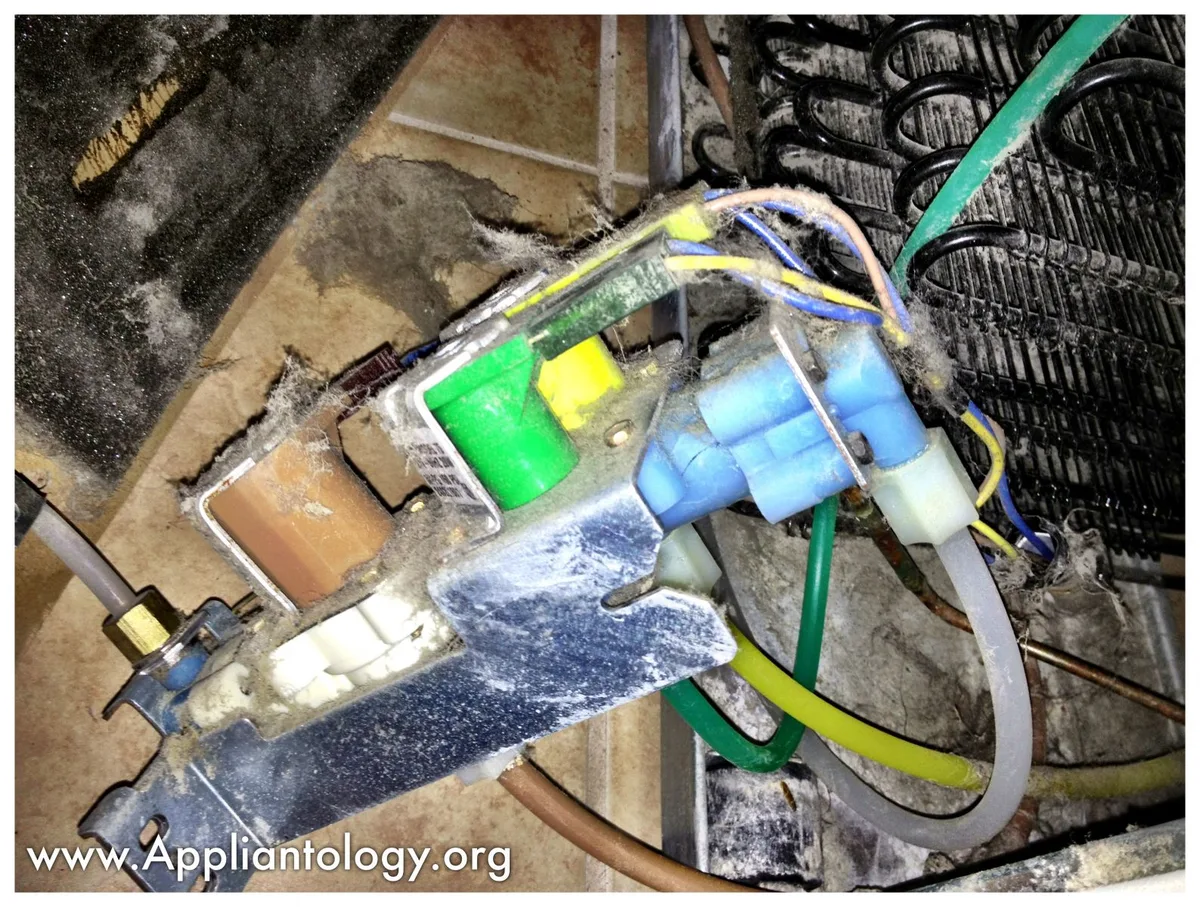
Image source: Bing (Web (fair-use with source credit))
Step 1: Check Water Supply Valves
It sounds obvious, but it's the most common cause. Go behind the washer. Confirm both hot and cold water supply valves are fully open.
Turn them counterclockwise until they stop. If they were partially closed, opening them fully may solve the problem immediately.
Step 2: Inspect the Inlet Valve Screens
Inside each water inlet valve is a small mesh screen that catches sediment. Over time, hard water deposits can completely block it. Shut off the water supply.
Unscrew the hoses from the back of the washer. You'll see a small plastic screen inside each valve port. Use a pair of needle-nose pliers to pull it out gently.
Clean it with an old toothbrush and water. If it's too corroded, replace it.
Reattach the hoses, turn the water back on, and test a fill cycle.
Step 3: Test the Inlet Valve Solenoids
If the screens are clean but water still doesn't enter, the solenoid coils may be burned out. Unplug the washer. Disconnect the wire harness from the valve.
Measure resistance across each solenoid's terminals. A good one reads between 500 and 1500 ohms. Infinite resistance means the coil is dead.
Replace the inlet valve assembly as a unit. Part numbers vary, but a common one is 5304505442. Match with your model.
Step 4: Check the Pressure Switch Hose
The pressure switch tells the control board when the tub is full. If the hose that connects the switch to the tub is cracked, disconnected, or clogged with lint, the switch never triggers. Find the pressure switch (usually a round plastic disc on the top or back of the cabinet).
Follow the small rubber hose down to the tub. Make sure it's attached at both ends. Blow through it gently to clear any debris.
Step 5: Test the Pressure Switch
If the hose is intact, the switch itself may be faulty. With the washer unplugged, locate the switch and remove the wire terminals. Use your multimeter to check continuity between the common terminal and the "full" terminal.
It should have continuity when the tub is empty and switch is at rest. If it's always open or always closed, replace the switch.
Step 6: Verify Low Water Pressure
If your home has well water or low municipal pressure, the fill may be too slow for the timer. Frigidaire washers need at least 20 psi to fill within the timeout window. You can test pressure at a nearby sillcock.
If it's below 20 psi, a pressure booster is the permanent fix rather than replacing parts.
What To Do When Neither Branch Works – Control Board and Diagnostic Mode
You've cleaned the filter. You've checked the hoses. You've tested the valves and the pump.
E1 still shows up. Now what?
At this point, the problem is likely electrical. The control board or the wiring that connects it to the sensors and actuators needs attention.
Enter Diagnostic Mode
Most Frigidaire washers have a hidden diagnostic mode that stores fault history. The sequence varies by model, but a common method is:
- Unplug the washer for 30 seconds.
- Plug it back in.
- Within 10 seconds, press and hold the "Start" button for 5 seconds.
- The display will show "D" or a number indicating diagnostic mode.
- Press "Start" again to cycle through stored error codes.
If E1 appears in the history, you're confirming the error, but you haven't found the root cause. If other codes like E2 (drain pump failure) or E3 (overfill) appear, they may point to a more specific issue.
Inspect the Control Board
The control board is a circuit board usually mounted behind the user interface panel or inside the cabinet top. Unplug the washer before opening anything. Pull the control panel forward.
Look for obvious signs of damage: burn marks, bulging capacitors, or corrosion on the solder joints.
A common failure point is the relay that delivers power to the drain pump or inlet valves. If the relay is stuck or burned, the board may send the signal but not enough current. Visually inspect the relay for a cracked case or discolored plastic.
Test Wiring Continuity
A loose pin or a corroded connector can cause intermittent E1. Trace the wire harness from the control board to the drain pump or inlet valves. Use your multimeter to check continuity.
Wiggle the connectors while watching the meter. If continuity drops when you move a wire, that connector needs to be cleaned or replaced.
When to Replace the Control Board
If all components test fine but E1 persists, the control board itself has likely failed. Replacement boards are available through Frigidaire parts distributors. You'll need your exact model number to get the right part.
Expect to pay between 100 and 250 dollars for the board. Installation is straightforward: unplug the old board, plug in the new one, and secure it in place.
Before you order a new board, try one last thing. Unplug the washer for 10 minutes. Plug it back in and see if the code clears.
A full discharge resets the control board's memory. Sometimes a temporary fault is stored and won't clear with a short unplug.
Common Mistakes That Keep People Stuck
After working through hundreds of Frigidaire E1 cases, certain mistakes come up over and over. Here are the ones to avoid.
Mistake 1: Assuming E1 Always Means the Same Thing
This is the biggest one. If you have a 2008 top load and you look up "Frigidaire E1" online, you'll find advice about fill problems. But your machine drains, not fills.
You'll spend hours checking water supply valves that work perfectly. Always verify your model year first.
Mistake 2: Skipping the Hard Reset
A hard reset means unplugging the washer for at least one full minute. Not 10 seconds. Not 30 seconds.
A full 60 seconds. This allows the capacitors on the control board to discharge completely. A brief unplug may not clear a soft fault.
Do the hard reset before you touch any parts.
Mistake 3: Overlooking the Drain Hose Height Limit
The drain hose outlet must be no more than 96 inches above the floor. If you installed the washer in a basement with a high standpipe, the pump may struggle to push water up that high. Measure from the floor to where the hose enters the pipe.
If it's over 8 feet, you need to lower the drain point or use a pump booster.
Mistake 4: Misdiagnosing a Silent Pump as Dead
A silent pump doesn't always mean failure. The control board may not be sending power. Check voltage at the pump terminals during a drain cycle.
If you read 120 volts but the pump doesn't run, the pump is bad. If you read 0 volts, the control board or wiring is the problem.
Mistake 5: Ignoring a Clogged Pump Filter Because It Looks Clean from the Outside
The filter cap may look clean. But the debris is usually jammed into the impeller inside the pump housing. You have to pull the filter completely out and reach into the housing.
Use a flashlight. Check for small objects stuck in the impeller blades. A single coin can stop the pump from working.
Mistake 6: Replacing Parts Without Testing
Throwing a new pump or a new valve at the problem is expensive and wasteful. Use a multimeter to test the component before you buy a replacement. The test takes 30 seconds and costs nothing.
It saves you money and confirms the actual cause.
When To Call A Professional (Or Replace The Washer)
DIY repair is great for pump filters and hoses. But some situations call for a technician.
When to Call a Professional
- You find burn marks on the control board. That indicates a short circuit that may have damaged other components. A technician can test the entire electrical system safely.
- You don't own a multimeter. You need one to test pumps, valves, and switches. Buying one is cheaper than a service call, but if you'd rather not, a pro can diagnose it quickly.
- The washer is less than a year old. Warranty covers the repair. Contact Frigidaire customer service or an authorized service center. Do not risk voiding the warranty.
- You've tried all steps and E1 still appears. A technician has advanced diagnostic tools and access to factory service manuals. They can identify a problem that a homeowner might miss.
When to Replace Instead of Repair
- The washer is over 10 years old. A new control board plus labor can cost 300 to 500 dollars. That's close to the price of a budget washer. Replacement often makes more sense.
- There is visible rust on the drum or outer tub. Water damage is likely inside the console as well. Repairing one part won't stop the corrosion from causing future failures.
- The main harness is damaged. Replacing the entire wiring loom is labor-intensive. On an older machine, the cost and effort exceed the value.
- You've already replaced multiple parts. If you're on your third repair in a year, the machine is unreliable. A new unit with a fresh warranty offers peace of mind.
Frequently Asked Questions
Can I run the washer with the E1 code?
No. The machine will not progress past the error. The control board stops the cycle to protect the motor and pump.
You must clear the underlying problem first.
Will unplugging the washer fix E1?
Sometimes. A hard reset clears temporary software glitches. If E1 was caused by a power surge or a momentary sensor misread, unplugging for one minute may fix it.
If the hardware problem persists, the code will return.
Is E1 the same on all Frigidaire brands?
Frigidaire also manufactures washers sold under the Electrolux and Kenmore brands. E1 generally follows the same logic on those units: drain timeout on older models, fill timeout on newer ones. Always verify the model year for your specific machine.
Does the error lock the door?
On front load models, yes. E1 prevents the door from opening for safety reasons. If there is standing water, the machine won't release the lock.
You may need to wait for the drain cycle or manually drain the tub before the door opens.
How much does a repair cost?
A service call typically runs 100 to 150 dollars. Parts cost extra. A drain pump costs around 40 to 80 dollars.
A control board runs 100 to 250 dollars. Total repair ranges from 150 to 400 dollars depending on the issue.
Can hard water cause E1?
Yes. Hard water deposits can clog inlet valve screens and pressure switch hoses. Regular cleaning of the screens and using a water softener can prevent fill-related E1 errors.

Similar Posts