Onida Ac Error Code

Your Onida AC just flashed an error code and stopped cooling. You see some letters and numbers on the display, and you aren't sure what they mean. Don't panic.
That code is the unit's way of telling you exactly what went wrong.
Per manufacturer specifications, each code corresponds to a specific fault. It could be a blocked filter or a failed compressor sensor. Knowing how to interpret it can save you a service call.
At the very least, it helps you explain the problem to a technician. Let's walk through the codes step by step.
Image source: Bing (Web (fair-use with source credit))
Onida AC Error Codes: What They Mean and What to Do First
An error code is your AC's SOS signal. The system runs a self-diagnosis every few seconds. When something goes wrong, it stops normal operation and shows a code.
That way you don't keep running a damaged unit.
Your first move, every time: Turn the AC off at the wall switch and wait at least five minutes. Then turn it back on. Many codes clear themselves after a proper power cycle.
If the code reappears, it points to a real fault.
Most urgent codes to watch for:
- E1, Indoor room sensor fault (common, often easy to fix)
- E2, Outdoor coil sensor fault (needs a technician)
- P1, Over-voltage or under-voltage protection (check your stabilizer)
- P4, Compressor drive error (inverter models only, call a pro)
If you see any code involving the compressor (P4, P5, or repeated E6/E7), don't keep restarting the unit. You risk damaging the compressor further. Move on to the next section to decode exactly what your AC is telling you.
How to Read Your Onida AC Error Code (No Manual Needed)
Not all Onida models have a digital display. Many older or window units use blinking LED lights on the indoor unit. The blink pattern tells you the code.
If your model has a digital panel, you will see the code directly (like E1, P1, etc.). If you see flashing green or red lights, count the number of blinks in a cycle.
On some models, the power indicator blinks in a repeating pattern. Count the number of blinks before a pause. For example, three blinks equals code E3.
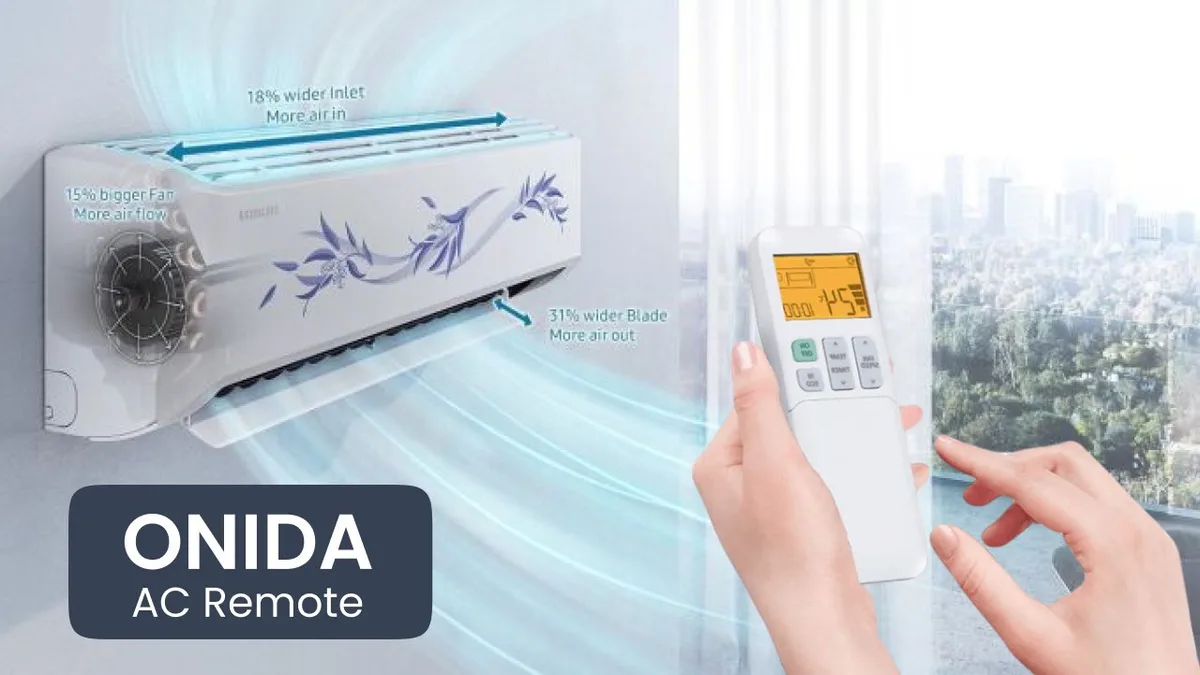 Image source: Bing (Web (fair-use with source credit))
Common LED blink patterns (typical Onida split ACs):
| Blinks | Code | Likely Fault |
|---|---|---|
| 1 | E1 | Indoor room sensor open or short |
| 2 | E2 | Outdoor coil sensor fault |
| 3 | E3 | Indoor coil sensor fault |
| 4 | E4 | Outdoor unit communication fault |
| 5 | E5 | Overload protection active |
| 6 | P1 | Power supply voltage out of range |
| 7 | P4 | Compressor drive error (inverter) |
If your model has no blinking at all and the AC simply won't start, check the remote control batteries and the receiver on the indoor unit. Sometimes a dead remote or a blocked receiver mimics a blank display. Press the manual power button on the indoor unit (if available) to rule that out.
The Most Common Onida Error Codes and Their Root Causes
Once you know the code, you need to understand what likely caused it. Below are the faults you will encounter most often in Indian homes. The causes vary by model but follow the same patterns.
E1, Room temperature sensor fault
The sensor that tells the PCB the room temperature has gone open circuit or short circuit. Dust accumulation or a loose wire usually causes this. You can sometimes fix it by cleaning the sensor (a small bead on a wire clip near the air intake).
If not, the sensor needs replacement. It is a cheap part but requires removing the front panel.
E2, Outdoor pipe sensor fault
This sensor monitors the outdoor coil temperature. It often fails during voltage spikes or lightning storms. Replacement requires a technician because the sensor is inside the outdoor unit near the compressor.
E3, Indoor pipe sensor fault
This is the same as E2 but on the evaporator coil inside. A dirty filter that causes the coil to ice up can trigger this code temporarily. Clean the filter and let the unit defrost before blaming the sensor.
E4 / E6, Communication error
The indoor and outdoor units cannot talk to each other. This usually means a wiring issue between the two units. Check if rodents have chewed the interconnecting cable.
Also inspect the terminals on both PCBs. Do not attempt to rewire if you are not confident. You could short the 230V line.
P1, Voltage protection
Onida ACs are designed to operate between 180V and 260V. Many Indian homes see voltage drops below 180V during peak summer. A stabilizer is essential.
If P1 keeps appearing, check the voltage at the socket with a multimeter. If it is below 180V, install a proper voltage stabilizer rated for your AC's tonnage.
P4, Compressor drive error (inverter models only)
This indicates the inverter compressor's drive circuit has detected a fault. It could be a bad compressor, a failed PCB, or a refrigerant blockage. Do not reset repeatedly.
Call an authorized Onida service center.
E7 / E8, Overload or fan motor lock
The indoor fan motor cannot spin freely. This is often caused by a stuck bearing or debris in the blower wheel. Turn off the unit and manually spin the fan blades.
If they do not move freely, the motor needs service.
If you are unsure which code your model uses, check Onida's official support page for the exact manual.
Step-by-Step: Safe Troubleshooting Before Calling a Technician
Before you call for help, try these steps in order. They solve about 40% of error code issues without any special tools. Always start with the power disconnected for safety.
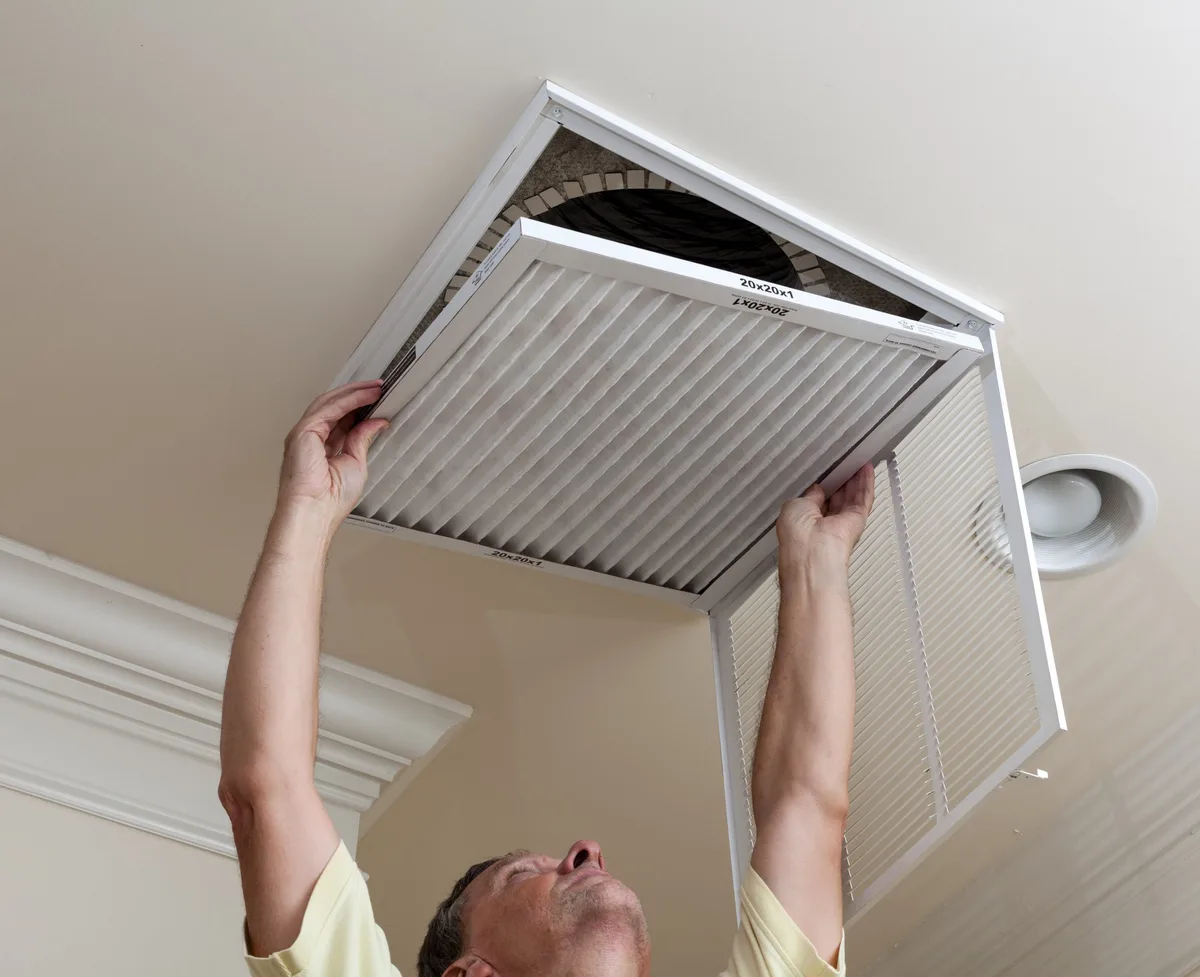 Image source: Bing (Web (fair-use with source credit))
Step 1: Power cycle properly
Turn off the AC using the wall switch, not just the remote. Wait at least five minutes. This gives the PCB capacitors time to discharge and the system to reset.
Turn it back on.
Step 2: Clean the air filter
A clogged filter restricts airflow, causing the indoor coil to freeze. When ice melts, the sensors can give false readings and trigger E1, E3, or E8 codes. Remove the filter, wash it with mild soap, and let it dry completely (12, 24 hours).
Reinstall.
Step 3: Check the outdoor unit
Make sure nothing is blocking the condenser fan. Leaves, plastic bags, or even a neighbour's drying line can stop airflow. Also look for ice buildup on the copper pipes.
Ice means a refrigerant leak or a dirty filter.
Step 4: Inspect the remote and receiver
Sometimes a stuck button on the remote sends a constant signal that confuses the PCB. Remove the batteries for 30 seconds, then reinsert. Point the remote at the AC and press the power button.
If the AC does not respond, try the manual power button on the unit.
Step 5: Measure the voltage
If your AC has a P1 or P2 code, measure the voltage at the socket during peak load time (afternoon). Use a multimeter on AC volts. Below 180V or above 260V will trigger protection.
A stabilizer is the fix.
Step 6: Reset the PCB
Some models have a small push-button on the indoor PCB. With power off, press and hold it for three seconds. Power on and see if the code cleared.
If you cannot find the button, leave the AC disconnected overnight. The PCB will reset fully.
If the error code disappears after any of these steps, monitor the unit for 24 hours. If it comes back, you have an underlying issue that needs a technician.
When to Stop DIY and Call a Pro (Safety Red Flags)
Some error codes are harmless and easy to fix. Others are dangerous. Knowing the difference keeps you safe and protects your investment.
Stop DIY immediately and call an Onida authorized service center if you see any of the following:
Error codes that repeat after a power cycle
If you have cleaned the filter, checked the voltage, and waited the full reset time, but the code returns within minutes, something is broken. Continuing to reset can damage the compressor or PCB.
Signs of a refrigerant leak
If you see oily stains on the copper pipes, hear a hissing sound, or notice ice on the thicker pipe, the system has lost refrigerant. Refrigerant is a pressurized chemical. Only certified technicians can handle it legally.
Attempting to add refrigerant yourself can cause freezer burns or compressor failure.
Burning smell or smoke
Any electrical burning smell means a component is overheating. Turn off the AC at the main switch. Do not remove panels.
The PCB, compressor capacitor, or fan motor could be a fire risk. Call the nearest service centre.
Code P4 or P5 on inverter models
These codes indicate a drive circuit fault. Inverter PCBs are expensive and sensitive. Opening the outdoor unit yourself voids the warranty (typically 5 years on the compressor).
Bureau of Indian Standards (BIS) guidelines require that only trained personnel service inverter air conditioners.
The AC trips the main breaker
This suggests a short circuit or an earth fault inside the unit. Do not plug it back into a different socket. Have a licensed electrician inspect the wiring and the AC's internal resistance.
Spark or arc when turning on
Visible sparking indicates a loose connection or a failing capacitor. Capacitors store electricity even when the unit is off. Touching the terminals can give a lethal shock.
What you should say to the technician
When you call, give them the exact error code. Example: "My Onida 1.5-ton inverter split AC shows code P4. It happened after a brief power cut." This saves them time and helps them bring the right parts.
Warranty tip
Onida ACs come with a standard 1-year comprehensive warranty and 5 years on the compressor. Unauthorized opening of sealed parts voids the compressor warranty. Always call an authorized dealer even if it costs a bit more.
A third-party repair could cost you the entire warranty.
Mistakes That Can Damage Your Onida AC or Void the Warranty
Some well-intentioned fixes do more harm than good. Here are the most common mistakes people make when they see an error code on their Onida AC.
Resetting the unit over and over
If the same code appears after a reset, something is broken. Repeatedly cycling power can damage the compressor or the PCB. Once the code comes back, stop.
Call a technician.
Using a non-contact voltage tester to check the PCB
These testers only detect live wires. They cannot measure sensor resistance or voltage accurately. A multimeter set to AC volts or ohms is the right tool.
Using the wrong tool leads to misdiagnosis and wasted time.
Opening the outdoor unit without disconnecting power
The capacitors inside store a lethal charge even after the unit is off. Always disconnect the wall switch and wait five minutes. Many injuries happen because people skip that step.
Adding refrigerant when the code says E1 or E3
Those codes indicate a sensor fault, not low gas. Adding refrigerant masks the real problem and can overcharge the system. Overcharging damages the compressor and voids the warranty.
Replacing the indoor PCB with a universal board
Onida uses proprietary firmware in its PCBs. A universal board will not communicate correctly with the outdoor unit. Stick to genuine Onida replacement parts from an authorized service center.
What voids the warranty fastest
Tampering with the compressor terminals. Cutting the interconnecting cable and splicing it. Drilling holes in the outdoor unit casing to add a fan.
Any physical modification to sealed components.
The real takeaway is this: if the error code involves the outdoor unit electronics or the compressor, leave it to a trained technician. The cost of a service call is far less than the cost of a new compressor.
How to Prevent Error Codes from Recurring (Maintenance Tips)
Error codes are not random. They usually follow a pattern of neglect. A little regular maintenance can stop most codes before they appear.
Clean the air filter every two weeks during summer
This is the single most effective prevention step. A clean filter allows proper airflow. Without it, the evaporator coil freezes, ice triggers sensor errors, and the compressor works harder.
Wash the filter with lukewarm water and let it dry fully before reinstalling.
Check the outdoor unit for debris monthly
Leaves, dust, and spider webs accumulate on the condenser coils. Blocked coils cause high pressure and trigger P1 or P5 codes. Use a soft brush or a garden hose on low pressure to clean the outdoor unit coils.
Do not use a pressure washer.
Install a voltage stabilizer rated for your AC
Power fluctuations are the leading cause of P1 and P4 codes in Indian homes. A stabilizer keeps voltage between 180V and 260V. For inverter ACs, use a stabilizer labeled for inverter compressors.
This small investment can save the PCB.
Schedule a professional service once a year
A technician should check the refrigerant pressure, clean the deep coils, and inspect the wiring. They can also tighten loose terminals that cause communication errors (E4/E6). Do this before summer starts.
Keep the area around the remote sensor clean
Dust on the receiver lens (on the indoor unit) can block signals and make the AC appear unresponsive. Wipe the lens with a dry cloth every few months.
Run the AC for at least 15 minutes each week in the off-season
During winter or rainy months, the compressor seals can dry out. Running the unit briefly circulates oil and keeps the mechanical parts lubricated. This prevents startup error codes when summer returns.
These habits take only 10 minutes a month. They drastically reduce the chances of seeing a new error code.
Frequently Asked Questions About Onida AC Error Codes
What does E1 mean on my Onida AC?
E1 means the indoor room temperature sensor has failed. The sensor is either open circuit or short circuit. Clean the sensor first.
If the code remains, replace it. This is a simple DIY fix if you are comfortable removing the front panel.
Can I fix an E2 error myself?
E2 points to the outdoor coil sensor. Replacing it requires opening the outdoor unit and accessing the sensor near the compressor. It is safer to call a technician.
The sensor itself is cheap, but the risk of electric shock is real.
Why does my Onida AC show P1 after a power cut?
P1 means the AC detected voltage outside its safe range (180V to 260V). After a power cut, voltage often spikes or dips temporarily. If the code clears within a few minutes, your stabilizer is working.
If it stays, check the stabilizer.
How do I reset my Onida AC after an error?
Turn off the AC at the wall switch. Wait five minutes. Turn the switch back on and use the remote to start.
If your model has a PCB reset button, press it with the power off. Do not hold it for more than three seconds.
Will a dirty filter cause an error code?
Yes, it can cause E3, E8, or even P1 indirectly. A dirty filter reduces airflow, which makes the indoor coil freeze. The frozen coil triggers sensor errors.
Cleaning the filter every two weeks prevents this.
How much does it cost to fix an Onida AC error code?
Service call charges range from 350 to 600 rupees for a basic visit. Sensor replacement parts cost 200 to 800 rupees. PCB replacement is more expensive, often 2,500 to 5,000 rupees depending on the model.
Compressor repairs cost much more and are covered under warranty if the unit is within 5 years.
Is there a way to see all Onida AC error codes in one place?
Yes, the official Onida website has a support section with downloadable manuals. Each model has its own list. This article covers the most common ones you will encounter.
Always check your specific model manual for exact codes.

Similar Posts