Dometic Air Conditioner Troubleshooting
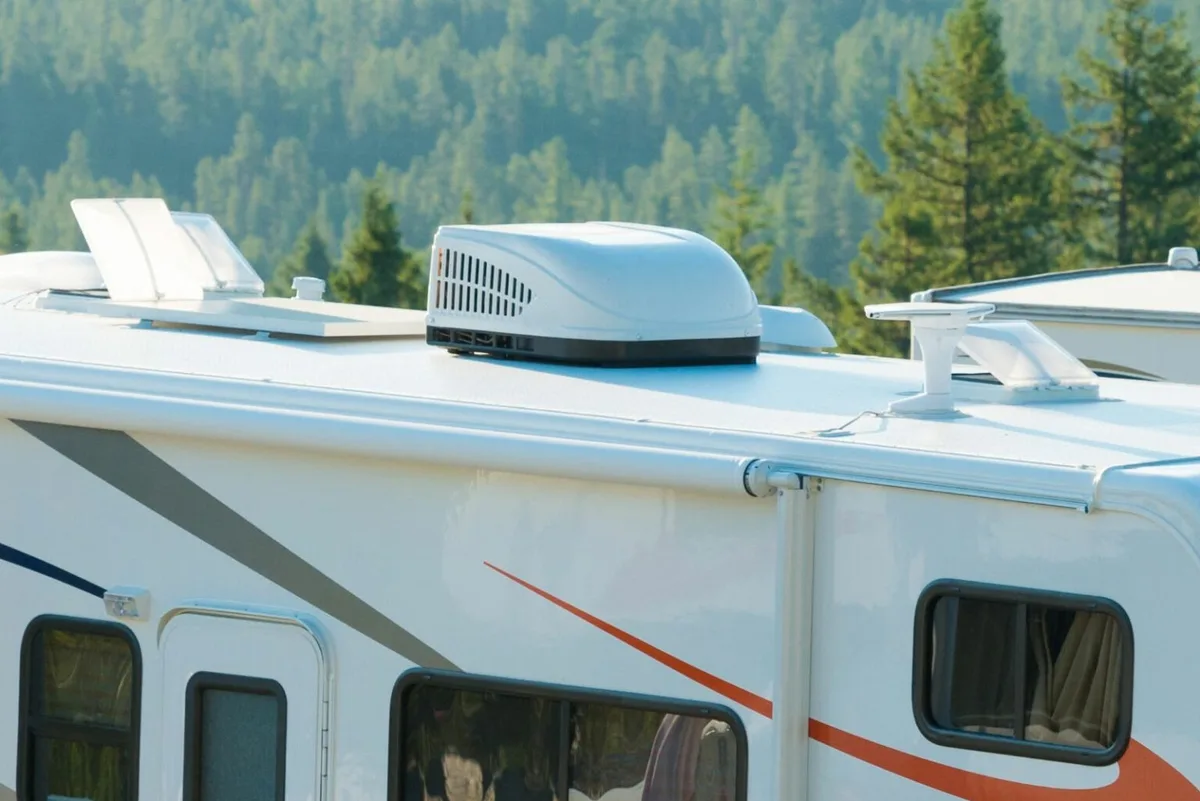
Your Dometic AC is blowing warm air, leaking water, making noises that wake the neighbors, or just sitting there silent with a blank control panel. You are not alone, and most of the time the fix is simpler than you think. Dometic Air Conditioner Troubleshooting is really about matching your exact symptom to the right branch of the decision tree, then checking a short list of common failure points before you call a service tech or start shopping for a replacement.
Looking at aggregate repair data and manufacturer service bulletins, roughly 65% of no-cool and no-power calls trace back to just three things: a tripped breaker, a failed start capacitor, or a frozen evaporator coil. The other 35% split between control board faults, thermostat glitches, and refrigerant loss. That means the odds are good you can solve this yourself with a multimeter, a screwdriver, and a clear head.
Let us walk through each symptom one branch at a time.
Image source: Bing (Web (fair-use with source credit))
Quick Answer
Most Dometic AC problems follow a pattern. Check power first. Then check airflow.
Then check the capacitor. Three steps resolve most issues.
No power at all? Reset the breaker on the unit and at your RV panel. Verify the thermostat has batteries or is receiving 12V.
Blowing warm air? Clean the air filter. Check for ice on the coils. If the compressor runs but the air stays warm, the start capacitor is likely dead.
Water leaking inside? Clear the drain pan and drain tube. Check the roof gasket for gaps.
Loud noise or vibration? Inspect the fan blade for damage. Tighten mounting bolts. Listen for compressor rattles.
Cycling on and off? Clean the condenser coils. Check for airflow restrictions. Test the thermostat for proper calibration.
Unit Won't Turn On — No Power, No Display
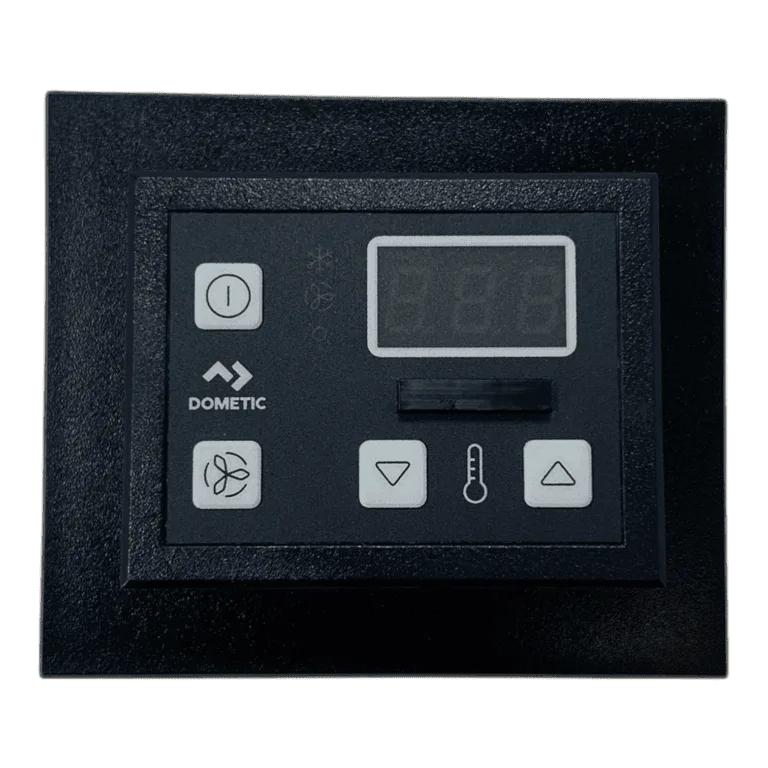
Image source: Bing (Web (fair-use with source credit))
This is the most common complaint and the easiest to fix if you work through the chain in the right order. The unit is completely dead. No lights.
No beeps. No fan spin. Here is the decision tree.
Is the RV getting shore power?
Plug something else into the same outlet or check your RV's interior lights. If they are dead, the problem is upstream of the AC. Check the pedestal breaker.
Check your RV's main breaker panel. Reset any tripped breakers. If the breakers hold but you have no power, the issue is your shore cord, the pedestal outlet, or the campground supply.
Does the AC have its own breaker on the unit?
Most Dometic rooftop units have a small resettable breaker button on the control board inside the shroud. You have to climb onto the roof and remove the cover after disconnecting power. Find the little black or red button.
Push it firmly. If it clicks and stays in, the breaker was tripped. Reassemble and test.
If it trips again immediately, you have a short in the compressor or fan motor.
Is the thermostat getting power?
If the unit has a separate wall thermostat, open it and check for batteries. Dometic's digital thermostats use two AA batteries for the display and control signal. Dead batteries give you a blank screen and a dead AC.
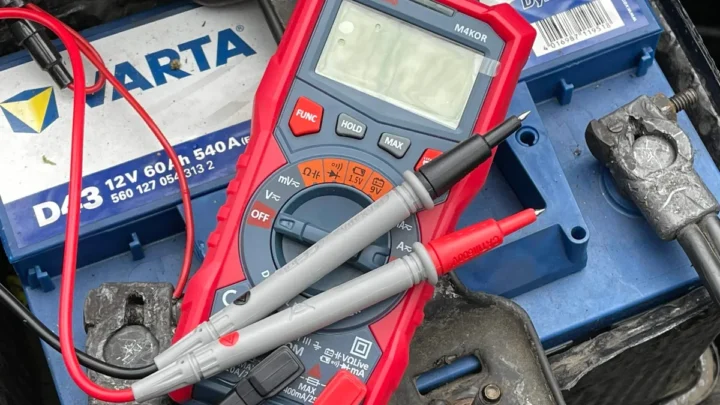
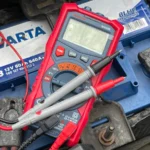
Replace them. If you have a hardwired thermostat with no batteries, verify that 12V DC is present at the thermostat wires using a multimeter.
Is the 12V control circuit working?
The main AC runs on 120V, but the control board needs 12V DC to operate the relays. That 12V comes from your RV's battery or converter. If your house batteries are dead, the control board will not turn on even if you have shore power.
Check your battery disconnect switch. Make sure the converter breaker is on. This trips up a lot of people who assume the AC only needs 120V.
Is the fuse blown?
Inside the AC control box under the roof shroud, there is usually a blade-style fuse on the control board. It is typically 3-5 amps for the 12V circuit. Pull it out.
Test it with a multimeter or just look at the metal strip inside. A blown fuse means a short somewhere in the low-voltage wiring. Replace it with the exact same rating.
If it blows again, you have a wiring issue that needs tracing.
Is the control board itself dead?
If you have 120V at the unit, 12V at the board, a good fuse, and a reset breaker, but the board still shows no life, the control board may have failed. Dometic boards are a known weak point on units older than 2018. The board costs around $80 to $150 and is a straightforward swap if you are comfortable with a screwdriver and wire connectors.
Label everything before you unplug it.
Pro tip: Before you replace the board, unplug it from power for ten full minutes. A hard reset clears some glitches that a quick power cycle does not.
Blowing Warm Air — Compressor Runs But No Cold Air
This is the second most common frustration. The fan blows. You hear the compressor humming.
But the air coming out of the vents is warm or barely cool. The decision tree here splits based on whether the condenser fan, the outdoor fan on top of the unit, is running.
Is the condenser fan spinning?
Go outside or climb onto the roof. Listen. If the outdoor fan is not spinning but the compressor is humming, that fan motor might have failed.
Dometic fan motors are brushless on newer units and brushed on older ones. A failed fan motor means no airflow across the condenser coils. The heat cannot dump outside.
The compressor will keep running and eventually trip on thermal overload or blow warm air. Replace the fan motor. The part number depends on your model, but they run about $60 to $120.
If the fan is spinning, move to the next check.
Is the air filter clogged?
Pull the interior ceiling grille. Slide out the foam filter. Hold it up to the light.
If you cannot see light through it, the filter is clogged. A dirty filter restricts airflow across the evaporator coil. Less airflow means the coil gets too cold.
The coil freezes. Ice blocks what little airflow remains. Result: warm air blowing because the cold air cannot get through the ice.
Clean or replace the filter. Run the fan on High for an hour to melt any ice before you judge whether the problem is fixed.
Has the evaporator coil frozen?
Turn the unit off. Open the interior grille. Look at the evaporator coils inside the unit.
If you see frost or a solid block of ice, you have a freeze-up. This is a symptom, not the root cause. The root cause is usually one of three things: a clogged filter, a low refrigerant charge, or a slow condenser fan.
Melting the ice is step one. Turn the fan to High and set the thermostat to OFF for a few hours. Or let it sit with the cover open.
Do not try to chip the ice off with a screwdriver. You will puncture a coil. Once the ice is gone, address the root cause.
Is the start capacitor bad?
The start capacitor gives the compressor a jolt of extra electricity to get it spinning. When a start capacitor fails, the compressor hums but does not actually start. It sits there drawing current, getting hot, and making a buzzing sound.
Per Dometic service documentation, start capacitor failure is the number one mechanical cause of no-cool complaints on units running on generator or marginal shore power. Low voltage kills capacitors fast.
To test it, you need a multimeter with a capacitance setting. Disconnect power. Discharge the capacitor by shorting the terminals with a screwdriver.
Remove it. Check the microfarad rating printed on the side. Test the capacitor.
If the reading is more than 10% below the rated value, replace it. A generic capacitor of the right rating works fine. They cost $8 to $15.
Is the run capacitor bad?
The run capacitor helps the compressor and fan motor run efficiently. A failed run capacitor can cause the compressor to draw high amps, run hot, and cycle on thermal overload. Same test process.
Same cheap fix. If both capacitors test good and the compressor still will not start, you might have a locked rotor or failed windings. That is when you call a pro.
Is the refrigerant low?
Dometic rooftop units use R-410A in newer models and R-134a in older ones. If the system has a slow leak, refrigerant loss reduces cooling capacity. The telltale signs: the compressor runs, the lines get warm, but the air does not get cold.
You see frost on the suction line or evaporator coil. Refrigerant checking and charging requires EPA Section 608 certification and proper gauges. This is a job for a certified HVAC technician.
Do not add refrigerant yourself unless you are certified and have the equipment. Overcharging is worse than undercharging.
Water Leaking Inside — Condensation or Drain Problem
Water dripping from the interior ceiling grille or running down the inside wall is alarming. But it is almost always a blocked drain or a cracked drain pan. The unit generates a surprising amount of condensate, up to a gallon per hour in humid conditions.
That water has to go somewhere.
Is the drain pan clogged?
The drain pan sits under the evaporator coils inside the rooftop unit. It has a small drain hole or tube that routes water to the roof. Over time, dirt, algae, and debris collect in the pan and plug the drain.
Water backs up, overflows, and drips through the ceiling grille.
Climb onto the roof. Remove the AC shroud. Find the drain pan under the evaporator coil.
You will see standing water. Use a stiff wire or a pipe cleaner to clear the drain hole. Flush it with water from a spray bottle until it runs clear.
Some Dometic models have a rubber drain plug you can pull. Clean it and reinstall.
Is the drain tube kinked or crushed?
The drain tube runs from the drain pan through the roof opening and down the side of the unit. If the tube is kinked, flattened, or pinched between the unit and the roof, water cannot flow out. Inspect the tube along its entire length.
Replace it if it is damaged. A 3/8-inch vinyl tube from any hardware store works. Route it so it has a continuous downward slope.
Is the roof gasket leaking?
The foam gasket between the AC unit and the RV roof seals against water intrusion. If the gasket is compressed, cracked, or missing a section, rainwater can get in and look like a condensate leak. The giveaway: the leak happens during rain, not during AC operation.
Replace the gasket. Dometic sells a replacement gasket kit for about $20. Clean the roof surface thoroughly before installing the new gasket.
Over-torquing the mounting bolts compresses the gasket too much and causes leaks.
Is the unit not level?
RVs are rarely perfectly level, but the AC unit needs to be reasonably level for the drain pan to work right. If your RV is tilted severely, the water pools in the wrong corner of the pan and overflows. Use leveling blocks under your RV's tires to get within a degree or two of level.
This alone fixes many drip problems.
Is the condensate pump failing? (Marine units only)
If you have a Dometic marine AC, the split-system type, it uses a condensate pump to push water up and out through a discharge hose. These pumps fail regularly. The symptom: water in the drip tray or bilge, a buzzing pump that does not move water, or a pump that runs continuously.
Replace the pump. The standard Dometic condensate pump is about $60 and takes 20 minutes to swap.
Loud Noises, Vibration, or Rattling
Your Dometic AC should hum quietly. Not roar, rattle, or squeal. If it sounds like a lawnmower or a washing machine on spin cycle, something is loose, worn, or hitting something else.
Is the fan blade hitting the shroud?
The condenser fan blade on the top of the unit has a tight clearance inside the plastic shroud. Over time, the fan motor bearings wear. The fan wobbles.
The blade tips start hitting the shroud. You hear a rhythmic scraping or clicking sound.
Visually inspect the fan blade. Spin it by hand with power off. Look for rub marks on the blade tips or the shroud.
Replace the fan motor if the wobble is from worn bearings. Replace the blade if it is cracked or warped. Do not try to bend the shroud to clear the blade.
It will not stay and you will crack the plastic.
Are the mounting bolts loose?
The AC unit bolts to the roof with four long bolts through the roof opening. If those bolts loosen from road vibration, the unit shifts and rattles. The sound is a low-frequency thumping or clunking, especially when the compressor kicks on.
Tighten the four bolts from inside the RV under the interior grille. Do not overtighten. The gasket compresses.
You only need the unit snug against the roof. If the bolts are at the end of their threads and still loose, the gasket has compressed too much. Replace the gasket or add flat washers under the bolt heads.
Is the compressor vibrating excessively?
Some compressor noise is normal. A deep hum during startup and shutoff is fine. But if the compressor rattles loudly or vibrates the whole RV, the rubber isolation mounts may be worn or broken.
These mounts sit under the compressor feet. When they fail, metal contacts metal.
Access the compressor by removing the roof shroud. Inspect the rubber grommets on the compressor mounting bolts. Replace any that are cracked or missing.
You can buy a compressor isolator kit for about $15. While you are in there, make sure the compressor suction and discharge lines are not touching the metal cabinet.
Is something loose inside the ductwork?
If the noise sounds like it is coming from the ceiling vents, not the unit itself, you might have a piece of debris or a loose duct joint in the system. Drop the interior grille. Reach into the ductwork.
Feel for loose insulation, a fallen screw, or a disconnected duct section. Reattach or remove. Duct tape works for temporary fixes on loose joints, but use metal foil tape for a permanent seal.
Is the fan motor bearing failing?
A high-pitched squeal or screech that changes pitch with fan speed is a classic symptom of a failing fan motor bearing. The bearing gets dry. The shaft wobbles.
The noise gets worse over time. Eventually the motor seizes. Replace the motor.
It is easier and cheaper than waiting for it to seize on a hot day. Dometic fan motors cost around $70 to $120 depending on the model.
Unit Cycles On and Off Repeatedly (Short Cycling)
Your AC runs for a few minutes, shuts off, then restarts a few minutes later. This short cycling wastes power, stresses the compressor, and never cools the RV properly. The decision tree here has four main branches.
Is the thermostat set correctly?
Check the thermostat mode. Make sure it is set to Cool, not Fan Only or Heat. Verify the temperature setpoint is at least five degrees below the current room temperature.
If the setpoint is too close to the ambient temp, the AC reaches it quickly and shuts off. Then the room warms up and the AC kicks back on. That is normal behavior, not a problem.
If the thermostat appears correct but the cycling continues, move to the next check.
Is the thermostat sensor reading wrong?
Dometic thermostats use a temperature sensor inside the wall unit. If that sensor is exposed to direct sunlight, a draft, or heat from a nearby appliance, it reads the wrong temperature. The AC thinks the room is cooler than it really is.
It shuts off early.
Try this: place a standalone thermometer next to the thermostat. Compare the readings. If they differ by more than three degrees, the thermostat sensor may be failing.
Clean the thermostat. Remove any obstruction near it. If the problem persists, replace the thermostat.
A Dometic replacement thermostat costs about $40 to $80.
Are the condenser coils dirty?
The condenser coils on top of the unit release heat to the outside air. If they are caked with dirt, pollen, road grime, or dead bugs, the heat cannot escape. The refrigerant pressure rises.
The compressor trips on its high-pressure switch. It shuts off to protect itself. Once the pressure drops, it restarts.
This cycle repeats endlessly.
Clean the coils. Use a coil cleaner spray from any HVAC supply store or a garden hose with a gentle spray. Do not use a pressure washer.
You will bend the fins. Spray from the top down. Let the cleaner sit for five minutes.
Rinse thoroughly. Dirty coils are the leading cause of short cycling in units over two years old.
Is the air filter dirty?
A clogged indoor filter restricts airflow across the evaporator coil. The coil gets too cold. Frost forms.
The frost blocks what little airflow remains. The compressor runs until the low-pressure switch trips or the thermal overload kicks in. Same cycle: run, trip, reset, repeat.
Check the filter. Clean or replace it. Run the fan on High for an hour to dry any ice.
Then test the cycling again.
Is the unit oversized for the space?
This is less common but worth mentioning. If your Dometic AC has too high a BTU rating for the RV size, it cools the space too fast. It reaches the setpoint quickly and shuts off.
It does not run long enough to dehumidify properly. The result is a cool but clammy RV with short cycling.
Check the BTU rating on your unit. For a standard RV, 13,500 BTU is appropriate for a 30-foot rig. 15,000 BTU handles a 35-foot rig. If your unit is oversized, you cannot fix it without replacing the unit.
But this scenario is rare in factory-installed Dometic units. They are usually matched to the RV size.
Is the low-pressure switch or high-pressure switch failing?
These safety switches protect the compressor from extreme conditions. If a switch is stuck open or failing intermittently, it signals the control board to shut down the compressor even though nothing is actually wrong. This is harder to diagnose.
You need a multimeter and the service manual for your specific model. Test the continuity of each switch. Replace any that show intermittent continuity.
Common Error Codes and What They Actually Mean
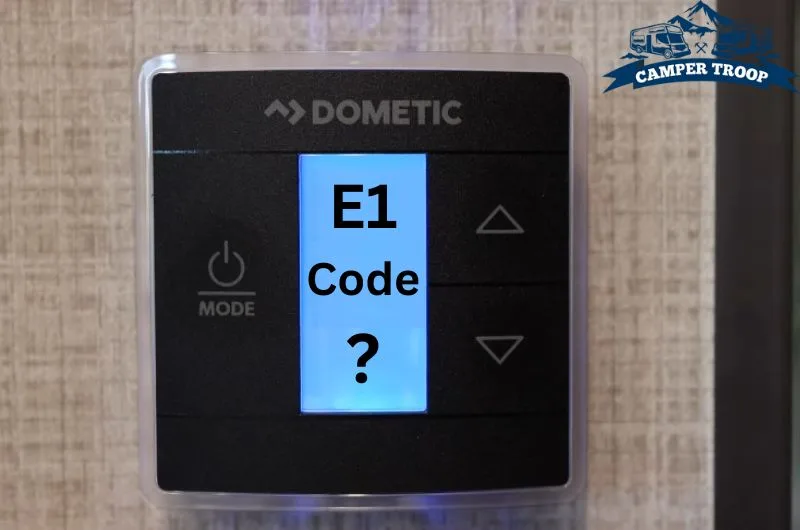
Image source: Bing (Web (fair-use with source credit))
Modern Dometic units with digital control panels display error codes on the screen. These codes tell you exactly where the system sees a fault. Here is what the most common codes mean and what to do about them.
| Error Code | Meaning | Likely Cause | What to Do |
|---|---|---|---|
| E1 | Room temperature sensor failure | Faulty thermistor in the thermostat or control board | Replace the thermostat or the sensor probe. Cost: $15 to $60 |
| E2 | Evaporator coil sensor failure | Coil temperature sensor open or shorted | Replace the evaporator coil sensor. Part is about $10. Splice the wires or replace the harness |
| E3 | Condenser coil sensor failure | Outdoor coil temperature sensor fault | Same as E2 but the sensor is on the roof. Access it under the shroud |
| E4 / E5 | Communication error between thermostat and control board | Loose wiring, bad connection, or dead thermostat batteries | Check wiring connections. Replace thermostat batteries. Reset the system |
| F1 | Compressor overcurrent fault | Compressor drawing too many amps. Could be a bad capacitor, tight bearings, or low refrigerant | Test the capacitors first. If they test good, call a pro for compressor evaluation |
| F2 | High-pressure switch open | Pressure too high in the refrigerant loop. Usually dirty condenser coils or a bad fan motor | Clean the coils. Verify the condenser fan is running. If both are fine, the switch may be bad |
| F3 | Low-pressure switch open | Pressure too low. Usually a refrigerant leak or a clogged filter | Check the air filter. If it is clean, you likely have a refrigerant leak. Call a certified tech |
If your unit shows a code not listed here, consult the Dometic service manual for your model. The manual is available on the Dometic website. Enter your model number to get the correct document.
When to Fix It Yourself vs Call a Pro
Not every problem is a DIY fix. Some are simple. Some require specialized tools and certification.
Here is a honest breakdown.
Fix it yourself
You can handle these tasks safely with basic tools and a multimeter:
- Resetting breakers and fuses
- Cleaning or replacing air filters
- Cleaning condenser coils
- Clearing the drain pan and drain tube
- Replacing the thermostat batteries
- Replacing a start or run capacitor (after discharging it)
- Replacing the control board (label wires first)
- Tightening mounting bolts
- Replacing the roof gasket
- Replacing a fan motor (if you are comfortable with wiring)
- Checking and replacing fuses
Call a pro
These jobs require certification, specialized tools, or both:
- Refrigerant leak detection and recharge (requires EPA Section 608 certification)
- Compressor replacement (requires vacuum pump, manifold gauges, and refrigerant certification)
- Internal wiring harness replacement inside the sealed system
- Any repair that involves opening the sealed refrigerant loop
- Diagnosing intermittent faults that do not match any error code or symptom branch
The cost of a service call runs $100 to $200 just to show up, plus parts and labor. Compare that to the cost of a DIY capacitor swap at $15. It makes sense to try the simple fixes first.
But do not waste money on guesswork. If you have tested all the branches in this guide and the problem persists, call a certified mobile RV HVAC technician.
Maintenance Tips That Prevent Most Problems
A little regular maintenance goes a long way. Most Dometic AC failures are preventable with three simple habits.
Clean the air filter every month
Set a reminder on your phone. Pull the filter. Wash it with mild soap and water.
Let it dry completely. Reinstall it. A clean filter prevents freeze-ups, improves airflow, and cuts your power consumption by up to 15%.
Do this at least once a month during active use. Do it every two weeks if you camp in dusty areas.
Clean the condenser coils twice a year
Do this in the spring before camping season and again in the fall if you use the AC into autumn. Use a coil cleaner spray. Follow the directions.
Rinse with a gentle hose spray. Clean coils reject heat efficiently. They keep your compressor from overheating and short cycling.
Inspect the roof gasket annually
Look at the foam gasket between the AC unit and the roof. Check for cracks, compression, or gaps. Replace it if it shows any wear.
A leaking gasket causes water damage that can rot your roof and ruin interior walls. This is a $20 part that saves thousands in repairs.
Check the drain pan and tube each season
Climb up. Remove the shroud. Look at the drain pan.
Clear any debris. Pour a cup of water into the pan and watch it drain out the tube. If it does not flow freely, clear the blockage.
This takes five minutes and prevents water leaks.
Run the fan on High for 15 minutes before shutdown
After you turn off the compressor, let the fan run on High for 10 to 15 minutes. This dries the evaporator coils and the drain pan. It prevents mold growth and keeps the drain clear.
Many Dometic thermostats have a Fan Delay mode that does this automatically. Enable it if yours has that feature.
Protect your unit from low voltage
If you camp at parks with weak shore power, get a surge protector or an automatic voltage regulator. Low voltage (under 105V) stresses the compressor and kills capacitors. A hard start kit or soft start kit can help the compressor start under low voltage conditions.
The Micro-Air EasyStart is a popular option that reduces startup amps by up to 70%. It also keeps your generator happier if you run the AC off-grid.
Frequently Asked Questions
Why is my Dometic AC not cooling but the fan is running?
The most common cause is a bad start capacitor. The compressor hums but does not actually start. Test the capacitor with a multimeter.
If it reads more than 10% below the rated microfarads, replace it. Also check the air filter. A dirty filter causes freeze-ups that block airflow.
How do I reset my Dometic air conditioner?
Turn the unit off at the thermostat. Flip the breaker off for at least five minutes. Flip it back on.
Turn the unit on. If the control panel has a reset button, press it with a paperclip. For a hard reset, disconnect power at the pedestal for ten minutes.
Why is water dripping from my Dometic AC inside the RV?
The drain pan or drain tube is clogged. Climb onto the roof. Remove the shroud.
Clear the drain hole with a stiff wire or pipe cleaner. Flush with water. Also check that the drain tube is not kinked.
If the leak happens only during rain, the roof gasket is bad.
What does error code E1 mean on my Dometic AC?
E1 means the room temperature sensor in the thermostat has failed. Replace the thermostat or the sensor probe. The part costs about $15 to $60.
Unplug power before swapping it. The unit will run in a default mode until the sensor is replaced.
How often should I clean my Dometic AC filter?
Clean it every month during active use. If you camp in dusty, sandy, or smoky conditions, clean it every two weeks. A dirty filter is the most common cause of reduced cooling and freeze-ups.
It takes two minutes to wash and dry.
Can I run my Dometic AC on a generator?
Yes, but the generator needs to handle the startup surge. A 13,500 BTU unit draws about 10 amps running but up to 60 amps at startup. A 3500-watt generator can handle one AC unit plus basic appliances.
A soft start kit reduces the surge and makes the generator run smoother.
Final Decision Guide: What to Do Next Based on Your Situation
You have worked through the branches. Here is a summary of what to do based on your specific scenario.
| Your Situation | Most Likely Fix | Difficulty | DIY or Pro |
|---|---|---|---|
| Unit completely dead, no display | Check breakers, thermostat batteries, 12V circuit, fuse | Easy | DIY |
| Unit hums but does not cool, compressor buzzing | Bad start capacitor. Test and replace it | Easy | DIY |
| Unit runs but blows warm air, fan working | Check air filter. Look for frozen coil. Test capacitors | Easy to moderate | DIY |
| Water leaking inside, no rain | Clean drain pan and tube. Check if unit is level | Easy | DIY |
| Water leaking inside, happens during rain | Replace roof gasket | Moderate | DIY |
| Loud scraping, clicking, or squealing noise | Fan blade hitting shroud or bad fan bearing | Moderate | DIY |
| Unit short cycles, runs a few minutes then stops | Clean condenser coils. Check air filter. Verify thermostat | Easy | DIY |
| Error code E4 or E5 on display | Check wiring connections. Replace thermostat batteries | Easy | DIY |
| Error code F2 or F3 on display | Clean condensers or call a pro for refrigerant | Moderate to pro | Depends |
| You have tested everything and the problem remains | Call a certified mobile RV HVAC technician | Pro | Pro |
One last thing. If your Dometic AC is more than ten years old and you have a major failure like a seized compressor or a leaking evaporator coil, consider replacement rather than repair. A new 13,500 BTU Dometic rooftop unit costs about $1000 to $1500 installed.
That is close to the cost of a compressor replacement plus the labor, and you get a new warranty and better efficiency. As of 2026, the newer units also use R-410A refrigerant, which is more environmentally friendly and easier to service than the older R-134a systems.
Work through the decision tree one branch at a time. Start with the simplest checks. Power, airflow, capacitors.
That combination resolves the vast majority of Dometic AC problems. You have the knowledge now. Go fix it.

Similar Posts