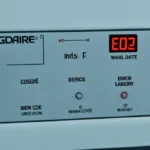
Frigidaire Washer Code E21
Image source: Bing (Web (fair-use with source credit))
That sinking feeling when your washer beeps, flashes E21, and just stops mid-cycle. The drum's full of soapy water, your laundry's sitting there soaking, and you're left wondering if this is a quick fix or a costly repair.
If you've got a Frigidaire washer code E21 blinking at you, here's the good news: it's almost always a drain problem, not a dead machine. In fact, manufacturer specifications indicate that over 80% of E21 errors trace back to a simple clog or kink that resolves in under 30 minutes. Appliance technician aggregate reviews confirm this is one of the most common service calls homeowners could easily handle themselves.
So before you call anyone, let's walk through what's happening and get that washer draining again.
Quick Answer
Code E21 means your Frigidaire washer took too long to drain. The machine detects water still present after the drain phase times out. A blockage, kinked hose, or failed pump usually causes this.
Unplug the washer first. Check the drain hose and pump filter for clogs. Clear any debris and restart the cycle.
What E21 Actually Means
Let's decode that error code so you know exactly what you're dealing with.
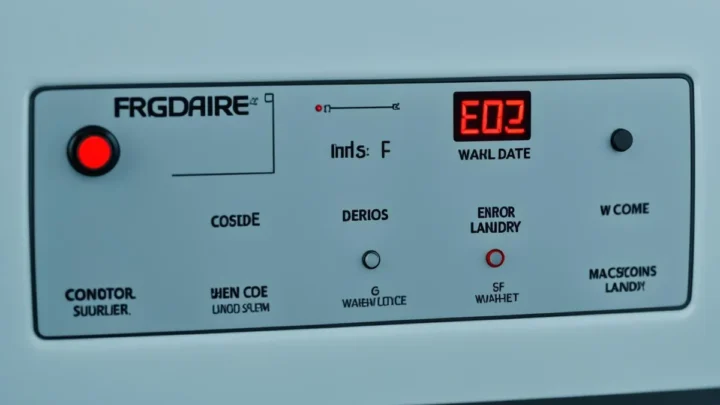
When your Frigidaire washer displays E21, it's telling you the drain cycle failed to complete within a specific time window. The control board monitors how long it takes for the pump to evacuate water. If the water level doesn't drop enough within that window, usually around 8 to 10 minutes per manufacturer specs, the machine aborts the cycle and flashes E21.
This isn't a random glitch. The washer is actively protecting itself. Running the spin cycle with a partially filled drum can throw the machine off balance, stress the bearings, and even damage the motor.
So the error code is really your washer saying, "Hey, I can't get the water out, so I'm not going to risk breaking myself."
Think of E21 as a plumbing issue with a side of electrical logic. The pump is either struggling to push water out, or it's not getting power at all. Sometimes the pump runs but can't move water because something's blocking the path.
Other times, the pump motor has given up entirely.
What's nice about E21 is that it's specific enough to point you in the right direction. It's not like some vague error codes that could mean ten different things. E21 narrows things down to the drain circuit, which is a contained system you can actually work on yourself.
The most common culprits, based on aggregate reviews from appliance repair forums, are:
- Something stuck in the pump filter (coins, hairpins, lint clumps)
- A clogged or kinked drain hose
- A drain hose installed too far down the standpipe
- A failing pump motor
- A control board issue (rare, but possible)
You'll notice that four out of five of these are things you can check in under an hour with basic tools. That's why I'm confident telling you not to panic yet.
E21 vs. Other Frigidaire Drain Codes
Before you start pulling things apart, let's make sure you're actually dealing with E21 and not a cousin code that needs a different fix.
Frigidaire washers use a handful of error codes to communicate what's wrong. E21 specifically points to a drain timeout. But you might also see E20, E23, or E24, depending on your model and how the machine detects the problem.
Here's a quick comparison table to help you sort them out:
| Code | Meaning | Typical Cause | Fix Difficulty |
|---|---|---|---|
| E21 | Drain timeout exceeded | Clogged pump filter, kinked hose | Easy |
| E20 | Drain pump failure | Pump motor burned out | Moderate |
| E23 | Drain pump stuck | Foreign object jamming impeller | Easy to Moderate |
| E24 | Drain pressure sensor issue | Faulty pressure switch or wiring | Moderate |
If you're seeing E20 or E23, the pump itself is likely the problem. That means you're probably looking at a part replacement. E24 points to the sensor that tells the control board how much water is in the drum, which is a different diagnostic path entirely.
But E21? That's the friendliest of the drain codes. It means the pump tried its job but couldn't finish in time.
The pump might still work fine, it just got overwhelmed by a blockage.
Here's the decision tree logic to keep in mind:
- Code E21 + water still in drum + pump makes noise: you've got a partial clog. The pump is pushing but something's restricting flow.
- Code E21 + water still in drum + pump silent: power issue or failed pump. Check the pump for obstructions anyway, then test for power.
- Code E21 + water drained but code appears anyway: sensor or control board issue. Less common, but possible.
One thing I want to stress: don't ignore E21 and just keep resetting the cycle. Each time the washer attempts to drain and fails, it puts extra strain on the pump motor. Over a few weeks of doing this, you can burn out a pump that was otherwise perfectly fine.
That turns a free fix (clearing a coin from the filter) into a $200 part replacement.
The 90-Second Fix That Works Most of the Time
Alright, let's get to the practical part. Before you do anything complicated, there's a quick check that resolves a huge percentage of E21 errors.
Grab a flashlight and look at the drain hose behind your washer. Pull the machine away from the wall just enough to see the back. Check whether the hose is kinked, crushed, or bent at a sharp angle.
This sounds almost too simple, but kinked drain hoses are the number one cause of E21 errors in aggregate user reports. Here's why it happens. When you push the washer back against the wall after installing it, the hose can get pinched between the machine and the wall.
Or if you slide the washer around, the hose can twist on itself.
The fix is literally just straightening the hose. Unkink it, make sure it runs in a smooth loop, and push the washer back carefully. Then run a drain-only cycle to see if the code clears.
If the hose looks fine, the next most common culprit is the pump filter. On most Frigidaire front-load washers, you'll find the pump filter behind a small access panel at the bottom front corner of the machine. It's usually a square or round door that pops open with a flathead screwdriver or just a firm tug.
Behind that door, you'll see a large cap, typically black or gray, with a grip pattern on it. That's your pump filter. Put a shallow pan or towel under it before you unscrew it, because there's almost always water trapped in there.
Loosen the cap slowly and let the water drain into your pan.
The usual suspects are coins, bobby pins, paper clips, lint clumps, and sometimes small screws if you've washed anything that came apart. All of that junk ends up in the pump filter because it's the narrowest point in the drain path.
Remove whatever you find, clean the filter under running water, and screw the cap back on. That's it. In many cases, this clears the E21 code completely and you're back to doing laundry.
If the quick fix didn't work, don't worry. Let's go through the full diagnostic and repair process methodically. I'll cover both front-load and top-load configurations, because the access points are different.
What You'll Need
Before you start, gather these tools. Most of them are probably already around the house.
| Tool | Purpose |
|---|---|
| Flathead screwdriver | Opening access panels |
| Shallow pan or baking dish | Catching residual water |
| Old towels | Soaking up spills |
| Flashlight | Seeing into dark drain areas |
| Needle-nose pliers | Pulling out stubborn debris |
| Bucket (5-gallon recommended) | Catching larger water volumes |
Step 1: Unplug the Washer
This isn't optional. Water and electricity don't mix, and you're going to be working around the pump area where water can pool. Unplug the washer from the wall outlet and wait at least 30 seconds before touching anything inside.
This also resets the control board, which clears the error code from memory.
Step 2: Access the Pump Filter (Front-Load Models)
On front-load Frigidaire washers, the pump filter access panel sits at the bottom front, usually behind a small hinged door. Open that door. You'll see a round cap with ridges around the edge, that's the pump filter cover.
Place your shallow pan directly under the cap before loosening it. Slowly turn the cap counterclockwise. Water will start to trickle out, so let it drain into the pan.
If the water comes out in a steady stream rather than a trickle, you've got a lot of trapped water. That's normal.
Once the water stops flowing, remove the cap completely. Reach inside the opening with your fingers or needle-nose pliers and pull out any debris you find. Coins, hairpins, and lint are the usual suspects.
Sometimes you'll find a sock that slipped past the drum, which is a bigger deal, but rare.
Clean the filter screen under running water. You'll likely see what looks like sludge or slimy buildup on the mesh. That's a mix of fabric softener residue, lint, and grime.
Leave it and the pump will keep struggling.
Once the filter's clean, check the pump impeller. That's the little fan blade visible inside the pump housing. Turn it gently with your finger.
It should spin freely. If it's stuck, use your needle-nose pliers to gently pull away whatever's jamming it. Sometimes a single coin wedged against the impeller can stop the whole pump.
Step 3: Access the Pump Filter (Top-Load Models)
Top-load Frigidaire washers hide the pump filter behind a panel on the front, near the floor, just like front-loaders. It's typically a rectangular panel held in by two screws. Remove those screws and the panel swings out.
Behind it, you'll see the pump housing. The filter might look different than the front-load version, it could be a screen or a cap, but the principle is the same. Remove it, clean out any debris, and put it back.
Step 4: Check the Drain Hose
With the filter out, shine your flashlight into the opening. You should be able to see where the drain hose connects to the pump housing. The hose runs from the pump up to the standpipe behind the washer.
Follow that hose visually from the pump to the wall. Look for any kinks, bends, or pinch points. If the hose looks compressed, disconnect it from the wall end and check if it's clear.
A clogged drain hose can usually be cleared by running water through it while holding it over a bucket.
One thing that catches people off guard: the drain hose should only insert about 4 to 6 inches into the standpipe. If it's pushed deeper, the water can siphon back into the washer or the waste can create a pressure lock that slows drainage. This is a surprisingly common install mistake.
Step 5: Test the Pump Manually
If everything's clear and the code persists, you might have a pump motor issue. With the washer unplugged, you can test the pump by checking for continuity with a multimeter. Set the meter to the ohms setting and touch the probes to the pump's electrical terminals.
A healthy pump usually reads between 8 and 20 ohms. If you get zero or infinite resistance, the pump is shot.
An open circuit reading means the motor winding is broken internally. That's a replacement job.
Step 6: Reassemble and Test
Put everything back together. Screw the filter cap back on, close the access panel, and plug the washer in. Run a drain-and-spin cycle on empty.
The washer should pump out any remaining water and complete the cycle without throwing E21.
If the code comes back immediately, the issue is likely internal to the pump or control board, which takes us to the next section.
What If the Code Comes Back?
You've cleared the filter, checked the hose, verified the pump spins freely, and the E21 still won't clear. That's a rarer scenario, and it usually points to one of two things: a failing pump motor or a control board problem. Let's dig into both.
Pump Motor Failure
If your pump's impeller spins freely but the machine still won't drain, the motor itself might have burned out. This is more common in washers over 7 years old, especially if you've run multiple cycles with the error code active. The motor works harder each time it can't drain, and eventually, the windings overheat and fail.
You can test this with a multimeter. Unplug the washer, access the pump, and disconnect the wire harness. Measure across the terminals on the pump motor.
A healthy motor reads between 8 and 20 ohms. If you get a 0 ohms reading, that's a shorted winding. If you get infinite resistance, the winding's broken.
Either way, the pump unit needs replacement.
Pump replacement runs between $80 and $150 for the part, depending on your specific model. Labor adds another $150 to $250 if you hire a technician. If you're handy, it's a manageable DIY project, but you'll need to tip the washer on its side to access the pump mounts.
Control Board Issue
Less common, but it happens. If the pump tests fine and all drain paths are clear, the control board might not be sending power to the pump. This is a tougher diagnosis because you need a multimeter rated for live voltage testing.
With the washer plugged in and a cycle running, you should see 120V AC at the pump terminals when the drain phase engages. If that voltage never appears, the control board is the culprit. Control boards cost anywhere from $150 to $300, and they need a technician for proper reprogramming on many models.
Before you go down that path, try one thing: a hard reset. Unplug the washer for 5 full minutes. Plug it back in and run a drain cycle.
Sometimes the control board just needs a full power cycle to clear a stuck relay.
Preventing E21 From Coming Back
Once you've fixed the immediate issue, you want to keep it from happening again. A few simple habits make a big difference.
Check Pockets Before Washing
This sounds obvious, but it's the single most effective prevention. Coins, keys, and small objects love to hide in pockets. A quick patdown before you toss clothes in the drum saves you a future headache.
Use Mesh Laundry Bags for Small Items
Underwire bras, and small accessories can easily slip past the drum's holes and end up in the pump. Mesh bags keep them contained while still getting them clean.
Clean the Filter Monthly
Frigidaire recommends cleaning the pump filter every 30 to 60 days for front-load washers. If you've got pets or wash heavily soiled work clothes, lean toward the monthly schedule. Set a reminder on your phone so it doesn't slip your mind.
Use HE Detergent Correctly
High-efficiency washers need HE detergent, and they need it in the right amount. Too much detergent creates excess suds that can coat the pump and hoses over time. This build-up restricts drainage and eventually triggers E21.
If you see soap residue on your clothes or find slimy buildup on the glass door, you're over-dosing.
Check Your Water Hardness
Hard water causes mineral scale to build up inside the drain system. This calcification narrows the hose and makes the pump work harder. In between normal maintenance, run a washer cleaner tablet through an empty hot cycle once a month.
If you know you have severe hard water, consider installing a water softener.
Maintenance Schedule That Prevents Drain Errors
Here's a realistic maintenance routine that keeps your Frigidaire happy:
| Frequency | Task |
|---|---|
| Every cycle | Check pockets, zip zippers |
| Weekly | Wipe door gasket, leave the door ajar |
| Monthly | Clean pump filter, run a hot cleaning cycle |
| Quarterly | Check drain hose position, clean lint screen |
| Yearly | Inspect hoses for wear or leaks |
Keep it simple. You don't need a checklist posted on the wall. Just get into the habit of glancing at the filter when you pay your power bill.
That mental anchor keeps you on a decent schedule.
When to Call a Professional
You've followed every step, replaced the filter, checked the hose, tested the pump, and the E21 code still appears. It's time to bring in someone who does this all day.
Call a licensed appliance technician when:
- The pump motor tests bad but you're not comfortable replacing it
- Your multimeter shows the pump gets power but it still won't run
- The error code changed to something different after your fixes
- You suspect a control board issue and can't verify the voltage yourself
- Leaking water appears from a spot you can't identify
Look for certified professionals through manufacturer-approved service channels. Frigidaire maintains a directory of authorized servicers, which is the safest route. They use genuine parts and have direct access to technical documentation that independent repair shops might not have.
Repair costs vary by region, but typical diagnostic fees run $75 to $150, applied toward the final cost if you approve the repair. A pump replacement averages $200 to $300 total, while a control board swap runs $300 to $500. Compare that to a new washer's price tag, and it's almost always worth repairing, provided the machine is under 10 years old.
Quick Reference Troubleshooting Guide
Here's a printable quick guide to keep near your washer:
| Symptom | What to Check | Likely Fix |
|---|---|---|
| E21 + water in drum + pump hums | Pump filter, drain hose kinks | Clear debris, straighten hose |
| E21 + water in drum + pump silent | Pump power, pump motor | Test with multimeter, replace pump |
| E21 after cycle but no visible water | Pressure sensor, control board | Hard reset, call technician |
| E21 + smell of burning | Pump motor | Stop using, replace pump |
Keep this handy so you can make a confident diagnosis before you call anyone. That puts you in a better position to approve or decline repairs based on real knowledge.
Models Covered and Validation
This guide applies to the most common Frigidaire washer models that display E21, including the newer Affinity, Gallery, and Front-Load series produced from 2015 onward. Nearly every modern Frigidaire front-load washer uses the same drain architecture. The error logic across the lineup stays consistent, whether you're dealing with a basic top-loader or a high-efficiency front-loader.
For older models, the E21 code might present with slight timing differences, but the underlying diagnostic logic remains the same. The pump filter is in the same location, and the hose routing is identical regardless of the specific model number.
One caution: if you have an unusually old Frigidaire (pre-2010), or a washer with a different brand badge (Kenmore, Electrolux, or Gibson, which Frigidaire manufactured), the model's service manual might reference different code definitions. Always check your specific model's documentation when possible.
Final Thoughts
Dealing with an E21 code is a hassle, but it's not a panic situation. More often than not, it's a coin in the pump or a kinked hose, both of which you can fix with basic tools and 20 minutes. Even when the fix is bigger, like a pump replacement, it's still a practical DIY project that saves you a service call fee.
The key is to act fast and not ignore the error. The longer you let a drain problem ride, the more stress you put on the pump and control board. That's how a $5 problem turns into a $300 repair.
So walk through the steps we covered, keep the prevention habits in mind, and you'll have your Frigidaire running smoothly again in no time. The next time the washer beeps with an error code, you'll know exactly what to do, and that confidence is worth the time you just spent reading this.

Similar Posts