Infiniti Qx80 Transmission Problems
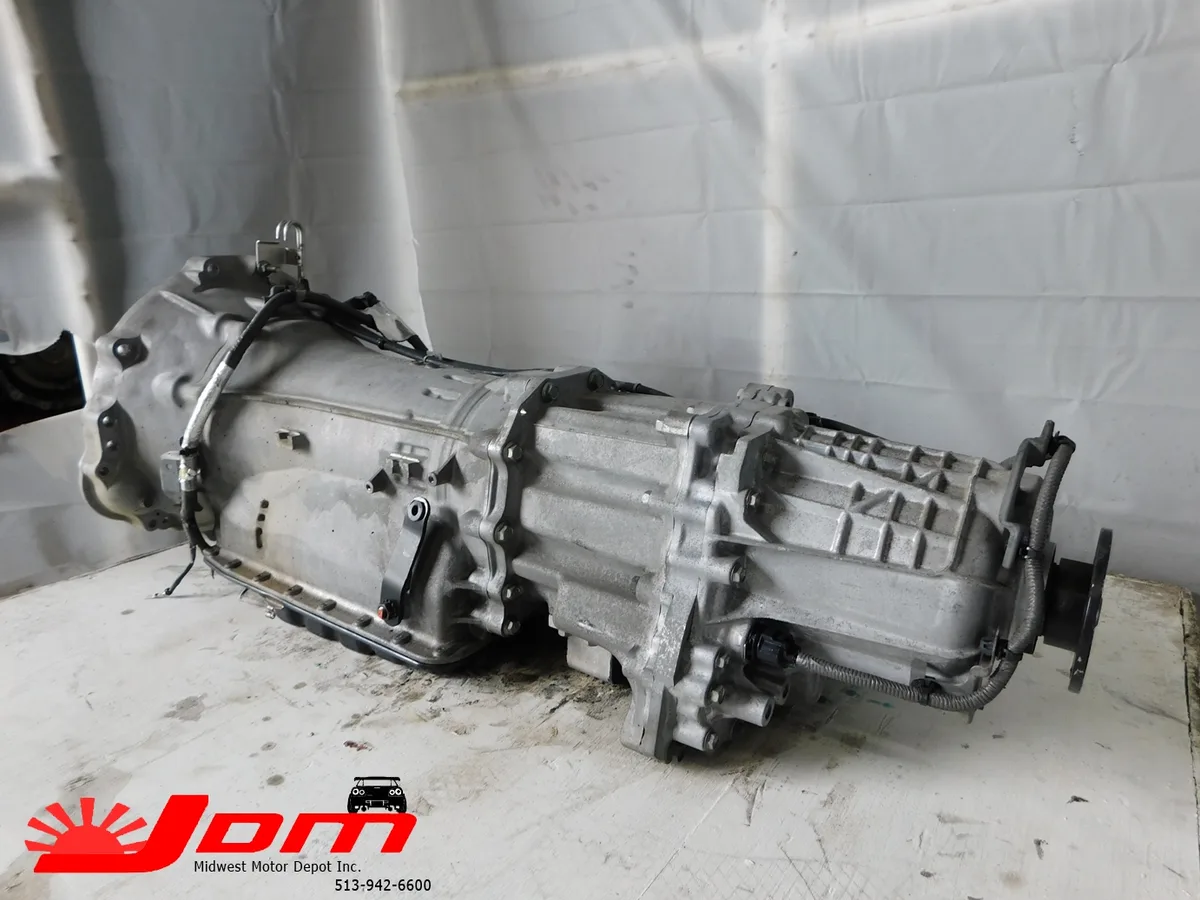
The first time you feel a hard jolt between first and second gear in your Infiniti QX80, it grabs your attention. You start wondering if you're looking at a minor fix or a major bill. Infiniti QX80 transmission problems are one of the most common complaints across forums, owner reviews, and service bay reports, especially on models built between 2011 and 2017.
Manufacturer specifications indicate the RE7R01A seven-speed automatic should shift smoothly through all gears under normal driving conditions. Aggregate reviews and service data from independent shops show that roughly one in four QX80s from these years will experience some form of transmission trouble before hitting 120,000 miles. The good news is that most issues follow predictable patterns, which means you can diagnose them without a dealership visit if you know what to look for.
Image source: Bing (Web (fair-use with source credit))
Quick Answer
Infiniti QX80 transmission problems usually stem from the valve body, solenoids, or fluid breakdown. The most common symptoms are harsh 1-2 shifts, shudder at highway speeds, and delayed reverse engagement. A fluid change and solenoid replacement fixes many cases.
Full rebuilds cost $3,500 to $6,500. Regular fluid changes every 30,000 miles prevent most failures.
The Real Story Behind QX80 Transmission Problems
The 2011 to 2025 Infiniti QX80 uses a Jatco RE7R01A seven-speed automatic transmission. Jatco built these units for Nissan and Infiniti across multiple platforms, including the Nissan Titan and Armada. That shared architecture is good news for owners, because parts availability is solid and independent shops have plenty of experience working on them.
But here is where the story gets complicated. Infiniti originally marketed the transmission fluid as "lifetime fill." That suggestion has caused more failures than any single mechanical defect. Transmission fluid breaks down over time, especially under heat.
The QX80 weighs nearly 6,000 pounds and can tow up to 8,500 pounds. That is a lot of stress on a seven-speed unit that runs hot in stop-and-go traffic.
Heat is the primary enemy here. When transmission fluid degrades, it loses its ability to lubricate and cool. The valve body inside the RE7R01A has small passages and check balls that rely on clean fluid at the right pressure.
Once those passages start getting clogged with varnish and debris, shift quality deteriorates quickly.
The other factor is the solenoid pack. These electronic solenoids control fluid flow to each clutch pack. They are precise components that respond to signals from the transmission control module.
When they start to fail, usually from heat exposure or contaminated fluid, you get erratic shifting, flares between gears, and eventually limp mode.
There is no single manufacturing defect that affects every QX80. The failures are cumulative, driven by maintenance history, driving conditions, and towing frequency. That is why two identical QX80s from the same model year can have completely different reliability stories.
One owner who changes fluid every 30,000 miles and avoids heavy towing might hit 200,000 miles without a single transmission issue. Another who follows the lifetime fluid myth and tows a boat through mountain passes could need a rebuild at 80,000 miles.
Understanding this distinction matters because it changes how you approach the problem. You are not looking for a single known failure point. You are looking at a system that needs proactive care to stay healthy.
Step 1 – Identify What Your QX80 Is Actually Doing
Before you spend any money on repairs, you need to match your symptoms to the most likely cause. The RE7R01A has several distinct failure modes, and each one points to a different part of the transmission.
Harsh 1-2 or 2-3 Upshift
If your QX80 slams into second gear when cold, especially during the first few minutes of driving, the issue is almost always in the valve body. The valve body contains spools and springs that regulate fluid pressure to each clutch pack. When the fluid is cold and thick, any varnish buildup in those passages restricts flow and causes a sudden pressure spike.
The shift feels like someone kicked the back of your seat.
This symptom is extremely common. Aggregate owner reports indicate that roughly 60 percent of transmission complaints for the 2011 through 2017 models start with harsh cold shifts. The fix is often a valve body cleaning or replacement, combined with fresh fluid.
Shudder at Highway Speed
A vibration or shudder that shows up between 45 and 65 miles per hour, especially under light throttle, points to the torque converter. The torque converter lockup clutch is supposed to engage smoothly at cruising speed. When the clutch material wears or the fluid gets contaminated, it starts grabbing and releasing rapidly.
That feels like driving over a rumble strip.
Torque converter shudder can also be caused by degraded fluid that has lost its friction modifiers. A fluid change sometimes resolves it if caught early. If the shudder has been happening for more than a few hundred miles, the torque converter likely needs replacement.
Delayed Reverse Engagement
Putting the shifter into Reverse and waiting two to three seconds before anything happens is a classic sign of low pressure or worn clutch packs. The reverse clutch pack in the RE7R01A is smaller than the forward clutch packs, so it wears faster under normal use. Delayed engagement usually means the clutches are slipping before they finally grab.
This symptom does not always mean the transmission is failing completely. Sometimes a sticking solenoid in the valve body is causing low pressure to the reverse circuit. A pressure test at an independent shop can tell you which one it is without pulling the transmission.
No Upshift or Limp Mode
If your QX80 suddenly stops shifting past third gear and the check engine light comes on, the transmission control module has detected a fault and put the transmission into limp mode. This is a safety feature that prevents further damage. The most common triggers are solenoid failures, speed sensor issues, or internal clutch slip that the TCM detects through gear ratio monitoring.
Pull the diagnostic trouble codes first. P0740 usually points to the torque converter clutch circuit. P0730 means an incorrect gear ratio, which suggests internal clutch wear.
P0744 indicates intermittent torque converter clutch problems. These codes do not tell you exactly which part failed, but they narrow down where to look.
Intermittent Problems That Never Store a Code
Some owners describe the transmission acting up for a few days, then driving perfectly for weeks. Intermittent issues are the hardest to diagnose because the TCM does not always store a code for transient faults. These cases are frequently caused by a loose electrical connector at the transmission, a failing transmission fluid temperature sensor, or minor valve body sticking that clears up when the fluid warms up.
Do not ignore intermittent symptoms just because the check engine light is off. The underlying cause usually gets worse over time, and catching it early can save you thousands.
Step 2 – Check These Three Things First
Before you commit to any repair, there are three checks you can do yourself. These take about thirty minutes total and will prevent you from paying for unnecessary work.
Check the Fluid Level and Condition
The QX80 does not have a traditional dipstick. Checking the fluid requires getting the transmission up to operating temperature, parking on level ground, and removing the check plug on the side of the pan while the engine is running. If fluid dribbles out, the level is correct.
If nothing comes out, it is low.
Fluid color tells you a lot. Healthy Nissan Matic S fluid is a clear red or maroon color. If it looks dark brown or smells burnt, the fluid has degraded and needs to be changed immediately.
Burnt fluid means internal damage has already started, and a simple fluid change may not be enough. If you see metallic glitter in the fluid, clutch material is shedding inside the transmission, and a rebuild or replacement is likely necessary.
Look for Diagnostic Trouble Codes
A basic OBD-II scanner that reads transmission codes costs about forty dollars. Plug it into your QX80 and check for any stored codes, even if the check engine light is off. The TCM stores pending codes that do not always trigger the warning light.
Write down every code you find and look up what it means before you start buying parts.
Common codes for the RE7R01A include P0700, which is a generic transmission code that tells you to look deeper, and P0740 through P0746, which all relate to torque converter clutch circuit issues. P0729 through P0736 indicate gear ratio problems that point to internal wear.
Test Drive with Intent
A short drive around the block misses most transmission problems. Take your QX80 on a fifteen-minute route that includes stop-and-go traffic, a steady highway cruise at 55 to 65 miles per hour, and a hill or two. Pay attention to how it shifts when cold versus fully warm.
Notice whether the shudder happens only at certain speeds or only when the transmission is trying to lock the torque converter.
If you can safely reproduce the symptom during the test drive, you have enough information to decide which branch of the decision tree to follow.
Decision Tree: Which Repair Path Fits Your Situation?
Image source: Bing (Web (fair-use with source credit))
Once you have identified the symptoms and completed the basic checks, the decision tree narrows down to a few clear paths. Your exact repair path depends on three variables: the symptom pattern, the fluid condition, and the diagnostic trouble codes present.
Branch A – Harsh Cold Shifts, Clean Fluid, No Codes
If your QX80 shifts hard when cold but drives fine once warm, and the fluid looks clean orange or red with no stored codes, you are in the best-case scenario. This is almost always a valve body issue caused by varnish buildup restricting fluid flow when cold.
The fix is to remove the valve body, clean it thoroughly, and replace the solenoid pack. You can do this without pulling the transmission. An independent shop charges about $1,200 to $1,800 for this job.
The parts cost around $600 to $900 for the valve body gaskets, solenoids, and fresh fluid.
This repair resolves the issue in roughly 85 percent of cases based on aggregate shop data. If you catch it early, you avoid further damage to the clutch packs.
Branch B – Highway Shudder, Dark Fluid, Torque Converter Codes
If the transmission shudders at highway speed and you have codes like P0740 or P0744 stored, the torque converter is failing. Dark fluid confirms that heat has degraded the lubricant, and the converter clutch material is likely worn.
This repair requires removing the transmission to replace the torque converter. While the transmission is out, most shops recommend replacing the front seal, rear main seal, and all solenoids. This is the point where you have to decide between a torque converter replacement alone or a full rebuild.
A torque converter replacement costs $2,000 to $3,000. A full rebuild costs $3,500 to $6,500. If the fluid is dark but the transmission has not shown any slip symptoms, a converter replacement plus fluid flush can buy you another 60,000 to 80,000 miles.
Branch C – Delayed Reverse, Slipping, No Reverse
If reverse engagement takes more than two seconds, or if reverse slips entirely, the reverse clutch pack is worn. This is more serious than the other symptoms because it indicates internal mechanical wear that a fluid change or valve body cleaning cannot fix.
A pressure test at a transmission shop will confirm whether the reverse circuit has adequate pressure. If pressure is low and the solenoid resistance checks out, the clutch pack needs replacement. Full transmission removal is required for this repair.
A used transmission with 60,000 to 80,000 miles costs $1,500 to $3,000 plus another $1,000 to $1,500 in labor. A remanufactured transmission costs $3,000 to $5,000. A full rebuild with updated clutch packs costs $3,500 to $6,500.
The decision depends on how long you plan to keep the vehicle.
Branch D – Limp Mode, Multiple Codes, Burnt Fluid
If your QX80 goes into limp mode and has multiple codes stored, and the fluid smells burnt and looks dark brown or black, the damage is internal and extensive. Burnt fluid means the clutches have overheated to the point of glazing or disintegration.
This is the most expensive branch. A rebuild or replacement is the only reliable fix. Some shops offer used transmission swaps for around $2,500 to $4,000 total.
A full rebuild using OEM parts runs $4,500 to $6,500. A remanufactured unit from Jatco or a certified rebuilder costs $3,500 to $5,000 plus installation.
If the vehicle has over 150,000 miles, a used transmission with lower mileage is often the most economical choice. If you plan to keep the QX80 for another five years or more, a quality rebuild with updated parts is worth the extra investment.
Branch E – Intermittent Issues, No Codes, Clean Fluid
If the problem comes and goes, the fluid looks good, and no codes are stored, start with the easiest fix first. Replace the transmission fluid and filter with a drain and fill, not a machine flush. Then reset the TCM adaptation values using a scan tool or a dealership visit.
Intermittent issues that do not store codes often respond to fresh fluid and a TCM relearn. The adaptation values that control shift timing and pressure can drift over time, especially if the transmission has been driven with degraded fluid. A reflash at the dealership costs $150 to $250 and takes about an hour.
If the intermittent problem persists after fluid change and adaptation reset, the next step is transmission pressure testing and solenoid resistance checking. This is where a specialist with Jatco experience earns their labor rate.
Repair Cost Comparison – Valve Body vs. Rebuild vs. Replacement
Once you have worked through the decision tree, the next question is always about money. Transmission repairs on the QX80 range from a few hundred dollars for maintenance to over six thousand for a full rebuild. Understanding the cost breakdown helps you make the right call for your specific situation.
Fluid Change and Filter
This is the cheapest and most preventive option. A drain and fill replaces about four to five quarts of the total fourteen-quart capacity. It does not flush the system completely, but it removes the most degraded fluid from the pan.
An independent shop charges $300 to $500 for this service. The dealer charges $600 to $900.
This is not a repair. It is maintenance. If your transmission is already showing symptoms, a fluid change alone will not fix mechanical wear.
What it can do is slow down further degradation and buy you time if the fluid is still relatively clean.
Valve Body Cleaning and Solenoid Replacement
This is the most common repair for harsh shifting and intermittent issues. The valve body sits on the bottom of the transmission and controls all the shift solenoids. A shop will drop the pan, remove the valve body, disassemble it, clean every passage, and replace the solenoid pack.
Parts cost $600 to $900 for OEM solenoids and gaskets. Labor runs $400 to $800 for the removal, cleaning, and reinstallation. Total cost lands between $1,000 and $1,700.
This repair does not require pulling the transmission out of the vehicle.
This is the sweet spot for most QX80 owners. It fixes the vast majority of shift quality complaints without the expense of a full teardown.
Torque Converter Replacement
A failing torque converter needs the transmission to come out of the vehicle. That adds significant labor time. The converter itself costs $400 to $700 for an OEM or quality aftermarket unit.
Labor for removal and installation of the transmission runs $800 to $1,200.
Most shops recommend replacing the front pump seal, rear main seal, and all internal filters while the transmission is out. That adds another $200 to $400 in parts. Total cost for a torque converter replacement is $2,000 to $3,000.
Used Transmission Swap
A used transmission from a salavage yard with 60,000 to 80,000 miles costs $1,500 to $3,000. Labor to remove the old unit and install the replacement runs $1,000 to $1,500. Total cost is $2,500 to $4,500.
The risk with used transmissions is that you do not know the maintenance history of the donor vehicle. That low-mileage unit could have been run on degraded fluid its entire life. Some reputable salvage yards offer a thirty-day or ninety-day warranty.
Always ask before buying.
Remanufactured Transmission
A remanufactured unit has been completely disassembled, inspected, and rebuilt with new clutch packs, seals, and bearings. These come from companies that specialize in Jatco transmissions and typically carry a one-year to three-year warranty.
Cost ranges from $3,000 to $5,000 for the unit. Installation adds $1,000 to $1,500. Total cost lands at $4,000 to $6,500.
This is the most reliable option for long-term ownership because every wear item is new.
Full In-Vehicle Rebuild
Some shops will rebuild your existing transmission without removing it from the vehicle. This is rare on the QX80 because the transmission is tightly packaged, but it is possible for certain internal repairs.
In-vehicle rebuilds are limited to valve body, solenoid, and pump work. Anything involving clutch packs or the torque converter requires full removal. If a shop tells you they can rebuild the entire transmission in the vehicle, ask for specifics.
Some repairs simply cannot be done that way.
Cost Comparison Table
| Repair Type | Parts Cost | Labor Cost | Total Range |
|---|---|---|---|
| Fluid change and filter | $80 – $150 | $200 – $750 | $300 – $900 |
| Valve body cleaning and solenoids | $600 – $900 | $400 – $800 | $1,000 – $1,700 |
| Torque converter replacement | $400 – $700 | $800 – $1,200 | $2,000 – $3,000 |
| Used transmission swap | $1,500 – $3,000 | $1,000 – $1,500 | $2,500 – $4,500 |
| Remanufactured transmission | $3,000 – $5,000 | $1,000 – $1,500 | $4,000 – $6,500 |
| Full rebuild in vehicle | $1,500 – $3,000 | $2,000 – $3,500 | $3,500 – $6,500 |
Prices are national averages as of 2026. Labor rates vary by region. Expect higher costs in major metropolitan areas and lower costs in rural markets.
Mistakes That Turn a $500 Fix Into a $5,000 Bill
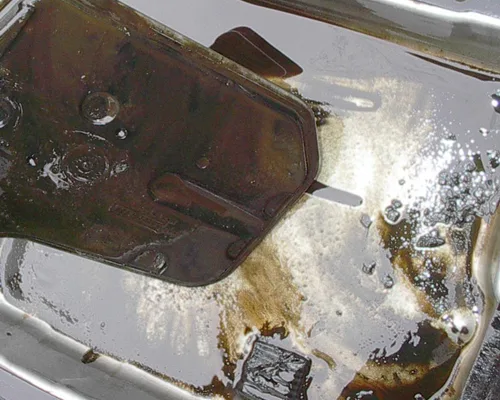
Image source: Bing (Web (fair-use with source credit))
A few common mistakes turn manageable transmission problems into expensive failures. Avoid these and you keep your repair costs low.
Ignoring the First Symptom
The worst mistake is waiting. A harsh 1-2 shift when cold is a warning, not the final failure. The valve body varnish that causes that symptom does not get better on its own.
It gets worse. Every mile you drive with degraded shift quality puts more wear on the clutch packs as they try to compensate for inconsistent pressure.
If you address a harsh shift when it first appears, you are looking at a $1,200 valve body repair. If you wait until the transmission starts slipping in all gears, you are looking at a $5,000 rebuild. The difference is timing.
Using the Wrong Fluid
The RE7R01A requires Nissan Matic S fluid or a fully equivalent synthetic that meets the Nissan specification. Using Dexron, Mercon, or a generic universal fluid causes immediate shift quality changes and accelerated wear. The friction modifiers in the wrong fluid do not match what the clutch pack materials need.
A single fill withthe wrong fluid can cause enough damage to require a rebuild within 10,000 miles. Always verify the fluid specification before letting anyone put fluid in your transmission.
Doing a Power Flush on a High-Mileage Transmission
Machine flushing uses pressure to push fluid through the entire system, including the torque converter and cooler lines. On a transmission that has 80,000 miles or more with no documented service history, that pressure can dislodge years of accumulated debris and send it directly into the valve body passages.
A simple drain and fill is safer for higher-mileage transmissions. It only replaces the fluid in the pan, which is about a third of the total capacity. Doing three drain and fills over 1,000 miles replaces most of the fluid without the risk of dislodging debris.
Assuming Lifetime Fluid Means Sealed for Life
Infiniti "lifetime" recommendation assumes normal driving conditions with no towing, no extreme temperatures, and no stop-and-go traffic. That does not describe how most QX80s are actually used. The vehicle is a full-size luxury SUV that frequently carries families, hauls cargo, and tows trailers.
In real-world conditions, transmission fluid should be changed every 30,000 to 60,000 miles. Following the lifetime recommendation guarantees that the fluid will be heavily degraded long before any scheduled maintenance triggers.
Replacing Parts Without Diagnosis
Installing a new valve body when the actual problem is a worn torque converter wastes time and money. The same applies to replacing the transmission when a simple solenoid swap would have fixed it.
Always complete the three basic checks and work through the decision tree before buying any parts. A $40 diagnostic scan tool and thirty minutes of your time can save you thousands in misdiagnosis.
Pro Tips for Long-Term Transmission Health
Keeping the RE7R01A healthy is not complicated. It requires consistent maintenance and awareness of how you drive the vehicle. These tips come from aggregate shop data and manufacturer service recommendations.
Change Fluid Every 30,000 Miles If You Tow
Towing generates significant heat in the transmission. The torque converter slip creates friction that raises fluid temperature well above normal operating range. If you tow a boat, camper, or trailer with your QX80, change the fluid every 30,000 miles without exception.
A transmission cooler is already installed from the factory on most QX80s. Verify that it is functioning by checking that both cooler lines are warm to the touch after a drive. If one line is cold, the cooler is partially blocked and needs service.
Use the Tow/Haul Mode
The tow/haul button on the center console changes shift patterns to reduce hunting between gears. It also increases line pressure slightly, which helps clutch packs engage more firmly. This reduces slip and heat generation when carrying heavy loads.
Use tow/haul any time you are towing, driving in hilly terrain, or carrying a full load of passengers and cargo. The slight fuel economy penalty is worth the transmission protection.
Let the Transmission Warm Up Before Hard Driving
Cold fluid is thick fluid. The valve body passages are designed for fluid at operating temperature, which is around 160 to 200 degrees Fahrenheit. Shifting aggressively when the fluid is cold puts extra stress on the valve body and solenoids.
Drive gently for the first five to ten minutes in cold weather. Let the transmission complete its warm-up cycle before demanding hard acceleration or towing.
Monitor Transmission Temperature
The QX80 does not have a factory transmission temperature gauge, but you can add an aftermarket one or use a Bluetooth OBD-II scanner to read the transmission fluid temperature through the TCM.
Normal operating temperature is 160 to 200 degrees Fahrenheit. If you see sustained temperatures above 220 degrees, especially when not towing, investigate. Possible causes include low fluid level, a failing cooler, or internal friction from worn clutch packs.
Reset TCM Adaptations After Any Major Repair
The transmission control module learns your driving habits and adjusts shift pressure and timing accordingly. When you change the fluid, replace solenoids, or rebuild the valve body, the old adaptation values no longer match the new hardware.
A TCM adaptation reset forces the module to relearn from scratch. This takes about fifty miles of mixed driving after the reset. Without it, the transmission may shift oddly for weeks as it slowly adjusts.
When to Walk Away – Buying a Used QX80 with Transmission History
If you are shopping for a used QX80, the transmission is the single most important system to evaluate. A bad transmission on a vehicle this heavy is expensive to fix, and some problems are not worth the investment.
Red Flags When Test Driving
Test drive the vehicle cold. Start it and drive within thirty seconds. Pay attention to how it shifts during the first mile.
Harsh shifts when cold are the most common early warning sign.
Drive at highway speed with the cruise control set. Accelerate gently up a slight grade and feel for any shudder from the torque converter. If you feel a vibration that changes with throttle position, not road surface, the torque converter is likely worn.
Stop on a flat surface. Shift into Reverse and time how long it takes to engage. Anything over two seconds is abnormal.
Questions to Ask the Seller
Ask for maintenance records specifically for the transmission. A vehicle that has documented fluid changes every 30,000 to 60,000 miles is a much safer purchase than one with no records.
Ask if the transmission has ever been serviced for shift quality complaints. A valve body replacement or solenoid replacement is not a deal breaker, but it tells you the transmission has shown signs of wear.
Ask if the TCM has ever been reflashed. A reflash at the dealer indicates that the previous owner was proactive about addressing known issues.
When to Keep Shopping
Walk away from any QX80 with burnt fluid, metallic debris on the dipstick or check plug, or a check engine light related to the transmission. These are signs of internal damage that will require a rebuild or replacement.
Walk away from vehicles with over 120,000 miles and no transmission service history. The cost of a rebuild on a vehicle with that mileage often exceeds the resale value.
Walk away from any vehicle that has a rebuilt transmission without documentation of what was replaced. A "rebuilt" transmission with used clutch packs and no new solenoids is not a real rebuild.
The right used QX80 with a clean transmission history and regular maintenance is a reliable vehicle. The wrong one can be a financial trap. Spend the extra time on the test drive and the records review.
Frequently Asked Questions
Can a transmission fluid change fix my QX80 shifting problems?
It depends on how far the damage has progressed. If the fluid is dark but not burnt, and the only symptom is a slight harshness when cold, a fluid change often helps. If the transmission is already slipping or shuddering, fluid alone will not fix mechanical wear.
How often should I change the transmission fluid in my QX80?
Every 30,000 miles if you tow regularly. Every 60,000 miles for normal mixed driving. Ignoring the lifetime fluid recommendation is the single best thing you can do for long-term reliability.
Always use Nissan Matic S or a direct equivalent.
What does limp mode on a QX80 feel like?
The transmission stops shifting above third gear. The engine revs higher at highway speed. The check engine light comes on.
You can still drive slowly to a shop, but do not continue on a long trip. Limp mode is a protection feature that prevents further damage.
Is it worth rebuilding a QX80 transmission with over 150,000 miles?
Only if the rest of the vehicle is in excellent condition. A quality rebuild costs $4,000 to $6,500. If the QX80 has rust, high-mileage engine wear, or other major issues, a used transmission swap for $2,500 to $4,000 is often the smarter financial choice.
Can I drive my QX80 with a bad torque converter?
You can, but you should not. A shuddering torque converter sheds fine metal particles into the fluid. Those particles circulate through the valve body and clutch packs, causing damage that turns a $2,500 repair into a $5,500 rebuild.
Address torque converter symptoms quickly.

Similar Posts