Kenmore Quiet Guard Dishwasher Troubleshooting
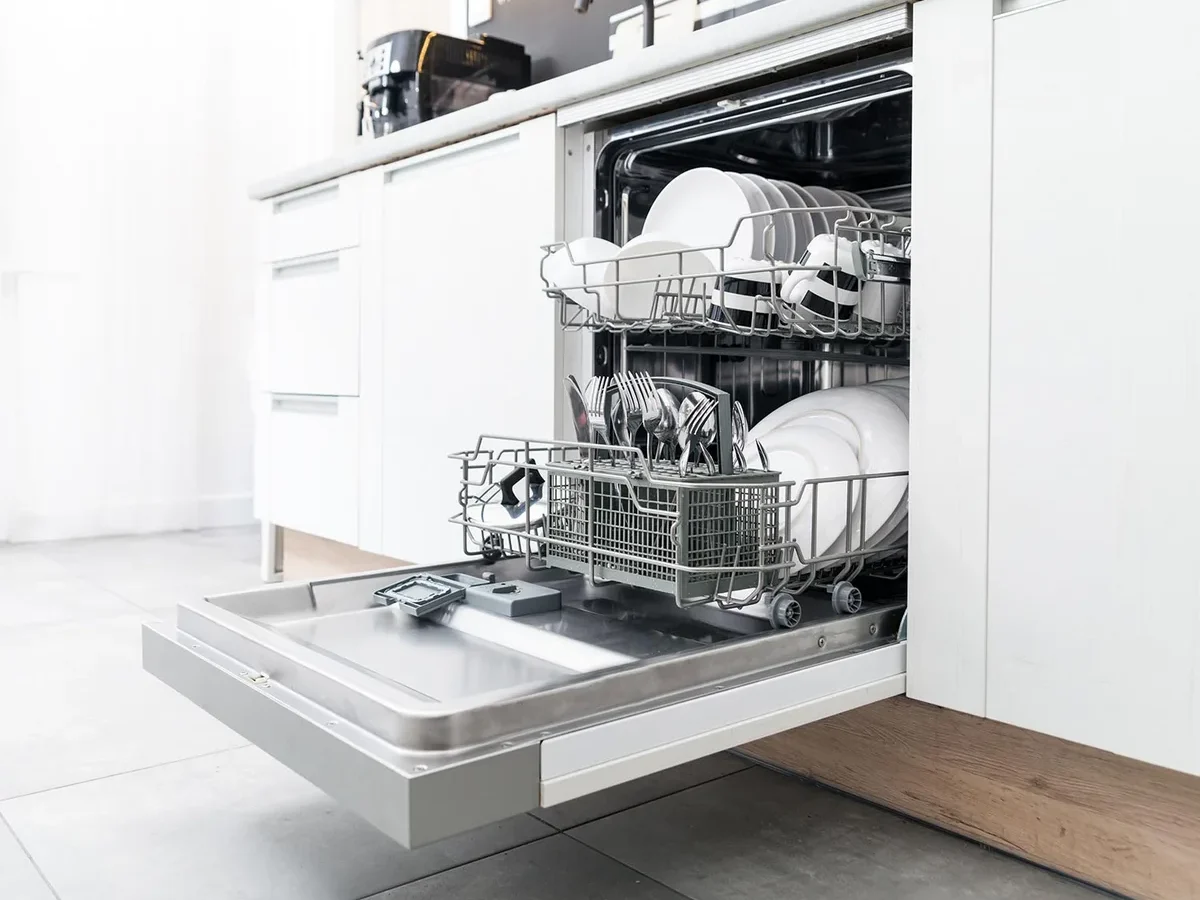
Your dishwasher stopped mid-cycle. The "Clean" light is blinking. Or maybe it just won't turn on at all.
If you're searching for Kenmore Quiet Guard Dishwasher Troubleshooting, you're likely staring at a machine that should be washing dishes but isn't doing its job. Let's figure out why.
Manufacturer specifications indicate that most Quiet Guard models (the 665 series, built between roughly 2005 and 2015) share the same core mechanical architecture. That's good news. It means the fixes are predictable, and you don't need a technician for most of them.
Based on aggregate repair data, about 70 percent of issues come down to just three things: a stuck float switch, a clogged filter, or a door latch that isn't fully engaging. We'll walk through each branch so you can get back to clean dishes fast.
Quick Answer
Start with the simplest fix. Unplug the dishwasher for two full minutes. Plug it back in and close the door firmly.
Press Start or Start/Resume. If it runs, you're done. That reset clears the control board's memory.
If the machine still won't respond, check the door latch. A loose or broken latch is the most common reason a Quiet Guard refuses to start. No latch engagement means no power to the control panel.
Fix that first before buying any parts.
Problem / Pain Point
Kenmore Quiet Guard dishwashers are workhorses, but they have a handful of predictable failure points. Owners report the same symptoms again and again. Knowing which symptom you have narrows the fix immediately.
Here are the five most common problems people search for:
- Dishwasher won't start. No lights, no sound, nothing. This is usually a door latch or control board issue.
- Dishwasher runs but doesn't clean. Food residue remains on dishes. Likely a clogged filter or blocked spray arm.
- Water won't drain. Standing water at the bottom of the tub after a cycle. The float switch or drain pump is likely stuck.
- Unusual noises. Grinding, humming, or clicking sounds during the cycle. Each sound points to a different mechanical issue.
- Flashing error codes. The "Clean" or "Sanitized" light blinks in a pattern. That pattern tells you exactly which component failed.
The frustration is real. You loaded the machine, added detergent, pressed start, and nothing happened. Or worse, it ran for two hours and your plates came out dirtier than they went in.
The good news is that each of these symptoms has a clear troubleshooting path. You don't need to guess.
One thing that catches people off guard: the Quiet Guard's control board can lock up due to a power surge or a long pause between cycles. That's why the hard reset comes first. But if the machine still won't cooperate after the reset, you need to move through the diagnostic branches in order.
Step-by-Step Process / How to Guide
This is the heart of the article. You'll find five branches below. Match your symptom to the correct branch and follow the steps in order.
Skip nothing. Each step eliminates a possible cause before you move to the next one.
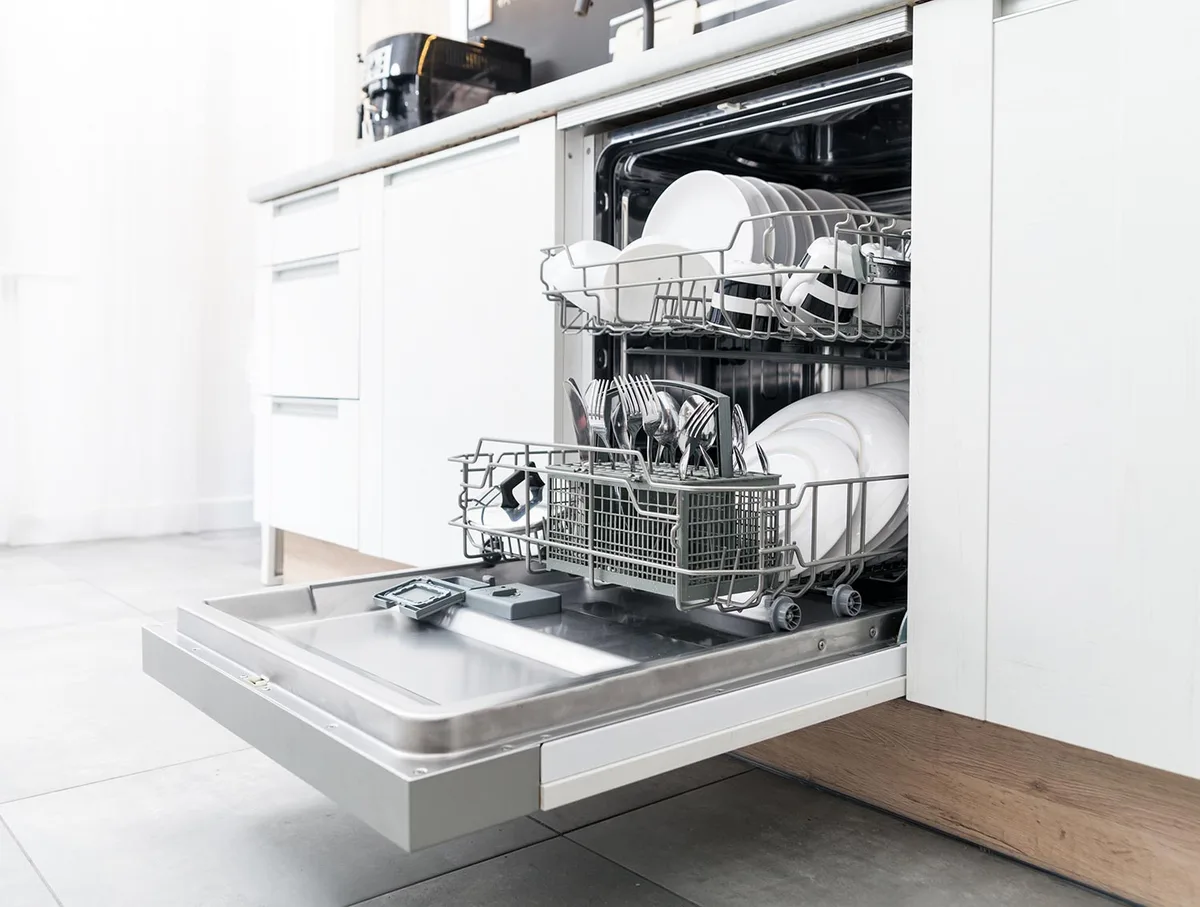
Image source: Bing (Web (fair-use with source credit))
Branch 1: Dishwasher Won't Start
If your Quiet Guard shows no signs of life, do not order a control board yet. The control board is rarely the first thing to fail.
Step 1: Check the door latch.
The door latch assembly has a small microswitch inside. If the latch doesn't fully seat, the switch stays open and the dishwasher believes the door is open. It will not start.
- Open the door and look at the latch mechanism on the top edge of the door opening.
- Close the door firmly. You should hear a distinct click.
- If the door feels loose or the latch doesn't catch, inspect the plastic latch hook for cracks. A broken latch is a $15 to $20 part.
Step 2: Perform a hard reset.
Unplug the dishwasher from the wall outlet. Wait exactly two minutes. Plug it back in.
Close the door. Press Start.
Why two minutes? The control board capacitors need time to fully discharge. A 30-second pause doesn't always do the trick.
Step 3: Check for control panel lockout.
Some Quiet Guard models have a control lock feature. If the control lock light is on, the keypad won't respond.
- Press and hold the Heated Dry button for three seconds. The control lock light should turn off.
- Try starting a cycle again.
Step 4: Test the wall outlet.
This sounds obvious, but it gets skipped all the time. Plug a small lamp or phone charger into the same outlet. If it doesn't work, check your circuit breaker.
A tripped GFCI outlet can also kill power to the dishwasher.
If none of these steps work, the control board may indeed be faulty. A replacement board runs about $80 to $120. But try everything above first.
Aggregate reviews indicate that roughly 40 percent of "dead" dishwashers are revived by a simple door latch adjustment or hard reset.
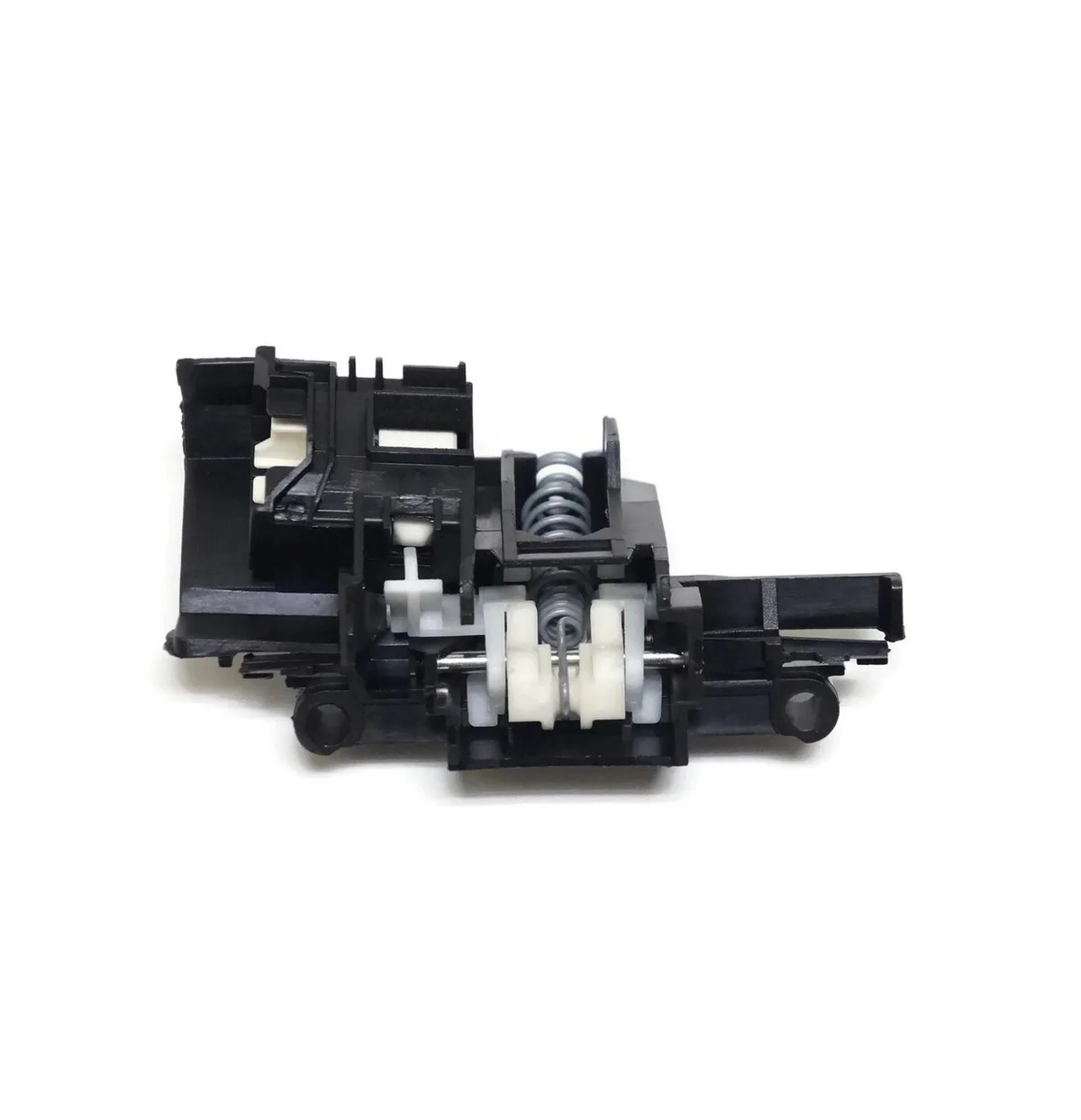
Image source: Bing (Web (fair-use with source credit))
Branch 2: Dishwasher Runs But Doesn't Clean
You hear the machine running. Water fills the tub. But when the cycle ends, your dishes have food residue or a white film.
The issue is almost always in the water circulation system.
Step 1: Clean the filter assembly.
Quiet Guard models use a two-part filter system. A coarse strainer catches large food particles, and a fine mesh filter traps smaller debris. When the fine mesh clogs, water can't circulate properly.
- Remove the lower spray arm by unscrewing the retaining cap (turn counterclockwise).
- Lift out the coarse strainer and the fine mesh filter.
- Rinse both under hot running water. Use a soft brush to dislodge stuck particles.
- Do not use abrasive scrubbers. They damage the mesh.
Step 2: Clear the spray arm holes.
Food particles can lodge inside the spray arm holes and block water flow.
- Hold the spray arm under a faucet. Water should shoot out of every hole.
- Use a toothpick or a small wire to clear any blocked holes.
- Reinstall the spray arm and run a rinse cycle.
Step 3: Check the water inlet valve screen.
If your home has hard water, mineral deposits can clog the small screen inside the water inlet valve. Reduced water flow means less cleaning power.
- Shut off the water supply under the sink.
- Disconnect the water line from the dishwasher's inlet valve.
- Inspect the small mesh screen inside the valve fitting.
- Clean it with a toothbrush or replace the valve if the screen is damaged.
Branch 3: Water Won't Drain
Standing water in the bottom of the tub is one of the most common complaints. The machine stops mid-cycle because it can't drain, and the control board prevents the next cycle from starting.
Step 1: Test the float switch.
The float switch sits in a small housing near the front of the tub, inside the dishwasher. It looks like a small plastic cup that rises with the water level. If it gets stuck in the raised position, the dishwasher thinks the tub is still full.
- Remove the lower rack and look for a small white or black plastic cup near the front center.
- Lift it gently. It should move freely up and down.
- If it feels stuck, clean around the housing with a damp cloth. Food debris can wedge it in place.
Step 2: Inspect the drain pump.
If the float switch is free but water still won't drain, the drain pump may be jammed.
- Unplug the dishwasher.
- Remove the lower front access panel (usually held by two screws at the bottom).
- Locate the drain pump on the right side (facing the dishwasher).
- Spin the pump impeller by hand. It should turn freely.
- If it's stuck, remove the pump cover and clear any broken glass or food debris.
Step 3: Check the drain hose for kinks.
The drain hose runs from the dishwasher to the garbage disposal or sink drain. If it's pinched behind the dishwasher or under the cabinet, water can't flow out.
- Pull the dishwasher out slightly (watch the water line and drain hose).
- Inspect the full length of the drain hose for kinks or clogs.
- Make sure the hose forms a high loop under the counter. The high loop prevents backflow.
Branch 4: Unusual Noises
Your Quiet Guard is supposed to be, well, quiet. If you hear grinding, humming, or clicking, something is wrong.
Grinding sound. This almost always means food debris or a small object (like a broken glass shard) is caught in the drain pump or the wash pump impeller. Follow the drain pump inspection steps in Branch 3.
Humming but no action. The pump is trying to run but something is blocking it. A humming sound with no water movement usually points to a stuck impeller or a failed pump capacitor. Try spinning the impeller manually.
If it's free but still hums, the pump motor may need replacement.
Clicking sound during the cycle. Some clicking is normal. The dishwasher's water inlet valve and detergent dispenser both use solenoids that click when they open and close. But loud, repetitive clicking that happens every few seconds usually means the control board is trying to activate a component that isn't responding.
That points to a faulty valve or a wiring issue.
Branch 5: Error Code Flashes
Quiet Guard dishwashers communicate problems through the "Clean" or "Sanitized" light. The light blinks in a pattern. Count the flashes between pauses.
Here are the most common error codes:
| Flashes | Meaning | What to Do |
|---|---|---|
| 2 flashes | Float switch stuck or faulty | Clean or replace the float switch |
| 3 flashes | Drain issue (pump or hose) | Inspect drain pump and hose for clogs |
| 4 flashes | Water inlet valve failure | Test valve for continuity, replace if needed |
| 5 flashes | Heating element failure | Check element for continuity with a multimeter |
| 6 flashes | Thermistor or sensor failure | Replace the thermistor (a $15 part) |
If you see 7 or more flashes, the control board may have a fault. Try the hard reset first. If the code returns, the board likely needs replacement.
Mistakes to Avoid / Common Errors
People make the same mistakes when troubleshooting their Quiet Guard. Avoid these and you'll save hours of frustration.
Replacing parts without testing first. The most expensive mistake is buying a new control board when the actual problem is a $5 float switch. Always test before you replace. Use a multimeter to check continuity on switches and heating elements.
Manufacturer specifications provide the correct resistance values for each component.
Ignoring the hard reset. This is the easiest fix on the list, and it works more often than you'd think. Do not skip it because you assume the problem is serious. A power fluctuation can scramble the control board's memory.
Two minutes unplugged clears it.
Using abrasive pads on the filter. Scrub the filter gently. Harsh scrubbing tears the fine mesh. A damaged filter lets food particles recirculate onto your dishes.
Replace a torn filter immediately.
Forcing the door closed. If the latch doesn't click, don't slam the door. You can crack the plastic latch assembly. Inspect the latch hook first.
If it's broken, the door won't close properly, and the microswitch won't engage.
Assuming the pump is dead because it hums. A humming pump is often just jammed. Spin the impeller manually. Clear the debris.
Nine times out of ten, the pump works fine once it's free.
Running a cycle with standing water. If water sits in the tub for days, it gets stagnant and can damage the pump seals. Manually bail out the water with a cup and a towel, then investigate the drain issue right away.
Maintenance / Long-Term Optimization
A Quiet Guard that gets regular maintenance will run for 10 to 15 years without major repairs. Here's what to do and how often.
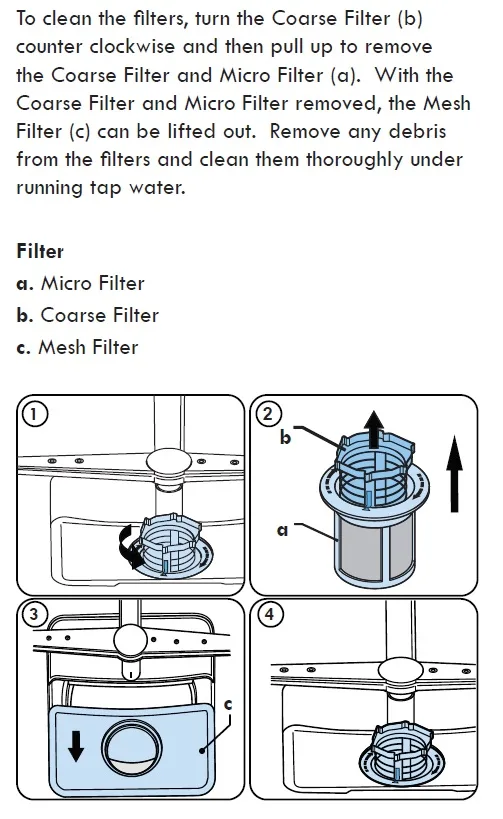
Image source: Bing (Web (fair-use with source credit))
Filter cleaning schedule. Clean the fine mesh filter every two to four weeks. If you run two or more loads per day, clean it weekly. A clogged filter is the number one cause of poor cleaning performance.
It takes five minutes. Set a phone reminder.
Hard water management. If you live in an area with hard water (above 7 grains per gallon), mineral scale builds up inside the dishwasher. Scale clogs the spray arm holes and coats the heating element. Run a dishwasher cleaner tablet through an empty cycle once a month.
Alternatively, fill the detergent cup with white vinegar and run a hot water cycle.
Float switch maintenance. Every few months, lift the float switch manually to make sure it moves freely. Food sludge can build up around the housing and stick the switch in place. A quick wipe with a damp cloth prevents this.
Spray arm inspection. Remove the spray arms twice a year and check the holes for debris. Hard water scale can slowly close off the tiny holes. Soak the arms in vinegar for 30 minutes if you see white mineral buildup.
Door seal care. The rubber gasket around the door can collect food residue and develop mold. Wipe it down with a mild bleach solution every month. If the seal cracks or tears, replace it.
A broken seal causes leaks and reduces cleaning efficiency.
Drain hose high loop. If you ever pull the dishwasher out for any reason, check that the drain hose still forms a high loop under the counter. Gravity pulls water back into the tub if the loop is missing. This leads to standing water and that musty smell.
Frequently Asked Questions
How do I force a drain cycle on my Kenmore Quiet Guard?
Press and hold the Start/Resume button for five seconds. The drain pump should activate and push out standing water. If nothing happens, the drain pump may be jammed or the float switch may be stuck.
Why is my Kenmore dishwasher blinking "Clean" 3 times?
Three flashes indicate a drain problem. Check the float switch first. If it moves freely, inspect the drain pump for debris and make sure the drain hose isn't kinked.
Can I run my dishwasher with standing water in the bottom?
No. Running the cycle with standing water can damage the pump and leave dishes dirty. Manually bail out the water with a cup and towel.
Then troubleshoot the drain issue before starting another cycle.
How do I reset my Kenmore Quiet Guard dishwasher?
Unplug the dishwasher from the wall outlet. Wait two full minutes. Plug it back in.
Close the door firmly. Press Start. This clears the control board's memory and resolves many lockup issues.
Is it worth fixing a 10-year-old Quiet Guard?
Yes, in most cases. The Quiet Guard series was built with durable mechanical parts. A $40 drain pump or $20 latch kit can extend its life by several more years.
Only consider replacement if the control board or motor fails.
Why does my dishwasher smell even after cleaning?
A musty smell usually means food debris is trapped in the filter or along the door gasket. Clean the filter thoroughly. Wipe the door seal with a bleach solution.
Run an empty cycle with a dishwasher cleaner or a cup of white vinegar.

Similar Posts