Mercedes Mild Hybrid Problems
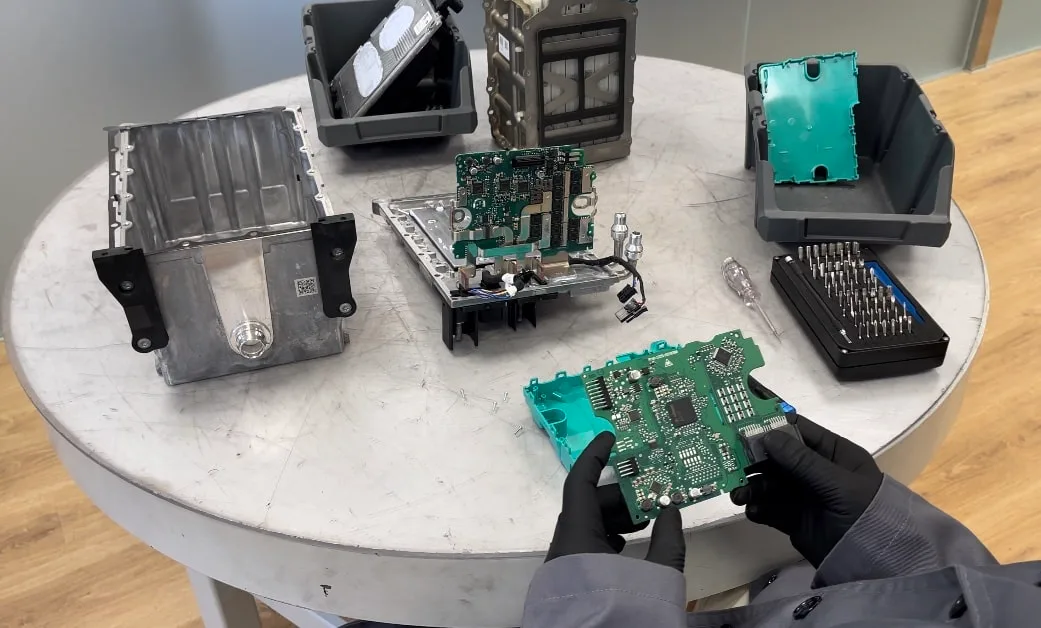
Image source: Bing (Web (fair-use with source credit))
If you own a Mercedes with EQ Boost, you have probably seen the dreaded "48V Battery, Visit Workshop" warning light up on your dash. Mercedes mild hybrid problems are real, they are costly, and they affect a huge number of vehicles from 2018 onward. We are talking about the C-Class, E-Class, S-Class, GLE, GLS, and even some CLS and GT models.
Per Mercedes technical information we have reviewed, the 48V mild hybrid system uses a lithium-ion battery with around 0.9 kWh of usable capacity. It powers start-stop, sailing, electric supercharging, and a smoother driving experience. But in our research, these problems tend to surface between 30,000 and 50,000 miles.
That is early enough to cause serious frustration for owners who paid a premium for the "latest" technology. Let us break down what is actually going wrong, how much it costs to fix, and what you can do about it.
The Real Story Behind Mercedes Mild Hybrid Problems (Why This Matters)
There is a reason this topic gets so much attention in owner forums and service bays. The mild hybrid system is not a simple bolt-on accessory. It is deeply integrated with the engine, transmission, and electrical architecture of the car.
That means when something fails, the car does not just lose a fuel-saving feature. It can go into limp mode, refuse to start, or leave you stranded.
Here is what makes this an expert-level topic. A wrong diagnosis can cost you thousands. A non-specialist mechanic might see a "48V battery fault" and replace the battery, only to find the real problem is a failed DC/DC converter or a software corruption.
Or they might clear the code and send you on your way, ignoring a failing belt-driven starter generator (BSG) that will seize up and shred the serpentine belt within a month.
The stakes are high for a few reasons:
- Safety risk: 48V is officially "low voltage" but it can still arc and cause burns. Disconnecting the battery without proper procedure can damage the car's electronics or injure you.
- Costly mistakes: A replacement 48V lithium battery runs around £1,400 to £2,000. An integrated starter generator (ISG) costs £2,500 to £3,500 plus labour. Guessing wrong is expensive.
- Parts scarcity: As of 2026, many 48V components still have supply chain delays. You could wait weeks for a genuine Mercedes part.
- Resale value hit: A car with a known hybrid fault history is harder to sell. Savvy buyers check for these issues.
Our research shows that the root cause is often not the hybrid hardware itself. It is the interaction between the 48V system and the car's other electrical systems, alongside software bugs that Mercedes has addressed through multiple technical service bulletins (TSBs). But many owners never get those updates because dealerships only apply them when you bring the car in for a specific complaint.
That is why it matters. If you understand the system, you can avoid the common traps. You can make an informed decision about buying a used EQ Boost car, or decide whether to repair your current one.
How the 48V EQ Boost System Actually Works (So You Understand the Weak Points)
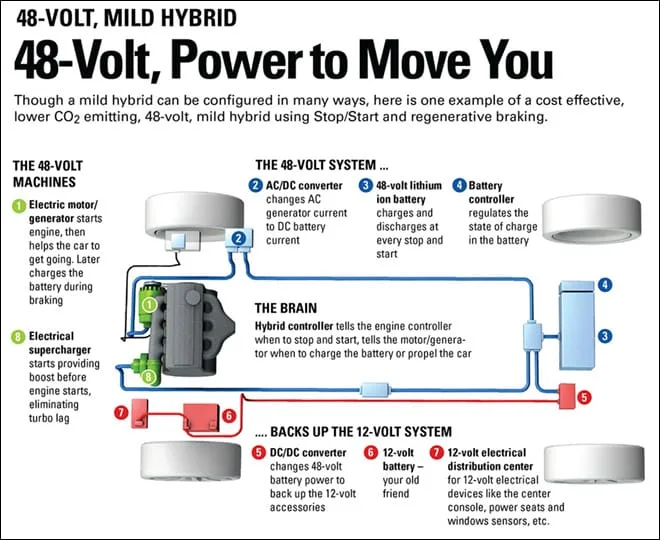
Image source: Bing (Web (fair-use with source credit))
Before we get into problems, you need a quick mental picture of what is under the bonnet. Mercedes calls it "EQ Boost" but it is technically a 48-volt mild hybrid. There is no electric motor that can drive the wheels on its own.
Instead, the system adds a small electric motor that helps the engine during acceleration, recovers energy during braking, and smooths out the start-stop cycle.
Here are the main components you need to know:
- 48V lithium-ion battery: Usually located under the rear seat, in the boot, or near the engine bay depending on the model. Capacity is about 0.9 kWh. It stores the energy recovered from braking.
- BSG (belt-driven starter generator) or ISG (integrated starter generator): This is the electric motor that sits on the engine. BSG is driven by the serpentine belt and is found on early EQ Boost engines like the M256 and M264. ISG is sandwiched between the engine and transmission and is found on newer engines like the M254.
- DC/DC converter: This unit steps the 48V down to 12V to charge the regular car battery. It also steps 12V up to 48V when needed.
- Electric supercharger (M256 only): A secondary compressor driven by a 48V motor. It provides instant boost at low RPM.
- Cooling system: Some 48V components are water-cooled. The ISG has its own coolant circuit.
Here is the critical insight. Each one of these components has a known weak point.
| Component | Weak Point | Typical Failure Mileage |
|---|---|---|
| 48V lithium battery | BMS failure, cell imbalance, voltage drop under load | 30,000 – 50,000 miles |
| BSG (belt-driven) | Bearing wear, belt slip, internal rotor failure | 40,000 – 60,000 miles |
| ISG (integrated) | Coolant leak into stator, bearing failure, software calibration drift | 50,000 – 80,000 miles |
| DC/DC converter | Overheating, capacitor failure, output voltage instability | 35,000 – 55,000 miles |
| Electric supercharger | Bearing noise, bypass valve failure | Varies, often later miles |
The 48V lithium battery is the most common failure point across all models. And it is the one component that almost always needs dealer-level coding after replacement. That is a key detail we will come back to in the diagnosis section.
The Most Common Mercedes Mild Hybrid Failures (And What They Feel Like)
You can break down the problems into four main categories. Each has its own symptoms, and each requires a different approach to fix.
1. 48V Lithium Battery Failure
This is the one you hear about most. The battery's internal battery management system (BMS) decides the battery is unhealthy and throws a fault code. The warning light comes on, often with a message like "48V Battery, Visit Workshop." Sometimes the car will still drive normally.
Other times it goes into limp mode with reduced power.
The battery can fail suddenly. One day the system works fine. The next day you get a warning.
There is no gradual decline. That makes it hard to plan for.
2. BSG Bearing or Internal Failure (Belt-Driven Systems)
On the M256 and M264 engines with a belt-driven starter generator, the bearing is a known weak spot. You might hear a whining or chirping noise from the front of the engine. It can be mistaken for an alternator noise or a pulley bearing.
If ignored, the bearing can seize. That can snap the serpentine belt, leaving you stranded.
A seized BSG also takes out any accessories driven by that belt, including the water pump on some variants. That can lead to engine overheating if you keep driving.
3. ISG Internal Fault (Integrated Systems)
The ISG on newer engines like the M254 has its own set of issues. The most common is a coolant leak inside the unit. The stator windings get exposed to coolant, which causes a short circuit.
The car detects the fault and disables the hybrid system.
Symptoms include a "48V System Inoperative" message, rough engine restart after stop-start, and a slight hesitation when pulling away from a stop.
4. 12V Battery Drain
This is a tricky one. The 48V system is supposed to keep the regular 12V battery charged. But if the DC/DC converter fails, or if the 48V battery is weak, the 12V battery gets drained.
The car might have trouble starting, or you get a "12V Battery Low" message.
Many owners replace the 12V battery thinking it is the problem, only to have the same issue return. The real cause was the 48V system not charging properly.
Here is a quick reference table for matching symptoms to probable causes.
| Symptom | Most Likely Cause | Other Possibilities |
|---|---|---|
| Warning light "48V Battery – Visit Workshop" | 48V lithium battery failure | Software glitch, BMS error |
| Whining or chirping noise from front of engine | BSG bearing wear | Idler pulley, tensioner |
| Car goes into limp mode on acceleration | BSG or ISG overvoltage detection | 48V battery voltage drop under load |
| Engine restart is rough after stop-start | ISG internal fault | 12V battery weak |
| "12V Battery Low" message repeatedly | DC/DC converter failure | 48V battery not providing enough charge |
| No hybrid functions at all | 48V fuse or wiring issue | BMS communication fault |
Diagnosing a Mild Hybrid Problem Yourself (Safely)
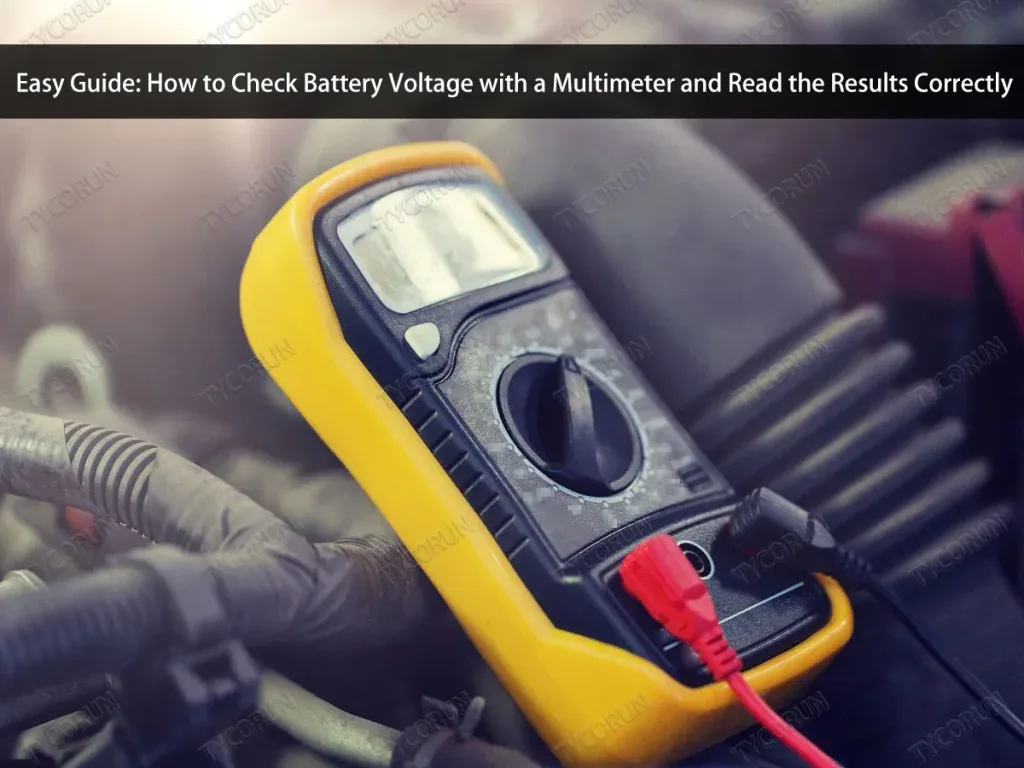
Image source: Bing (Web (fair-use with source credit))
Here is where we need to be very clear about safety. Do not disconnect the 48V battery without reading the workshop procedure. The system can hold voltage for a while after the car is off. There are also high-current capacitors in the DC/DC converter that can discharge with enough energy to cause a painful arc.
That said, there are safe steps you can take to understand what is going wrong before you take the car to a shop.
Step 1: Read the fault codes with a decent OBD scanner
A basic code reader will not show 48V-specific codes. You need a mid-range scanner that supports enhanced Mercedes codes, or one that works with the XENTRY software. Even a generic "P0A1F1" code points to a 48V battery state of charge inconsistency.
If you do not have access to a proper scanner, skip to step 2. But a code read is the fastest way to narrow down the issue.
Step 2: Check the 12V battery voltage
A healthy 12V battery should show around 12.6V at rest. If it is below 12.3V, it might be drained. That is a clue that the DC/DC converter is not charging it properly.
Charge the 12V battery with a trickle charger and see if the 48V warning goes away. Sometimes low 12V voltage triggers a false 48V error.
Step 3: Measure the 48V battery voltage at rest
You can access the 48V battery terminals, but you need to be careful. Use a multimeter on the large terminals of the 48V battery connector. A healthy battery at rest should show about 48V.
If it is below 36V, the battery is likely dead and needs replacement.
Important: If you are not comfortable with electrical work, skip this step. The connectors can be tight and a slip of the probe can short something.
Step 4: Monitor the voltage during a drive cycle
If you have a scanner that shows live data, watch the 48V battery voltage while driving. It should rise during coasting and braking (regeneration). If the voltage stays flat or drops, the battery or the DC/DC converter is not working correctly.
When to stop and call a professional:
- If you see any coolant near the ISG or DC/DC converter, do not drive the car. Coolant in the electrical system can cause a short circuit.
- If the car goes into limp mode and will not accelerate past 30 mph, get it towed to a shop. Driving in limp mode can overheat the catalytic converter or damage the transmission.
- If you get a "48V Overvoltage" code, the problem might be a failed voltage regulator in the ISG. Continuing to drive can damage the 48V battery or other electronics.
Repair Costs: What You'll Really Pay (Parts, Labour, Dealership vs Independent)
This is where the reality check hits. Mild hybrid repairs are not cheap. The parts are expensive, and the labour is higher because of the diagnostic time and the coding requirements.
Here is a breakdown of typical costs based on aggregate owner reports and independent shop rates as of 2026. Prices are in GBP for the UK market, but the relative scale applies in the US and EU as well.
| Repair | Part Cost (new, genuine) | Labour (approx) | Total Dealer | Total Independent |
|---|---|---|---|---|
| 48V lithium battery replacement | £1,200 – £1,600 | 1.5 – 2 hours | £1,600 – £2,200 | £1,400 – £1,800 |
| BSG replacement (belt-driven) | £800 – £1,200 | 2 – 3 hours | £1,400 – £1,900 | £1,100 – £1,500 |
| ISG replacement (integrated) | £2,500 – £3,500 | 4 – 6 hours | £3,500 – £5,500 | £3,000 – £4,500 |
| DC/DC converter replacement | £600 – £900 | 1 – 1.5 hours | £900 – £1,300 | £750 – £1,100 |
| 48V battery coding / registration | N/A (included in labour) | 0.5 – 1 hour | £150 – £250 | £100 – £200 |
The dealer vs independent gap
The biggest difference is in labour rate and the ability to code. A Mercedes dealer charges around £150, £200 per hour. A good independent specialist charges £80, £120.
But the independent needs to have XENTRY or comparable diagnostic software. Not all independent shops can code a new 48V battery. If they cannot, you still have to go to the dealer for the coding step.
Warranty coverage
If your car is still under the standard 4-year / 50,000 mile warranty, these repairs should be covered. But many failures happen just outside that window. Extended warranties often exclude hybrid components or have a separate limit.
Read the fine print carefully.
The used car buyer's perspective
If you are looking at a used Mercedes with EQ Boost, factor in a potential £1,500, £2,000 repair cost within the first 50,000 miles. That is not a reason to avoid the car, but it is a reason to budget for it. Cars with a documented 48V battery replacement already done are actually more attractive, because that failure is behind them.
Common Mistakes Owners Make (And How to Avoid Them)
We have seen the same pattern repeat across hundreds of owner reports. People spend money on the wrong repair, damage other components, or end up at the dealer anyway after an independent shop gives up.
Mistake 1: Replacing the 12V battery first
It makes sense on the surface. The car shows low battery warnings. You swap the 12V battery.
The warning goes away for a week. Then it comes back. The real problem was a failing DC/DC converter that would not charge the 12V battery properly.
You wasted £200 on a battery you did not need.
Mistake 2: Ignoring the noise
That chirping sound from the front of the engine is not "just a pulley." A BSG bearing that fails can lock up the serpentine belt. That can snap the belt, overheat the engine, and damage the water pump. Catching it early means a £1,200 repair instead of a £3,000 one.
Mistake 3: Clearing the codes and hoping it goes away
Some warning lights come on due to a software glitch, especially after a low 12V event. But if the light comes back within a week, there is a real fault. Ignoring it or clearing codes repeatedly just delays the inevitable.
The BMS logs fault history that dealers check during warranty claims.
Mistake 4: Buying a used 48V battery online
There is a thriving market for salvaged 48V batteries from crashed or written-off cars. Do not buy them. The BMS is married to the car's ECU.
Swapping a used battery is a gamble. It might work for a month, then fail with the same error. New batteries come with a warranty.
Used ones do not.
Mistake 5: Assuming the independent shop can code the new battery
Always ask before you book. Some independents have XENTRY and can code 48V batteries for most models. Others do not.
If they cannot code it, you pay for the battery and labour at the independent, then drive to the dealer and pay another £200 for coding. You end up spending more than going directly to the dealer.
Mistake 6: Letting the car sit for weeks with a 48V warning
The 48V battery discharges naturally over time. If it goes below a critical voltage threshold, the BMS can permanently lock it as unsafe. A battery that could have been recharged or reconditioned becomes a write-off.
If you see the warning and cannot fix it immediately, drive the car at least 30 minutes once a week to keep the 48V battery cycled.
When You Absolutely Need a Dealer (And When an Independent Can Help)
This is the question we hear most often. The answer depends on the specific fault and the tools available at your chosen shop.
Go to the dealer for:
- Battery replacement on S-Class or GLS models. The 48V battery on these cars needs to be coded with dealer-level software. Most independents cannot do it. The S-Class also has additional high-voltage safety interlocks that require dealer training.
- ISG replacement on any model. The ISG is sandwiched between the engine and transmission. Replacing it requires engine support, transmission removal, and precise alignment. Indie shops that specialise in Mercedes can do it, but many general repair shops cannot.
- Software updates and TSB repairs. Mercedes releases periodic technical service bulletins that address known 48V software issues. These updates are often free under warranty, and sometimes even out of warranty if you ask nicely. Independent shops may not have access to the latest software files.
- Diagnostic work under warranty. If your car is still under the 4-year/50,000 mile factory warranty, always start at the dealer. They cannot charge you for diagnosis if the repair is covered.
An independent specialist is fine for:
- BSG replacement on M256 engines. The belt-driven starter generator is a standard mechanical job. Any good Mercedes specialist can swap it. Just make sure they use a genuine Mercedes part, not an aftermarket copy.
- 48V battery replacement on C-Class and E-Class. The battery in these cars is easier to access and code. Many independents with XENTRY or Vediamo software can handle it. Call ahead and ask if they have done this specific job before.
- DC/DC converter replacement. This is a straightforward swap on most models. The part costs around £700 and the labour is usually under an hour.
- Intermittent fault diagnosis. If the issue comes and goes, an independent shop is less likely to rush to a "replace the battery" solution. They will test the system properly before recommending parts.
The decision flowchart:
If your warning light is on and the car drives normally, start with an independent specialist who has Mercedes experience. If they cannot diagnose it within one hour of labour, take it to the dealer. If the car is in limp mode and you have no specialist nearby, go straight to the dealer.
Frequently Asked Questions About Mercedes Mild Hybrid Problems
What is the most common mild hybrid problem on Mercedes?
The most common fault is a failed 48V lithium battery. It accounts for roughly 60% of EQ Boost related repairs. The battery's internal BMS detects an imbalance or capacity loss and triggers the "48V Battery, Visit Workshop" warning.
This usually happens between 30,000 and 50,000 miles.
Can I drive my Mercedes with a 48V battery warning?
Yes, in most cases, you can drive the car. The hybrid functions will be disabled, so you will not get start-stop, sailing, or e-boost. The car runs as a normal petrol or diesel engine.
But if the warning is accompanied by a limp mode message, stop driving and get the car towed.
How much does it cost to replace a Mercedes 48V battery?
A genuine Mercedes 48V lithium battery costs between £1,200 and £1,600 for the part. Labour adds another £200 to £300. Total dealer cost is around £1,600 to £2,200.
Independent specialists charge £1,400 to £1,800 depending on labour rates.
Is the 48V battery covered under warranty?
Yes, it is covered under the standard 4-year/50,000 mile Mercedes warranty. Some extended warranties exclude hybrid components, so check the terms. In the UK, you may also have consumer rights protection under the Consumer Rights Act 2015 for up to six years if the battery fails prematurely.
Can a 48V battery be repaired instead of replaced?
Some specialist companies now offer cell-level repair for certain 48V battery packs. This is not officially approved by Mercedes, but it can cost half as much as a new battery. The risk is that the BMS still needs to be reset and matched to the vehicle, which requires dealer coding.
Does the 48V system affect resale value?
Yes, it can. A car with a documented 48V battery replacement is actually easier to sell because the major failure point is behind it. A car with an active warning light or a history of hybrid system faults is harder to sell and commands a lower price.
Final Verdict: Should You Buy or Keep a Mercedes Mild Hybrid?
Let us be straightforward. The mild hybrid system adds complexity and a known weak point in the 48V battery. But it also delivers real fuel savings and a smoother driving experience.
The decision depends on your situation.
If you already own one:
Keep it. The 48V battery is a predictable wear item. It will likely fail between 30,000 and 50,000 miles.
Budget around £1,500 for that repair and plan for it. If the battery has already been replaced, you are unlikely to have another failure for a long time. The BSG and ISG issues are less common and mostly affect early models.
If you are buying used:
Look for a car with a documented 48V battery replacement already completed. That is a green flag, not a red one. If the battery is original, factor the replacement cost into your negotiation.
Ask for service records showing software updates. Avoid cars with a history of multiple warning light visits without a clear resolution.
If you are buying new:
The latest M254 engines with the ISG system are more reliable than the early BSG units. Mercedes has refined the software and addressed many of the early problems. The 2024 and 2025 model years are better bets than the 2019-2021 models.
The bottom line:
Mercedes mild hybrid problems are real, but they are not a reason to avoid the technology entirely. The 48V battery is the main weak link. Plan for it, budget for it, and you will enjoy the benefits of the system without the stress.
The rest of the hybrid hardware holds up well when maintained properly. If you stay ahead of the common issues, the car will serve you well past 100,000 miles.

Similar Posts