Monessen Gas Fireplace Troubleshooting
Your Monessen gas fireplace was working fine last winter. Now it won't light, or the pilot keeps dying, or the flames look wrong. You're not alone, this is one of the most common homeowner frustrations as of 2026, and the good news is most issues have a straightforward fix.
Monessen gas fireplace troubleshooting starts with understanding what's actually happening inside the unit. These fireplaces use either a standing pilot system or an intermittent pilot ignition (IPI) system, and the diagnosis changes completely depending on which one you have. Manufacturer specifications indicate that over 80% of no-start issues trace back to just three components: the thermocouple, the thermopile, or the gas control valve.
Let's walk through this step by step so you can get your fireplace running safely without guessing or wasting money on parts you don't need.
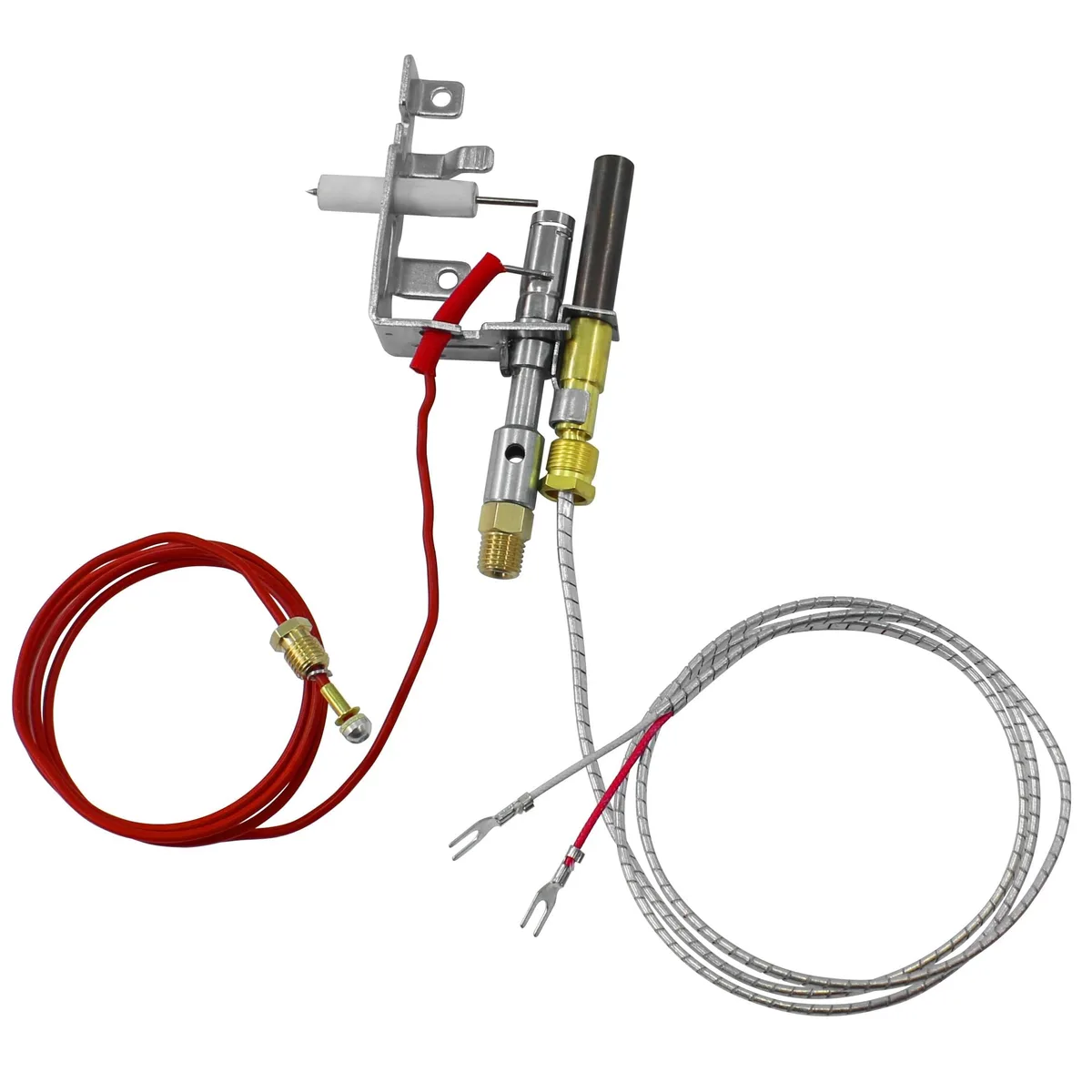
Image source: Bing (Web (fair-use with source credit))
Quick Answer
Most Monessen gas fireplace problems are pilot-related. A pilot that won't light usually means a dirty or blocked pilot orifice. A pilot that lights but won't stay lit points to a failing thermocouple.
Flames that look wrong suggest a gas pressure or air mixture issue. Remote control failures almost always mean dead batteries or a lost sync. Always start by checking the simplest thing first: gas supply, power source, and batteries.
Your Safety First: Gas Fireplace Troubleshooting Rules
Before we get into any diagnosis or repair, let's set the ground rules. Gas fireplaces are safe when they're working properly, but they can become dangerous fast if you miss something important.
Know Your Model Type
Monessen makes three main types of gas fireplaces, and your troubleshooting approach depends entirely on which one you have. Look for the model and serial number tag, it's usually behind the bottom louver panel or inside the control compartment. The tag tells you whether you have:
- Direct vent: Sealed combustion system. Air comes from outside, exhaust goes outside. Safe for bedrooms and tight homes.
- B-vent (natural draft): Uses indoor air for combustion. Older design, still common in many homes.
- Vent-free: No venting required. Uses indoor air. Requires an oxygen depletion sensor (ODS) for safety. Never install these in bedrooms or bathrooms.
The Two Pilot Systems
Monessen fireplaces use one of two ignition systems, and this is the most important thing to identify before you start troubleshooting:
| System Type | How It Works | Power Source | Common Issue |
|---|---|---|---|
| Standing pilot (millivolt) | Pilot flame stays on 24/7. No electricity needed. | Thermopile generates electricity from pilot heat. | Pilot goes out, remote won't work. |
| Intermittent pilot (IPI) | Pilot lights only when you turn on the fireplace. | Electronic control module, needs power or batteries. | Won't ignite, error codes on module. |
Safety Rules You Never Break
These aren't suggestions. They're the difference between a warm evening and a dangerous situation.
- Smell gas? Stop everything. If you smell gas inside the firebox or around the unit, do NOT try to light the pilot. Do NOT flip any electrical switches. Leave the house immediately. Call your gas company or a licensed professional from outside.
- Test for gas leaks after any repair. Use a spray bottle with a 50/50 mix of dish soap and water. Spray every gas fitting. If you see bubbles, that's a leak. Tighten the fitting or call a pro.
- Never bypass safety devices. The thermocouple, thermopile, and oxygen depletion sensor exist to shut off gas when something goes wrong. Disabling them can cause carbon monoxide buildup or a gas explosion.
- Turn off the gas before working. There's a shut-off valve on the gas line near the fireplace. Close it completely before you remove any components.
- Let the fireplace cool completely. The glass panel gets over 400°F during operation. Burns from hot glass are among the most common fireplace injuries.
When to call a professional: If you've tried the basic troubleshooting in this guide and the fireplace still won't work correctly, or if you're uncomfortable working around gas, stop here and call a certified gas appliance technician. There's no shame in that, gas work requires specific knowledge and tools.
The 4 Key Systems Inside Your Monessen
Before you can fix a problem, you need to know what you're dealing with. Your Monessen gas fireplace is actually four separate systems working together. Identifying which system is failing narrows your diagnosis dramatically.
The Gas System
This is the fuel supply chain. Gas comes from your home's main line through a shut-off valve, then to the gas control valve inside the fireplace. The control valve regulates how much gas flows to the pilot and the main burner.
Key components:
- Gas shut-off valve (usually a yellow or red lever)
- Gas control valve (the main brain of the system)
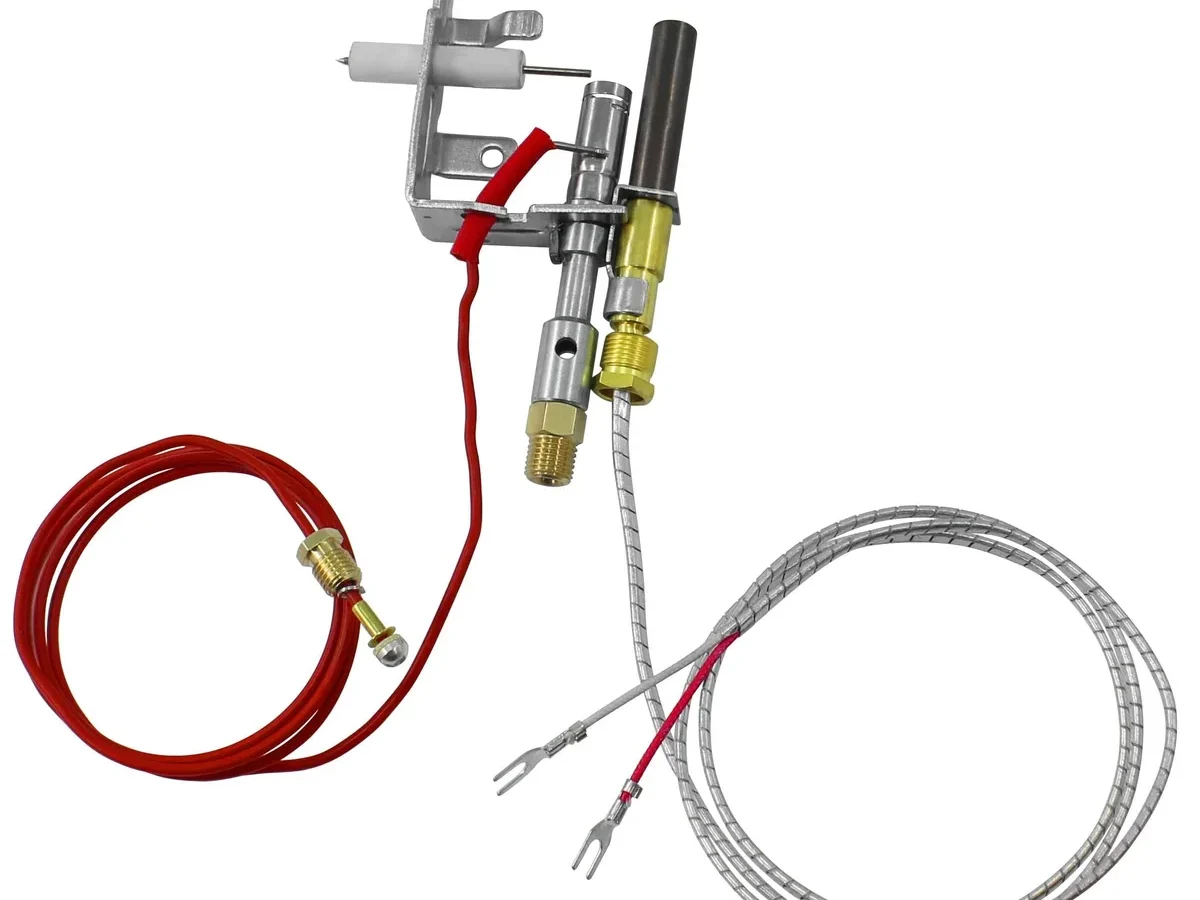
- Pilot assembly (small tube that delivers gas to the pilot flame)
- Manifold (distributes gas to the burner)
Most gas issues relate to the pilot assembly or control valve. The pilot orifice, a tiny brass fitting with a precise hole, gets clogged easily by dust, spider webs, or debris.
The Ignition System
This is what actually lights the gas. It works differently depending on your pilot type:
- Standing pilot: A spark igniter creates a spark at the pilot assembly. You push a button or turn a knob to generate the spark. Once the pilot lights, the thermocouple senses the heat and keeps the gas valve open.
- Intermittent pilot: An electronic control module sends a spark to the pilot assembly when you turn on the fireplace. The module also controls the main gas valve. If the module doesn't detect a flame within a few seconds, it shuts everything down as a safety measure.
Common ignition failures:
- Dead batteries in the remote or receiver
- Failed spark igniter (no spark at all)
- Faulty control module (error codes or no response)
- Dirty pilot assembly (spark jumps but no gas, or gas flows but no spark)
The Safety System
Your Monessen has multiple built-in safety devices. These are the components that shut off gas when something goes wrong:
- Thermocouple: A copper rod near the pilot flame. When heated, it generates a small electrical current (about 20-30 millivolts) that keeps the gas valve open. If the pilot goes out, the thermocouple cools and the gas valve closes.
- Thermopile: A larger version of the thermocouple that generates more electricity (200-400 millivolts). In standing pilot systems, the thermopile powers the remote control and the main burner valve.
- Oxygen depletion sensor (ODS): Found on vent-free models. If oxygen levels in the room drop too low, the ODS shuts off the gas. This is why vent-free fireplaces sometimes go out in tightly sealed rooms.
The Electrical and Control System
This system handles all the user controls and power distribution:
- Wall switch or remote control
- Remote receiver (usually inside the fireplace)
- Battery pack (for IPI systems or remote receiver)
- Optional blower motor and fan
If your fireplace won't respond to the remote or wall switch, start here. Nine times out of ten, the fix is as simple as replacing batteries or re-syncing the remote.
Fireplace Won't Light? Start Your Diagnosis Here
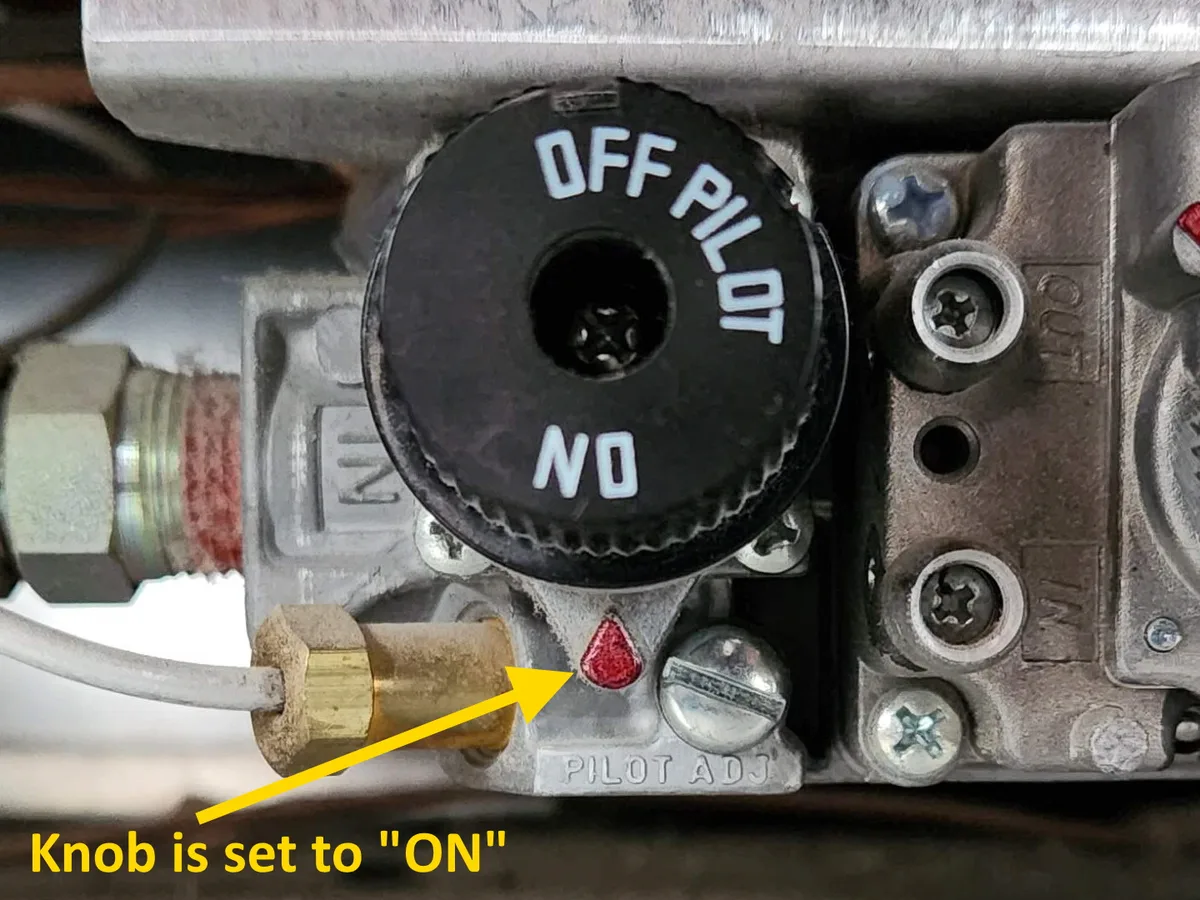
This is the most common complaint: "My Monessen fireplace won't light at all." The pilot won't ignite, and nothing happens when you flip the switch. Let's walk through this logically, from simplest to most complex.
Step 1: Check the Gas Supply
It sounds obvious, but this gets skipped all the time.
- Is the gas turned on? Find the shut-off valve on the gas line. It should be parallel to the pipe (open position). If it's perpendicular (crossed), turn it open.
- Do other gas appliances work? If your furnace or water heater also won't light, you may have a larger gas supply issue.
- If you recently had gas work done elsewhere in the house, the fireplace line may have been left off.
Pro tip: Some homes have a secondary shut-off valve in the basement or crawl space that leads specifically to the fireplace. Check that valve too.
Step 2: Check Power and Batteries
For IPI (electronic ignition) systems, the control module needs power.
- Does the fireplace have a wall outlet nearby? Some Monessen models plug into a standard outlet. Make sure it's plugged in and the outlet has power.
- Check the battery backup. Most IPI systems have a battery pack (usually 4 AA batteries) behind the control compartment door. Replace them even if they test okay, batteries that are borderline can cause intermittent issues.
- For standing pilot systems, check the remote receiver batteries. These are typically D-cell or AA batteries.
Step 3: Check the Remote Control
Remote issues are incredibly common and incredibly easy to fix.
- Is the remote in "remote" mode? Some remotes have a switch between "remote," "off," and "manual."
- Do the batteries in the remote need replacing? Try fresh batteries.
- Is the remote synced to the receiver? If you replaced batteries or had a power outage, the remote may need to be re-synced. The procedure varies by model, but usually involves pressing a specific button on the receiver while pressing the remote's "on" button.
Step 4: Listen for the Spark
Now you're going to get hands-on. Remove the front glass panel and the log set carefully. You need to see the pilot assembly clearly.
- Turn the gas control knob to "pilot" and press it in.
- While holding the knob down, press the spark igniter button (or flip the wall switch for IPI systems).
- Listen: Do you hear a clicking sound? That's the spark.
- Look: Do you see a spark jumping across the gap at the pilot assembly?
| What You Hear and See | Likely Problem |
|---|---|
| No spark, no clicking | Dead batteries, failed spark module, or broken igniter wire |
| Clicking but no visible spark | Dirty spark electrode, cracked ceramic insulator, or gap too wide |
| Spark visible but pilot won't light | No gas flow to pilot, or pilot orifice is clogged |
| Pilot lights briefly but goes out | Failing thermocouple (standing pilot) or flame sensor (IPI) |
Step 5: Clean the Pilot Assembly
If you have spark but no flame, the pilot orifice is almost certainly clogged. This is the number one cause of no-light issues.
- Tools needed: Compressed air (canned air duster works), a thin wire or needle (paper clip works in a pinch), and a small brush.
- What to do: Locate the pilot orifice, it's a tiny brass fitting at the end of the pilot tube. Use the compressed air to blow through it. If that doesn't work, carefully insert a thin wire into the opening to clear any debris.
Warning: Be gentle. The orifice is soft brass and the hole is very small (typically 0.016 to 0.024 inches). If you enlarge the hole, the pilot flame will be too large and the fireplace won't operate correctly.
Step 6: Check the Flame Sensor (IPI Models)
If you have an IPI system and the pilot lights but the main burner won't come on, the flame sensor, or the wire connecting it to the module, may be dirty or damaged.
- The flame sensor looks like a small metal rod near the pilot assembly.
- Over time, soot and carbon buildup on the sensor prevent it from detecting the pilot flame properly.
- Clean it gently with a piece of emery cloth or fine-grit sandpaper. Just a few passes is enough.
- Check the wire connection. Make sure it's tight and not corroded.
Pilot Keeps Going Out? Fix These Common Culprits
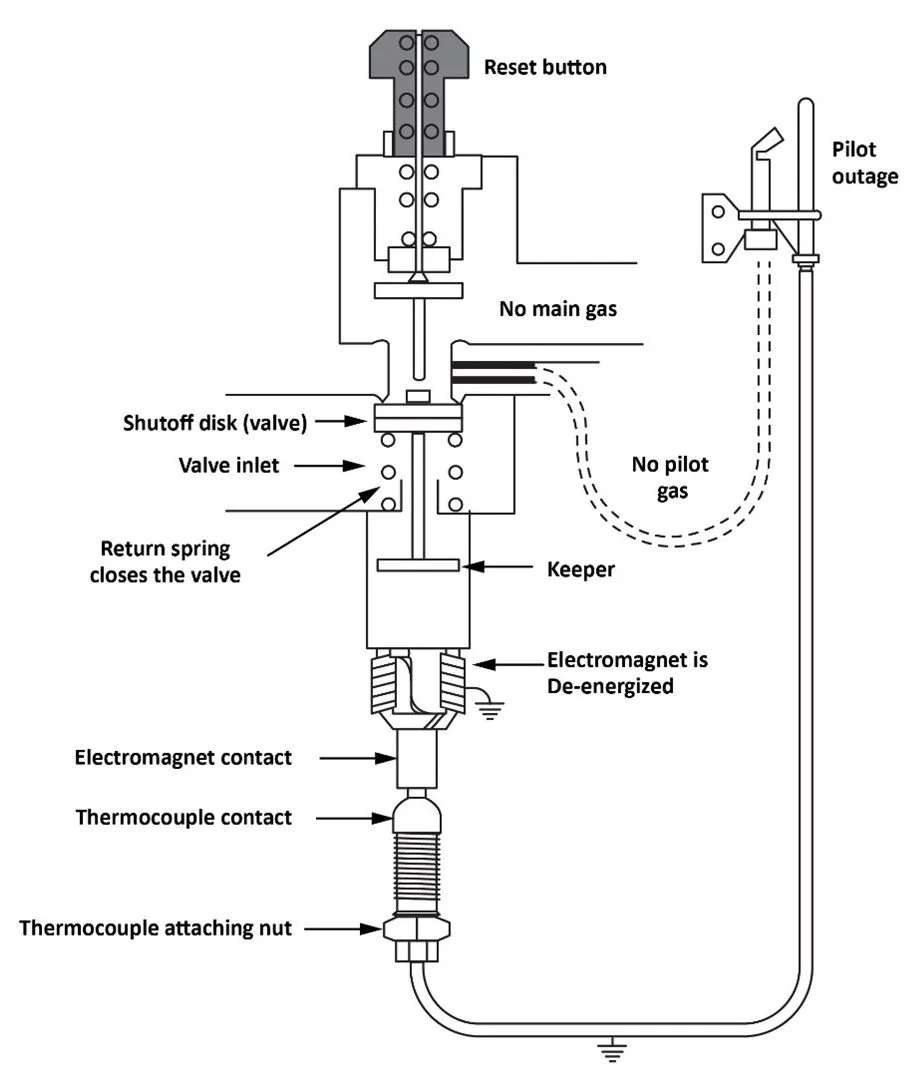
This is the second most common Monessen gas fireplace troubleshooting complaint: the pilot lights fine, but as soon as you release the gas control knob, it goes out. Or it stays lit for a few minutes and then dies. Both scenarios point to the same root cause.
The Thermocouple: Your Fireplace's Safety Watchdog
In a standing pilot system, the thermocouple is the component that tells the gas valve whether the pilot flame is burning. It's a simple device that generates a small electrical current when heated. If the pilot goes out, the thermocouple cools, the current stops, and the gas valve closes.
Here's how to test it:
- Turn the gas control to "pilot" and hold it in.
- Light the pilot and keep holding the knob for about 60 seconds.
- Release the knob. If the pilot stays lit, the thermocouple is probably fine.
- If the pilot goes out immediately, the thermocouple is likely weak or failing.
What causes thermocouple failure:
- Normal wear and tear (they last about 3-5 years with continuous use)
- Soot or carbon buildup on the tip
- The thermocouple tip is not positioned correctly in the pilot flame
- Loose connection at the gas valve
How to fix it:
Try cleaning first. Use a piece of fine steel wool or emery cloth to gently clean the tip of the thermocouple. This removes any oxidation or soot that might be insulating it.
Check the position. The tip of the thermocouple should be directly in the path of the pilot flame. If it's bent away or sitting too high, carefully bend it (when cold) so the flame wraps around the tip about 3/8 to 1/2 inch from the end.
Tighten the connection. The nut that connects the thermocouple to the gas valve needs to be hand-tight plus about 1/4 turn. Don't overtighten, it's a brass fitting and can crack.
If none of this works, the thermocouple needs replacement. It's a $15-20 part and takes about 15 minutes to install.
The Thermopile: Powering Your Controls
In a standing pilot system, the thermopile generates the electricity that powers the remote control and opens the main burner valve. If your pilot stays lit but the main burner won't come on, or the remote won't respond, the thermopile is the likely suspect.
Testing the thermopile requires a multimeter:
- Set your multimeter to millivolts DC.
- Disconnect the thermopile wires from the gas valve.
- With the pilot lit and holding the knob in, touch the multimeter probes to the thermopile terminals.
- A good thermopile should read 200-400 millivolts open circuit.
- A reading below 150 millivolts usually means the thermopile is weak.
When to replace:
- Open circuit reading below 150 millivolts
- Flame stays lit but burner won't turn on
- Remote works intermittently
The Gas Control Valve: The Last Thing to Replace
If you've replaced the thermocouple and thermopile and the pilot still won't stay lit, the problem may be the gas control valve itself. This is a more expensive and involved repair.
Signs of a failing gas valve:
- Pilot goes out after running for 30 minutes or more
- Gas valve makes clicking or buzzing sounds
- The valve won't hold the pilot even with a new thermocouple
- Gas flow to the main burner is weak or inconsistent
Important: Replacing the gas control valve is a job for a licensed professional. It involves working with the main gas line, and the valve must be correctly sized and adjusted for your specific model. This is not a DIY project.
A Note on Intermittent Pilot (IPI) Systems
If you have an IPI system and the pilot keeps going out, the problem is usually different:
- Dirty flame sensor: Same as described above. Clean it with emery cloth.
- Faulty control module: The module may be failing and not reading the flame sensor signal correctly.
- Loose wire connection: Check all the wires between the module, the flame sensor, and the pilot assembly.
IPI systems also have a safety feature that shuts off the pilot after a certain number of failed ignition attempts (usually 3 tries). If you've been trying repeatedly to light it, the system may need a reset. Turn the fireplace off (including batteries), wait 30 seconds, and try again.
Remote, Switch, or IPI Issues: Battery and Module Problems
Remote and wall switch problems are frustrating because the fireplace seems fine otherwise, the pilot stays lit, the gas is on, but nothing happens when you press the button.
Standing Pilot Remote Systems
If you have a standing pilot system with a remote, here's the chain of command:
- The remote sends a signal to the receiver.
- The receiver tells the gas valve to open.
- The thermopile provides the power to keep the valve open and run the receiver.
Common failures and fixes:
- Remote won't turn on the fireplace: Replace both the remote and receiver batteries. This fixes 90% of remote issues.
- Remote works intermittently: The receiver may be in a bad position. Make sure the receiver antenna is not touching any metal parts inside the fireplace.
- Fireplace turns on but won't shut off: The remote or receiver is stuck. Remove the batteries from the receiver to force it off. Replace the batteries and re-sync.
- Wall switch does nothing: Check the wires connecting the switch to the gas valve. A loose or broken wire is common, especially if the switch was bumped during cleaning.
IPI Electronic Module Systems
IPI systems have a control module that manages everything. These modules are reliable, but they do fail.
Error codes and what they mean:
Most Monessen IPI modules have a small LED light that flashes error codes. The pattern tells you what's wrong:
| Flash Pattern | Meaning | What to Do |
|---|---|---|
| 1 flash, pause | Flame sensor issue | Clean the flame sensor, check wire |
| 2 flashes, pause | Ignition failure | Check spark, gas supply, pilot orifice |
| 3 flashes, pause | Module fault | Replace the control module |
| 4 flashes, pause | Safety lockout | Reset system, wait 30 seconds |
| 5 flashes, pause | Low battery or power | Replace batteries, check wall power |
Module reset procedure:
- Turn the fireplace off and remove all batteries.
- Unplug the module from the wall outlet if it's plugged in.
- Wait 60 seconds.
- Reinstall batteries and plug the module back in.
- Turn the fireplace on and check for error codes.
When to replace the module:
If you've checked all wires, cleaned the flame sensor, and verified gas supply, but the module still shows an error code or won't operate, the module itself is likely dead. Monessen modules are model-specific, so order the exact replacement part matching your fireplace's model number.
Battery Compartment Problems
Battery corrosion is a real issue, especially in fireplaces that sit unused for months.
- Check the battery terminals in both the remote and the receiver.
- White or green crusty buildup is corrosion. It interrupts the electrical connection.
- Clean corrosion with a mixture of baking soda and water applied with a cotton swab. Dry thoroughly before installing new batteries.
- If corrosion is severe, the battery holder may need replacement. These are inexpensive and easy to swap out.
Flames Look Wrong? Weak, Orange, or Sooty Flames
Your Monessen should burn with a clean, steady blue-orange flame pattern. If the flames look off, something is wrong with the gas-to-air mixture.
Normal Flame Appearance
- Direct vent models: Blue flames at the base, yellow-orange tips. The flames should be about 6-10 inches tall on high setting.
- Vent-free models: More yellow flames, shorter and wider. This is normal for vent-free operation.
- B-vent models: Similar to direct vent, but with a wider flame spread.
Weak or Lazy Flames
If the flames are short, weak, or barely flickering, the burner is not getting enough gas.
Possible causes:
- Clogged burner ports: Dust, pet hair, or spider webs can block the small holes in the burner tube. Remove the logs and brush the burner surface with a soft brush.
- Low gas pressure: If your home's gas line pressure is low (below 7 inches water column for natural gas), the fireplace won't burn properly. This requires a professional to test.
- Partially closed gas valve: Check that the gas shut-off valve is fully open. Even a slightly closed valve can restrict flow.
How to fix it:
- Turn off gas and let the fireplace cool.
- Remove the log set carefully.
- Inspect the burner ports. If you see debris, use a small brush or compressed air to clean them.
- Reassemble and test.
Orange or Yellow Flames with Soot
A small amount of yellow in the flame is normal. But if the flames are consistently orange, lazy, and leaving soot on the glass or logs, you have incomplete combustion.
What causes sooty flames:
- Improper log placement: Logs placed too close to the burner ports block the gas flow and create soot. Check your owner's manual for the correct log placement diagram.
- Vent blockage: For direct vent models, a blocked vent restricts air flow. Check the outside vent opening for bird nests, leaves, or debris.
- Gas pressure too high: High gas pressure creates rich fuel mixture that burns dirty. This needs professional adjustment.
How to fix it:
- Check log placement against the manual. Move any logs that are directly over burner ports.
- Clean the glass and logs after they cool.
- For direct vent models, go outside and inspect the vent termination. Clear any obstructions.
- If sooting continues, call a professional to check gas pressure and venting.
Flames Lifting Off the Burner
If the flames are lifting away from the burner ports and floating above them, the air mixture is too rich or there's a draft issue.
- Check for drafts: Open windows or ceiling fans can create air currents that disturb the flame. Close nearby windows and turn off fans.
- Check gas pressure: High gas pressure can cause flames to lift. Again, this requires a professional to measure and adjust.
- Inspect the burner: Make sure the burner is sitting correctly in its brackets and not tilted.
When to Call a Pro: Red Flags You Never Ignore
Some problems are beyond DIY. Here's when you need to put down the tools and pick up the phone.
Carbon Monoxide Concerns
Carbon monoxide (CO) is odorless and deadly. Every home with a gas fireplace should have CO detectors on each floor.
Warning signs that suggest CO problems:
- Headaches or dizziness when the fireplace is running
- Soot accumulating on walls or ceilings near the fireplace
- Yellow-orange flames that are unusually tall and unsteady
- The pilot flame is yellow instead of blue
- The fireplace has a "chemical" or "sharp" smell when running
If you suspect CO exposure, turn off the fireplace immediately, open windows, leave the house, and call your gas company or fire department.
Gas Leaks
If you smell gas at any point during troubleshooting, stop.
- Do not try to light the pilot.
- Do not flip any switches or use any electrical devices.
- Do not use a phone inside the house.
- Leave the house immediately.
- Once outside, call your gas company or 911.
Vent Blockages
For direct vent models, the vent termination outside can become blocked by snow, ice, leaves, or animal nests.
- Check the outside vent opening regularly, especially in winter.
- A blocked vent can cause CO to enter your home.
- Clear snow or debris carefully. Never reach into the vent tube.
- If you can't clear it from outside, call a professional.
Electrical Problems
If you see sparks, smell burning plastic, or notice the control module getting hot to the touch, stop using the fireplace immediately. These are signs of a serious electrical fault that needs professional diagnosis.
Structural Issues
Sometimes the fireplace itself is fine, but the surrounding structure has problems:
- Cracked or broken glass panel
- Damaged firebox walls
- Loose or missing refractory panels
- Water damage around the fireplace
These issues require professional assessment and repair before the fireplace can be safely used.
Preventive Maintenance That Saves You Headaches
Regular maintenance prevents most problems before they start. Here's what you should do each year:
Annual Checklist
Every fall, before you start using the fireplace:
- Clean the glass panel. Use a fireplace glass cleaner and a soft cloth. Do not use abrasive cleaners.
- Clean the log set. Use a soft brush to remove dust and debris. Follow the log placement diagram when putting them back.
- Clean the burner and pilot assembly. Use compressed air to remove dust from the burner ports and pilot assembly.
- Check the batteries. Replace the batteries in the remote, receiver, and battery backup even if they seem fine.
- Test the thermopile output. If it reads below 200 millivolts, consider replacing it before it fails.
- Inspect the vent system. For direct vent models, go outside and check the vent termination for blockages.
- Check for gas leaks. Use the soap and water method on all accessible gas fittings.
During the season:
- Keep the area around the fireplace clear of combustible materials (furniture, curtains, decorations).
- Dust the fireplace exterior regularly.
- Listen for unusual sounds. Clicking, hissing, or popping noises can indicate developing problems.
After the season:
- Turn off the gas at the shut-off valve.
- Remove the batteries from the remote and receiver to prevent corrosion.
- Clean the glass and logs before storage.
- Cover the outside vent (if applicable) to prevent debris from entering during summer.
A Note on Professional Servicing
The National Fuel Gas Code (NFPA 54) recommends annual inspection and cleaning by a qualified gas appliance service technician. This isn't just a suggestion, it's the best way to catch issues before they become dangerous or expensive.
A professional inspection typically costs $100-200 and includes:
- Measuring gas pressure
- Checking thermocouple and thermopile output
- Cleaning burner and pilot assembly
- Inspecting vent system
- Testing safety controls
Compared to the cost of replacing a firebox or dealing with a gas leak, this is cheap insurance.
Frequently Asked Questions
Why won't my Monessen gas fireplace stay lit?
The most common cause is a failing thermocouple in standing pilot systems. The thermocouple is a safety device that senses the pilot flame and keeps the gas valve open. If it's dirty, positioned wrong, or worn out, it can't sense the heat and the valve closes.
Clean the tip or replace it.
How do I reset my Monessen fireplace after a power outage?
For IPI systems, remove all batteries from the battery pack, wait 60 seconds, then reinstall them. If the fireplace is plugged into a wall outlet, unplug it for 60 seconds and plug it back in. For standing pilot systems, simply relight the pilot, no reset is needed.
Why is my gas fireplace clicking but not lighting?
Clicking means the spark igniter is working, but gas isn't reaching the pilot. The most likely cause is a clogged pilot orifice. Dust, dirt, or spider webs can block the tiny hole.
Use compressed air or a thin wire to clear it.
How much does it cost to replace a thermocouple on a Monessen?
A replacement thermocouple costs $15-20. If you have the tools and are comfortable working around gas, it's a simple DIY job that takes about 15 minutes. If you hire a professional, expect to pay $100-150 including the part and labor.
Why is there soot on my fireplace glass?
Soot on the glass indicates incomplete combustion. The most common fix is adjusting log placement, logs sitting directly over burner ports block gas flow and create soot. Check your owner's manual for the correct log position.
If that doesn't help, call a professional to check gas pressure and venting.
Can I use my Monessen fireplace during a power outage?
If you have a standing pilot (millivolt) system, yes. These systems generate their own electricity from the thermopile and don't need household power. The remote will still work as long as the receiver has batteries.
If you have an IPI system, you can use the battery backup to operate the fireplace without household power.

Similar Posts