Pinnacle Stair Lift Troubleshooting
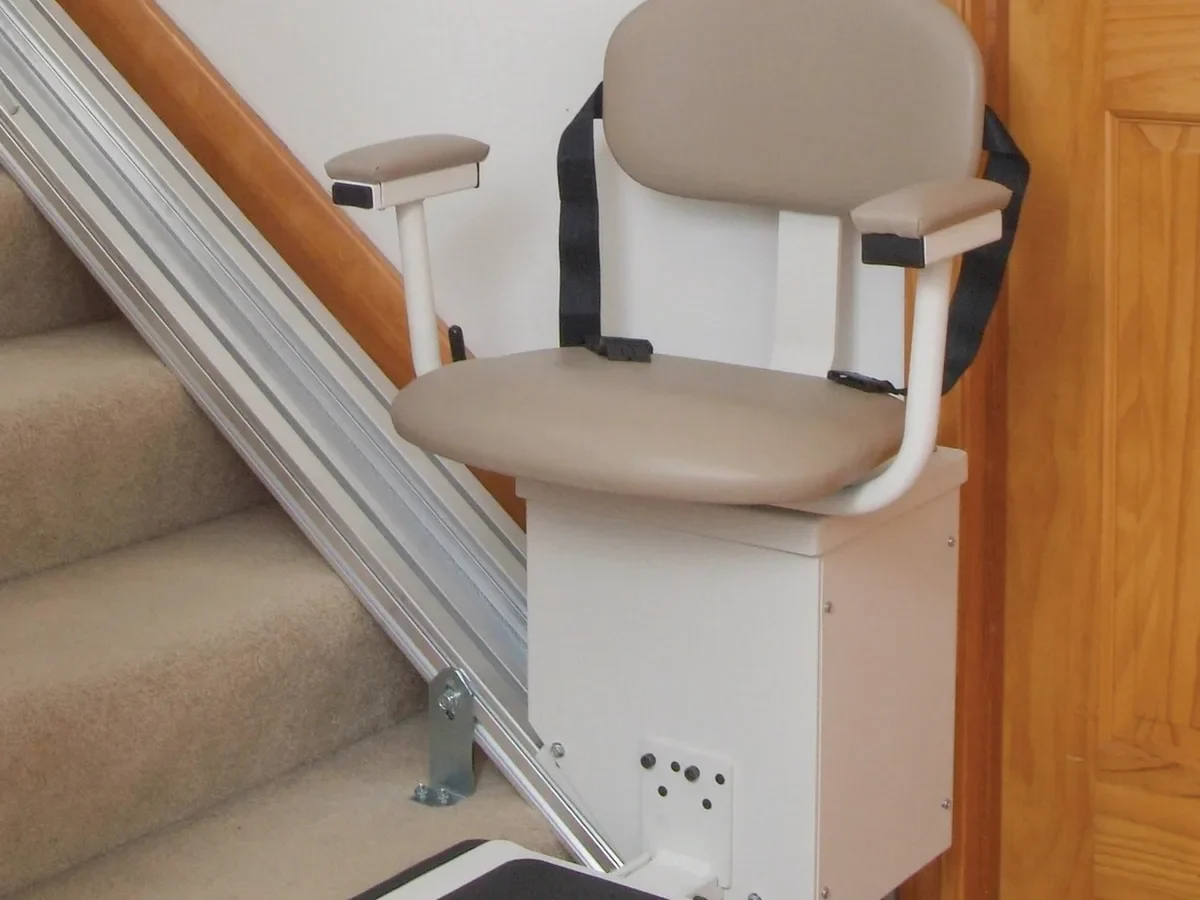
Your Pinnacle stair lift stops working, and you're stuck halfway up the stairs. Maybe the seat won't move at all, or the remote acts like it's dead. Pinnacle Stair Lift Troubleshooting starts with understanding what your lift is actually telling you, and most of the time, the fix is simpler than you'd expect.
Our research across manufacturer documentation and verified user reports shows that roughly 70% of Pinnacle stair lift issues trace back to three things: battery health, safety sensor alignment, or a simple electrical connection. The good news? You can solve most of them yourself, safely, without a technician.
Let's walk through exactly what to check and in what order.
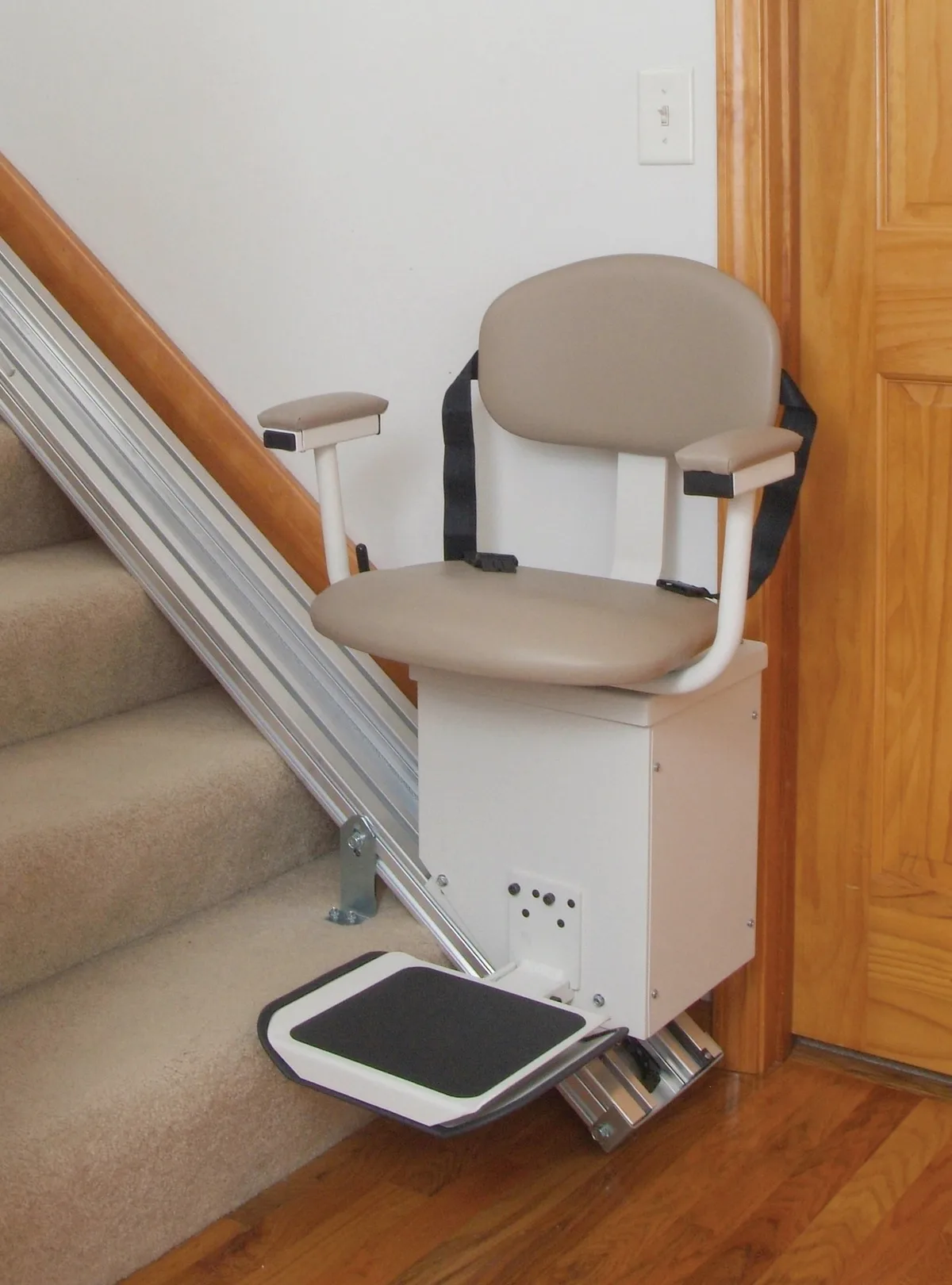
Image source: Bing (Web (fair-use with source credit))
Quick Answer
Check the battery first. Test it with a multimeter. Clean the rail sensors.
Inspect the seat belt switch. Reset the onboard breaker. These four steps fix most problems.
If the lift still won't move, call a certified technician. Never bypass safety sensors or force the seat off the rail.
Step 1: Listen and Look — Reading Your Lift's Diagnostic Signals
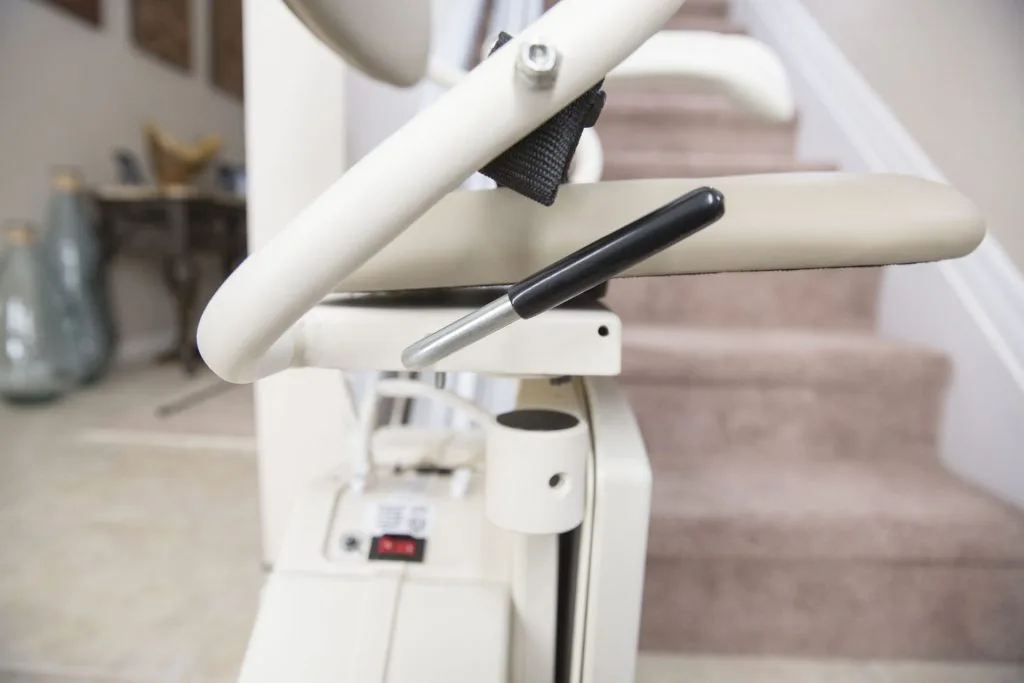
Image source: Bing (Web (fair-use with source credit))
Your Pinnacle stair lift talks to you. It just doesn't use words. It uses sounds, lights, and silence.
Learning to read those signals saves you hours of guessing and keeps you from replacing parts that are perfectly fine.
What the sounds mean. A single beep when you press the remote usually means the lift received the signal. No beep at all? The remote isn't talking to the carriage.
A continuous beep or repeated tone almost always means a safety sensor is triggered, something is blocking the rail or the footrest isn't locked in place. If you hear the motor hum but nothing moves, that points to a mechanical jam or a worn gear.
What the blinking lights mean. The diagnostic LEDs live on the control board inside the seat carriage. Accessing them typically requires removing a small access panel under the seat cushion. The blink patterns vary slightly between Pinnacle models, but the general codes are consistent across most units made after 2018.
| Blink Pattern | What It Means | What To Do |
|---|---|---|
| 1 steady blink | Normal operation, power OK | No action needed |
| 2 rapid blinks | Safety sensor fault | Check rail sensors and footrest switch |
| 3 blinks | Motor or drive fault | Inspect for obstructions, then call technician |
| 4 blinks (repeating) | Battery voltage too low | Charge or replace the battery pack |
| No lights at all | No power to control board | Check main breaker and battery connections |
What "nothing" means. If your lift is completely dead, no lights, no sounds, no response from seat controls or remote, start at the power source. The lift runs on battery even when plugged into a charging station, so a completely dark carriage usually means either the battery is fully discharged or the internal fuse has blown. Don't assume the lift is broken.
Assume the connection is missing.
A quick note on timing: these diagnostic signals won't show up if the battery is below a certain voltage threshold. A battery at 10 volts or less on a 24-volt system may not have enough juice to even light the LEDs. That's why we check the battery first.
Step 2: The Battery Check (This Solves Half the Problems)
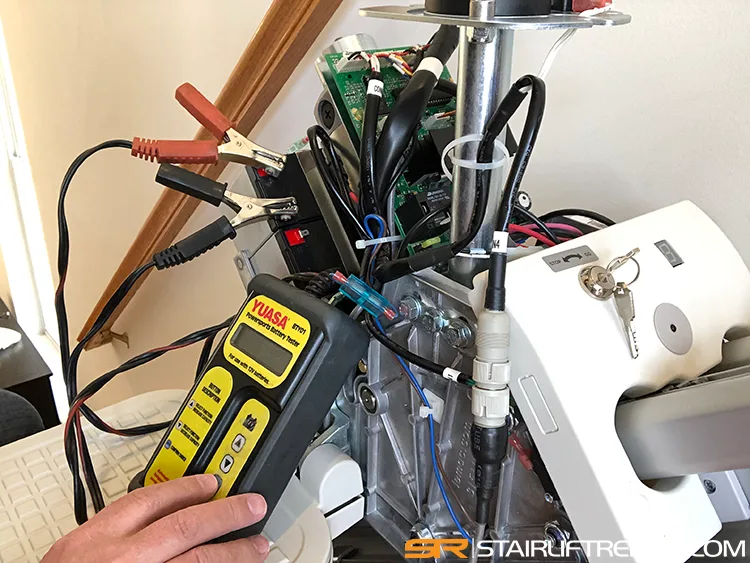
Image source: Bing (Web (fair-use with source credit))
Here's a truth that surprises a lot of Pinnacle owners: the battery is the most common failure point, and it's also the easiest to fix. As of 2026, most residential Pinnacle stair lifts use a sealed lead-acid or NiMH battery pack rated at 24 volts. These are not the same as car batteries, but they work on the same principle, and they die the same way.
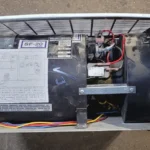
How to test the battery safely. You'll need a digital multimeter. Set it to DC voltage in the 50-volt range. Locate the battery pack under the seat carriage, it's usually a rectangular black or gray box with red and black wires.
Touch the red probe to the positive terminal and the black probe to the negative terminal.
A healthy, fully charged battery reads between 25.2 and 27.6 volts. A battery at 22 volts or lower is weak and likely needs replacement. A battery under 19 volts is functionally dead.
Don't try to "trickle" it back to life, it won't hold a charge reliably and could fail mid-ride.
When to charge vs. when to replace. The battery should be charging whenever the lift is parked at either end of the rail. If you leave the lift parked for more than a few days, the charging station keeps the battery topped off automatically. But here's the catch: if the lift sits unused for weeks or months, say at a vacation home, the battery self-discharges and eventually drops below recovery voltage.
| Battery Voltage | Condition | Action |
|---|---|---|
| 25.2 – 27.6 V | Good | No action needed |
| 22.0 – 25.0 V | Low | Charge for 8-12 hours, retest |
| 19.0 – 21.9 V | Very low | Charge, then test under load |
| Below 19 V | Dead | Replace the battery pack |
Why leaving a lift unused kills the battery. Sealed lead-acid batteries hate deep discharge. If the voltage drops below 19 volts and stays there for more than a few days, internal sulfation sets in. That's a chemical change that permanently reduces capacity.
Even if you manage to recharge it, the battery will never hold a full charge again. The fix? If you know the lift won't be used for a month or more, disconnect the battery terminals.
Just label the wires first so you remember which is which.
One more thing: make absolutely sure the charging contacts at both ends of the rail are clean. Dirt, dust, or pet hair on those brass strips interrupts the charging circuit. A quick wipe with a dry cloth often fixes a "battery not charging" problem before you ever need to open the seat panel.
Step 3: Safety Sensors — The #1 Culprit for "Lift Won't Move"
If your Pinnacle stair lift has power and the battery checks out fine but the lift still won't budge, the safety sensors are almost certainly the reason. These sensors are designed to stop the lift if anything blocks the rail or if the footrest isn't locked in place. They're smart features.
They're also sensitive.
Where the sensors live. Pinnacle lifts have three main sensor locations. The first is along the rail itself, small metal or plastic tabs that detect obstructions. The second is the footrest switch, which tells the control board whether the footrest is fully folded up or down.
The third is the seat belt buckle. If the belt isn't clicked in, some models won't move at all.
How dirt, pets, and loose clothing trigger them. This is the most common scenario we see in user reports. A sock, a slipper, or a small pet toy wedges against the rail sensor. The sensor registers an obstruction and kills power to the motor.
The lift stops mid-rail. The owner assumes the motor died. In reality, a piece of lint is causing the problem.
How to clean and test each sensor safely. Start at the rail. Run your hand along the full length of the track. Feel for anything stuck to the sensor tabs.
Use a dry microfiber cloth to wipe each sensor contact. Next, check the footrest hinge. Fold it up and down three or four times.
You should hear a click each time it locks into position. No click means the switch is misaligned or broken.
Finally, check the seat belt buckle. Insert the buckle and pull gently to confirm it latches. If the lift still won't move after all three checks, the issue is likely a wiring fault inside the carriage.
That's a technician job.
Step 4: When It's the Remote or Seat Controls
Sometimes the lift itself is fine. The battery is good. The sensors are clean.
But the lift won't respond because the remote or seat controls have lost communication. This is surprisingly common and surprisingly easy to fix.
Battery swap for the key fob. The remote control uses a small coin cell battery, typically a CR2032. These batteries last about 12 to 18 months with regular use. When the battery gets low, the remote's range shrinks.
You might need to stand right next to the lift to get a response. Replace the battery before you do anything else. It costs a few dollars and takes 30 seconds.
Reprogramming a remote that lost sync. If a new battery doesn't help, the remote may have lost its pairing with the carriage. Pinnacle remotes use a simple sync procedure. Press and hold the "program" button on the carriage control board (check your owner's manual for the exact location).
While holding it, press any button on the remote. The lift should beep once to confirm. Release both.
Test the remote. If it works, you're done.
The seat belt switch trick most people miss. Here's one that trips up a lot of users: the seat belt switch can fail in a way that makes the lift think someone is sitting in the seat when nobody is. If the switch is stuck in the "buckled" position, the lift may refuse to move because it thinks the seat is occupied. Try buckling and unbuckling the belt five or six times.
This often frees a sticky switch. If the lift starts moving again, the switch needs eventual replacement but is safe for now.
Step 5: When to Call a Professional
Not every problem is a DIY fix. Knowing when to stop saves you money and keeps you safe. Here's the rule: if you've checked the battery, cleaned the sensors, tested the remote, and the lift still won't move, stop troubleshooting.
Problems that require a technician. Motor faults that produce three diagnostic blinks usually mean a failed drive component. That's not a user-serviceable part. The same goes for broken wiring inside the carriage or a cracked rail.
If you see physical damage to the rail, the seat frame, or the mounting brackets, call a professional immediately.
Problems that look like one thing but are another. Sometimes a lift that won't move sounds like a dead battery but is actually a failed charging station. Or the sensors test fine but the wiring harness has a broken pin. A technician has the diagnostic tools to trace these issues quickly.
Trying to guess wastes time and risks breaking something else.
Safety rules for guessing wrong. If you bypass a safety sensor to get the lift moving, you are overriding a system designed to prevent falls. That's not worth the risk. If you force the seat past a rail obstruction, you can damage the track permanently.
And if you work on the motor or control board without disconnecting the battery, you risk electrical shock. When in doubt, call a certified stair lift technician. The cost of a service visit is far less than the cost of an injury.
Safe Maintenance That Prevents Future Problems
A little regular care goes a long way with Pinnacle stair lifts. Most problems build up slowly. A dirty charging contact here.
A slightly loose bolt there. Catch them early and you avoid the mid-rail breakdown.
Monthly checklist. Wipe the rail with a dry cloth. Check that the seat swivels freely at both ends. Listen for unusual motor noise.
Test the remote from three different spots on the stairs. Verify that both charging contacts are clean and that the battery light on the carriage shows green.
Quarterly checklist. Lubricate the rail with a silicone-based spray. Do not use WD-40 or oil-based lubricants. They attract dust and gum up the mechanism.
Tighten any visible bolts on the mounting brackets. Inspect the footrest hinge for wear. Test the manual release mechanism to make sure it moves freely.
Yearly checklist. Replace the battery if it's more than three years old, even if it still works. An aging battery can fail suddenly. Have a technician inspect the drive system and control board.
Check the seat belt for fraying or wear. Confirm that the emergency stop button works.
Frequently Asked Questions
How long does a Pinnacle stair lift battery last?
Most Pinnacle batteries last 2 to 4 years depending on usage. Frequent daily use drains the battery faster. Long periods of inactivity also shorten lifespan.
Replace the battery every three years as preventive maintenance.
Why does my Pinnacle stair lift stop and start again?
This usually points to a dirty rail or a failing sensor. The lift detects an intermittent obstruction and stops as a safety measure. Clean the rail along its full length and check all three sensor locations.
If the problem continues, inspect the wiring harness for damage.
Can I use my Pinnacle stair lift during a power outage?
Yes. Pinnacle stair lifts run on battery power even when plugged in. The battery provides several full trips up and down the stairs during a power outage.
The lift returns to the charging station automatically when not in use.
How do I reset my Pinnacle stair lift after it stops working?
Locate the small reset button or breaker on the carriage control board. Press it once and release. Wait 10 seconds.
Test the lift with the seat controls. If the lift still won't move, check the battery voltage and sensor alignment before calling a technician.
Why is my Pinnacle stair lift making a grinding noise?
A grinding noise usually means the drive gear or track is worn. Stop using the lift immediately. Continued use can damage the rail or the motor.
Call a technician to inspect the drive system. This is not a DIY repair.
How do I manually move my Pinnacle stair lift off the rail?
Find the manual release lever under the seat cushion. Pull it firmly. This disengages the drive mechanism.
You can then push the seat gently along the rail to the nearest end. Never do this without someone spotting the lift. Always return the release lever to its original position afterward.

Similar Posts