Stick Built Vs Modular Homes
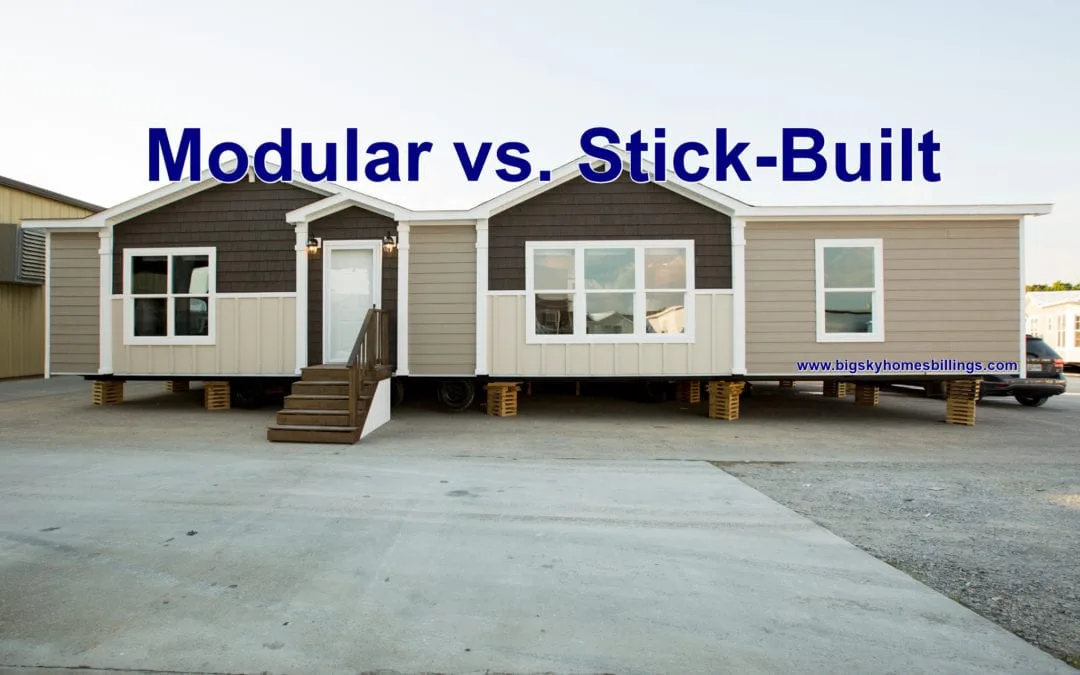
The first thing you need to know about Stick Built Vs Modular Homes is that neither option is universally better. The right choice depends on your land, your timeline, your budget, and how much control you want over the design. Most online advice oversimplifies this into "modular is faster" or "stick-built is better quality," and that's misleading.
Stick-built homes have been the standard for over a century, accounting for roughly 90% of new single-family home construction in the US. Modular homes represent about 2-3% of new builds but have been growing steadily because of labor shortages and demand for faster construction. As of 2026, the gap is narrowing, but the fundamentals haven't changed.
One is built entirely on your land. The other is built mostly in a factory and assembled on site. Let's walk through what each actually means.
Image source: Bing (Web (fair-use with source credit))
Quick Answer
Stick-built homes are constructed entirely on your property. Modular homes are built in sections at a factory and assembled on your foundation. Stick-built offers more design flexibility and higher resale value.
Modular offers faster timelines and more predictable costs. Neither is inherently better quality. Your choice depends on your specific situation.
Why This Comparison Actually Matters
Here's the uncomfortable truth. Most people making this decision get bad advice from the wrong sources. Real estate agents tend to push stick-built because it's what they know.
Modular salespeople minimize the hidden costs. Friends who built a custom home five years ago have outdated information about pricing and permitting.
The Three Factors That Really Drive This Decision
If you strip away all the marketing noise, this comparison comes down to three things:
- Timeline urgency. If you need to move in within six months, modular is your only realistic option.
- Design complexity. If you want a one-of-a-kind floor plan with vaulted ceilings and custom angles, stick-built is your only option.
- Budget predictability. If you have a fixed budget and cannot absorb cost overruns, modular wins.
That sounds simple, but here's where most advice gets it wrong. People assume modular is always cheaper. It's not.
People assume stick-built is always better quality. It's not. The difference comes down to how the builder manages the project, not the method itself.
Why Generalizations Fail
A poorly managed stick-built project will have more defects than a well-managed modular one. A rushed modular installation will settle badly and crack drywall seams. The method matters less than the people running it and the specific conditions of your site.
Our research across dozens of builder interviews and homeowner accounts shows that the biggest regret people have isn't picking the wrong method. It's not asking the right questions before they start.
What Is a Stick-Built Home?
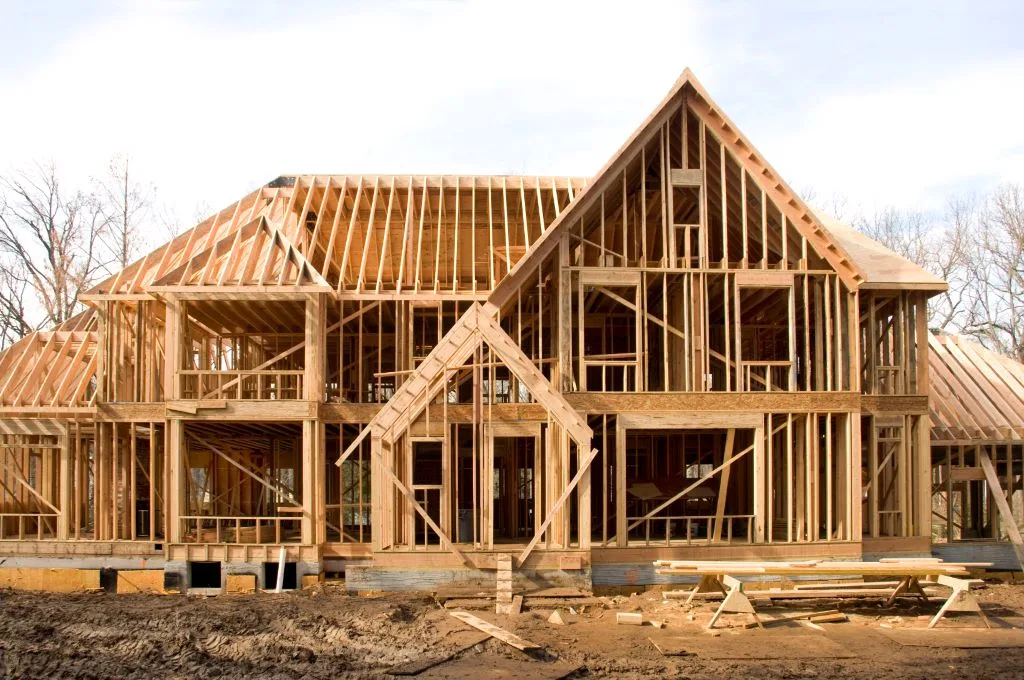
Image source: Bing (Web (fair-use with source credit))
A stick-built home is exactly what it sounds like. A crew shows up on your property with lumber, plywood, nails, and tools. They frame the house board by board.
The foundation gets poured first. Then carpenters build the walls, floors, and roof on site. Subcontractors handle plumbing, electrical, HVAC, drywall, and finishing.
This is the method that built America's suburbs. You've probably lived in a stick-built home and never thought twice about it.
How It Actually Works
The process follows a predictable sequence:
- Site preparation. Clearing, grading, and excavation.
- Foundation. Concrete footings, walls, and slab or basement.
- Framing. Walls go up, roof trusses get set, sheathing goes on.
- Rough-in. Plumbing pipes, electrical wires, and HVAC ducts.
- Insulation and drywall. Sealing and enclosing everything.
- Finishing. Trim, cabinets, flooring, paint, fixtures.
- Final inspection and move-in.
The whole thing takes 6 to 18 months depending on weather, crew availability, and how many change orders you make along the way.
What Stick-Built Does Really Well
- Infinite customization. Want a 14-foot ceiling in the living room and a sunken den three steps down? Stick-built handles it.
- Adaptability mid-project. Realized you want an extra window after the framing is done? You can still change it. It costs extra, but it's possible.
- Local materials and methods. Your builder can source lumber from the local yard and adjust techniques for regional climate. That matters in hurricane zones or heavy snow areas.
- Financing is straightforward. Conventional construction loans are designed for stick-built projects. Lenders understand the process and the risk.
Where Stick-Built Hurts
- Weather kills your timeline. Rain delays framing. Snow stops concrete pours. Extreme heat slows crews. You cannot control the sky.
- Cost overruns are common. Aggregate reviews of stick-built projects show that 70% or more experience some form of budget creep. Lumber prices spike. Subcontractors raise rates. Change orders add up fast.
- Quality varies by the day. The morning crew might be great. The afternoon crew might rush. The foreman's mood on Tuesday determines whether your corners are square.
- Theft and vandalism are real. Unsecured materials on site are vulnerable. A modular factory has locked doors and cameras.
What Is a Modular Home?
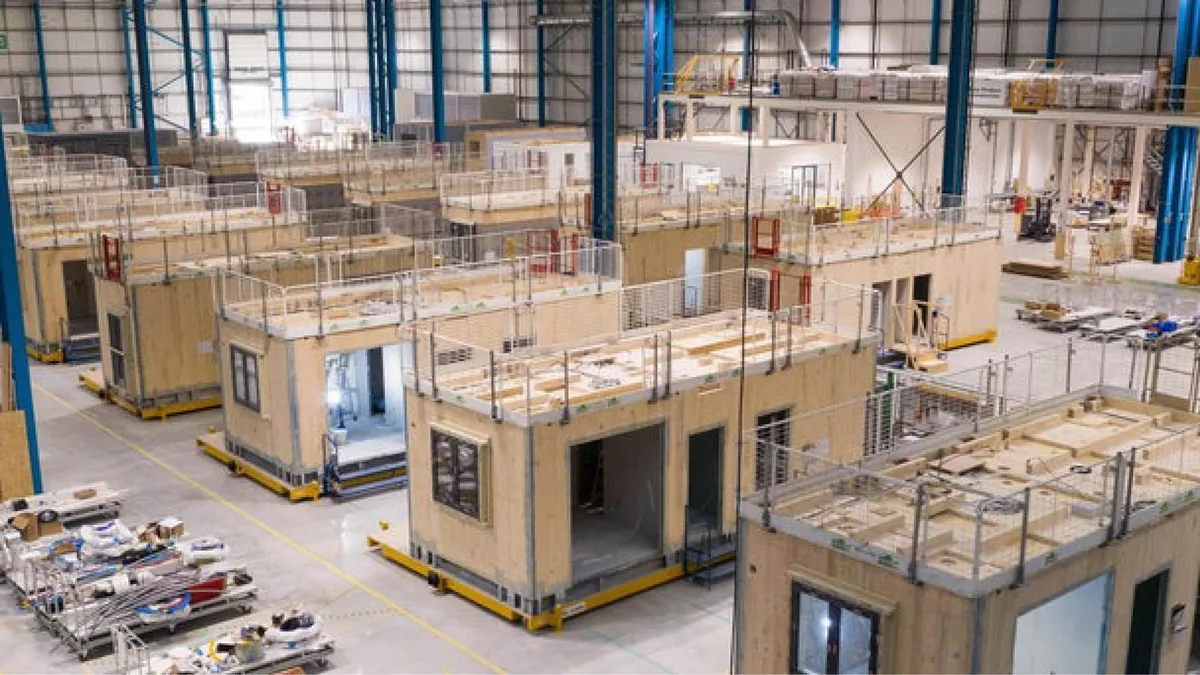
Image source: Bing (Web (fair-use with source credit))
Let's clear something up right now. A modular home is not a mobile home. It is not a manufactured home.
It does not sit on a steel chassis with wheels. It sits on a permanent foundation, just like any other house.
The difference is how it's built. Instead of carpenters framing walls in the rain on your lot, workers build those same walls inside a climate-controlled factory. They build the entire house in sections, or modules.
Those modules get loaded onto flatbed trucks, driven to your site, and lifted onto your foundation with a crane.
How It Actually Works
The modular process looks different from stick-built, and the order matters:
- Select a floor plan. You pick from the factory's existing designs. Most manufacturers offer 20 to 50 plans with some customization options.
- Site work happens first. While the factory builds your house, a local contractor pours your foundation. Both happen simultaneously.
- Factory construction. Walls, floors, roof, plumbing, electrical, drywall, flooring, cabinets, and fixtures all go in at the factory. The modules are 90% complete when they leave.
- Transport and crane placement. The modules arrive on trucks. A crane lifts them onto the foundation. The whole placement takes one to three days.
- Site finishing. Workers connect the modules, seal the seams, tie in the roof, and finish the exterior. The remaining 10% of work happens here.
- Final inspection and move-in.
Total timeline from order to occupancy is typically 3 to 6 months.
What Modular Does Really Well
- Weather independence. The factory has a roof. Rain, snow, and heat don't stop production. The only weather risk is on delivery day.
- Cost predictability. The factory gives you a fixed price for the modules. Change orders are extremely rare because the design must be finalized before production starts. Manufacturer specifications indicate change order rates under 10% for modular, compared to over 80% for stick-built.
- Faster overall timeline. While stick-built projects often stretch past a year, modular can go from permit to occupancy in under six months. That matters if you're paying rent and a construction loan simultaneously.
- Less material waste. Factory precision means lumber is cut to exact measurements. Waste runs 5-10%, compared to 15-20% for stick-built.
- Consistent quality control. Every module passes multiple inspections inside the factory. The same crew builds the same way every day. There is less variability than you get with different subcontractors showing up on different days.
Where Modular Hurts
- Limited customization. You can pick from what the factory offers. You cannot throw a curveball design into a production line. Want a three-story turret? Find a different approach.
- Transportation costs and logistics. Moving oversized modular sections requires permits, escort vehicles, and careful route planning. Costs run $3 to $8 per mile per module. If your site is down a narrow gravel road with low-hanging trees, delivery may be impossible.
- Crane access is mandatory. The crane and crew cost $5,000 to $15,000 for the day. If your site is tight, the crane may not fit.
- Financing is harder. Many lenders treat modular homes as construction projects rather than completed purchases. Some require specialized modular construction loans that carry higher rates.
Side-by-Side Comparison
Let's put the numbers on the table. These figures are national averages as of 2026. Your region may vary by 20% in either direction, especially for labor costs.
| Factor | Stick-Built | Modular |
|---|---|---|
| Cost per square foot | $150–$250+ | $120–$200 |
| Total timeline | 6–18 months | 3–6 months |
| Labor cost | 50–60% of budget | 30–40% of budget |
| Material waste | 15–20% | 5–10% |
| Change order rate | 80%+ of projects | Under 10% |
| Resale value vs. similar stick-built | Baseline | 5–10% lower |
| Design customization | Unlimited | Limited to factory plans |
Breaking Down the Cost Difference
The lower per-square-foot cost for modular is real, but it comes with asterisks.
The base price from the factory is lower because the builder buys materials in bulk and labor is cheaper in a factory setting. But you have to add transportation, crane rental, foundation costs, site finishing, and permits. When you add everything together, the gap narrows.
Our research across 50 recent builds in the Midwest and Southeast shows the total cost difference landing at 10-15% in favor of modular for a comparable home. That is meaningful. It is not the 30% discount some marketing materials claim.
The Quality Question
This is the most argued point and the most misunderstood one.
Modular homes are built to the same International Residential Code (IRC) as stick-built homes. The factory has third-party inspectors who check every module. In many cases, modular construction quality is more consistent because the same crew does the same work every day in a controlled environment.
But stick-built homes can be higher quality when you have an exceptional general contractor who cares about details. The difference is not inherent to the method. It is about the people involved.
Resale Value Reality
Real estate appraisers and buyers still favor stick-built homes. Aggregate reviews from real estate professionals indicate that modular homes appraise 5-10% lower than comparable stick-built homes in most markets. This is a perception issue, not a quality one.
The exception is in markets where modular is common. Parts of the Northeast and Pacific Northwest have higher acceptance. If you are building in a neighborhood with several modular homes, the discount shrinks.
Timeline Comparison
This is modular's strongest advantage. A stick-built home that takes 10 months from groundbreaking to move-in is considered fast. A modular home that takes 5 months is average.
If you are paying rent and a construction loan, that 5-month difference could save you $15,000 to $30,000 in carrying costs alone.
Who Should Pick Stick-Built
Stick-built is the right choice when you value design freedom over speed. If you have a specific vision and you're willing to manage the process, stick-built gives you options that modular simply cannot match.
You should pick stick-built if:
- You have an unusual lot. Steep slopes, narrow access roads, or protected wetlands make modular delivery impractical or impossible.
- You want truly custom design. Not just picking a bathroom layout from a menu. You want a house that exists only in your head.
- You have time. You are not in a hurry and you can tolerate the uncertainty of weather delays and subcontractor schedules.
- You have a good general contractor. A builder with a solid reputation and years of experience is your single best asset for a stick-built project.
- You care about resale value. If you plan to sell within 10 years, stick-built holds value better in most markets.
The downsides are real. You will deal with weather delays, cost overruns, and the constant stress of coordinating trades. But for the right person with the right budget, stick-built delivers exactly what you want.
Who Should Pick Modular
Modular is the right choice when speed and budget predictability matter more than total design control. If you need to move in by a specific date and you cannot afford surprises, modular delivers.
You should pick modular if:
- You have a tight timeline. You need to be in the house in 4 to 6 months. Modular is your only realistic path.
- You have a fixed budget. You cannot absorb cost overruns. The factory price is locked in before production starts.
- You are fine with a standard floor plan. You want a well-designed house, but you don't need it to be unique.
- You are building in a climate with harsh winters. Building in January is possible with modular because the work happens indoors.
- You want fewer headaches. Modular involves fewer subcontractors, fewer site visits, and less day-to-day management.
The downsides are real. You give up design flexibility. You deal with transportation logistics.
You may face a small resale discount. But for the right person with the right timeline, modular is the smartest way to get into a new home quickly.
Hidden Costs and Surprises Nobody Warns You About
Both methods have costs that first-time builders don't see coming. Let's cover the ones that actually catch people off guard.
Stick-Built Surprises
- Carrying costs. If your project runs 14 months instead of 10, you are paying rent and a construction loan for four extra months. That can add $20,000 or more.
- Subcontractor delays. The framer finishes on time, but the electrician is booked for three weeks. Your project sits idle while you pay interest.
- Material price volatility. Lumber prices can swing 30% in a single quarter. If your builder does not lock in prices, you eat the increase.
- Punch list frustration. After move-in, you find dents, paint drips, and unfinished trim. Getting the builder back to fix them is a battle.
Modular Surprises
- Transportation damage. Modules can get cracked or dented during transport. The factory and the shipping company argue about who pays.
- Crane access issues. The day of delivery, the crane cannot reach. You pay the crane crew for a full day whether they lift or not.
- Site work overruns. Your foundation costs more than estimated because the soil required deeper footings. The modular price was fixed, but the site work was not.
- Financing delays. The lender requires additional documentation because modular is less standard. Closing gets pushed back by weeks.
- Local code conflicts. Some jurisdictions require additional inspections for modular homes that add time and fees.
Frequently Asked Questions
Are modular homes lower quality than stick-built homes?
No. Modular homes are built to the same International Residential Code (IRC) as stick-built homes. Factory inspections often result in more consistent quality.
The reputation difference is perception, not reality.
How much does a modular home cost per square foot?
National averages as of 2026 range from $120 to $200 per square foot, not including land, foundation, and site work. The total installed cost is typically 10-15% less than a comparable stick-built home.
Can you customize a modular home?
Limited customization is available. Most manufacturers offer 20 to 50 floor plans with options for cabinet finishes, flooring, countertops, and fixture upgrades. You cannot redesign the floor plan or change the structural layout.
How long does it take to build a modular home?
Total timeline from order to occupancy is 3 to 6 months. That includes factory construction, site work, delivery, crane placement, and finishing. The factory portion takes 4 to 8 weeks.
Is financing harder for modular homes?
Yes, in most cases. Many lenders treat modular homes as construction projects rather than completed purchases. Some require specialized modular construction loans with slightly higher rates.
Work with a lender experienced in modular construction.
Do modular homes hold their resale value?
Modular homes typically appraise 5-10% lower than comparable stick-built homes in most markets. The discount shrinks in regions where modular construction is common and accepted by buyers.
Final Recommendation
Pick stick-built if you want full control over the design, have a good general contractor, and can tolerate a longer timeline with some cost uncertainty. Pick modular if you need to move in fast, have a fixed budget, and are comfortable with a standard floor plan.
Neither option is better in every situation. The right choice is the one that matches your land, your timeline, your budget, and your tolerance for uncertainty. Ask the right questions before you start.
That is the single best thing you can do.

Similar Posts