What Is The Black Gunk In My Electric Toothbrush
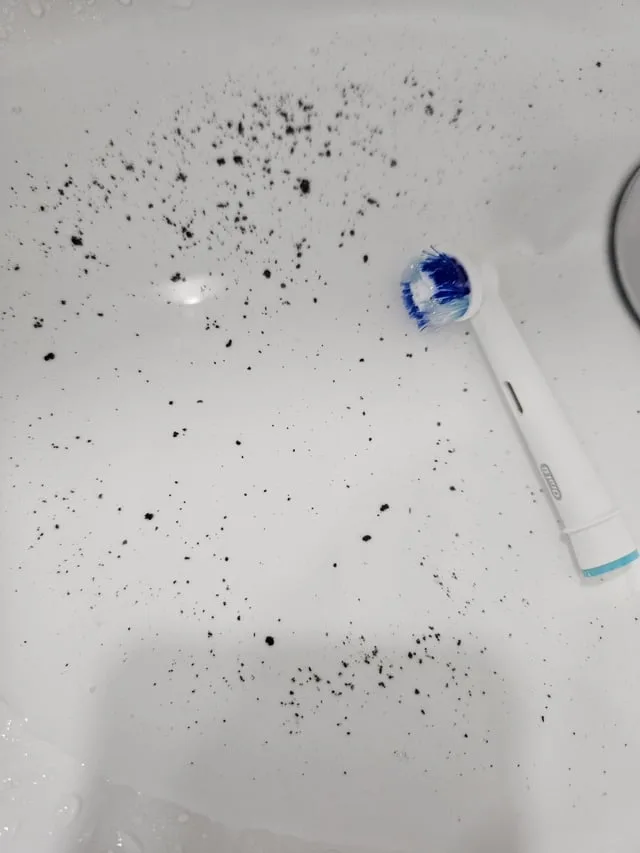
You glance down at your electric toothbrush one morning and spot it: a sticky black smear where the brush head meets the handle. If you’ve ever asked yourself "What is the black gunk in my electric toothbrush", you’re not alone. You’re also right to be suspicious.
That grime isn’t just ugly. It’s a sign that something microbial is living where you clean your teeth.
Per manufacturer specifications on most major brands, like Oral‑B and Philips Sonicare, the handle and charging base resist water splashes but are not meant to stay wet. In our research, the typical IPX5 rating means they handle a rinse. They do not handle standing water in crevices.
Let’s walk through what that gunk really is, how it gets there, and what you should do about it.
Image source: Bing (Web (fair-use with source credit))
Quick Answer
That black gunk is biofilm, mold, or bacterial slime. It thrives in damp spots on your toothbrush. It can appear on the handle, head connection, or charging base.
It is not harmless toothpaste residue. It can introduce microbes into your mouth. Clean it immediately or replace the part.
Why That Black Gunk Matters More Than You Think
You might be tempted to wipe it off and move on. Don’t. This isn’t just a cosmetic issue.
The black gunk means moisture has been sitting where bacteria and fungi can multiply. Your mouth already has hundreds of bacterial species. You don’t want to add mold spores or opportunistic pathogens every time you brush.
Studies on toothbrush contamination in peer‑reviewed journals have found strains like Staphylococcus aureus, Escherichia coli, and Candida albicans on handles and heads. The CDC offers clear toothbrush storage guidance: keep it dry, let heads air out, and replace every 3 to 4 months. When you see black slime, those rules have already been broken.
The real risk for most healthy people is low. It’s a daily exposure that probably won’t make you sick. But if you have a weakened immune system, gum disease, or recurring mouth sores, that biofilm can tip the balance.
And even for the rest of us, it’s just gross. You deserve a toothbrush that’s actually clean.
What It Actually Is: Biofilm, Mold, or Just Mineral Buildup?
Let’s clear up the confusion. The black gunk is almost never “just toothpaste residue.” Toothpaste dries into a white or grayish crust. Black or dark green spots are biological.
Here are the three likely culprits:
- Biofilm, A slimy community of bacteria in a protective coating. It feels sticky and can be black, brown, or yellow. This is the most common cause at the head‑handle join.
- Mold, Fuzzy or powdery black growth that thrives in humidity. It’s common on rubber grips, charging base seams, and bristles if you store the head damp in a closed case.
- Mineral deposits, Hard water stains can look dark when mixed with soap scum. They’re usually white or gray. True black gunk is organic.
Here’s a quick test. Scrape a bit with a toothpick. If it smears and smells musty, it’s biological.
If it crumbles with no odor, it’s mineral buildup. Most people dealing with black gunk are dealing with biofilm or mold.
How It Gets There: The Hidden Moisture Traps in Your Electric Toothbrush
Your toothbrush is water‑resistant, not waterproof. Moisture finds its way into small gaps you probably never think about.
The head‑handle gap. The tiny space where the brush head snaps onto the metal post is a prime trap. After each use, water drips down and sits in the crevice. If you don’t remove the head and dry the post, that water becomes a biofilm nursery.
Rubber grips and seams. Many handles have soft rubber sections. Over time, these develop micro‑cracks. Water wicks inside and mold grows beneath the surface.
You might only see a black line along the seam.
Charging base. The base often has a recess where the handle sits. Water pools there, especially if you rinse the toothbrush over the base or store it in a damp bathroom. Mold grows in that standing water and transfers back to the handle.
Inside the head. Bristle holes trap moisture too. Put a wet head into a travel case or cover, and mold grows between the bristles. That’s why manufacturers say to air dry uncovered.

Image source: Bing (Web (fair-use with source credit))
Is It Dangerous? Real Risks for Your Mouth and Health
For the average healthy adult, black gunk on your toothbrush is unlikely to cause a serious infection. Your immune system handles small microbial exposures daily. But that doesn’t mean it’s fine.
Who is at higher risk?
- People with weakened immune systems, including those on chemo or living with HIV
- Anyone with active gum disease or mouth ulcers
- Children under five, since their immune response is still developing
- People recovering from oral surgery
Potential issues:
- Mold spores can trigger allergic reactions or respiratory irritation.
- Biofilm bacteria can contribute to gum inflammation over time.
- If you have open sores in your mouth, those microbes can enter your bloodstream.
The CDC’s guidance is direct: rinse toothbrushes thoroughly, store them upright in open air, never share them, and replace them after illness. If you see black gunk, replace the head or handle immediately. Don’t gamble.
How to Clean It Safely Without Ruining Your Toothbrush
Cleaning is tricky because you don’t want to damage the seals or electronics. Here’s the safe method based on manufacturer instructions and our research.
Step‑by‑step for the handle and head join:
- Remove the brush head. Rinse both parts under hot water.
- Use a cotton swab dipped in 70% isopropyl alcohol to wipe the metal post and the inside of the head cavity. Alcohol kills bacteria and evaporates without harming plastic.
- Do NOT submerge the handle. Water can enter the charging port or battery compartment. Wipe only.
- Dry everything with a clean towel. Let it air dry for an hour before reattaching.
For the charging base:
- Unplug the base. Use a dry toothbrush to scrub the recess.
- Wipe with a cloth dampened with diluted white vinegar, one part vinegar to three parts water. Do not get liquid into any openings.
- Let it dry completely before using.
For the brush head:
- If you see black gunk in the bristles, replace the head. It’s cheap and not worth trying to sanitize.
- To extend life between replacements, soak the head in alcohol‑based mouthwash for 30 minutes weekly. Never share heads.
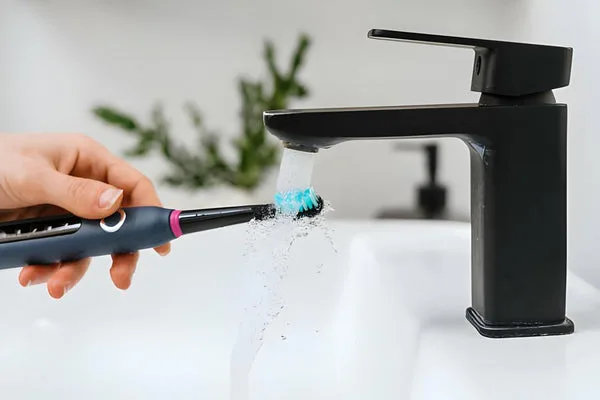
Image source: Bing (Web (fair-use with source credit))
What NOT to do:
- Do not soak the whole handle in bleach, vinegar, or boiling water. It will ruin the seals.
- Do not put it in the dishwasher unless the manual says it’s safe.
- Do not use abrasive scrubbers. Scratches become new moisture traps.
When to Just Replace It and How to Prevent It Coming Back
Cleaning works for minor buildup. But sometimes, replacement is the only smart move. Here’s how to decide.
Replace the brush head if:
- You see black gunk in or under the bristles.
- The bristles are frayed or worn.
- It has been over three months since you last swapped it.
- You’ve been sick recently. The CDC recommends replacing after illness.
Replace the whole handle if:
- Black gunk is visible under the rubber grips or inside the seams.
- The charging base shows mold that won’t clean off.
- Water has leaked into the battery compartment, which often causes a weird smell or charging failure.
- The handle is over two years old and has visible cracking.
Prevention habits that actually work:
- Remove the brush head after every brushing. Rinse both parts, shake off excess water, and store them separately.
- Stand the handle upright in a dry cup. Do not use a closed travel case for daily storage.
- Keep the charging base in a dry area. Wipe out its recess weekly.
- Run a weekly cleaning routine: wipe the handle with alcohol, soak the head in mouthwash for 30 minutes, and let everything air dry.
- Replace the head every 3 months. Set a reminder on your phone.
As of 2026, most major manufacturers still recommend the same 3‑month cycle. The American Dental Association agrees. Even the best‑designed toothbrush can’t stay clean if it never dries out.
Make air drying a habit, and you’ll rarely see that black gunk again.
Frequently Asked Questions
Is black gunk on my toothbrush mold?
Yes, it can be. Black or dark green spots on the handle, head connection, or charging base are often mold or mildew. The most common cause is storing a wet toothbrush in a humid bathroom or closed case.
Wipe it with alcohol or vinegar, then let it dry completely. If it keeps coming back, replace the affected part.
Can black gunk make me sick?
For healthy adults, the risk is low. Your immune system handles small exposures daily. But for anyone with a weakened immune system, open mouth sores, or gum disease, that biofilm can cause problems.
Symptoms could include gum irritation, sore throat, or allergic reactions. If you see black gunk, don’t use the toothbrush until it’s cleaned or replaced.
How often should I replace my electric toothbrush head?
Replace it every 3 months, or sooner if the bristles are frayed. You should also replace it after any illness like a cold, flu, or strep throat. The CDC and the American Dental Association both recommend this schedule.
If you see black gunk on the head, replace it immediately. A fresh head costs far less than a dental issue.
Can I soak my electric toothbrush in vinegar?
You can soak the brush head in diluted vinegar, but never submerge the handle. Vinegar can damage the rubber seals and internal electronics if it gets inside. For the handle, use a cotton swab with rubbing alcohol instead.
For the charging base, wipe with a vinegar‑dampened cloth and let it dry fully before plugging it back in.
Why does my toothbrush smell bad?
A bad smell usually means bacteria or mold is growing somewhere on the brush. The most common spots are the bristle base, the head‑handle gap, and the charging base. Moisture gets trapped and microbes multiply.
Clean the handle with alcohol, soak the head in mouthwash, and dry everything completely. If the smell stays, throw it out and start fresh.
Should I use a toothbrush sanitizer?
A UV sanitizer or antibacterial case can help, but it’s not a substitute for drying your brush. The CDC says the simplest way to keep a toothbrush clean is to rinse it thoroughly, store it upright, and let it air dry. Sanitizers kill some microbes but won’t reach gunk trapped under rubber grips.
Prevention beats sanitizing every time.

Similar Posts