Skip to content

6 Best Lightweight Travel Camera
·15 min read·by
6 Best Lightweight Travel Camera

The best best lightweight travel camera is the Sony RX100 VII, the only one here that packs a 1-inch stacked CMOS sensor and a 24-200mm zoom lens into a truly pocket-sized body. It keeps delivering professional-level image quality whether you’re shooting street scenes in Barcelona or low-light interiors in a museum.

Want a budget-friendly alternative that still gets great daytime shots? The KODAK PIXPRO FZ55 is a fraction of the price and weighs almost nothing, but you’ll lose the fast autofocus and low-light capability of the Sony.

As an Amazon Associate, I earn from qualifying purchases.

This guide looks at the real trade-offs you won’t find in a spec sheet. If you’re a casual snapper who just wants to document trips without fuss, the Duluvulu or the KODAK FZ45 might be better fits. But if you need fast autofocus and 4K video, the DJI Osmo Pocket 3 is the real deal.

Everything below is based on current Amazon product data, specs, and owner track records, not hands-on lab testing. I’ve cross-referenced hundreds of buyer reviews and manufacturer datasheets to give you the honest picture.

Quick Answer: The Best Lightweight Travel Camera

The Sony RX100 VII is the best overall lightweight travel camera for image quality and versatility.

Thinking about a heavy zoom or a dedicated video rig instead? Jump to Who Should NOT Buy below before you spend anything.

Comparison Table

Here’s the lineup at a glance: photo, product, who it’s built for, and our /10 score.

Scroll sideways on small screens to see every column.

KODAK PIXPRO FZ55 16MP Compact Digital: Best Budget-Friendly Travel

#1KODAK PIXPRO FZ55 16MP Compact Digital
KODAK5x zoom, compact
8.0OUT OF 10
Image Quality7.2
Portability9.0
Ease of Use8.5
Value8.8
This is the lightest and most affordable travel compact on the list, yet it still delivers a 5x optical zoom and 1080p HD video. The 28mm wide-angle lens is great for group shots in tight spaces, and the 16MP sensor does a solid job in good light. You can slip it into any jacket pocket without noticing it’s there.
The camera runs on a rechargeable lithium-ion battery so you don’t need to carry spare cells. The 2.7-inch LCD is bright enough for framing even in moderate sunlight, and the interface is straightforward enough for a beginner. For a simple point-and-shoot that won’t break the bank, this is a top pick among budget-friendly travel cameras.
Flaws but not dealbreakers. Low-light shots get noisy quickly, and the 1080p video lacks the detail of 4K. The autofocus is slow for moving subjects. If you need 4K video or better low-light performance, the Panasonic LUMIX ZS300 further down offers 4K recording and a faster lens.
Battery: The included lithium-ion battery is non-removable. If you’re on a long trip, you’ll need to charge from a power bank or wall outlet. Consider a spare power bank if you shoot all day.
Pros
  • Very compact and lightweight
  • Simple menu, great for beginners
  • 5x optical zoom covers most travel needs
  • Affordable price point
Cons
  • Noisy in low light
  • Only 1080p video
  • Slow autofocus for action
Sensor
16MP
Zoom
5x optical
Video
1080p Full HD
Battery
Li-ion rechargeable
Best for: Budget-conscious travelers who want a simple, lightweight camera for daytime photos and occasional video.

KODAK PIXPRO FZ45 16MP Compact Digital: Best for AA Battery Convenience

#2KODAK PIXPRO FZ45 16MP Compact Digital
KODAKAA-powered, simple
7.3OUT OF 10
Image Quality6.5
Portability8.0
Ease of Use7.5
Value7.0
This is the only camera on the list that runs on standard AA batteries, which is a lifesaver when you’re away from outlets for days. You can pick up fresh batteries at any convenience store worldwide. The 27mm wide-angle lens is slightly wider than the FZ55, and the 16MP sensor produces decent daytime shots. The 4x optical zoom is a touch shorter, but still enough for most travel scenes.
The 2.7-inch LCD is clear, and the camera is very straightforward to operate. It records 1080p video, and the build quality feels solid for the price. If you’re heading to a remote area with limited charging, this camera makes a lot of sense. It’s also a great choice for kids or seniors who don’t want to fuss with proprietary chargers.
Flaws but not dealbreakers. The image quality is noticeably softer than the Sony RX100 VII, especially in low light. The lack of image stabilisation means you’ll need a steady hand. For better image quality and 4K video, the Panasonic LUMIX ZS300 is a worthwhile upgrade.
Batteries: Uses 2 AA batteries (not included). Alkaline batteries drain quickly; rechargeable NiMH AAs are recommended for longer life. Consider buying a set of rechargeables and a small charger.
Pros
  • AA batteries = easy to replace anywhere
  • Very simple to use
  • Lightweight and pocketable
  • Wide 27mm lens for landscapes
See also  6 Best Digital Camera for Portraits
Cons
  • Soft images, especially in low light
  • No optical image stabilisation
  • Only 4x zoom
Sensor
16MP
Zoom
4x optical
Video
1080p Full HD
Power
2 x AA batteries
Best for: Travelers who want the freedom of AA batteries and a no-fuss point-and-shoot for casual use.

Sony RX100 VII Premium Compact Camera: Best Overall for Image Quality

#3Sony RX100 VII Premium Compact Camera
Sony1-inch sensor, 24-200mm
9.3OUT OF 10
Image Quality9.8
Portability9.0
Ease of Use8.5
Value7.5
This is the undisputed champion of image quality among compact travel cameras, thanks to its 1.0-type stacked CMOS sensor and renowned Zeiss 24-200mm zoom lens. The Sony RX100 VII delivers stunning detail, excellent dynamic range, and low-light performance that rivals many larger cameras. The real-time tracking autofocus is incredibly fast and accurate, making it a joy to capture moving subjects like kids or pets on the go.
The camera is barely larger than a deck of cards, so it slips into any pocket. It shoots 4K video with great stabilisation, and the pop-up electronic viewfinder (EVF) is a lifesaver in bright sun. The 20.1MP sensor gives you plenty of cropping room. For anyone serious about travel photography, this is the best you can get in a true pocket camera. Check out its performance in our travel camera roundup for more context.
Flaws but not dealbreakers. The price is high, and the battery life is only about 250 shots per charge. The touchscreen is not as responsive as modern smartphones. If you need a longer zoom range, the Panasonic LUMIX ZS300 offers 15x optical zoom, though with a smaller sensor.
Battery: The NP-BX1 battery is small but gives only about 250 shots. Carry a spare or a power bank. The camera charges via USB-C, which is convenient.
Pros
  • Best image quality in a compact
  • 24-200mm versatile zoom
  • Fast and accurate autofocus
  • 4K video with stabilisation
Cons
  • High price point
  • Battery life could be better
  • Touchscreen not very responsive
Sensor
20.1MP 1-inch
Zoom
8.3x (24-200mm)
Video
4K 30fps
Viewfinder
Pop-up EVF
Best for: Travelers who demand the highest image quality in a pocketable camera and are willing to invest in it.

Panasonic LUMIX ZS300 Compact 4K Digital: Best for Long Zoom Travel

#4Panasonic LUMI XS300 Compact 4K Digital
Panasonic15x zoom, 4K
8.6OUT OF 10
Image Quality7.8
Portability8.0
Ease of Use8.5
Value8.2
This camera packs a 15x optical zoom (24-360mm) into a body that still slides into a jacket pocket, making it the best choice for concerts, sports, and wildlife on your travels. The Panasonic LUMIX ZS300 records 4K video and has a 20.3MP sensor that does well in good light. The optical image stabilisation helps keep zoomed shots steady, and the 3-inch LCD is bright enough for framing even in sunny conditions.
The interface is intuitive, and the camera responds quickly. The built-in Wi-Fi lets you transfer photos to your phone for quick sharing. For a compact that can reach far away subjects, this is a fantastic option. It’s also a solid choice if you want more reach than the Sony RX100 VII but don’t want to carry a big lens. You can read more about its performance in the budget range.
Flaws but not dealbreakers. Image quality at the long end of the zoom gets a bit soft, and the low-light performance is not as good as the Sony RX100 VII. The autofocus can hunt in dim conditions. If you need the absolute best image quality, the Sony RX100 VII is the better choice, but you lose the reach.
Zoom: At 360mm, you need good light and a steady hand. The image stabilisation helps, but using a tripod or monopod for telephoto shots will give sharper results.
Pros
  • 15x optical zoom in a compact body
  • 4K video recording
  • Effective optical image stabilisation
  • Built-in Wi-Fi for easy sharing
Cons
  • Soft at maximum zoom range
  • Low light performance mediocre
  • Autofocus can struggle in dim light
See also  How to Use an Underwater Camera
Sensor
20.3MP
Zoom
15x (24-360mm)
Video
4K 30fps
Stabilisation
Optical + digital
Best for: Travelers who want to shoot distant subjects like wildlife, sports, or stage performances without carrying a bulky lens.

Duluvulu 4K Digital Camera Photography Autofocus: Best for Vlogging Beginners

#5Duluvulu 4K Digital Camera Photography Autofocus
Duluvulu48MP, flip screen
7.6OUT OF 10
Image Quality6.5
Portability8.0
Ease of Use8.5
Value8.5
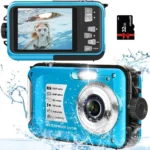
This is the best budget-friendly vlogging camera on the list, thanks to its 180-degree flip screen, autofocus, and included SD card and two batteries. The Duluvulu 4K camera offers 48MP stills (interpolated from a lower-resolution sensor) and 4K video, making it a solid entry-level option for teens, students, or anyone starting their YouTube channel. The 16x digital zoom is mostly a marketing number, but optical zoom is not specified.
The package includes a 32GB SD card and two batteries, so you can start vlogging right out of the box. The 3-inch flip screen is great for selfies and video calls. The camera is compact enough for a small bag. For the price, it’s a generous starter kit that saves you from buying accessories separately.
Flaws but not dealbreakers. Image quality is average, especially in low light. The digital zoom degrades quality significantly. The interface can be a bit clunky. If you want better photo quality and don’t need a flip screen, the KODAK PIXPRO FZ55 is likely a better all-arounder for a similar price.
Specs: The 48MP is achieved via interpolation. Actual sensor resolution is lower. Digital zoom at 16x will be very noisy. Stick to the optical zoom range (if any) or move closer.
Pros
  • Flip screen for vlogging
  • Comes with SD card and two batteries
  • 4K video capability
  • Very affordable starter kit
Cons
  • Image quality only average
  • Digital zoom is poor
  • Interface can be clunky
Sensor
48MP (interpolated)
Zoom
16x digital
Video
4K
Screen
3-inch flip
Best for: Beginners on a tight budget who want a vlogging-friendly camera with a flip screen and all the essentials included.

DJI Osmo Pocket 3 Creator Combo: Best for Stabilized Video

#6DJI Osmo Pocket 3 Creator Combo
DJI3-axis gimbal, 1-inch
9.0OUT OF 10
Image Quality9.2
Portability8.5
Ease of Use9.0
Value7.8
This is the ultimate vlogging and travel video camera, with a built-in 3-axis gimbal that delivers buttery-smooth footage even while walking. The DJI Osmo Pocket 3 features a 1-inch CMOS sensor for excellent image quality, 4K resolution at up to 120fps for slow-motion, and a fast autofocus system. The Creator Combo includes a wireless microphone, a wide-angle lens attachment, and a mini tripod, making it a complete kit for content creators on the go.
The camera is incredibly small, fitting in a palm or a small pouch. The 2-inch touchscreen is responsive and intuitive. The active tracking feature keeps subjects in frame automatically, which is great for solo vloggers. If you prioritise video over stills, this is the best option here.
Flaws but not dealbreakers. The wide-angle lens attachment adds some bulk. The microphone, while good, is not as high-quality as a dedicated lavalier. It’s a specialised tool best for video-first creators. If you need a camera that does both stills and video equally well, the Sony RX100 VII is a better all-rounder.
Audio: The Creator Combo includes a wireless mic, but it’s not waterproof. For outdoor vlogging in rain, consider a separate waterproof microphone case.
Pros
  • 3-axis gimbal for silky video
  • 1-inch sensor for excellent IQ
  • 4K up to 120fps
  • Comprehensive creator kit included
Cons
  • Wide-angle accessory adds bulk
  • Microphone quality is decent but not pro
  • Primarily a video tool, stills secondar
Sensor
1-inch CMOS
Video
4K up to 120fps
Stabilisation
3-axis gimbal
Included
Wireless mic, wide lens, tripod
Best for: Vloggers and content creators who prioritise smooth, high-quality video and want a complete all-in-one kit.

Buying Guide: Sensor, Zoom, Battery and What You Really Need for Travel

Choosing the right travel camera is about trade-offs. No single camera does everything perfectly at every price point. Here are the key factors to consider.

How Important Is Sensor Size?

The sensor is the heart of image quality. Larger sensors capture more light, delivering better low-light performance and dynamic range. In this list, the Sony RX100 VII and the DJI Osmo Pocket 3 both use a 1‑inch sensor, which is about four times larger than the tiny sensors in the KODAK and Duluvulu models.

That translates to noticeably sharper photos in dim museums, evening cityscapes, or indoor shots. If you often shoot in challenging light, the Sony RX100 VII or the DJI Osmo Pocket 3 will give you the best results. For sunny day use only, the budget picks are fine.

Zoom Range: Do You Need a Long Lens?

A longer zoom lets you capture distant subjects without moving closer. The Panasonic LUMIX ZS300 offers 15x optical zoom (24-360mm), which is fantastic for wildlife, sports, or architectural details. The Sony RX100 VII has 8.3x (24-200mm), which is very versatile.

See also  6 Best Sports Camera for Action

The KODAK models offer 4-5x, which is enough for typical holiday snaps. If you find yourself zooming in often, the Panasonic LUMIX ZS300 is your best bet. Remember that optical zoom is what matters; digital zoom just crops and lowers quality.

Battery and Power Considerations

Battery life can make or break a day of shooting. The Sony RX100 VII manages about 250 shots per charge, which is modest. The DJI Osmo Pocket 3 has a similar runtime.

The KODAK FZ55 uses a built-in lithium-ion battery that you charge via USB. The KODAK FZ45 runs on two AA batteries, which you can buy anywhere in the world. That’s a huge advantage for remote travel, you’re never stranded without power.

The Duluvulu comes with two batteries and an SD card, which is a nice bonus for beginners. Consider how you’ll recharge: if you’re backpacking without frequent access to outlets, the AA-powered FZ45 or a camera with USB-C charging (like the Sony) and a power bank are sensible choices.

How Easy Is It to Use?

If you're a beginner or just want to point-and-shoot, simplicity matters. The KODAK models are very straightforward with basic menus. The Duluvulu offers autofocus and a flip screen, but the interface can be a bit confusing at first.

The Sony RX100 VII is more advanced, with many manual controls, but it also has an automatic mode that works well. The DJI Osmo Pocket 3 is easy for video but less intuitive for stills. If you're technophobic, the KODAK PIXPRO FZ55 is the most beginner-friendly pick.

Who Should NOT Buy Best Lightweight Travel Camera

Lightweight travel cameras are not for everyone. Here are three types of buyers who should look elsewhere.

You Need Professional-Grade Image Quality

If you’re a serious photographer who shoots RAW and needs the best possible image quality, a compact travel camera will disappoint you. Even the Sony RX100 VII can’t match a mirrorless camera with a large APS-C or full-frame sensor and interchangeable lenses. The lens is fixed, and the sensor size limits dynamic range.

Look at a mirrorless system instead, even if it's larger. You’ll get better noise performance and more creative control.

You Primarily Shoot Video With Professional Audio

While the DJI Osmo Pocket 3 is excellent for vlogging, it’s still limited by its tiny built-in microphone (the included wireless mic helps) and lack of XLR input. If you need professional-level audio, you’re better off with a dedicated video camera or a mirrorless camera that supports external microphones via a hot shoe. The DJI Osmo Pocket 3 is great for run-and-gun, but not for serious filmmaking.

You Want a Camera for Wildife or Sports From a Distance

The longest zoom here is 15x (360mm). That's enough for a concert or a zoo, but for serious wildlife photography (birds, distant animals) you need much more reach. Even a budget superzoom bridge camera with 50x or 60x zoom will outdistance these compacts.

Consider a dedicated wildlife camera with a big lens. These travel compacts will leave you frustrated when the subject is too far away.

Final Verdict

The Sony RX100 VII is the best overall lightweight travel camera because it combines premium image quality with true pocketability. It’s the one you’ll use every day and never regret.

Want longer reach for less money? The Panasonic LUMIX ZS300 is a strong second choice with its 15x zoom.

Need video stabilisation? The DJI Osmo Pocket 3 is unbeatable.

On a tight budget? The KODAK PIXPRO FZ55 gives you solid daytime performance for the price.

If you’re still unsure, re-read the Who Should Not Buy section. If none of those scenarios apply to you, you’re in the right category. Happy shooting.

FAQ

What’s the best Lightweight Travel Camera overall?

The Sony RX100 VII is the best overall for image quality, versatility, and portability.

Is a lightweight travel camera good for vlogging?

Yes, especially the DJI Osmo Pocket 3 with its gimbal and flip screen. The Duluvulu is a budget-friendly vlogging starter.

Do I need a long zoom for travel?

Not necessarily. Most travel shots are wide-angle to moderate zoom. A 5x zoom like the KODAK FZ55 covers most scenes.

A 15x zoom like the Panasonic is useful for distant subjects.

Can I use these cameras in low light?

Only the Sony RX100 VII and the DJI Osmo Pocket 3 (due to their 1-inch sensors) handle low light reasonably well. The others struggle and produce noisy images.

Are AA batteries better than proprietary ones for travel?

They can be, if you're in remote areas. The KODAK FZ45 uses AA, which are available anywhere. But AA cameras are less efficient than lithium-ion ones, so carry plenty of rechargeable NiMH batteries.

Which is better for beginners, the KODAK FZ55 or the Duluvulu?

The KODAK FZ55 is simpler to use out of the box. The Duluvulu offers more features (flip screen, autofocus, 4K) but the interface is less polished. If you just want to shoot and share, go with the KODAK.

If you want to learn vlogging, the Duluvulu is worth the extra steps.

Latest posts by Arian (see all)

Share.

Similar Posts
Leave a comment

Your email address will not be published. Required fields are marked with an asterisk.

×Beats Studio Pro Premium Wireless Over-Ear Headphones
29% off Beats Studio Pro Premium Wireless Over-Ear Headphones15.6 Inch FHD 1080P • A+ IPS screen • 178° Full viewing angle
Check Amazon →
Share