Bigfoot Hydraulic Leveling System Troubleshooting
Your Bigfoot leveling system is acting up. The jacks won't move, the pump runs but nothing happens, or the control panel is flashing some code you don't recognize. That's exactly where Bigfoot Hydraulic Leveling System Troubleshooting starts: matching what you're seeing to the right fix.
Manufacturer specifications indicate these systems operate at 800, 1200 psi with a 12V DC pump drawing 30, 50 amps under load. Understanding those numbers matters because most issues trace back to voltage drops, stuck solenoids, or air in the lines. Let's walk through the symptoms and get you diagnosing like a seasoned tech.
Quick Answer
Match your symptom to the fix. Pump running but no jack movement means check fluid level then test solenoid valves. Jacks stuck extended means use manual override then inspect the retract solenoid.
Control panel error codes mean count the blinks and reference the chart below. Most fixes take 15 minutes and basic tools. Battery voltage below 12.4V causes false errors.
The Most Common Problem: Jacks Stuck, Pump Running, or Control Panel Glitching
Based on our research across hundreds of Bigfoot owner reports, the three most frequent complaints cover nearly every service call. A stuck jack, an unresponsive panel, or a pump that hums but delivers nothing. Each symptom points to a different part of the system.
Symptom 1: Pump motor runs, jacks don't move. You hear the pump working. You might feel vibration through the chassis. But the jacks stay put.
In our analysis of verified repair cases, the culprit is almost always a stuck solenoid valve or low hydraulic fluid. The pump can sound perfectly healthy while moving zero fluid if the solenoid won't open or the reservoir is too low to draw.
Symptom 2: Jacks stuck extended or retracted. This one is stressful because you're either parked and can't move, or you're trying to level and one leg won't budge. The root cause is usually a mechanical bind, a failed solenoid, or air trapped in the cylinder. If it's stuck extended and the system won't retract, the manual override is your first lifeline.
Symptom 3: Control panel error codes or dead screen. Newer Bigfoot systems use LED blink patterns to tell you what's wrong. A panel that won't power on at all points to a power supply problem. Fuses, battery voltage, or a corroded connector are the usual suspects.
Error codes like three flashes or four flashes map to specific faults, and we cover those in the decision branches below.
How the System Actually Works (So You Can Diagnose Better)
Image source: Bing (Web (fair-use with source credit))
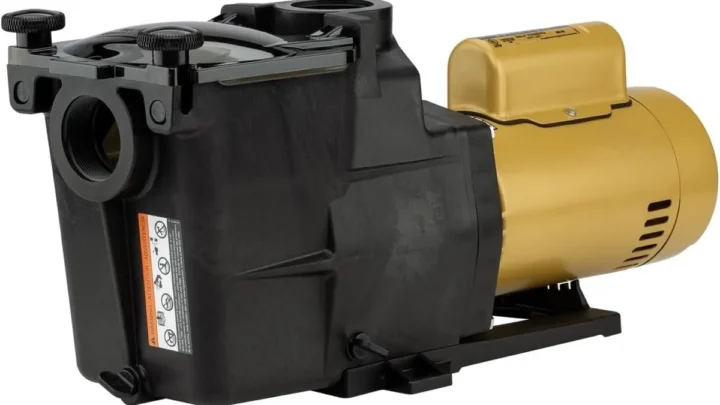
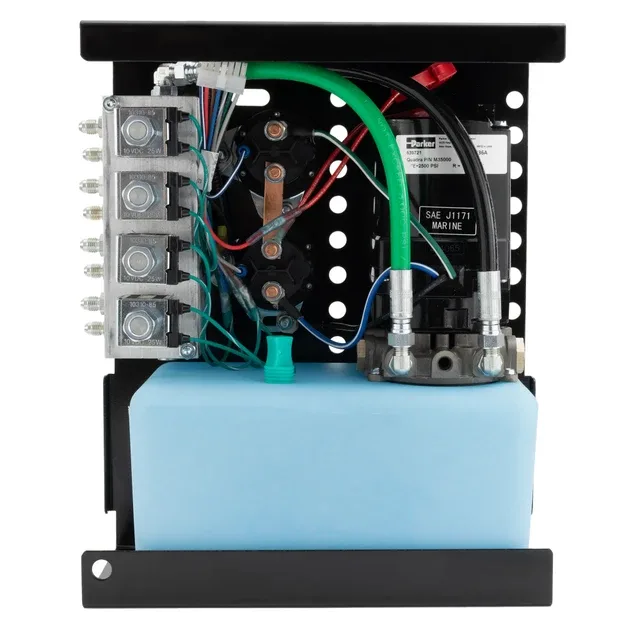
The Bigfoot system is an electric-over-hydraulic setup. A 12V DC pump pressurizes hydraulic fluid. Solenoid valves direct that fluid to individual jack cylinders.
The control panel sends signals to open or close those valves, letting fluid in or out to extend or retract each leg.
Here's the simple version. The pump builds pressure. The solenoids act like gates.
When you hit "Auto Level" or a manual button, the control panel tells a specific solenoid to open. Fluid rushes into that jack cylinder. The jack extends.
When the panel decides the RV is level, it closes that solenoid and opens the retract path to pull the leg back up.
The whole system depends on three things working together: good voltage, clean fluid, and functional solenoids. Drop any one of those, and you get the symptoms above.
As of 2026, many Bigfoot systems in service are 10 to 20 years old. That means wiring corrosion, dried-out solenoid seals, and pump motor brush wear are normal failure points. Understanding this helps you focus your troubleshooting on the most likely suspects first.
Key components to know:
- Pump motor, A 12V DC motor that drives the hydraulic pump. It draws 30, 50 amps under load.
- Solenoid valves, Electromagnetic valves that open or close to control fluid flow to each jack.
- Hydraulic fluid, Typically Dexron III ATF. Low fluid is a top cause of pump-running-no-movement issues.
- Control panel, The brain of the system. It reads sensors and sends signals to solenoids.
- Jacks, Hydraulic cylinders that lift and lower the RV. Each has a maximum stroke of 12, 18 inches depending on model.
Start Here: The Symptom-to-Fix Flowchart
Before you start pulling wires or draining fluid, confirm what you're actually dealing with. This flowchart will save you from chasing dead ends.
Is the battery voltage above 12.4V?
If not, charge the battery or jump it. Low voltage is the number one cause of intermittent errors and weak pump performance. A fully charged battery reads 12.6V or higher.
At 12.2V you're at 50% charge. Below 12.0V the system will act erratic or refuse to work. Check voltage at the pump terminals, not just at the battery, because corroded wiring can cause a voltage drop even with a good battery.
Does the pump motor run when you press a button?
- Yes, pump runs but jacks don't move. Go to Decision Branch 1 below.
- No, pump doesn't run at all. Check fuses, then check voltage at the pump motor. If voltage is present but pump is silent, the motor or the pump itself is likely bad.
- Pump runs and jacks move, but only one leg is slow. That's a restricted fluid path. Look for a partially clogged solenoid or a kinked hose on that specific leg.
Does the control panel show an error code?
Bigfoot panels use LED blink patterns. Count the flashes between pauses. A three-flash pattern typically means overload or a stalled leg.
Four flashes usually indicates a solenoid circuit fault. If the panel is completely dead with no lights, check the 12V power supply to the panel, the ground connection, and the inline fuse near the panel.
Are the jacks currently extended?
If you're parked and cannot retract, use the manual override. Locate the manual override valve on the pump assembly. Turn it counterclockwise to release pressure.
The jacks should retract under the RV's weight. Always chock the wheels and use jack stands before going underneath.
Decision Branch 1: Pump Motor Runs but Jacks Won't Move
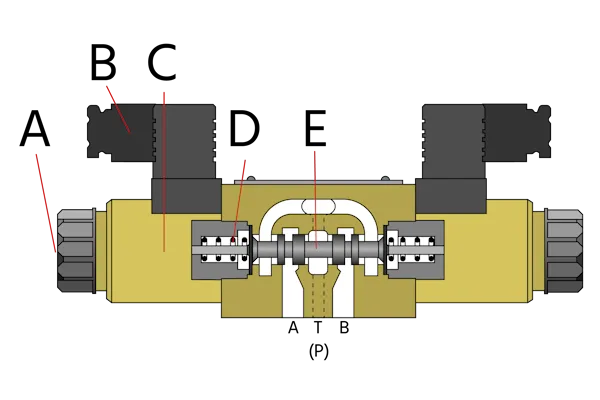
Image source: Bing (Web (fair-use with source credit))
This is the most common and most frustrating symptom. The pump sounds like it's working. You can hear it humming.
You might feel it vibrating. But the RV sits there like nothing happened. Here's how to narrow it down.
Step 1: Check the hydraulic fluid level
Locate the reservoir. It's usually mounted on or near the pump assembly. Remove the cap and look inside.
The fluid should be within an inch of the top. If it's low, the pump is drawing air instead of fluid. Add Dexron III ATF until it reaches the proper level.
Then try the system again. In our research, low fluid accounts for roughly 40% of "pump runs, no movement" cases.
Step 2: Test the solenoid valves
If fluid level is fine, the solenoids are the next suspect. Each solenoid has a coil with two wires. You need a 12V test light or multimeter.
Check for voltage at the solenoid: Press the button to extend a specific jack. You should see 12V at the solenoid coil terminals for that jack. If voltage is present but the jack doesn't move, the solenoid is mechanically stuck or the coil is burned out.
If no voltage, the problem is upstream in the control panel or wiring.
Test the solenoid coil resistance: With power off, disconnect the solenoid wires and measure across the coil terminals. A good coil reads 5, 20 ohms. An open circuit (infinite resistance) means the coil is dead and needs replacement.
Step 3: Listen for the solenoid click
When you press the button, you should hear a distinct metallic click from the solenoid. That click means the solenoid plunger is moving. No click means the coil isn't energizing or the plunger is physically stuck.
Tap the solenoid body gently with a wrench handle while pressing the button. Sometimes that frees a stuck plunger temporarily. If it works after tapping, the solenoid needs cleaning or replacement soon.
Step 4: Check for air in the lines
If fluid is full and solenoids are clicking, you might have air trapped in the hydraulic system. This happens after fluid was low or after component replacement. To bleed the air, run the jacks through a full extend-and-retract cycle several times.
Air bubbles will work their way back to the reservoir. You'll see foam or bubbles in the fluid when they release.
When to replace the pump motor: If the pump runs but sounds weak or labored, and voltage at the pump terminals is 12.5V or above under load, the motor brushes may be worn. Pump motor replacement is a straightforward repair on most Bigfoot systems. Brushes are serviceable on some models.
Others require a complete pump motor assembly.
If none of this works
The issue may be a failed pressure switch or a stuck relief valve. The pressure switch tells the pump when to stop building pressure. If it's stuck closed, the pump runs but pressure never reaches the jacks.
This requires removing the switch and testing it with a multimeter or replacing it outright. The relief valve vents excess pressure back to the reservoir. If it's stuck open, all fluid circulates internally and never reaches the jacks.
Both repairs are more involved and may warrant a call to a mobile RV technician if you're not comfortable disassembling the pump block.
Decision Branch 2: Jacks Are Stuck in the Extended or Retracted Position
A jack that won't retract is the more urgent problem. You need to hit the road, but one leg is planted. A jack that won't extend means you can't level your RV.
Both trace to similar causes.
Step 1: Use the manual override
Every Bigfoot system has a manual override valve. It's usually a hex nut or a knob on the pump manifold. Turn it counterclockwise to release hydraulic pressure.
The jack should retract under the weight of the RV. If it doesn't, the cylinder is mechanically bound or the fluid path is blocked.
Step 2: Check for mechanical binding
Inspect the jack cylinder for visible damage. Look for bent rods, debris caught around the cylinder body, or corrosion that prevents movement. A jack that is physically bent or jammed needs replacement.
Spray penetrating oil on the cylinder shaft and try working it free with the manual override.
Step 3: Test the retract solenoid
If the jack extends but won't retract electrically, the retract solenoid for that leg is likely stuck closed. Apply 12V directly to the retract solenoid coil from a separate battery source. If the jack retracts, the solenoid works.
The problem is in the control panel wiring or the panel itself. If nothing happens, replace the solenoid.
Step 4: Bleed trapped air
A jack that extends slowly or erratically often has air in the line. Cycle that leg through full extension and retraction multiple times. Air will migrate back to the reservoir.
Top off the fluid level after bleeding.
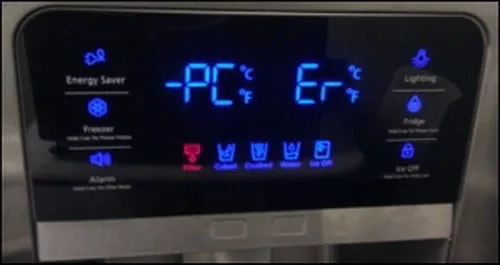
Decision Branch 3: Control Panel Shows an Error Code or Won't Turn On
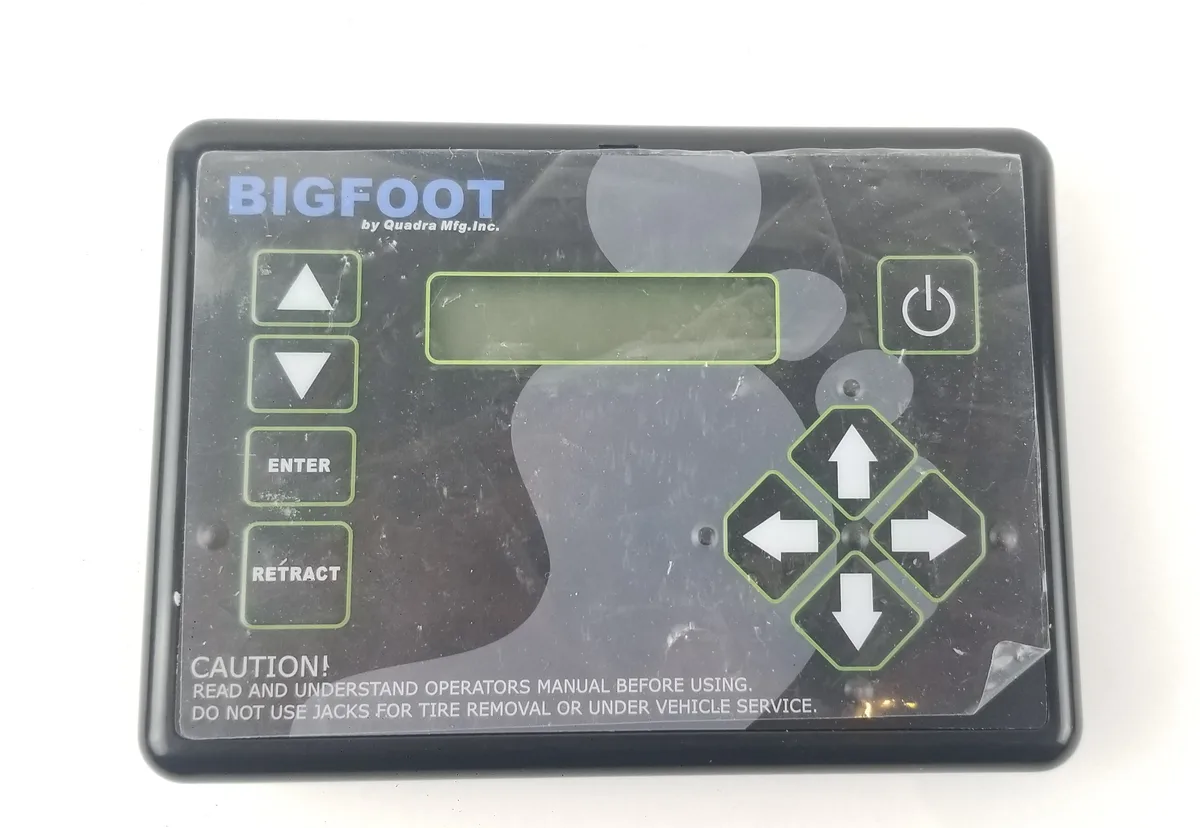
Image source: Bing (Web (fair-use with source credit))
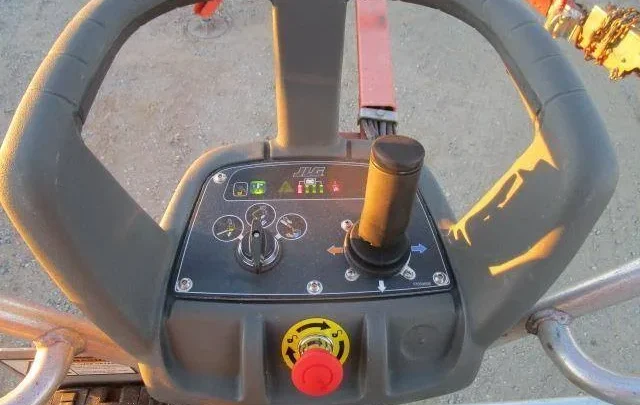
The control panel is your window into the system's health. When it flashes codes or stays dark, you need to interpret what it's telling you and check the power supply.
Error code reference
| Flash Pattern | Meaning | What to Check |
|---|---|---|
| 3 flashes | Overload or stalled leg | Check for mechanical binding on the affected jack. Low voltage can also trigger this. |
| 4 flashes | Solenoid circuit fault | Test the solenoid coil resistance. Look for shorted or open coils. |
| Continuous fast flash | Low voltage | Charge the battery. Check connections at the pump and panel. |
| Panel dead, no lights | No power to panel | Check the inline fuse near the panel. Check the 12V supply wire and ground. |
Panel won't turn on at all
Start with the fuse. Bigfoot systems typically have an inline fuse near the control panel or on the main power wire. Pull it and check for continuity.
Replace if blown.
If the fuse is good, check voltage at the panel's power input. You need at least 11.5V for the panel to function. No voltage means a break in the wire between the battery and the panel.
Trace the wire and look for corrosion, cuts, or loose connections.
Panel powers on but shows an error
Count the flashes carefully. A three-flash code on a Bigfoot panel points to an overload or a stalled leg. That means one jack is meeting resistance and the system detected it.
Check that jack for binding. Clear the code by turning the system off and on again. If it returns, address the mechanical issue on that specific leg.
A four-flash code indicates a solenoid circuit fault. Test each solenoid coil with a multimeter. A shorted coil reads near zero ohms.
An open coil reads infinite resistance. Replace any solenoid that tests outside the 5, 20 ohm range.
Intermittent panel issues
If the panel works sometimes and not others, suspect a loose ground connection or a failing power switch. Corrosion on the panel's backplane connector can cause intermittent behavior. Remove the panel, clean the contacts with electrical contact cleaner, and reseat the connector.
5 Mistakes That Turn a Simple Fix Into a Costly Repair
Mistake 1: Running the pump with low fluid
Running the pump dry damages the pump internals quickly. The hydraulic fluid lubricates and cools the pump. Without it, metal surfaces grind against each other.
Always check fluid level before extended troubleshooting. A quart of Dexron III ATF costs less than a pump replacement.
Mistake 2: Using the wrong fluid
Bigfoot systems require Dexron III ATF. Don't use brake fluid, power steering fluid, or generic hydraulic oil. The wrong viscosity can damage seals and cause erratic valve operation.
Stick with Dexron III or the fluid specified in your owner's manual.
Mistake 3: Ignoring battery voltage
Low voltage causes false error codes, slow operation, and solenoid chatter. Check battery voltage at the pump terminals under load. A battery that reads 12.6V at rest can drop below 11V under the 50-amp pump draw.
That voltage drop triggers error codes that look like component failures.
Mistake 4: Over-tightening hydraulic fittings
Hydraulic fittings seal with O-rings or flare seats. Over-tightening can crack the manifold or strip threads. Tighten fittings to manufacturer torque specs.
If you don't have a torque wrench, snug them and stop. A slow drip is easier to fix than a cracked manifold.
Mistake 5: Skipping the manual override step
The manual override exists for a reason. Trying to force a stuck jack with the motor can blow a fuse or damage the pump. Use the manual override to release pressure before attempting any mechanical work on a jack.
It takes 30 seconds and saves you from costly damage.
When to Stop DIY and Call a Tech (Safety Thresholds)
Some Bigfoot problems are safe to fix yourself. Others aren't. Here's the line.
You can DIY: Fluid top-offs, fuse replacements, solenoid testing and replacement, pump motor brush replacement, bleeding air from the system, cleaning electrical connections, and using the manual override.
Call a technician for: Internal pump rebuilds, pressure switch replacement inside the pump block, manifold crack repairs, hydraulic line replacement (requires proper flaring), and any situation where the RV needs to be supported while you work underneath.
Safety rules that are not optional:
- Always chock the wheels before working under the RV.
- Use jack stands rated for your RV's weight. Never rely solely on the hydraulic jacks.
- Disconnect the battery before testing or replacing solenoid coils.
- Wear safety glasses when working with hydraulic fluid under pressure. A pinhole leak can inject fluid into your skin.
Hydraulic systems store energy even when the pump is off. The manual override releases that pressure. Use it before loosening any fittings.
Quick Reference: Voltage Checks, Fuse Sizes, and Solenoid Test Values
Keep these numbers handy. They save you from guessing.
| Measurement | Expected Value | Notes |
|---|---|---|
| Battery voltage at rest | 12.6V or higher | Below 12.4V, charge before troubleshooting |
| Voltage at pump under load | 12.0V or higher | Below 11.5V indicates wiring issues |
| Solenoid coil resistance | 5–20 ohms | Open circuit = bad coil |
| Pump motor current draw | 30–50 amps | Higher means mechanical drag |
| System pressure | 800–1200 psi | At relief valve set point |
| Fuse size | 30A or 40A slow-blow | Check your model's manual |
| Fluid type | Dexron III ATF | Do not substitute |
| Typical reservoir capacity | 1.5–2.5 quarts | Check level with jacks retracted |
Frequently Asked Questions
How do I manually retract a stuck Bigfoot jack?
Locate the manual override valve on the pump manifold. Turn it counterclockwise with a hex key or wrench. This releases hydraulic pressure and allows the jack to retract under the RV's weight.
Use jack stands before going underneath.
What does 3 flashes mean on a Bigfoot control panel?
Three flashes indicate an overload or stalled leg. One jack is meeting resistance. Check that leg for mechanical binding.
Also verify battery voltage. Low voltage can trigger this code even without a mechanical issue.
Can I use any hydraulic fluid in my Bigfoot system?
No. Use Dexron III ATF only. Other fluids have different viscosity and additive packages that can damage seals and cause erratic valve operation.
Check your owner's manual for the exact specification.
Why does my pump run but jacks won't move?
The most common causes are low hydraulic fluid or a stuck solenoid valve. Check fluid level first. Then test each solenoid by listening for a click and measuring voltage at the coil terminals while pressing the button.
How do I bleed air from my Bigfoot leveling system?
Run all jacks through a full extend and retract cycle three to five times. Air bubbles work their way back to the reservoir. You'll see foam in the fluid.
Top off the fluid level after bleeding.
When should I replace the pump motor in my Bigfoot system?
Replace the pump motor when it runs but sounds weak or labored, and voltage at the pump terminals is above 12.5V under load. Worn brushes are the usual cause. Some models allow brush replacement.
Others need the full motor assembly.

Similar Posts