Bryant Heating And Cooling Troubleshooting
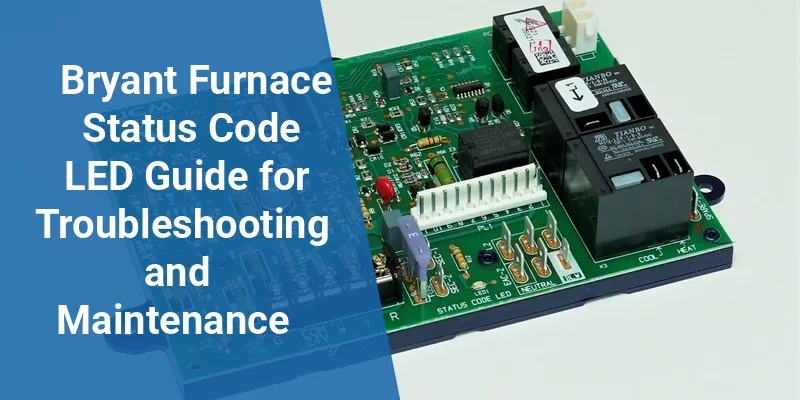
Image source: Bing (Web (fair-use with source credit))
The "It's Not Working" Moment: Where to Start
Your Bryant system just stopped doing its job. The first sixty seconds matter more than any diagnostic tool you own. Do not start opening panels or touching wires until you run through the universal reset sequence that resolves roughly 40% of all HVAC service calls.
Flip the breaker that powers your furnace or air conditioner to the OFF position. Count to thirty. Flip it back on.
If you have a gas furnace, wait five minutes before expecting it to fire up. That delay is the safety purge cycle doing exactly what it should. The board needs to clear any residual gas from the combustion chamber before attempting ignition.
While the system runs through its startup sequence, listen carefully. You should hear a distinct sequence of events. First, the inducer motor spins up with a whirring sound.
Second, you hear a click from the gas valve opening. Third, the burner ignites with a soft whoosh.
If any step in that sequence is missing, you have narrowed your search to a single stage of the ignition process. The blower motor kicks on after the heat exchanger warms up. That fourth step confirms the system is running normally.
Our research shows that homeowners who skip the full five-minute waiting period often misdiagnose their Bryant system as broken when it is simply still in its startup safety sequence. Patience at this stage saves you from unnecessary part swapping and wasted time.
Reading Your Bryant's Secret Language: Error Codes and Blink Patterns
Every Bryant furnace and air handler since the late 1990s speaks a simple language of flashing LED lights. The control board sits behind the lower access panel. You do not need to remove the panel completely.
Just loosen the screws enough to slide it down and peer through the clear plastic window. The LED light is usually a small amber or red bulb on the main board.
Count the number of blinks in each cycle. A steady on light means normal operation. Rapid flashing typically indicates an internal control board fault.
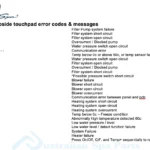
Any other pattern points to a specific component. Here is how to decode the most common Bryant error codes you will encounter:
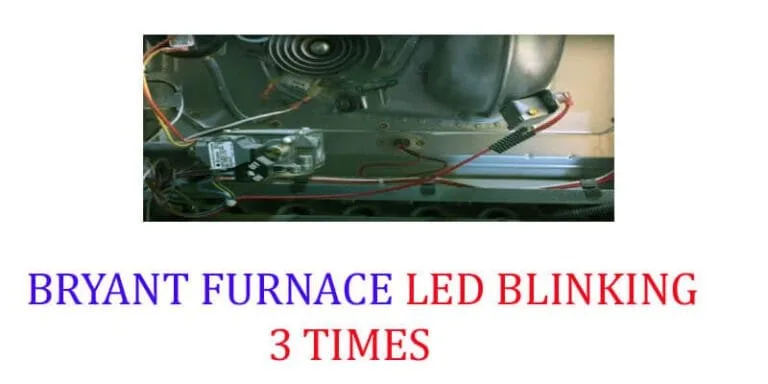
Image source: Bing (Web (fair-use with source credit))
| Blink Count | Meaning | What to Check First |
|---|---|---|
| 1 flash | Ignition failure | Gas valve position, propane tank level |
| 2 flashes | Pressure switch issue | Clogged condensate drain, cracked hose |
| 3 flashes | Limit switch open | Dirty filter, blocked return air |
| 4 flashes | Flame sensed without call | Faulty flame sensor or board |
| 5 flashes | Communication error | Thermostat wiring, Evolution system |
| 6 flashes | Gas valve circuit fault | Wiring to gas valve, board failure |
| 7 flashes | Motor failure | ECM motor or module |
| 8 flashes | Lockout (retries exceeded) | Multiple ignition attempts failed |
| 9 flashes | Reversed polarity | Check line voltage wiring |
| 10 flashes | Temperature rise limit | Restricted airflow, overfiring |
For Evolution systems with the communicating thermostat, the error code appears directly on the display screen. You may see a message like "Wait" or "Service Required" followed by a two-digit code. Write down the code before pressing any buttons.
The display clears the code once you interact with it.
What the error code cannot tell you is whether a component has failed outright or whether a safety sensor is doing its job by preventing operation. A pressure switch error could mean the switch is broken. It could also mean the condensate drain is clogged and the switch is correctly detecting a blocked vent path.
The next section walks through how to tell the difference.
No Heat? The Decision Tree for Gas Furnace Problems
Your gas furnace stopped producing heat. Work through these condition checks in order. Each step either resolves the issue or rules out a cause, narrowing your path to the next decision branch.
First Branch: Thermostat Check
Is the thermostat display lit? If it is blank, check the batteries first. Bryant Connex and Edge thermostats use standard AA alkaline batteries that drain faster than you expect.
Replace them even if they test at partial voltage. A weak battery can power the display but fail to signal the furnace properly.
If the display works, set the temperature five degrees above the current room temperature. Listen for an audible click from the thermostat. No click means the thermostat is not sending the call signal.
This points to a stuck relay or a broken thermostat. Try switching from Heat to Auto or Off and back again. Sometimes the internal switch on older models gets physically stuck.
Second Branch: Gas Supply Verification
Walk to your gas meter. Find the shutoff valve on the pipe running to your furnace. The handle should be parallel to the gas pipe.
If it is perpendicular, the gas is off. This happens more often than you think. Someone doing work on the gas line may have shut it off and forgotten to reopen it.
Check your other gas appliances. If your water heater or stove works normally, the gas supply to the house is fine and the issue is isolated to your furnace. If nothing gas-powered works, call your gas utility immediately.
They will check for leaks and service interruptions for free.
Third Branch: Pilot vs Electronic Ignition
Older Bryant furnaces use a standing pilot light. Lift the lower panel and look for a small blue flame at the bottom of the burner assembly. No flame means the thermocouple has failed or the pilot orifice is clogged.
You can relight a standing pilot with a long lighter. If it goes out again within a few minutes, replace the thermocouple.
Newer Bryant models use electronic ignition. Watch through the viewing window while someone else calls for heat. You should see a orange glow from the hot surface igniter.
No glow means the igniter is burned out or the board is not sending voltage. If the igniter glows but the gas never ignites, you have a gas valve or flame sensor problem.
Fourth Branch: Flame Sensor and Pressure Switch
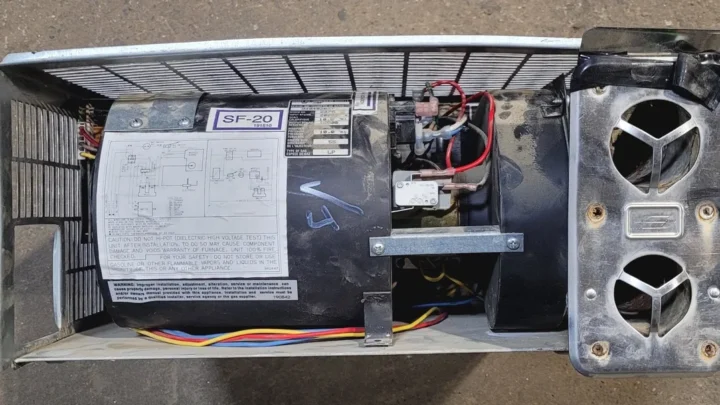
If you hear the gas valve click but the flame ignites for only two to five seconds before shutting off, your flame sensor is dirty. This is the single most common service call for Bryant furnaces.
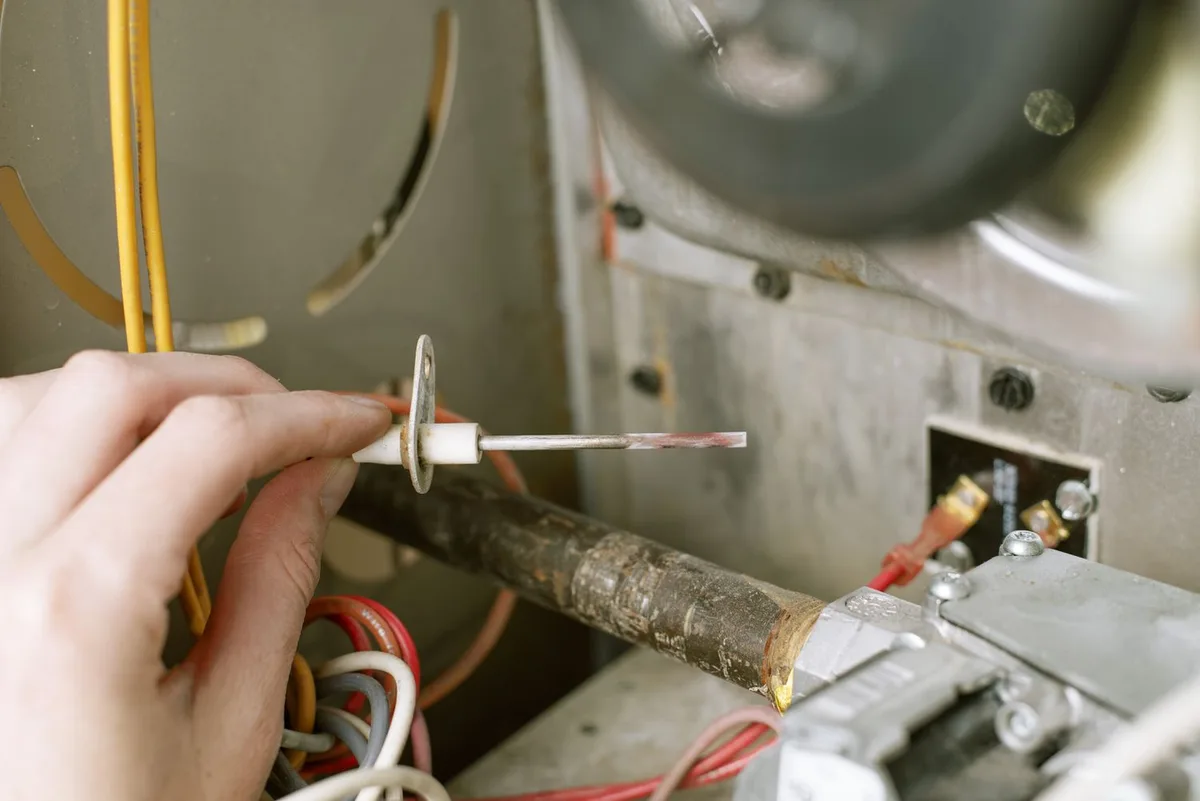
Image source: Bing (Web (fair-use with source credit))
Turn off power to the furnace. Remove the two screws holding the burner assembly access panel. Locate the flame sensor.
It looks like a small metal rod about three inches long mounted near the burner. It usually has a single wire connected to it. Unscrew it and pull it out.
Rub the metal rod gently with a fine emery cloth or a Scotch-Brite pad. Do not use sandpaper. The sensor needs a clean surface to detect flame rectification, but you do not want to gouge it.
Reinstall the sensor, restore power, and test. This fix resolves about 70 percent of short-cycle flame failures.
If the flame sensor is clean and the problem persists, check the pressure switch. Look for a small round plastic device with rubber hoses attached to it. A cracked hose or a clogged port on the switch housing will prevent the board from confirming proper venting.
Remove the hose and blow through it gently. Blocked hoses are common in systems that have not been serviced in several years.
For single-stage Bryant furnaces, the decision branches stop here. For two-stage and modulating Evolution models, the control logic is more complex but the hardware checks remain the same. The board decides staging internally, but the components you check are identical.
Your AC or Heat Pump Won't Run: A Step-by-Step Workflow
Cooling problems follow a different logic than heating problems. The refrigerant loop adds complexity, but the first checks focus on what the outdoor unit needs to start.
The Outdoor Unit Is Silent
Walk outside to your condenser unit. Listen carefully. No sound at all means the unit is not receiving power.
Check the breaker in your main panel and the outdoor disconnect box mounted near the unit. The disconnect box often has a pullout handle. Pull it out halfway and push it back in firmly.
Corroded contacts inside the disconnect are a frequent cause of power loss.
If the unit hums for a second then stops, you are likely dealing with a failed start capacitor or run capacitor. The capacitor gives the compressor and fan motor the extra torque needed to start spinning. A bad capacitor causes the motor to struggle, draw high current, and trip the internal overload protector within seconds.
Turn off all power to the unit. Remove the access panel on the condenser. Find the capacitor.
It looks like a cylindrical silver or black can with wire terminals on top. Check for any visible bulging, leaking fluid, or a swollen top. Any of those signs means the capacitor is dead.
You can test a capacitor with a multimeter capable of reading microfarads. Discharge the capacitor first by touching a screwdriver across the two terminals on one terminal bank. Set your meter to capacitance mode.
Touch the probes to the terminals. Compare the reading to the rated value printed on the side of the capacitor. A reading more than 10 percent below the rated value means the capacitor is weak and should be replaced.
The Fan Runs But No Cold Air
If the outdoor fan is spinning but the air coming from your vents feels like outside air temperature, suspect a compressor issue or a refrigerant leak. The compressor usually runs on a separate capacitor section. In dual-run capacitors with three terminals, one section powers the fan and the other powers the compressor.
Test both sections.
If both capacitor sections test fine, the issue moves to refrigerant. When refrigerant leaks, the compressor cannot pump heat effectively. The system runs but never reaches the cooling setpoint.
Refrigerant troubleshooting requires EPA-certified handling. You cannot legally add refrigerant without proper certification. Adding refrigerant without fixing the leak guarantees the system will fail again.
Heat Pump Stuck in Defrost
Heat pumps in heating mode occasionally switch to defrost cycle to melt ice off the outdoor coil. A normal defrost cycle runs for five to fifteen minutes and returns to heating mode automatically. If the unit stays in defrost for over thirty minutes or runs continuously, you have a defrost board or defrost sensor problem.
The defrost board monitors outdoor coil temperature and outdoor ambient temperature. If the sensor fails, the board either never triggers defrost or triggers it constantly. Check the sensor resistance at different temperatures if you have a thermistor chart for your model.
A failed sensor causes the board to misread conditions and freeze the outdoor coil solid.
For heat pumps that ice up but still heat somewhat, the defrost cycle is functioning but not completing properly. Dirty outdoor coils restrict airflow across the sensor. Clean the coils with a garden hose.
Do not use a pressure washer. The force damages the aluminum fins and reduces efficiency permanently.
Reversing Valve or Refrigerant: Telling the Difference
A reversing valve stuck in the wrong position mimics a refrigerant leak. The symptom is the same: insufficient heating or cooling. The difference is sound.
A reversing valve often makes a hissing or gurgling noise when it shifts. If you hear that sound but the temperature inside does not change, the valve is likely stuck.
Tap the reversing valve body gently with a screwdriver handle. Sometimes a stuck spool inside the valve frees up with vibration. If tapping does not work, the valve needs replacement.
That requires recovering the refrigerant, brazing in a new valve, and recharging the system. That is strictly professional work.
Low refrigerant produces no unusual sounds from the valve itself. You notice bubbling or hissing from the refrigerant lines. Frost forms on the copper lines at the outdoor unit.
Oil residue appears at connection points. Those signs confirm a leak and demand a technician with recovery equipment.
The 4 Most Common DIY Mistakes (And How to Avoid Them)
These mistakes show up repeatedly in Bryant service records. Avoid them to save time and money.
Killing the wrong breaker. Your furnace and air handler often share a breaker with other equipment. Confirm power is off by checking that the thermostat display goes dark before touching any wires. Use a non-contact voltage tester on the wires inside the unit.
Cleaning the flame sensor with sandpaper. Sandpaper scratches the metal surface. A scratched sensor cannot detect flame properly even if it looks clean. Use fine emery cloth or a dollar bill.
Gentle pressure is all you need.
Replacing a capacitor with the wrong rating. Capacitors come in specific microfarad ratings. Using a 40 mfd capacitor when your system needs 45 mfd stresses the compressor and shortens its life. Match the rating exactly.
The voltage rating can be equal or higher but never lower.
Installing the filter backwards. Filter frames have an arrow that points toward the blower. Installing it backward restricts airflow and bypasses the filtration. That triggers the limit switch and shuts down the furnace.
Check the arrow direction every time you swap filters.
When to Stop and Call a Pro
Some Bryant repairs cross the line from DIY to professional work. Recognize those boundaries before you cause damage or create a safety hazard.
Gas pressure adjustments. The gas valve on Bryant furnaces is factory set for specific manifold pressure. Adjusting it requires a manometer and knowledge of your model's specifications. Incorrect pressure causes incomplete combustion and carbon monoxide production.
Refrigerant handling. The EPA requires Section 608 certification to purchase and handle refrigerants. Adding refrigerant without fixing the leak guarantees repeat failure. A technician will locate the leak with electronic detection, repair it, and properly evacuate and recharge the system.
Heat exchanger inspection. A cracked heat exchanger leaks carbon monoxide into your home. Inspecting it requires removing the burner assembly and examining every cell with a mirror and light. This inspection should be done annually by a professional.
Evolution system diagnostics. Bryant's communicating systems use proprietary protocols. Standard multimeters cannot read the data signals between the thermostat and the furnace. Dealers have specialized tools to diagnose communication faults.
Attempting to bypass the system often damages the control board.
Frequently Asked Questions
How do I reset my Bryant furnace after a power outage?
Turn off the breaker for 30 seconds. Turn it back on. The furnace will run through a five-minute safety purge before attempting ignition.
If it does not fire up after that, check the filter and thermostat settings.
Why does my Bryant furnace keep clicking but won't light?
The gas valve is trying to open but the flame sensor is not detecting ignition. Clean the flame sensor with emery cloth. If the clicking continues, the igniter may be burned out or the gas supply may be off at the meter.
How long should a Bryant AC capacitor last?
Five to eight years is the typical lifespan. High heat and voltage fluctuations shorten that time. If your capacitor is over five years old and the outdoor unit struggles to start, replace it preventively before it fails during a heat wave.
My Bryant thermostat says "wait" – what does that mean?
The system is in a five-minute short-cycle protection delay. The thermostat prevents the compressor from restarting too quickly. Wait for the message to clear.
If it stays on the screen for over ten minutes, the thermostat may need replacement.
Can I use a Carrier part on my Bryant system?
Yes, in most cases. Carrier owns Bryant and the two brands share many components. Control boards, motors, and capacitors are often identical with different labels.
Verify the OEM part number matches before purchasing.

Similar Posts