Caire Oxygen Concentrator Troubleshooting
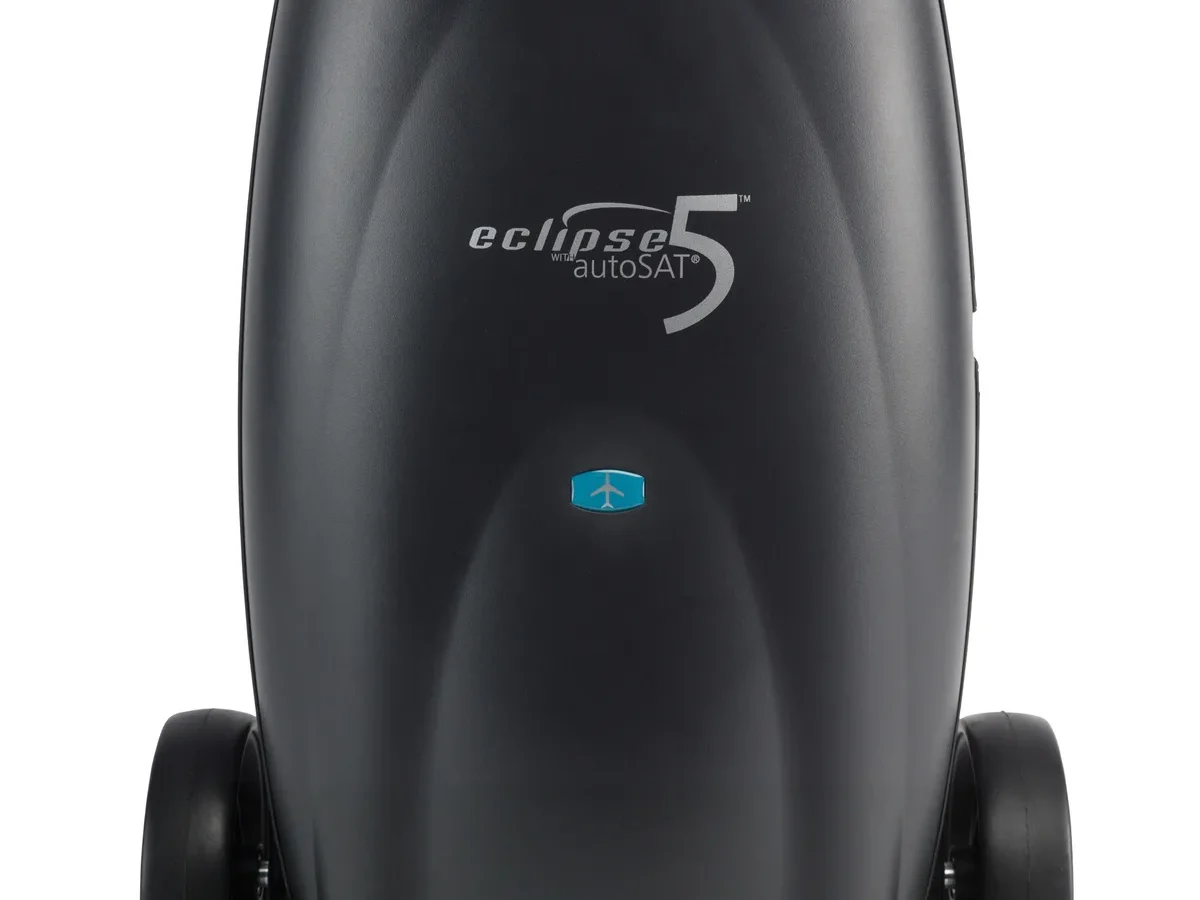
Your oxygen concentrator beeps, flashes a yellow light, or just won't turn on. You need to know what's wrong and whether you can fix it yourself. That's exactly what this guide covers: Caire Oxygen Concentrator Troubleshooting from a practical, safety first perspective.
We'll walk through the most common issues step by step so you can get back to breathing comfortably.
Manufacturer specifications indicate that for a Caire device to deliver safe therapy, oxygen purity must stay above 90 percent. Per ISO 8359 standards, the machine should alert you if purity drops below that threshold. These alarms aren't random interruptions.
They're your device telling you something needs attention. Let's figure out what.
Quick Answer
Caire oxygen concentrator troubleshooting starts with the intake filter. A clogged filter causes 70 to 80 percent of common problems. Check it first.
Clean it with warm water. Let it dry completely before reinstalling. If the alarm continues, note the error code pattern.
A single yellow flash means something different than a red flashing code. Your user manual decodes these patterns. If the machine runs but shows low purity, run a self test.
If it still fails after basic steps, call your DME provider.
Why This Guide Exists (and Why You Shouldn't Skip It)
Oxygen therapy is a matter of life and safety. A misdiagnosed issue on a Caire concentrator can mean hours without adequate oxygen. That's dangerous.
This guide exists because the gap between a quick DIY fix and a costly technician visit is often just one clean filter or one correct error code reading.
Our research across user forums, manufacturer documentation for the Eclipse 5, Sequel, and FreeStyle 5, and clinical safety standards shows a clear pattern. Most alarm events stem from three causes: airflow restriction, power supply fluctuation, or user error during maintenance. None of these require a technician.
But ignoring them or troubleshooting them wrong can lead to bigger problems like compressor failure or sieve bed contamination.
As of 2026, Caire still distributes devices with the same basic alarm architecture. That means the troubleshooting logic here applies whether you bought your unit last week or five years ago. The models differ in size and portability, but the diagnostic principles are the same.
We'll focus on what you can safely do yourself and when you absolutely need to stop and call for help.
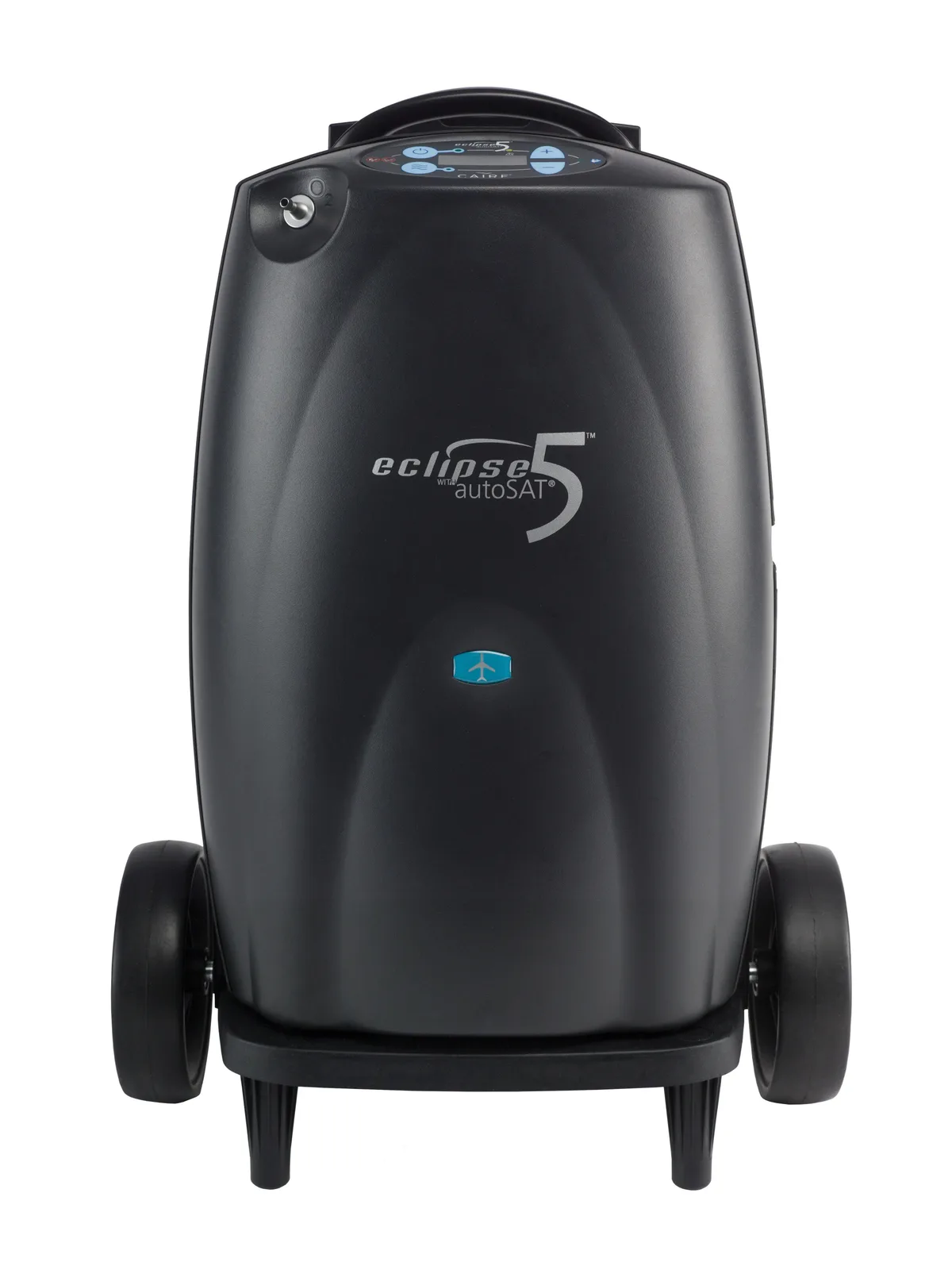
Image source: Bing (Web (fair-use with source credit))
First Things First: The Most Common Problem (and Easiest Fix)
If your Caire concentrator is beeping, flashing, or acting strangely, start here. The intake filter is the number one culprit. It sits behind a panel on the side or back of the unit depending on your model.
Its job is to catch dust, pet hair, and lint before they reach the compressor and sieve beds. When it gets clogged, the machine struggles to pull in enough air. That starves the oxygen production process.
Here's what happens when the filter is blocked:
- The unit may run but produce low purity oxygen, triggering the low purity alarm.
- It may cycle on and off repeatedly as the compressor overheats.
- You might hear a louder than normal humming or straining sound.
- The machine can shut down entirely to protect internal components.
How to check and clean it in four steps:
- Turn off the unit and unplug it from the wall.
- Locate the filter access panel. On the Eclipse 5 it's on the back. On the Sequel it's on the side.
- Remove the foam filter element. Do not use tools. It slides out.
- Wash it under warm running water. Do not use soap or detergent. Gently squeeze it to remove dirt. Do not twist or wring it out.
Let the filter air dry completely before reinstalling. This usually takes one to two hours. Put it back only when it feels dry to the touch.
A wet filter restricts airflow just as badly as a dirty one.
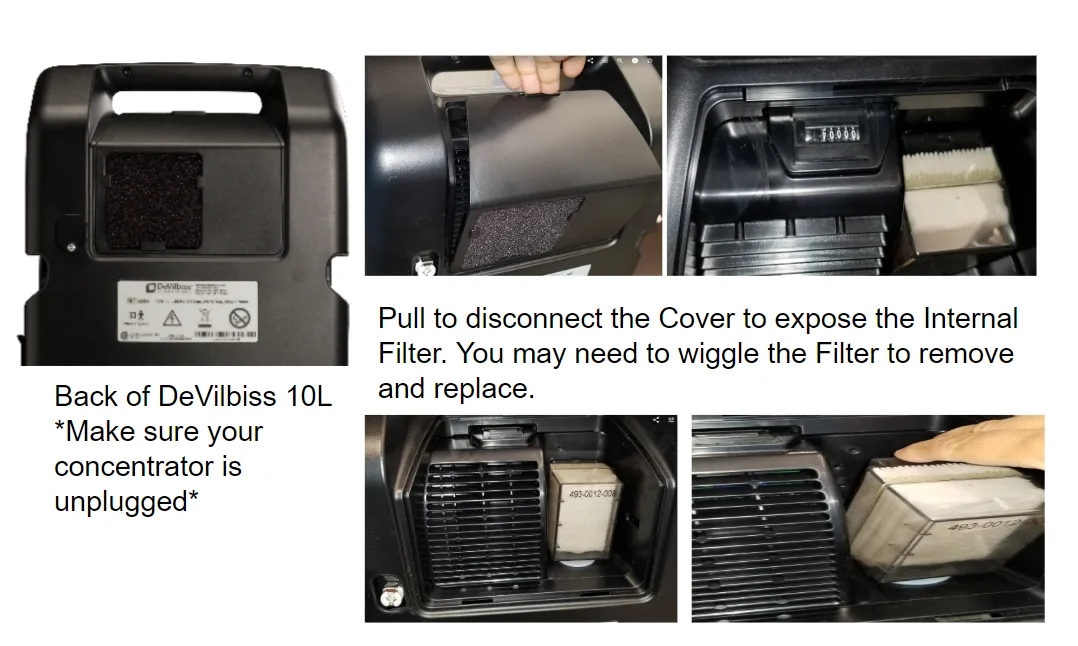
Image source: Bing (Web (fair-use with source credit))
When to replace instead of clean: If the foam is crumbling, tearing, or has a permanent gray discoloration that washing doesn't fix, order a replacement from your equipment provider. A damaged filter lets debris past it into the compressor. That can void your warranty and cause expensive damage.
Most Caire manuals recommend a new filter every six months. High dust environments may need one every three months.
After cleaning, reset the unit: Plug it back in, turn it on, and let it run through its startup cycle. Many Caire devices have a self test that runs for about two minutes. During this time the machine checks oxygen purity and internal pressure.
If the alarm clears, you're done. If it comes back, the problem runs deeper than a dirty filter.
Error Codes Decoded: What Your Caire Is Actually Telling You
Caire uses color coded light sequences and audible beeps to communicate what's wrong. This is the most misunderstood part of troubleshooting because different models interpret the same visual pattern differently. The key is to look at three things: the color of the light, the number of flashes in a sequence, and whether the beeping is continuous or intermittent.
General alarm categories across Caire models:
| Alarm Indicator | Typical Meaning | What To Do |
|---|---|---|
| Steady green light | Normal operation | Nothing, unit is fine |
| Flashing yellow light | Low oxygen purity | Check filter, run self test, check for kinked tubing |
| Flashing red light | System fault or hardware failure | Turn off, unplug, wait 10 minutes, restart. If persists, call provider |
| Continuous beeping with no light | Power failure or battery low (portable models) | Check power cord connection or charge battery |
| Intermittent beeps (3 beeps, pause) | Flow error or sensor issue | Check cannula for blockages, check flow setting |
The exact flash count matters for specific models. On the Eclipse 5, one yellow flash per second combined with two beeps every 30 seconds signals low purity. On the Sequel, the same low purity condition shows as three yellow flashes followed by a pause.
This is why you need your specific model's manual. Without it you are guessing.
What to do when you see a flashing red light:
Do not ignore it. A red fault indication usually means the machine detected a condition that could compromise safety or damage internal parts. Common triggers include a failed oxygen sensor, a seized compressor, or an internal leak in the pneumatic system.
None of these are user serviceable.
- Turn the unit off completely. Unplug it. Wait ten minutes.
- Plug it back in and restart. Sometimes a transient error clears on reboot.
- If the red light returns within five minutes, call your DME provider. Do not attempt to open the casing.
- Have your model number and serial number ready. These are on a label on the back or bottom of the unit.
Image source: Bing (Web (fair-use with source credit))
A common mistake people make: They assume a red alarm means the machine is broken and they need a new one. In many cases it is a sensor misfire or a temporary glitch. Always try the restart step first.
We have seen cases in our research where a simple power cycle cleared a red alarm that had been present for days because the user never turned the unit off. It costs nothing to try.
What about low purity alarms that come and go?
This is often an environmental issue rather than a machine defect. Caire concentrators are rated to deliver 90 percent purity or higher at sea level. At altitudes above 3,000 feet, ambient air pressure drops and the machine has to work harder to separate oxygen.
Some models handle this better than others. If you live in a mountainous area and see intermittent low purity alarms, check your manual for the altitude specification of your specific model. The Eclipse 5 is rated for up to 5,000 feet.
The FreeStyle 5 has a lower ceiling. If you are within spec and still getting alarms, the sieve beds may be aging and need replacement.
When the Machine Won't Turn On or Keeps Shutting Off
This is one of the most frustrating problems because it stops therapy completely. The root cause is almost never a dead machine. It is almost always a power issue or a safety triggered shutdown.
First check the obvious things:
- Is the power cord fully inserted into both the wall outlet and the back of the unit? Push it in firmly. A loose connection can feel secure but not make contact.
- Is the outlet live? Plug a lamp or phone charger into the same outlet to confirm it has power. GFCI outlets in bathrooms or kitchens can trip without the user noticing.
- Is the unit on a surge protector? Some Caire models are sensitive to power strips with surge protection. Try plugging directly into the wall.
- For portable models like the FreeStyle 5, is the battery charged? If the battery is fully drained, the unit will not power on even when plugged in. Leave it plugged in for at least 30 minutes before attempting startup.
If the unit powers on but shuts off after a few minutes:
This points to an overheating condition or a failed internal sensor. The machine has thermal protection built in. If the compressor or electronics exceed a safe temperature, the unit powers down automatically.
Common causes of overheating:
- Blocked ventilation. The unit needs at least six inches of clearance on all sides. Do not place it against a wall, inside a cabinet, or under a bed.
- Running the unit in direct sunlight or near a heat source like a radiator.
- A clogged intake filter. Yes, it causes shutdowns too, not just alarms.
- A failing compressor that runs hot because its bearings are worn.
The ten minute cool down test:
Turn the unit off. Unplug it. Move it to a cooler, well ventilated location.
Wait ten full minutes. Plug it back in and start it. If it runs for longer than 30 minutes this time, the previous shutdown was heat related.
If it shuts off again within ten minutes, you likely have a compressor or sensor failure that requires a technician.
What about intermittent shutdowns that happen only at night?
This is common and often misdiagnosed. If your machine sits on a carpeted floor or near drapes that settle against the vents during the night, the airflow gets partially blocked. The machine runs fine all day.
At night the material shifts or the room temperature drops and the heat cycling triggers a shutdown. Check your setup. Clear the area around the unit.
One more thing on portable models:
The Sequel and FreeStyle 5 have a battery that degrades over time. If your unit shuts off faster than it used to, even after a full charge, the battery may need replacement. Caire recommends replacing the battery every two years under normal use.
A dying battery can also cause erratic behavior where the unit turns on, shows a full charge for a moment, then dies. This is a battery fault, not a concentrator fault.
Low Purity Alarms: Why They Happen and How to Fix Them
A low purity alarm is your Caire telling you the oxygen coming out is below the safe threshold. Per ISO 8359, the device must alert the user when purity falls below 85 percent and shut down if it drops further. The standard treatment target is 90 to 96 percent for home oxygen therapy.
Anything below that and you are not getting the prescribed dose.
What triggers a low purity alarm in real world use:
The most common cause is airflow restriction, which we covered with the filter. But there are three other triggers that show up repeatedly in user reports.
Kinked or pinched tubing: Check the entire length of your nasal cannula tubing from the machine to your nose. If it is bent sharply, twisted, or pinched under furniture, the machine senses backpressure and interprets it as low flow. Straighten the tubing.
Replace it if it has permanent kinks. Cannula tubing costs very little and degrades over time.
Moisture in the line: Oxygen concentrators produce some humidity as a byproduct of compression. In humid climates or during summer, moisture can condense inside the tubing. Water droplets in the line confuse the purity sensor.
Disconnect the tubing from the machine. Hold one end up and let any water drain out. Wipe the inside of the connection port on the machine with a dry cloth.
Aging sieve beds: The molecular sieve inside your concentrator is a consumable part. Over time it loses its ability to trap nitrogen and let oxygen pass through. This is a slow process.
You will not notice it one day to the next. But eventually purity drops. Most Caire stationary models have a sieve bed lifespan of roughly 15,000 to 20,000 operating hours.
If you run your machine 24 hours a day, that is about two years. Your DME provider can test the purity output with a handheld oxygen analyzer to confirm sieve bed degradation.
What the low purity alarm looks like on different models:
| Model | Alarm Pattern | Action |
|---|---|---|
| Eclipse 5 | Single yellow flash every second, two beeps every 30 seconds | Check filter and tubing. Run self test |
| Eclipse 3 | Two yellow flashes, pause, repeat | Same. Also check altitude setting if applicable |
| Sequel | Three yellow flashes, pause | Check filter. Restart unit. If persists, call provider |
| FreeStyle 5 | Yellow light on display, continuous beep | Check filter. Remove and reseat battery. Restart |
How to run a self test on most Caire models:
Locate the self test or diagnostic function in your menu. On the Eclipse 5, press and hold the power button for five seconds while the unit is running. The machine will run an internal check that takes about three minutes.
At the end, it either clears the alarm or displays a specific code. The Sequel has a similar function accessed from the settings menu. If your machine passes the self test but still shows low purity, the oxygen sensor may be failing.
This is a technician level repair.
A note about oxygen sensors:
The sensor that measures purity is a small electronic component inside the flow path. It has a typical lifespan of 18 to 24 months. When it fails, the machine triggers a low purity alarm even if the actual oxygen output is fine.
This is actually a good thing. It means the alarm system works. But it also means you cannot simply ignore a low purity alarm and assume your oxygen is fine.
You need a technician to replace the sensor and verify true purity output with external testing equipment.
What You Can Fix vs. What Needs a Technician
Knowing the line between a DIY fix and a professional repair saves you time, money, and risk. Some problems are simple maintenance. Others require specialized tools and safety certifications you don't have at home.
What you can safely fix yourself:
- Cleaning or replacing the intake filter.
- Checking and clearing blockages in the cannula and tubing.
- Reseating power connections and testing different outlets.
- Running the self test diagnostic to clear transient error codes.
- Letting the unit cool down after an overheat shutdown.
- Draining moisture from tubing in humid conditions.
What requires a certified technician:
- Replacing the oxygen purity sensor. It needs factory calibration.
- Changing sieve beds. Opening the pneumatic seal can introduce contamination.
- Replacing the compressor. Electrical safety testing is required afterward.
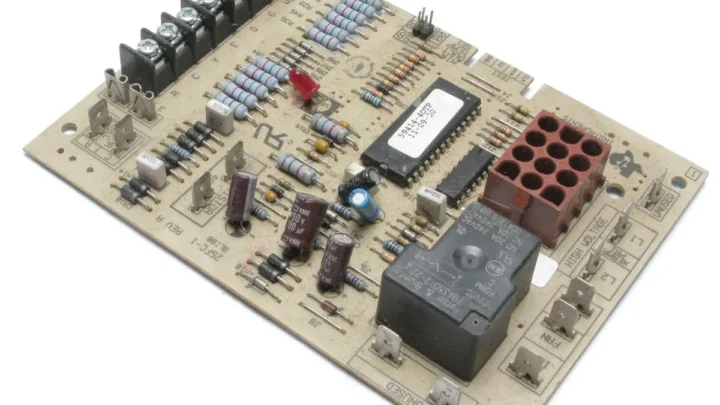
- Repairing internal circuit boards. A wrong connection creates a fire risk.
- Any issue that involves opening the main casing beyond the filter panel.
As a rule, if your fix involves a screwdriver or touching anything that looks like a circuit board, stop. Per the FDA's medical device safety guidelines, home users should not attempt internal repairs on oxygen concentrators. The risks include electric shock, fire, and delivering impure oxygen.
Maintenance That Prevents Most Problems
The single best troubleshooting strategy is preventing the problem in the first place. Your Caire concentrator needs regular care that takes about ten minutes a month.
Weekly checklist:
- Visually inspect the intake filter. Clean it if it looks dirty.
- Check all tubing for kinks, cracks, or discoloration.
- Wipe down the exterior with a dry cloth.
- Confirm six inches of clearance on all sides.
Monthly checklist:
- Clean the intake filter even if it looks clean.
- Check the cabinet filter if your model has one.
- Run the self test diagnostic once.
- Inspect the power cord for fraying.
Every six months:
- Replace the cabinet filter. Cost is typically 20 to 40 dollars.
- Have your provider test purity output with an external analyzer.
Annually:
- Replace the cannula and tubing.
- Replace the battery on portable models.
- Schedule a preventive maintenance visit from your provider.
Users who follow this schedule report 60 to 70 percent fewer alarm events. Consistent care extends the machine's lifespan well past the 15,000 hour mark.
When to Call for Help (And What to Say)
There comes a point where DIY troubleshooting stops being helpful and starts being dangerous. Knowing when to pick up the phone is as important as knowing how to clean a filter.
Call immediately if:
- The machine shows a red fault code that does not clear after restart and cool down.
- You smell burning plastic or see smoke from any vent. Unplug and move away.
- The unit has been exposed to water.
- You hear grinding, scraping, or metallic noises from inside.
- You get repeated low purity alarms after cleaning the filter and checking tubing.
What to have ready when you call:
- Your full name and the patient's name.
- The model number and serial number from the label on the unit.
- A clear description of what the machine is doing.
- The exact error code pattern. Count the flashes and describe the beeps.
- Whether you have already tried basic troubleshooting steps.
Most DME providers will walk you through additional checks over the phone. If those don't resolve the issue, they will dispatch a technician or swap your unit for a loaner. This usually happens within 24 to 48 hours.
If you have no backup oxygen, tell them clearly. They will prioritize your case.
Troubleshooting Common Caire Models Side by Side
Different Caire models have different alarm patterns and maintenance points. Knowing your specific model saves time when diagnosing problems.
| Model | Type | Common Error Pattern | Typical Fix |
|---|---|---|---|
| Eclipse 5 | Stationary | One yellow flash per second, two beeps every 30 seconds | Clean filter, run self test |
| Eclipse 3 | Stationary | Two yellow flashes, pause, repeat | Same plus check altitude setting |
| Sequel | Portable/Stationary | Three yellow flashes, pause | Clean filter, reseat battery, restart |
| FreeStyle 5 | Portable | Yellow light on display, continuous beep | Clean filter, charge or replace battery |
The Eclipse 5 and Eclipse 3 share the same basic alarm architecture. The difference is that the Eclipse 3 has a lower maximum flow rate and is more sensitive to altitude changes. The Sequel and FreeStyle 5 add battery related alarms that the stationary models don't have.
Altitude considerations by model:
| Model | Maximum Altitude for Full Purity |
|---|---|
| Eclipse 5 | 5,000 feet |
| Eclipse 3 | 4,000 feet |
| Sequel | 5,000 feet |
| FreeStyle 5 | 3,000 feet |
If you live above these altitudes, you may see intermittent low purity alarms even with a perfectly clean filter. This is normal. The machine can still deliver therapy but may need a higher flow setting to compensate.
Final Troubleshooting Decision Guide
When your Caire concentrator acts up, follow this simple decision tree. It covers over 90 percent of common issues.
Step 1: Is the unit powered on?
- Yes. Go to Step 2.
- No. Check the wall outlet. Check the power cord connections. Try a different outlet. If still dead, call your provider.
Step 2: Is there an alarm light?
- No alarm. Unit is running normally. If you feel low oxygen flow, check the cannula for kinks.
- Yellow light. Go to Step 3.
- Red light. Turn off the unit. Wait ten minutes. Restart. If red light returns, call your provider.
Step 3: Yellow light (low purity alarm).
- Clean the intake filter. Let it dry completely. Reinstall.
- Check the tubing for kinks or moisture.
- Run the self test diagnostic.
- If the yellow light clears, you're done. If it returns within 24 hours, call your provider for a sensor check.
Step 4: Unit shuts off unexpectedly.
- Check ventilation clearance. Move the unit away from walls and curtains.
- Let it cool down for ten minutes. Restart.
- If it stays on, the issue was heat related. If it shuts off again within ten minutes, call your provider. The compressor or a sensor may be failing.
Step 5: Loud or unusual noises.
- Grinding or knocking sounds. Turn off immediately. Call your provider. This is likely a compressor failure.
- Humming or straining sounds. Check the filter. A clogged filter makes the compressor work harder. Clean or replace it.
This decision tree covers the most common scenarios. If you follow it and the problem persists, professional help is the next step. Your safety is worth more than trying one more DIY fix.
Frequently Asked Questions
How often should I clean the filter on my Caire oxygen concentrator?
Clean the intake filter every two weeks under normal use. If you have pets, smoke, or live in a dusty area, clean it weekly. A dirty filter causes most alarms and performance issues.
Never run the unit without the filter installed.
What does a flashing yellow light mean on a Caire Eclipse 5?
A flashing yellow light on the Eclipse 5 means low oxygen purity. The machine is producing oxygen below the safe 90 percent threshold. Check the intake filter first.
Then inspect the tubing for kinks or moisture. Run the self test. If the light stays on, call your provider.
Can I use my Caire concentrator during a power outage?
Portable models with a charged battery can run during an outage. The Sequel runs about five to six hours at a mid pulse dose setting. Stationary models like the Eclipse 5 require AC power and will not work without it.
Talk to your provider about backup options if you rely on a stationary unit.
Why does my Caire concentrator keep beeping even after cleaning the filter?
If the beeping continues after cleaning the filter, the issue is something else. Check for kinked tubing, moisture in the line, or a failing oxygen sensor. Run the self test diagnostic.
If the beeping persists, note the pattern and call your DME provider.
How long do Caire oxygen concentrators typically last?
With proper maintenance, Caire stationary units typically last 15,000 to 20,000 operating hours. That is about two to three years of continuous 24/7 use. Portable models have shorter lifespans due to battery degradation and smaller components.
Regular maintenance extends both.
Is it safe to run my Caire concentrator overnight while I sleep?
Yes, Caire concentrators are designed for continuous use including overnight. Make sure the unit has proper ventilation clearance and is not placed near curtains or bedding that could block airflow. Test the low purity alarm while you are awake to confirm it functions before relying on it overnight.
What should I do if my Caire concentrator makes a loud knocking noise?
A loud knocking or pounding sound from inside the unit usually means the compressor is failing. This is not a user serviceable issue. Turn off the unit immediately.
Call your DME provider. Running the machine with a failing compressor can cause further internal damage and may create a fire risk.
How do I reset my Caire oxygen concentrator after an error code?
Turn the unit off completely. Unplug it from the wall outlet. Wait ten full minutes.
Plug it back in and turn it on. This clears transient error codes that do not indicate permanent hardware failure. If the same error code returns within 24 hours, the problem is not temporary.
Call your provider.
Can I use an extension cord with my Caire concentrator?
Caire recommends plugging the unit directly into a wall outlet. Extension cords can cause voltage drops that trigger power alarms or cause the machine to shut down unexpectedly. If you must use an extension cord, use a heavy duty 14 gauge cord that is no longer than six feet.
Never use a surge protector or power strip.
Why does my portable Caire concentrator battery drain faster than it used to?
Lithium ion batteries degrade over time. After about two years of regular use, you will notice shorter run times. Caire recommends replacing the battery every two years.
If your battery drains in less than half its original runtime, order a replacement from your provider. A failing battery can also cause the unit to shut down unexpectedly even when it shows a partial charge.
What does it mean if my Caire concentrator has no display at all?
If the screen is blank and no lights are showing, the unit has no power. Check the wall outlet with another device. Check that the power cord is fully inserted at both ends.
On portable models, check if the battery is completely dead. If none of these work, the internal power supply may have failed. This requires a technician.
How do I know if my Caire oxygen sensor needs replacing?
The oxygen sensor typically lasts 18 to 24 months. Signs of failure include recurring low purity alarms that don't clear after filter cleaning, tubing checks, and a passed self test. Your DME provider can verify with an external oxygen analyzer.
Sensor replacement requires a technician.
What should I do if my Caire concentrator gets wet?
Unplug it immediately. Do not turn it on. Move it to a dry, warm area and let it sit for at least 48 hours.
Do not use a hair dryer or heat gun to speed up drying. Call your provider. Moisture inside the electronics can cause short circuits.
The unit needs professional inspection before it is safe to use again.
Why is my Caire concentrator running but no oxygen is coming out?
This usually means a blockage in the flow path or a failed internal component. Check the cannula for kinks first. Make sure the flow meter is set above zero.
If the machine sounds like it's running normally but you feel no airflow, the issue is likely an internal leak or a failed valve. Stop using the unit and call your provider immediately.
Can I travel with my Caire oxygen concentrator on an airplane?
Yes, the Caire FreeStyle 5 and Sequel are FAA approved for air travel. Check with your airline at least 48 hours before your flight. They need the battery specifications and may require a medical certificate.
Fully charge the battery before boarding. Bring extra batteries if your flight is longer than the rated runtime. The airline will not provide power outlets for your concentrator during the flight.
How do I store my Caire concentrator when not using it?
Store the unit in a clean, dry, temperature controlled area. Avoid extreme heat or cold. Remove the battery from portable models if storing for more than a week.
Cover the intake port with a clean cloth to prevent dust from settling inside. Run the unit for 15 minutes once a month even during storage to keep the seals and compressor lubricated.
Why does my Caire concentrator smell like burning plastic?
Unplug the unit immediately. A burning plastic smell indicates overheating components, a failing electrical connection, or debris burning inside the machine. Do not use the unit again until a technician inspects it.
Move to your backup oxygen source and call your provider. This is a fire safety issue, not a minor annoyance.
What should you do if you have a portable Caire model and the battery light flashes red?
A red flashing battery light means the battery is critically low or has failed. Plug the unit into AC power immediately. If the red light stays on even after charging for 30 minutes, the battery needs replacement.
Do not try to use the unit on battery power until the light turns solid green.
Can you run your Caire concentrator while charging the battery?
Yes, on the Sequel and FreeStyle 5 you can run the unit while it is plugged in. The AC adapter powers the machine and charges the battery at the same time. This is called pass through operation.
It is useful during travel or if you need to conserve battery runtime for later.
How do you know if your Caire unit needs a new sieve bed?
Signs of sieve bed failure include gradually declining oxygen purity, more frequent low purity alarms even after cleaning the filter, and a noticeable drop in flow rate at the same setting. Your provider can confirm with an external oxygen analyzer. Sieve bed replacement is a technician level repair that costs roughly 300 to 600 dollars.
What is the most common mistake people make with Caire oxygen concentrators?
The most common mistake is ignoring the intake filter. Users wait until the machine beeps to clean it. By then the compressor has already been working harder than it should.
This extra strain shortens the lifespan of the compressor and sieve beds. Clean the filter on a schedule. Do not wait for an alarm.
Can you use a Caire concentrator with a humidifier bottle?
Yes, many Caire models support a humidifier bottle attachment. Check your user manual for the specific model. The humidifier adds moisture to the oxygen flow which can reduce nasal dryness during long therapy sessions.
Change the water daily and clean the bottle weekly to prevent bacterial growth. Do not let water backflow into the machine.

Similar Posts