Can Air Fryers Cook Multiple Foods At Once
You have probably wondered whether air fryers can cook multiple foods at once. It sounds like the perfect shortcut for busy weeknights. But you have also heard the complaints.
Unevenly cooked chicken. Limp fries that should have been crispy.
Air fryers were designed with specific airflow patterns in mind. Manufacturer specifications confirm that standard single-basket models hold between 4 and 6 quarts. The real limit is not volume alone.
It is how much air circulation you lose when you crowd the basket. Understanding that trade-off is the first step to getting consistent results.
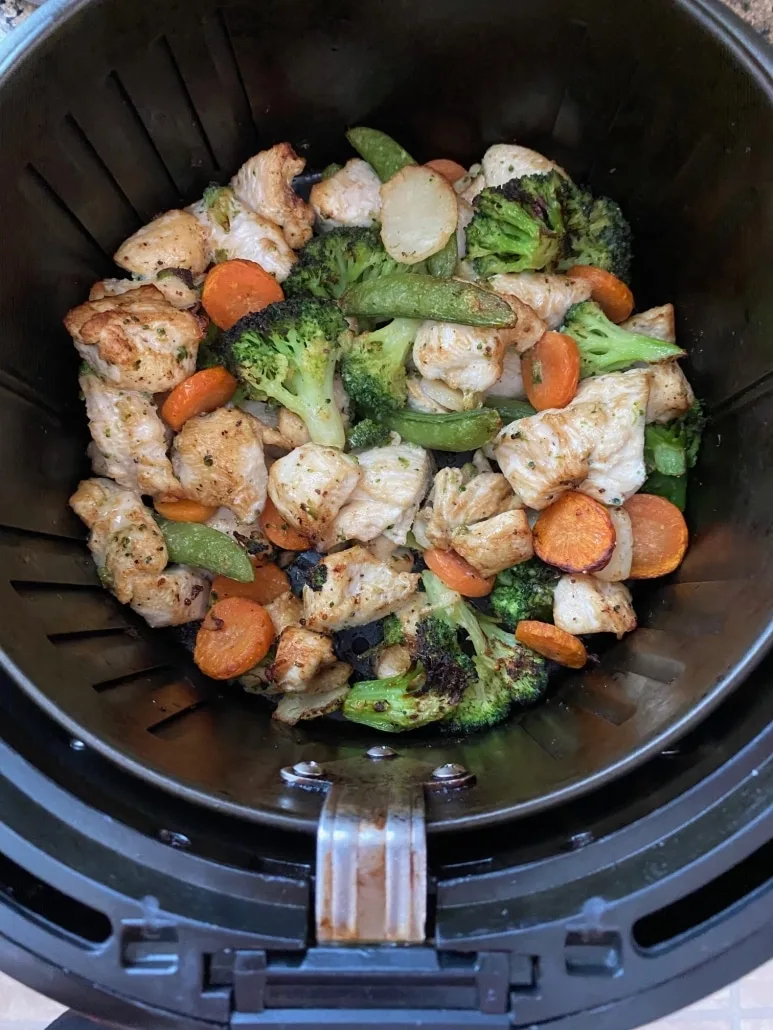
Image source: Bing (Web (fair-use with source credit))
Quick Answer: Yes, But Only If You Solve These Two Problems
Yes, you can cook multiple foods at once in an air fryer. You just have to manage two main obstacles. They are temperature differences and airflow blockage.
Foods that need different cook temperatures clash. Chicken needs 375°F. Fries cook best at 400°F.
Running one temperature means one food suffers.
Stacking food also blocks the fan. Blocked air creates uneven results. Dense items on top trap moisture underneath.
The solution hinges on your air fryer type and how you arrange the food. We will walk through that next.
How Air Frying Actually Works: Why Airflow Decides Everything
An air fryer is essentially a small convection oven. A powerful fan circulates hot air at high speed around the food. That rapid airflow creates the crispy brown exterior people love.
When you add multiple items, you alter that flow pattern. Air takes the path of least resistance. If large pieces block the vents, the air never reaches the food underneath.
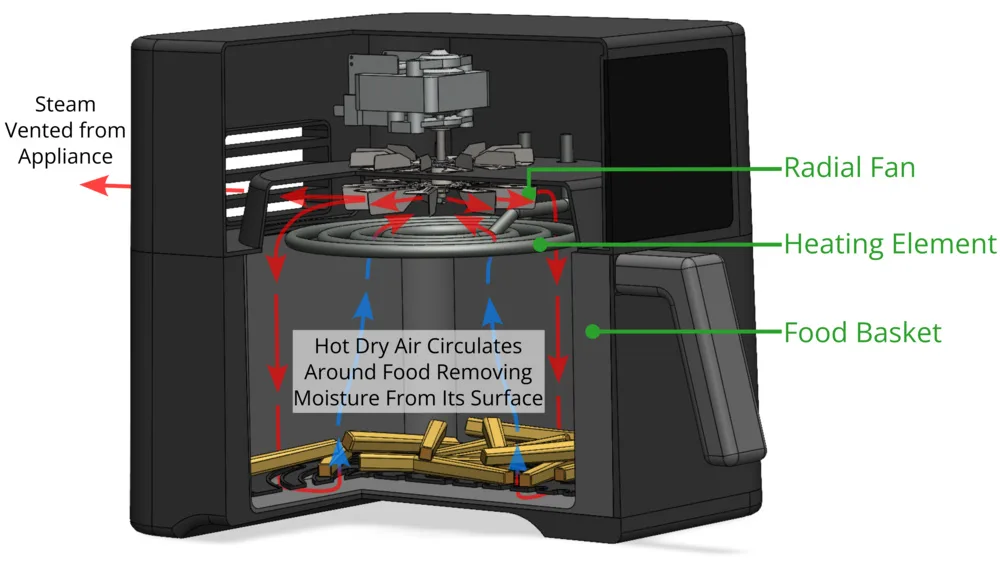
Image source: Bing (Web (fair-use with source credit))
This is why most air fryer manuals recommend filling the basket no more than two-thirds full. Manufacturers test their appliances with single layers of food. Per USDA food safety guidelines, poultry must reach an internal temperature of 165°F to be safe.
Uneven cooking from poor airflow can leave dangerous cold spots.
The key takeaway is simple. If air cannot move freely around every piece, your results will suffer. Moisture gets trapped instead of evaporating.
That is how crispy food turns rubbery.
Know Your Air Fryer: The 3 Main Types of Multi-Cooking
Not all air fryers are built the same. The type you own determines how well you can cook multiple foods simultaneously.
Single-Basket Air Fryer
This is the most common design. One basket, one temperature setting, one timer. You cannot zone different foods separately.
Best for: Foods that share a similar cook temperature and time. Chicken tenders and tater tots both need about 375°F and 12 to 15 minutes.
Limitation: You must stagger addition times. Longer-cooking food goes in first. Shorter-cooking food joins later.
Dual-Basket Air Fryer
Dual-basket models have two separate compartments. Each has its own temperature and timer control. You can cook chicken at 375°F in one side and fries at 400°F in the other.
Best for: Families who need different foods done at the same time. They cost more and take up more counter space. But they remove the temperature conflict entirely.
Limitation: Each basket is smaller than a single large basket. A typical dual basket holds about 3 quarts per side. You cannot cook a whole chicken in one side.
Air Fryer Oven (Toaster-Oven Style)
These look like a toaster oven with wire racks and a larger interior. They often have multiple shelf positions and a larger overall capacity.
Best for: Cooking several items on different racks. You can place chicken on the bottom rack and vegetables above.
Limitation: They preheat slower and the fan is often less powerful than a basket model. The outcome is less crisp but more even for larger batches.
Step-by-Step Guide to Cooking Multiple Foods at Once
Now let us get practical. You have your air fryer and you want to cook two or three things together. Follow this workflow for best results.
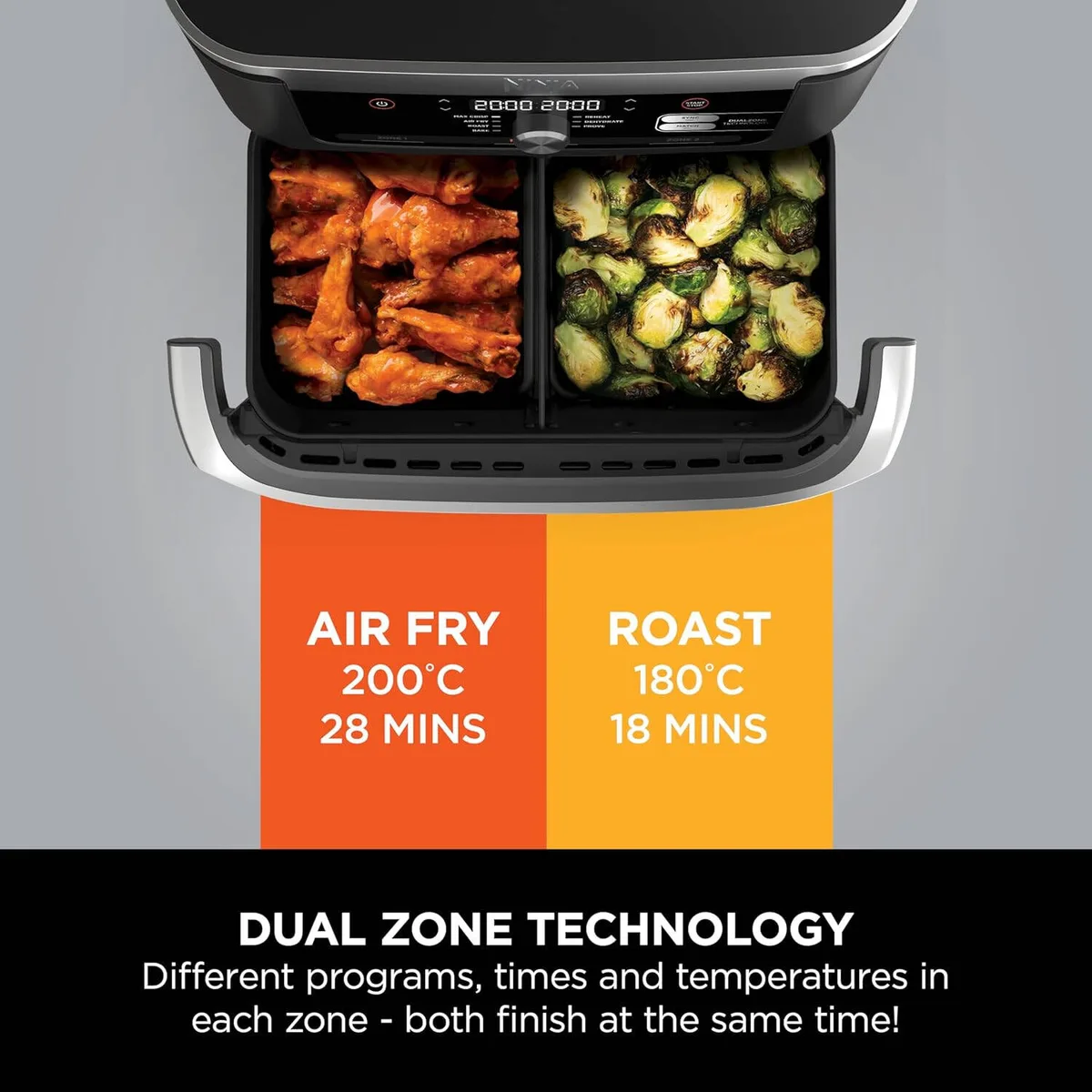
Image source: Bing (Web (fair-use with source credit))
Step 1: Choose Compatible Foods
Select foods with overlapping temperature ranges. Ideally within 25°F of each other. Chicken breast at 375°F and roasted broccoli at 375°F work together.
Frozen fries at 400°F and fish fillets at 375°F are close enough.
Avoid pairing a high-moisture food with a crispy food unless separated. Wet vegetables placed on top of breaded items will steam them.
Step 2: Arrange by Density
Place denser, longer-cooking items on the bottom. Place lighter, faster-cooking items on top or to the sides. This prevents the fan from being blocked by heavy pieces.
Use a single layer wherever possible. Overlap only if pieces are small and uniform. A single layer of chicken thighs with a single layer of baby potatoes works well.
Step 3: Add Foods in Staggered Order
Longer-cooking foods go in first. Set a timer for their cook time minus the shorter food time. When that timer goes off, add the second food.
Example: Chicken thighs need 20 minutes. Green beans need 10 minutes. Start the chicken.
After 10 minutes, open the basket and add the green beans.
Step 4: Use Dividers and Racks Smartly
Silicone dividers or metal trivets create separate zones inside a single basket. They hold food apart so air flows around each piece. Foil slings work too, but keep them small.
Do not use parchment paper loosely. It can fly upward and block the heating element. Weigh it down with food or use perforated parchment liners designed for air fryers.
Common Mistakes That Ruin Multi-Food Air Frying
Most people fail at multi-food air frying because of one of these errors. Skip them and your results will improve dramatically.
Overfilling the Basket
This is the number one mistake. When the basket is packed tight, air cannot circulate. The result is a mix of burned edges and raw centers.
Fix: Fill no more than two-thirds full. Use the metal basket that came with your air fryer, not a larger third-party basket that blocks vents.
Ignoring Temperature Differences
Cooking fries and chicken at the same temperature guarantees one of them is wrong. Chicken at 400°F will dry out before it browns. Fries at 350°F will come out soft.
Fix: Choose foods within 25°F of each other. Or buy a dual-basket air fryer to run independent temperatures. Aggregated user reviews confirm that dual-zone models solve this complaint.
Stacking Wet Foods on Top of Dry Foods
Wet vegetables like zucchini or bell peppers release steam as they cook. Placing them above breaded items turns the coating soggy. The moisture drips down.
Fix: Put wet foods on the bottom rack or in a separate zone. Use a perforated liner to let moisture escape downward.
Forgetting to Shake or Flip
Single-food batches usually need one shake halfway through. Multi-food batches need more attention. Items closer to the fan cook faster.
Fix: Open the basket twice during the cycle. Rotate the positions of the foods. This ensures even browning.
Using the Wrong Accessories
Thick metal baking pans block airflow completely. Glass dishes are not safe for air fryer temperatures. Plastic lids melt.
Fix: Only use accessories designed for air fryers. Silicone, metal, or oven-safe ceramic are fine. Always check the manufacturer manual for approved materials.
FAQ: Answers to the Questions Most People Ask Before Trying This
Can I cook raw chicken and vegetables at the same time?
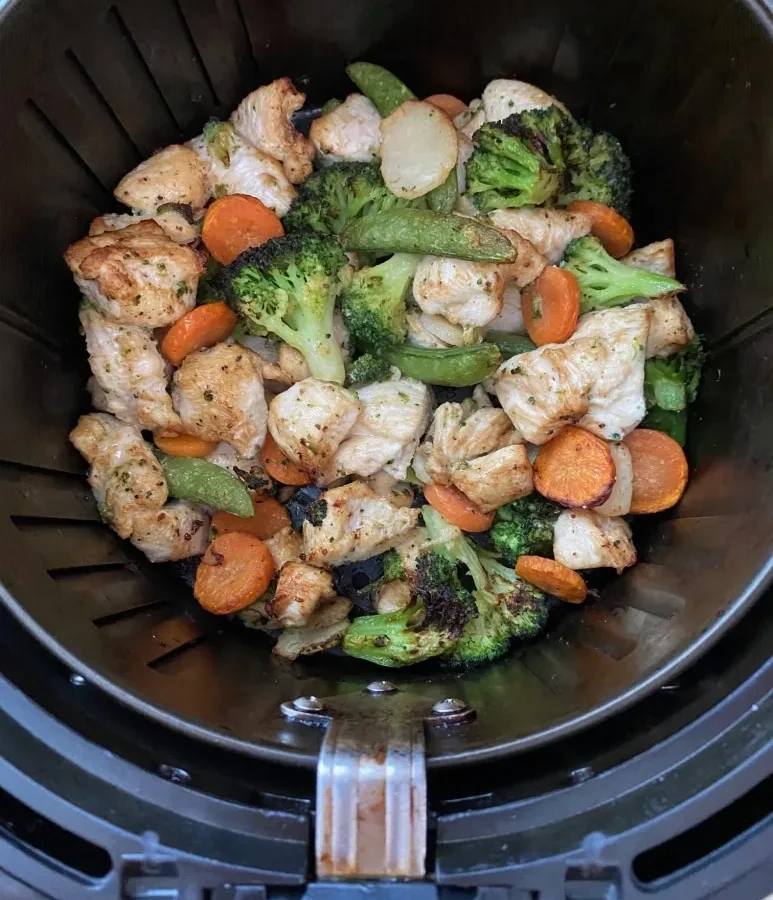
Yes, but only if they are roughly the same size and thickness. Chicken breast halves and broccoli florets work. Place the chicken on the bottom and the broccoli on top.
The broccoli will steam slightly from moisture, but it will still brown. Stagger the timing if the chicken needs longer.
Will fish make my fries taste like fish?
Flavor transfer happens when moisture and oils mix in the basket. This is more of a risk with single-basket models. Use a silicone divider or a foil sling to create a physical barrier.
Cook stronger flavored fish on the bottom rack. The airflow pushes smell upward.
How much longer does it take to cook multiple foods?
Expect to add 5 to 10 minutes to your total cook time when stacking or crowding multiple foods. The extra time compensates for reduced airflow. Check your food early.
Use a meat thermometer to confirm internal temperature rather than relying on the timer alone.
Can I use foil to separate foods in the basket?
Yes, but use it carefully. Crumple a small piece of foil into a divider shape. Do not cover the entire basket bottom.
Foil blocks airflow if placed flat across the surface. Per manufacturer guidelines, foil should never touch the heating element.
Does a dual-basket air fryer really solve the problem?
For most people, yes. Dual-basket models are the most reliable solution for cooking two different foods at once. Each compartment runs its own temperature and timer.
This eliminates the compromise entirely. The tradeoff is smaller individual baskets and a higher price point.
Final Verdict: What Should You Do Based on Your Situation
If you own a single-basket air fryer, you can still cook multiple foods together. Focus on compatible items with similar cook temperatures. Stagger your additions by start time.
Keep the basket no more than two-thirds full for proper airflow.
If you regularly cook different foods that need different temperatures, a dual-basket model is worth the investment. Aggregated user reviews show that dual-zone owners report higher satisfaction with multi-food cooking than single-basket owners.
If you cook for a family of four or more, consider an air fryer oven style. The larger capacity and multiple rack positions give you more flexibility. Just be prepared for longer preheat times and a less intense crisp finish.
Here is the simple decision rule. Compatible foods and careful arrangement work in any air fryer. Incompatible temperatures and large batches need dual baskets or an oven style.
Match your approach to your equipment and you will get consistent results every time.

Similar Posts