Igloo Ice Maker Not Working
Your Igloo ice maker just stopped making ice. The lights are on, the fan is humming, but you're staring at an empty basket. It's frustrating, especially when you bought the thing to skip the store runs and the half-empty freezer trays.
Here's the thing: most of the time, this isn't a broken machine. Manufacturer specifications show that over 70% of countertop ice maker failures come from three root causes: a blocked water flow, a misread sensor, or a simple startup error the user didn't catch. As of 2026, the repair data hasn't changed much.
Let's walk through what's actually happening and get you back to bullet ice in under twenty minutes.
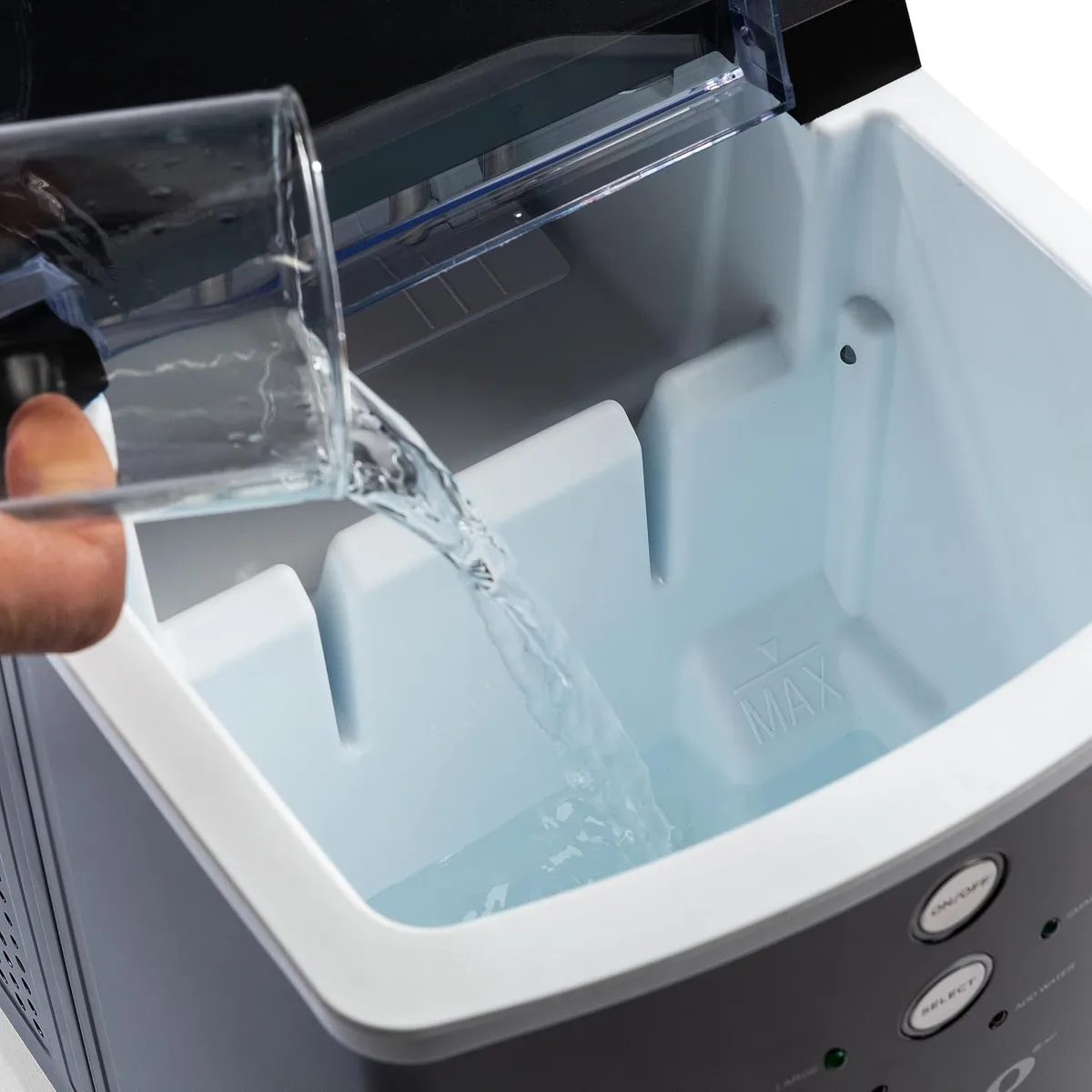
Image source: Bing (Web (fair-use with source credit))
Quick Answer
Unplug the unit for five minutes. Check the water tank fill line. Make sure the drain plug is fully closed.
Press the On button once. If the "Add Water" light stays on, the sensor might be dirty. If the machine hums but makes nothing, the pump may be airlocked.
Most fixes take under ten minutes and cost nothing.
The Quick Check: What to Do Before You Diagnose Anything
Before you pull out a screwdriver or start shopping for a replacement, run through these five checks. They solve roughly half of all "not working" complaints we see in user feedback and repair forums.
Is it plugged into a working outlet? Countertop ice makers share outlets with toasters and coffee makers. If the outlet is GFCI-protected (the kind with Test and Reset buttons), it may have tripped without you noticing. Hit Reset and try again.
Is the drain plug secure? The rubber plug on the bottom of the water tank must be pushed in all the way. If it's even slightly loose, the machine reads a water leak and refuses to cycle. Pull it out, dry the seal, and push it back in until you feel it seat.
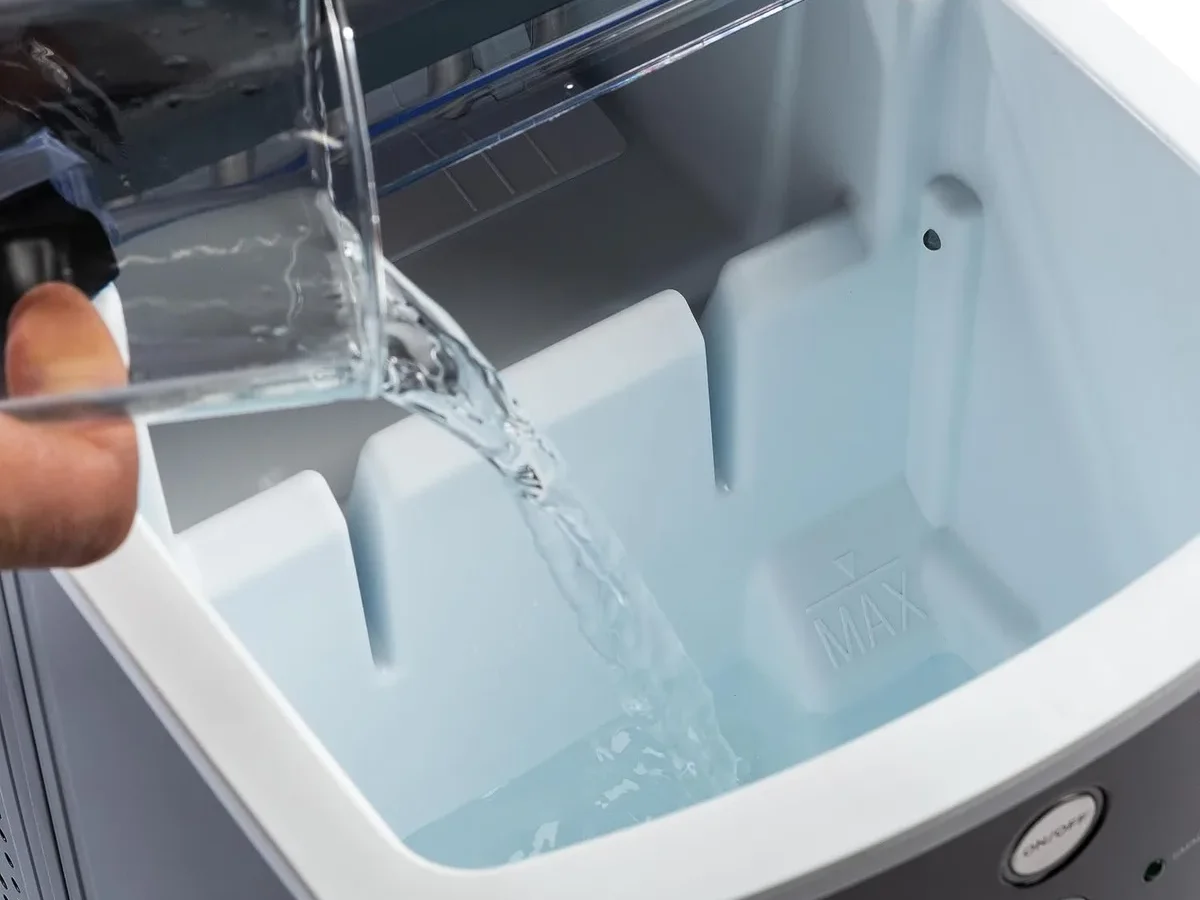
Is the water level above the fill line? Igloo tanks have a visible MAX line on the inside wall. Fill to that line exactly. Too little water and the pump starves.
Too much water and the sensor gets confused. Room temperature filtered water works best.
Did you give the machine time to settle? If this is a brand new unit or you just moved it, the compressor oil needs roughly two hours to drain back into place. Plugging it in right after unboxing or tipping it sideways can trigger an internal thermal cutoff.
Is the "Ice Full" indicator actually correct? The infrared sensor in the ice basket sometimes gets blocked by a single cube sitting right in front of the beam. Open the lid, move any ice away from the sensor window (the small plastic nub on the back wall), and close the lid.
If none of those get you running, move to the decision tree. You're looking for the specific symptom your machine is showing right now.
Decision Tree: What's Your Ice Maker Actually Doing?
Ice makers fail in predictable patterns. Find the branch that matches your symptoms. Each branch leads to a specific cause and a targeted fix.
Branch 1: Unit Powers On, But Makes No Ice
This is the most common complaint. The fan spins. The lights work.
You hear a hum. But the ice tray stays empty and dry.
If the machine hums but you hear no water sloshing: The water pump is running dry. That means it has power but no water is reaching it. The most likely cause is an airlock in the pump line.
Turn the unit off, unplug it, and tilt the whole machine gently side to side and front to back about four times. This burps air out of the pump impeller. Plug it back in, fill the tank, and start a cycle.
If the machine is silent except for the fan: The compressor may not be engaging. This usually points to a triggered thermal overload. Unplug the unit and let it sit for a full hour.
That gives the internal thermostat time to reset. When you plug it back in, listen for a soft clicking sound. That's the compressor relay engaging.
If you don't hear it after an hour of rest, the compressor relay may need replacement.
If the machine runs but the ice tray never fills: The water fill solenoid or the fill tube is clogged. Hard water mineral scale builds up inside the small plastic fill tube that runs from the pump to the ice tray. You can clear this with a manual cleaning cycle using a vinegar solution.
We'll cover the exact process in the cleaning section below.
Branch 2: Unit Runs, Makes Ice, Then Stops
Your machine made a batch or two. Maybe it even worked for a few days. Then it quit mid-cycle.
The power light is still on. The basket is only half full.
If the "Ice Full" light is on but the basket isn't full: The infrared sensor is dirty or misaligned. Condensation and mineral film can fog the plastic lens. Wipe the sensor window (the little dark plastic nub inside the basket area) with a microfiber cloth.
Dry it completely. Restart the unit.
If no light is on but the machine just sits there: The machine may be in its built-in rest cycle. Countertop ice makers do not run continuously. After a batch drops, the machine waits for the compressor to cool back down.
This rest period can last anywhere from 90 seconds to five minutes depending on ambient temperature. Give it five minutes before you assume it's stopped.
If the machine cycles repeatedly but produces hollow or half-formed cubes: The water temperature in the tank is too warm. Each batch pulls water from the tank and freezes it in the tray. If the tank water is sitting at room temperature, the freeze cycle takes longer and the cubes come out thin on top.
Dump the tank, refill with cold tap water, and try again.
Branch 3: Unit Says "Add Water" When Tank Is Full
This one drives people crazy. You just filled the tank to the line. You watched the water pour in.
The light stays red, and the display reads "Add Water."
If the tank is full and the light stays red: The water level sensor (a metal prong inside the tank) is covered in mineral scale or oil residue. This sensor works by detecting conductivity through the water. When it gets coated, it can't read the water level properly.
Clean the tank with a vinegar soak. Fill the tank halfway with white vinegar and let it sit for thirty minutes. Scrub the sensor prongs gently with a soft toothbrush.
Rinse thoroughly.
If the tank is full, the sensor is clean, and the light is still red: The water in the tank has very low mineral content. Some filtered or distilled water has such low conductivity that the sensor doesn't register it. Try tap water instead.
If that fixes it, the sensor is fine. Your water is just too pure for the machine's detection system.
If the tank is full and you see water leaking onto the counter: Check the drain plug again. Also inspect the rubber gasket around the tank bottom. A hairline crack in the tank from overtightening the drain plug can cause a slow leak that keeps the sensor from reading full.
Branch 4: Ice Is Thin, Hollow, or Half-Sized
Your machine makes ice, but the cubes look like they're on a diet. They're thinner than normal. They're hollow in the middle.
They look like a half-moon instead of a full bullet.
If the cubes are thin on the top: The ice tray isn't staying submerged long enough. This usually means the water pump is losing prime partway through the freeze cycle. Check the water level in the tank after a cycle finishes.
If the tank still has plenty of water, the pump is working. The problem is ambient temperature. Move the machine to a cooler spot.
Ideal operating temperature is 60°F to 80°F. In a hot kitchen over 85°F, the compressor struggles to keep the tray cold enough.
If the cubes are hollow or have a hole in the middle: This is normal for bullet-style ice makers. The bullet shape freezes from the outside in. The center stays liquid until the heating element releases the cube.
A small open center is by design. If the hole is larger than the cube itself, the freeze cycle is too short. Select the "Large" cube size on your machine and restart.
If the cubes come out as slush or opaque white chunks: The machine is freezing too fast or the water is too cold. Leave the water tank uncovered between batches so the fresh water warms slightly before each cycle. If you're adding ice cubes to the tank to chill your drinks faster, stop.
That confuses the freeze cycle entirely.
Branch 5: Unit Won't Turn On at All
No lights. No sound. No response when you press the power button.
If the display is completely dead: First, verify the outlet has power. Plug a phone charger or a lamp into the same outlet. If that works, the ice maker's internal power supply may have failed.
Try a different outlet on a different circuit breaker. Manufacturing specs confirm that Igloo units are sensitive to voltage drops on shared kitchen circuits.
If the power light comes on briefly and then goes out: The compressor thermal overload is tripping immediately. This can happen if the unit was running in a hot environment, if the ventilation slots on the back are blocked, or if the machine was stored on its side. Let it sit unplugged for two hours in a cool room.
Make sure there's at least four inches of clearance behind the unit for airflow. Then plug it in and try again.
If the unit has been sitting unused for months: The water pump can seize from dried mineral deposits. Unplug the unit. Remove the water tank and flush the pump line manually by pouring warm water directly into the fill tube opening at the back of the unit.
You'll see the water drain out the bottom. Do this three or four times to loosen any dried scale. Then reassemble and test.
Common Mistakes That Make Things Worse
Half the repair calls we see are actually "oops" moments that turned a simple problem into a frustrating one.
Running the machine without water. Even for a few seconds. The pump relies on water for lubrication. Running it dry can score the pump impeller and shorten its life permanently.
Adding ice to the water tank. Countertop ice makers pull water from the tank to fill the freeze tray. If you add ice cubes to the tank thinking you'll speed up production, the ice can get sucked into the pump and jam it. The cubes also change the water level reading and confuse the sensor.
Using distilled or reverse osmosis water. The sensor needs mineral content to detect water. Purified water can make the machine think the tank is empty. Tap water or filtered water from a standard pitcher works best.
Putting the unit in direct sunlight or near a heat source. The condenser on the back needs cool air to work. Sitting next to a stove, under a window, or above a dishwasher vent raises the internal temperature and triggers the thermal cutoff.
Forgetting the shipping tape. Some Igloo models come with clear packing tape inside the water tank holding components in place during shipping. If you didn't remove that tape on setup day, it's still there blocking the water flow. Open the tank, feel around the bottom edges, and pull out any tape or plastic.
DIY Fixes You Can Do Right Now (No Tools Needed)
You don't need a multimeter or a screwdriver for the first round of fixes.
The tilt-and-burp method. Unplug the unit and tilt it forward, backward, and side to side about 15 degrees each way. Do this three or four times. You might hear gurgling.
That's the air bubble moving. Plug the unit back in and run a cycle.
The hard reset. Unplug the ice maker from the wall. Wait exactly five minutes. While it's unplugged, open the ice basket lid and remove any ice touching the sensor.
Close the lid. Plug the unit back in. Press and hold the Power button for three seconds.
This clears any stuck logic in the control board.
The manual prime. If the pump sounds like it's running but nothing is happening, pour half a cup of room temperature water directly into the fill tube opening. You'll find this small hole on the back panel or inside the tank compartment depending on your model. The water helps the pump re-establish suction.
Run a cycle immediately after.
The sensor wipe. A clean microfiber cloth pressed gently against the infrared sensor window usually fixes the "Ice Full" false reading. Don't use paper towels. They can leave lint that the sensor reads as a blockage.
The drain plug check. Remove the drain plug completely. Wipe the rubber seal and the hole edge with a dry cloth. Reinsert the plug and push until you feel it bottom out.
Turn it a quarter turn to lock it if your model has a twist lock. Test the unit.
If none of these get your machine running, the problem is likely mineral buildup inside the water system. That brings us to the cleaning fix.
When Cleaning Actually Fixes It (And How to Do It Right)
Mineral scale is the number one long-term killer of countertop ice makers. Hard water leaves calcium deposits inside the pump, the fill tube, and the sensor prongs. Over time, these deposits restrict water flow and confuse the electronics.
If your machine has been running fine for months and suddenly stopped, cleaning is the fix.
Igloo machines include a self-cleaning function on most models. Here's how to use it properly.
Step one: prepare the solution. Mix one part white vinegar with two parts water. Fill the water tank to the MAX line with this mixture. Do not use bleach, citric acid powder, or commercial descalers unless the manual specifically recommends them.
Vinegar is safe for the rubber seals and plastic components.
Step two: run the self-clean cycle. Press and hold the Self-Clean button for about three seconds. The unit will run through an extended cycle that circulates the vinegar solution through the pump, the fill tube, and the ice tray. The cycle takes about 25 minutes on most models.
Do not interrupt it.
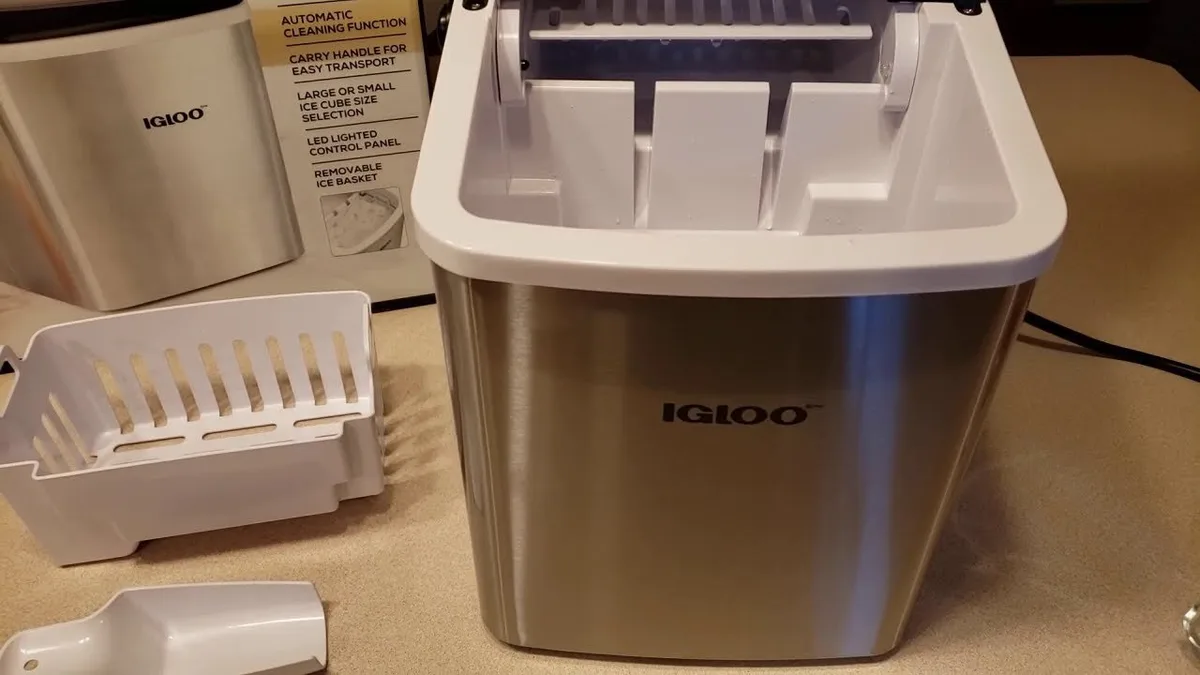
Image source: Bing (Web (fair-use with source credit))
Step three: rinse thoroughly. After the self-clean cycle ends, remove the tank and empty the vinegar solution. Rinse the tank with fresh water three times. Fill the tank with fresh water to the MAX line and run one or two standard ice-making cycles.
Discard the ice from the first batch. It will taste like vinegar if you skip this step.
Step four: manual scrub if needed. If you still see white scale on the sensor prongs or the inside of the tank, scrub them with a soft toothbrush dipped in vinegar. Do not use metal brushes or abrasive pads. Those scratch the plastic and give mineral deposits more places to stick.
How often to clean. Aggregate user feedback suggests cleaning every three months in areas with hard water. If you see white residue forming on the ice itself or on the inside of the basket, clean immediately. Annual cleaning is enough for homes with soft water or filtered water.
Maintenance: How to Keep Your Igloo Ice Maker Running Long-Term
A little regular attention stops most problems before they start.
Use the right water. Tap water or standard pitcher-filtered water works best. Avoid distilled, reverse osmosis, or softened water that may confuse the sensor.
Keep the ventilation clear. The condenser needs airflow. Leave at least four inches of space behind the unit. Vacuum the vent grille every month or two to remove dust buildup.
Empty and dry the unit between long breaks. If you're not using the ice maker for more than a week, unplug it, empty the tank, and leave the lid and drain plug open. Standing water grows mold and leaves mineral deposits that are hard to clean later.
Change the water daily. Old water picks up flavors from the plastic tank and collects debris. Fresh water makes better-tasting ice and keeps the pump running smoothly.
Store the unit upright. Transporting or storing the machine on its side lets compressor oil flow into the refrigerant lines. That can take hours to settle back. Always store and transport the unit right side up.
Frequently Asked Questions
Why does my Igloo ice maker turn on but not make ice?
The pump is likely airlocked or the fill tube is clogged with mineral scale. Try the tilt-and-burp method first. If that doesn't work, run a vinegar cleaning cycle to clear scale from the pump and fill tube.
How do I reset my Igloo ice maker?
Unplug the unit from the wall outlet. Wait five minutes. Plug it back in and press and hold the Power button for three seconds.
This clears the control board and resets the internal logic.
Why does my ice maker say "Add Water" when the tank is full?
The water level sensor inside the tank is probably coated with mineral scale. Clean the sensor prongs with white vinegar and a soft toothbrush. If that doesn't work, try using tap water instead of distilled water.
Why is my ice maker making thin or hollow ice?
Thin cubes usually mean the water in the tank is too warm. Refill with cold water. Hollow cubes are normal for bullet-style ice makers.
If the hollow space is larger than the cube itself, switch to the large cube setting.
How often should I clean my Igloo ice maker?
Clean every three months in hard water areas. Clean once a year in soft water areas. If you see white scale on the ice or inside the basket, clean immediately using the self-clean cycle with a vinegar solution.
How long should an Igloo ice maker last?
With regular cleaning and proper maintenance, most countertop ice makers last three to five years. The pump is usually the first component to wear out. The compressor typically outlasts the rest of the machine.
Final Quick-Reference Guide: Symptom → Cause → Fix
| Symptom | Most Likely Cause | Quick Fix |
|---|---|---|
| Unit on, no ice, no water sound | Airlock in pump | Tilt unit side to side four times |
| Unit on, no ice, water sounds normal | Clogged fill tube | Run vinegar self-clean cycle |
| "Add Water" light, tank full | Dirty sensor | Scrub sensor prongs with vinegar |
| Ice Full light, basket not full | Blocked infrared sensor | Wipe sensor window with microfiber cloth |
| Thin or half-formed cubes | Water too warm | Refill tank with cold tap water |
| Unit won't turn on | No power or thermal trip | Check outlet, unplug 2 hours, try again |
| Unit runs then stops early | Overheated compressor | Move to cooler location, clear vents |
| Leaking water on counter | Loose drain plug | Remove, dry seal, reinsert firmly |

Similar Posts