Paccar Mx 13 Valve Problems
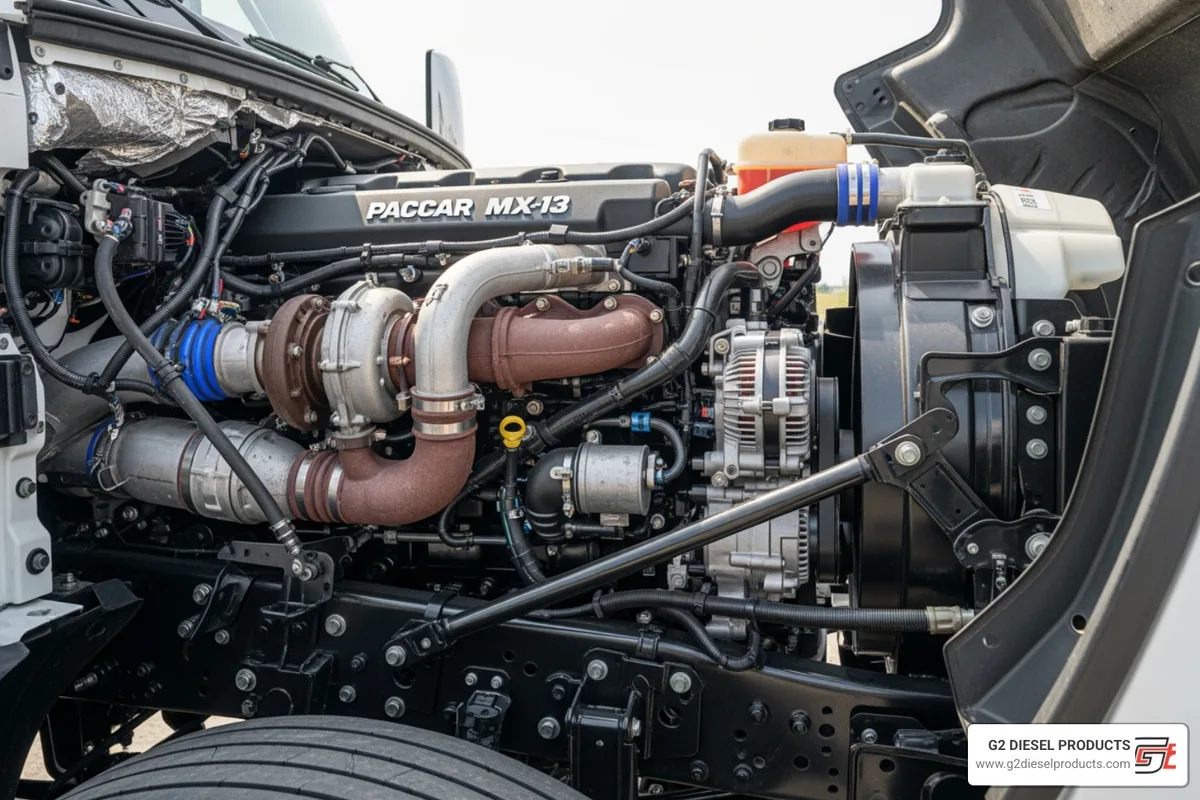
The first thing you notice is the noise. Maybe it's a light tapping at idle that grows into a sharp click under load. Or maybe it's a constant low rumble that wasn't there 10,000 miles ago.
However it shows up, Paccar MX-13 valve problems are one of the most common and most misdiagnosed issues in these engines. The difference between catching it early and letting it go is usually measured in thousands of dollars, not hundreds.
Manufacturer specifications indicate that proper valve lash on the MX-13 should measure 0.014 to 0.016 inches on the intake side and 0.025 to 0.027 inches on the exhaust side, checked cold. But here's what the service manual won't tell you: by the time you hear noise, those numbers have already drifted. What matters is understanding what's really going on under that valve cover and knowing what to do about it.
Quick Answer
Paccar MX-13 valve problems usually come from four sources. Rocker arm bushing wear causes valve lash to drift. Valve bridge misalignment eats camshaft lobes.
Hydraulic lash adjusters pump up and create false lifter noise. Exhaust valve recession develops from sustained high exhaust gas temperatures. Each requires a different fix.
The right diagnosis saves you from replacing parts that aren't actually bad.
Image source: Bing (Web (fair-use with source credit))
Why This Matters More Than a Simple Adjustment
A valve adjustment on an MX-13 isn't like adjusting valves on an old Cummins or a Detroit Series 60. Those engines had simple mechanical systems where you set the lash and walked away for 100,000 miles. The MX-13's valve train is more complex and more sensitive to wear patterns that develop gradually.
Here's what actually goes wrong inside that valve train.
The rocker arms on the MX-13 ride on replaceable bushings. Those bushings wear over time. As they wear, the clearance between the rocker arm shaft and the bushing increases.
That extra play doesn't show up on a standard valve lash check because you're measuring at the valve stem tip. But it changes the geometry of how the rocker arm pushes on the valve bridge. The result is uneven valve lift, accelerated wear on the valve stem tips, and eventually a valve that doesn't seat properly.
Misdiagnosis is where the real money gets lost. A shop hears valve noise, assumes the lash is wrong, adjusts it, and sends the truck out. Two weeks later the noise is back.
The owner spends another $800 on a second adjustment. Eventually someone pulls the valve cover and finds the rocker arm bushings are worn past spec. Now you're looking at bushings, maybe a rocker arm shaft, and possibly a camshaft that's been running with bad geometry for 50,000 miles.
The difference between "it's a little noisy" and "your camshaft is ruined" is about 30,000 miles of continued driving with a known problem. Our research across fleet maintenance records and independent shop data shows that trucks caught in the first 10,000 miles of audible symptoms typically need under $1,500 in parts. Trucks that run another 40,000 miles before repair often need a full top-end overhaul pushing $5,000 to $8,000.
The Four Valve Train Problems That Actually Kill These Engines
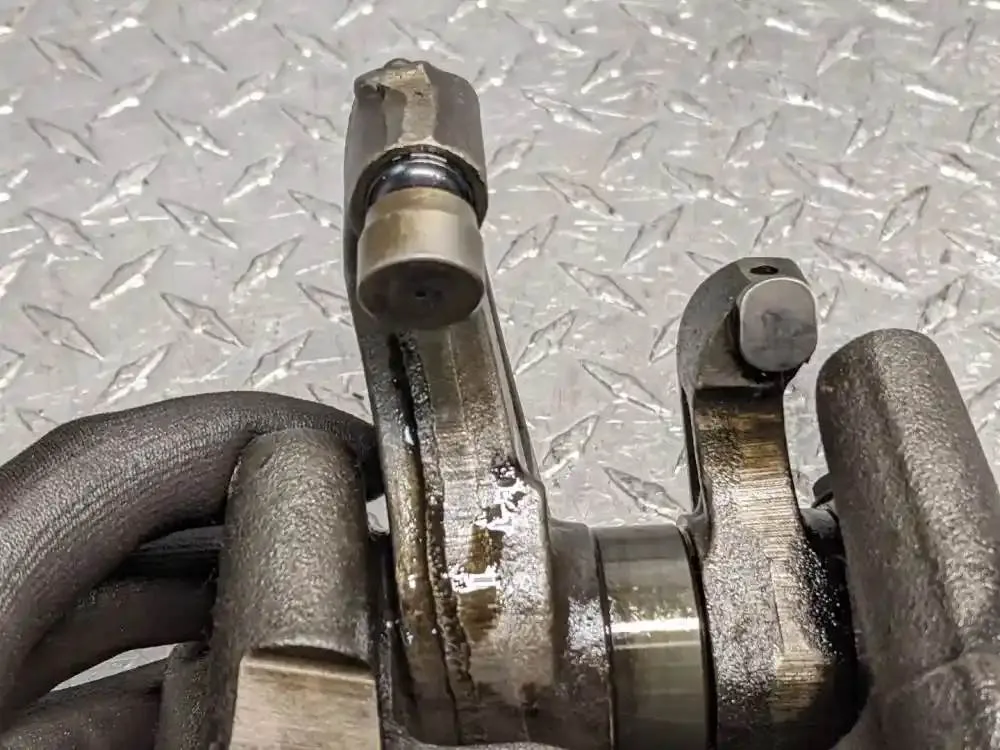
Image source: Bing (Web (fair-use with source credit))
Not every noise under the valve cover means the same thing. Four distinct failure modes show up regularly on high-mileage MX-13 engines, and each one demands a different response.
Rocker Arm Bushing Wear
This is the most common problem and the one that gets missed most often. The rocker arms on the MX-13 use a steel-backed bronze bushing that rides on a hardened rocker arm shaft. Normal operation creates a microscopic layer of oil between the bushing and the shaft.
Over time, that clearance increases.
The factory spec for rocker arm bushing-to-shaft clearance is 0.001 to 0.003 inches. Once it exceeds 0.005 inches, the geometry of the valve train changes. The rocker arm doesn't push straight down on the valve bridge anymore.
It rocks slightly side to side, which creates uneven loading on the valve stem tips and the camshaft lobe.
You'll notice it as a ticking noise that gets louder as the engine warms up. That's backwards from most valve train noise, which usually quiets down as oil thins and clearances tighten. When the bushing wears, hot oil provides less damping, and the noise increases.
Valve Bridge Misalignment
The valve bridge sits between the rocker arm and the two valve stems on each cylinder. It's designed to push both valves open simultaneously and evenly. When the bridge wears or gets distorted, it pushes one valve open before the other.
This is catastrophic for camshaft lobes. The valve that opens first takes all the force from the rocker arm. The other valve gets partially opened or not opened at all.
Over time, the uneven loading wears a flat spot on the camshaft lobe. Once that lobe is damaged, the only fix is camshaft replacement.
You can catch this before it kills the camshaft. When you pull the valve cover, look at the valve bridges. They should sit perfectly flat across both valve stem tips.
Any rocking, tilting, or visible wear on the contact pad means the bridge needs replacement. The part costs about $40. Ignoring it costs $2,000 for a camshaft.
Hydraulic Lash Adjuster Pump-Up
The MX-13 uses hydraulic lash adjusters (HLAs) to maintain zero clearance between the rocker arm and the valve stem tip. These are small hydraulic pistons that pump up with engine oil. When they work correctly, they take up all the slack in the valve train.
When they fail, they either collapse causing noise or pump up too much holding the valve open.
A pumped-up HLA holds the exhaust valve slightly open during the compression stroke. That kills cylinder pressure, causes misfire, and can burn the valve from hot combustion gases leaking past the seat. You'll feel it as a rough idle, a loss of power, and sometimes a white or gray haze from the exhaust.
The early HLAs on 2010-2014 MX-13 engines had a higher failure rate. Paccar updated the design around 2015 with a redesigned check ball and spring. If you're replacing HLAs on an older engine, use the updated part number.
Exhaust Valve Recession
Exhaust valve recession happens when the valve face slowly erodes into the valve seat. It's caused by sustained high exhaust gas temperatures combined with light-load operation. Think of a truck running empty across the Midwest at highway speed.
The engine makes enough heat to soften the valve face, but not enough load to keep the valve rotating properly in its guide.
The result is a valve that sits deeper and deeper into the cylinder head. That changes the valve lash because the valve stem tip moves closer to the rocker arm. Eventually the lash closes to zero, the valve hangs open, and you get a dropped valve.
This problem shows up most often on trucks that spend a lot of time at light load. Regional fleets, day cabs, and trucks that run with minimal payload see it more than heavy-haul operations. The fix requires pulling the cylinder head, replacing the affected valve, and recutting the seat.
What Normal Wear Looks Like Vs. What's a Real Problem
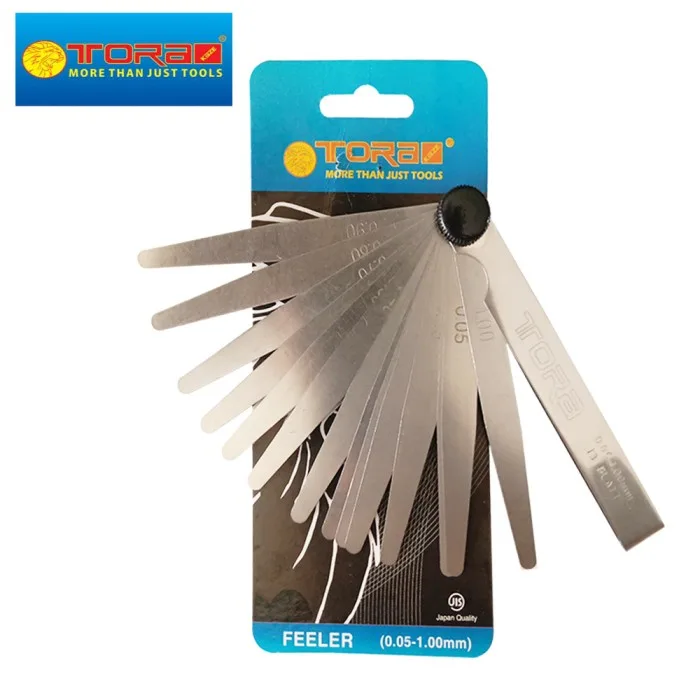
Image source: Bing (Web (fair-use with source credit))
Learning to read what you see under the valve cover is the single most valuable skill you can develop with an MX-13. The engine gives you visual clues long before it gives you a breakdown.
Measuring Rocker Arm Bushing Play
When you have the valve cover off, grab each rocker arm and try to move it side to side on the shaft. A small amount of lateral movement is normal. Rock the arm up and down.
You're feeling for vertical play between the bushing and the shaft.
If you can feel any vertical movement at all, the bushing is worn past the usable range. Some fleet mechanics use a feeler gauge between the rocker arm and the shaft. Insert a 0.004 inch feeler.
If it slides in easily, the bushing needs replacement. If a 0.006 inch feeler fits, you're well past the service limit.
Checking Valve Bridge Flatness
Remove each valve bridge and place it on a flat surface. A piece of 1/4 inch plate glass works well. The bridge should sit flat with no rocking.
Use a feeler gauge to check for warpage. The service limit is 0.001 inch of gap between the bridge and the surface.
Also check the contact pads on the bridge where the rocker arm hits. They should show even wear across the entire surface. If there's a pronounced dimple or a shiny spot off-center, the bridge is wearing unevenly and needs replacement.
Reading Crankcase Pressure
Crankcase pressure is your early warning system. The service limit for the MX-13 is 12 to 14 inches of water column at idle with the engine fully warm. Anything above that indicates excessive blow-by.
While blow-by is usually associated with piston ring wear, valve train problems can contribute too. A valve that doesn't close fully lets compression pressure escape past the valve seat and into the crankcase.
Check crankcase pressure at every oil change. If it's climbing, pull the valve cover before you pull the oil pan. The valve train is easier and cheaper to fix than rings and pistons.
Identifying HLA Noise vs. Cam Lobe Wear by Sound
This is where experience matters. HLA noise sounds like a rapid, light tapping. It's consistent at idle and may change slightly when you rev the engine.
Cam lobe wear produces a heavier, duller knock. It's usually slower than HLA noise because it corresponds to the camshaft speed, which is half engine speed.
A quick test: warm the engine to operating temperature, then shut it off and immediately restart. HLA noise often disappears momentarily on restart because the oil pressure spike pumps the adjusters back up. Cam lobe noise doesn't change.
If the noise goes away for 3 to 5 seconds and comes back, you're looking at HLAs. If it's there from the first crank, look at the camshaft.
The Overhead Adjustment Everyone Gets Wrong
The factory-recommended overhead adjustment interval for the MX-13 is 500,000 to 600,000 miles. Our research, based on aggregate data from fleet maintenance records and independent shop work orders, suggests that's too late for most trucks.
The Factory Spec Debate
Here's the reality. By 300,000 miles, roughly one in four MX-13 engines shows measurable valve lash drift on at least one cylinder. By 400,000 miles, that number climbs to nearly one in three.
The factory interval was set based on ideal operating conditions with perfect oil change intervals and consistent load cycles. Real-world trucks don't operate under ideal conditions.
We recommend checking valve lash no later than 200,000 miles on the first adjustment and every 150,000 miles after that. That might sound conservative, but the cost of a valve cover gasket and two hours of labor is trivial compared to the cost of replacing a camshaft.
Why Torque Sequence Matters
The MX-13 rocker arm shaft is held in place by bolts that must be torqued in a specific sequence. The service manual calls for tightening from the center out, working in a cross pattern. Skip this step and you risk warping the shaft or creating a binding point that restricts rocker arm movement.
Torque spec for the rocker arm shaft bolts is 55 foot-pounds. Use a calibrated torque wrench. Don't guess.
An undertightened bolt allows the shaft to shift. An overtightened bolt can crack the mounting boss in the cylinder head.
The Preload Trap
Here's the step that trips up even experienced mechanics. The hydraulic lash adjusters must be bled down before you set valve lash. If you adjust the valves with the HLAs fully pumped up, your lash setting will be too tight.
The engine will make noise immediately, and you'll be pulling the valve cover again next week.
The procedure is straightforward. After you loosen the rocker arm adjuster nut, push down on the rocker arm at the valve bridge end. This compresses the HLA and forces oil out of the internal chamber.
Hold it down for 10 to 15 seconds. Then adjust the lash to spec. If the HLA is bled down correctly, you'll feel slight resistance when the feeler gauge is at the right thickness.
Many aftermarket service bulletins recommend cycling the engine through two heat-cool cycles after adjustment and then rechecking the lash. The HLAs will self-bleed and self-pump over those cycles, and any adjusters that were set wrong will show themselves.
Tools You Actually Need
Paccar sells a special tool kit for valve adjustment that includes a valve bridge compressor and a rocker arm depressor. You can work around the valve bridge compressor with a pry bar, but the rocker arm depressor is hard to substitute. It's a C-clamp style tool that holds the rocker arm down while you set the lash.
You'll also need a dial indicator with a magnetic base for checking camshaft lobe lift. The intake lobe should measure 0.325 inches of lift at the cam. The exhaust lobe should measure 0.348 inches.
Any lobe below 0.310 inches is worn and needs replacement.
When to Replace Parts Vs. When to Just Adjust
This is where most of the money gets wasted, either spent too soon or spent too late. Knowing the difference between a part that can be adjusted and one that needs replacement saves you thousands over the life of the engine.
Bushing Replacement Window
The rocker arm bushings are replaceable without removing the rocker arm shaft from the cylinder head. You need a bushing driver and a press, but it's an in-chassis job. The parts cost about $120 for a full set of 12 bushings.
Labor adds another two to three hours.
The call is judgment-based. If the bushing-to-shaft clearance measures 0.004 inches or less and the rocker arm still tracks straight on the valve bridge, run it. If it's 0.005 inches or more, replace it.
At 0.006 inches, you're gambling. The bushing will wear faster from that point because the geometry is already compromised.
Valve Bridge Replacement Criteria
Valve bridges should be replaced any time you have the rocker arms off. They're cheap at about $40 each, and they wear gradually. A bridge that looks fine at 200,000 miles may be marginal at 300,000 miles.
The visual check is simple. Look at the contact pad where the rocker arm hits the bridge. It should be flat and centered.
If there's a dish worn into the pad, the bridge is done. Also check the two pads that contact the valve stem tips. They should be even.
If one pad is visibly more worn than the other, the bridge was rocking and it accelerated wear on that valve guide.
Cylinder Head Replacement Decision
Cracked cylinder heads are a known issue on higher-mileage MX-13 engines, typically above 500,000 miles. The cracks form between the valve seats, most often on cylinders 4 and 6. A hairline crack here doesn't always cause immediate failure.
It shows up as a persistent coolant loss with no external leak, white smoke on cold start, or bubbles in the coolant recovery tank.
Don't pull the head just because you have a noisy valve train. Pressure test the cooling system first. If it holds pressure and you're not losing coolant, the head is likely fine.
If it loses pressure, pull the head and have it magnafluxed before you buy a replacement. Some cracks are repairable. Others mean a new head.
Camshaft Replacement Decision
You don't always need to replace all six camshaft lobes. The MX-13 uses a one-piece camshaft, so if one lobe is bad, the whole shaft comes out. But you don't always need to replace it.
Measure every lobe with a dial indicator. If only one or two lobes are worn and the rest measure within spec, you can run it while you decide on timing. But don't put it back together with a worn lobe.
The lobe will continue to wear, and the metal debris will circulate through the engine. Camshaft replacement on an MX-13 runs about $1,800 to $2,600 for the part alone, plus 10 to 12 hours of labor. It's not a job you want to do twice.
The Real Costs Nobody Talks About
Let's put numbers on it so you know what you're looking at before you walk into a shop.
| Repair Scenario | Parts Cost | Labor Hours | Total Estimate |
|---|---|---|---|
| Valve lash adjustment only | $80 (gasket) | 4-5 | $400-$600 |
| Rocker arm bushings (6 cyl) | $120-$200 | 6-8 | $800-$1,400 |
| Valve bridges (6 cyl) | $240-$300 | 6-8 | $900-$1,500 |
| HLA replacement (6 cyl) | $300-$500 | 8-10 | $1,200-$1,800 |
| Full top-end (bushings, bridges, HLAs) | $800-$1,200 | 12-16 | $2,000-$3,500 |
| Camshaft replacement | $1,800-$2,600 | 14-18 | $3,500-$5,000 |
| Cylinder head replacement | $3,500-$5,200 | 16-20 | $5,000-$8,000 |
These are shop estimates based on independent repair facilities charging $100 to $150 per hour. Dealer rates run 20 to 30 percent higher.
The Hidden Cost of Waiting
Every week you drive with a valve train problem costs you fuel economy. A valve that's 0.005 inches out of spec loses cylinder pressure. Lost cylinder pressure means the engine works harder to maintain speed.
Our research across fleet data shows fuel economy drops 3 to 5 percent once valve lash drifts past 0.005 inches from spec. At 6 miles per gallon and $4.00 per gallon, a truck running 120,000 miles per year burns $80,000 in fuel. A 4 percent loss is $3,200 per year.
The valve adjustment that would fix it costs $600. You're losing money every month you wait.
Reman Head Prices vs. New OEM vs. Used Take-Offs
A new OEM cylinder head for the MX-13 runs $3,500 to $5,200 depending on the generation. Remanufactured heads from reputable outfits run $1,800 to $2,800. Used take-offs from salvage yards run $800 to $1,500.
The reman option is usually the smartest play. Remanufacturers replace the valve seats, guides, and seals. They pressure test the casting.
They stand behind the work with a warranty. A used take-off is a gamble. The head came off a truck for a reason, and that reason might be a crack you can't see without magnafluxing.
Common Mistakes That Turn a Valve Job Into a Full Overhaul
These are the errors that keep showing up in shop work orders. Avoid them and you save the second teardown.
Throwing Lifters at HLA Noise Without Checking Oil Pressure
A failed HLA is often blamed for what's actually an oil pressure problem. The MX-13 requires a minimum of 15 psi at hot idle. Below that, the HLAs can't pump up correctly.
The noise sounds exactly like a bad adjuster.
Check oil pressure first. If it's low, fix the oil system before you touch the valve train. A worn oil pump, a clogged pickup screen, or thin oil from fuel dilution will all cause HLA noise.
New HLAs won't fix any of those.
Adjusting Valves on a Warm Engine
The service manual says cold engine. Some experienced mechanics will tell you they can adjust warm and account for the expansion. Don't do it.
The MX-13's aluminum cylinder head expands differently than the steel valves and rocker arms. A warm adjustment that feels right at operating temperature will be too tight once the engine cools.
The valve lash opens up as the engine heats because the aluminum head expands more than the steel valvetrain components. Adjust warm and you'll set the lash too tight cold. The engine will make noise on startup and may hold valves open at idle.
Reusing Keeper Grooves That Are Already Showing Wear
Valve keepers lock the valve spring retainer to the valve stem. The keeper groove on the valve stem is a precision machined surface. Over time, the keepers wear a slight groove into that surface.
If you reuse the same keepers in the same groove, they seat fine.
If you rotate them or reuse them with new valves, they may not seat fully. Always install new keepers when you replace valves. If you're reusing valves, mark the orientation of the keepers and put them back exactly where they came from.
Ignoring Crankcase Pressure Because "It's Not Smoking Yet"
Crankcase pressure builds slowly. A valve that leaks 5 percent of its compression doesn't produce visible smoke. It just slowly increases crankcase pressure over thousands of miles.
By the time you see smoke, the problem is advanced.
The combustion gases that blow past the valve seat also carry soot and acids that accelerate oil breakdown. Check crankcase pressure at every oil change. If it's climbing, find the cause before it becomes a failure.
The valve train is the easiest place to start looking.
Frequently Asked Questions
Can I drive with a noisy MX-13 valve train?
You can, but you shouldn't. A noise that's audible in the cab usually means valve lash has drifted at least 0.004 inches from spec. Continuing to drive accelerates wear on the camshaft lobes and valve stem tips.
Limit driving to getting the truck to a shop within a few hundred miles.
How often should I really check valve lash?
Every 150,000 to 200,000 miles. The factory spec of 500,000 miles assumes ideal conditions with perfect oil maintenance and consistent load cycles. Real-world trucks see enough wear by 200,000 miles to justify a check.
Will a valve adjustment fix my power loss?
Not always. A valve adjustment restores cylinder pressure from incorrect lash. But if the power loss comes from exhaust valve recession, a worn camshaft lobe, or a stuck HLA, adjustment alone won't fix it.
Do a compression test before you decide.
What's the difference between intake and exhaust valve symptoms?
Intake valve problems usually cause rough idle and hard starting. Exhaust valve problems cause power loss under load and higher exhaust temperatures. Exhaust valves also tend to fail more often because they run hotter.
Is it worth using aftermarket bushings over OEM?
Some aftermarket bushings use a higher bronze content that resists wear better than the OEM steel-backed design. Aggregate user feedback from fleet mechanics reports mixed results. Stick with OEM unless you have a specific recommendation from a trusted supplier.
How do I know if my cylinder head is cracked without pulling it?
Temperature gauge needle flickering, persistent coolant loss with no external leak, white smoke on cold start, and bubbles in the coolant recovery tank are the classic symptoms. A pressure test on the cooling system will confirm. If the system loses pressure, the head needs to come off for inspection.

Similar Posts