Chevrolet Suburban Transmission Problems
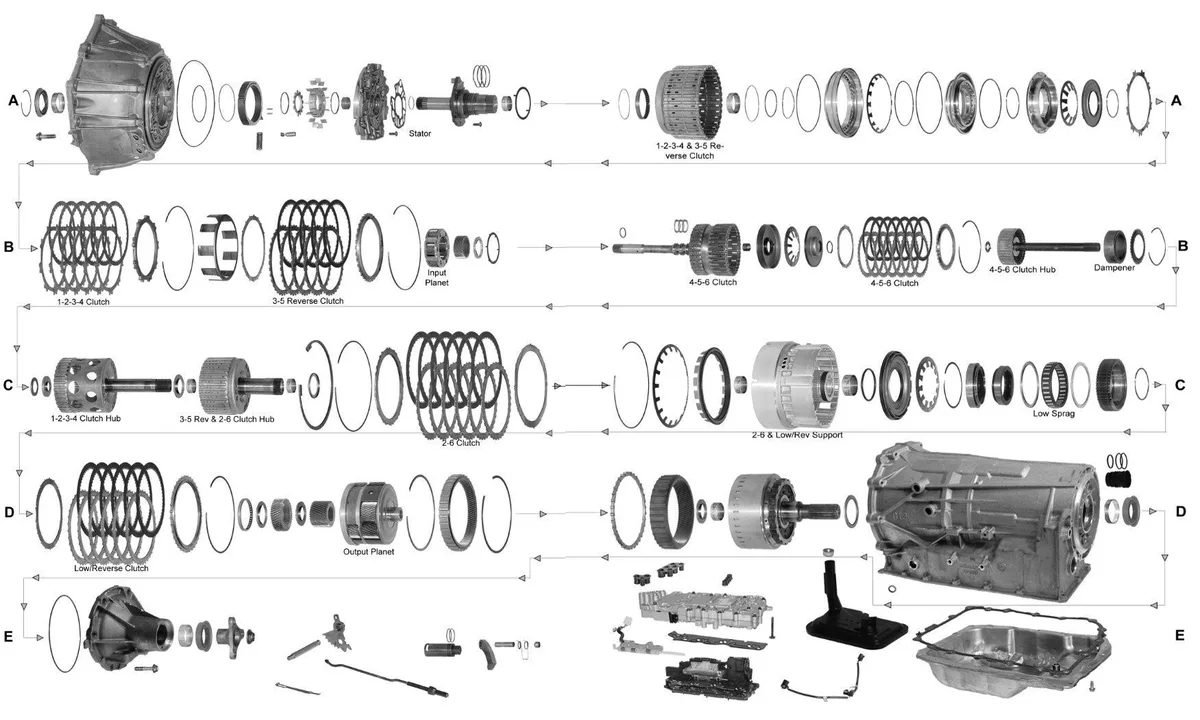
If you own a Chevrolet Suburban, you have probably heard about transmission problems. Or you are living them right now. These SUVs are workhorses, but their transmissions have known weak spots across certain model years.
According to aggregate owner reports and manufacturer service bulletins, the 6L80 six-speed automatic used from 2007 to 2014 is particularly prone to torque converter shudder between 60,000 and 80,000 miles. Before you panic or start shopping for a new truck, let us walk through exactly what to look for and how to decide what to do next.
Aggregate reviews from owner forums and certified transmission shops confirm that early diagnosis saves thousands. The 10-speed 10L80 transmission found in 2021 and newer Suburbans has far fewer reported issues so far. But the earlier six-speed units still dominate the used market.
Understanding your specific symptom and model year is the difference between a $400 fluid change and a $4,000 rebuild.
Image source: Bing (Web (fair-use with source credit))
Quick Answer
Chevrolet Suburban transmission problems typically stem from torque converter shudder, hard shifts, or no reverse. These issues appear between 60,000 and 100,000 miles. The solution depends on your symptom and model year.
A fluid change can fix some cases. Others need a rebuild.
Is Your Suburban’s Transmission Acting Up? Here’s What to Look For
Your Suburban’s transmission talks to you through vibrations, noises, and shifting behavior. The trick is knowing which sounds mean something serious and which are just character. Let us go over the most common symptoms and the model years where they show up.
The shudder. This is the big one. You feel a vibration under light acceleration between 40 and 60 mph. It feels like driving over rumble strips.
The torque converter clutch is not locking properly. The 6L80 in 2007 to 2014 models is the worst offender. The 8-speed used from 2015 to 2019 also had issues.
GM released software updates that helped.
Hard shifts. A harsh 1-2 or 2-3 gear change points to valve body wear or sticky solenoids. This is common in high-mileage 6L80 units after 100,000 miles. It can mean debris in the fluid.
No reverse or delayed engagement. If you shift into reverse and get nothing for a few seconds, that is a mechanical failure. Usually the reverse clutch pack or a worn seal. This is expensive and rarely a quick fix.
Burning smell or whining noise. Those signal overheating fluid or worn bearings. Stop driving immediately. Check fluid level and condition.
Check Engine Light with codes. Common codes include P0741 (torque converter clutch stuck off), P0756 (shift solenoid B), P0776 (pressure control solenoid), and P0796 (clutch solenoid). Each points to a different subsystem.
What model year are you in? That changes everything. A 2007 Suburban with shudder is almost certainly a torque converter issue. A 2022 with the same problem might need a transmission control module reflash.
We will cover year-specific branches in the decision tree below.
Aggregate reports from owners and repair shops show that catching problems early improves the odds of a low-cost fix. A shudder caught at 60,000 miles often responds to a fluid change and a TCM update. Wait until 100,000 miles and you are looking at a converter replacement.
Step One: Check the Fluid and Scan for Trouble Codes
Before you guess at the cause, check the basics. These two checks take 15 minutes and can save you from buying parts you do not need.
Check the transmission fluid level and condition. The Suburban’s 6L80 and 6L90 transmissions use a dipstick under the hood. Warm the engine to operating temperature. Park on level ground.
Cycle through all gears before checking. Pull the dipstick, wipe it, reinsert, and pull again.
- Low fluid. Top up with Dexron VI ATF. Low fluid causes slipping and hard shifts. If it is low, look for a leak.
- Dark brown or burnt smell. Fluid that looks like used motor oil and smells burnt means the transmission has overheated. Change it now. Expect that damage may already be done.
- Pink or milky fluid. If it looks like strawberry milkshake, coolant has mixed with the transmission fluid. This is a known failure of the internal transmission cooler in 2007 to 2011 models. You need a new radiator and a transmission rebuild. Do not drive it.
- Metal particles on the dipstick. Shiny specks mean clutch material is shedding. A rebuild is coming. A fluid change will only buy you a few thousand miles.
Scan for diagnostic trouble codes. You need a basic OBD-II scanner that reads transmission codes. Most auto parts stores scan for free. Write down the exact code.
The most common codes for the Suburban are:
| Code | Meaning | Likely Fix |
|---|---|---|
| P0741 | Torque converter clutch stuck off | New torque converter or solenoid |
| P0756 | Shift solenoid B performance | Valve body rebuild or solenoid replacement |
| P0776 | Pressure control solenoid B stuck on | Replace solenoid or valve body |
| P0796 | Clutch solenoid performance | Same as above |
A code alone does not tell you the whole story. But it points you to the right part of the decision tree. A P0741 on a 2010 Suburban with shudder almost guarantees the torque converter is shot.
A P0756 on a 2018 might just be a software glitch that a dealer reflash can fix.
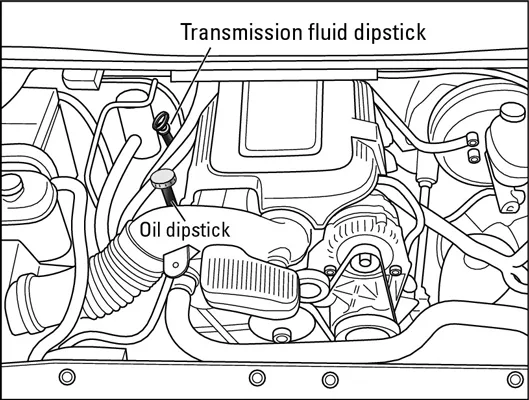
Image source: Bing (Web (fair-use with source credit))
What about a test drive? After checking fluid and codes, take the Suburban on a 10-minute drive. Note when the symptom happens. Speed, throttle position, whether it is worse cold or hot, and if towing makes it worse.
Write it down. That information maps directly to a branch in the decision tree.
The Decision Tree – Match Your Symptom, Model Year, and Mileage
This is where you turn symptoms into a real plan. Each path starts with what you feel and ends with what you should do. Use your fluid check results and code scan to narrow it down.
Image source: Bing (Web (fair-use with source credit))
Shudder Under Light Acceleration (40–60 mph)
If your fluid looks good and the code is P0741. This is the classic torque converter shudder. On a 2007 to 2014 Suburban with 60,000 to 90,000 miles, start with a fluid drain-and-fill using Dexron VI and a new filter. Do not do a power flush.
That can dislodge debris and make things worse. After the fluid change, have a dealership or a shop update the TCM software. Many 2015 to 2019 models had a technical service bulletin for a software update that reduced shudder.
If the shudder persists after fluid and software, you need a new torque converter. Budget $800 to $1,500 for the converter replacement.
If your fluid is dark or burnt. Skip the soft repair. The torque converter clutch material has already contaminated the fluid. You need a torque converter replacement and possibly a valve body rebuild.
Aggregate repair data shows less than 20 percent success rate with a flush once the fluid is burnt. Plan on $2,500 to $4,000.
If the shudder only happens when towing. Your transmission is overheating. Install an aftermarket external transmission cooler. The factory cooler on older Suburbans is undersized for heavy towing.
A $150 cooler plus $200 install often fixes the shudder permanently.
Hard or Delayed 1-2 / 2-3 Shift
If fluid is clean and code is P0756 or P0776. Start with a TCM relearn. Some shops can do this with a scan tool. It resets the shift adaptation values.
If that does not help, the valve body has sticking solenoids. A valve body rebuild kit runs about $400 to $700 installed. On 2007 to 2014 models, this is a common fix at 100,000 to 120,000 miles.
If fluid is low or dirty. Top up or change the fluid first. Hard shifts when cold are often caused by thick, degraded fluid. Drive 500 miles and reassess.
If the hard shift comes with a bang and no code. You may have a cracked snap ring or broken piston inside the transmission. This requires a full rebuild. No cheap fix.
No Reverse or Slipping Under Load
No reverse. This is almost always internal. The reverse clutch pack or the rear sun shell has failed. On 6L80 transmissions, this is a known failure around 120,000 to 150,000 miles in heavy-duty use.
Do not drive it. Plan on a rebuild or replacement. Cost is $3,000 to $5,500.
Slipping in Drive under acceleration. If the engine revs but the Suburban barely moves, the forward clutches are worn. A fluid change will not help. This is a rebuild-or-replace situation.
The only exception is if it only slips when hot and the fluid is low. Top off the fluid and test again.
Check Engine Light with Specific Transmission Codes
P0741 only. See the shudder path above.
P0756 or P0776 only. Try a TCM relearn and valve body service.
Multiple codes together. Likely a main electrical issue. Check the TCM connector for corrosion or loose pins. Water intrusion into the transmission control module is common on Suburbans that see off-road use.
If the connector looks clean, you may need a new TCM. Cost is $600 to $1,200.
P0796 plus shudder. This is a clutch solenoid sticking. Replace the solenoid pack. Some shops sell a service kit for about $300.
Common Mistakes That Cost You Thousands (and How to Avoid Them)
Suburban owners throw money at the wrong part more often than they should. These five mistakes are the most expensive.
1. Ignoring the fluid change interval. GM recommends 45,000 miles for severe service. That includes towing and stop-and-go driving.
Most owners skip it. By 60,000 miles, the fluid breaks down and eats the clutches. A $150 fluid change every 30,000 to 45,000 miles could add 100,000 miles to your transmission life.
2. Doing a power flush on an old transmission. If your fluid is dark, a high-pressure flush can push debris into the valve body. That debris jams solenoids and causes hard shifts.
Always do a drain-and-fill or a pan-drop with filter change.
3. Replacing the transmission without checking the TCM software. A 2015 to 2019 Suburban with shudder might just need a software update. The dealer can do it for around $150.
Owners sometimes pay $4,000 for a transmission replacement when a reflash would have fixed it. Check for technical service bulletins first.
4. Using generic aftermarket fluid. Dexron VI is required. Do not use Dexron III or any universal fluid.
The wrong viscosity causes harsh shifts and accelerates wear. GM specifies Dexron VI for all 6L80 and 10L80 transmissions.
5. Ignoring the external cooler. If you tow, the factory cooler is marginal. Even after a transmission replacement, the new transmission will suffer the same fate without an external cooler.
Spend $300 on a cooler and installation. Your next transmission will last much longer.
Your Repair Options and What They Actually Cost
Once you have matched your symptom to a branch, the next question is which repair path makes sense. The cost range is wide. The right choice depends on your budget, the Suburban’s age, and how long you plan to keep it.
Fluid change and filter. This is the cheapest option. It is the first step for any symptom where fluid is dark or low. Expect to pay $150 to $250 at a shop.
Parts cost about $100 if you do it yourself. Use Dexron VI and a genuine ACDelco or WIX filter. This fix works best for early shudder or hard shifts with clean fluid.
It buys you time, not a permanent cure.
Torque converter replacement. If the shudder persists after a fluid change and software update, the converter itself is failing. Parts cost $300 to $800 depending on OEM versus aftermarket. Labor adds $500 to $1,000 because the transmission must be removed.
Total is $800 to $1,800. Some shops recommend replacing the pump and seals at the same time. That adds $200 to $400 but prevents return visits.
Valve body rebuild or solenoid replacement. For hard shifts with a P0756 or P0776 code, the valve body can be serviced without pulling the transmission. A solenoid kit runs $150 to $300. Labor is $300 to $500.
Total is $450 to $800. This is a common fix on 100,000-mile 6L80 units.
Full rebuild. When the transmission slips in all gears or has no reverse, a rebuild is the only lasting option. A reputable shop will charge $2,500 to $4,000 for labor and parts. That includes new clutches, seals, bands, torque converter, and a valve body refresh.
Remanufactured transmission. A dealer-sourced or high-quality remanufactured unit costs $3,500 to $5,500 plus installation. It comes with a warranty, typically 2 to 3 years or 50,000 to 100,000 miles. This is the best option if you plan to keep the Suburban another 5 years.
| Repair Type | Typical Cost | Best For | Warranty |
|---|---|---|---|
| Fluid change + filter | $150–$250 | Early shudder, clean fluid | None |
| Torque converter swap | $800–$1,800 | Shudder after fluid change | Parts only |
| Valve body service | $450–$800 | Hard shifts, solenoid codes | 1 year |
| Full rebuild | $2,500–$4,000 | Slipping, no reverse | 2–3 years |
| Remanufactured unit | $3,500–$5,500 | Long-term ownership | 2–3 years |
Labor rates vary by region. Shops in the Northeast and West Coast charge $130 to $160 per hour. The Midwest and South run $90 to $120.
Always get a written estimate that includes fluid, filter, and any software updates.
When It’s Time to Walk Away – Is Fixing an Older Suburban Worth It?
Not every Suburban with transmission problems is worth saving. You have to do the math honestly. A $4,000 rebuild on a 2007 Suburban with 200,000 miles and rust in the brake lines is throwing good money after bad.
The 50% rule. If the repair cost exceeds half the vehicle’s current market value, consider selling or scrapping. A 2007 Suburban in fair condition with 180,000 miles is worth about $5,000 to $7,000. A full rebuild at $4,000 is 57 to 80 percent of that value.
That math rarely works. A 2015 Suburban with 120,000 miles is worth $18,000 to $22,000. A rebuild at $3,500 is only 16 to 19 percent of the value.
That is worth doing.
Other factors to consider. Frame rust is a dealbreaker in the Northeast and Midwest. If the body mounts or suspension mounting points are rotted, the truck is unsafe regardless of a new transmission. Look for bubbling rocker panels, sagging rear springs, and rust around the rear shock mounts.
Also check the engine. The 5.3L and 6.2L V8 engines are reliable, but the AFM lifters fail around 150,000 miles. A transmission rebuild on an engine with failing lifters is poor planning.
What about the 10-speed models? The 10L80 used in 2021 and newer Suburbans has fewer reported issues as of early 2026. These trucks are still under powertrain warranty in most cases. If your 2022 Suburban has transmission problems, take it to the dealer.
The factory warranty covers 5 years or 100,000 miles for the powertrain in many states.
When to keep it. If the rest of the truck is solid, the body is clean, and you have already replaced expensive items like the AC compressor or alternator, a transmission rebuild extends the life. Many Suburban owners get 250,000 to 300,000 miles out of the engine after a rebuild. The truck will be worth less than you put in.
It is cheaper than a new $60,000 Suburban.
Real-World Case: A 2015 Suburban with 80k Miles and a Shudder
Let us look at a real scenario. A 2015 Suburban 4WD with the 6.2L V8 and 6L80 transmission. 80,000 miles. The owner tows a boat three weekends per month from April to October.
They noticed a mild shudder at 55 mph under light throttle.
The diagnosis. The owner checked the fluid first. It was dark brown but did not smell burnt. There were no metal particles on the dipstick.
A scan showed code P0741. The transmission cooler lines were hot but not leaking. Per aggregate repair data from transmission shops, this is the classic 6L80 torque converter failure pattern.
The decision branch. Because the fluid was dark but not burnt, the shop recommended a torque converter replacement and a fluid change. They did not recommend a full rebuild. The transmission still shifted cleanly in all gears when the shudder was not happening.
They also installed an aftermarket external transmission cooler since the owner towed. The total bill was $1,600. That included a new OEM torque converter, Dexron VI fluid, filter, labor, and the cooler.
The outcome. The shudder disappeared immediately after the repair. The owner reported smooth shifting and no return of vibration after 20,000 miles of follow-up driving. The external cooler kept transmission temperatures 30 to 40 degrees lower during rowing, according to a gauge the shop installed.
The owner plans to change the fluid every 30,000 miles proactively.
What would have happened without the cooler? Aggregate data from owner forums shows that rowing with only the factory cooler leads to a repeat torque converter failure within 40,000 to 60,000 miles. The cooler is not a luxury. It is a necessity for any Suburban that sees rowing duties.
What if the owner had ignored the shudder? Waiting another 10,000 miles would likely have led to burnt fluid, metal particle contamination, and a full rebuild. The cost jumps from $1,600 to $4,000. That is the difference between early diagnosis and procrastination.
Frequently Asked Questions
How long do Chevy Suburban transmissions typically last?
With regular fluid changes every 30,000 to 45,000 miles, the 6L80 often lasts 150,000 to 200,000 miles. The 10L80 in newer models is too new for definitive numbers. Early reports suggest it is more durable.
Neglected fluid changes cut that lifespan in half.
What years of the Suburban have the most transmission problems?
The 2007 to 2011 model years with the 6L80 six-speed transmission have the highest rate of torque converter failure. The 2015 to 2019 models with the eight-speed also had frequent shudder complaints. The 2021 and newer 10-speed models have far fewer reported issues so far.
Can a transmission flush fix Suburban shudder?
No. A power flush is risky on high-mileage transmissions. It can dislodge debris and cause hard shifts or solenoid failure.
A drain-and-fill with a new filter is safer and more effective. If software causes the shudder, only a dealer reflash fixes it.
Is it safe to drive with a shuddering transmission?
Short distances at low speed are usually safe if the fluid is clean and full. But the shudder means the torque converter is slipping. That slipping creates heat and wears down the clutch material.
Driving daily with a shudder will turn a $1,600 repair into a $4,000 rebuild.
How much does a Suburban transmission rebuild cost?
A full rebuild by a reputable shop runs $2,500 to $4,000 depending on your region. Remanufactured transmissions from dealers cost $3,500 to $5,500 installed. A simple fluid change is $150 to $250.
Does the Suburban transmission have a recall?
There is no single recall covering all Suburban transmissions. Several Technical Service Bulletins address specific issues. TSB 16-NA-175 covers torque converter shudder on certain 2015 to 2016 models.
NHTSA has records of complaints and some warranty extension programs. Check your VIN at the NHTSA website for any active recalls.
Final Verdict: Your Step-by-Step Decision Guide
Here is the entire workflow summarized. Match your situation to the step.
Step 1, Check fluid level and condition. Low? Top up and test drive. Burnt or metallic?
Prepare for a rebuild. Milky? Replace the radiator and rebuild.
Clean? Move to step 2.
Step 2, Scan for codes. Write down all transmission codes. P0741 points to torque converter. P0756 and P0776 point to valve body.
Multiple codes suggest electrical issues.
Step 3, Drive and confirm the symptom. Note speed, throttle position, and whether the symptom changes when hot or cold. Compare to the decision tree.
Step 4, Match your model year. 2007 to 2014? Torque converter issues dominate. 2015 to 2019? Software updates and torque converter. 2021 and newer?
Likely software or sensor. Go to the dealer if under warranty.
Step 5, Choose your repair path. Fluid change first if fluid is dark. Torque converter if shudder persists. Valve body if hard shifts with codes.
Rebuild if slipping or no reverse.
Step 6, Decide if the truck is worth it. Use the 50% rule. Compare repair cost to vehicle value. Consider rust, engine health, and how long you plan to keep it.
Step 7, Add an external cooler if you tow. This prevents repeat failures and extends transmission life by 50,000 to 100,000 miles.
That is the complete framework. Each step narrows the decision so you do not waste money on guesswork. If you take away one thing, it is this.
Catch the problem early. A shudder at 60,000 miles is a $400 fluid change and a software update. A shudder at 100,000 miles is a $4,000 rebuild.
Do not wait.

Similar Posts