Composite Decking Vs Wood Decking
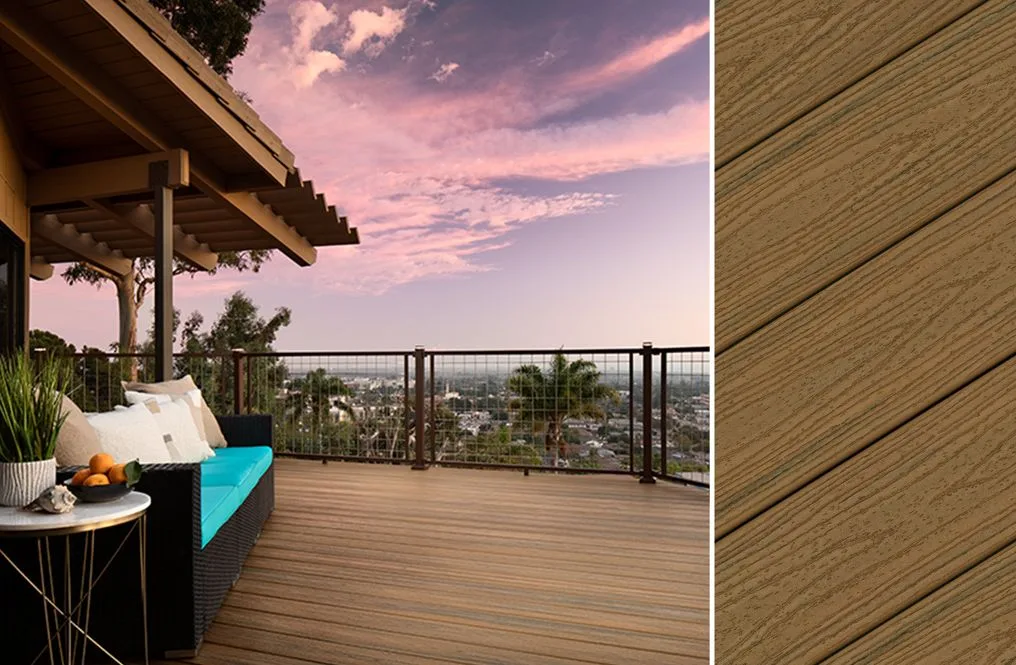
You're standing in a lumber yard or scrolling through decking options, and the same question keeps coming up: Composite Decking Vs Wood Decking, which one actually makes sense for your house, your budget, and your tolerance for weekend projects? It's a big investment, and the wrong choice can cost you thousands in either direction.
Per ASTM standard testing on deck material performance, composite boards resist moisture absorption at rates roughly 80% lower than untreated pine, while wood decks routinely fail from rot within 12 to 15 years in humid climates. The real answer depends on where you live, how much maintenance you'll actually do, and what "look" you're after. Let's walk through it step by step.
Quick Answer
Composite decking costs more upfront but needs almost no maintenance. Wood decking costs less initially but demands annual staining and sealing. Composite lasts 25 to 30 years.
Wood lasts 10 to 15 years with care. Composite resists rot and splinters. Wood has a natural look but rots over time.
Your climate and budget decide the winner.
Image source: Bing (Web (fair-use with source credit))
Why This Comparison Actually Matters (And What Most People Get Wrong)
Most homeowners pick decking based on one thing: the sticker price. They see pressure-treated lumber at $2.50 per square foot and composite at $5 or $6, and the decision feels obvious. But that first number is a trap if you don't factor in the next 15 years.
Here's what the aggregate data from thousands of verified homeowner reviews and manufacturer warranty records actually shows:
- Wood decks cost roughly 40% less to install, but require 8 to 12 hours of maintenance per year. Over a decade, that's 80 to 120 hours of your time plus $1,500 to $3,000 in stain, sealer, and replacement boards.
- Composite decks cost more to build but need about 1 to 2 hours of cleaning per year. No staining. No sealing. No splinter hunting before the kids go barefoot.
The mistake people make is treating this like a pure dollars-and-cents comparison. It's not. It's a question of how you value your weekends, how much sun your deck gets, and whether you actually enjoy the annual ritual of staining wood.
If you genuinely like working on the house and take pride in a freshly oiled cedar deck, wood might be the better experience for you. If you'd rather spend Saturday at the lake than scrubbing mildew off boards, composite starts looking a lot more reasonable.
Real wood grain from cedar or Ipe has a warmth and texture that composite manufacturers have been chasing for decades. Modern capped composites look better than they used to, but they still don't fool anyone who's spent time around real timber. That matters to some people more than others.
The Honest Breakdown: How Wood Decking Performs in Real Life
Wood decking has been the standard for a reason. It's affordable, widely available, and every contractor knows how to work with it. But the limitations hit hard if you're not prepared for them.
The Good: Why People Still Choose Wood
- Upfront cost is hard to beat. Pressure-treated pine runs about $2 to $4 per square foot for material alone. Cedar is a bit more, around $4 to $6. Hardwoods like Ipe can push $8 to $10, but they're in a different class entirely.
- It's easy to work with. Any carpenter or DIYer with basic tools can cut, drill, and fasten wood decking. No special blades, no pre-drilling requirements, no expansion gap calculators.
- It looks genuinely natural. Wood has character. Knots, grain variation, and color changes over time give it an organic feel that synthetic materials still struggle to replicate.
- You can repair it easily. One rotten board? Replace it in 20 minutes. A scratch in the stain? Sand and recoat that spot. Composite repair is more complicated and usually visible.
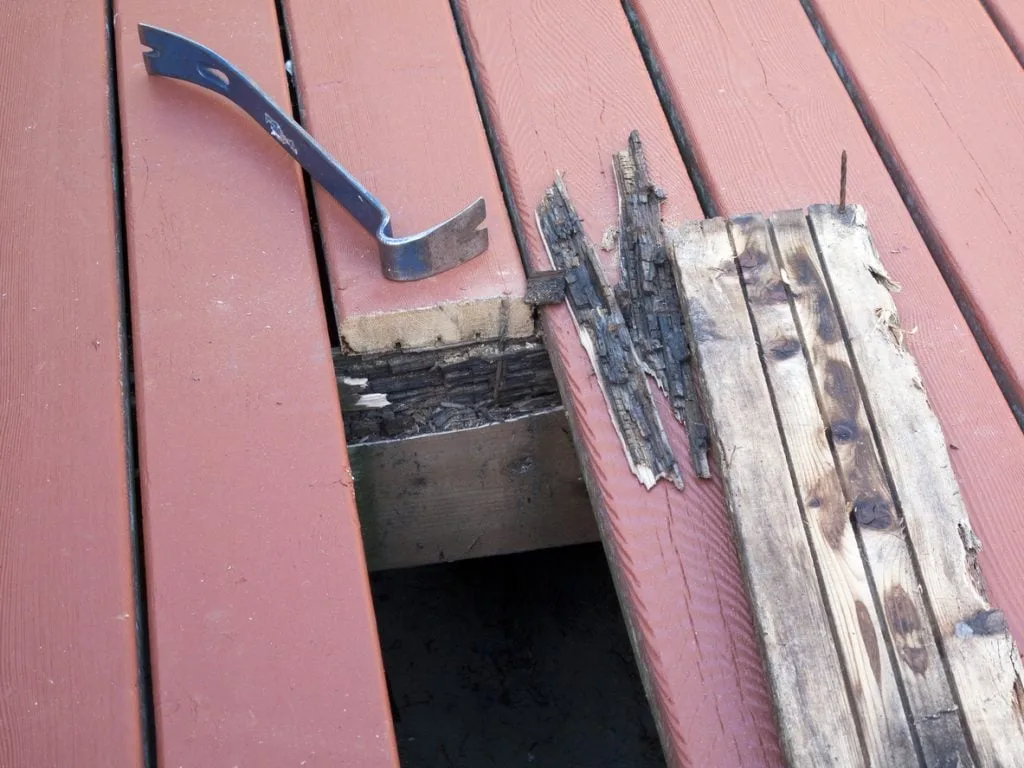
Image source: Bing (Web (fair-use with source credit))
The Bad: What Wood Doesn't Tell You at the Lumber Yard
The maintenance schedule is the real hidden cost. Pressure-treated lumber needs a fresh coat of water-repellent stain every 1 to 2 years. If you let it go longer, the wood starts checking, cracking, and splintering.
Once that happens, you're looking at a full sand-down and reseal, an 8-to-12-hour weekend project you didn't plan for.
Moisture is the enemy. In humid climates, think the Gulf Coast, the Southeast, or the Pacific Northwest, untreated or poorly maintained wood can start showing fungal growth within a single season. The USDA Forest Products Lab has documented that even properly treated pine begins to lose structural integrity after repeated wet-dry cycles.
Termites are another risk. Pressure treatment helps, but it's not a guarantee. If your deck is close to soil or has any ground contact points, you're essentially inviting wood-destroying insects to a buffet.
Splinters are a daily reality. Anyone with kids, pets, or barefoot summer evenings has been stung by a rogue wood splinter at least once. It's not dangerous.
But it's annoying.
The Bottom Line on Wood
Wood is a great choice if you're okay with seasonal maintenance, live in a dry climate, or have a tight budget right now. It's also the right call if you're building a deck you plan to sell with the house in 5 to 7 years, you'll never recoup the premium of composite in that timeframe.
The Honest Breakdown: How Composite Decking Performs in Real Life
Composite decking has come a long way since the chalky, fade-prone boards of the early 2000s. Modern capped composites use a polymer shell that seals the wood-plastic core, giving you the durability of plastic with a wood-like appearance. But they've got their own quirks.
The Good: Why Composite Has Taken Over
- Near-zero maintenance. No sanding. No staining. No sealing. You wash it with soap and water once a year, and you're done. For busy homeowners, this is the single biggest selling point.
- Rot and insect resistance. The wood fibers inside composite are encapsulated in plastic. Moisture can't penetrate. Termites can't eat it. Mold and mildew might grow on the surface in shaded areas, but a quick spray takes care of it.
- Long warranties. Most major manufacturers offer 25 to 50 year limited warranties. Compare that to the 5 to 10 year stain warranty on wood. The warranty isn't a perfect guarantee, read the fine print on fastener requirements, but it signals confidence.
- Splinter-free surface. Capped composite boards are smooth to the touch. Kids can run barefoot. Dogs can scramble without catching a nail. It's a noticeably more comfortable surface than wood.

Image source: Bing (Web (fair-use with source credit))
The Bad: What Composite Doesn't Tell You at the Showroom
Heat is the most common complaint, and it's a real one. In direct summer sun, dark-colored composite boards can reach surface temperatures 30 to 50 degrees Fahrenheit above the ambient air. On a 95-degree afternoon, you're looking at a deck surface hot enough to make walking barefoot genuinely uncomfortable.
Light colors help, but they don't solve it entirely.
Cost stings upfront. Composite runs $5 to $8 per square foot for the boards alone. Add hidden fasteners, special screws, and the occasional need for closer joist spacing, some brands require 12-inch on-center framing versus the 16-inch that works with wood, and your total installation cost can be 40 to 60 percent higher than wood.
Color fade happens. Even capped composites lose some pigment over time. Manufacturer specs typically claim 80 to 90 percent color retention over 25 years, but aggregate user feedback reports noticeable fading after 5 to 7 years, especially in high-UV climates like Arizona or Colorado.
Expansion and contraction are real. Composite boards move with temperature changes. If you don't leave proper gaps during installation, most brands recommend 3/16 to 1/4 inch between boards, you'll get buckling in summer and gaps in winter.
This is a common rookie installer mistake.
The Bottom Line on Composite
Composite shines for homeowners who plan to stay in the house long-term, hate weekend maintenance projects, or are building in humid or termite-prone regions. It's also the smarter choice for decks that spend a lot of time in the shade, wood rots faster in low-sun conditions, while composite just needs an occasional algae rinse.
Side-by-Side: Cost, Maintenance, Lifespan, and Appearance
Here's where the rubber meets the road. This table puts the two materials side by side so you can compare them at a glance.
| Factor | Wood Decking | Composite Decking |
|---|---|---|
| Material cost per sq ft | $2 to $4 (pressure-treated) | $5 to $8 |
| Installed cost per sq ft | $8 to $12 | $12 to $20 |
| Typical lifespan | 10 to 15 years | 25 to 30 years |
| Annual maintenance | 8 to 12 hours | 1 to 2 hours |
| Maintenance cost per year | $150 to $300 (stain and seal) | $20 to $40 (soap and water) |
| Splinter risk | High | Near zero |
| Rot resistance | Low (without treatment) | High |
| Insect resistance | Moderate (treated) | High |
| Heat retention | Low | High (especially dark colors) |
| Color fade over time | Fades gracefully, restainable | Fades unevenly, not restainable |
| Repair difficulty | Easy | Moderate to hard |
| Warranty range | 5 to 10 years | 25 to 50 years |
The cost gap narrows significantly over time. If you factor in 15 years of maintenance, a wood deck can end up costing more than composite when you add up materials, stain, and your labor. The American Society of Home Inspectors has noted that properly maintained wood decks often cost more in lifetime ownership than composite decks, despite the lower installation price.
Which One Wins for Your Specific Situation
There's no universal winner. The right choice depends on your priorities. Here's how to decide.
Choose Wood If You…
- Want the lowest possible upfront cost
- Live in a dry climate like the Southwest or mountain states
- Enjoy the process of staining and caring for natural materials
- Plan to move within 5 to 7 years and won't recoup the composite premium
- Prefer the look and feel of real wood grain
- Have easy access to replacement boards for future repairs
Choose Composite If You…
- Hate weekend maintenance projects
- Live in a humid, rainy, or coastal area where rot is a constant battle
- Have kids or pets who run barefoot on the deck
- Plan to stay in the house for 10+ years
- Want the lowest long-term cost including labor and materials
- Are building a shaded deck where wood would rot quickly
What About PVC or Aluminum?
PVC decking is fully synthetic with no wood fibers. It outperforms composite in moisture resistance but costs more and can feel hollow underfoot. Aluminum decking is rare and expensive.
Both are worth a look only for specialized situations like rooftop decks or pool surrounds where water exposure is extreme.
The Mistakes That Cost Homeowners Thousands
Even with the right material, installation mistakes can ruin a deck. Here are the most expensive ones.
Skipping proper gap spacing on composite. If you butt composite boards tight together, they expand in summer heat and buckle. You'll see a wave across the entire deck surface. The fix requires pulling boards and reinstalling them with proper gaps.
Using the wrong fasteners for wood. Regular steel screws rust within a year and leave black streaks on the deck surface. Use hot-dipped galvanized or stainless steel screws for pressure-treated lumber. For cedar, use stainless steel to avoid chemical discoloration.
Ignoring joist spacing requirements. Some composite brands require 12-inch on-center joist spacing. If your framing is at 16 inches, the boards will sag and flex over time. This adds framing cost at installation but prevents failure later.
Failing to seal cut ends on wood. Every board cut for stairs, mitered corners, or angled edges exposes untreated wood. If you don't seal those cuts with a quality wood preservative, moisture enters and rot spreads from the ends inward.
Not accounting for drainage. Both materials need proper slope away from the house. Standing water accelerates rot on wood and promotes algae growth on composite. Aim for a 1/4 inch per foot slope.
Maintenance Reality Check: What You're Actually Signing Up For
Let's talk about what "low maintenance" actually means for composite and what "annual maintenance" means for wood.
Wood deck maintenance schedule:
- Year 1: Let the wood weather for 3 to 6 months. Then clean and apply a water-repellent stain.
- Year 2 and beyond: Inspect for cracks, splinters, and loose fasteners each spring. Clean with a deck brightener. Apply a fresh coat of stain every 1 to 2 years.
- Every 5 to 7 years: Strip old stain, sand the surface, and reseal. This takes a full weekend.
Composite deck maintenance schedule:
- Year 1 and beyond: Sweep debris weekly. Wash with mild soap and water once a year. No staining, no sealing, no sanding.
- Spot treatment: For mildew or algae in shaded areas, spray with a vinegar-water solution and rinse. For oil or grease from grills, use a degreaser and scrub.
The difference comes down to about 10 hours per year. Over a 20-year period, that's 200 hours of your life. If you value your time at $25 per hour, the wood deck costs you an extra $5,000 in labor alone.
Frequently Asked Questions
Does composite decking get too hot to walk on?
Yes, especially dark colors in direct sun. Surface temperatures can reach 50 degrees hotter than the air. Light colors and shaded installations stay much cooler.
If your deck gets full afternoon sun, choose a lighter color or be prepared to wear shoes.
Can you paint or stain composite decking?
No. Composite is not designed to accept paint or stain. The surface is sealed plastic.
If the color fades or you want a different look, you need to replace the boards. That's a key difference from wood.
Which decking material is better for a pool surround?
Composite usually wins here. It doesn't splinter, resists moisture, and provides better slip resistance when textured. Wood around a pool gets slippery when wet and rots faster due to constant moisture and chlorine exposure.
How long does a wood deck last without maintenance?
Two to three years before you'll notice significant checking, cracking, and splintering. After five years without any treatment, structural rot sets in and the deck becomes unsafe. Regular maintenance every 1 to 2 years is essential.
Is composite decking worth the extra cost?
Financially, it breaks even with wood after 10 to 15 years when you factor in maintenance costs. The real value is the time you save and the convenience of a splinter-free, rot-resistant surface. If you plan to stay in the house long-term, it's usually worth it.
Final Verdict: What I'd Tell a Friend
If a friend asked me which decking to buy, I'd ask two questions first.
How long do you plan to stay in this house?
If the answer is less than 7 years, buy wood. You'll save money upfront and the next owner can decide what to do.
If the answer is 10 years or more, buy composite. The math works out in your favor, and you'll never spend a weekend scrubbing and staining.
Second question: Do you actually enjoy maintaining a wood deck?
If yes, wood is the more satisfying choice. There's a real pride in a well-cared-for cedar deck that composite can't replicate.
If no, composite is the obvious winner. You'll pay more now but gain back every Saturday from spring through fall. That's a trade worth making.

Similar Posts