Roman Blinds Vs Roller Blinds
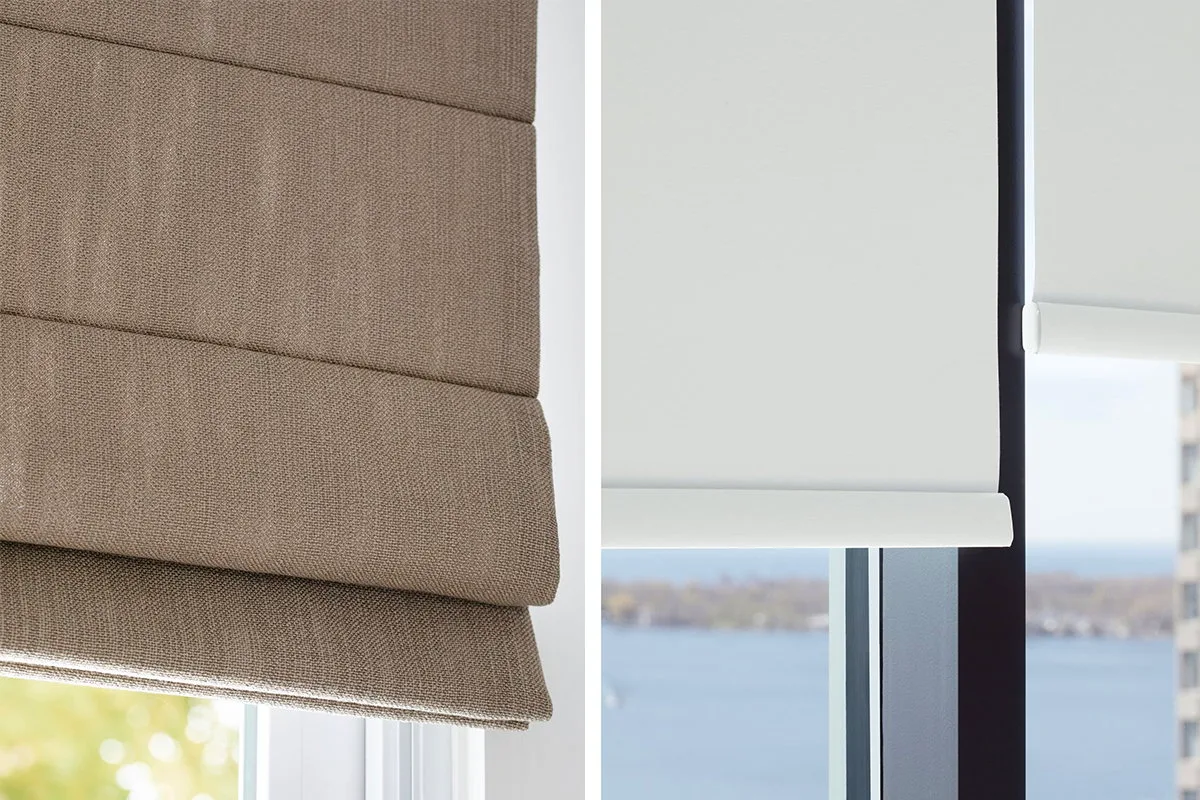
You're standing in front of a window, tape measure in hand, and you've hit the classic blind buyer's fork in the road. Roman Blinds Vs Roller Blinds, which one actually works for your room? The answer isn't about which looks better on a showroom wall.
It's about light, moisture, safety, and how much time you want to spend dusting.
According to UK safety standard BS EN 13120, every blind sold in the UK must meet strict cord safety requirements. That's one piece of the puzzle. What really matters is matching the blind to the room, and that's what we're going to sort out together.
Quick Answer
Roman blinds fold into soft horizontal pleats when raised. Roller blinds roll around a tube at the top. Romans look warmer but trap dust.
Rollers clean easier and block more light. Roller blinds cost less and last longer. Roman blinds suit living rooms best.
Roller blinds win for kitchens, bathrooms, and bedrooms.
Image source: Bing (Web (fair-use with source credit))
How Roman Blinds Actually Work – The Good and the Not-So-Good
Roman blinds are fabric shades that stack into horizontal folds when you pull them up. The fabric attaches to a series of rods or rings sewn into the back. When you raise the blind, those rods force the fabric to fold evenly.
It's an old design, and it looks elegant when done well.
Where They Shine
Roman blinds bring warmth to a room in a way roller blinds cannot. The soft folds add texture and depth. If you're decorating a living room or dining room where people sit and look at the windows, Romans deliver a curated look.
Fabric choice is another strength. You can choose linens, cottons, velvet, or patterned fabrics that match your curtains or upholstery. Interior designers tend to gravitate toward Romans for exactly this reason.
They feel like furniture, not hardware.
There is a modest insulation benefit too. The stacked folds create small air pockets against the glass, which can reduce heat loss in winter. Manufacturer specs typically show a marginal improvement in thermal performance compared to a single-layer roller blind.
Where They Struggle
Roman blinds are difficult to clean. The folds trap dust, and over time that dust settles into the fabric creases. You cannot wipe them with a damp cloth like a roller blind.
You need to vacuum with a brush attachment, or in bad cases, get professional cleaning.
Moisture is the bigger enemy. In a bathroom or kitchen, steam gets trapped in those fabric folds. Mould grows.
Aggregate reviews from homeowners who installed Roman blinds in bathrooms report visible mildew within six to twelve months.
The stack height is another issue. When a Roman blind is fully raised, those fabric folds stack at the top of the window. That stack can be 8 to 15 centimetres thick.
On a shallow window reveal, it blocks daylight and looks bulky.
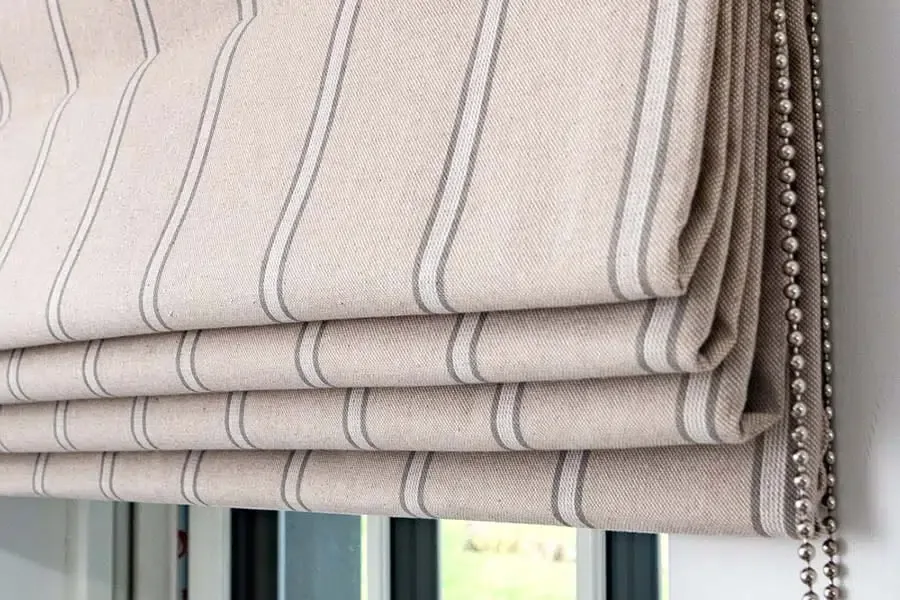
Image source: Bing (Web (fair-use with source credit))
How Roller Blinds Work – Clean, Simple, But Not For Everyone
Roller blinds use a single piece of fabric wrapped around a tube at the top. You pull a cord, chain, or spring mechanism, and the fabric rolls up or down. No folds, no stacking, no fuss.
Where They Excel
Blackout performance is the headline. Roller blinds can use triple-coated or aluminium-backed fabric that blocks 100% of light when fitted with side tracks. If you work night shifts, have a baby who naps during the day, or want a bedroom that's genuinely dark, roller blinds are the clear winner.
Roman blinds, even blackout-rated ones, leak light through the folds.
Cleaning is easy. A damp cloth and a few seconds is all it takes. No vacuuming, no brushing, no professional cleaning bills.
In a kitchen or bathroom, that ease of maintenance is a genuine advantage.
Price matters too. A decent roller blind costs £15 to £80 per window. A comparable Roman blind starts at £30 and goes past £150.
For a house with multiple windows, that gap adds up fast. Landlords and property managers default to roller blinds for this reason.
Roller blinds also last longer. Manufacturer warranties cover mechanisms for one to two years. Aggregate user feedback suggests roller blinds hold up for five to ten years with normal use.
Roman blinds, with more moving parts in the folding mechanism, tend to show wear by year three to seven.
The Trade-Offs
Roller blinds look cleaner but colder. They work well in modern flats and minimalist spaces, but they feel sterile in a cosy living room with warm wood tones. The fabric selection is narrower too.
You get polyester and blackout-coated materials, but nothing that approaches the warmth of a linen Roman blind.
Insulation is minimal. A single fabric layer offers almost no thermal barrier. If energy efficiency is a serious concern, you want cellular or honeycomb shades instead.
Side-by-Side Comparison: What Really Matters
| Factor | Roman Blinds | Roller Blinds |
|---|---|---|
| Aesthetic feel | Soft, warm, layered, textured | Clean, modern, minimal, flat |
| Light control | Good, but light escapes through folds | Excellent, especially with side tracks |
| Total blackout | Rarely 100% – folds leak | Easily 100% with coated fabric |
| Cleaning difficulty | High – dust in folds, vacuum needed | Low – quick wipe with damp cloth |
| Price per window | £30 to £150+ | £15 to £80 |
| Lifespan | 3 to 7 years | 5 to 10 years |
| Stack height when raised | 8 to 15 cm (bulky) | 2 to 4 cm (compact) |
| Child safety | Cordless or tensioner required | Cordless or tensioner required |
| Insulation value | Decent – air pockets in folds | Minimal – single fabric layer |
| Best room match | Living rooms, dining rooms, bedrooms | Kitchens, bathrooms, offices, rentals |
Image source: Bing (Web (fair-use with source credit))
Which One For Which Room – Real-World Use Cases
Bedrooms and Nurseries
Roller blinds win here. If you want a room that is genuinely dark for sleep, roller blinds with side tracks are the only reliable option. Roman blinds marketed as blackout still let light bleed through the edges of the folds.
For a nursery, that means a cranky baby who wakes at 5 AM in summer.
Child safety is critical in both types. All blinds sold after 2014 must comply with BS EN 13120. Cordless roller blinds are widely available and safe.
Cordless Roman blinds exist but are less common and usually more expensive. If you have young children, cordless is non-negotiable on either type.
Living Rooms and Dining Rooms
This is where Roman blinds justify their higher price. A living room is a space where people sit and look around. The visual warmth of fabric folds and the ability to match your curtains or upholstery deliver a finished look that roller blinds cannot match.
Homeowners who chose Romans for living rooms consistently report higher satisfaction with the room's overall feel.
Kitchens and Bathrooms
Roller blinds every time. Moisture, grease, and steam destroy fabric folds. You will clean Roman blinds constantly and still get mould eventually.
A roller blind wipes clean in seconds and has no crevices for moisture to hide in. Aggregate reviews confirm that Roman blinds in bathrooms fail faster than any other application.
Bay Windows and Odd Shapes
Roman blinds have an edge. They can be custom-made to fit non-rectangular windows, arches, and shallow reveals more naturally. Roller blinds are limited by the tube length and fabric width, typically maxing out around 2400 mm.
Roman blinds offer more flexibility for unusual shapes.
Large Patio Doors
Roller blinds win for width. A single roller blind can cover a 2400 mm sliding door without issues. Roman blinds struggle at that width because the fabric folds become heavy.
You would need two Roman blinds side by side, which adds cost and breaks the visual line.
The Child Safety Question – Non-Negotiable
The UK BS EN 13120 standard is mandatory for all blinds sold since 2014. It covers cord safety, tensioners, and breakaway devices. If you have children, this is not optional.
Cordless vs Corded – What You Must Know
Cordless blinds eliminate the risk entirely. You push or pull the fabric directly. No cords, no loops, no danger.
Spring mechanisms and wand-operated systems are the most common cordless options.
Corded blinds must use safety devices. Tensioners keep cords tight against the wall. Breakaway chains separate under pressure so a child cannot get tangled.
These devices work, but they require proper installation and maintenance.
Where Most People Get This Wrong
The biggest mistake is assuming existing blinds are safe. If your blinds were installed before 2014, they may not meet the standard. Second-hand blinds are another risk.
Never install used blinds in a room where children spend time.
The second mistake is thinking cord cleats are enough. A cord cleat wraps excess cord out of reach, but a corded blind still has loops that can form. Tensioners are the correct solution for looped cords.
Mistakes People Make When Choosing
Picking Based on Looks Alone
The biggest mistake is choosing blinds for a room without thinking about how the room is actually used. A beautiful Roman blind in a bathroom looks great for three months. Then the mould starts.
Ignoring Stack Height
A Roman blind stacks 8 to 15 cm at the top. If your window reveal is shallow, that stack blocks light and looks bulky. Measure your reveal depth before buying.
If it is less than 10 cm, roller blinds are likely a better fit.
Assuming Blackout Means Total Darkness
Blackout is a marketing term, not a technical standard. Many Roman blinds labelled blackout still leak light through the folds. Roller blinds with side tracks are the only way to guarantee total darkness.
Forgetting About Cleaning
Roman blinds need vacuuming and occasional professional cleaning. Roller blinds need a damp cloth. Think about whether you are willing to maintain fabric folds before you buy.
Buying Ready-Made Without Checking Drop Length
Ready-made blinds come in standard sizes. Your window may not match those sizes exactly. A blind that is too short leaves a gap.
A blind that is too long bunches on the sill. Measure three times before you order.
Frequently Asked Questions
Can you get Roman blinds that are truly blackout?
Not reliably. Even blackout-rated Roman blinds leak light through the folds and edges. The fabric itself may be opaque, but the folds create gaps.
Roller blinds with side tracks are the only way to guarantee total darkness.
Are roller blinds cheaper than Roman blinds?
Yes. A decent roller blind costs £15 to £80 per window. A comparable Roman blind starts at £30 and goes past £150.
The gap widens for larger windows and custom sizes.
Which blind type is safer for kids?
Both types are safe when cordless. Cordless roller blinds are widely available and affordable. Cordless Roman blinds exist but are less common and more expensive.
For corded versions of either type, the same safety standard applies.
Can Roman blinds be motorized?
Yes. Motorized Roman blinds are available with battery-powered or hardwired motors. They cost significantly more than manual versions.
The motor adds weight to the stacking mechanism, so fabric choice and drop length become important factors.
What about moisture in bathrooms?
Roller blinds are the right choice for bathrooms. Roman blinds trap moisture in the folds, and mould develops within months. Roller blinds wipe clean and have no crevices for moisture to hide.
Which type adds more value to a home?
Roman blinds add perceived value in living rooms and dining rooms because they look like custom treatments. Roller blinds add value in practical terms because they last longer and cost less to maintain. Neither type significantly increases resale value on its own.
The Final Verdict – What Should You Actually Buy?
Ask yourself one question: do you want your blinds to look warm and layered, or do you want them to be practical and easy to maintain?
If you want warmth and you are buying for a living room or dining room where dust and moisture are not issues, choose Roman blinds. They will make the room feel finished and cosy.
If you want practicality, darkness, or easy cleaning, choose roller blinds. They win for bedrooms, kitchens, bathrooms, rentals, and large windows. They cost less, last longer, and block light better.
If you are still unsure, start with the room. Bathroom and kitchen get roller blinds every time. Bedroom and nursery get roller blinds with side tracks for blackout.
Living room gets Roman blinds. That simple rule covers 90% of homes.

Similar Posts