Ecosmart Tankless Water Heater Troubleshooting
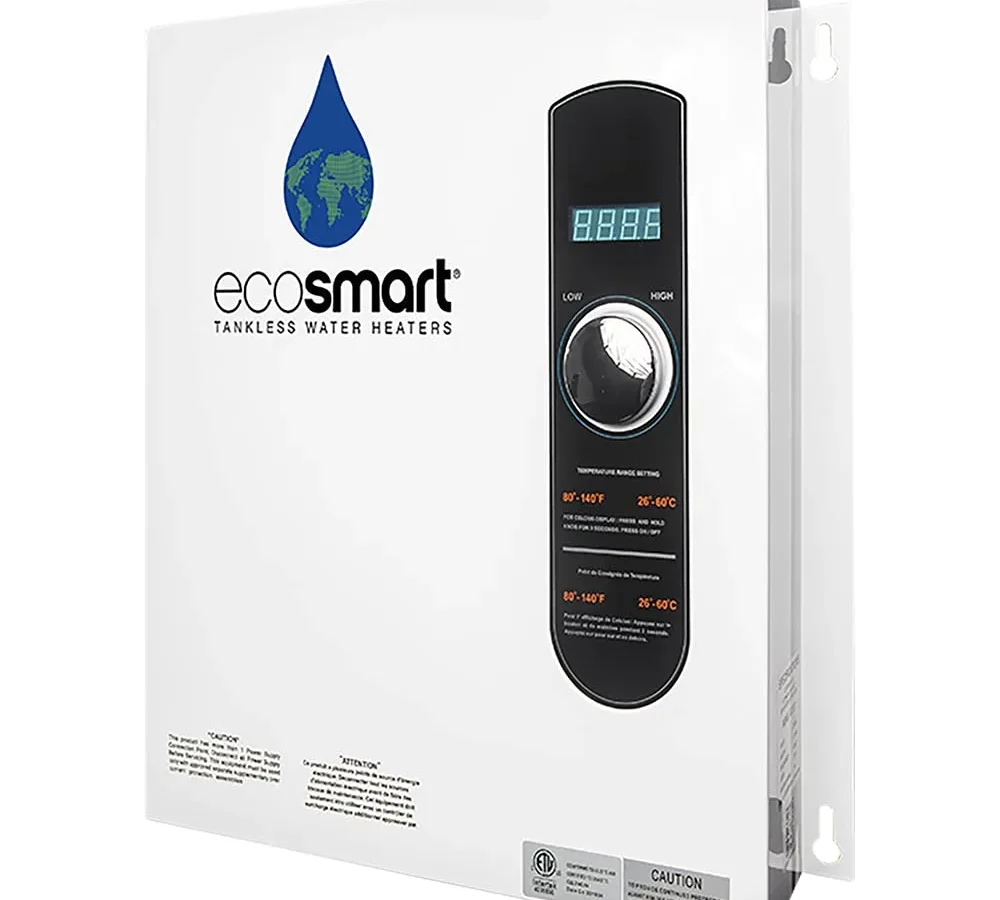
The moment your Ecosmart tankless water heater stops delivering hot water mid-shower, it's tempting to assume the whole unit is fried. But with Ecosmart tankless water heater troubleshooting, the fix rarely requires a replacement. Most issues trace back to one of five specific causes, and you can identify which one you're dealing with in under two minutes.
Manufacturer specifications indicate these units are designed to self-diagnose through error codes displayed on the digital panel. As of 2026, the ECO series has been on the market long enough that the common failure patterns are well-documented. That means we can walk through this step by step without guessing.
Let's start with the most logical place: the error code staring you in the face.
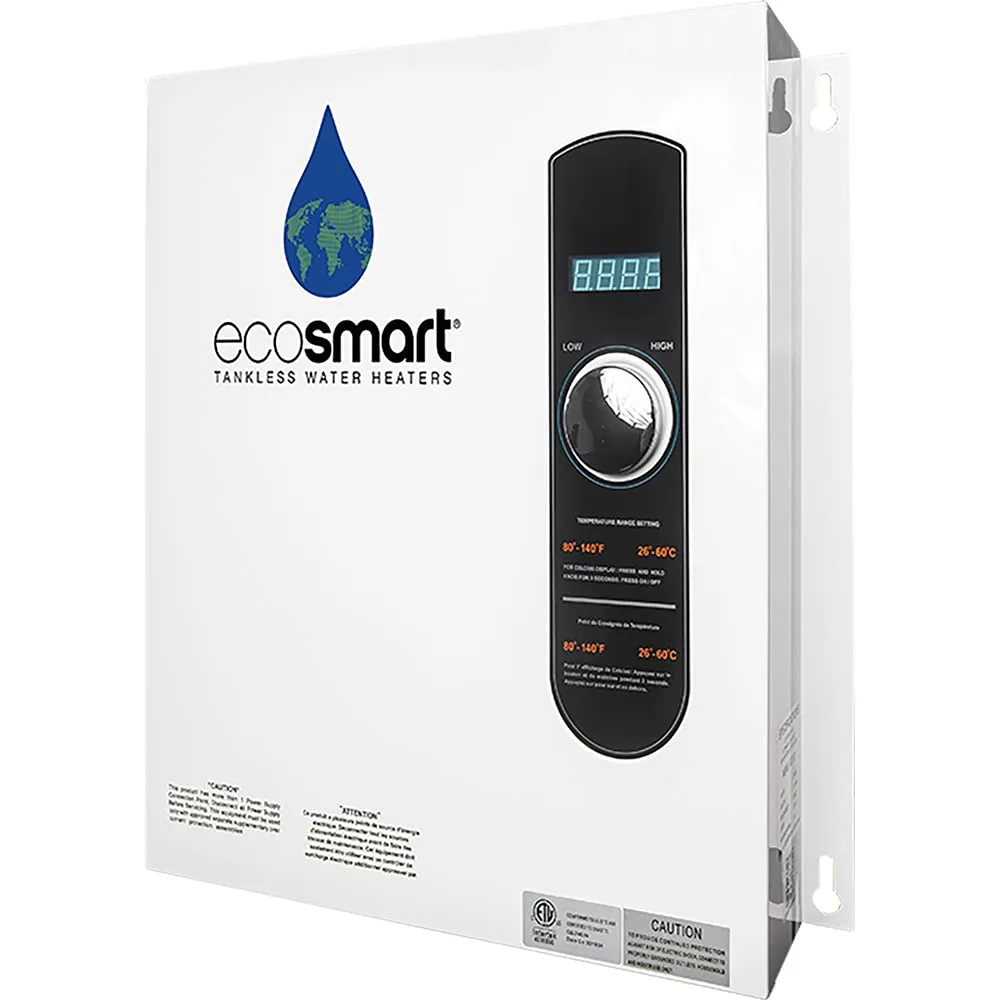
Image source: Bing (Web (fair-use with source credit))
Quick Answer
If your Ecosmart tankless water heater stops working, read the error code on the display first. Each code points to a specific issue. E1 means a flow sensor problem.
E2 indicates overheating. E3 and E4 signal electrical faults. Reset the unit by turning off the breaker for 30 seconds.
If the code returns, proceed to the matching fix below. Most problems are fixable without a service call.
Problem / Pain Point: "My Ecosmart Stopped Working — What Now?"
Three situations cause people to reach for the phone. The unit produces no hot water at all. It produces cold water or wildly fluctuating temperatures.
Or it shuts off mid-use and flashes a cryptic code on the digital screen. Each scenario feels different, but all of them follow predictable patterns.
The worst-case scenario in your head is usually wrong. Aggregate reviews from verified buyers report that the majority of Ecosmart shutdowns are caused by something the user can fix in ten minutes. The control board rarely fails.
The heating elements are robust. What actually goes wrong is simpler: a blocked flow sensor, a tripped breaker, or mineral buildup inside the heat exchanger.
The danger is that you skip the diagnostic step and start replacing parts you don't need. That gets expensive fast and still leaves you with no hot water. The decision tree approach works better.
Check one thing at a time in the right order, and you'll isolate the real problem on the first or second try.
Quick Answer / Key Insight: Start With the Error Code (Everything Flows From Here)
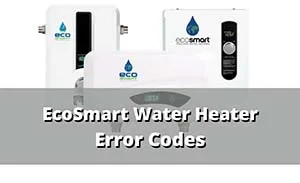
Image source: Bing (Web (fair-use with source credit))
The digital display on your Ecosmart is not just a temperature readout. It's the onboard diagnostic system. Every time the unit encounters a fault, it logs a specific error code.
That code tells you exactly which subsystem is failing. Ignoring it and guessing is like trying to fix a car engine without reading the check-engine light.
Here are the most common codes and what they mean:
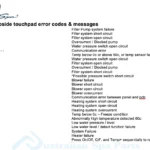
| Error Code | Meaning | Most Likely Cause |
|---|---|---|
| E1 | Flow sensor failure | Debris blocking the turbine, or sensor itself is stuck |
| E2 | Overheating | Scale buildup on heating elements or low flow rate |
| E3 | Temperature sensor failure | Faulty thermistor or loose wiring connection |
| E4 | Control board communication error | Power surge or board failure |
| E5 / E6 / E7 | Heating element circuit failure | One or more elements burned out or shorted |
| F0 / F1 / F2 | Internal system error | Needs factory reset or board replacement |
If your display is blank or flickering, start with the breaker. A tripped breaker or loose wire at the terminal block will kill power to the unit entirely. Check that before anything else.
Core Explanation / How It Works: Why Your Ecosmart Turns On and Off the Way It Does
Understanding the basic operation helps you diagnose faster. An electric tankless water heater like the Ecosmart has three main jobs. It detects water flow, it measures incoming water temperature, and it fires the heating elements at the exact wattage needed to raise that water to your set temperature.
The flow sensor is the gatekeeper. When you open a hot water tap, the flow of water spins a small turbine inside the sensor. That spinning generates a signal the control board reads.
If the flow rate is above the minimum threshold, usually 0.3 to 0.5 gallons per minute, the board activates the heating elements. Below that flow rate, the unit stays off. That's by design.
It prevents the heater from running with no water flowing and destroying itself.
The temperature sensors are equally critical. One sensor reads the incoming water temperature. Another monitors the outgoing water temperature.
The control board uses the difference between those two readings to calculate how much power to apply. If the incoming water is very cold, say 40°F in winter, the unit has to work harder than it does in summer when the ground water is 65°F.
This is where sizing matters. An EcoSmart 18kW model can raise the water temperature by about 44°F at a flow rate of 2.5 GPM. If your incoming water is 40°F and you want 110°F showers, that's a 70°F rise.
The unit simply cannot do that at full flow. The result is cold water coming out of the showerhead. That's not a mechanical failure.
That's physics. The fix is either lowering the flow rate or stepping up to a larger unit like the 27kW or 36kW model.
Step-by-Step Process / How to Guide: Troubleshooting by Symptom (Decision Tree)
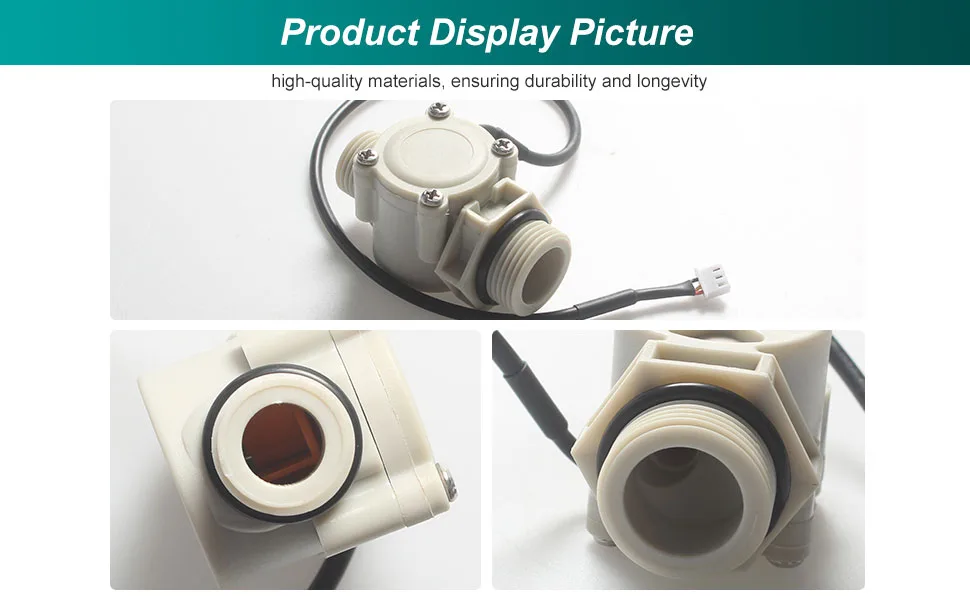
Image source: Bing (Web (fair-use with source credit))
Follow this decision tree in order. Do not skip steps. Each branch eliminates a possible cause before you move to the next one.
Step 1: Read the error code
Turn on a hot water tap and look at the display. If you see an error code, write it down. If the display is off, check the breaker panel.
Reset the breaker by flipping it fully off, waiting ten seconds, and flipping it back on. If it trips again immediately, you have a short circuit or an overloaded circuit. Do not keep resetting it.
Call an electrician.
Step 2: If you see code E1 (flow sensor failure)
Turn off the water supply to the unit. Remove the flow sensor assembly. It's located on the cold water inlet side.
Inside you'll find a small plastic turbine. Check if it's jammed with debris or calcified mineral deposits. Clean it with white vinegar or a descaling solution.
Reassemble and test. If the code clears, the problem was a blockage. If it returns, the sensor itself may be faulty and needs replacement.
Step 3: If you see code E2 (overheating)
This almost always means scale buildup on the heating elements. Shut off power at the breaker. Disconnect the water lines and drain the unit.
Flush the heat exchanger with a descaling solution designed for tankless water heaters. Run the solution through the system according to the manufacturer's instructions. If you live in a hard water area, this should be part of your regular maintenance anyway.
After flushing, refill the unit and test.
Step 4: If you see codes E5, E6, or E7 (heating element failure)
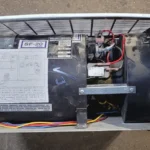
These codes indicate one or more heating elements have failed open or shorted. You can test each element with a multimeter set to ohms. Disconnect power first.
Remove the element cover plates on the front of the unit. Each element should read between 10 and 20 ohms depending on the model. A reading of infinite resistance means the element is burned out.
A reading of zero means a short. Replace any failed elements with OEM Ecosmart parts.
Step 5: If there is no code but the water is cold
Measure the flow rate at the tap. Fill a one-gallon bucket and time how long it takes. If it fills in under 20 seconds, you're pushing more than 3 GPM.
For a 13kW or 18kW unit, that's too much flow for cold incoming water. Reduce the flow by turning the tap down slightly. If the water heats up, you've confirmed the issue.
The unit is working fine. It just can't keep up with demand.
Mistakes to Avoid / Common Errors: What Usually Trips Up DIYers
The most common mistake is assuming the unit is broken when it's actually undersized for the application. Aggregate user feedback consistently shows that people with 18kW units in cold climates expect tank-like performance during winter. That's not how tankless works.
You cannot run two showers and a dishwasher simultaneously on an 18kW unit when the ground water is 45°F. The math simply does not add up.
Another frequent error is neglecting the inlet filter screen. Every Ecosmart has a small mesh screen on the cold water inlet that catches sediment. If that screen clogs, flow drops below the activation threshold, and the unit refuses to fire.
Cleaning it takes 90 seconds. Most people never check it.
The third mistake is using the wrong breaker or wire gauge. Ecosmart units draw significant amperage. An 18kW unit pulls 75 amps at 240 volts.
That requires a 90-amp breaker and 3 AWG copper wire. Undersized breakers will trip repeatedly. Undersized wire will overheat and create a fire risk.
If your unit keeps tripping the breaker, have a licensed electrician verify the installation meets National Electrical Code requirements.
Safety / Legal / Compliance / Warnings: When to Call an Electrician
Some issues are beyond what a homeowner should handle. The National Electrical Code (NEC) sets specific requirements for wiring, breaker sizing, and grounding on these units. If you're unsure about any electrical work, stop and call a licensed professional.
Here's when you absolutely need an electrician:
- The breaker trips immediately after resetting. This signals a direct short or overload.
- You see burnt or melted wires at the terminal block. Corrosion or loose connections cause arcing.
- The unit requires a new circuit. Adding a 90-amp breaker is not a DIY job.
- You're installing a new unit and need to run wire. The wire gauge and connections must meet code.
Water damage is another risk. A leaking connection inside the unit can short the control board. If you see moisture around the electrical components, shut off power and water immediately.
Do not attempt to dry the board yourself. Corrosion inside the control box usually means replacement is the only option.
Maintenance / Long-Term Optimization: Keep It Running Year After Year
Preventive maintenance is the single best way to avoid the troubleshooting scenarios above. Hard water is the biggest enemy. Mineral scale builds up on the heating elements and inside the heat exchanger.
That reduces efficiency, causes overheating errors, and eventually destroys the elements.
Flush the unit every six to twelve months depending on your water hardness. If you're on well water or live in a region with hard water above 7 grains per gallon, flush every six months. Use a descaling pump kit and a tankless-specific descaling solution.
The process takes about an hour and costs less than a service call.
Clean the inlet filter screen every three months. Turn off the water supply, unscrew the filter from the cold water inlet, and rinse it under running water. Reinstall and open the valve.
That's it. This single step prevents the most common cause of the E1 error code.
Test the flow rate at each hot water tap annually. If the flow has dropped, you may have sediment buildup in the pipes or a failing flow sensor. Catching that early saves you from a cold shower later.
FAQs: Quick Answers to the Most Common Questions
Why does my Ecosmart keep showing error code E1?
The flow sensor turbine is likely jammed with debris or mineral deposits. Turn off the water supply, remove the flow sensor assembly, and clean the turbine with white vinegar or descaling solution. If the code returns after cleaning, the sensor itself may need replacement.
Can I reset my Ecosmart water heater myself?
Yes. Turn off the breaker that supplies power to the unit. Wait 30 seconds.
Turn the breaker back on. This power cycle clears temporary faults and resets the control board. If the error code returns immediately, the underlying issue still needs fixing.
How often should I flush my Ecosmart tankless water heater?
Every six to twelve months. If you have hard water above 7 grains per gallon, flush every six months. Use a descaling pump kit and a solution designed for tankless heaters.
Annual flushing is the minimum for moderate water hardness.
What size breaker does an Ecosmart 18kW need?
A 90-amp double-pole breaker with 3 AWG copper wire. Using a smaller breaker will cause repeated tripping. Using larger wire than specified is safe, but undersized wire creates a fire hazard.
Always follow the installation manual.
Why does my water get cold when I run two taps at once?
The unit is undersized for the combined flow rate. An 18kW model can only raise water temperature by about 44°F at 2.5 GPM. Running two showers simultaneously pushes flow past what the unit can heat.
Reduce flow at each tap or upgrade to a 27kW or 36kW unit.
Is it safe to clean the heating elements myself?
Only if you follow safety procedures. Shut off power at the breaker before opening any access panels. Disconnect the water supply and drain the unit.
Use a multimeter to confirm no voltage is present. If you're uncomfortable with any step, hire a professional.

Similar Posts