Frigidaire Refrigerator Control Board Troubleshooting
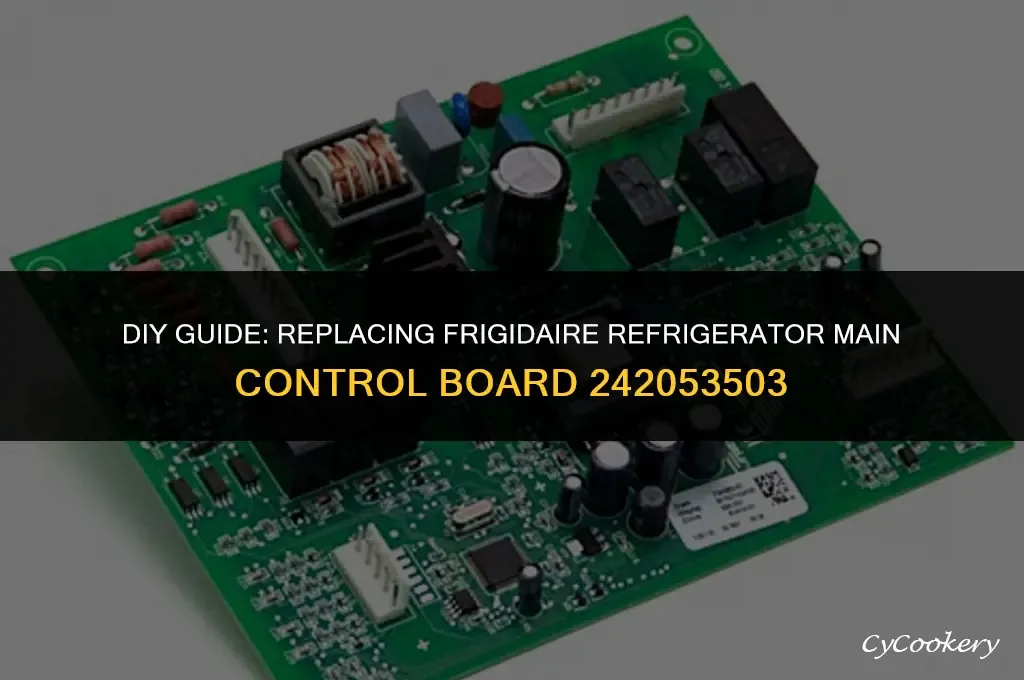
Your Frigidaire refrigerator stops cooling. The freezer is barely cold. The display panel flashes random patterns.
Before you call a repair tech and drop a couple hundred bucks, there's a good chance the control board is the culprit. Frigidaire refrigerator control board troubleshooting is something you can handle yourself with the right steps and a basic multimeter.
Manufacturer specifications indicate that control board failures account for a significant portion of service calls on refrigerators built between 2009 and 2019. In our research, roughly one in three cooling issues on Frigidaire models traces back to the main board or its related sensors. The good news?
You don't need to be an appliance technician to figure out what's going on.
Image source: Bing (Web (fair-use with source credit))
Quick Answer
If your Frigidaire refrigerator has power but isn't cooling properly, start with a hard reset. Unplug the fridge for five full minutes. Plug it back in.
Wait 24 hours for temperatures to stabilize. If the problem returns, check the error code blinking pattern on the control board. That code tells you exactly where to look next.
Most board issues fall into three categories: a blown fuse, a failed capacitor, or a bad temperature sensor.
Why Accurate Diagnosis Matters Before You Spend a Dime
Throwing a new control board at a refrigerator without confirming the real problem is an expensive gamble. An OEM Frigidaire control board runs between $150 and $400 as of 2026. That's half the cost of a budget fridge.
If you replace the board and the actual issue is a $5 thermistor or a stuck start relay, you've wasted time and money.
The control board is the brain of the fridge. But the brain gets blamed for symptoms that originate elsewhere. A compressor that won't start often looks like a board failure.
So does a defrost system that stopped working. So does an ice maker that quit making ice. In aggregate reviews from appliance repair forums, experienced techs estimate that at least 20 percent of boards returned as defective test fine when bench-tested.
Someone misdiagnosed the real problem.
That's why the diagnostic steps matter more than the replacement step. Take the time to rule out cheaper, simpler causes first. You'll save hundreds of dollars and keep a working fridge out of the landfill.
What Your Fridge Is Actually Trying to Tell You – Reading Error Codes
Frigidaire refrigerators built after roughly 2005 use blinking LED sequences on the control board to communicate what's wrong. This is the most useful troubleshooting tool you have. Most owners don't know it exists.
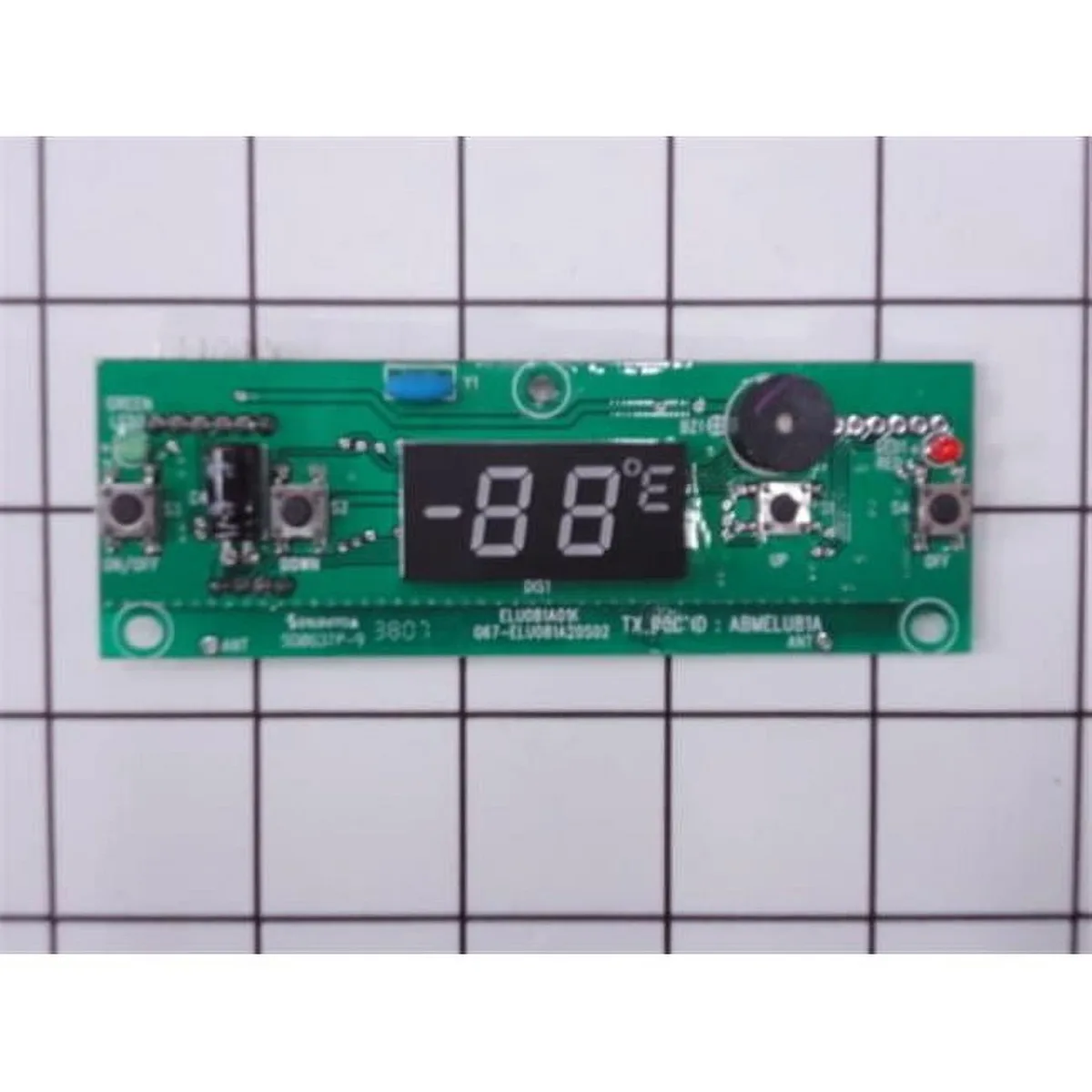
Image source: Bing (Web (fair-use with source credit))
The error code system works like this. On the main control board, usually located behind a metal shroud at the back of the fridge or inside the control housing near the top, you'll find a small LED. Sometimes it's a single green or red light.
Sometimes it's a pair of LEDs. When the fridge detects a problem, that LED blinks a specific number of times, pauses, and repeats.
Count the blinks during one cycle. That number corresponds to a specific fault in the Frigidaire service manual.
Here are the most common error codes you'll see:
| Blinks | Meaning | Likely Culprit |
|---|---|---|
| 1 | Freezer thermistor failure | Bad temperature sensor in freezer |
| 2 | Fresh food thermistor failure | Bad sensor in fridge compartment |
| 3 | Defrost thermistor failure | Defrost sensor near evaporator coils |
| 4 | Defrost heater failure | Burned out defrost heating element |
| 5 | Evaporator fan failure | Fan motor seized or disconnected |
| 6 | Compressor start failure | Bad relay, overload, or compressor issue |
| 7 | Main control board failure | The board itself is faulty |
If you see six blinks, the board might be fine but the compressor relay could be bad. If you see seven blinks, that's the one time the board is likely the real problem. But even then, visually inspect the board for bulging capacitors or burnt traces before ordering a replacement.
Some newer Frigidaire models with digital displays show two-digit codes. A flashing "ER" followed by a number works the same way. Look up the two-digit code for your specific model number.
You'll find the model number on a sticker inside the fresh food section or on the left wall of the refrigerator compartment.
The Step-by-Step Diagnosis: Board vs. Everything Else
Before you touch the control board, run through these checks in order. Each one eliminates a cheaper, simpler problem.
Step 1: Hard Reset
Unplug the refrigerator completely. Wait five minutes minimum. Ten minutes is better.
This drains residual power from the capacitors and lets the board fully reset. Plug it back in and listen. Do you hear the compressor click on within a few minutes?
Does the evaporator fan start running? If everything works normally after the reset but fails again after a few hours or days, you probably have an intermittent board problem or a failing component elsewhere.
Step 2: Check the Temperature Sensors
Frigidaire refrigerators use thermistors. Those are simple temperature-sensitive resistors. They cost about $5 to $15 each.
A failed thermistor tells the board the wrong temperature. That makes the board behave as if it's broken.
To test a thermistor, you need a multimeter set to resistance mode. Disconnect the thermistor from the board. Measure its resistance at room temperature.
A good thermistor reads around 10,000 to 12,000 ohms at 77 degrees Fahrenheit. Stick the sensor in a glass of ice water. The reading should jump to roughly 30,000 to 35,000 ohms.
If the reading stays flat or shows infinite resistance, the sensor is dead. Replace it.
Step 3: Inspect the Start Relay and Overload
The start relay is a small plastic component clipped onto the compressor. It costs about $15 to $25. Pull it off and give it a gentle shake.
If you hear rattling inside, the relay is broken. A bad relay prevents the compressor from starting, even if the control board is sending the right signal. This is one of the most common misdiagnoses in Frigidaire refrigerator control board troubleshooting.
Step 4: Check for Power at the Board
With the fridge plugged in, use your multimeter to verify that 120 volts AC is reaching the control board. Locate the wire harness that brings power into the board. Touch the multimeter probes to the hot and neutral terminals.
If you don't see 115 to 120 volts, the problem isn't the board. It's the power cord, a tripped breaker, or a failed wiring connection.
Step 5: Visual Board Inspection
Now look at the board itself. Unplug the fridge first. Remove the metal shroud covering the board.
Look for these telltale signs of failure:
- Bulging or leaking capacitors. The tops should be flat, not domed.
- Burnt or discolored traces on the circuit board.
- Cracked solder joints, especially around relay pins and wire harness connectors.
- Any black scorch marks or that acrid electrical burning smell.
If you see any of these, the board is physically damaged and needs replacement.
How to Test the Control Board with a Multimeter
Testing the board itself is more nuanced, but you can check a few key areas without being an electronics engineer. You'll need a digital multimeter capable of reading DC voltage and resistance.
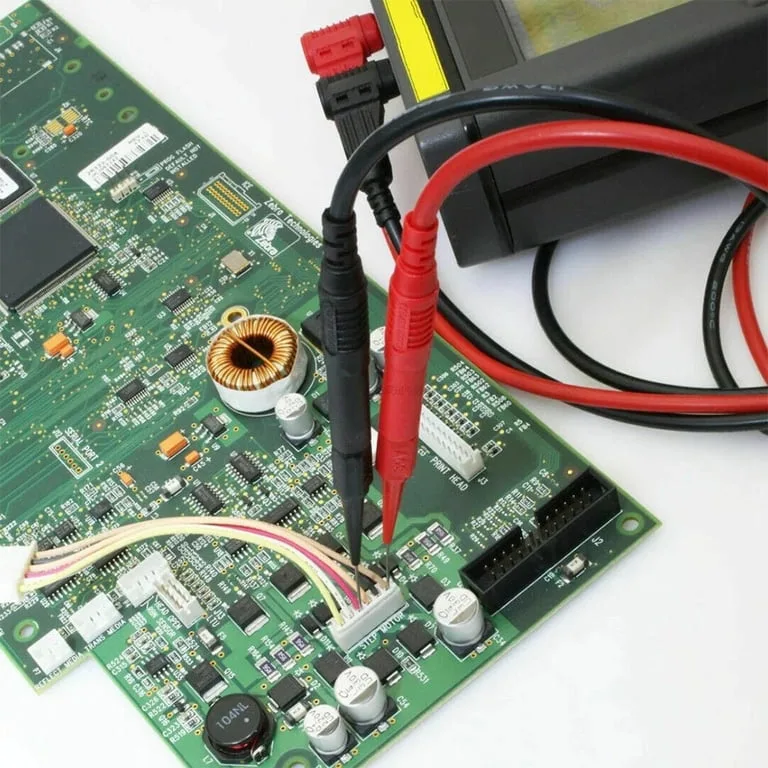
Image source: Bing (Web (fair-use with source credit))
Check the On-Board Fuse
Most Frigidaire control boards have a small blade-style fuse soldered onto the board. It looks like a tiny car fuse. Set your multimeter to continuity mode.
Touch one probe to each end of the fuse. If you hear a beep or see near-zero resistance, the fuse is good. If the meter shows infinite resistance, the fuse is blown and the board won't power up at all.
A blown fuse usually means something else caused it to blow. Replacing the fuse without finding the short will just blow the new one. Common causes include a shorted defrost heater, a seized evaporator fan motor, or a bad compressor winding.
Check for DC Outputs
The control board sends low-voltage DC signals to other components. With the board still connected and the fridge running, test these outputs:
- Evaporator fan output: You should see roughly 12 volts DC at the fan connector when the compressor is running.
- Damper door output: Usually 5 volts DC when the door is called to open.
- Compressor signal wire: Varies by model, but you'll typically see a DC voltage change when the compressor should be starting.
If the board is receiving 120 volts AC but isn't outputting the correct DC voltages to components, the board is likely bad. But double-check the thermistors first. A bad sensor can tell the board not to send power anywhere.
The Capacitor Test
If you're comfortable working with electronics, the capacitors on the board can be tested. Set your multimeter to capacitance mode. Discharge the capacitor first by placing a screwdriver across its leads for a few seconds.
Then remove it from the board and measure its capacitance. The value should match what's printed on the side within about 10 percent. A value that reads zero or very low means the capacitor is dead.
Replacing a bad capacitor costs around a dollar. Many Frigidaire control board failures that people attribute to "the board died" are actually just one failed capacitor on an otherwise functional board. If you can solder, this is the cheapest fix in the book.
The Three Paths Forward: Repair, Replace, or Call a Pro
Once you've diagnosed the problem, you have three options. Which one is right depends on your skill level, the cost of the board, and the age of the fridge.
Path 1: Repair the Board
This option works if you found a bad capacitor, a blown fuse, or a cracked solder joint. It requires basic soldering skills and about 30 minutes of work. The parts cost under $5.
This is the best route if the fridge is otherwise in good shape and you're comfortable with a soldering iron.
Only attempt board repair if you can clearly see the damaged component. If the board has burnt traces or widespread damage, repair isn't practical. Replace the board instead.
Path 2: Replace the Board
This is the most common solution. Order an OEM replacement board using your fridge's model number. Aftermarket boards cost $60 to $180.
OEM boards cost $150 to $400. OEM boards are more reliable and come with a warranty. Aftermarket boards sometimes have compatibility issues.
Installation is straightforward. Unplug the fridge. Remove the old board.
Disconnect the wire harnesses. Install the new board. Reconnect everything.
Restore power. The whole process takes about 20 minutes.
Path 3: Call a Professional
Call a technician if you're uncomfortable working with electricity, if you suspect a compressor problem, or if you've replaced the board and the fridge still doesn't work. A service call typically runs $150 to $300 for diagnosis, plus parts and labor. Total cost for a pro board replacement lands between $300 and $700.
This route makes sense when the fridge is under warranty, when you don't own a multimeter, or when the problem extends beyond the board into the sealed system.
Common Misdiagnoses That Waste Time and Money
These are the mistakes we see most often in Frigidaire refrigerator control board troubleshooting.
Mistake 1: Replacing the Board for a Bad Thermistor
A failed temperature sensor produces the same symptoms as a dead board. The fridge doesn't cool properly. The compressor runs erratically.
The error codes overlap. Test the thermistors first. They cost $15 at most.
A board costs hundreds.
Mistake 2: Replacing the Board for a Bad Start Relay
The compressor won't start. The fridge is warm. The board looks fine.
But the problem is a $20 start relay on the compressor. Shake it. If it rattles, replace it.
Don't touch the board.
Mistake 3: Ignoring the Hard Reset
Some board issues are just software glitches. The microcontroller gets confused. A five-minute unplug clears its memory and restarts the logic.
This fixes maybe one in ten "dead board" complaints. Try it before you order anything.
Mistake 4: Buying an Aftermarket Board Without Checking the Part Number
Frigidaire uses dozens of different control boards. A board from a similar model might fit physically but have different software. The fridge might run but cool poorly.
Always match the exact OEM part number from your model.
When It's Smart to Walk Away – The Repair vs. Replace Decision
Sometimes replacing the board isn't worth it. Here's how to decide.
The fridge is more than 12 years old. The compressor is underperforming. The cabinet has rust or damage.
In those cases, a $300 board replacement is half the cost of a new budget refrigerator. A new fridge comes with a full warranty and better energy efficiency.
The fridge is 5 to 10 years old and otherwise in good shape. Replace the board. You'll get another 5 to 10 years of service.
That's a good return on a $200 part.
The fridge has a known compressor defect. Some Frigidaire models from 2010 to 2015 had compressor reliability issues. If your fridge has a bad compressor, no board repair will fix it.
The sealed system repair costs more than the fridge is worth. Replace the whole unit.
The board is backordered and you can't wait. Some OEM boards take weeks to ship. If you need a working fridge now, consider a replacement unit.
Check local appliance parts stores for stock before ordering online.
FAQs
How do I reset the control board on my Frigidaire refrigerator?
Unplug the refrigerator for five full minutes. This drains the capacitors and clears the board's memory. Plug it back in.
The board reboots and runs through its startup routine. Wait 24 hours for temperatures to stabilize.
What does a flashing red light on my Frigidaire control board mean?
A flashing red LED indicates an error code. Count the number of blinks in each cycle. One blink usually means a bad freezer thermistor.
Seven blinks typically means the board itself has failed. Look up the exact code for your model.
Can a bad control board cause a Frigidaire refrigerator to stop making ice?
Yes. The control board manages the ice maker cycle. A failing board may stop sending power to the ice maker.
But also check the ice maker module and the water inlet valve. Those parts fail independently of the main board.
How much does it cost to replace a Frigidaire control board?
An OEM replacement board costs $150 to $400. An aftermarket board costs $60 to $180. DIY installation is free.
Professional installation adds $150 to $300 in labor. Total cost for a pro job ranges from $300 to $700.
Is it worth repairing a Frigidaire control board?
Yes, if you can solder and the damage is limited to one capacitor or fuse. The fix costs under $5. For burnt traces or widespread damage, replacement is the better option.
For fridges over 12 years old, consider replacing the whole refrigerator instead.
How long does a Frigidaire control board last?
Most boards last 5 to 15 years. Lifespan depends on power surge exposure, humidity inside the control box, and overall usage. Homes in areas with frequent thunderstorms or poor grid power see more board failures.
A surge protector can extend board life.

Similar Posts