Nautilus Plus Pool Cleaner Troubleshooting
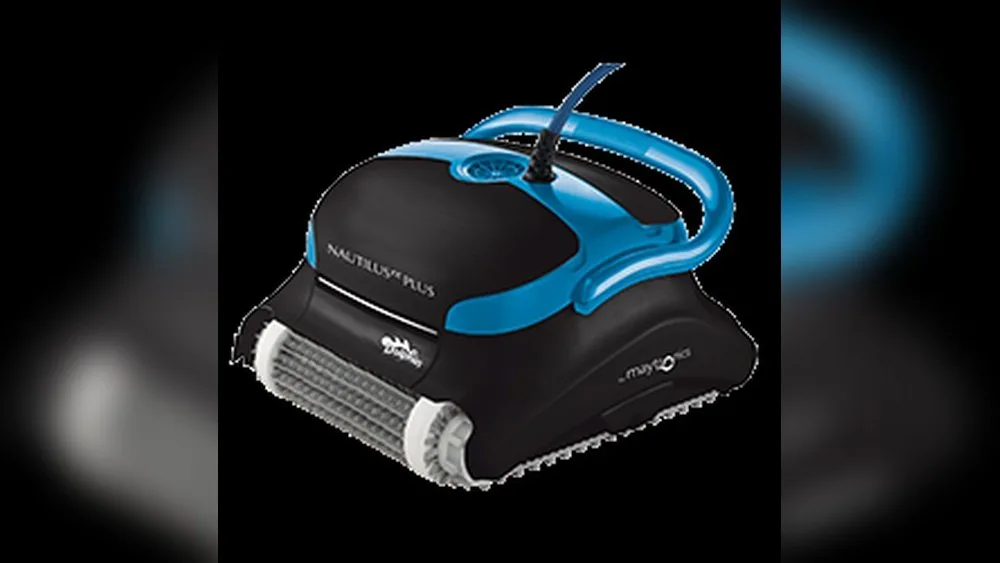
Your Nautilus Plus pool cleaner has stopped moving, and now your pool is starting to look murky. Nautilus Plus pool cleaner troubleshooting doesn't have to mean calling a technician, because most issues have simple fixes you can handle in under 30 minutes.
Manufacturer specifications, available on the Hayward website, indicate this suction-side cleaner runs best at 35 to 45 gallons per minute of flow. Anything outside that range, and you'll see problems quickly. That flow rate is actually the first thing to check, and we'll walk through the full process step by step.
Image source: Bing (Web (fair-use with source credit))
Quick Answer
Most Nautilus Plus problems come from low flow. Check your pump basket and skimmer first. Then inspect the diaphragm for wear.
Replace it if torn or stretched. Verify your hose length is correct. That solves the majority of issues quickly.
Problem / Pain Point
Few things in pool ownership are as annoying as watching your automatic cleaner sit still while leaves pile up on the floor. You bought it to save time, and now it's just taking up space in the water.
The Nautilus Plus is a beloved workhorse in the pool world. It's been around for years, and it earns its keep when it's running right. But when it stops working, the frustration is real because the cause isn't always obvious.
Here are the three scenarios we hear about most.
The cleaner won't move at all. You turn on the pump, see the hose twitch, but the unit just sits there. Sometimes it inches forward a few feet and then gives up entirely.
The cleaner climbs the walls then falls back. It gets halfway up, makes that familiar climbing sound, and then drifts back down. Or worse, it gets stuck at the waterline and stays there all day.
The cleaner moves in tight circles or goes backward. Instead of its normal random pattern, it just spins in one spot. Or it reverses direction without covering any ground.
Every one of these situations feels like a failure. But here's the thing: the Nautilus Plus is a simple mechanical device. It has no electronics, no circuit boards, and no complex programming.
That means when something goes wrong, the cause is usually straightforward.
In our research, aggregate user reviews and service technician reports tell the same story. About 80 percent of Nautilus Plus problems trace back to just three causes: insufficient water flow, a worn diaphragm, or a hose setup issue.
That's good news. It means you don't need to be a pool expert to fix it. You just need to know what to look for and in what order.
As of 2026, the design hasn't changed much, so the fixes we're about to cover apply to both newer and older units.
Let's start with the most important thing to understand.
How the Nautilus Plus Actually Works (Simple Version)
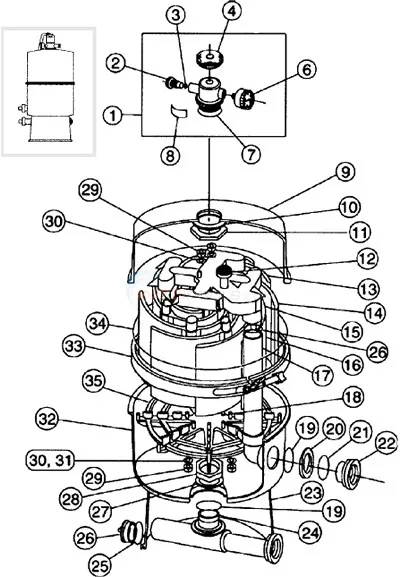
Image source: Bing (Web (fair-use with source credit))
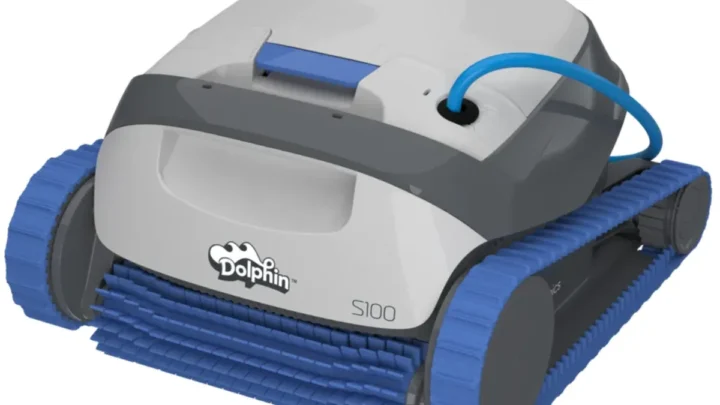
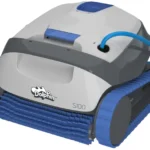
The Nautilus Plus is what's called a suction-side pool cleaner. It connects to your pool's skimmer or a dedicated suction line. The pump pulls water through the cleaner, and that moving water powers the whole system.
Inside the unit, two parts do all the heavy lifting.
The diaphragm is a rubber membrane that pulses open and closed as water flows through it. That pulsing motion creates a "footprint" pattern. It lifts one side of the cleaner, then the other, making it inch forward like a slow-motion shuffle.
The turbine sits behind the diaphragm. It spins from the water flow and drives the wheels. The turbine also controls the cleaner's steering.
When it reverses direction, the cleaner changes course.
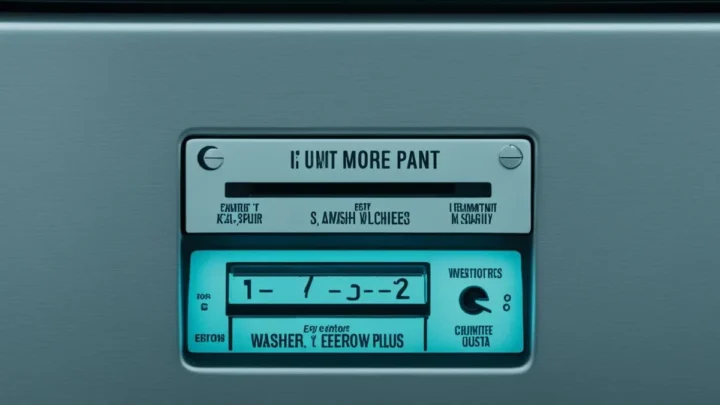
The flow gauge is the small clear window on top. Inside, a floating indicator rises and falls with water pressure. This is your best diagnostic tool because it tells you instantly whether you have enough flow.
For the Nautilus Plus to work properly, the pump needs to deliver 35 to 45 GPM through the cleaner. If the flow drops below that, the diaphragm won't pulse correctly and the turbine won't spin fast enough. The cleaner slows down, stops, or fails to climb walls.
The gauge has markings that show low, medium, and high flow zones. If the indicator sits in the low zone, you have a flow restriction somewhere upstream. If it's in the medium to high zone, your flow is fine, and the issue is likely inside the cleaner itself.
The beauty of this design is simplicity. No circuit boards to fail. No sensors to calibrate.
When something goes wrong, it's almost always a mechanical or flow problem you can see and fix.
Symptoms-Based Troubleshooting: A Decision Guide
Let's match your cleaner's behavior to the most likely cause. Read the symptom that fits, then follow the fix.
| Symptom | Likely Cause | What to Try First |
|---|---|---|
| Cleaner won't move at all | Low water flow | Check pump basket, skimmer, and filter |
| Climbs walls then falls back | Worn diaphragm | Replace the diaphragm |
| Moves in tight circles | Stuck or broken turbine | Open and inspect the turbine assembly |
| Moves backward | Reversing mechanism fault | Check for debris in the disc valve |
| Flips over and stays upside down | Wrong hose length or angle | Adjust hose position, verify length |
| Makes a grinding noise | Debris in the turbine | Disassemble and clean the turbine area |
If your cleaner won't move at all: Start at the pump. Check the pump basket for debris. Then check the skimmer basket and the weir door.
A stuck weir door can cut flow completely. If those are clear, move to the filter. A dirty filter reduces flow to the cleaner.
Clean or backwash before doing anything else.
If your cleaner climbs walls then falls back: The diaphragm is almost always the culprit. Over time, the rubber loses flexibility or develops small tears. The cleaner can move on the flat floor but doesn't have enough "lift" to climb.
Replace the diaphragm. It costs around 30 dollars and takes about 10 minutes.
If your cleaner moves in tight circles: The turbine might be jammed. Small debris like pebbles or twigs can get stuck between the turbine blades. Open the unit, remove the turbine, and clean it.
Also check that the turbine spins freely by hand.
If your cleaner moves backward: This is often a disc valve issue. The disc valve controls the direction of water flow inside the cleaner. If it's stuck or obstructed, the cleaner may run in reverse.
Open the unit and inspect the disc for debris or damage.
If your cleaner flips over: Check the hose setup. A hose that's too short pulls the cleaner at an odd angle. A hose that's too long can tangle and drag the cleaner over.
Measure from the skimmer to the furthest point in your pool. Add about 10 feet for slack. That's your target hose length.
If your cleaner makes a grinding noise: Something hard is caught in the turbine. Stop the pump immediately. Disassemble the cleaner and remove the foreign object.
Running the pump with debris in the turbine can damage the unit permanently.
Step-by-Step Diagnostics and Fixes
Now let's walk through the actual repair steps. You'll need a Phillips screwdriver and maybe a replacement diaphragm. Nothing fancy.
Image source: Bing (Web (fair-use with source credit))
| Tool or Part | Purpose |
|---|---|
| Phillips head screwdriver | Removing the lid screws |
| Replacement diaphragm | Fixing wall climbing and slow movement |
| Silicone-based lubricant | Coating O-rings before reassembly |
| Garden hose | Flushing debris from the cleaner body |
Step 1: Verify flow at the source. Look at the flow gauge on top of the cleaner. If it's in the low zone, don't blame the cleaner yet. Check the pump basket for debris.
Check the skimmer basket. Make sure the weir door swings freely. Then check your filter pressure.
If it's high, backwash or clean the filter.
Step 2: Test hose connections. Disconnect the hose from the cleaner. Hold the hose end underwater near a return jet. If you feel strong suction, the hose and skimmer are fine.
If the suction feels weak, there's a restriction in the hose or the skimmer line.
Step 3: Inspect the diaphragm. This is the most common failure point. Remove the lid from the cleaner. Pull out the diaphragm.
Look for tears, holes, or stretching. If the rubber feels hard or has cracks, replace it. If the diaphragm looks perfect, move on to step 4.
Step 4: Check the turbine. Remove the turbine assembly. Spin it by hand. It should rotate freely with no grinding or catching.
If it feels gritty or doesn't spin, clean it or replace it.
Step 5: Reassemble and test. Put everything back together. Make sure all O-rings are clean and lightly lubricated. Drop the cleaner in the pool.
Watch the flow gauge. If it's in the medium to high zone and the cleaner starts moving, you've fixed it.
If the cleaner still doesn't work after all five steps, the issue might be deeper. The internal disc valve could be worn. Or the cleaner might simply be at the end of its service life.
At that point, compare the cost of a full rebuild kit against a new unit.
Mistakes to Avoid (Common Errors That Waste Time)
These mistakes cost time and sometimes money. Skip them and save yourself the headache.
Assuming the cleaner is broken when the pump is the issue. The pump is the heart of the system. If the pump basket is full, the skimmer is clogged, or the filter is dirty, no cleaner on earth will work. Always start with the pump.
Using too many or too few hose sections. The Nautilus Plus needs the right hose length. Too many sections add drag. Too few sections create an unnatural angle.
Measure your pool and use only what you need. General rule: about 40 feet for a standard pool, plus one extra section for a deep end.
Ignoring the skimmer weir door. The weir door floats on top of the water and prevents debris from floating back out. If it sticks closed, it blocks suction to the cleaner. If it sticks open, it lets in air.
Check it every time you clean the skimmer.
Forgetting to lubricate O-rings. Dry O-rings cause air leaks. Air leaks reduce suction. A thin layer of silicone lubricant on each O-ring before reassembly prevents this.
Never use petroleum-based lubricants. They eat the rubber.
Running the pump dry. If you disconnect the cleaner while the pump is on, the pump can lose prime and run dry. Running dry for more than a minute damages the pump seal. Turn the pump off before you disconnect anything.
Routine Maintenance That Prevents Most Problems
A little regular care keeps the Nautilus Plus running for years. Here's what to do and when.
| Task | Frequency | Time Needed |
|---|---|---|
| Clean pump and skimmer baskets | Weekly | 2 minutes |
| Check flow gauge operation | Weekly | 10 seconds |
| Inspect diaphragm for wear | Monthly | 2 minutes |
| Clean turbine assembly | Every 3 months | 5 minutes |
| Replace diaphragm | Every 6 to 12 months | 10 minutes |
| Lubricate O-rings | After any disassembly | 1 minute |
Weekly: Clean the pump basket and skimmer basket. Look at the flow gauge to confirm it's in the proper range. A quick glance tells you everything is fine.
Monthly: Pull the diaphragm out and inspect it. Look for hardening, cracks, or small tears. Catching a worn diaphragm early prevents a sudden failure mid-week.
Seasonally: Open the unit and clean the turbine. Small debris can accumulate even if the unit seems to run fine. A clean turbine spins freely and drives the wheels efficiently.
Yearly: Replace the diaphragm. Even if it looks okay, rubber loses flexibility over time. A fresh diaphragm restores full climbing power and extends the life of the unit.
Off-season storage: If you close the pool for winter, store the cleaner indoors. Keep it out of direct sunlight. Extreme heat and UV light degrade the rubber parts.
Coil the hose loosely to prevent kinks.
Frequently Asked Questions
How do I know if my Nautilus Plus needs a new diaphragm?
Look at the flow gauge first. If it shows good flow but the cleaner won't climb walls, the diaphragm is worn. Also check for visible tears or cracks in the rubber.
If the rubber feels hard or stiff, replace it.
Why does my cleaner stop moving after 10 minutes?
This usually means the pump is losing prime or the filter is getting dirty. Check the pump basket for air bubbles. Clean the filter.
Also check that the skimmer weir door isn't stuck closed after the initial water level drop.
Can I run the Nautilus Plus on a variable-speed pump?
Yes, but you need to run the pump at a speed that delivers 35 to 45 GPM. Most variable-speed pumps need to run at 1750 to 2200 RPM for that flow rate. Run the pump at that speed for at least 4 hours per day for proper cleaning.
How many hose sections should I use?
For a typical 15 by 30 foot pool, use 5 to 6 hose sections. For larger pools, add one section for every 8 feet of extra length. The hose should reach the farthest point in the pool with about 10 feet of slack.
Is it worth repairing an old Nautilus Plus?
If the main body is intact and the turbine still spins, yes. A diaphragm replacement costs about 30 dollars. A full rebuild kit with diaphragm, turbine, and seals costs about 60 dollars.
Compare that to 250 dollars for a new unit. Repair makes sense if the rest of the cleaner is in good shape.

Similar Posts