Kobalt Pole Saw Problems

Your Kobalt pole saw is sitting in the garage, the battery is charged, and it still won't cut. That's frustrating. Kobalt Pole Saw Problems usually fall into a handful of predictable categories, and most of them have simple fixes you can handle without a trip to the repair shop.
Manufacturer specifications indicate that the 40V and 80V Kobalt pole saws share a common drivetrain design across nearly all models as of 2026. That means the troubleshooting steps work whether you own the 6‑inch pruning head or the 10‑inch extended‑reach version. Let's walk through the symptoms one at a time so you can get back to trimming.
Image source: Bing (Web (fair‑use with source credit))
Quick Answer
Kobalt pole saw problems usually come from three sources. Battery charge or connection issues cause most “won’t start” failures. Chain tension problems cause the chain to stop spinning or fall off.
Clogged oil ports cause the chain to run dry and bind up in the cut. Check those three things first and you will solve roughly 80 percent of all issues.
Quick Diagnosis: The Three Questions That Solve Most Issues
Before you take anything apart, stop and ask yourself three things. These three checks solve more problems than any other single troubleshooting step. They are fast, they cost nothing, and they rule out the most common failures.
Is the battery charged and clicking in?
Pop the battery off the saw. Press it into the charger. Does it show a solid green light?
If the charger blinks red or the battery won’t seat fully, that is your problem right there. The Kobalt 40V batteries use a spring‑loaded latch that sometimes doesn’t engage fully. Wipe the contacts with a dry cloth and snap it back in until you hear a firm click.
Is the chain tension correct?
This is the single most overlooked fix. A chain that is too loose will slip off the bar. A chain that is too tight will bind the motor and make the saw stop mid‑cut.
The correct tension means the chain should pull snug against the bar but still allow you to rotate it by hand with some resistance. You should see a slight droop on the bottom rail when the saw is off. If the chain hangs loose like a necklace, it needs tightening.
Is there oil in the reservoir?
Running a pole saw dry is the fastest way to ruin a chain and a bar. The Kobalt manual specifies filling the oil reservoir before every use. If you can’t see oil in the translucent tank, fill it.
If the tank is full but the chain looks dry after running for 30 seconds, your auto‑oiler port is clogged.
| Symptom | Most Likely Cause | Fix Time |
|---|---|---|
| Saw won’t start | Battery connection or charge | 2 minutes |
| Chain stops mid‑cut | Chain tension too tight | 1 minute |
| Chain falls off | Chain tension too loose | 1 minute |
| Chain doesn’t oil | Clogged oil port | 5 minutes |
| Saw vibrates heavily | Dull chain | 10 minutes |
If you answered yes to all three questions and the saw still doesn’t work right, you need to dig deeper. That is when you move into the specific symptom branches below.
Won’t Start – Battery, Safety Switch, or Trigger Lock?
A pole saw that refuse to start is the most common complaint in aggregate reviews. The good news is that the fix is almost never a dead motor. It is almost always one of three things: the battery, the safety switch, or the trigger lock.
Battery blinks or won’t power on
Slide the battery off the saw and press it into the charger. Pay attention to the LED pattern. A solid green light means the battery is fully charged and ready.
A blinking green light means the battery is in a charge cycle and is not at full capacity yet. A blinking red light means the charger detects a fault.
Kobalt’s official troubleshooting guidance for a blinking red indicator is to unplug the charger, remove the battery, wait 30 seconds, and try again. If the blinking red persists, the battery may have overheated during storage or use. Let it cool to room temperature for about 30 minutes before retrying.
Battery contacts on both the battery and the saw can develop a thin layer of oxidation over time. Wipe them with a clean dry cloth. Do not use any cleaning solvent or lubricant on the contacts.
If the contacts look bent or damaged, that battery will need to be replaced.
Safety switch not fully depressed
The Kobalt pole saw has a two‑hand safety system. You must press the safety switch on the top of the handle while simultaneously squeezing the trigger. If the safety switch is sticky or not pressing down fully, the saw will not start.
This happens more often on saws that have been sitting in a garage for a few months.
Test this by pressing the safety switch firmly with your thumb and holding it down while you squeeze the trigger. If the saw starts, the switch was just not fully engaged. If it doesn’t, move to the next check.
Trigger lock jammed or broken
On the 80V models, there is a trigger lock button on the side of the handle. This button must be pushed in before the trigger will move. Dirt and small wood chips can get lodged around this button and prevent it from moving freely.
Clear any debris with a small brush or compressed air.
On the 40V models, the trigger lock is built into the trigger itself. You push the trigger forward before pulling it back. If this mechanism feels gritty or stuck, try working the trigger back and forth a few times without the battery installed to free up any debris.
Decision branch: power LED on the saw?
Look at the LED indicator on the saw body near the battery mount. If it lights up green when you press the safety switch, the saw is receiving power and your problem is in the trigger or safety switch circuit. If the LED does not light up at all, the problem is between the battery contacts and the saw’s internal wiring.
If the LED lights up but the motor does not run when you pull the trigger, the issue is likely a faulty trigger switch or a seized motor. A seized motor is rare on Kobalt pole saws but can happen if the bar is overtightened and pinches the chain against the drive sprocket. Loosen the bar nuts slightly and try again.
Chain Won’t Spin – Motor Runs But Nothing Moves
You pull the trigger. You hear the motor humming. The saw feels alive in your hands.
But the chain just sits there. This is a different problem from a saw that won’t start, and it is almost always mechanical.
Bar nut too tight or too loose
The bar nut on the side of the saw holds the guide bar and chain cover in place. If you overtightened it during the last chain adjustment, you may have pinched the bar against the drive sprocket. The motor tries to spin the sprocket, but the bar is clamped so tightly that the chain cannot move.
Loosen the bar nut about a quarter turn. Pull the bar outward gently to take up any slack in the chain, then retighten the nut snug. Not gorilla tight.
Hand tight plus a quarter turn is enough.
Conversely, if the bar nut is too loose, the bar can shift and the chain can slip off the drive sprocket entirely. Tighten the bar nut and check that the chain is seated in the bar groove.
Chain seized on the bar groove
This happens when the chain runs dry and the metal links friction‑weld themselves to the bar rail. You will see scoring or discoloraton on the bar where the chain stopped. The chain will not budge even when you try to turn it by hand with the saw off.
Remove the bar and chain from the saw. Soak the chain in a solvant like kerosene or a commercial chain cleaner for 15 minutes. Clean the bar groove with a screwdriver or a bar groove cleaning tool.
If the chain is still tight in the groove after cleaning, the bar may be damaged and need replacement.
Drive sprocket worn or stripped
The drive sprocket is the small gear inside the saw head that the chain hooks onto. Over time, the teeth of the sprocket wear down and can no longer grab the chain links. You can inspect the sprocket by removing the bar and chain cover and looking at the sprocket directly.
A worn sprocket will have sharpened or hooked teeth instead of rounded smooth ones. If you see wear, replace the sprocket. Kobalt recommends replacing the sprocket every two chains or whenever you install a new bar.
Motor spins but chain slack
You hear the motor running but the chain is loose and not moving. This usually means the chain has jumped off the drive sprocket and is just sitting loose in the bar groove. Open the bar cover, reseat the chain on the sprocket, and re‑tension.
Decision: Does the chain move by hand when the saw is off?
If you can rotate the chain by hand with the saw off and the brake disengaged, the problem is in the drive sprocket or the clutch assembly. If the chain does not move by hand, the problem is a seized bar or an overtightened chain. This single hand‑test tells you exactly which branch to follow.
Chain Keeps Coming Off or Losses Tension Mid‑Cut
You are in the middle of a cut and suddenly the chain flies off the bar and clatters onto the ground. Or worse, it goes slack and wraps around the bar without cutting anything. This is dangerous because a loose chain can snap and whip around.
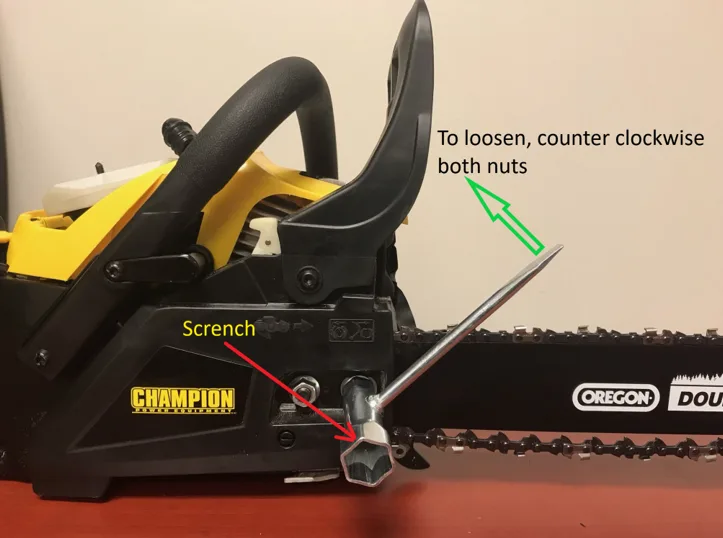
Image source: Bing (Web (fair‑use with source credit))
Incorrect tension adjustment technique
The Kobalt pole saw uses a tool‑free tensioning system. You turn the knob on the side of the bar cover to tighten or loosen the chain. But the technique matters.
You must hold the bar tip up slightly while you tighten to take the slack out of the bottom rail.
If you tighten the knob without lifting the bar, the chain will appear tight at the top but will be loose on the bottom. As soon as you start cutting, the chain will sag and fall off. Lift the tip of the bar about 45 degrees while you turn the knob.
Tighten until the chain pulls snug against the bottom rail but still rotates freely.
Worn chain links or stretched chain
All chains stretch over time. The metal links elongate slightly with use, especially if the chain runs dry or you cut dirty wood. A stretched chain will not stay tight no matter how much you adjust the tension knob.
You will tighten it, cut for two minutes, and it will be loose again.
The fix is a new chain. Kobalt uses Oregon brand chains on most models. The bar and chain size is stamped on the bar near the mounting end.
Look for the pitch and gauge numbers, then buy a replacement that matches exactly.
Burred or bent bar rail
If the chain keeps coming off the same spot on the bar, inspect that section of the bar closely. A burr or a bent rail can catch the chain and throw it off during rotation. Use a flat file to smooth down any burrs on the sides of the bar.
If the bar is bent, it needs to be replaced. A bent bar will cause the chain to derail repeatedly even with a new chain and correct tension.
Bar tightening knob not holding
The plastic tension knob on the side of the Kobalt pole saw can strip out over time. If you turn the knob and it just spins without actually tightening, the internal threads are gone. You can order a replacement knob from Kobalt parts or you can use a small wrench on the hex nut behind the knob if it is accessible.
Decision: Does the chain stay on when you hand‑spin it?
With the saw off and the brake disengaged, rotate the chain by hand around the bar a few full rotations. If the chain stays seated and feels smooth, your tension adjustment was probably the problem. If the chain jumps off or feels rough at a specific spot, you have a bar or chain damage issue.
Oil Leaks or No Oil Reaching the Chain
A pole saw needs oil on the chain to keep it cool and reduce friction. Two problems show up here: oil dripping everywhere while the saw sits, or the chain running bone dry during a cut.
Overfilled reservoir
The oil tank has a vent hole to let air in as oil drains out. If you overfill the tank past the full mark, excess oil can seep out through the vent and drip onto the bar and the ground. Wipe off the outside of the tank and run the saw for a few seconds to clear the vent.
Next time, fill only to the line.
Cap seal cracked or missing
The oil cap has a small rubber O‑ring that seals the tank. If that O‑ring is cracked or missing, oil will leak out during storage. Inspect the cap.
Replace the O‑ring with a standard size that fits snugly, or buy a new cap from Kobalt if the O‑ring is molded in.
Clogged oil port in the bar
The oil travels from the tank through a small hole in the saw body and into a matching hole on the bar. Sawdust and dried oil can block that hole. Remove the bar and clean the oil port with a stiff wire or a pipe cleaner.
Reinstall the bar and test by running the saw over a piece of cardboard for 30 seconds. You should see a thin line of oil on the cardboard.
Auto‑oiler mechanism failure
If none of the above fixes work, the internal oil pump may be dead. On Kobalt pole saws, the pump is driven by the motor. A broken pump means no oil gets to the bar no matter what.
This usually requires replacing the saw head assembly. Check with Kobalt customer support for warranty options first.
Decision: Is there oil on the bar after 30 seconds of no‑load running?
Run the saw at half throttle with no load for 30 seconds. Stop and touch the bar rail with your finger. If you feel oil, the system is working.
If the bar is dry, you have a clog or a pump failure.
Battery Problems – Won’t Charge, Dies Fast, Blinks Red
Battery issues are the second most common set of Kobalt pole saw problems. The saw itself might be fine, but if the battery won’t hold a charge or the charger rejects it, you’re stuck.

Image source: Bing (Web (fair‑use with source credit))
Charger error codes
The Kobalt charger uses a specific blink pattern to tell you what’s wrong:
- Solid green: full charge
- Blinking green: charging
- Blinking red: battery temperature out of range (too hot or too cold)
- Fast blinking red: battery or charger fault
If you get a fast blinking red, unplug the charger and remove the battery. Wait 30 seconds. Plug the charger back in without the battery.
Does it show a steady green light? If yes, the charger is fine and the battery is faulty. If the charger blinks red by itself, the charger itself is bad.
Battery contacts dirty or bent
Over time, the metal contacts on the battery and the saw can develop a thin layer of oxidation or get bent out of shape. Wipe both sets of contacts with a dry cloth. Gently bend any bent contacts back into alignment using a small flat‑blade screwdriver.
Do not use sandpaper or abrasive pads on the contacts.
Battery overheated or stored in extreme cold
Lithium‑ion batteries have a safe operating temperature range. Kobalt specs indicate the battery should be between 32°F and 104°F (0°C to 40°C) during charging. If you left the saw in a hot car or a freezing garage, the charger will refuse to charge until the battery returns to a normal temperature.
Let it sit in the house for an hour and try again.
Cell degradation
All lithium‑ion batteries lose capacity over time. After about 300 to 500 charge cycles, the battery will hold less charge and die faster during use. There is no fix for cell degradation.
If your 2‑year‑old battery only runs for 5 minutes, it is time for a replacement.
Decision: Does the battery work in another Kobalt tool?
If you have another Kobalt 40V or 80V tool, try the battery in that tool. If it powers the other tool normally, the problem is with the pole saw, not the battery. If it fails in both, the battery is the issue.
Common Mistakes and How to Avoid Them
Most Kobalt pole saw problems are caused by user mistakes, not defective parts. Avoid these five common errors and you will reduce your troubleshooting time by half.
Forgetting to release the chain brake before cutting
The chain brake is a safety feature that stops the chain if it kicks back. If you leave the brake engaged, the chain won’t spin. Always push the brake lever forward into the unlocked position before you start the saw.
Over‑tightening the bar nuts
A common mistake. People crank the bar nuts down as hard as they can to prevent the bar from moving. That pinches the bar and binds the chain.
Hand tight plus a quarter turn is all you need.
Using the wrong chain or bar
The pitch and gauge of the chain must match the bar and sprocket. Using a chain with a different pitch will cause the chain to skip or bind. Check the numbers stamped on the bar before buying a replacement.
Cutting dirty or nail‑embedded wood
Hitting a nail or a piece of gravel dulls the chain immediately. Dull chains produce more vibration, overheat, and wear out faster. Avoid cutting wood that might have hidden metal.
Storing the saw with oil in the reservoir
Oil left in the tank for months can thicken and gum up the auto‑oiler. Drain the tank before long‑term storage. Run the saw dry for a few seconds to clear the oil from the lines.
Maintenance That Prevents Most Problems
Regular maintenance keeps your Kobalt pole saw running smoothly and extends its life. You don’t need special tools, just a few minutes after each use.
Clean the bar groove and oil port after every use
Sawdust and pitch build up inside the bar groove and block the oil port. Use a bar groove cleaning tool or a stiff wire to clean the groove. Then run a pipe cleaner through the oil hole on the bar.
Sharpen the chain when it stops pulling into the wood
A dull chain requires you to push the saw into the cut. A sharp chain pulls itself in. Use a round file (5/32 inch for most Kobalt chains) and file each tooth at the same angle.
Two or three strokes per tooth is usually enough.
Replace the drive sprocket every two chains
A worn sprocket will damage a new chain quickly. Inspect the sprocket teeth when you replace a chain. If they look hooked or sharp, replace the sprocket.
Store batteries at partial charge
Kobalt recommends storing batteries at about 50% charge in a cool dry place. Avoid fully charging a battery and leaving it for months. That shortens its lifespan.
Lubricate pole pivot points
The telescoping pole sections and the pivot joint at the head can get stiff. Apply a light spray lubricant to the moving parts every few months.
When to Replace vs. When to Repair
Sometimes the repair costs more than a new saw. Other times a simple part swap saves you money. Here is how to decide.
Cost of replacement bar and chain
A new Kobalt bar and chain costs about $25 to $40. That is worth it if everything else on the saw works. If the saw is more than three years old, consider whether a new saw kit with battery is only $100.
Battery out of warranty
A replacement Kobalt 40V battery costs $60 to $80. That is about half the price of a new saw kit that includes a battery and charger. If your battery is dead and the saw is old, buying a whole new kit is often the better deal.
Motor failure
If the motor hums but does not spin, or if it smells burnt, the motor windings may be shorted. Replacing the motor assembly is possible but usually costs $50 to $70 in parts plus labor. A new saw head assembly is often cheaper.
Warranty claim process
Kobalt offers a 5‑year limited warranty on the tool and a 3‑year warranty on the battery. If you are within that period, contact Kobalt customer support or take the saw to a Lowe’s service center. They will typically replace the tool or battery free of charge.
Frequently Asked Questions
Why does my Kobalt pole saw stop mid‑cut?
The chain brake is the most likely reason. You may have triggered it accidentally during the cut. Push the brake lever forward to unlock it.
Another common cause is a chain that is too tight, which binds the motor and triggers the thermal overload protection.
Can I use a third‑party chain or battery?
You can use a third‑party chain as long as the pitch, gauge, and drive links match. For batteries, it is safer to use Kobalt OEM batteries. Third‑party batteries often have lower capacity and may not communicate correctly with the charger.
How do I reset the battery after it blinks red?
Remove the battery from the charger and let it cool to room temperature for 30 minutes. Press the battery level indicator button to reset the internal circuit board. Then place it back on the charger.
Why is my saw smoking?
Smoke usually means the chain is running too dry or the bar is pinching the chain. Check the oil level and the auto‑oiler. If those are fine, the bar may be bent and causing metal‑on‑metal friction.
Does Kobalt offer replacement parts for older models?
Yes, many parts are available through Kobalt customer service or at Lowe’s service centers. However, parts for models discontinued more than three years ago can be hard to find. Check the model number and call ahead.

Similar Posts