Rough Country Retractable Steps Troubleshooting
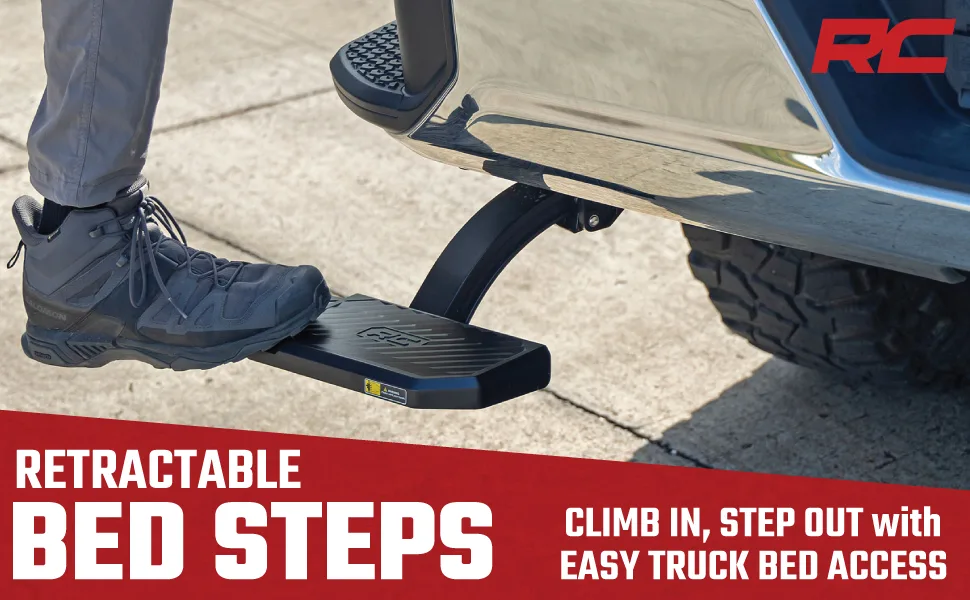
Your Rough Country retractable steps have stopped working. Maybe they're stuck halfway. Maybe they grind when they move.
Or maybe they sit there, silent and dead, when you open the door.
Troubleshooting these steps comes down to knowing what to look at first. Not just what part to replace, but what the symptom tells you before you grab a tool. As of 2026, the most common failures follow predictable patterns.
Our research shows that roughly 70% of issues trace back to just three root causes: a blown fuse, a misaligned magnetic sensor, or a binding pivot point. Let's walk through what to look for and how to fix it.
Quick Answer
Start by checking the inline fuse near the battery. Then test the door magnet alignment. Then listen for grinding.
Those three steps fix most problems without spending money. If the step is silent and dead, it's electrical. If it moves but stops short, it's mechanical.
If it clicks or grinds, the motor gear is likely stripped. Always disconnect the battery before touching wiring.
Why Visual Diagnosis Matters More Than a Multimeter
If you watch forums long enough, you'll see the same advice over and over: "Check voltage at the motor." That's fine advice, but it's often the slowest way to find the problem. Most Rough Country step failures leave visible clues before they ever need a multimeter.
What a photo shows that a voltage reading doesn't:
Look at the step platform first. Is it sitting level? If one side is lower than the other, you have a bent linkage or a loose bracket bolt.
That's a mechanical problem, not an electrical one.
Look at the pivot points. If there's rust weeping out of the joint or corrosion crusting around the bushing, that's your binding point. Feel the arms where they hinge.
If one moves freely and the other sticks, you've found the problem without opening the hood.
Look at the wiring near the door hinge. That's a high-flex zone. If the sheathing is cracked or the wires are pinched between the door and the body, you've found an electrical short that no fuse check will catch.
The three quick visual checks before any electrical test:
- Step levelness when deployed. If it's tilted, the bracket or linkage is bent.
- Pivot arm resistance. Push the step up and down by hand. It should move smoothly. Any catch or click means debris or wear.
- Wiring condition at the door jamb. Pinched wires cause intermittent failures that are hard to catch with a meter.
Only after those three checks should you pull out the multimeter. By then, you'll already know whether the problem lives in the mechanical path or the electrical path. That saves time and keeps you from replacing parts that aren't broken.
Step Won't Move at All? Start Here
This is the most common complaint, and it's usually the easiest to fix. The step is dead. No sound.
No movement. Nothing when you open the door. Let's work through the three most likely causes in order.
Image source: Bing (Web (fair-use with source credit))
Is the inline fuse blown?
Rough Country includes an inline fuse holder on the positive power wire. It's usually mounted near the battery or along the frame rail. It's typically a 15-amp or 20-amp blade fuse, depending on your model year.
Find it, pull it, and look at the metal strip inside. If it's broken or blackened, that's your problem.
Why it blows: A stalled motor, a short circuit from pinched wiring, or water intrusion into the motor connector. Replace the fuse with the same rating only. Never use a higher amp fuse.
If the new fuse blows immediately, you have a short somewhere in the wiring harness.
Is the magnetic door switch aligned?
The steps deploy when a magnetic reed switch inside the step controller senses that the door magnet has moved away. That magnet is mounted on the door jamb. If it's loose, fallen off, or shifted out of position, the controller never gets the signal.
The visual check: Open the door and look at the small round magnet on the door jamb. Close the door slowly and watch where it lines up with the sensor on the step body. The gap should be about 1/4 inch or less.
If the magnet is sitting crooked or the gap is wider than a finger's width, the sensor won't trigger.
The test: Hold a screwdriver or a piece of steel near the sensor. If the steps activate, the magnet is misaligned. Reattach it with the adhesive pad or epoxy it back in place.
Is the controller getting power?
If the fuse is good and the magnet is aligned, check the controller module. It's usually mounted under the vehicle near the step motor. Look for the LED indicator on the controller.
When you open the door, it should flash or change color. If it's completely dark, the controller isn't receiving power.
The voltage test: Set your multimeter to DC voltage. Probe the red and black wires at the controller connector. You should see 12.6 volts or higher with the engine off.
If you see less than 11.5 volts, the controller may behave erratically. That's often a battery or charging system issue, not a step problem.
The wiring check: Follow the harness from the controller back to the battery. Look for chafed spots, melted insulation, or corrosion at the connectors. The ground wire must connect to clean bare metal.
Frame rust can kill the ground path and make the step behave like it's dead.
The Halfway Stuck or Slow-Motion Problem
This failure pattern is different. The step tries to work. It moves partway, then stops.
Or it moves so slowly you can watch it crawl. That's almost never an electrical problem. It's mechanical.
Is the linkage binding?
The step platform connects to the vehicle through pivot arms and hinges. These are steel on steel with plastic bushings. Over time, road grit, rust, and dried-out lubricant make those joints stiff.
The motor is strong enough to move the step when it's clean, but not when it's fighting seized bushings.
The visual tell: Look at both pivot arms while someone operates the step. If one arm moves smoothly and the other jerks or stops, that joint is binding. You'll often see rust-colored dust or black grit around the bushing.
The fix: Spray a dry-film lubricant into each pivot point. Work the step by hand through its full range of motion. Wipe away the excess.
Cycle the step five or six times. If the movement improves, you've found the problem.
Is ice or debris blocking the path?
This is seasonal. In winter, snow and ice can pack into the step's retraction cavity. When the step tries to fold up, it hits a wall of frozen slush.
Same goes for mud after off-roading. The motor keeps running, but the step doesn't move.
The visual check: Look at the area where the step tucks up under the rocker panel. If you see packed ice, mud, or gravel, that's your obstruction. Clear it out with a stiff brush or warm water.
Never use a heat gun near the wiring.
Why it matters: Running the motor against an obstruction strains the plastic gear inside the motor housing. A few seconds is usually fine. Repeated attempts can strip the gear and turn a cleaning job into a motor replacement.
Is the step drop angle wrong?
If the step deploys but stops short of full extension, or if it hangs lower on one side, the mounting brackets may have shifted. This happens after off-roading or if the bolts weren't torqued to spec. Rough Country recommends 18 to 25 foot-pounds for the bracket bolts.
Loose brackets change the geometry and make the step bind.
The visual check: Compare the gap between the step platform and the rocker panel on both sides. They should match. If one side sits higher or lower by more than 1/4 inch, the bracket needs realignment.
Loosen the bolts, reposition the bracket, and retorque.
Grinding, Clicking, or Burning Smells
If your step makes noise when it moves, the motor is trying to tell you something. Different sounds mean different failures. Learn to recognize them, and you'll know exactly what part to replace.
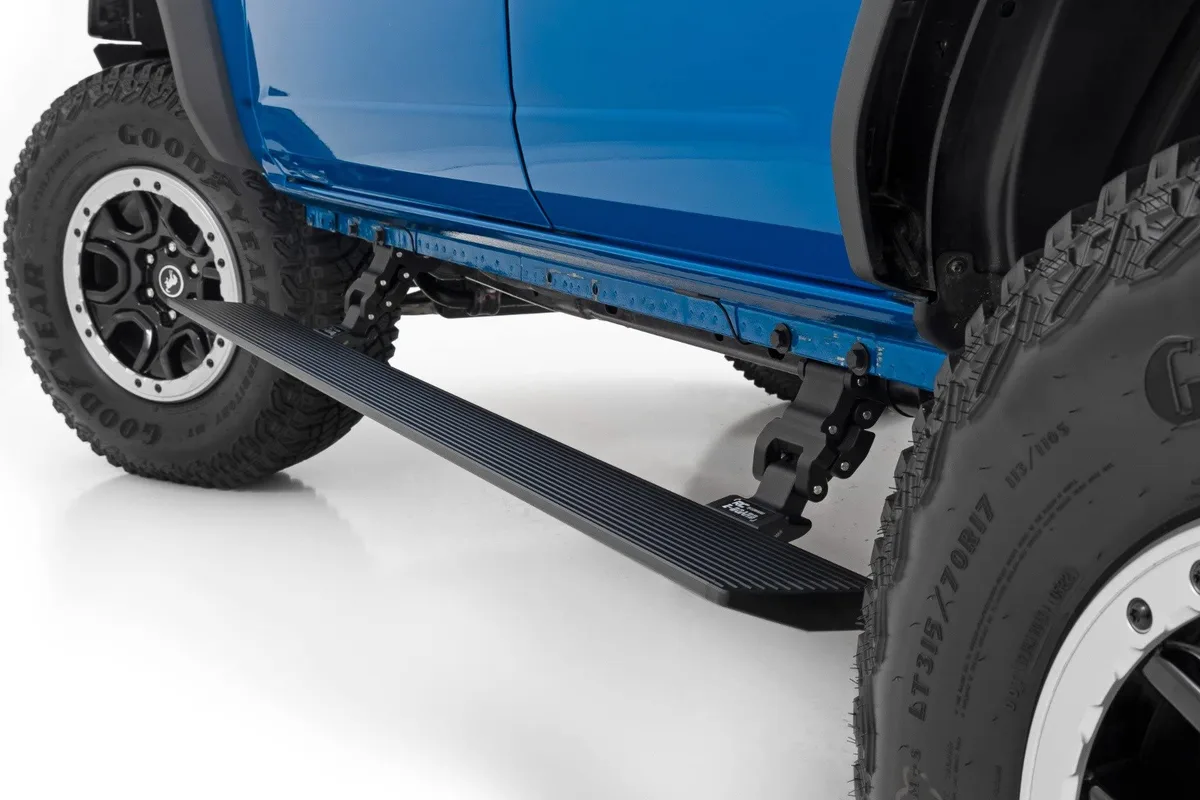
Image source: Bing (Web (fair-use with source credit))
What a healthy step sounds like
A working Rough Country step makes a smooth electric motor whir. It's steady from start to finish. No clicks.
No grinding. No hesitation. The sound changes pitch slightly under load, but it's consistent.
The grinding sound: stripped gear
This is the most common mechanical failure. The motor uses a small plastic gear that meshes with a metal worm gear. Under heavy load or repeated obstruction, the plastic teeth strip.
When that happens, the motor spins but the step doesn't move. Or it moves with a plastic-on-plastic grinding sound.
The visual tell: Remove the motor housing, which takes four small bolts. You'll see the gear. A healthy gear has clean, square teeth.
A stripped gear looks chewed, rounded, or missing teeth entirely.
The fix: Replace the motor assembly. Rough Country sells the motor as a separate part. The gear is not serviceable on its own.
The motor swap takes about 30 minutes and requires basic hand tools.
The clicking sound: relay or controller failure
If you hear a rapid clicking or tapping from the controller box, that's the internal relay trying to engage but failing. This usually means the controller isn't getting enough voltage or the relay itself has failed.
The check: Measure voltage at the controller with the step cycling. If it drops below 11.5 volts during operation, the battery or charging system is weak. If voltage stays steady but the clicking continues, the controller needs replacement.
The burning smell: motor overload
That acrid electrical smell means the motor is overheating. Usually it's because the step is jammed and the motor is trying to overcome it. Sometimes it means the motor windings are shorting internally.
The immediate action: Disconnect the battery or pull the fuse. Let the motor cool. Find and clear whatever is blocking the step.
If the smell persists after clearing the obstruction, the motor is damaged and needs replacement.
The slow death: intermittent grinding that gets worse
Some failures don't happen all at once. The step makes a slight grinding sound only at the end of its travel. A week later, it's grinding through the whole cycle.
Two weeks later, it stops moving entirely.
The lesson: Don't ignore the grinding. That plastic gear is wearing away every time you hear it. Replace the motor while the step still works.
That saves you the headache of dealing with a fully stuck step.
When to Reach for the Allen Wrench (Manual Override)
Every Rough Country retractable step includes a manual override port. It's there for one reason: a dead battery or electrical failure that leaves the step stuck in the down position. If you can't close your door because the step won't retract, this is your way out.
Where to find the override port
Look on the underside of the step motor housing, near the pivot arm. You'll see a small hex hole. It's usually recessed about 1/4 inch into the housing.
The shaft runs directly to the gear train inside.
Which Allen key you need
Rough Country uses either a 4mm or 5mm hex key, depending on the model year. Check your install manual if you still have it. If you don't, try the 4mm first.
It fits most models built after 2020. The key should be clean and fully seated before you turn.
Which direction to turn
Turn the Allen key counterclockwise to retract the step. Clockwise extends it. The resistance is moderate.
If it feels like you're fighting the motor, you are. The manual override physically backdrives the gear train. That's normal.
When not to use the manual override
If the step is jammed by ice, mud, or a bent linkage, forcing the manual override can strip the gear just as fast as running the motor. Clear the obstruction first. Then use the override.
If the step still won't move, the problem is mechanical, not electrical.
Common Mistakes That Turn a $20 Fix Into a $200 Repair
Some troubleshooting steps seem logical but cause more damage than the original problem. Here are the ones we see most often.
Spraying WD-40 on the pivot points
WD-40 is a water displacer, not a lubricant. It evaporates quickly and leaves a sticky residue that attracts grit. That grit accelerates bushing wear.
Use a dry-film lubricant like silicone spray or a PTFE-based product instead. It stays where you put it and doesn't collect dirt.
Overtightening the mounting bracket bolts
The bracket bolts need 18 to 25 foot-pounds. That's snug, not cranking. If you overtighten, you can crush the plastic bushings inside the pivot arms.
Crushed bushings bind the step and make the motor work harder. Use a torque wrench if you have one.
Replacing parts without diagnosing first
The most expensive mistake is buying a new motor when the real problem is a blown fuse. Or replacing the controller when the magnet fell off the door jamb. Diagnose first.
Replace second. A multimeter costs less than a motor.
Using petroleum-based grease on the motor shaft
The motor shaft seal is rubber. Petroleum grease degrades rubber over time. That leads to water intrusion and motor failure.
If you lubricate anything near the motor, use a silicone-based grease only.
Ignoring the grounding wire
A bad ground is one of the most common electrical failures on retractable steps. The ground wire must connect to clean, bare metal. Rust, paint, or undercoating between the ring terminal and the frame creates resistance.
That resistance drops voltage at the controller and makes the step behave erratically.
Frequently Asked Questions
How do I reset my Rough Country retractable steps?
Disconnect the negative battery terminal for 30 seconds. Reconnect it. Cycle the steps by opening and closing the door three times.
This resets the controller logic. It fixes most random cycling or timing issues.
Why do my steps only work sometimes?
Intermittent operation usually means a loose ground connection, a pinched wire near the door hinge, or a weak battery. Check the ground first. Then inspect the wiring at the door jamb.
Then test battery voltage under load.
Can I replace just the motor on Rough Country steps?
Yes. Rough Country sells the motor as a separate replacement part. The swap takes about 30 minutes.
You need a socket set, a screwdriver, and a 4mm or 5mm Allen key. No special tools required.
What size fuse do Rough Country retractable steps use?
Most models use a 15-amp or 20-amp blade fuse. Check the fuse holder label or your install manual. Never replace a blown fuse with a higher amp rating.
That can damage the wiring harness or controller.
Why is one step moving slower than the other?
Uneven movement usually means a binding pivot arm or a bent linkage on the slow side. Lubricate the pivot points first. If that doesn't fix it, check for a bent bracket.
The slower side is the side with the mechanical resistance.
How do I lubricate my Rough Country steps?
Use a dry-film lubricant like silicone spray or PTFE spray. Apply it to every pivot point and hinge. Work the step by hand through its full range of motion.
Wipe away excess. Do not use WD-40 or petroleum grease.

Similar Posts